
Topic
Bibliology
415 sermons · All topics
Free Grace Baptist Church - October 20, 2019 PM
The positive duties of the first commandment — to know, love, fear, obey, trust, and worship God alone — are expounded from Deuteronomy 5:6-21 as the necessary implication of the prohibition 'You shall have no other gods before me.' The sermon argues that these responses flow naturally from the heart conquered by sovereign grace, and that idolatry, whether material or mental, is the root sin underlying all other violations of God's law. Hearers are called to reject false conceptions of God, cultivate the knowledge of the triune God as revealed in Scripture, and render the whole-hearted allegiance the Creator demands and deserves.
Free Grace Baptist Church - October 6, 2019 AM
Acts 10:44–11:18 records what the preacher calls the 'Gentile Pentecost' — the decisive moment when the Holy Spirit falls upon Cornelius and his household, confirming that God has granted repentance unto life to the Gentiles apart from circumcision or the works of the Mosaic law. The sermon expounds two movements: first, the conversion itself, with its cessationist reading of the tongue-speaking as a corporate, historically unrepeatable sign of Christ's lordship rather than a pattern for individual Christian experience; second, the controversy in Jerusalem, where Peter's defense silences the objectors and causes them to glorify God for Gentile inclusion in the covenant of grace. The practical burden is threefold: cherish the unity of Jew and Gentile in the one body of Christ, submit to immediate believers' baptism as the New Testament pattern, and rest in justification by faith alone in Christ alone, which excludes every form of faith-plus-works soteriology.
The Two Builders

Matthew 7:24–29 closes the Sermon on the Mount with a parable that presses every hearer to examine the foundation of their life before God. Both builders hear the words of Christ, but only the wise builder obeys them — and that obedience, rooted not in moral effort but in faith in Christ alone, is the mark that distinguishes genuine discipleship from hollow profession. The foolish builder is not a pagan but a hearer who pays lip service to the Word without submitting to it, a condition Ezekiel 33 and James 1 both diagnose with sobering precision. The sermon calls every listener to repent, believe the gospel, and rest on Christ as the only foundation that will withstand the final storm of God's holy wrath.

Free Grace Baptist Church - July 21, 2019 AM
Acts 9:1–9 records the conversion of Saul of Tarsus, the arch-enemy of the early church, and the sermon works through this passage in two movements: the hostility of Saul and the sovereign confrontation by Christ on the Damascus road. The preacher argues that the violence and ruthlessness of Saul's pre-conversion mission magnifies the richness of divine grace, because Christ's effectual call reaches even the chief of sinners without any prior disposition toward God on Saul's part. Drawing on parallel accounts in Acts 22 and 26, Galatians 1, and 1 Timothy 1, the sermon applies this reality as an encouragement to those who fear themselves beyond the reach of redeeming grace, and as a rebuke to any confidence in moral or religious achievement as a ground of acceptance before God.

James 1:2-8
James 1:2–8 addresses the believer's response to trials and the request that should accompany them. The passage distinguishes trials as God-ordained testings of faith from temptations to sin, and calls believers to count such afflictions as joy because God uses them to produce endurance, maturity, and conformity to Christ. When wisdom is lacking in the midst of trial — as it invariably is — the believer is commanded to ask God, who gives liberally and without reproach to all who ask. That asking must be in faith, for the double-minded man who doubts will be unsettled, unanswered, and unstable in all his ways.
The Sovereignty of God
Proverbs 3:19–20 grounds God's sovereignty not merely in creation but in every sphere of existence — the world was founded by divine wisdom, and that same sovereign wisdom governs all of history and secures the redemption of His people. Drawing widely from Proverbs alongside Genesis, the Psalms, Daniel, and Romans, this sermon traces three distinct expressions of God's sovereignty: His free, unconstrained creation of all things; His comprehensive providence over human affairs including civil government; and His eternal purpose in redemption, centred in the pre-existent Christ of Proverbs 8. The practical force of the message is that divine sovereignty — rightly understood — produces neither fatalism nor hyper-Calvinist passivity, but rather deep comfort, stable faith, and the use of appointed means, all to the glory of God.

The Call to Faithfulness in Perilous Times
Paul's warning to Timothy in 2 Timothy 3:1–9 identifies the gravest threat facing the church as not external persecution but internal corruption — men with a form of godliness who deny its power. The passage is expounded under four headings: the recognition of danger in the last days, the description of godless men marked by secular humanism, materialistic idolatry, and hedonism, the exhortation to avoid such men entirely, and the encouragement that their folly will be exposed as surely as that of Jannes and Jambres before Moses. The sermon calls believers to know the foundational doctrines of Christianity, to conduct themselves worthy of the gospel, and to discriminate carefully about who is permitted to teach — while resting in the confidence that Christ will build his church and the gates of hell shall not prevail against it.
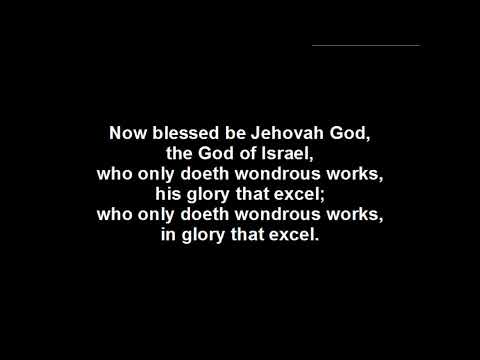
Free Grace Baptist Church - June 9, 2019 AM
The Christological unity of Scripture — the truth that the Old Testament prophets testified to Christ by the Spirit of Christ — grounds the believer's hope under suffering and shapes a properly Christocentric hermeneutic. Drawing from 1 Peter 1:10–12, this sermon argues that the Spirit of Christ was personally present in and through the prophets, disclosing the sufferings of Christ and the glories that follow, so that the Old Testament is not Israel-centric but Christ-centric in its ultimate focus. The sermon calls believers to read Scripture not merely for cognitive information but as a supernatural encounter with Christ himself, whose revealed glory transforms the reader into his likeness and sustains eschatological hope in the face of suffering and persecution.

The Purity of God's Word
Proverbs 30:5–6 presents two inseparable claims: every word of God is pure, and God is a shield to those who trust him. This sermon expounds the purity of Scripture as an attribute derived from the character of God himself, extends it across every genre and testament, and anchors it in the New Testament's own witness to its inspiration and authority. The warning of verse 6 — that adding to God's words brings divine rebuke and the verdict of liar — is applied not only to unbelieving Judaism, Roman Catholic tradition, and Charismatic continuationism, but to the Reformed believer's own temptation to bind consciences where God has not legislated. Hearers are called to read the whole counsel of God daily, to rest in its sufficiency, and to resist every impulse to place human words on a level with or in competition with divine revelation.

Free Grace Baptist Church - June 2, 2019 AM
Acts 8:9-25 presents the account of Simon Magus, a former sorcerer who professed faith and was baptized in Samaria, yet subsequently attempted to purchase the apostolic ability to confer the Holy Spirit. The sermon works through Simon's request, Peter's sharp rebuke, and Simon's reply, while holding in tension the genuine ambiguity the text leaves about whether Simon's profession was true. The preacher draws out the contrast between the gift-character of God's grace — which can never be bought, bribed, or trafficked — and the spirit of simony that has recurred throughout church history, pressing hearers to examine not Simon's salvation but their own, and to rest their standing before God on Christ's blood and righteousness alone.

Saul and the Medium at En Dor
When Saul consults a medium at En Dor on the eve of his final battle with the Philistines, the deepest terror of 1 Samuel 28 is not the Philistine army but the silence of God — the Lord refuses to answer Saul by dreams, Urim, or prophets. The passage exposes the bankruptcy of pragmatic religion: Saul does not want communion with God, only tactical advantage, and so he turns to what God has explicitly forbidden. The sermon examines the three main interpretive positions on the conjured spirit, argues that a demonic entity — not the real Samuel — appeared to the medium, and closes by distinguishing between the hardened reprobate who has been abandoned by God and the struggling believer who is called to renew repentance and press into the ordained means of grace.

Free Grace Baptist Church - March 20, 2019 Bible Study
Genesis 16 exposes the impatience of Sarai and Abram as they resort to human ingenuity — surrogate motherhood through Hagar — to secure the seed God had promised rather than waiting upon him to fulfill it in his own time and means. The passage is set against the backdrop of Genesis 15, where God had already specified that the heir would come supernaturally from Abram's own body, making their scheme not merely socially problematic but a failure of faith in the very word of God. Yet the same chapter that records their faithlessness also records God's faithfulness: the angel of the Lord meets the fleeing Hagar, names her unborn son, and promises a multitude of descendants — a display of divine common grace extended even to the non-elect. The exhortation is to believe the promises of God, use lawful means, and refuse to substitute human engineering for patient trust in divine sovereignty.

Free Grace Baptist Church - March 17, 2019 PM
Romans 1 confronts humanity with the universal condemnation that falls upon Jew and Gentile alike: God's righteousness is revealed in the gospel precisely because all people suppress the truth of God in unrighteousness. The sermon traces Paul's argument from general revelation — God's invisible attributes made plain in creation — through the progressive moral descent that follows the rejection of the Creator, culminating in divine judgment expressed as God giving humanity over to its disordered desires. The remedy is the righteousness of God revealed through faith in Jesus Christ alone, which the apostle sets against the backdrop of universal guilt in order to magnify the grace of justification freely given.
Free Grace Baptist Church - February 24, 2019 PM
Proverbs 18:17 and its companion verse 13 provide the biblical foundation for two bedrock principles of due process: the requirement of cross-examination and the presumption of innocence. The sermon moves from Solomon's wisdom to the Mosaic law of witnesses in Deuteronomy 19 and the regulation of corporal punishment in Deuteronomy 25, arguing that Western juridical civilization is built on these scriptural foundations. The congregation is exhorted to resist the rush to judgment — whether in civil society or within the church — and to recognize that Christ alone perfectly fulfills the integrity demanded by Psalm 15, so that believers stand before God on the basis of his righteousness, not their own.

Gentile Inclusion in God's Covenant
Ephesians 2:11–22 presents Gentile inclusion in the covenant promises of God as a third demonstration of divine power, alongside the resurrection of Christ and the salvation of individual sinners. Gentile believers were once Christless, churchless, hopeless, godless, and homeless — aliens from the commonwealth of Israel and strangers to the covenants of promise — but now, through the blood of Christ, they have been brought near and made one new man together with believing Jews. The sermon refutes dispensationalism's two-peoples framework, explains the threefold division of the law (moral, judicial, ceremonial) to clarify what Christ abolished at the cross, and calls the church to a high corporate esteem of the household of God as the dwelling place of the Spirit.

The Rejection of the True Prophet of God
When Ahab of Israel gathered four hundred prophets to sanction his campaign at Ramoth-Gilead, he had already resolved what he wanted to hear — and hated the one man who would tell him the truth. This exposition of 1 Kings 22:1–28 traces the confrontation between King Ahab and the prophet Micaiah, examining how the rejection of the true prophet is ultimately the rejection of the Word of God itself. Drawing on the parallel Paul draws in 2 Timothy 4:1–4, the sermon calls hearers to guard their hearts against the perennial temptation to accumulate teachers who scratch itching ears, and to receive the whole counsel of God — rebuke and exhortation included — as the mercy of a wise and sovereign Father.

The Bible and Abortion
Abortion is not merely a political question but a theological one, demanding that Christians know what Scripture says about the pre-born. Working through Exodus 20:13 and Exodus 21:22–25, this sermon establishes the Sixth Commandment's prohibition of murder, grounds the sanctity of human life in the doctrine of the image of God (traced from creation through the incarnation), and demonstrates from the Mosaic case law that even accidental harm to a pre-born child carried the full force of the lex talionis — life for life. The sermon closes by addressing the church's responsibility to preach both law and gospel, to vote and live consistently with the conviction that abortion is both sin and crime, and to extend the forgiveness of Christ to those who have been party to this particular transgression.

The Condemnation of Heartless Worship
Malachi 1:6–14 exposes a pattern of heartless worship among the priests and people of Israel who offered blind, lame, and stolen animals on God's altar — defective sacrifices that expressed contempt for God's table without a word being spoken. The sermon traces the prophetic structure of divine accusation, petulant human question, and divine refutation, then draws four implications: heartless worship is evil, it is common even among the redeemed, it reduces religion to external formalism, and it provokes the judgment of God. The application turns on the regulative principle of worship — that God alone defines acceptable approach to himself — and calls believers to pursue good theology, responsible leadership, and biblical worship, while calling the unconverted to look by faith to the Lamb of God.

Free Grace Baptist Church - November 11, 2018 PM
What is the most important question ever asked, and what hangs on the answer? This sermon expounds Matthew 16:13–20 as a launching point for a seven-point study in the importance of the knowledge of Christ — Christology as the highest of all sciences. Christ is shown to be the scope of all Scripture, the one on whom eternal life hinges, the substance of the gospel, the only way of salvation, the location of every redemptive benefit, the ground of the church's commission, and the present and future hope of every believer. The practical import moves hearers toward Christ-informed worship, humility, beneficence, and steadfast confession.
The Importance of the Knowledge of Christ

The most important question ever asked — 'Who do you say that I am?' — exposes a crisis in the contemporary church: a Ligonier survey found that 78% of polled evangelical Christians answered that Jesus Christ is the highest creature of God, effectively the ancient Arian heresy. This sermon works through Matthew 16:13–20 as a launching point, pressing seven reasons why the knowledge of Christ is of supreme importance: He is the scope of Scripture, eternal life hinges on a right knowledge of His person, the gospel is about Him, He is the exclusive way of salvation, all redemptive benefits are found in Him, the church's commission is given by and about Him, and our present and future hope rests in Him alone. The practical import of Christology — rightly defined as the dignity of Christ's person and the virtue of His office — is shown to bear on worship, humility, beneficence, good works, and steadfast confession.

The Divine Provision of Eternal Life
Isaiah 55 presents God's gracious and urgent invitation to sinners to receive the fullness of salvation — the refreshment, gladness, and nourishment of the gospel — entirely without cost, because the suffering servant of Isaiah 53 has already satisfied the purchase price. The sermon expounds the chapter in two movements: the invitation to come (vv. 1–5), grounded in the new covenant and secured by the Davidic king, and the call to faith and repentance (vv. 6–13), sustained by the sovereign power of God's Word. Believers are urged to treasure the abundance of every spiritual blessing already given in Christ, and unbelievers are warned not to squander their lives on what cannot satisfy while the Lord may yet be found.
The Prayer of the Church
Acts 4:23–31 records the first corporate prayer meeting of the apostolic church, gathered under threat from the Sanhedrin. The sermon traces three movements in the prayer — invocation of God as Creator and sovereign, exposition of Psalm 2 as prophetic preparation for the rage of nations against Christ and His people, and supplication not for the removal of threats but for boldness to preach the Word. The central argument is that a robust theology of creation, scriptural authority, and divine sovereignty is the necessary foundation of faithful prayer, and that the church's primary calling — confirmed by what the early church actually asked of God — is the bold proclamation of the gospel.

Free Grace Baptist Church - October 7, 2018 AM
The corporate prayer of Acts 4 reveals the theological convictions and missional priorities of the early church under threat. Working through the structure of invocation, exposition, and supplication, this sermon argues that the church's primary calling is the bold proclamation of God's Word — not social programming, entertainment, or the removal of opposition. The apostolic church did not pray for safety or the destruction of enemies but for courage to preach in the midst of hostility, a pattern that exposes and corrects the consumer-driven drift of contemporary evangelicalism.

The Deliberation of the Council
Acts 4:13–22 records the Sanhedrin's deliberation over Peter and John following the healing of a lame man and the apostolic proclamation of Christ's resurrection. The council faces an insoluble dilemma: the miracle is undeniable and publicly known, yet to leave the apostles unchallenged is to permit the gospel to spread unchecked. This sermon traces two broad movements — the deliberation of the council (vv. 13–17) and the attempt to silence the apostles (vv. 18–22) — and draws out the benefits of being with Jesus as seen in the apostles' boldness and wisdom, alongside the liabilities that attend any attempt to suppress the word of God. The application presses believers to pray for men of gospel courage and to resist every pressure, civil or ecclesiastical, to silence the name of Christ.

The Diligence of the Ant
Proverbs 6:6–11 and 26:13–16 present the ant as a model of self-directed industry and the sluggard as a figure of moral and practical ruin. The sermon traces four marks of the lazy man — excuse-making, love of sleep, inability to complete tasks, and self-congratulating conceit — before turning to the genuine blessings diligence brings: material provision, the dignity of honest labor, and the honor of excellent work. The exposition closes by applying the same categories spiritually: the sinner who makes excuses before Christ and the drowsy saint grown cold in the means of grace are both called to a diligence that flees to the Savior and feeds on the Word.

The Sermon in Solomon's Porch, Part 1
Peter's sermon in Solomon's Porch (Acts 3:11–21) opens with a pointed denial: the healing of the congenitally lame man was not accomplished by apostolic power or godliness, but by the name of Jesus Christ, the glorified servant of Yahweh announced throughout the Old Testament prophets. The sermon works through three considerations in verses 11–16 — the God who glorified the servant, the sinners who rejected him, and the servant who healed the lame man — showing that Peter's staccato recitation of Jerusalem's guilt is not cruelty but evangelism: men must know the weight of their sin before the call to repent and be converted carries any urgency. The healing itself illustrates the completeness of Christ's saving work — perfect soundness, public and undeniable — and the authority he exercises from the right hand of the Father is the same authority by which sinners are saved today.

Matthew 8:23-27
Matthew 8:23–27 presents the stilling of the storm on the Sea of Galilee as a window into both the true humanity and the full divinity of the Lord Jesus Christ. The passage exposes the disciples' little faith — not absent faith — and rebukes the perennial temptation to treat temporal prosperity as the measure of God's favor. Christ's presence in the boat does not exempt believers from storms, but it does guarantee that he will see them through every trial he ordains for their conformity to himself.

Wisdom from Above

James 3:13–18 presents heavenly wisdom in direct contrast to the earthly, sensual, and devilish wisdom that breeds jealousy, faction, and confusion. This exposition identifies four fundamental features of wisdom from above: it is communicated from the triune God through His Word and Spirit; it is a copy of God's own pure, immutable wisdom suited to finite creatures; it is contemplative, engaging the regenerate mind to perceive all things in relation to God; and it is consequential, bearing the practical fruit of peace, meekness, mercy, and a good life ordered by God. The sermon calls hearers to test whether they possess this wisdom by asking whether they trust Christ alone, love God, and earnestly seek to frame their lives in the order God has established.

Free Grace Baptist Church - July 15, 2018 PM
Hebrews 12:1 calls the people of God to run with endurance the race that is set before them, laying aside every weight and entangling sin. This exposition of the verse's first incentive — the great cloud of witnesses from Hebrews 11 — argues that those Old Testament saints are not spectators watching believers run, but witnesses testifying to the faithfulness of God in every circumstance of trial, hardship, and suffering. The sermon moves through Abel, Enoch, Noah, Abraham, Sarah, Joseph, Moses, Rahab, David, the three Hebrew youths, Habakkuk, Job, and the martyrs to demonstrate that the consistent, unanimous testimony of the faithful is that Yahweh upholds those who persevere, whatever their lot. The exhortation is concrete: lay aside weights and sin, fix your gaze on Christ, listen to the testimony of the cloud of witnesses, and press on toward the finish with disciplined, unglamorous, daily faithfulness.

The Response to Peter's Sermon
Acts 2:41–47 records the immediate fruit of Peter's Pentecost sermon: three thousand souls baptized and a church marked by steadfast doctrine, fellowship, the Lord's Supper, and prayer. This exposition argues that the passage is both descriptive and prescriptive — what the early church did defines what the church in every age must be. Along the way, believers' baptism is defended against paedo-baptist readings of verse 39, and the growth of the church is traced not to programs or techniques but to the sovereign calling of God through the faithful preaching of Christ crucified.