
Topic
Soteriology
2,239 sermons · All topics

Of God's Decree - Chap. 3

God's decree — his eternal, comprehensive, and unchangeable purpose over all things — is the subject of 1689 London Baptist Confession Chapter 3. The confession affirms that God has foreordained whatsoever comes to pass, including the free and sinful actions of men, without becoming the author of sin or violating the will of the creature. Paragraph 2 refutes the Molinist and Arminian claim that God's decree is grounded in his foreknowledge of human choices, insisting instead that election puts sinners in Christ rather than finding them there. The doctrine is shown to be practically consoling, doxologically oriented, and inseparable from the character of God as defined in Chapter 2.
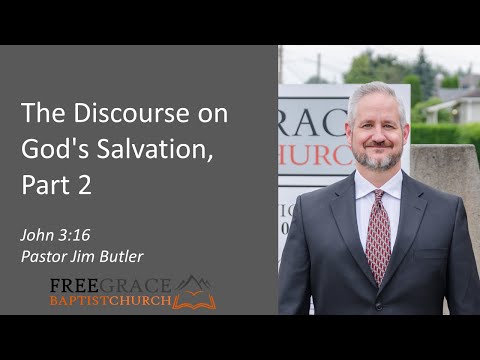
The Discourse on God's Salvation, Part 2
John 3:16 — Luther called it 'the Bible in miniature,' and this exposition treats it as precisely that: a compressed statement of the whole Christian gospel. The sermon moves through three divisions of the verse — the declaration of God's love, the demonstration of that love in the gift of the only begotten Son, and the description of those who receive God's redemptive love through faith. Central to the argument is the insistence that God's love is the source, not the consequence, of the atonement, and that 'the world' in John's vocabulary denotes persons from every tribe and tongue without ethnic distinction, not every individual without exception — a conclusion that grounds particular redemption in the wider theology of John's writings. The sermon closes with a direct appeal to unbelievers: the one way of salvation is to believe on Jesus Christ alone, whose active obedience supplies the righteousness that sinners need and whose substitutionary death removes the condemnation they deserve.

The Qualifications of Elders, Part 2
What does Scripture require of those who lead and teach the church? Expounding 1 Timothy 3:1–7, this sermon works through the apostle Paul's qualifications for the elder-bishop-pastor office, arguing that these standards are not perfectionist ideals but demonstrated graces and virtues that the church must require of any man considered for gospel ministry. The qualifications are examined under four heads: the man's desire and its right motives, his personal conduct, his domestic faithfulness, and his testimony among outsiders, with particular attention given to the distinction between blamelessness and sinlessness, the meaning of 'husband of one wife,' and the danger of a Gnostic misreading of the prohibition on wine. The sermon closes with a call to churches to pursue both the edification of the saints and the evangelistic mission that God ordained through the office of pastor-teacher.

Exodus 15 - Song of Moses
Exodus 15 records the Song of Moses, a celebration of divine redemption and righteous judgment sung by Israel after the destruction of Pharaoh's army in the Red Sea. The sermon expounds the threefold structure of the song — the triumph of the Lord, the defeat of the Egyptians, and the majesty and incomparability of God — before tracing its prophetic reach into the nations' fear of Yahweh and the ultimate goal of covenant dwelling. The bitter waters of Marah complete the chapter, exposing Israel's reflexive grumbling as a failure to trust the God who had already done the greater work of redemption. Hearers are called to praise God for both his saving mercy and his just judgment, and to pass that doxological heritage to the next generation.

A Practical Example for the Suffering Christian

Psalm 61 presents David at the edge of the wilderness — heart overwhelmed, throne usurped, kingdom collapsing — as a concrete example of what it looks like for a suffering believer to cry out to God, refocus on covenant faithfulness, and be brought from despair to joyful praise. The sermon traces three movements in the psalm: the cry for help from the brink of despair (vv. 1–2), the deliberate refocusing on God's past faithfulness, the Davidic covenant, and the eternal inheritance of the Messiah's kingdom (vv. 3–7), and the resulting resolve of praise (v. 8). David's process is not mystical — it is conscious, disciplined engagement with the means of grace: prayer, meditation on covenant promises, and fixing the mind on the eternal kingship of Christ. Suffering Christians are exhorted to follow that same pattern rather than abandoning the means of grace at the very moment they are most needed.

The Discourse on God's Salvation, Part 1
Jesus answers Nicodemus's question — 'How can these things be?' — by pointing to three realities: his own incarnation as the one who descended from heaven, the Old Testament typology of the bronze serpent in Numbers 21, and the necessity of his crucifixion as the antitype to whom sinners must look in faith. The sermon works through John 3:11–15, examining Christ's authority to speak of heavenly things, the doctrine of the hypostatic union and the communication of idioms, and the parallel between Israel's look-and-live prescription in the wilderness and saving faith in the crucified Son of Man. The application is direct: the antidote to sin is not moral reformation but faith in the lifted-up Christ, who alone secures justification and eternal life for believing sinners.

Exodus 14
Exodus 14 records the crossing of the Red Sea — a chapter whose driving theme is not merely Israel's deliverance but God's self-glorification over Pharaoh and his army. The exposition works through two main movements: the plan of God (vv. 1–14), in which God sovereignly directs Israel's route and hardens Pharaoh's heart so that He may gain honor, and the power of God (vv. 15–31), in which divine promise, protection, and action result in the salvation of Israel and the destruction of Egypt. Israel's fear and complaint throughout the chapter expose a chronic lack of faith, while Moses' brief but confident exhortation — 'Do not be afraid; stand still and see the salvation of the Lord' — models the response that faith in God's promises produces.

The Crucifixion of Jesus, Part 3
Matthew 27:45–46 records the fourth of Christ's seven words from the cross — the cry of dereliction, 'My God, my God, why have you forsaken me?' — and its interpretation demands both exegetical precision and doctrinal care. The darkness from the sixth to the ninth hour was not a solar eclipse but a supernatural sign of divine judgment, recapitulating the ninth plague pattern and marking the moment the Passover antitype was slain. The cry itself does not imply any ontological division within the Trinity, any dissolution of the hypostatic union, or the suffering of all three persons; rather, it expresses the withdrawal of divine consolation from the Son according to his true humanity as he bore, in our place as surety, the full weight of penal wrath. Believers are called to ground their assurance not in felt divine presence but in the covenant faithfulness of the God to whom Christ still cried 'my God' even in the depth of his substitutionary suffering.

The Meeting with Nicodemus, Part 2
John 3:4–10 confronts every hearer with the absolute necessity of regeneration before any entrance into the kingdom of God. Working through Nicodemus's proud misunderstanding and Christ's patient explanation, this exposition argues that the new birth is entirely God's sovereign work — initiated by the Holy Spirit, prefigured in Ezekiel 36 and Deuteronomy 30, and entirely prior to saving faith. The sermon also draws out the Trinitarian theology embedded in Christ's wind analogy, showing that the Spirit's sovereign, effectual work in regeneration reveals who God is, not merely what He does.
Exodus 13 - The consecration of the firstborn
Exodus 13 grounds the consecration of Israel's firstborn in the redemptive logic of the tenth plague: because God spared Israel's firstborn while striking Egypt's, Israel's firstborn belong to him — to be set apart, sacrificed if clean, or redeemed if human or unclean. The chapter's twin emphases on perpetual remembrance through the Feast of Unleavened Bread and the catechetical instruction of children press the same truth across generations: God's people are defined by what God has done for them, not by their own merit or strength. The typological weight of substitutionary redemption — one life in the place of another — finds its terminus in the Lamb of God who takes away the sin of the world, making these ordinances intelligible only in light of Christ. Practically, the sermon calls the congregation to remember the mighty works of God, to sacrifice freely in gratitude for redemption received, and to pass this theological inheritance faithfully to the next generation.
The Meeting with Nicodemus
John 3:1–10 presents Jesus confronting Nicodemus — a ruler of the Sanhedrin sent by the Jerusalem religious leadership — with the doctrine of regeneration: that a man must be born again, born from above, before he can see or enter the kingdom of God. The sermon argues that the new birth is entirely a sovereign act of God Most High, not a command for the sinner to obey by his own power, and that regeneration logically precedes and produces saving faith rather than following it. Those born of God will evidence that new life through faith in Christ, a practice of righteousness, love for the brethren, and an overcoming of the world.

The Qualifications for Elders
What qualifications does Scripture require of a man before he may serve as an elder in a local church? Expounding 1 Timothy 3:1–7, this sermon establishes that the elder, overseer, and pastor are three terms for one office, and that the qualifications Paul lists are not recommendations but binding mandates. The sermon works through the first qualification — a genuine, rightly-motivated desire for the office — and frames it within four criteria for evaluating a call to ministry: right motives, graces indicating genuine Christian experience, gifts indicating divine provision (especially aptness to teach), and providential opportunity. The congregation is exhorted to apply these standards carefully and not to install any man, however virtuous or personable, who lacks the God-given ability to preach and teach the word.

Exodus 12, part 2
Exodus 12:29–51 records the execution of the tenth plague, the departure of Israel from Egypt, and the regulations governing who may participate in the Passover. The death of every firstborn in Egypt—from Pharaoh's throne to the dungeon—is presented not as arbitrary cruelty but as the righteous retribution of a holy God against a nation that had enslaved and slaughtered His people, fulfilling the promise made to Abraham in Genesis 15. The Passover ordinance, with its requirements of circumcision for participation and the prohibition against breaking the lamb's bones, functions typologically to point forward to Christ, who is our Passover sacrificed for us, whose bones were not broken at the crucifixion.

The Antitype of the Temple
John 2:18–25 presents Jesus as the antitype of the Old Testament temple — the reality to which the type pointed and in which it finds its fulfillment and realization. The Jews' demand for a sign of his authority after the temple cleansing is answered by the one definitive sign: the death and resurrection of Christ, which the apostle John interprets for the reader in verses 21–22. The sermon also treats the omniscience of Christ as evidence of his divinity, demonstrated in his refusal to entrust himself to those whose belief was superficial and temporary. Hearers are called to flee to Christ in genuine faith and repentance, receiving both forgiveness of sin and the imputed righteousness of Christ that avails before the Father.

Exodus 12 - Part 1
Exodus 12 presents the institution of the Passover and the Feast of Unleavened Bread as a blood ritual pointing forward to Christ, the anti-type of the Passover lamb. The chapter is expounded in three movements: the specific blood-ritual instructions God gives to Moses and Aaron (vv. 1–13), the regulations for the memorial Feast of Unleavened Bread (vv. 14–20), and Moses's transmission of those instructions to the elders of Israel (vv. 21–28). The blood on the doorposts was not a sign for an omniscient God who needed locating data, but an outward expression of the faith of those who believed Yahweh's word — a pattern fulfilled when Christ, the blemish-free Lamb, shed his blood so that the wrath of God passes over all who trust in him. The study closes by drawing out the catechetical purpose embedded in the Passover ordinance: that each generation would rehearse the redemptive acts of God and understand that without the shedding of blood there is no remission.

LBC - Chapter 2 - Of God and the Trinity
What does Scripture reveal about God's relationship to his creation, and how does that shape the creature's obligation to the Creator? Working through paragraphs two and three of Chapter 2 of the 1689 London Baptist Confession of Faith, this study expounds three perfections of God in his external relations: his aseity (independence and self-sufficiency), his omniscience, and his holiness. From Acts 17, 1 Kings 8, Psalm 113, Psalm 115, Daniel 4, Ephesians 1, and Romans 9, the instructor demonstrates that God is the sole fountain of all being, exercises most sovereign dominion over all creatures, and is morally pure in all his counsels, works, and commands — and that these perfections ground the creature's comprehensive obligation of worship, service, and obedience to the Creator.

The Cleansing of the Temple
Jesus' cleansing of the temple in John 2:13–17 is not an aberration from his character but a direct expression of his identity as the Son of God and the antitype of the temple itself. The passage reveals two inseparable realities: the apostasy of first-century Israel's worship and the messianic zeal prophesied in Psalm 69, Malachi 3, and the post-exilic prophets. Christ's authority to purge the temple rests on his sonship by nature, not adoption, and his action announces that the entire Old Covenant sacrificial system finds its fulfillment in him. The sermon calls the church to recover zeal for the purity of God's worship, to identify and resist the defections of contemporary Christendom, and to look in faith to the Lamb who has displaced every animal sacrifice.
The New Heaven and New Earth
Revelation 21:1–8 presents the new heaven and new earth not as the annihilation and replacement of creation but as its renovation — the consummation of covenant blessing in which God dwells fully and finally with his redeemed people. Working through four elements of the vision (the new creation, the bride, the announcement of blessing, and the voice from the throne), this exposition situates John's language within the broader biblical storyline of paradise lost in Adam and paradise restored in Christ, and interprets the new Jerusalem as the church — the covenant community that has replaced apostate Israel as the bearer of God's covenant promises. The sermon closes with a meditation on individual eschatology, drawing on Job, the Psalms, and the Apostle Paul to comfort believers with the certainty that those who die in Christ pass immediately into his presence, and that the fullness of covenant blessing awaits them in the age to come.

Exodus 11
Exodus 11 announces and describes the tenth plague — the death of the firstborn throughout Egypt — which God executes directly and immediately, without mediation through natural means. The chapter is structured around three movements: the promise of liberty and prosperity to Israel, the announcement of sweeping judgment upon every household in Egypt, and Pharaoh's continued, God-ordained rebellion. The hardening of Pharaoh's heart is treated not as mere divine permission but as a just act of sovereignty, displaying God's power, holiness, and mercy simultaneously — mercy to Israel being inseparable from judgment upon her oppressors.

The Wedding at Cana of Galilee
John 2:1–12 recounts the wedding at Cana, where Jesus turns water into wine as the first of his public signs. The sermon traces three movements in the passage — the setting, the sign, and the summary — and argues that the miracle is not merely a display of power over nature but a prophetically charged inauguration of new covenant abundance, anticipated by Isaiah, Jeremiah, Joel, Amos, and Zechariah. The water pots of Jewish purification give way to wine that surpasses what came before, signifying that the grace and truth that came through Jesus Christ exceeds the law given through Moses. The closing application presses hearers to heed the one command Mary gives in all of Scripture: whatever Jesus says, do it.

The Crucifixion of Jesus, Part 2
Matthew 27:39–44 records the threefold mockery of Christ on the cross — by passing bystanders, by the chief priests and scribes, and by the robbers crucified alongside him. Each taunt — that he could not save himself, that his kingship was fraudulent, that his claim to divine sonship was false — is shown to be an ironic confirmation of the very things the mockers deny: Christ's identity as temple builder, King of Israel, and Son of God. His refusal to descend from the cross is not weakness but the perfect obedience of the covenant of redemption, the very means by which he saves his people from their sins. The sermon closes with the conversion of the penitent thief as a trophy of sovereign grace and an argument for faith in a willing Savior.

The Pharisee and the Publican
This exposition of Luke 18:9–14 examines the parable of the Pharisee and the publican as a penetrating diagnosis of self-righteousness and a declaration of justification by faith alone. The sermon works through the occasion of the parable, the contrasted characters of the two men, and Christ's concluding verdict that the tax collector — not the Pharisee — went home justified. The central contention is that acceptance before God rests entirely on the imputed righteousness of Christ received through faith, not on any moral performance or religious accomplishment, and that those who understand this will be marked by humility rather than contempt toward others.

The Enthronement of the Priest-King
Psalm 110, the most frequently cited Old Testament passage in the New Testament, presents the Messiah as the divinely enthroned Priest-King whose universal dominion is secured by the oath of God. This exposition traces three movements in the psalm: the enthronement and government of Christ the King (vv. 1–3), his eternal priesthood after the order of Melchizedek (v. 4), and the triumphant conquest of his enemies (vv. 5–7). The sermon draws on Peter's argument in Acts 2, Paul's application in 1 Corinthians 15 and Ephesians 1, and the author of Hebrews to show that Christ's present session at the right hand of the Father is not passive but active — he reigns, subdues, and intercedes. Christians living in tumultuous times are urged to resist despair by fixing their confidence in the sovereign rule of the enthroned Priest-King rather than in the shifting circumstances of earthly politics.

Live Stream - August 22, 2021

Facing persecution, trial, and the chaos of a fallen world, believers are not left without anchor. This exposition of 1 Peter 1:3–5 works through three movements: the author of salvation (God the Father, who acts out of abundant mercy), the nature of salvation (regeneration unto a living hope grounded in the resurrection of Christ, and an inheritance incorruptible, undefiled, and unfading), and the certainty of salvation (both the inheritance and the heirs are preserved by the power of God). The sermon calls believers to fix their hope on the coming glory rather than on the perishing things of this world, and it summons the unconverted to flee to Christ before facing the polar opposite of that glory.

Live Stream - August 22, 2021
Joy and grief can coexist in the Christian life because they draw from different sources: grief responds to the realities of the temporal realm, while joy is rooted in the heavenly realities secured by Christ's resurrection and ascension. Expounding 1 Peter 1:6–9, this sermon works through three movements: the paradox of Christian experience (simultaneous rejoicing and grieving), the purpose of trials (proving and purifying genuine faith as gold is proved by fire), and the principle of maintaining joy (a growing, knowledge-grounded faith in Christ). The congregation is called to resist both stoic denial of suffering and carnal despair, and instead to cultivate an ever-deepening knowledge of Christ through the Word, prayer, and the local church, so that joy — rooted in the guaranteed inheritance awaiting believers — remains constant through manifold trials.

1 Peter 1:6-9
The paradox of simultaneously rejoicing and grieving marks the Christian life as Peter describes it in 1 Peter 1:6–9. Trials are not accidents of providence but a necessary divine instrument: God uses suffering to prove and purify a faith that is more precious to Him than refined gold is to men, and that tested faith will issue in praise, honor, and glory at the revelation of Jesus Christ. The principle for maintaining joy amid suffering is not mere willpower but a growing, knowledge-grounded faith fixed on Christ — His cross, His resurrection, and the inheritance He has secured — so that joy becomes the constant fruit of right focus rather than a fluctuating response to circumstances.
1 Peter 1:3-5
The believer's hope of glory, grounded in 1 Peter 1:3–5, is not a vague aspiration but a certain inheritance secured by God's sovereign mercy and the resurrection of Christ. Peter's doxology unfolds the doctrine of salvation under three headings: God the Father as its author, the nature of that salvation as a living hope pointing to a new creation, and the certainty of preservation by divine power. Because both the inheritance and the heirs are kept — the one reserved in heaven, the other shielded by omnipotence through faith — believers facing trial are called to reorient every earthly sorrow toward the glory that is to come.

Live Stream - August 15, 2021
Drawing from 2 Timothy 1:8–12, this sermon confronts the church's tendency to romanticize suffering in the abstract while shrinking from it in practice. The gospel of Christ is inherently shameful by the world's measure — Christ died as a condemned man, bearing public disgrace — and those who hold to it will face ridicule, social pressure, and even imprisonment. The only ground for standing firm under such conditions is not personal resolve but the power of God, who purposed salvation in Christ before time began, abolished death through his appearing, and promises to preserve his gospel and his church until the last day.

Live Stream - August 15, 2021
Ruth 4 presents the redemption of Naomi and the perpetuation of the line of Elimelech through the costly love of Boaz, a kinsman-redeemer whose sacrifice foreshadows the redemptive work of Christ. The chapter closes with a genealogy pointing forward to David and, ultimately, to the King who defeats death and reigns at the right hand of the Father. Where Israel was without a king and God's people without hope, this text insists there is no hopeless future for the people of God, because their hope is grounded not in circumstances but in Christ the King who walks with his people in suffering and who gave himself as a bridegroom for an unlovely bride.
2 Timothy 1
Paul's final letter charges Timothy — and every believer — not to be ashamed of Christ's gospel or of those who suffer for it. Expounding 2 Timothy 1:8–12, this sermon confronts the tendency to romanticize persecution in the abstract while failing to stand when actual pressure comes, drawing pointed application from recent governmental restrictions on church gatherings. The ground of unashamed endurance is the gospel itself: God's eternal purpose of grace, accomplished in Christ who has abolished death and brought immortality to light, and entrusted to a church that shall never finally fail. Christians are called to pray for courage in times of peace precisely so they do not waver when suffering arrives.