
Topic
Ecclesiology
1,163 sermons · All topics
Brotherly Love - 1 Peter 1:22-25

What does it mean to love the brethren, and what is the source of that love? Expounding 1 Peter 1:22–25, this sermon works through three interlocking realities: the common Christian experience of soul-purification through Spirit-wrought faith alone, the command to love one another with a fervent, self-sacrificial agape love, and the regenerate new birth through the incorruptible word of God that grounds and generates that love. The exhortation is concrete: foster genuine fellowship, receive as well as give, and resist the tendency to confine brotherly love within the narrow boundaries of denomination, theological system, or Christian liberty — for our identity is in Christ, not in any confessional tradition.
God the Righteous Judge
Psalm 94 presents God as the righteous judge who hears the cry of His oppressed people, sees the wickedness of their persecutors, and will not ultimately abandon His inheritance. This expository treatment works through the chiastic structure of the psalm, showing how the cry for justice (vv. 1–3) is answered by justice administered (vv. 20–23), and how the folly of those who deny God's omniscience mirrors the divinely-given wisdom of His people. The sermon draws out the covenant comfort of God's chesed — His steadfast faithfulness to those He has chosen — as the ground of peace in the midst of affliction, and closes with a direct call to repentance for any who remain outside of Christ.

The New People of God, Part 1
What does it mean for the church to be built on Christ as a living cornerstone, and how does the Old Testament ground that identity? Expounding 1 Peter 2:6–8, this sermon traces the biblical-theological arc from Adam's failed dominion mandate in Genesis through Israel's typological history—law-giving, exile, and restoration—to the fulfilment of Isaiah's cornerstone prophecy in the Lord Jesus Christ. Israel's covenant history is shown to be a historical type of the cosmic reality: the broken covenant of works and its restoration by the Messiah, who is now building a global kingdom of redeemed image-bearers out of every tribe and tongue. Believers are called to marvel at God's sovereignty over history, over the kingdom of darkness, and over the unified message of Scripture that runs from Genesis 3:15 to the church as the true Israel of God.

Live Stream - June 12, 2022
Spiritual growth is not merely a personal benefit but the primary means by which the church of Christ is built up as a strong, enduring structure. Expounding 1 Peter 2:1–5, this sermon argues that believers are called to mortify the self-serving sins of malice, deceit, hypocrisy, envy, and evil speaking — all of which collapse the very foundation upon which other believers must stand — and to cultivate an insatiable desire for the pure word of God as their appointed means of growth. Christ is the chief cornerstone and the ultimate builder of his church; believers are living stones whose solidity or weakness determines what the next generation inherits. The congregation is exhorted to press on in sanctification and doctrinal growth not to earn their justification — which rests on faith alone in Christ alone — but to be the solid building blocks upon which children, new believers, and future generations of the church may be securely built.

The Call for Christian Growth
Unrepentant sin and a failure to desire the Word of God are the chief hindrances to Christian growth — and that growth is not merely a personal blessing but a corporate responsibility. Working through 1 Peter 2:1–5, this sermon argues that believers are living stones being built into a spiritual house, and that weak, doctrinally shallow Christians produce a structurally unsound church. The exhortation is concrete: mortify the sins of malice, deceit, hypocrisy, envy, and slander; cultivate an insatiable hunger for the pure milk of the Word; and do so knowing that justification rests on faith alone while sanctification calls every believer to steady, disciplined growth.
Live Stream - June 05, 2022

First Peter 1:22–25 grounds the command to fervent brotherly love in the doctrine of regeneration. The passage distinguishes between the natural, emotional bond of phileo and the deliberate, self-sacrificing agape the redeemed are called to exercise toward one another within the covenant community. Justification is by faith alone — faith understood not as a meritorious act but as passive reception of Christ's finished work, wrought in the heart by the Holy Spirit's regenerating power. The sermon closes with exhortations to pursue unhypocritical, reciprocal, cross-denominational love, and with a warning to those who have heard the gospel preached and have yet to submit to it in faith.

Chap. 14 - Of Saving Faith
Saving faith is the gracious gift of the Holy Spirit, worked in the hearts of the elect through the ministry of the Word, enabling them to trust in Christ alone for justification, sanctification, and eternal life. This study of 1689 London Baptist Confession chapter 14 distinguishes true saving faith from temporary or false faith, establishes that faith is built on knowledge rather than religious emotion or experience, and traces the three classical elements of faith — notitia, assensus, and fiducia — while guarding against both the mysticism that smuggles emotion into the essence of faith and the rationalism that mistakes bare intellectual assent for it. The practical burden throughout is that the proper object of saving faith is Christ and his work alone, and that assurance, while distinct from faith itself, grows through the appointed means of grace.
Brotherly Love
What grounds the command to love fellow believers, and what does that love look like in practice? Expounding 1 Peter 1:22–25, this sermon argues that brotherly love among believers is not merely a moral duty but flows necessarily from regeneration — the purification of the soul through faith worked by the Holy Spirit. The sermon carefully distinguishes passive, receiving faith from any works-based or neonomian construal of 'obeying the gospel,' grounding the command to love in the incorruptible seed of the new birth. Application presses toward sincere, unhypocritical, self-sacrificial love that crosses denominational and theological-liberty lines, because the bond of the brethren is founded on the eternal word of God, not on natural or doctrinal affinity.

The Need for Gospel Ministers
Matthew 9:35–38 presents Christ surveying the multitudes of Galilee and responding not primarily to their political oppression but to their spiritual destitution — harassed and scattered like sheep without a shepherd because Israel's religious leaders had failed and become predators of the very flock they were charged to keep. The sermon traces the shepherd-and-harvest imagery through Numbers 27, 1 Kings 22, Jeremiah 23, and Micah 5 to demonstrate that God's remedy for faithless shepherds has always been the raising up of faithful men under the Messiah's authority. Christ's compassion, exercised according to his human nature, issues not in mere sympathy but in effective action: commanding his disciples to pray the Lord of the harvest to send out laborers, then immediately appointing and commissioning the Twelve. The congregation is called to share Christ's own compassion for the spiritually destitute, to believe that the harvest is genuinely plentiful across every tribe and nation, and to pray, give, identify, train, and send qualified men into gospel ministry.

The Conduct of a Faithful Minister
Paul's charge to Timothy in 1 Timothy 4:12–16 sets forth the pattern for every faithful gospel minister: exemplary character, diligent public ministry, ongoing personal growth, and tenacious perseverance to the end. Preached at an ordination service for a newly commissioned pastor, this exposition works through each element of the apostle's command — from the six spheres of a minister's example (word, conduct, love, spirit, faith, purity) to the three pillars of public ministry (reading, exhortation, doctrine). The sermon insists that Christian virtue, however admirable, cannot save souls; it is the word of God, proclaimed boldly and accurately, that the Spirit uses as the instrument of salvation. The congregation is charged alongside the minister: receive the word with joy, reject heresy, prize the public means of grace, and honour those who watch for your souls.

The Apostle's Prayer for the Ephesians, Part 2
Ephesians 1:19–23 presents the climax of Paul's apostolic prayer: that believers would know the exceeding greatness of God's power. This sermon expounds three demonstrations of that power in Christ — his resurrection from the dead, his current session at the right hand of the Father, and his dominion over all things for the sake of the church. The doctrines of inseparable operations and appropriations ground the Trinitarian account of these events, while the universal and eternal sovereignty of the enthroned Christ is set forth as the foundation for perseverance, praise, and fearlessness in the face of hostile spiritual and civil powers.

The Ministry of Paul in Corinth
What does faithful gospel ministry look like when met with sustained opposition, rejection, and fear? Expounding Acts 18:1–11 within Paul's second missionary journey, this sermon traces four movements: Paul's strategic arrival in Corinth, his testimony in the synagogue, the fierce Jewish opposition and his response, and the Lord's night vision that commands him to speak because God already has a people in the city. The sermon argues that sovereign election and human culpability stand together — the God who predestines the elect also holds every rejector accountable for his own blood. A closing application presses believers toward faithful gospel proclamation, the planting of churches, and the catechesis of covenant children as genuine instruments of the effectual call.

Book introduction: The Mystery of Christ, His Covenant, and His Kingdom
Samuel Renihan introduces his book 'The Mystery of Christ, His Covenant, and His Kingdom,' explaining its origins in his seminary-era dissatisfaction with both pedobaptist and Baptist covenantal literature. He argues that historical particular Baptist covenant theology has been largely forgotten, and that modern Reformed Baptist literature has suffered from poor historical theology, excessive polemicism, and conclusions stated without premises. The book is structured by biblical theology rather than systematic theology, tracing three covenantal kingdoms — creation, Israel, and Christ — and contends that the concept of mystery in Paul is essential to a properly calibrated covenant theology that distinguishes the old covenants from the new covenant without collapsing the progressive development of divine revelation.

The 9th Commandment, Part 2/2
James 1:26 places the ninth commandment's prohibition of false witness directly inside the local church: a professing believer who does not bridle his tongue deceives himself, and his religion is exposed as useless — the same Greek word applied to idolatry. The sermon surveys the tongue's destructive power across James 3–4, Matthew 12 and 15, and a wide range of Proverbs texts, arguing that sins of speech are systematically undertriaged in the church compared to sins of action. Ten practical helps are offered, grounded in the conviction that taming the tongue is a fruit of genuine saving faith and requires the enabling power of the Holy Spirit working through the ordinary means of grace.
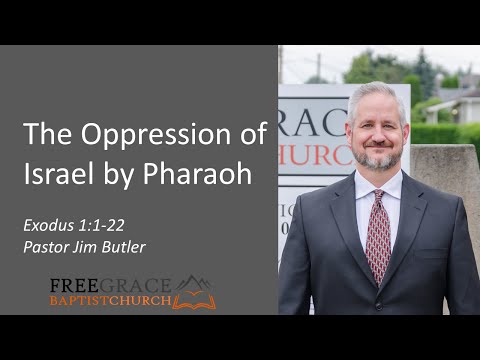
The Oppression of Israel by Pharaoh
Exodus 1 records the escalating oppression of Israel in Egypt — from the rise of an ignorant pharaoh, through forced labor, to an explicit policy of infanticide targeting Hebrew male infants. This exposition traces the passage in two movements: the connection between Exodus and the Abrahamic promises of Genesis, and the progressive stages of Pharaoh's tyranny, culminating in a national decree of genocide. The Hebrew midwives Shiphrah and Puah are held up as models of God-fearing civil disobedience, and the whole chapter is read typologically, anticipating the greater deliverance wrought through Moses and ultimately through the seed of Abraham, Jesus Christ. The congregation is called to imitate the courage of the faithful — to obey God rather than men in whatever sphere God has placed them.

The Faithful Christian Mother
Proverbs 31:28–30 presents the faithful Christian mother not merely as a moral exemplar but as a woman whose fear of the Lord is itself the fruit of sovereign grace — a grace Jeremiah 32 promises God will plant in the hearts of his covenant people. The sermon works through four aspects of the Christian mother's calling: her condition before God, her influence over her children, her God-given authority over them (rooted in the fifth commandment), and her fourfold responsibility to instruct, to set an example, to discipline, and to love. Mothers are urged to press law and gospel upon their children tirelessly, to embrace corporal and verbal discipline without apology, and to find their ultimate confidence not in their own faithfulness but in Christ, the stellar Savior, whose life, death, and resurrection is the only ground of acceptance before God.
Of Adoption
Adoption into the family of God is a sovereign act of grace grounded entirely in union with Christ and received only by those who are justified. Drawing on 1689 London Baptist Confession chapter 12, this exposition distinguishes the creational sense in which all men are God's offspring from the redemptive grace of adoption that belongs to the justified alone. The benefits of adoption — inclusion in God's family, the Spirit of adoption, boldness of access to the throne of grace, God's fatherly pity, protection, provision, discipline, and the inheritance of everlasting salvation sealed by the Holy Spirit — are unfolded through an extensive range of Scripture passages. Adopted sons and daughters are called to walk in love, light, and wisdom, resting in the indicative of the cross as the foundation for all obedience.

The Bread of Life Discourse, Part 4
John 6:48–59 brings the Bread of Life discourse to its conclusion, with Christ pressing upon unbelieving hearers the absolute necessity of eating His flesh and drinking His blood — a sustained metaphor for saving faith in His atoning sacrifice. The sermon demonstrates that this language is not eucharistic or literal but is the equivalent of coming to, receiving, and believing on Christ as the one who gives His flesh for the life of the world. The exposition draws out five doctrines of grace embedded in the discourse — total depravity, unconditional election, particular redemption, irresistible grace, and the preservation of the saints — and closes by tracing the glory of Christ seen in the incarnation, His power to save, His divine origin, and His patient mercy in repeating the same call to faith before a rejecting audience.
The Ministry of the Holy Spirit, Part 2
Ephesians 1:13–14 presents the Holy Spirit as both the seal and the guarantee of the believer's inheritance, grounding the security of salvation not in human performance but in the inseparable operations of the triune God. The sermon traces the instrumentality of the word of truth — showing that sinners must hear the gospel before they can believe — and then expounds the sealing of the Spirit as authentication, ownership, and security. The guarantee of the Spirit is the first installment of a heavenly inheritance that awaits the full redemption of the purchased possession at the consummation of the age. Believers are therefore urged to rest their assurance in the Father who chose, the Son who redeemed, and the Spirit who seals and guarantees.

The 9th Commandment, Part 1/2
The ninth commandment, 'You shall not bear false witness against your neighbor' (Exodus 20:16), extends far beyond the courtroom to govern all speech — forbidding perjury, lying, slander, gossip, and talebearing. Drawing on the Mosaic law, the Wisdom literature, the Gospels, and the Epistles, this study traces how Scripture consistently condemns every form of false speech as an assault on the image of God, the stability of society, and the character of God himself, who is truth and cannot lie. The passive reception of gossip is indicted alongside its active propagation, and hearers are called to close their ears to talebearers as firmly as they close their mouths to speaking falsehood.
Clip: Theology is crucial for every church and believer
Theology proper — the knowledge of who God is as Father, Son, and Holy Spirit — is not an academic luxury but the essential foundation of Christian life, worship, and witness. This sermon clip from an exposition of Ephesians 1:3–14 argues that the church's tendency to rush past doxological passages to practical ethics has left believers spiritually thin, prone to a mercenary relationship with God rather than one grounded in the infinite riches of his grace. The preacher calls the congregation to disciplined study of the Trinity, warning that without it believers become vulnerable to ancient heresies and lose the impetus to proclaim Christ to a lost world.

The 8th Commandment, Part 2 & Economic Theory
The Eighth Commandment's prohibition against theft carries positive moral obligations — diligent labor, charitable giving, and biblical contentment — and provides the scriptural framework for evaluating economic and political systems. Drawing on the Mosaic law, the apostolic letters, and historical narrative, the sermon argues that socialism and communism are founded upon institutionalised theft and therefore stand under divine condemnation, while capitalism, for all its imperfections, respects the God-given right to private property. Israel's demand for a king in 1 Samuel 8 and Ahab's seizure of Naboth's vineyard in 1 Kings 21 are presented as biblical case studies in governmental confiscation. Hearers are exhorted to cultivate contentment, labor faithfully, give charitably, and judge all economic theory by the standard of Exodus 20:15.

The Redemptive Work of the Son, Part 2
Ephesians 1:8–12 grounds the individual believer's redemption within a cosmic divine purpose: God's wisdom in the plan of salvation maintains all his holy perfections without compromise, the mystery of his will now openly revealed in the gospel calls sinners from every tribe and nation, and all things will be recapitulated — gathered up and set in order — under the lordship of Christ at his return. The inheritance of the elect is secured by predestination, not by human performance, so that the redeemed exist 'to the praise of his glory' — as a trophy case of grace before angels and the entire created order.

The Bread of Life Discourse, Part 2
John 6:35–40 presents Christ as the Bread of Life whose identity, sovereignty, and redemptive mission are inseparable. The sermon expounds three movements in the text: Christ's self-identification as the Bread of Life with its attendant promise that those who come to Him will never hunger or thirst; the declaration of divine sovereignty in verse 37, grounding the certainty of salvation in the Father's eternal gift of a people to the Son; and the revelation of the Father's will in verses 38–40, encompassing the Son's mediatorial mission, the preservation of all given to Him, and the call to every sinner to see the Son in the preaching of the Word and believe. The doctrines of grace — total depravity, unconditional election, definite atonement, irresistible grace, and the perseverance and preservation of the saints — are shown to arise directly from the text, and the sermon closes by pressing the free offer of the gospel against both Arminian uncertainty and hyper-Calvinist paralysis.

The Great Commission
The Great Commission in Matthew 28:16–20 is grounded in the absolute authority of the risen Christ, who possesses all power in heaven and on earth and commissions His church to make disciples of all nations. The passage contains four grammatically imperatival commands — going, making disciples, baptizing, and teaching — each examined for its precise theological and ecclesiological force. Believers' baptism by immersion follows upon credible profession of faith, not the reverse, and the Trinitarian formula of baptism grounds the church's confession of one divine essence in three persons. The sermon closes by situating the Great Commission within the full passion narrative: the life, death, and resurrection of Christ are themselves the content the church is sent to proclaim, and Christ's omnipotence and omnipresence are the twin assurances that the commission will not fail.

The Introduction to Ephesians
Ephesians 1:1–2 introduces one of the richest doctrinal letters in the New Testament canon, and this sermon surveys the authorship, historical context, and theological purpose of the epistle before examining Paul's greeting to the saints. The apostle's self-identification as one sent by Christ 'by the will of God' grounds his authority not in self-appointment but in sovereign divine commission, while his description of the recipients as 'saints' and 'faithful in Christ Jesus' defines sainthood in purely biblical terms — all who are justified by grace alone through faith alone in Christ alone. The sermon traces Paul's founding ministry in Ephesus through Acts 18–19, showing how the gospel's triumph over witchcraft, idolatry, and the cult of Diana provides the backdrop for the letter's emphasis on Christ's supremacy over all powers. The epistle is previewed as a two-part structure — doctrinal foundation (chapters 1–3) followed by practical application (chapters 4–6) — aimed at grounding believers in both the indicatives and imperatives of redemption.

The 6th Commandment -
Exodus 20:13 — 'You shall not murder' — is one of the briefest commands in the Decalogue, yet it carries profound theological and legal weight. This expository Bible study examines the precise Hebrew terminology that distinguishes murder from other forms of killing, establishes the internal disposition (hatred, unrighteous anger, character assassination) as equally condemned by the sixth commandment alongside the external act, and then surveys three exceptions to the prohibition: capital punishment, just war, and self-defense. Each exception is grounded in both Old and New Testament texts, with sustained attention to the Noahic Covenant, Romans 13, and Exodus 22, demonstrating that the civil magistrate's sword is a God-ordained instrument of justice rather than a violation of the commandment.

The Denial of the Resurrection
Matthew 28:11–15 records the fabrication of the lie that Christ's disciples stole his body — the original counter-narrative to the resurrection. This sermon exposes the willful unbelief of the Jewish religious leaders, tracing their conspiracy as one episode in a sustained, devil-driven war against the truth of the gospel. The implausibility of the theft narrative is examined on apologetic grounds, and the sermon closes by contrasting the Counter Great Commission of bribe-funded deception with the Great Commission of Christ's abiding-presence-powered truth.

The 5th Commandment
Exodus 20:12, the fifth commandment to honor father and mother, stands as the first commandment of the second table of the law and governs the entire structure of human authority relations — in the family, the church, the workplace, and the civil commonwealth. The command's scope extends beyond parent-child dynamics to all lawful superior-inferior relationships, a point the Westminster Larger Catechism makes explicit. The sermon traces the commandment's explanation, scope, and sanctions through the Old Testament case laws, the prophets, and the New Testament vice lists, before treating the covenant promise of longevity as a general principle of divine providence rather than an unconditional guarantee. The application presses parents to discipline their children by word and rod, warns of the social consequences of failing to do so, and qualifies submission to authority where superiors command sin.

The Wisdom of Little Things
Proverbs 30:24–28 presents four creatures — ants, conies, locusts, and a spider or lizard — each marked by inherent weakness yet possessing a compensatory wisdom that enables them to thrive. Expounding Agur's numerical proverb, this sermon draws out four corresponding virtues for the people of God: industry in preparation, caution before danger, unity in cooperation, and persistence under adversity. Both temporal and spiritual dimensions of each lesson are developed — from Sabbatarian labor ethics and self-defense to readiness for the day of judgment and the endurance of the Christian race. The whole is gathered under a call to honest self-awareness: to know one's limitations, refuse indolence and complaint, and by grace overcome through wisdom.