
Scripture
Acts
159 sermons

The Conversion of Lydia

Acts 16:6–15 presents the Macedonian call and the conversion of Lydia as twin demonstrations of divine sovereignty in the advance of the gospel. The Holy Spirit's redirection of Paul's itinerary, the night vision, and the sovereign opening of Lydia's heart at the Philippian riverside together show that gospel missions proceeds by God's appointment, not human initiative or chance. Lydia's conversion illustrates the full ordo of grace: effectual calling, forgiveness in Christ's blood, and the imputation of his righteousness received by faith alone — all confirmed outwardly in her immediate baptism and hospitality. The sermon presses the church to embrace both the means of gospel preaching and confidence in God's sovereign grace as the only ground of missionary hope.

The Mission and Ministry of the Church
What is the mission and ministry of the church, and how does the apostolic pattern in Acts 2 define both? This sermon works through Acts 2:22–42, showing that the church's mission is the proclamation of Christ — his life, atoning death, resurrection, and exaltation — accompanied by the killing work of God's law that convicts sinners of their guilt and drives them to the Savior. The ministry that follows is shaped by the four marks of the early church in verse 42: steadfast continuance in the apostles' doctrine, fellowship, the breaking of bread, and prayer — the simple means by which God feeds his blood-bought people.
Kept By The Power Of God
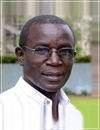
Acts 27:39–28:16 records the final leg of the Apostle Paul's journey to Rome — shipwreck, a viper's bite on the beach at Malta, miraculous healings, and at last the arrival that God had promised. The central question the passage forces upon every hearer is whether God keeps His promises when His servants suffer. Drawing on Ecclesiastes 9, John 9, and Luke 13, the sermon demonstrates that calamity falls on the righteous and the wicked alike without distinction, and that the right response to suffering is not to identify whose sin caused it but to seek God's glory in it. The believer's ground of confidence is 1 Peter 1:5 — that the people of God are kept by His power through faith, and that the same sovereign purpose which brought Paul safely to Rome will bring every trusting soul to its appointed end.

The Salvation of Sinners on Pentecost
Peter's sermon on the day of Pentecost (Acts 2:22–42) declares the life, death, resurrection, and exaltation of Jesus Christ as the exclusive ground of salvation, and calls sinners to repentance and faith. The sermon examines what genuine repentance means — a change of mind inseparable from faith, not a prior moral reformation — and argues that baptism is the sign of what God has already accomplished internally, not the instrument of forgiveness. Acts 2:39 is addressed directly against paedobaptist appeals, with the promise of the Spirit shown to belong to all who are effectually called, not to the physical infants of believers. The sermon closes with an exhortation to follow the Pentecost pattern: preach the gospel, baptize disciples, and teach them in the church.

The Baptism of Saul of Tarsus
The baptism of Saul of Tarsus in Acts 9:17–25 demonstrates the proper order of Christian baptism: conversion precedes the ordinance, which then publicly marks the believer as a disciple of Christ. The passage is treated as a direct answer to Stephen's dying prayer in Acts 7:60, with Saul's transformation from chief persecutor to chief preacher serving as a vivid display of sovereign, redeeming grace. The sermon draws out three observations from Saul's early ministry — the immediacy, the effects, and the hostility of his preaching — and closes with the baptism of three new believers, each of whom gives a brief testimony of their own conversion.

The Martyrdom of Stephen
Acts 7:54–8:1 records the martyrdom of Stephen, the first Christian martyr, whose death exposes the murderous hatred that unbelieving Israel bore toward the Messiah and those who bore witness to Him. Standing alone before the Sanhedrin, Stephen receives a vision of the glory of God and the Son of Man standing at the right hand of the Father — confirming his theology of temple, rebuking his executioners, and manifesting the presence of the triune God with His servant in extremity. His dying words, mirroring Christ's own prayers from the cross, demonstrate that true temple worship — the meeting of God and sinners in prayer and forgiveness — is found not in any physical structure but in the Lord Jesus Christ. The passage calls believers to theological preparedness, courageous witness, and dependence on the triune God in the face of opposition, however severe.

The Ministry in Lystra
Acts 14:8–18 presents Paul and Barnabas in Lystra, where the healing of a man crippled from birth provokes the surrounding pagans to identify the apostles as Zeus and Hermes come in human form. Paul's corrective address to the Lystrans teaches the non-divinity of creatures and, by implication, the sharp ontological distinction between the living God and all that he has made. The study moves from the healing account into a substantial exposition of divine impassibility and simplicity, grounding those doctrines in the phrase 'of like passions' and tracing them through the confession, Scripture, and the Reformed theological tradition.

The Ministry in Iconium, Part 2
Acts 14:1–7 records the apostolic ministry in Iconium: bold gospel preaching met by coordinated Jewish opposition, a divided city, a violent plot, and a strategic withdrawal to Lystra and Derbe. This exposition traces the pattern of persistent opposition to the gospel across Acts and the Old Testament, establishing that persecution is not an aberration but the ordinary condition of faithful gospel ministry. The sermon draws four conclusions: the inevitability of persecution for godly living, the perseverance required of gospel ministers, the wisdom to know when to stay and when to flee, and the indispensability of the Holy Spirit for any effectual proclamation of the Word.
The Ministry in Iconium, Part 1
Acts 14:1–7 records the ministry of Paul and Barnabas in Iconium during the first missionary journey, and this exposition focuses on God's blessing in verse 1 — specifically the sovereignty of God in salvation and the instrumentality of gospel preaching. Drawing on Acts 13:48, Acts 16:14, Romans 10, 1 Corinthians 1, and 2 Timothy 4, the sermon argues that while God alone opens hearts, He ordains the foolishness of preaching as the ordinary means of saving sinners. The sermon closes by examining the relationship between faith and repentance in Acts, contending that the two are inseparable sides of the same coin and that repentance must never be preached as a work the sinner performs before coming to Christ.

Paul in Athens
Paul's encounter with the philosophers and council of Athens in Acts 17:16–34 exposes the persistent and universal nature of idolatry, the sufficiency of general revelation to render all men without excuse, and the necessity of special revelation for salvation. The sermon traces Paul's Mars Hill address to show how the apostle grounds his proclamation in the doctrines of creation, providence, and divine aseity before pressing the call to repentance and warning of coming judgment. Where idolatry blurs the Creator-creature distinction, the gospel restores it — and the varied responses of the Athenians (mockery, curiosity, and saving faith) remind the church that conversion belongs to the Spirit of God, not to the eloquence of the preacher.
The Ministry in Pisidia Antioch
Paul's evangelistic address in the synagogue at Pisidia Antioch reaches its climax in Acts 13:38–43 with two inseparable gospel blessings: the forgiveness of sins and justification by faith alone apart from the works of the law. The sermon traces the inability of the Mosaic law to justify — not because the law is defective, but because sinners cannot render the perfect, entire, and perpetual obedience it demands — and shows how Christ's active and passive obedience supply precisely what the law exposes as lacking. The response of the Gentiles, who begged to hear the gospel again, is held up as a rebuke to any preaching that substitutes self-help or moralism for the proclamation of free acceptance with God through Christ alone.

2LCF Chapter 5 - God's Providence
God's providence, as defined in 2LCF Chapter 5, is not blind fate or impersonal chance but the active upholding, directing, disposing, and governing of all creatures and things by the good Creator, according to his infallible foreknowledge and the free and immutable counsel of his own will. The chapter roots providence in the eternal decree of Chapter 3 and traces its scope across four domains: the whole system in general, fortuitous events, the free actions of men, and even the sinful actions of men — the last illustrated supremely by the crucifixion of Christ in Acts 2:23, where God's absolute sovereignty and man's full culpability are held together without cancelling either. The session works through paragraph 1 of the chapter in detail, drawing on Psalm 73, Isaiah 46, Daniel 4, Acts 17, Proverbs 16 and 21, Ephesians 1 and 2, Philippians 2, and Genesis 50 to show that Scripture, not merely the confession, grounds these claims. Believers are exhorted to interpret every circumstance — including political wickedness and social evil — through the axiomatic principle that God is good, while continuing to pray, preach the gospel, and live according to God's revealed will rather than retreating into fatalism.

The Apostolic Sermon
Peter's sermon on the day of Pentecost, recorded in Acts 2:14–41, is the first apostolic proclamation of the risen Christ, and it follows a carefully constructed argument: correcting a false accusation, demonstrating from Old Testament Scripture who the Messiah is, and confronting the hearers with their guilt before the exalted Lord. The sermon examines how Peter builds his case through the life, death, resurrection, and ascension of Christ, drawing on Joel 2, Psalm 16, and Psalm 110 to show that every stage of Christ's humiliation and exaltation was foreordained. The hearers' anguished question — 'What shall we do?' — is answered with a call to repentance, faith, and baptism, which Peter grounds not in human decision alone but in the sovereign, effectual call of God. The application presses hearers to submit to Christ as Lord, to feel the weight of sin's horror, and to follow repentance and faith with public baptism and membership in the local church.

The Blessings of the Ascended Christ

The ascended and glorified Christ actively dispenses blessings to his church from the right hand of the Father. Expounding Acts 2:22–47, this sermon traces three categories of those benefactions: his proclamational gifts (the gift of preachers, the preaching of the Word, and the Spirit's empowering of that preaching), his salvific gifts (effectual calling and the forgiveness of sins), and his ecclesiastical gifts (the creed of the church, the building and unity of the church, the gathering around apostolic doctrine, and the new covenant ordinances of baptism and the Lord's Supper). Believers are exhorted to pray for Spirit-empowered preaching, to attend diligently upon all the appointed means of grace, and to find their unity in the objective content of Christian confession rather than in secondary things.

The Ministry of Paul in Ephesus
Acts 19:1–10 presents what appears to be a re-baptism of John's disciples by Paul, but a careful reading of the passage's punctuation and structure reveals that verses 4 and 5 record what Paul said — a summary of John's baptism — while verse 6 records what Paul did: lay hands on these men to confer the extraordinary gifts of the Holy Spirit. John's baptism was Christian baptism, requiring repentance and faith in Christ Jesus, and these disciples had already received it. The extraordinary sign gifts of tongues and prophecy that accompanied the Spirit's coming in Acts 2, 8, 10, and 19 were revelatory gifts suited to the first-century church's founding mission and are not normative patterns for all believers in subsequent ages.

The Cross of Christ in the Book of Acts
The cross of Christ is not a threshold event left behind at conversion but the perpetual heartbeat of Christian life and worship. Working through the theme of the cross as it appears across the Book of Acts, this sermon traces six dimensions of the cross under six headings — divine purpose, divine promise, divine providence, divine power, divine proclamation, and divine proficiency — demonstrating that the crucifixion was planned in eternity, foretold throughout redemptive history, carried out through providential means, accomplished by the God-man himself, heralded by apostolic messengers, and effectually applied to all whom the Father gave the Son. The central application is a call to restore the art of marveling in the cross daily, not only on the Lord's Day, as the only fitting response to the reality that the God of heaven and earth took human flesh to bring many sons to glory.

The Apostle in Pisidian Antioch
Paul's sermon in the synagogue at Pisidian Antioch (Acts 13:38–43) proclaims two inseparable blessings at the heart of the apostolic gospel: the forgiveness of sins and justification by faith alone in Christ alone. The law of Moses exposes the sinner's total inability to meet God's demand for perfect righteousness, while Christ's life of obedience, substitutionary death, and resurrection supply both the pardon and the imputed righteousness the guilty sinner needs. The sermon concludes with a warning drawn from Habakkuk 1:5 against despising this gospel, and with the Gentiles' eager reception of the word as a pattern for which the church ought to pray in every generation.

The Conversion of the Ethiopian Eunuch
Acts 8:26–40 records the conversion of an Ethiopian eunuch whose exclusion from the assembly of God under the Mosaic order (Deuteronomy 23) is overturned by the new-covenant fulfillment of Isaiah 56, as God sovereignly directs Philip to him on the Gaza road. The sermon traces three movements: the divine initiative behind the contact, the Christ-centered content of the communication from Isaiah 53, and the confession and baptism that mark the conversion itself. Throughout, the preacher insists that the eunuch's deepest problem was not his ethnicity or his condition but his sin, and that the only remedy—then as now—is faith in the Lord Jesus Christ, whose righteousness is received by grace through faith alone and sealed in believers' baptism by immersion.

The Practice of the Early Church
Acts 2:41–47 describes the irreducible practices of the early church — the apostles' doctrine, fellowship, the breaking of bread, and prayer — and this sermon argues that those practices are not merely historical description but prescription for the church in every age. The gospel that created the church (sovereign grace working through proclamation to bring dead sinners to faith and repentance) also defines what the church does when it gathers. The sermon presses both the unconverted (to seek the Lord Jesus Christ in whom alone there is forgiveness and an imputed righteousness) and the congregation (to continue steadfastly in the ordained means of grace rather than chasing experience, ecstasy, or entertainment).

The Martyrdom of Stephen
The martyrdom of Stephen in Acts 7:54–60 displays the triune God sustaining, comforting, and ultimately receiving His servant in the moment of violent death. The sermon works through three movements: the blessedness of Stephen as he receives a vision of the glorified Christ standing at the right hand of the Father; the murderous rage of the Sanhedrin who stone him outside the city in lawless contempt of Roman authority; and Stephen's dying words — echoing the Savior's own cross-utterances — as he commends his spirit to Christ and intercedes for his killers. The conversion of Saul of Tarsus is set before the congregation as the answer to that dying prayer, a monument to sovereign grace, and the entire passage is pressed home with the comfort of Heidelberg Catechism Question 1: Christ alone is the believer's comfort in life and in death.

CLIP: What is your only comfort in life and death?
Acts 7:60 records Stephen's death, and this clip draws out what his martyrdom demonstrates: dependence on the triune God, courage in the face of violent death, and a deliberate imitation of Christ's own words from the cross. The exposition closes with Heidelberg Catechism Question 1 — 'What is your only comfort in life and in death?' — as the doctrinal frame for why the people of God die well: they belong, body and soul, to their faithful Savior Jesus Christ, who has paid for their sins, broken the tyranny of the devil, and by his Spirit assures them of eternal life.

The Arrest of Peter and John
Acts 4:1–12 presents the arrest of Peter and John by the Sanhedrin and Peter's Spirit-filled defense before the council, in which he declares Jesus of Nazareth — crucified and risen — as the sole name under heaven by which men must be saved. The sermon traces two movements: the sovereign advance of God's word despite the imprisonment of its preachers (the number of believers growing to five thousand), and the christological and soteriological content of Peter's address, which grounds salvation exclusively in Christ's active obedience, atoning death, and resurrection. The stone rejected by the builders has become the chief cornerstone, and those who refuse him will ultimately be crushed by him. The sermon applies these realities to the perpetual persecution of the church, the exclusivity of the gospel, and the urgent call to believe on Christ alone for salvation.

The Ministry of Paul in Corinth
What does faithful gospel ministry look like when met with sustained opposition, rejection, and fear? Expounding Acts 18:1–11 within Paul's second missionary journey, this sermon traces four movements: Paul's strategic arrival in Corinth, his testimony in the synagogue, the fierce Jewish opposition and his response, and the Lord's night vision that commands him to speak because God already has a people in the city. The sermon argues that sovereign election and human culpability stand together — the God who predestines the elect also holds every rejector accountable for his own blood. A closing application presses believers toward faithful gospel proclamation, the planting of churches, and the catechesis of covenant children as genuine instruments of the effectual call.

The Prophecy Concerning the Resurrection
Peter's Pentecost sermon in Acts 2:24–32 anchors the resurrection of Jesus Christ not in apostolic invention but in the prophetic word of Psalm 16, written by David nearly a millennium before the event. Working through Peter's appeal to and interpretation of that psalm, this exposition traces four aspects of the Messiah's disposition before His death — His focus, joy, confidence, and dependence upon the Father — and demonstrates that David, writing as a prophet under the Davidic covenant of 2 Samuel 7, could not have been describing his own resurrection since his tomb remained occupied. The resurrection is therefore the Father's public vindication that divine justice has been fully satisfied by Christ, the ground of the believer's justification, and the fulfillment of the Davidic covenant promise that one from David's line would build an eternal house for God. The sermon closes by calling sinners — however guilty — to call upon the risen Lord Jesus, the one on the middle cross who alone can grant everlasting life.
Clip: The Hyper-Calvinism Lie
Peter's Pentecost sermon in Acts 2 simultaneously affirms God's comprehensive sovereignty over the crucifixion and demands personal repentance from those who crucified Christ. Hyper-Calvinism distorts both truths by collapsing human responsibility into divine decree, leaving sinners with no reason to repent. The sermon argues that Scripture holds divine sovereignty and human accountability together without theodicy or apology, and calls every hearer to repent and believe the gospel.
The Prayer of the Persecuted Church
When the early church faced arrest and official prohibition of gospel preaching, its first instinct was corporate prayer — not political agitation or fearful compliance. This exposition of Acts 4:23–31 traces the structure of that prayer: an invocation of God as sovereign Creator, an exposition of Psalm 2 applied to the conspiracy against Christ and his people, and a pointed supplication not for safety or comfort but for boldness to declare the word. The sermon calls the contemporary church to the same God-centred prayer, understanding persecution as something always beneath the sovereign hand of God, and faithfulness in proclamation as the unchanging vocation of every Christian steward.
Clip: God isn't crippled, hindered, silent, or absent
The early church in Acts 4:23–31 prayed not as though God had been caught off guard by persecution, but as though the God who created and governs all things remained sovereignly in control of even the threats of the Sanhedrin. This clip draws out the church's invocation of divine sovereignty as the theological ground of confident petition: to pray is to address the one with absolute ability to fulfill what he has promised and purposed. The application is direct — believers do not come to a God who is crippled, hindered, or absent, but to the sovereign Lord who holds the hearts of all men in his hand.

The Conversion of the Philippian Jailer
Acts 16:16–34 presents the arrest and imprisonment of Paul and Silas as the God-ordained means by which a Roman jailer was brought to saving faith in Jesus Christ. The sermon traces two movements: the exorcism of a python spirit that provoked false charges and a severe beating, and the subsequent earthquake and gospel conversation that issued in the jailer's conversion and household baptism. Paul and Silas's midnight prayers and hymns amid unjust suffering demonstrate that Christ is worth all suffering, while the jailer's question — 'What must I do to be saved?' — receives the apostolic answer: believe on the Lord Jesus Christ. The sermon closes with three baptisms that embody the same gospel the Philippian jailer heard, illustrating that believers' baptism by immersion is the fitting public sign of union with Christ in His death and resurrection.
The Appointment of the Seven
Acts 6:1–7 records the Jerusalem church's response to a logistical crisis that threatened to pull the apostles away from prayer and the ministry of the Word. The passage establishes the diaconate in seed form: men of good reputation, full of the Holy Spirit and wisdom, appointed to serve the practical needs of the congregation so that those charged with preaching and teaching may be undistracted. Expounding 1 Timothy 3:8–13 alongside the Acts text, this sermon examines the qualifications, function, and appointment of deacons, and the connection between a biblically ordered church — with both elders and deacons — and the advance of the gospel.

The Earthly Temple in Stephen's Defense
Stephen's defense before the Sanhedrin in Acts 7:44–50 is not an attack on the temple but a demonstration that the Sanhedrin itself has misunderstood it. Working through the tabernacle, David's desire, Solomon's building, and Isaiah's oracle, Stephen shows that Israel's entire sacrificial and dwelling-place theology was typological — pointing forward to the Lord Jesus Christ as the true temple in whom God dwells with his people. The sermon argues that the dispensational expectation of a rebuilt physical temple in Jerusalem represents a retreat from fulfilled typology, and calls hearers to receive Christ as the antitype of all that the earthly sanctuary signified.