

Jun 14, 2024

Jonah 4 exposes the problem of unrighteous anger with God's sovereignty, as the prophet sulks over the mercy God shows to Nineveh — the very enemies he wished to see destroyed. The passage sets God's character as the gracious covenant Lord, slow to anger and abounding in lovingkindness (Exodus 34), against Jonah's petty double standard: grieving more over a withered plant than over the souls of 120,000 people. God's gentle rebuke of Jonah magnifies rather than diminishes his sovereign mercy, which extends not merely to Israel but to the nations — a Gentile foretaste ultimately fulfilled in the proclamation of the gospel through Jesus Christ. The sermon calls hearers to repent of covetous anger at God's goodness toward others, and to trust that the same sovereign God who pitied Nineveh has pitied sinners in Christ Jesus.

Live Stream - July 07, 2024

John 15:1-4 presents Christ as the True Vine, his Father as the vine dresser, and believers as the branches — a metaphor that directly challenges both dispensationalism and the paedobaptist reading of this passage. The sermon argues that the unfruitful branches of verse 2 refer primarily to apostate old-covenant Israel being cut off from the True Vine, not to externally-connected members within the New Covenant, and that Jeremiah 31's description of the New Covenant as inviolable and universally regenerate among its members forecloses any category of covenant members who lack saving faith. For the believer, the pruning work of God the Father as vine dresser is a mark of covenant love — painful at times, but purposeful in conforming the branches to the image of the Son.

The Atonement at Gibeah
The atonement made at Gibeah — where seven descendants of Saul were executed to satisfy the blood-guilt incurred by Saul's slaughter of the Gibeonites — is expounded as a typological anticipation of penal substitutionary atonement. David's inquiry of God, the Gibeonites' insistence that no silver or gold could ransom a murderer (Numbers 35:33), and the hanging of the seven men before the Lord all illustrate that atonement is the satisfaction of divine justice through blood. The sermon argues that Rizpah's grief beside the bodies of her sons is a solemn, sin-cursed scene designed to strip away abstraction and force the reader to feel the horror of what atonement costs. Only when the gore of Gibeah is taken seriously does Golgotha regain its proper weight: Christ, the greater Son of David, stood in the place of his people to quench the wrath of God and secure the covenant safety of all whom the Father gave him.

2LCF Chapter 19 - Of the Law of God

2 London Baptist Confession of Faith Chapter 19 sets forth a comprehensive doctrine of the law of God, tracing its origin in the covenant of works given to Adam, its threefold division into moral, ceremonial, and judicial law under the Mosaic economy, and its continuing role in the life of the New Covenant church. The moral law, rooted in creation and specially revealed at Sinai in the Ten Commandments, retains its binding force for all persons, while the ceremonial law finds its divinely designed terminus in the person and work of Christ, and the judicial law expired with the dissolution of the Israelite state. The sermon closes with a christological summary: Christ alone actively obeyed the whole law in the room and stead of the elect, bore the law's curse in his passive obedience, and now governs the hearts of his people by his Spirit according to that same law.

The Vine, the Vinedresser, and the Branches
John 15:1–8 presents Christ as the true vine, his Father as the vinedresser, and his people as the branches — a passage that answers the question of who constitutes the true Israel of God. The sermon argues from Jeremiah 31 and the New Covenant's own terms that the New Covenant knows no externally connected members, and that the unfruitful branches of verse 2 refer to apostate Old Covenant Israel and to those who counterfeit saving faith, not to baptized infants as some paedo-baptist readings propose. The pruning of living branches is shown to be the Father's gracious work of conforming his people to the image of his Son through affliction and discipline. The sermon closes with a double application: unbelievers are called to look to Christ in faith, and believers are urged to receive God's chastening as the evidence of his love and the means of their growth in grace.

Ask FGBC #16: What is Free Will?
Free will is affirmed in Reformed Baptist theology, but the crucial question is not whether man has a will, but what that will is capable of choosing given man's location on the continuum of creation, fall, grace, and glory. The 1689 London Baptist Confession of Faith (chapters 3 and 9) teaches that God endows man with a will free from coercion, yet after the fall that will is bound toward sin and incapable of inclining toward what is spiritually good. Regeneration liberates the will, and so evangelism does not appeal to free will but to God's free grace, trusting him to open deaf ears and hardened hearts.
Ask FGBC #17: What does it mean to repent and believe?
Repentance and faith are two sides of the same coin in the gospel call, yet they are not equals: the principal act of conversion is faith, and justification is by faith alone apart from works. Repentance, properly understood, is a change of mind concerning sin — not a moral clean-up prerequisite — and is itself a gracious gift granted by God (Acts 11:18). The elements of the ordo salutis (regeneration, repentance, faith, justification, adoption, the beginning of sanctification) occur simultaneously, not sequentially, and neonomianism is identified as a live danger whenever repentance is turned into a condition the sinner must satisfy before coming to Christ.

Live Stream - June 30, 2024
Jesus' declaration 'I am the True Vine' (John 15:1a) is not merely a pastoral metaphor but a covenantal claim rooted in the entire sweep of redemptive history. Drawing on biblical and covenant theology, the sermon traces how old covenant Israel was repeatedly identified as God's vine in the Psalms and prophets — a vine that bore wild grapes, rejected the servants, and ultimately crucified the Son — and argues that Christ as the last Adam and true Israel fulfills every obligation that Adam and Israel forfeited. The sermon then turns to the apostolic application: the Israel of God in the new covenant is the body of those united to Christ by faith, Jew and Gentile alike, with direct implications for how believers should understand modern geopolitics, dispensationalism, and the church's evangelistic obligation to ethnic Jews.

The Righteousness of David
David's declaration in 2 Samuel 22:21 — 'The Lord rewarded me according to my righteousness' — presents an apparent contradiction for anyone who knows his history of adultery, murder, and failure of justice in his own household. This sermon works through that tension by examining the theology underlying David's claim: his righteousness is not a personal moral achievement but the imputed righteousness of Christ received by faith alone, the same doctrine Paul draws from David's own Psalm 32 when arguing for justification in Romans 4. The sermon concludes with a call to imitate David not merely in doctrine but in appetite — in his fierce love for public worship, the means of grace, and the presence of God.
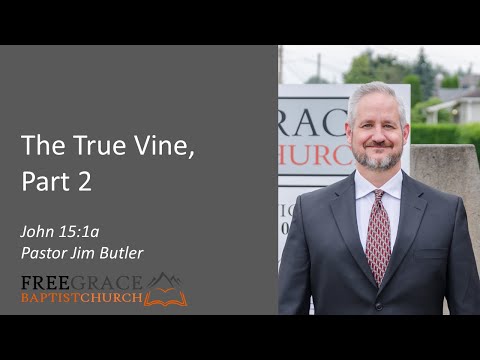
The True Vine, Part 2
Jesus' declaration 'I am the true vine' (John 15:1) is not a free-standing metaphor but the culmination of a redemptive-historical pattern running from Adam through Old Covenant Israel to the Last Adam. The sermon traces the vine imagery through the Psalter and the Prophets — Psalm 80, Isaiah 5, Jeremiah 2, Ezekiel 15 and 17 — to show that Israel was the vine God tended, judged, and finally condemned for covenant unfaithfulness. Christ as the true vine fulfills what both Adam and ethnic Israel forfeited, and those united to him by faith are therefore identified by the apostles as the Israel of God, the new covenant people who inherit all the promises. The sermon closes with a direct application: ethnic Jews today are to be called to repent and believe on Jesus Christ, not treated as a covenant people apart from faith in Him.

The True Vine
When Jesus declares 'I am the true vine' in John 15:1, he is not merely offering a pastoral metaphor — he is making a claim that draws together the entire sweep of Old Testament revelation. This sermon traces the two categories of 'I am' statements in John's Gospel, first the absolute 'I am' without a predicate (rooted in Exodus 3:14 and the Isaianic Yahweh-speeches), and then the seven predicative 'I am' statements, culminating in the vine. The second half sets that declaration in its biblical-theological frame: Old Covenant Israel was named God's firstborn son (Exodus 4:22), and Matthew's Gospel deliberately patterns the opening of Jesus' ministry — the flight to Egypt, the passage through water, the wilderness temptation — on Israel's national history, identifying Jesus as the true and obedient Israel who succeeds where Adam and Israel failed. The sermon calls hearers to believe on the one who says 'if you do not believe that I am, you will die in your sins,' and to worship him as the fulfillment of every covenant promise.

The Commission Given to Joshua
Joshua 1:1–9 records the divine commission given to Joshua upon the death of Moses — a commission built on four pillars: the reminder of God's covenant promise, the blessing of God's presence, the charge to courageous obedience, and the centrality of God's Word. God's appointment of Joshua as Moses' successor demonstrates that sovereign providence works through human instruments, yet is never bound to them; the faithfulness of God outlasts every leader. The sermon draws a direct line from the conquest commission to the Great Commission of Matthew 28, arguing that Christ's promised presence with His church is the only sufficient ground for courage and faithfulness in gospel ministry.

2LCF Chapter 16 - Of Good Works
Good works are only such as God has commanded in His holy word, proceeding from a heart purified by faith through the enabling power of the Holy Spirit — never the ground of justification, but the necessary fruit of it. This study of 2LCF Chapter 16 examines the definition, foundation, imperfection, non-meritorious nature, and acceptability of good works, set against Roman Catholic supererogation and any scheme that makes works a cause or increase of justification. Good works are accepted by God solely through union with Christ the mediator, and their purpose is the manifesting of thankfulness, the strengthening of assurance, the edifying of brethren, and the adorning of the gospel.

The Departure of Christ, Part 2
John 14:29–31 grounds the disciples' faith in Christ's predictive prophecy, his victory over the devil, and his loving obedience to the Father. Jesus announces his departure in advance so that when it comes to pass the disciples will believe — both that he is the object of saving faith and that he is the second person of the triune God. The cross simultaneously displays the Father's love for the world and the Son's love for the Father, and the resurrection and ascension secure every blessing the departing Christ promises his people. The sermon closes with a call to find stability not in practical strategies but in the knowledge of the triune God and the peace Christ himself gives by the Spirit.

The Ground of Christian Love
What is the ground and shape of the command to 'love one another fervently with a pure heart'? Expounding 1 Peter 1:22–25, this sermon works through three movements: the exhortation to fervent, sincere Christian love; the foundation of that love in the new birth wrought through the incorruptible Word; and the motivation for that love in the stark contrast between the transient glory of man and the enduring Word of the Lord. The sermon draws on 1 Corinthians 13 and Romans 13 to define love's character and content, and closes with the assurance that the divine promise sealed in the gospel is itself imperishable — and therefore the sufficient ground for fervency in loving the brethren.

Live Stream - June 9, 2024
John 14:28 — 'the Father is greater than I' — is one of the most frequently deployed anti-Trinitarian proof texts, yet its meaning is resolved by a hermeneutical principle the church has employed since Augustine: partitive exegesis, the practice of predicating statements of the one Christ according to either his divine or his human nature. This sermon works through the three movements of John 14:28–31 — the exhortation to rejoice at Christ's departure, the confirmation of the divine plan, and the expectation of triumph — demonstrating that the Father's greatness over the Son refers exclusively to Christ's assumed humanity and mediatorial office under the Covenant of Redemption, not to any inequality within the one divine essence. The congregation is exhorted to recover the confessional and creedal guardrails — the Nicene settlement, the Chalcedonian definition, and the Second London Confession — that protect Trinitarian orthodoxy, and to rest in the peace and Spirit Christ has sent to his people precisely because his departure leads to exaltation, intercession, and reign.

The Institution of the Lord's Supper
What does Christ accomplish at the Lord's Supper, and how does it connect to the Passover, the new covenant, and the future kingdom? Expounding Matthew 26:26–30, this sermon traces the institution of the supper through its Old Covenant setting in the Passover, the covenantal and sacrificial significance of the bread and cup, and the eschatological anticipation of the messianic feast. The sermon argues for a real but spiritual presence of Christ at the supper — against transubstantiation, consubstantiation, and bare memorialism alike — grounding this in the Spirit's mediating work. Throughout, the ordinance is presented as a means of grace that communicates the forgiveness of sins purchased through Christ's substitutionary, penal death for the many.

2LCF Chapter 15 - Of Repentance unto Life and Salvation
The 1689 London Baptist Confession of Faith, Chapter 15, treats repentance not as a human achievement that merits divine favor but as a sovereign gift granted by God in effectual calling, rooted in the covenant of grace, and ratified by the active and passive obedience of Jesus Christ. The chapter distinguishes saving repentance — an evangelical, Spirit-wrought change of mind toward sin — from both mere Judas-like sorrow and the moralistic performance of good works in place of bad. Five structural concerns of the chapter are examined in sequence: the place, necessity, outflow, duration and duty, and result of repentance, culminating in the assurance that no sin is so great as to bring damnation upon those who truly repent. Hearers are called to daily, particular repentance for known sins, to pray for strength and supplies of the Spirit, and to embrace the ministry of reconciliation as the abiding means by which God renews sinners and saints alike.

The Departure of Christ
John 14:28–31 presents Christ's departure not as cause for sorrow but as grounds for rejoicing, because it leads through the cross to his exaltation at the right hand of the Father. The sermon gives sustained attention to the clause 'my Father is greater than I,' defending Trinitarian orthodoxy against Arian misreading by deploying two hermeneutical guardrails: the consubstantiality of the divine persons (each having the whole divine essence undivided) and partitive exegesis (predicating statements of Christ according to whichever nature is in view). The Father is not greater than the Son in respect of the divine nature, but is greater with respect to the Son's assumed humanity and mediatorial office in the covenant of redemption. Believers are called to rejoice in Christ's departure, to stand in awe that the Spirit has been sent so they are not left as orphans, and to receive the peace Christ bequeaths as their stable foundation for mission.

The Ministry in Lystra
Acts 14:8–18 presents Paul and Barnabas in Lystra, where the healing of a man crippled from birth provokes the surrounding pagans to identify the apostles as Zeus and Hermes come in human form. Paul's corrective address to the Lystrans teaches the non-divinity of creatures and, by implication, the sharp ontological distinction between the living God and all that he has made. The study moves from the healing account into a substantial exposition of divine impassibility and simplicity, grounding those doctrines in the phrase 'of like passions' and tracing them through the confession, Scripture, and the Reformed theological tradition.

Wednesday Night Bible Study - The Ministry in Iconium, Part 2
John 14:25-27 presents Christ's final gifts to his disciples before his departure: the Holy Spirit and his peace. The sermon traces the procession of the Spirit from the Father through the Son, grounding the temporal mission of the Spirit at Pentecost in the eternal procession within the triune life of God, drawing on the Nicene Creed and the 1689 LBCF. The peace Christ bequeaths is distinguished from the world's counterfeit — objective, grounded in justification by faith, and subjectively appropriated through soteriology and theology proper — given precisely so that the disciples, and all who follow them in gospel ministry, would not be paralyzed by fear but would advance the kingdom with boldness.

The Blessing of Gospel Rest
Matthew 11:25–30 grounds the gospel invitation — 'Come to me, all you who labor and are heavy laden' — in the sovereign will of the Father and the mediatorial office of the Son, so that the call to rest is inseparable from the doctrines of election and definite atonement. Jesus thanks the Father for hiding these things from the self-wise and revealing them to babes, declaring that all sovereign authority over salvation belongs to Him as the God-man and mediator. The 'rest' He offers is not relief from physical toil but deliverance from the crushing burden of sin and the impossible demands of pharisaical religion, received through faith alone. Those who come to Christ in faith are also exhorted to take His yoke — the life of sanctification — which is not oppressive bondage but the glad obedience of those justified freely by grace.
The Gifts Given by Christ
John 14:25–27 presents two gifts Christ gives his disciples on the eve of his departure: the Holy Spirit and his peace. The sermon expounds the procession of the Spirit from the Father and the Son, the Spirit's specific work of teaching and bringing Scripture to remembrance in the apostles, and the distinction between Christ's objective, lasting peace and the transient peace the world offers. The practical weight falls on the call to displace carnal fear — which the sermon argues signals bad theology, lack of kingdom priority, and ultimately endangers the soul — with the peace that flows from knowing the triune God.

The Ministry in Iconium, Part 2
Acts 14:1–7 records the apostolic ministry in Iconium: bold gospel preaching met by coordinated Jewish opposition, a divided city, a violent plot, and a strategic withdrawal to Lystra and Derbe. This exposition traces the pattern of persistent opposition to the gospel across Acts and the Old Testament, establishing that persecution is not an aberration but the ordinary condition of faithful gospel ministry. The sermon draws four conclusions: the inevitability of persecution for godly living, the perseverance required of gospel ministers, the wisdom to know when to stay and when to flee, and the indispensability of the Holy Spirit for any effectual proclamation of the Word.

Live Stream - May 26, 2024
The regulative principle of worship requires that God be worshiped only as he has commanded in his written Word — nothing added, nothing taken away. This third message in a brief series grounds that principle in its covenantal context, tracing the moral obligation to worship from general revelation through the Mosaic economy to the New Covenant, and arguing that the abrogation of the old covenant removes its positive-law ordinances — temple, priesthood, sacrifice, incense — from legitimate New Covenant worship. The sermon concludes by distinguishing the unchangeable elements of New Covenant worship (prayer, singing, Scripture reading, preaching, and the sacraments) from variable circumstances, and by calling the congregation to hold those elements without addition or subtraction as the only worship the living God will accept.

2LCF Chapter 14 - Of Saving Faith
The 1689 London Baptist Confession chapter 14 ('Of Saving Faith') teaches that saving faith is entirely a divine gift, wrought by the Spirit of Christ through the ministry of the Word, and not a capacity native to fallen man. The chapter unfolds the origin, content, object, and victory of saving faith: its Trinitarian orientation in paragraph 2 (an expansion unique to the Baptist confession), its exclusive resting upon Christ alone for justification, sanctification, and eternal life by virtue of the covenant of grace, and its ultimate triumph despite weakness and assault. Believers are exhorted to attend faithfully to the ordained means of grace — Word, baptism, the Lord's Supper, and prayer — as the appointed channels through which faith is not only wrought but continually increased and strengthened.

The Blessing of Communion with God, Part 2
What does Jesus mean when he promises that the Father and the Son will come and make their home with the one who loves him and keeps his word (John 14:23)? This sermon works through seven observations on that promise, showing that the indwelling of Christ necessarily entails the indwelling of the entire triune God — Father, Son, and Holy Spirit — because the divine persons are inseparable in their operations. The sermon traces the biblical pattern of God dwelling with his people from Eden through the tabernacle and temple to the new covenant, and concludes that union with Christ is union with the triune God, which is both the chief blessing of salvation and the ground of the believer's worship.

The Regulative Principle of Worship, Part 3
Deuteronomy 12:32 commands that nothing be added to or taken from what God has appointed for worship — a principle this sermon grounds in covenant theology and traces from the moral demands of natural law through the abrogation of the Old Covenant into the simplicity of New Covenant worship. The shift from Old Covenant to New Covenant is not a loosening of God's requirements but a fulfilment: the ceremonial positive law governing tabernacle, priesthood, sacrifice, and feasts has been abrogated by Christ, leaving the New Covenant church with the elements Christ himself has appointed — prayer, singing, Scripture reading, preaching, and the sacraments. The elements-and-circumstances distinction closes the argument: only what the divine Lawgiver has commanded in the New Covenant may govern the church's worship, and nothing may be added or taken away.
The Ministry in Iconium, Part 1
Acts 14:1–7 records the ministry of Paul and Barnabas in Iconium during the first missionary journey, and this exposition focuses on God's blessing in verse 1 — specifically the sovereignty of God in salvation and the instrumentality of gospel preaching. Drawing on Acts 13:48, Acts 16:14, Romans 10, 1 Corinthians 1, and 2 Timothy 4, the sermon argues that while God alone opens hearts, He ordains the foolishness of preaching as the ordinary means of saving sinners. The sermon closes by examining the relationship between faith and repentance in Acts, contending that the two are inseparable sides of the same coin and that repentance must never be preached as a work the sinner performs before coming to Christ.
The Regulative Principle of Worship, Part 2
What authorizes the church to add, subtract, or substitute elements in corporate worship? Tracing the divine appointment of worship from Exodus and Leviticus through Deuteronomy 12:32 and into the books of Chronicles, this sermon demonstrates that Old Covenant Israel worshiped according to explicit divine command — not human creativity, cultural accommodation, or felt need. The same God who consumed Nadab and Abihu for offering strange fire, who filled Solomon's temple with his glory when worship was ordered according to his word, has not relaxed his standard in the New Covenant. The regulative principle is not a straitjacket but a guard against idolatry, and the New Covenant church is called to the same obedience: asking King Jesus what he has commanded, and doing that.