
Topic
Theology Proper
369 sermons · All topics

The Glory of the Father

John 17:1–5 records the opening of Christ's High Priestly Prayer, in which the incarnate Son petitions the Father to glorify Him in and through His approaching death, resurrection, and exaltation. The sermon expounds three grounds for that petition: the salvation of the elect, the accomplishment of redemption through Christ's active and passive obedience, and the restoration of the pre-incarnate glory to the God-Man. Central to the exposition is verse 3, where Christ defines eternal life as the knowledge of the only true God and Jesus Christ — a knowledge that necessarily issues in glorifying God, sustaining believers through trial, and grounding assurance not in personal performance but in the character and covenant of the triune God. Hearers are pressed to pursue that knowledge through the ordinary means of grace: the reading of Scripture, prayer, and faithful attendance upon the Word.
1 Samuel 1:19-2:11
Hannah's prayer in 1 Samuel 2:1–10 moves from personal thanksgiving for the birth of Samuel to a theologically rich confession of God's holiness, immutability, omniscience, and sovereignty. The prayer parallels Mary's Magnificat in Luke 1 and Psalm 113, demonstrating a consistent biblical pattern of rejoicing in the Giver rather than the gift, grounding praise in the attributes of God, and culminating in prophetic expectation of the Messiah's kingdom. The study draws out six responses the prayer demands of the believer: joy in God's presence, confidence in his rule, admiration of his attributes, humility before his omniscience, security in his immutability, and submission to his government.
Of Creation (4.1-3)

The doctrine of creation, as confessed in chapter four of the 1689 London Baptist Confession of Faith, encompasses far more than the sheer scale of the cosmos — it demands precise theological definition on every point from the time and agent of creation to its purpose and result. This study works through three sections of the chapter: the overview of creation (paragraphs on creation ex nihilo, the triune authorship, divine purpose, the full extent of all things visible and invisible, the literal six-day duration, and the verdict 'all very good'), the apex of creation (the constitution, identity, and integrity of man made in God's image in knowledge, righteousness, and true holiness), and the fulcrum of creation (the covenant of works in the garden as the hinge upon which God's redemptive purpose to save sinners by Christ Jesus turns). Creation is neither an emanation nor a reshaping of pre-existent matter, but a free act of the triune God out of nothing, ordered ultimately to the manifestation of his glory and the redemption of his elect to the praise of his glorious grace.
Of God's Decree (3.1-6)
God's decree — his eternal, free, and unchangeable foreordination of all things whatsoever come to pass — is grounded in his absolute sovereignty and is comprehensive in scope, extending to the free acts of men, chance occurrences, sinful acts, the affairs of nations, and the final destinies of both the elect and the reprobate. This confession-study exposition of 1689 London Baptist Confession Chapter 3 works through five aspects of the decree: its foundation in divine sovereignty, its inviolable and unfrustratable character, its comprehensive reach, its unconditional nature (contra Arminian foreseen-faith schemes and Molinist middle-knowledge frameworks), and its relation to redemption through election and reprobation. The decree of election terminates not upon election itself but upon the praise of God's glorious grace, while the decree of reprobation terminates not upon damnation itself but upon the praise of God's glorious justice. Listeners are called to rest in a God whose sovereign will is the first and final cause of all things, leaving nothing to chance or creaturely contingency.
Divine Impassibility (2LCF 2.1)
Divine impassibility — the classical Christian teaching that God does not undergo inner emotional changes of state, whether from without by his creatures or from within by himself — is the subject of this exposition of 2nd London Baptist Confession chapter 2, paragraph 1. The confession's phrase 'without passions' is shown to be an entailment of divine immutability, simplicity, and aseity: a God who could be moved, excited, or disturbed would be neither most absolute nor self-sufficient. Biblical texts establishing divine immutability ground the argument, while the phenomenon of anthropopathism in Scripture (God 'grieved in his heart,' God 'crying out like a woman in labor') is explained through the category of revelatory condescension — God lisping, as it were, to finite creatures — not as evidence of genuine emotional change in the divine being. The doctrine is shown to yield concrete pastoral fruit: it protects the uniqueness of the incarnation, grounds the believer's comfort in a God who is most loving without ebb or flow, and fuels doxology.
Divine Simplicity 2 - Of God and the Holy Trinity (2LCF 2.1-3)
What does it mean to say God is 'without parts,' and why does it matter for every other divine attribute? This second session on divine simplicity (2LCF 2.1–3) continues an expository study of the Second London Baptist Confession's opening chapter on God, working through the classical doctrine that God is not composed of physical, metaphysical, or logical parts — a doctrine historically attested from the church fathers through the Reformation and represented in every major Reformed confession. The session focuses especially on God's pure actuality (the denial of act-and-potency composition), the inseparability of God as knower, knowing, and things known, and the impossibility of God being both agent and patient — showing that divine simplicity is the ontological foundation for God's immutability, independence, absoluteness, unity, and infinite love.
Divine Simplicity - Of God and the Holy Trinity (2LCF 2.1-3)
Divine simplicity — the classical doctrine that God has no parts, no composition whatsoever, and that all that is in God is God — is examined through its confessional, definitional, historical, and doctrinal dimensions. The 1689 London Baptist Confession's phrase 'without body, parts, or passions' serves as the entry point, with 'without parts' identified as the direct expression of divine simplicity. The doctrine is shown to be the ontological foundation for God's aseity, infinity, immutability, and the unity of his attributes, and is traced through an unbroken stream of witnesses from Irenaeus and Augustine through Aquinas, the Reformers, and the Reformed scholastics. Hearers are pressed to resist any conception of God as a composite being whose attributes are properties inhering in a subject, and to affirm instead that God is identical with his own essence, being, and every perfection predicated of him.
The Lord's Prayer, Part 5
The fourth petition of the Lord's Prayer — 'Give us this day our daily bread' (Matthew 6:11) — addresses the believer's daily dependence upon God for temporal provision. This study examines what the petition does not mean (it neither excuses idleness nor promises wealth), what it does mean (a request for all necessary temporal sustenance, not luxury), and its theological weight: it confesses the forfeiture of blessing through the fall, acknowledges that even the capacity to work is a divine gift, expresses faith in God's provision, and recognizes God as the first cause behind every blessing. The practical scope of the petition extends beyond personal need to intercession for fellow believers, the suffering church, and the persecuted worldwide.
The Prayer of the Early Church, Part 1
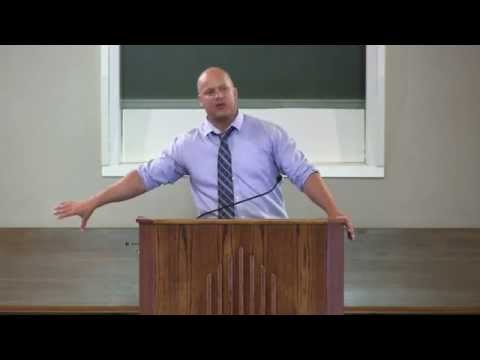
Acts 4:24–28 records the early church's response to persecution: a corporate prayer that grounds confidence not in circumstances but in the character of God. The sermon traces three foundations of the congregation's confidence — God as sovereign creator, God as sovereign revelator (particularly through Psalm 2), and God as sovereign predeterminer and governor of all things — showing that the church's unity is a gospel-defined unity, not a generic sociological bond. The exposition presses these truths against fleshly anxiety, open theism, and the therapeutic impulse to find comfort in a God who co-suffers, calling the congregation to bring their petitions to the immutable, impassible God who has decreed all things and governs them for the good of his people.
Of God and the Holy Trinity (2LCF 2.1-3)
The doctrine of the Trinity — one divine and infinite being in whom there are three subsistences, Father, Son, and Holy Spirit — is not a speculative ivory-tower abstraction but the foundation of all Christian communion with God and comfortable dependence upon him. This session in the study of 2LCF Chapter 2 continues the examination of paragraph three, working through the personal distinctions of generation, filiation, and spiration; the confession's summary statement on unity and personal distinction; and the practical import of Trinitarian theology for prayer, worship, redemption, and assurance. Biblical proofs are drawn from Genesis, the Psalms, Isaiah, and the New Testament, demonstrating the revelatory development of the doctrine from its seed form in the Old Testament to its full flower in the New.

Exhortation and Doxology
Paul's charge to Timothy in 1 Timothy 6:13–16 is framed by two weighty divine witnesses — the life-giving Father and the Christ who confessed the truth before Pontius Pilate — and calls every gospel minister to keep the apostolic commandment without spot, blameless, until the Lord's appearing. The sermon examines the gravity of that charge, the eschatological horizon that shapes it, and the doxology to God that it provokes, displaying five divine perfections: the blessed Potentate, King of Kings and Lord of Lords, sole possessor of immortality, dweller in unapproachable light, and the One whom no man has seen or can see. Faithfulness — not popularity, church size, or personal ability — is the measure of ministerial success according to the apostolic ethic. The congregation is exhorted to pray for those in gospel ministry, to pursue the knowledge of God including the doctrine of the Trinity, and to see faithful preaching as the ordinary means by which God saves sinners.
The Lord's Prayer, Part 4
Matthew 6:10 — 'Your will be done on earth as it is in heaven' — is not a passive resignation but a twofold petition: that God's people would actively obey His revealed, preceptive will as disclosed in Scripture, and that they would submit patiently to His secret, decretive will even when it brings hardship and trial. The study distinguishes the decretive will (God's eternal, all-encompassing decree, which cannot be altered) from the preceptive will (the commandments and precepts God requires of His creatures), drawing on the Westminster Larger Catechism, John Owen, Thomas Watson, and Thomas Manton. Four practical applications follow for the individual — recognizing God's right to command, knowing His revealed will, obeying it, and submitting patiently to His providential ordering — together with applications for the church and for society.
Of God and the Holy Trinity (2LCF 2.3)
What does it mean to confess that God is one being subsisting in three persons — Father, Son, and Holy Spirit? This study of 2nd London Baptist Confession of Faith chapter 2, paragraph 3 works through the classical Trinitarian formulation upheld by the particular Baptists, tracing its foundations in Scripture, its continuity with the ecumenical creeds, and the Baptist Confession's terminological improvement of 'subsistences' over 'persons.' The exposition addresses the unity and equality of the three subsistences, the personal distinctions expressed by eternal generation and procession, and the practical necessity of robust Trinitarian confession in an age of continuing anti-Trinitarian error.
Of God and the Holy Trinity (2LCF 2.1-2)
What does it mean that God is omnipresent, and how does his omniscience differ from all creaturely knowledge? Working through the second chapter of the 1689 London Baptist Confession of Faith, this study examines the divine attributes of omnipresence and omniscience with theological precision, drawing on Scripture, the church fathers, the Reformers, and the Reformed orthodox tradition. God's omnipresence is grounded not in his omnipotence or omniscience but in his infinity and immensity — he fills all of heaven and earth repletively, with his whole being, while remaining utterly transcendent and uncircumscribed by creation. God's omniscience is equally distinguished from creaturely knowing: he knows all things not discursively, derivatively, or by foreknowledge acquired through observation, but intuitively, independently, and eternally, in one simple act of self-knowledge.
The Lord's Prayer, Part 2
How does the first petition of the Lord's Prayer — 'hallowed be your name' — actually shape the daily life of a believer, a family, a church, and a missionary enterprise? This Bible study on Matthew 6:9 works through the meaning of God's name (his essence, attributes, titles, and word), explains what the petition is actually asking (not that God become holy, but that his existing holiness be recognized and exalted), and applies it in four concentric spheres: personal discipleship, household religion, corporate worship, and global missions. The study draws on the Westminster Larger Catechism, Calvin, Spurgeon, Thomas Watson, and John Owen to show that praying 'hallowed be thy name' commits the petitioner to a life of knowing, professing, depending on, esteeming, and actively promoting that name.
Of God and the Holy Trinity (2LCF 2.1-3)
What does it mean to confess that the Lord our God is but one only living and true God, infinite in being and perfection? This session opens a multi-week study of 2nd London Baptist Confession chapter 2, introducing the doctrine of God (theology proper) with attention to divine singularity (Christian monotheism against polytheism, monolatry, and tritheism) and the three divine omniperfections, treating omnipotence in particular depth. Five interpretive cautions frame the study: the ontological chasm between Creator and creature, the legitimacy of biblical speculation, the revelatory condescension of God in anthropomorphic language, the necessity of reading any text in light of the whole canon, and the call to sustained mental exertion in theological study.

The Divine Refuge
Psalm 46 proclaims God as the divine refuge of His covenant people in the midst of cosmic upheaval, national crisis, and personal trial. The sermon works through the psalm's four movements: the declaration of God's presence, the contrast between earthly chaos and divine stability, the invitation to behold God's redemptive works in Scripture, and the command to be still in God's sovereignty. The central comfort is covenantal: because Yahweh, the Lord of hosts, has bound Himself to His people in the covenant of grace, no trial, calamity, or fear can unseat Him from His throne or separate His people from His care. Believers are called to meet their sorrows not with fretting but with a deepening knowledge of God, which is itself the appointed means of comfort and strength.
The Lord's Prayer, Part 1
The preface to the Lord's Prayer — 'Our Father in heaven' — calls the believer to ground every act of prayer in sound theology proper before a single petition is offered. Against both the hypocrite's ostentation and the heathen's vain repetition, the Lord Jesus provides a model that is at once personal and majestic: the One addressed is Father by adoption through the redemptive work of Christ, and He is in heaven, sovereign over all creation. This study traces six qualities of 'Our Father' — that He is personal, gracious, hearing, caring, loving, and the exclusive object of prayer — before turning to 'in heaven' as the warrant for approaching God with both filial confidence and reverential awe.

The Majestic Maker

Genesis 1:1 declares that in the beginning, the triune God — Father, Son, and Holy Spirit — created the heavens and the earth ex nihilo, by the word of his omnipotent power, in six literal twenty-four-hour days. The Hebrew term Elohim, a plural of majesty used with a singular verb, identifies the Creator as the sole rightful object of worship, the sovereign lawgiver, and the one to whom all creatures owe praise. The sermon draws out five lessons from the opening verse: the world had a beginning; the triune God is the active agent; creation was ex nihilo by divine speech; the Creator is the rightful lawgiver and proper object of worship; and mankind possesses unique dignity as image-bearers. Unbelievers are warned that creation renders them without excuse before the judgment seat of God, and are called to believe on the Lord Jesus Christ, the one who fulfilled the law and died as the perfect sacrifice.
Judges 13
Judges 13 opens the Samson cycle with a birth and call narrative that reveals far more about God than about the deliverer He raises up. The chapter's deepest lesson lies in what is conspicuously absent: unlike every previous cycle in Judges, Israel does not cry out under Philistine oppression — a sign that the nation has grown comfortable with its subjugation and assimilated the culture around it. Against that backdrop of spiritual declension, God acts sovereignly and unilaterally, sending the angel of the Lord to a barren and anonymous woman, stipulating the Nazirite consecration of her son, and prefiguring in Samson the greater Deliverer who was marked out before the world was made. Manoah and his wife together model the right response to the divine presence: trembling fear and confident joy held together, the posture Psalm 2:11 commands.

The Justice of God in His Merciful Election
Romans 9:14–18 confronts the charge that God acts unjustly in electing particular sinners to salvation while passing over others. Drawing on God's declaration to Moses in Exodus 33 and His purpose in raising up Pharaoh, the sermon argues that divine election is just precisely because God, as the omnipotent Creator and sovereign Judge, retains the absolute right to bestow mercy on whom He wills and to harden whom He wills — a right He expressly claims and which no creature may dispute. The sermon situates election within the full ordo salutis and the pactum salutis, showing predestination to be the eternal foundation of every benefit of salvation applied in history. Hearers are called to find assurance in the marks of grace, to trust God's immutable purposes, and to proclaim the gospel as the ordained means by which the elect are called forth.
Judges 9
Judges 9 narrates the brutal rise and fall of Abimelech, the illegitimate self-appointed king of Israel who murders 69 of his half-brothers and terrorizes the city of Shechem before meeting his end beneath a millstone dropped by a woman in Thebes. The chapter is examined under four headings: the state of Israel at Gideon's death, Abimelech's treachery, Jotham's fable and curse, and the divine judgment that fulfills that curse in precise detail. Central to the exposition is Jotham's parable of the trees and the bramble, which indicts not merely Abimelech's usurpation but the folly of those who appoint unqualified men to lead. The sermon closes with application to church governance: qualified leadership according to Scripture is not optional, and God's people bear responsibility when they place brambles in positions of authority.

The Excellence, the Wonder, and the Glory
Hebrews 1:1–4 presents the glory of Jesus Christ as the culmination and surpassing excellence of all divine revelation, redemption, and reign. This sermon works through the opening verses of Hebrews under three headings: the excellence of Christ's revelation over the partial and preparatory word of the prophets, the wonder of his redemption accomplished by one who is simultaneously the radiance of the Father's glory and the sovereign upholder of the universe, and the glory of his present reign at the right hand of the Majesty on high. Believers are called to rejoice in the removal of the guilt of sin through Christ's exclusive and perfectly executed atoning work, while those outside Christ are warned that to neglect so great a salvation leaves no escape.
Judges 7
Judges 7 recounts God's reduction of Gideon's army from 32,000 to 300 men before Israel's victory over 120,000 Midianites — a disparity that is not incidental but theologically deliberate. The controlling principle of the entire chapter is verse 2: God whittled down Israel's forces so that the nation would not claim glory for itself, demonstrating that divine strength is perfected through human weakness. The lappers and kneelers are not to be distinguished by vigilance or virtue; the selection is simply a sovereign means to reduce the army to a number that makes self-congratulation impossible. God's patient encouragement of the fearful Gideon along the way reveals not only His sovereignty but His kindness, and the judges as a whole point typologically to the Lord Jesus Christ, the final deliverer who saves His people from sin rather than merely from earthly oppressors.
The Murder of the Preborn, Part 2
Exodus 21:22–25 grounds a biblical answer to the hardest objections raised against the prohibition of abortion. The sermon establishes that Scripture recognises exactly three instances of lawful killing — self-defense, just and necessary war, and capital punishment — and demonstrates that abortion satisfies none of them. The death penalty, far from contradicting the sanctity of life, is its strongest legal expression, grounded in the imago Dei of Genesis 9:6 and confirmed for the new covenant era by Romans 13:1–4. The church's response to abortion requires preaching the law of God without apology, loving neighbours through practical compassion, and declaring the gospel of the Lord Jesus Christ as the only remedy for guilt.
The Truth Concealed and Revealed
Matthew 11:25–26 records Jesus praising the Father for the doctrines of election and reprobation — not defending or debating them, but adoring God for them. This sermon examines the sovereign will of the Father as the first and foundational reason why any sinner receives the gospel: God conceals gospel truth from the self-sufficient wise and prudent by a judicial act of righteous judgment, and reveals it to 'babes' by sovereign grace alone, not by any predisposition in the recipient. The proper response to these doctrines is not polemical ammunition but thanksgiving, worship, and adoration — the very posture Christ models in his prayer to the Father. For the unbeliever, the sovereignty of God in election and reprobation ought to provoke both fear and hope, since God is gracious and has purposed to save a great multitude, and the sovereign foundation of verses 25–26 is precisely what grounds the free gospel call of verses 28–30.
Acts 17:16-34
Paul's address to the Athenian philosophers in Acts 17:16–34 stands as the biblical model for proclaiming the gospel to a pagan audience that lacks the foundation of Old Testament revelation. The sermon works through the setting, the sermon, and the summary of Paul's speech, showing how he confronts idolatry as genuine moral offense against the Creator, not as an approximate form of true religion, and how he frames the resurrection not as a proposition to be proved but as God's appointed assurance of coming judgment. The three responses Paul receives — mockery, curiosity, and belief — are the same responses faithful gospel proclamation produces in every generation.
Angered by the Grace of God
Jonah 4:2 preserves one of the most striking confessions of divine grace in all of Scripture — stated not as praise, but as the reason a prophet fled from God. This expository overview of the entire book of Jonah traces Jonah's flight, his rescue, his mission, and his anger, demonstrating that the book's central concern is not missiology or even sanctification, but theology proper: a revelation of God's character as gracious, merciful, slow to anger, and abounding in steadfast love toward sailors, a rebellious prophet, and a pagan city alike. The sovereignty of God is shown to govern every creature and circumstance — fish, plant, worm, and wind — so that His word to His prophet cannot return void. The sermon calls every hearer to abandon self-sufficiency and cast themselves upon the mercy of God revealed supremely in the Lord Jesus Christ, in whom all that Nineveh hoped for is guaranteed without the 'if perhaps' of uncertainty.
The Revelation of God's Glory
Exodus 34:6–7 reveals the attributes of God not in the abstract but in the wake of the catastrophic covenant-breaking of the golden calf — making the declaration of divine mercy, grace, long-suffering, and forgiveness all the more staggering. This sermon works through the context of Exodus 32–33 to show that God meets great sin with greater grace, and that sovereign grace is not a theological concession but the very content of the divine name. The same passage that grounds Moses' intercession grounds the call to flee to Christ, who accomplishes what Moses could only typify: atonement for covenant-breakers.
The Blessing of Knowing God
Psalm 91:1–2 presents four distinct names for God — El Elyon (Most High), El Shaddai (Almighty), Jehovah (LORD), and Elohim — each disclosing a different facet of the divine character: absolute supremacy, all-sufficiency, covenant faithfulness and redemptive love, and creative power. The sermon argues that knowing God by these names is the believer's chief comfort and greatest need in a world of rival truth-claims, competing gods, and the constant assault of the world, the flesh, and the devil upon intimate fellowship with him. The application presses every hearer — especially those who have grown up in Christian homes without personal faith — to personal repentance and trust in Christ, so that they may say with the psalmist, 'He is my refuge and my fortress, my God, in him I will trust.'