
Topic
Hamartiology
705 sermons · All topics

The Children of the Devil, Part 1

John 8:37–41 records Jesus systematically dismantling the religious establishment's claim that physical descent from Abraham constitutes spiritual standing before God. Working through the Jews' twofold assertion — that Abraham is their father and, in verse 41, that God is their father — Jesus marshals three evidences that expose the claim as groundless: their murderous intent toward him, their refusal to receive his word, and their rejection of the one he came from. The sermon drives toward the conclusion that membership in the family of God is secured not by race but by grace through faith in Jesus Christ, the promised seed of Genesis 3:15, and calls every hearer to examine whether they have received or rejected that word.

Live Stream - November 13, 2022
John 8:33–36 presents two and only two conditions for humanity: slavery to sin or freedom in the Son. Expounding Christ's exchange with the unbelieving Jews after the Feast of Tabernacles, this sermon argues that every person outside of Christ is a slave to sin in the most absolute sense — dead in Adam, under the dominion of the devil, and liable to the wrath of God — not merely imperfect or morally deficient. The illustration of the slave who does not abide in the house forever is applied to the national judgment upon Israel for rejecting the Messiah, while the Son who abides forever is shown to be the only ground of permanent standing before God. The remedy for this tyranny is neither moral reform nor religious heritage but the liberating work of the Son himself: 'if the Son makes you free, you shall be free indeed.'

The Freedom in Receiving the Son, Part 2
John 8:33–36 sets two irreconcilable conditions before every person: slavery to sin or freedom in the Son. Working through Jesus' response to the objecting Jews — His declaration of spiritual slavery in verse 34, His illustration from the household in verse 35, and His promise of true liberty in verse 36 — this sermon argues that sin's bondage is total, that the sinner is constitutionally blind to his own condition, and that freedom comes exclusively through the only-begotten Son who abides in the Father's house forever. The law of God must be pressed upon the conscience so that sinners know their malady before they can receive the remedy: the Son who makes men free indeed.

Clip: Breathtaking kindness! And the danger of rejecting the Son
Drawing from John 3 and John 6:37, this excerpt sets the grace of God in sending his Son against the solemn reality of condemnation for unbelief. The breathtaking condescension of the incarnation — that the only true God came down for sinners — is meant to produce humility, admiration, and worship. The appeal closes with the binary that brooks no middle ground: come to Christ and be saved, or die in your sins.

Laws Concerning Marriage and Capital Offences
Exodus 22:16–20 presents two distinct legal categories: the seduction of an unbetrothed virgin and three capital offenses — sorcery, bestiality, and idolatry. The sermon works through each law in its ancient Israelite context, drawing on Deuteronomy 18, 22, 27, and 13 to amplify and clarify the Exodus text, and defends the coherence of the bride-price legislation against the charge that it sanctions rape. All three capital offenses are shown to be covenant-destroying acts that strike at both the religious and civil foundations of Israel's polity, carrying the theological weight of treason against the Lord of the Covenant. The general equity of these laws presses the church today toward a high view of marriage, a total rejection of the occult, and recognition that first-table faithfulness to God is the indispensable ground of second-table obligations to one's neighbor.
Clip: Breathtaking kindness! And the danger of rejecting the Son
Drawing from John 8:21–29, this sermon clip sets before the listener two and only two positions: the breathtaking kindness of the God who sent his Son to save sinners, and the deadly consequence of dying in unbelief. The gospel offer is pressed with urgency — Christ receives all who come to him and casts out none — while the condemnation of those who refuse to believe that 'I am' is stated with equal plainness. The hearer is called to stop wavering and believe on the Lord Jesus Christ for everlasting life.
The Laws Concerning Homicide and Bodily Injury, Part 3
Exodus 21:33–22:15 sets out Israel's case laws governing property damage, animal theft, and home defense — laws designed not as an exhaustive legal code but as representative principles equipping judges to adjudicate equitably. Three features of biblical law emerge with force: the pervasive principle of restitution (the offender must make the victim whole, not merely 'pay a debt to society'), the absence of a prison system in the Mosaic economy, and the explicit legitimacy of lethal self-defense when a thief breaks in under cover of darkness. The sermon calls hearers to appreciate the pro-victim orientation of God's law and to think biblically about criminal justice, property rights, and self-defense in the present civil order.

The Laws Concerning Homicide and Bodily Injury, Part 2
Exodus 21:22–32 contains Israel's civil laws governing bodily injury to a pregnant woman, the discipline of servants, and liability for a goring ox — all concrete applications of the sixth commandment. The passage's language for premature birth employs the same Hebrew vocabulary used elsewhere in Genesis for childbirth, establishing that both mother and child (or children) are protected persons under the law, which the sermon applies directly to the ethics of abortion. The lex talionis (life for life, eye for eye) is examined not as a mandate for literal replication of injury but as a principle requiring proportionate punishment — neither too lenient nor excessive — a standard grounded in the dignity of every person as an image bearer of God.

The Laws Concerning Homicide & Bodily Injury (Part I)
Exodus 21:12–21 applies the Sixth and Fifth Commandments through the judicial law of Israel, treating the capital offenses of murder, parental assault, cursing of parents, and kidnapping, then moving to laws governing non-fatal bodily injury and the discipline of servants. The sermon draws on the Noahic Covenant (Genesis 9:6), the abiding authority of civil government to bear the sword (Romans 13), and the general equity principle to argue that these case laws carry enduring moral weight even outside the Mosaic theocracy. Listeners are called to pray for civil governments to discharge their God-ordained duty of punishing criminal offenders, and to take seriously the fifth commandment's demand that parental authority be honored and enforced in the home.

The Woman Caught in Adultery
John 8:1–11 presents the Pharisees placing Christ on the horns of a dilemma: uphold the law of Moses and condemn the woman caught in adultery, or show compassion and be exposed as an antinomian. This sermon works through the passage in two movements — the woman brought to Christ (vv. 1–6) and the woman forgiven by Christ (vv. 7–11) — demonstrating that Jesus resolves the dilemma not by choosing one horn but by upholding both simultaneously. He appeals to the Mosaic witness laws of Deuteronomy 17 and 19 to silence the hypocritical accusers, then pronounces forgiveness, illustrating that the gospel pattern is 'get and do' rather than 'do and get.' The passage stands as a vivid display of Christ as both the holy lawgiver who writes with his finger and the friend of sinners who bids the thirsty come and drink.

The Reaction to Jesus and His Words
John 7:40–53 records the sharply divided public reaction to Jesus's preaching at the Feast of Tabernacles and the private opposition of the Sanhedrin to him and his followers. The crowd fractures over whether Jesus is the promised prophet of Deuteronomy 18 or the Christ himself, while the religious leadership responds not with argument but with contempt, attempting to silence him through force and scorn. The temple officers sent to arrest Jesus return empty-handed, confessing that no man has ever spoken as he has — a testimony that magnifies Christ's divine authority even as the Sanhedrin descends into lawlessness. The sermon calls hearers to abandon the confusion of the crowd and the hardness of the Sanhedrin, and instead to come to Christ in faith, receiving the everlasting life he freely offers.

Epilogue to the Decalogue
Deuteronomy 5:22 supplies a concise epilogue to the Decalogue, highlighting the divine origin, absolute authority, comprehensive character, and finality of God's moral law — a law that is trans-covenantal and binding on all men everywhere. Working through Exodus 20:18–26, this exposition examines Israel's terrified response to Sinai's theophany, Moses's distinction between slavish fear and filial fear of God, and the protocols for the altar that bridge the giving of the law to the detailed judicial legislation of chapters 21–23. The threefold division of the law — moral, ceremonial, and judicial — is defended against dispensationalist revision, with the 1689 LBCF chapter 19 paragraph 5 cited as the correct Reformed statement of the moral law's perpetuity. The sermon closes by calling believers to a filial fear of God as the most fundamental restraint against sin, and to gratitude that Christ, as the true Israel, perfectly kept the law his people swore and failed to keep.

The Saving Grace of God, Part 1
Ephesians 2:1–3 confronts the reader with a precise diagnosis of humanity's condition apart from saving grace: spiritual death in Adam, slavery to the world-system, subjection to Satan, and liability to the wrath of God. The sermon grounds this diagnosis in the covenant of works, the doctrine of original sin, and the federal headship of Adam, drawing on Romans 5 and 1 Corinthians 15 to show that all humanity stands condemned either in Adam or justified in Christ. Total depravity is shown to be comprehensive — corrupting not only outward conduct but the mind and heart — making sovereign grace the only remedy for sinners who are, apart from Christ, lifeless, helpless, and hopeless.

The Thief on the Cross
Luke 23:39–43 presents the conversion of the thief on the cross as a concentrated exhibition of sovereign, effectual grace applied to a notorious criminal and insurrectionist in his final hour. The sermon examines the evidences of genuine conversion in the believing thief — fear of God, concern for the honor of Christ, confession of personal guilt, and faith in the Savior's kingdom — then turns to the graciousness and power of Christ's response: 'Today you will be with me in paradise.' The central pastoral burden is twofold: no sinner is beyond the reach of sovereign grace, and no sinner should presume upon a deathbed opportunity for repentance that may never come.

The Judgment Seat of Christ
Matthew 7:21–23 confronts the reader with Christ's own words at the final judgment: 'I never knew you. Depart from me, you who practice lawlessness.' The sermon argues that this passage is not a call to more good works but a stark exposition of the doctrine of justification by faith alone — the false professors are condemned not for lack of works but for resting upon their works as the ground of their acceptance with God. Self-righteousness is identified as a species of lawlessness, as damning as any gross immorality. The believer's only refuge is the doing, dying, and rising of Christ, received by faith alone, and it is to Christ — not to personal performance — that all assurance must be anchored.

The Prohibition Against Judgmentalism
Matthew 7:1–5 is among the most frequently misapplied texts in Scripture, routinely weaponised to silence any and all Christian judgment. This sermon from the Sermon on the Mount demonstrates that Christ's prohibition targets not judgment as such but the censorious, fault-finding, hypercritical spirit endemic to the Pharisees and to fallen human nature generally. The preacher surveys five legitimate spheres of Christian judgment — identifying false teachers, exercising church discipline, addressing sins of elders, and rendering civil judgments — before expositing the speck-and-plank illustration as Christ's indictment of hypocrisy. The sermon closes with practical counsel for mortifying judgmentalism through dependence on the Holy Spirit, the pursuit of humility, and a right understanding of remaining corruption in oneself and in one's neighbour.

The Problem of Israel's Apostasy
Israel's apostasy in Judges 2:7–3:6 follows a pattern rooted not in ignorance but in a failure to know the Lord experientially — a failure that produced syncretism, Baal worship, and divine chastisement. The sermon traces the root, description, and divine response to Israel's apostasy, showing that God's repeated raising up of judges was not provoked by Israel's repentance but by his own covenant faithfulness and mercy. Samson is presented as a type of Christ, each of the twelve judges pointing typologically to the Savior who would definitively deliver his people from their sins. The church is exhorted to keep herself unspotted from the world, resisting the toleration that leads by degrees to full apostasy.
2LCF 16 - Of Good Works (part I)

Good works in the Christian life must be carefully defined, grounded, and distinguished from every meritorious scheme if the glory of Christ is to be preserved. This study of 2nd London Baptist Confession chapter 16 works through the definition of good works (their substance, manner, and definitive character as fruits and evidences of a lively faith), the necessary foundation of good works in the enabling power of the Holy Spirit, and the non-meritorious nature of good works as plainly asserted in Romans 3 and Galatians 2. The central burden is that no work of the creature — however sincere, however commanded — can merit pardon of sin or eternal life before God, because the only works that avail with divine justice are the active and passive obedience of Christ alone imputed to the believer by faith.

The Things God Hates
Proverbs 6:16–19 presents a numerical list of seven things God hates and finds abominable — a proud look, a lying tongue, hands that shed innocent blood, a heart that devises wicked plans, feet swift in running to evil, a false witness who speaks lies, and one who sows discord among brethren. This sermon works through each item in canonical order, grounding the list in its immediate context (the portrait of the son of Belial in vv. 12–15) and in the broader testimony of Proverbs, the Psalms, and the New Testament. The abominable members (pride, lying, murder, the cunning heart, swift feet) and the abominable actions (perjury and discord) are each exposed and applied. The sermon concludes by urging hearers to pursue the opposites of each vice — humility, truth-telling, protection of innocent life, guarding the heart, swift pursuit of good, faithful witness, and peacemaking — and to rest in Christ, whose perfect obedience is the righteousness that covers remaining corruption in the believer.
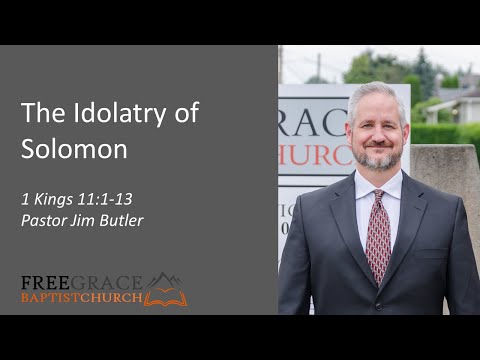
The Idolatry of Solomon
Solomon's idolatry in 1 Kings 11:1–13 exposes how a man richly blessed by God — with the law, direct divine appearances, a faithful father, and transcendent wisdom — can fall into the grossest sin when he fails to guard his heart. The sermon traces the problem, precedent, and practice of Solomon's idolatry before examining God's just and covenant-shaped response: judgment tempered by the unconditional Davidic covenant that finds its telos in the Lord Jesus Christ. The passage issues sober warnings against the assumption that age, experience, knowledge, or good pedigree secure ongoing faithfulness apart from vigilant dependence on the Holy Spirit.

The Conversion of Matthew
Matthew 9:9–13 records the sovereign call of a tax collector — among the most despised and morally compromised figures in first-century Jewish society — to follow Christ and ultimately to author the first Gospel. The sermon works through three movements: Christ's effectual call of Matthew to discipleship, the feast Matthew hosts to honour Christ and evangelize his associates, and the confrontation with the Pharisees in which Jesus declares the nature of his mission — not to call the self-righteous but sinners to repentance. The account is pressed into seven marks of genuine discipleship, closing with an appeal to the unconverted to look to Christ as the great physician of sin-sick souls.

The Greatest Commandments
Matthew 22:34–40 records a Pharisaic lawyer testing Jesus with the question of which commandment is greatest. Jesus answers by citing the Shema from Deuteronomy 6:4–5 and the neighbor-love command from Leviticus 19:18, thereby summarizing the entire Decalogue under two heads: love to God and love to man. This sermon argues that Christ's endorsement of these two commandments confirms the abiding validity of the moral law for New Covenant believers, who are called to keep it not as a means of justification but as the Spirit-wrought response of those already justified by faith alone. The hearer is pressed to recognize that the law's demand — to love God with the whole self and the neighbor as oneself — drives the believer perpetually to Christ, in whom alone that demand has been perfectly met.

May 22nd - Sun AM Webcast
John 6:60–71 presents the sharpest crisis of Jesus's Bread of Life discourse: the mass departure of superficial disciples and the steadfast confession of the Twelve. This sermon traces three interrelated truths in Jesus's response — the life-giving Spirit as the sole agent of spiritual understanding, total depravity as the explanation for unbelief, and the sovereign grace of the Father as both the cause of faith and the ground of its perseverance. The application presses the church not to soften biblical truth before a resistant generation, but to press it, trusting that the Spirit alone opens the hearts of the dead to receive the words of eternal life.

The Tenth Commandment
The tenth commandment's prohibition of covetousness exposes the spirituality of God's law: external compliance is insufficient, for the law reaches the desires and affections of the heart. Covetousness is defined as inordinate desire for what belongs to a neighbor — whether his wife, his goods, or anything that is his — and its connection to the first commandment reveals that misplaced desire is a form of idolatry. The sermon traces covetousness through envy and discontentment, showing how inward sin often becomes the prelude to overt transgression. The positive counterpart calls believers to contentment grounded in God's sovereign ownership, his covenant promise of provision, the surpassing weight of eternal glory, and the cultivation of a genuinely charitable spirit toward others.

The 9th Commandment, Part 2/2
James 1:26 places the ninth commandment's prohibition of false witness directly inside the local church: a professing believer who does not bridle his tongue deceives himself, and his religion is exposed as useless — the same Greek word applied to idolatry. The sermon surveys the tongue's destructive power across James 3–4, Matthew 12 and 15, and a wide range of Proverbs texts, arguing that sins of speech are systematically undertriaged in the church compared to sins of action. Ten practical helps are offered, grounded in the conviction that taming the tongue is a fruit of genuine saving faith and requires the enabling power of the Holy Spirit working through the ordinary means of grace.

The Faithful Christian Mother
Proverbs 31:28–30 presents the faithful Christian mother not merely as a moral exemplar but as a woman whose fear of the Lord is itself the fruit of sovereign grace — a grace Jeremiah 32 promises God will plant in the hearts of his covenant people. The sermon works through four aspects of the Christian mother's calling: her condition before God, her influence over her children, her God-given authority over them (rooted in the fifth commandment), and her fourfold responsibility to instruct, to set an example, to discipline, and to love. Mothers are urged to press law and gospel upon their children tirelessly, to embrace corporal and verbal discipline without apology, and to find their ultimate confidence not in their own faithfulness but in Christ, the stellar Savior, whose life, death, and resurrection is the only ground of acceptance before God.

The Bread of Life Discourse, Part 3
John 6:41–51 records the Jews' grumbling rejection of Jesus as the bread of life and his pointed rebuke of their unbelief. This sermon expounds that rejection in two movements: the nature of the Jews' complaint against Christ's divine origin, and Christ's twofold response — his assertion of the Father's sovereign, efficacious drawing of sinners and his appeal to the prophetic scriptures that learning from the Father issues in coming to the Son. The doctrines of total depravity and total inability are drawn from verse 44 and grounded in parallel texts from John 1, Romans 8, and Ephesians 2, establishing that salvation is possible only because the Father draws whom he will. The sermon closes with an exhortation to look to Christ in faith for everlasting life, the sole remedy for the problem of human sin.

Chapter 11, Of Justification (Part 2)
The 1689 London Baptist Confession of Faith, Chapter 11 (Of Justification), paragraphs 3–6 are expounded in this Sunday school session, building on an earlier treatment of paragraphs 1–2. The study examines the basis of justification in Christ's penal substitutionary atonement and the satisfaction of divine justice (paragraph 3); the ordering of justification in time against the error of eternal justification (paragraph 4); the ongoing forgiveness of post-conversion sin in light of remaining corruption, with David's Psalm 51 as a case study (paragraph 5); and the uniformity of justification across both testaments, showing that Old and New Covenant saints are saved by grace alone through faith alone in Christ alone (paragraph 6). The Westminster Larger Catechism's distinctions between justification and sanctification are brought in to guard against both antinomianism and perfectionism, and the session closes urging justified sinners to run to their Advocate rather than wallow in guilt.
The 8th Command - You shall not steal
Exodus 20:15 — 'You shall not steal' — encompasses far more than common burglary. This study works through the range of sins prohibited by the Eighth Commandment, from robbery and kidnapping to fraud, extortion, the destruction of property, and the robbing of God through withheld tithes, before examining the inner dispositions — covetousness, discontentment, and idolatry — that drive those external violations. The theological grounding for the command rests on three pillars: God's sovereignty as owner of all things, the position of man as steward and vice-regent, and the recognition that an attack on another's property is an indirect attack on the life that property sustains. The study closes with a direct application to civil government, arguing that unjust taxation, inflation, and redistributive economic systems are themselves violations of 'you shall not steal.'

The Redemptive Work of the Son, Part 1
Ephesians 1:6–7 sets forth the redemptive work of the Son within the triune economy of salvation, moving from the Father's electing purpose in eternity past to Christ's historic accomplishment of redemption in time. The sermon expounds two interlocking realities: the Father's sovereign initiative in bestowing grace upon the elect in the Beloved, and the Son's purchase of redemption through the shedding of his blood. Redemption is shown to be not a mere exercise of divine power but the payment of a ransom price, with the forgiveness of sins as its primary blessing — all flowing from the inexhaustible riches of God's grace. Hearers are called to respond with worship, gratitude, and increasing love for Christ, the Beloved of both the Father and the redeemed.