
Topic
Evangelism
58 sermons · All topics

Livestream - Baptism: Abigail Stair
Acts 8:26-40 recounts the Spirit-orchestrated encounter between Philip and an Ethiopian eunuch, and this exposition traces three movements: the contact, the communication, and the conversion. The sermon grounds the eunuch's inclusion in the covenant community in the fulfilment of Isaiah 56 and Isaiah 53, showing that the dawn of the Messianic kingdom brings eunuchs and Gentiles near through the substitutionary suffering of the Servant of Yahweh. Baptism is expounded as the outward sign of an inward, sovereign work of grace — not the means of salvation but the visible expression of union with Christ in his death and resurrection — and is administered to Abigail Stair following her public profession of faith. The sermon calls every hearer to ask with the eunuch 'What hinders me?' and to look to Christ alone, the silent, suffering Lamb of God, for everlasting life.
The Conversion of the Ethiopian Eunuch

Acts 8:26–40 records the Spirit-orchestrated conversion of an Ethiopian eunuch through Philip's proclamation of Christ from Isaiah 53. The passage is set within the fulfillment of Isaiah 56's promise that eunuchs and Gentiles would be brought near to God in the messianic age — a promise Luke deliberately highlights as the risen and exalted Christ builds his kingdom to the uttermost parts of the earth. The sermon expounds the substitutionary suffering of the servant of Yahweh as the content of Philip's evangelism, the great exchange of 2 Corinthians 5:21 as the ground of justification, and the proper order of faith then baptism as the pattern of apostolic practice. Hearers are pressed to ask whether they understand the gospel, to believe it without delay, and — if already believing — to submit to baptism as an act of obedience and a means of grace.

Free Grace Baptist Church - February 21, 2016 PM
1 Timothy 1:15 — 'This is a faithful saying and worthy of all acceptance, that Christ Jesus came into the world to save sinners' — is expounded as a self-contained creedal summary of the gospel. The sermon moves through three structural heads: the introduction to the creed (its truthfulness and trustworthiness), the creed itself (the person of Christ, the doctrine of the Incarnation, and the certainty of his saving work), and the demonstrable confirmation of the creed in the conversion of Paul as chief of sinners. Hearers are called to rest their assurance not in inward evidences but solely in the finished, effectual work of Christ Jesus, and unbelievers are urged to receive the only Savior who saves to the uttermost.
The Divine Invitation to Eternal Life
Isaiah 55 is a divine summons addressed to sinners without merit or money, calling them to receive the full salvation accomplished by the servant of Yahweh in Isaiah 53. The chapter divides into two movements: an invitation to come to water, wine, and milk — representing a complete and free salvation — and a call to respond in faith and repentance while the Lord may be found. Three reasons ground the call to believe and repent: the incomparable nature of God whose thoughts and ways exceed ours in mercy, the sovereign efficacy of God's word which never returns void, and the promise of eschatological joy, peace, and the reversal of the curse. Believers are exhorted to examine whether they have displaced God with idols, legitimate or otherwise, and unbelievers are pressed with the urgency that the day of access to God will not last forever.

Free Grace Baptist Church - October 4, 2015 AM
Matthew 20:17–19 records the third and most specific formal announcement by Jesus of his coming death — naming the betrayal, the Sanhedrin, the Gentiles, the scourging, and the crucifixion — before closing with the triumph of the resurrection. The sermon argues that the necessity driving Christ to Jerusalem rests on three pillars: the eternal Covenant of Redemption between the Father and the Son, the prophetic fulfillment of all that the law and prophets had written, and the salvation of his people from their sins. Penal substitution and justification frame the cross-work: Christ bore the wrath due to sinners and was raised for their justification. The sermon closes with a threefold application to the church — receive the gospel, respond in worship, and imitate Christ's focus on his redemptive work — and a direct call to unbelievers to believe.
Prayer and Witness
Colossians 4:2–6 calls the Christian to a life of earnest, watchful, and thankful prayer, and to a witness before the world that is wise in conduct and gracious in speech. Working through Paul's four marks of effective prayer — persistence, vigilance, thanksgiving, and petition — the sermon shows that prayer is normal Christian living, not the province of an elite spiritual class. The exposition then turns to the two elements of faithful witness: a walk of wisdom toward outsiders and a conversation seasoned with grace and salt, grounded in the ability to answer the unbeliever with both meekness and clarity.

The Healing of the Sick at Gennesaret
Matthew 14:34–36 records the healing of the sick at Gennesaret, a summary passage that Matthew uses to display the sovereign power and compassionate mercy of the Son of God. The passage demonstrates a progression from lesser to greater: Christ's mastery over food, storms, and physical illness points to His supreme authority to forgive sin and heal the spiritually dead. The fitting response to recognising who Jesus is — as modelled by the men of Gennesaret — is to come to Him in faith, to bring others to Him, and to rest in the justifying righteousness that is imputed to the sinner through faith alone in Christ alone.
Free Grace Baptist Church - March 21 Missions Event
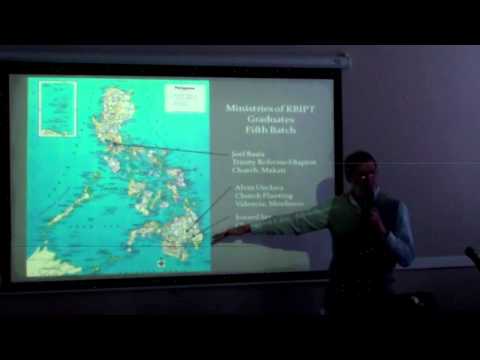
A Reformed Baptist missionary with thirty years of service in the Philippines presents an overview of the work in Metro Manila and beyond: church planting, a three-year pastoral training institute covering biblical languages and systematic theology, and itinerant teaching among pastors in remote provinces. The presentation is grounded in Revelation 5 and Romans 10 — Christ has purchased a people from every tribe, tongue, and nation, and messengers must be sent to gather them. The evening closes with prayer requests for the elders of Moonwalk Community Bible Church, the graduates scattered across the Philippine islands, and the ongoing effort to bring the gospel to Roman Catholics, Muslims, and those ensnared in health-and-wealth Christianity.
The Conversion of the Ethiopian Eunuch
Acts 8:26–40 records the Spirit-directed encounter between Philip the evangelist and an Ethiopian eunuch who was reading Isaiah 53 on his return from Jerusalem. The sermon traces three movements in the passage: the Holy Spirit's sovereign direction of Philip to the eunuch, Philip's exposition of Isaiah 53 as fulfilled in the person and work of Christ, and the eunuch's conversion and subsequent baptism by immersion. The central burden is that Christ's atoning work — his obedient life, substitutionary death, and vindicating resurrection — is the only ground on which any sinner, however excluded by law or circumstance, may be forgiven and brought near to God, and that believer's baptism is the public, visible sign of that inward, Spirit-wrought grace.
The Gracious Declaration of the Gospel
Matthew 11:27–28 sets forth the mediatorial office of Christ and the gracious declaration of the gospel as the second and third grounds upon which sinners come to know God. Christ possesses all authority delivered by the Father, holds exclusive knowledge of the Father, and sovereignly wills to reveal Him — condemning universalism, pluralism, and every works-based religion. The free invitation 'Come to me' presupposes sovereign election and effectual grace, addresses those burdened by sin and Pharisaic religion alike, and promises rest that is grounded in Christ's mediation alone, not in human virtue or effort.
Acts 17:16-34
Paul's address to the Athenian philosophers in Acts 17:16–34 stands as the biblical model for proclaiming the gospel to a pagan audience that lacks the foundation of Old Testament revelation. The sermon works through the setting, the sermon, and the summary of Paul's speech, showing how he confronts idolatry as genuine moral offense against the Creator, not as an approximate form of true religion, and how he frames the resurrection not as a proposition to be proved but as God's appointed assurance of coming judgment. The three responses Paul receives — mockery, curiosity, and belief — are the same responses faithful gospel proclamation produces in every generation.
Come to the Savior
Isaiah 55 presents one of the Old Testament's most explicit gospel invitations: a universal summons to sinners of every nation to come, without price or merit, to receive the mercy secured by the suffering Servant of Isaiah 53. The sermon expounds the chapter under two main movements — the invitation to come (vv. 1–5) and the call to believe and repent (vv. 6–13) — demonstrating that what appears to be merely an offer to Israel in Babylonian exile is in fact the covenant of grace proclaimed to all humanity, grounded in Christ's substitutionary work. Particular attention is given to the folly of seeking satisfaction in anything other than God, the abundant pardon He promises to the vilest sinners who seek Him, and the absolute efficacy of His Word to accomplish the purpose for which He sends it. Hearers are urged to call upon God while He is near, to repent of sin, and to trust Christ alone for justification and eternal life.
The Calling of Matthew
The calling of Matthew in Matthew 9:9–13 is not merely a biographical interlude but a deliberate theological display of Christ's authority to save notorious sinners. Matthew's own spare account of his conversion — omitting Luke's detail that 'he left all' — directs every eye to the power of the Son of Man rather than to the sacrifice of the disciple. The sermon traces Jesus's three-fold response to the Pharisees' complaint — proverb, prophet, and purpose — showing that the physician goes to the sick, that Hosea's call for mercy over mere cultic observance still indicts externalism, and that Christ's stated mission is to call sinners, not the self-righteous, to repentance. The hearer is exhorted to respond as Matthew did: immediately, totally, with thankfulness, and with a desire to bring others to the Savior.
A Lofty Confession of Faith
Thomas's refusal to believe the apostolic witness to the resurrection exposes a posture common to all people: dictating the terms by which they will believe. Yet Christ condescends with sovereign grace to meet Thomas in his obstinance, drawing from him the highest Christological confession in the fourth Gospel — 'My Lord and my God.' John's purpose in recording these events is stated explicitly: that readers would believe Jesus is the Christ, the Son of God, and so receive life in his name. The sermon presses every hearer to ask whether they can claim Christ with Thomas's personal possessive — 'my Lord and my God' — and warns against every attempt to negotiate terms with God before believing.
The Conversion of Rahab the Harlot
Joshua 2 records the conversion of Rahab the harlot — a pagan prostitute in Jericho who confessed Yahweh as 'God in heaven above and on earth beneath' and cast herself upon his mercy. This exposition works through her conduct, her confession, and her blessings, arguing that the narrative is strategically placed in Joshua to arrest the reader before the conquest begins with a reminder that God saves to the uttermost. The sermon draws out three implications of a Jonah-like contempt for 'unsavory' sinners: it is an implicit denial of one's own depravity, a failure to comprehend the power of the gospel, and a lack of appreciation for divine grace.
Paul at Athens
Acts 17:16–34 records Paul's proclamation of the Christian worldview at the Areopagus in Athens — a city saturated with idolatry and home to Epicurean and Stoic philosophy. Paul does not simply offer historical evidences for the resurrection but instead sets forth God as creator, sovereign ruler over the nations, the only legitimate object of worship, and the coming judge — grounding the resurrection and the call to repentance in a comprehensive biblical theology. The sermon draws out the pattern of Paul's method: provoked by idolatry, he reasons in the synagogue and marketplace, addresses his audience on their own terms without compromising the truth, and calls all men everywhere to repent. Believers today are urged to cultivate the same burden for souls, to know the gospel accurately, and to carry it faithfully into a culture that remains, in its own way, given over to idols.
The Thief on the Cross
The conversion of the thief on the cross in Luke 23:39–43 raises an urgent double question: how does a murderous criminal enter paradise moments before death, and what does his transformation reveal about the character of Christ as Savior? The sermon traces five marks of genuine conversion in the thief — concern for others, fear of God's judgment, ownership of guilt, confession of Christ's holiness, and casting himself wholly upon divine mercy — before turning to Christ's response as a willing, able, and glorious Savior. Three conclusions follow: the passage teaches the nature of the Savior, the sovereignty of grace in salvation, and that salvation is by grace alone through faith alone in Christ alone, with no contribution of works, baptism, or covenant faithfulness on the part of the saved sinner.
The Privileges of Christ's Church
1 Peter 2:9 presents the church with a fourfold corporate identity — chosen generation, royal priesthood, holy nation, special people — rooted in what God originally purposed for Israel at Sinai and fulfilled in Christ. This sermon traces that identity from Exodus 19 through the failure of Old Covenant Israel, to its consummation in Christ who, by his obedience, death, and resurrection, purchased these privileges for his church. The God-centered function of this identity is the proclamation of God's excellencies, which demands a gospel rightly understood as centered on the doing, dying, and rising of Jesus Christ. Believers are called to take up the corporate privileges of access to God, prayer, praise, and the knowledge of God with the seriousness these mercies deserve.
The Blessed Invitation
Isaiah 55 presents what the prophet, functioning as an evangelist, calls a blessed invitation: sinners are commanded to come to the Lord on the basis of Christ's atoning work in Isaiah 53, receiving water, wine, and milk — refreshment, exhilaration, and nourishment — freely, without price. The sermon works through three particulars: the universal and gracious invitation to gospel blessings (vv. 1–5), instruction in faith and repentance as the means of coming (vv. 6–7), and information intended to amaze — the sovereign efficacy of God's Word and the contrast between divine and human ways (vv. 8–13). The linchpin of the whole invitation is Jesus Christ, the sure mercies of David, who as prophet, priest, and king carries out the covenant promise made to Abraham and calls sinners to come to him for rest.
The Gospel in the Graveyard

Mark 5:1–20 presents a man utterly beyond human remedy — demon-possessed, dwelling among tombs, breaking every chain — as a vivid picture of the sinner in his natural condition before grace. The sermon works through four movements: the sovereign, condescending Christ who seeks out individuals; the absolute bondage that characterises fallen humanity; the peace with God that Christ alone effects through the blood of His cross; and the commission to proclaim His excellencies wherever one is planted. The application presses both believer and unbeliever to see themselves in the demoniac, to glory in the depth of the pit from which they were drawn, and to tell others of the compassionate Christ who saves to the uttermost.
A Faithful Saying
The phrase 'Christ Jesus came into the world to save sinners' (1 Timothy 1:15) is not rhetorical decoration but a precise theological claim about the nature and scope of redemption. This exposition works through Paul's self-description as 'chief of sinners' — blasphemer, persecutor, and insolent man — to show that the depth of his depravity magnifies rather than diminishes the glory of sovereign, particular grace. The sermon argues that Calvinistic soteriology reduces to one confession: God saves sinners, doing everything from election to glorification, leaving no share of the decisive act to man. Hearers are called to respond to this grace with informed, exhilarated worship and to press the invitation upon every sinner who imagines himself too wretched to be saved.
A Little Sinner and a Big Savior
Luke 19:1–10 presents the conversion of Zacchaeus as a concentrated display of sovereign, covenant-keeping grace. The sermon works through Zacchaeus's identity as a chief tax collector, a rich man, and above all a lost sinner, before turning to the mission of Christ: he condescends, calls by name, and saves by grace alone through faith alone, with repentance and good works following as inevitable fruit. The closing application presses both the unconverted to make haste to Christ and the converted to receive him joyfully as they come to the Lord's Supper.
Jesus Was Born to Reign
Christ's appearance before Pontius Pilate in John 18:33–38 forces a confrontation with the nature of his kingdom and his identity as king. The sermon examines three particulars from this exchange — the issue Pilate raises, the clarification Jesus gives, and the response Jesus offers — showing that the incarnation is inseparable from the crown: Christ was born not merely as a helpless infant but as the eternal king whose kingdom originates not from man but from God, and whose conquest advances not by military power but by truth. The passage calls every hearer to reckon with the sovereign reign of Christ and to believe the gospel, knowing that what one does with Jesus determines one's eternal destiny.
The Salvation of an Ethiopian Eunuch
Acts 8:26–40 records the sovereign calling, gospel instruction, and baptism of an Ethiopian eunuch — a Gentile and a eunuch, doubly excluded from full participation in Israel's assembly, yet brought to Christ through the preaching of Philip from Isaiah 53. The sermon exposits three movements in the narrative: the Spirit's sovereign direction of Philip to the eunuch, the necessity of the proclaimed gospel for salvation, and the eunuch's believing response expressed in baptism. The occasion of eight baptisms frames the exposition as a demonstration that God saves sinners of every kind through the hearing of the gospel — the substitutionary death and resurrection of Christ — and that believer's baptism by immersion is the proper public confession of that saving faith.
The Sovereignty of God in the Salvation of Sinners
Matthew 11:25–30 presents the sovereignty of God in salvation not as a theological puzzle to be argued but as a doxology to be prayed. Jesus praises the Father for hiding gospel truth from the self-sufficient wise and revealing it to those whom the Spirit reduces to babes — an act that is not injustice but divine judgment upon rebels who have no excuse. The passage then sets forth Christ's mediatorial authority as the sole ground upon which any sinner may know the Father, and issues three commands — come, take the yoke, learn — backed by the power of the one who commanded a dead man out of a tomb. The sermon calls hearers to abandon both hyper-Calvinist fatalism and Arminian manipulation, resting instead in the sovereign grace that humbles pride and fuels genuine gospel proclamation.
A Real Savior for Real Sinners
Paul's description of the Corinthian church in 1 Corinthians 6:9–11 — fornicators, idolaters, adulterers, homosexuals, thieves, drunkards, revilers — followed by the three-fold declaration 'you were washed, you were sanctified, you were justified' — furnishes the text for five observations on the nature of the gospel. The sermon confronts self-deception about standing before God, refutes the claim that sin is genetic or environmentally determined, and sets out the biblical doctrines of regeneration, definitive sanctification, and justification by imputed righteousness as the only remedy for real sinners. The application is threefold: these truths ought to promote worship, drive evangelism, and sustain holiness in the lives of those who have been washed in Christ.
Conversion in the Eleventh Hour
The conversion of the dying thief in Luke 23:39–43 displays the anatomy of saving faith and the character of Christ as a willing, able, and glorious Savior. Working through five marks of genuine conversion visible in the thief — concern for others, fear of God's judgment, ownership of guilt, confession of Christ's holiness, and calling upon the Lord — the sermon demonstrates that saving faith is not a human achievement but a sovereign work of grace. The passage equally reveals that Jesus, even in the agony of bearing the wrath of God on the cross, is actively and assuredly saving sinners. The application is urgent: salvation is by grace alone through faith alone in Christ alone, and no sinner should presume upon a future opportunity to repent.
Observations on the Gospel
What is the gospel, and what does it demand of its hearers? Expounding 1 Corinthians 15:1–11, this sermon traces six defining observations about the gospel of Jesus Christ: it is rooted in history, revealed by God in Scripture, Christ-centered, received by faith alone, essential to salvation, and powerful for the worst of sinners. The Lord's Supper frames the meditation, reminding believers that the bread and wine point not to human merit but entirely to Christ's accomplished work. Hearers are called to examine whether they possess a saving interest in Christ and to trust him alone for justification.