
Topic
Ecclesiology
1,163 sermons · All topics

The Conversion of the Ethiopian Eunuch

Acts 8:26–40 records the Spirit-directed encounter between the evangelist Philip and an Ethiopian eunuch, a man doubly excluded from Israel's assembly by Deuteronomy 23:1 yet drawn by God's sovereign grace into the new-covenant community. The sermon traces three movements in the narrative — the providential meeting, the expository dialogue from Isaiah 53, and the eunuch's confession and baptism — arguing that the passage is not merely a quotation but a fulfillment of Isaiah 56, in which eunuchs and foreigners are brought near through the blood of Christ. Against any notion of baptism as a converting ordinance, the preacher grounds believers' baptism in the pattern of faith preceding baptism throughout Acts, Calvin's own concession that immersion was the ancient mode, and the 1689 LBCF's definition of baptism as an ordinance primarily for the party baptized. The sermon closes with an indiscriminate call to all sinners to relinquish their own righteousness and rest in the imputed righteousness of Jesus Christ.

The Conversion of Matthew
Jesus calls Matthew — a despised tax collector and notorious sinner — to discipleship with two words: 'Follow me.' This sermon on Matthew 9:9–13 traces three movements: the sovereign, immediate call to Matthew at his tax office; the feast Matthew throws in honor of Christ, filling his table with fellow sinners; and Christ's threefold response to the Pharisees' complaint, in which he identifies himself as physician for the sin-sick, appeals to Hosea's rebuke of mere external religion, and declares his mission to call sinners to repentance. The passage insists that the power demonstrated in forgiving the paralytic avails equally for the greatest of sinners, and calls every hearer to respond as Matthew did — immediately, wholly, and with joy.

The Call to Faithfulness in Perilous Times
Paul's warning to Timothy in 2 Timothy 3:1–9 identifies the gravest threat facing the church as not external persecution but internal corruption — men with a form of godliness who deny its power. The passage is expounded under four headings: the recognition of danger in the last days, the description of godless men marked by secular humanism, materialistic idolatry, and hedonism, the exhortation to avoid such men entirely, and the encouragement that their folly will be exposed as surely as that of Jannes and Jambres before Moses. The sermon calls believers to know the foundational doctrines of Christianity, to conduct themselves worthy of the gospel, and to discriminate carefully about who is permitted to teach — while resting in the confidence that Christ will build his church and the gates of hell shall not prevail against it.

The Worship of God in Private Families
Family worship — the regular practice of reading Scripture, praying, and singing with one's household — is grounded in a consistent biblical pattern running from Abraham in Genesis 18 through the Apostle Paul's commands in Ephesians 6. This topical survey traces the biblical warrant for family worship through key Old Testament figures and texts, examines the elements that should mark it, and presses the duty home with both positive examples and negative warnings. Parents and grandparents are called to diligent, consistent instruction of their children in law and gospel, with the sobering reminder that neglect — not busyness — is the real obstacle.
The Apostle Peter and Simon Magus
Acts 8:18–25 presents one of Scripture's most debated conversion accounts: Simon Magus, a former sorcerer who professed faith and was baptized, then attempted to purchase apostolic power with money. This exposition traces Peter's sharp rebuke — 'your money perish with you' — through its Old Testament resonances in Deuteronomy 29 and Proverbs 5, while weighing the evidence on both sides of the question of Simon's genuine conversion. The sermon concludes that the deeper question Acts 8 presses is not Simon's eternal state but the hearer's own: whether they have come to know the Christ who forgives wickedness, grants repentance, and receives every sinner who comes to him.

Free Grace Baptist Church - June 2, 2019 AM
Acts 8:9-25 presents the account of Simon Magus, a former sorcerer who professed faith and was baptized in Samaria, yet subsequently attempted to purchase the apostolic ability to confer the Holy Spirit. The sermon works through Simon's request, Peter's sharp rebuke, and Simon's reply, while holding in tension the genuine ambiguity the text leaves about whether Simon's profession was true. The preacher draws out the contrast between the gift-character of God's grace — which can never be bought, bribed, or trafficked — and the spirit of simony that has recurred throughout church history, pressing hearers to examine not Simon's salvation but their own, and to rest their standing before God on Christ's blood and righteousness alone.
The Samaritan Pentecost
Acts 8:14–17 records the coming of the Holy Spirit upon the Samaritan believers through the apostolic ministry of Peter and John — an event frequently misread as a proof text for Roman Catholic confirmation or Pentecostal second-blessing theology. This sermon argues that the Samaritan Pentecost is neither a repeatable pattern for individual Christian experience nor evidence of a subsequent work of the Spirit distinct from regeneration, but rather a unique, unrepeatable, redemptive-historical event marking the corporate inclusion of Samaritans into the one covenant people of God, in direct fulfillment of Acts 1:8. The three Pentecosts — Jerusalem (Acts 2), Samaria (Acts 8), and the Gentile household of Cornelius (Acts 10) — together attest Christ's messianic lordship from the Father's right hand and demonstrate the unity of His people across every ethnic division. Believers are called to receive the Word by faith, submit to baptism as its public sign, and embrace the corporate solidarity of the one new man in Christ.

The Profession of Simon Magus
Acts 8:9–13 presents a direct clash between the gospel of Jesus Christ and the sorcery of Simon Magus, who had captivated the whole population of Samaria with his claim to divine greatness. The sermon expounds two movements in the text: the comprehensive grip of false doctrine under Simon, and the liberating power of divine grace through Philip's proclamation of the kingdom of God and the name of Jesus Christ. Salvation comes exclusively through faith in Christ — not through a mixture of truth and magic, not through works — and believers' baptism publicly identifies the convert with the triune God while repudiating every former allegiance. The passage is set forth as a demonstration that Christ, enthroned at the right hand of the Father, must reign until all his enemies are made his footstool, which is ground for courage, prayer, and faithful gospel proclamation in every generation.
Free Grace Baptist Church - May 12, 2019 PM
The fifth commandment — 'Honor your father and your mother' — carries a weight far beyond domestic courtesy. Expounding Deuteronomy 5:16 alongside its supporting texts across both Testaments, this sermon argues that the command governs every sphere of God-ordained authority: family, church, workplace, and civil Commonwealth. The sanction attached to its violation, from capital penalties in the Mosaic law to its appearance in the New Testament vice lists, reveals that dishonor of parental authority is symptomatic of a deeper insubordination to God himself. The sermon closes with the gospel reminder that obedience to the fifth commandment cannot secure salvation — only the righteousness of Christ imputed to the believing sinner does that — but redeemed hearts will seek to keep what God commands.
The Fifth Commandment
The fifth commandment — 'Honor your father and your mother' — reaches far beyond childhood obedience in the home; it establishes the foundational posture of submission to divinely-ordained authority in family, church, civil society, and workplace. This exposition of Deuteronomy 5:16 traces the command through the Mosaic law, the prophets, and into the New Testament, where Paul applies it unchanged to Gentile believers in Ephesus, demonstrating the trans-covenantal abiding force of the Decalogue. The sermon examines the severity of the sanctions attached to its violation — including the theocratic death penalty and Israel's exile — as evidence that God regards the fifth commandment not as a domestic nicety but as load-bearing structure for any ordered society. Parents are called to enforce the command through discipline and instruction, and all hearers are reminded that the only remedy for its violation is the gospel of Christ, who was born under the law to redeem lawbreakers.

The Duties of Christian Women
Titus 2:3–5 sets forth concrete duties for older and younger women within the covenant community, grounded not in cultural expectation but in the doctrine of grace. This exposition works through the instructions Paul gives to older women — reverence in conduct, guarded speech, sobriety, and the charge to teach younger women — before examining the cluster of virtues prescribed for younger women: love for husband and children, discretion, chastity, homemaking, goodness, and submission to their own husbands. The complementarian order is defended exegetically from 1 Timothy 2, 1 Corinthians 11 and 14, and 1 Peter 3, with creation and fall established as the theological foundation rather than cultural accommodation. The gospel itself is the undergirding motive: women are not saved by fulfilling these duties, but those redeemed by the grace that appeared in Christ are equipped by that same grace to adorn the doctrine of God their Savior in every sphere of life.

The Good Soldier's Incentives
What motivates a Christian to endure suffering rather than abandon the faith? Expounding 2 Timothy 2:8–13, this sermon identifies three incentives Paul sets before Timothy: the contemplation of Christ in his incarnation and resurrection, the conduct of the Apostle Paul who endured chains as a self-described evildoer for the sake of the elect, and the believer's present and future communion with Christ — dying with him, living with him, and ultimately reigning with him. The sermon closes with a sober examination of the faithful saying in verses 11–13, distinguishing the warning against apostasy from the assurance belonging to the wavering but genuine believer, and connects the Lord's Supper as a divinely appointed means of grace for sustaining the good soldier's contemplation of Christ.

Free Grace Baptist Church - May 5, 2019 AM
Christ declared 'I am the way, the truth, and the life; no one comes to the Father except through Me' — a claim as offensive to the ancient world as to the modern, yet the only word that addresses the guilt, ignorance, and rebellion of sinners. Working through Acts 8:1–17, this exposition traces the Spirit-confirmed extension of the gospel from Jerusalem into despised Samaria, showing how Philip's preaching of Christ — not social commentary, not racial reconciliation programmes, but Christ as prophet, priest, and king — produced joy in a city that had been alien to the covenants of promise. The sermon argues that the cross, and only the cross, is the answer to ethnic hostility, civic disorder, and personal despair, and calls hearers to attend to the preached Word with the same urgency the Samaritans showed when Philip came among them.
The Ministry of Philip in Samaria
Acts 8:5–8 records Philip's preaching ministry in Samaria — a region despised by Israel as racially and religiously impure — and presents it as the deliberate fulfillment of Christ's commission in Acts 1:8 to carry the gospel to Jerusalem, Judea, Samaria, and the uttermost parts of the earth. The sermon traces the historical background of Samaritan alienation from Israel, the fourfold summary of Philip's ministry (his preaching, the response of the crowds, the authenticating miracles, and the resulting joy), and the theological significance of the Spirit's confirmation through Peter and John. Against contemporary debates over racial justice, the sermon argues that the cross of Christ — preached faithfully in his offices as prophet, priest, and king — is the only power that reconciles divided peoples and extends the kingdom of God across ethnic boundaries.

The Extension of Christ's Kingdom
Christ's sovereignty over persecution is the controlling theme of Acts 8:1b–4, where the martyrdom of Stephen triggers a great dispersion that advances the very mission Christ commissioned in Acts 1:8. The sermon traces the programmatic geography of Acts — Jerusalem, Judea, Samaria, the ends of the earth — and shows that the scattering of the disciples, far from being a setback, was the means by which Christ extended his kingdom. Particular attention is given to Saul of Tarsus as the chief persecutor whose subsequent conversion illustrates that no human opposition can thwart the sovereign purposes of Christ. Hearers are called to pray earnestly for gospel preachers to be raised up, to commit to biblical churchmanship with perseverance, and to hold fast to the confidence that Christ must reign until all his enemies are made his footstool.

The Good Soldier of Jesus Christ
Paul's commands to Timothy in 2 Timothy 2:1–7 address the inevitable reality of hardship in gospel ministry and Christian life, and the apostle equips believers to face it through three vivid analogies: the devoted soldier, the disciplined athlete, and the diligent farmer. A fourth consideration emerges from verse 7 — the dedicated disciple who both thinks seriously and depends on sovereign grace for understanding. The sermon applies these four models not only to ordained ministers but to every Christian, closing with a sustained exhortation to perseverance in the 'middle mile' of the Christian race, grounded in the 1689 London Baptist Confession's doctrine of the perseverance of the saints.

Free Grace Baptist Church - April 24, 2019 Bible Study
Genesis 18:1–15 presents the Lord's appearance to Abraham at Mamre, where the promise of Isaac's birth is reiterated — this time directed toward Sarah, who laughs within herself at what she judges a physical impossibility. The study examines the identity of the three visitors (most likely the angel of the Lord and two attendant angels), the exemplary hospitality of Abraham as a model for Christian brotherly love, and the rebuke issued to Sarah's unbelief. The passage pivots on the question of verse 14 — 'Is anything too hard for the Lord?' — and calls believers to ground their confidence not in circumstantial possibility but in the omnipotence of God, whose covenantal promises are not contingent on human capacity.

Free Grace Baptist Church - April 21, 2019 PM
Ephesians 4:7–16 presents the ascended Christ as the sovereign giver of gifts to his church — gifts that are men appointed to the ministry of the Word. This exposition argues that the purpose of those gifts is not to provide an outlet for individual expression but to bring about corporate maturity, doctrinal stability, and Christlikeness among the people of God. Listeners are pressed to examine whether they genuinely value word-based ministry, hold fast to the unity of the faith, and live as model members of Christ's new-creation temple.

The Martyrdom of Stephen
Acts 7:54–60 records the martyrdom of Stephen, the first Christian martyr, whose death exhibits divine sustaining grace amid murderous opposition. This exposition traces three movements in the passage: the blessedness of Stephen as the triune God fills, illumines, and comforts him; the murderous rage of the Sanhedrin, whose violent reaction to his vision of the exalted Christ exposes their guilt and apostasy; and the death of Stephen, whose dying prayers — for Christ to receive his spirit and to forgive his murderers — mirror the death of the Lord Jesus and further corroborate his entire defense. The sermon closes with the conversion of Saul of Tarsus in Acts 9 as God's answer to Stephen's intercessory prayer, and with a call to trust Christ as the one who hears prayer, forgives sin, and grants access to God.

Free Grace Baptist Church - April 10, 2019 Bible Study
Genesis 17:15–27 is examined within the framework of the Abrahamic covenant, with particular attention to the declaration concerning Isaac, the obedience of Abraham, and the theological relationship between circumcision and baptism. The study draws a careful distinction between the covenant of circumcision — which governed membership in Old Covenant Israel by a works principle (Genesis 17:14) — and the covenant of grace, arguing with Nehemiah Coxe that the two must not be conflated. Colossians 2:11–12 is then opened to demonstrate that spiritual circumcision (regeneration) is the antitype of physical circumcision, and that baptism is the retrospective outward sign of that inward grace already received through faith — a sign that presupposes faith and therefore cannot legitimately be administered to infants.

Stephen's Defense, Part 9
Acts 7:51–53 records the climactic conclusion of Stephen's defense before the Sanhedrin, in which he reverses the charge of blasphemy against Moses and the temple by indicting the council itself for idolatry. Each epithet Stephen employs — 'stiff-necked,' 'uncircumcised in heart and ears,' and 'always resisting the Holy Spirit' — is drawn from the Old Testament vocabulary of Exodus, Leviticus, Deuteronomy, and the Psalms, showing that the council stands in unbroken solidarity with the idolatrous generations before them. The pinnacle of their guilt is the betrayal and murder of the Just One, the Messiah foretold by the prophets, whose coming was the very purpose of the law and the temple they claimed to defend. The sermon calls hearers to recognize that the law of Moses and the temple of God both point inexorably to Christ, and that to reject him is to break the law one professes to uphold.
Free Grace Baptist Church - March 31, 2019 AM
Stephen's defense before the Sanhedrin in Acts 7:44–53 serves as a window into the Old Testament's typological structure, tracing the Davidic covenant from 2 Samuel 7 through the construction of Solomon's temple to its ultimate fulfillment in Jesus Christ. The sermon argues that both tabernacle and temple functioned as types and shadows pointing forward to Christ, and that Israel's idolatrous attachment to the physical temple — trusting the structure rather than the God it signified — mirrors the Sanhedrin's rejection of the very Messiah those institutions were designed to anticipate. Drawing on Isaiah 66, Solomon's dedicatory prayer, and Matthew 16, the preacher shows that Christ is himself the true temple, the Son of David who builds the house of God, and that all the promises of God find their 'yes and amen' in him. The application is direct: neglect of the Old Testament impoverishes Christian experience, and those still outside Christ are called to look to him — as Israel looked to the bronze serpent — for forgiveness and righteousness received by faith alone.

The Capture of the Ark
Israel's decision to fetch the Ark of the Covenant as a battlefield talisman in 1 Samuel 4 exposes a perennial human tendency: taking the good gifts of God and treating them as instruments of manipulation rather than means of worship. The chapter's three movements — Israel's defeat, Eli's death, and the naming of Ichabod — together declare that God will not be controlled by technique, and that He would sooner allow the symbol of His presence to fall into pagan hands than permit His people to profane it through superstition. The sermon presses believers to examine whether their own acts of piety — prayer, fasting, corporate worship — are genuine communion with God or covert attempts to secure desired outcomes from Him.

Free Grace Baptist Church - March 24, 2019 AM
Stephen's defense before the Sanhedrin in Acts 7:44–45 opens a window into the Old Testament theology of divine dwelling — tabernacle, temple, and conquest — showing that God's entire redemptive economy pointed forward to Christ as the true temple. Working through Exodus 25, 29, 40, Leviticus 9–10, 16, and Joshua 3–24, the sermon traces how the tabernacle of witness was given by divine command, designed for the purpose of God dwelling among his people, and completed under Moses only to reveal a new tension: even the godliest man could not enter the glory-filled sanctuary without atoning blood. The Book of Leviticus resolves that tension by prescribing the bloody knife and smoking altar that typified Christ's substitutionary sacrifice, and Joshua shows that the conquest of Canaan was accomplished by the strong arm of Yahweh alone — a pattern that mirrors the believer's ongoing mortification of sin by the Spirit. The application is direct: attachment to types and shadows after Christ has come is idolatry, and the only way to dwell in the presence of God — now or in the New Jerusalem — is through faith in the Lord Jesus Christ.

The Christian Mother
Proverbs 31:28–30 sets forth the fear of the Lord as the defining virtue of a godly mother — the root from which her influence, authority, and responsibility toward her children flow. The sermon works through four observations: her condition before God (saved by grace and walking in the fear of Yahweh), her God-given influence over her children, her God-given authority over her children (grounded in the fifth commandment), and her responsibility to instruct, set an example, and discipline them. Fathers are called to honor and encourage their wives, children to express gratitude, and mothers to persevere in a calling that is difficult, often thankless, and of the utmost importance.

Free Grace Baptist Church - March 3, 2019 PM
Ephesians 2:1–10 expounds the salvation of individual sinners by tracing its origin in the triune God's eternal counsel, its objects in spiritually dead and demonic-oriented rebels, and its execution by divine love, resurrection power, and sovereign grace. Salvation is received through faith as an instrument, never as a human contribution, because dead sinners possess nothing to bring to God. The sermon corrects both Roman Catholic and Federal Vision distortions by insisting that justification rests solely on the active and passive obedience of Christ, while affirming that genuine saving faith is necessarily accompanied by sanctification and good works.
Free Grace Baptist Church - February 24, 2019 PM
Proverbs 18:17 and its companion verse 13 provide the biblical foundation for two bedrock principles of due process: the requirement of cross-examination and the presumption of innocence. The sermon moves from Solomon's wisdom to the Mosaic law of witnesses in Deuteronomy 19 and the regulation of corporal punishment in Deuteronomy 25, arguing that Western juridical civilization is built on these scriptural foundations. The congregation is exhorted to resist the rush to judgment — whether in civil society or within the church — and to recognize that Christ alone perfectly fulfills the integrity demanded by Psalm 15, so that believers stand before God on the basis of his righteousness, not their own.

Free Grace Baptist Church - February 17, 2019 PM
Proverbs 6:20–35 presents a father's urgent warning to his son against the sin of adultery, grounding the exhortation in the law of God as a lamp, a guide, and a restraint. The sermon works through two movements: the necessity of internalising God's Word as a preventive against sexual sin, and the inevitable consequences — social ruin, the fury of an offended husband, and the judgment of God — that attend the adulterer. The application is direct: parents must instruct their children in sexual purity, married persons must cultivate faithfulness, and all who have fallen must look to Christ, in whose name fornicators and adulterers have been washed, sanctified, and justified.
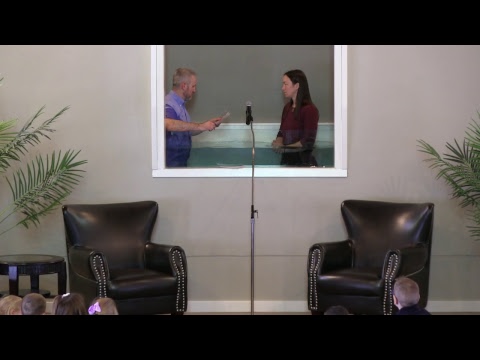
Livestream - Baptism: Carrie Lawson, Catharine Shook
The Great Commission of Matthew 28:18–20 defines the church's narrow, ordered mission: make disciples, baptize those disciples, and teach them to observe all Christ has commanded. This expository treatment of the Commission frames a baptism service for two women who profess saving faith in Christ, arguing that believer's baptism by immersion is the proper New Testament pattern — the sign of a new covenant already sealed by sovereign grace, not a sacrament of hopeful inclusion. The sermon draws on the doctrine of divine simplicity, the Trinity, and the covenant promises to Abraham to show that baptism is administered into the one name of Father, Son, and Holy Spirit, and that this triune God is himself the substance of eternal life.
The Great Commission
Christ's Great Commission in Matthew 28:18–20 provides the church with her complete marching orders: go, make disciples, baptize those disciples, and teach them to observe all that Christ commanded. The authority behind the commission belongs to the risen and exalted Christ, who possesses all authority in heaven and earth; the assurance sustaining it is His promise of perpetual presence to the end of the age. The sermon treats the specific focus of the commission in sequence, defending believers' baptism by immersion as the pattern demanded by the text and the order it establishes — make disciples first, then baptize — against both baptismal regeneration and paedobaptism. The Trinitarian formula of baptism occasions an extended treatment of theology proper, including divine simplicity, impassibility, and the unity of essence in three persons, with warnings against tritheism, modalism, and subordinationism.