
Topic
Ecclesiology
1,163 sermons · All topics

Gentile Inclusion in God's Covenant

Ephesians 2:11–22 presents Gentile inclusion in the covenant promises of God as a third demonstration of divine power, alongside the resurrection of Christ and the salvation of individual sinners. Gentile believers were once Christless, churchless, hopeless, godless, and homeless — aliens from the commonwealth of Israel and strangers to the covenants of promise — but now, through the blood of Christ, they have been brought near and made one new man together with believing Jews. The sermon refutes dispensationalism's two-peoples framework, explains the threefold division of the law (moral, judicial, ceremonial) to clarify what Christ abolished at the cross, and calls the church to a high corporate esteem of the household of God as the dwelling place of the Spirit.

Stephen's Defense, Part 2
Stephen's defense before the Sanhedrin in Acts 7:2–8 turns on a redemptive-historical reading of Abraham that dismantles the charges of blasphemy against the law and the temple. The sermon traces three movements: the call of Abraham (vv. 1–4), the promise of land and descendants made to a childless man (vv. 5–7), and the covenant of circumcision (v. 8). Central to the exposition is the argument that God appeared to Abraham outside the land and apart from any temple, that both circumcision and temple find their terminus in Christ, and that Abraham's justification was by faith alone — his obedience being the fruit, never the ground, of that faith. Listeners are urged to trust not in any outward religious token but in the God of Abraham who sent his Son to fulfill every covenantal obligation his people could not meet.

Genesis 13:1-18
Genesis 13 presents the separation of Abram and Lot as a sustained contrast between faith-driven generosity and sight-driven selfishness. Abram, though possessing the divine promise of the land, voluntarily surrenders his claim to preference and offers Lot first choice — a posture the New Testament repeatedly commends and commands. Lot's eastward movement toward Sodom illustrates the peril of choosing by the physical eye alone, while God's subsequent renewal of the covenant promise to Abram shows that the Word of God is the appointed remedy for the grief that faithfulness can cost. The sermon traces these Abrahamic land and seed promises through Joshua, the Psalms, Isaiah, and the New Testament epistles to demonstrate that their ultimate fulfillment is not territorial but cosmic — in Christ as heir of the world and in a redeemed multitude from every tribe and tongue and nation.

Stephen's Defense, Part 1
Acts 7:1–2 opens Stephen's defense before the Sanhedrin — the longest speech in the book of Acts — and this sermon surveys the whole of that defense before turning to its parts in subsequent weeks. Stephen answers two formal charges: that he has blasphemed Moses and the law, and that he has blasphemed the temple. His argument from Israel's own history demonstrates that the Sanhedrin, not Stephen, has missed the trajectory of redemptive history, because the law points to Christ and the temple was always a signpost, not a final resting place. The sermon closes by calling hearers who are convicted of sin to run to Christ rather than to gnash their teeth at those who declare the truth.

The Rejection of the True Prophet of God
When Ahab of Israel gathered four hundred prophets to sanction his campaign at Ramoth-Gilead, he had already resolved what he wanted to hear — and hated the one man who would tell him the truth. This exposition of 1 Kings 22:1–28 traces the confrontation between King Ahab and the prophet Micaiah, examining how the rejection of the true prophet is ultimately the rejection of the Word of God itself. Drawing on the parallel Paul draws in 2 Timothy 4:1–4, the sermon calls hearers to guard their hearts against the perennial temptation to accumulate teachers who scratch itching ears, and to receive the whole counsel of God — rebuke and exhortation included — as the mercy of a wise and sovereign Father.

The Arrest of Stephen
Acts 6:8–15 narrates the arrest of Stephen, the first Christian martyr, whose faithful ministry and superior argumentation so threatened the religious establishment of Jerusalem that they were forced to resort to false witnesses, mob agitation, and a rigged Sanhedrin trial to silence him. The sermon traces two movements: the mounting opposition to Stephen's Spirit-empowered preaching and sign-working, and the formal charge of blasphemy against the temple and the law of Moses — a charge virtually identical to what was leveled against Jesus before the same court. Stephen's composure before the Sanhedrin, his face shining like an angel's, and his masterful biblical theology of temple and law anticipate his defense in Acts 7, where he demonstrates that the temple and Mosaic ceremonies were always typological pointers fulfilled in Christ. Believers are called to study, exegete, and contend for the truth with the same reasoned fidelity Stephen displayed, and to expect that faithfulness to Christ will attract the same hostility it has always attracted.

The Mission of the Son of Man
Matthew 20:20–28 confronts the persistent problem of pride and the inverted logic of kingdom greatness. Against the backdrop of Christ's third passion prediction, the ambitious request of James and John exposes a desire common to all God's people: the crown without the cross. The sermon works through Christ's twofold instruction — rejecting the Gentile model of top-down authority and embracing servant-greatness — before landing on the theological heart of verse 28: the Son of Man gave his life as a ransom for many, a payment securing the definite salvation of his people and providing the interpretive key to the entire passion narrative of Matthew 21–27.

Free Grace Baptist Church - January 6, 2019 AM
Acts 6:1–7 confronts the Jerusalem church's first internal crisis: the Hellenistic widows were being overlooked in the daily distribution, threatening to pull the apostles away from prayer and the Ministry of the Word. The sermon expounds the apostles' response as a model of church government — the division of labor between those called to preach and those appointed to serve — demonstrating that the two offices of elder and deacon are the Spirit's provision for a church that will inevitably face persecution, corruption, and distraction. The passage closes with a progress report showing that when the Word is freed to go forth, disciples multiply and even inveterate enemies of the gospel are brought to saving faith by efficacious grace. The central application is a call to pray for biblically qualified, praying and preaching men in every congregation.
The Appointment of the Seven
Acts 6:1–7 presents the early Jerusalem church navigating a threat not of persecution or corruption but of distraction — the risk of the apostles being pulled from prayer and the ministry of the Word to adjudicate a dispute over the daily distribution to widows. The passage reveals two offices in the church, each with distinct responsibilities: those called to preach and pray, and those appointed to serve. The sermon traces the problem, the apostles' proposal of qualified men to oversee the practical need, and the resulting provision — a gospel that spreads and even inveterate priestly enemies who are overcome by efficacious grace.

The Condemnation of Heartless Worship
Malachi 1:6–14 exposes a pattern of heartless worship among the priests and people of Israel who offered blind, lame, and stolen animals on God's altar — defective sacrifices that expressed contempt for God's table without a word being spoken. The sermon traces the prophetic structure of divine accusation, petulant human question, and divine refutation, then draws four implications: heartless worship is evil, it is common even among the redeemed, it reduces religion to external formalism, and it provokes the judgment of God. The application turns on the regulative principle of worship — that God alone defines acceptable approach to himself — and calls believers to pursue good theology, responsible leadership, and biblical worship, while calling the unconverted to look by faith to the Lamb of God.

The Decision of the Council
Acts 5:33–42 records the Sanhedrin's decision to beat the apostles and command them to cease preaching in the name of Jesus — and the apostles' rejoicing response. This exposition works through three movements: the council's murderous fury at Peter's gospel proclamation, the qualified wisdom of Gamaliel's historical and theological arguments for restraint, and the apostles' departure rejoicing that they were counted worthy to suffer shame for the name. The sermon calls the congregation to a readiness for persecution that mirrors the apostles', grounded not in stoic resolve but in the altogether loveliness of Christ who is chief among ten thousand.
The Apostles' Defense before the Council
Acts 5:27–32 records the apostles' second arraignment before the Sanhedrin and their bold proclamation of the gospel under direct threat of punishment. Peter's reply — 'we ought to obey God rather than men' — establishes a permanent principle for the church: when civil or religious authority commands disobedience to God, the Christian is bound to God alone. The sermon expounds Peter's gospel proclamation in verses 30–32, treating the incarnation, crucifixion, exaltation, and gift of repentance as a coherent apostolic witness, and closes with exhortations to prepare for persecution, persevere in bold proclamation, and believe the message of forgiveness through Christ.
Free Grace Baptist Church - December 9, 2018 AM
Acts 5:27–32 presents the apostles before the Sanhedrin for the second time, charged with filling Jerusalem with their doctrine and implicating the council in the death of Jesus. This sermon exposits their defense as both a declaration of unwavering allegiance — 'we ought to obey God rather than men' — and a proclamation of the gospel: that the God of their fathers raised up, exalted, and appointed Jesus as Prince and Savior to give the gifts of repentance and forgiveness. Because repentance and faith are divine gifts sovereignly bestowed, not human achievements, the proper response to persecution and opposition is not silence but bold, faithful proclamation of Christ crucified and exalted.

Genesis 10:1-32
Genesis 10, the 'table of nations,' traces the seventy nations descending from Shem, Ham, and Japheth after the flood — but Moses is doing far more than recording ethnography. The genealogy is a deliberate theological narrowing: from all nations, to Shem's line, to Eber's son Peleg, and ultimately to Abraham, identifying the family through whom the promised seed of Genesis 3:15 would come. The chapter also grounds the later Gentile inclusion in the covenant promises of God, confirming Noah's prophecy that Japheth would dwell in the tents of Shem — a reality James cites at the Jerusalem Council from Amos 9.

Liberty and Law

Galatians 5:1–15 presents the Pauline application of justification by faith alone: those whom Christ has liberated from the law's curse must stand fast in that freedom rather than entangle themselves again in the yoke of legal works-righteousness. The sermon works through two headings — the liberty of Christ (vv. 1–6) and the law of love (vv. 7–15) — showing that true Christian liberty is neither license for sin nor grounds for adding human merit to Christ's finished work. Justified believers are called to a gospel holiness expressed through love of God and neighbor, lived out by the Spirit in dependence on Christ's imputed righteousness alone.

Free Grace Baptist Church - November 11, 2018 PM
What is the most important question ever asked, and what hangs on the answer? This sermon expounds Matthew 16:13–20 as a launching point for a seven-point study in the importance of the knowledge of Christ — Christology as the highest of all sciences. Christ is shown to be the scope of all Scripture, the one on whom eternal life hinges, the substance of the gospel, the only way of salvation, the location of every redemptive benefit, the ground of the church's commission, and the present and future hope of every believer. The practical import moves hearers toward Christ-informed worship, humility, beneficence, and steadfast confession.

The Benefactions of the Ascended Christ

The ascended Christ does not cease his mediatorial activity after the resurrection — he pours out benefactions upon his church. Preaching through Acts 2:22–43, this sermon examines two of three categories of those gifts: his charismatic benefactions (the gift of preachers, the act of preaching, and the Spirit's empowerment for proclamation) and his soteriological benefactions (effectual calling and the forgiveness of sins). Believers are urged to pray for their preachers, to come eager to hear the Word preached, and to give thanks daily for the grace by which God raises dead sinners to life in Christ.
The Importance of the Knowledge of Christ
The most important question ever asked — 'Who do you say that I am?' — exposes a crisis in the contemporary church: a Ligonier survey found that 78% of polled evangelical Christians answered that Jesus Christ is the highest creature of God, effectively the ancient Arian heresy. This sermon works through Matthew 16:13–20 as a launching point, pressing seven reasons why the knowledge of Christ is of supreme importance: He is the scope of Scripture, eternal life hinges on a right knowledge of His person, the gospel is about Him, He is the exclusive way of salvation, all redemptive benefits are found in Him, the church's commission is given by and about Him, and our present and future hope rests in Him alone. The practical import of Christology — rightly defined as the dignity of Christ's person and the virtue of His office — is shown to bear on worship, humility, beneficence, good works, and steadfast confession.
The Imprisonment and Release of the Apostles
Acts 5:17–26 records the arrest, miraculous release, and re-arrest of the apostles at the hands of a Sanhedrin dominated by Sadducees — the very men who denied the existence of angels. The angel who opens the prison doors and the apostles who immediately return to temple preaching together demonstrate that no earthly authority can silence the gospel of Jesus Christ. This passage is treated as a paradigm for the church's experience throughout history: faithful proclamation will always draw persecution, yet Christ is building His church and the gates of hell shall not prevail against it. The sermon calls hearers to remember the globally persecuted church, to pursue the boldness of the apostles, and to believe the words of this life — the gospel of forgiveness and imputed righteousness in Christ.
Free Grace Baptist Church - November 4, 2018 AM
Acts 5:17–26 records the arrest, miraculous release, and re-arrest of the apostles by the Sanhedrin — a body conspicuously heavy with Sadducees who denied the existence of angels, yet found their prisoners freed by an angel of the Lord. The sermon argues that the opposition of governing powers, religious authorities, and persecutors throughout history has never been able to suppress the advance of the gospel, because Christ himself is building his church. Hearers are called to remember the globally persecuted church, to preach the 'words of this life' with apostolic boldness, and to trust that the same gospel that turned the ancient world upside down is still the power of God unto salvation.

The Continuing Growth of the Church
Acts 5:12–16 presents the continuing growth of the early church through signs and wonders performed by the apostles, the addition of believers to the Lord, and the healing of multitudes from Jerusalem and surrounding cities. The passage raises a sharp question about the nature and purpose of miraculous signs: were they a permanent feature of church life, or did they serve the specific redemptive-historical function of authenticating the apostolic word? This sermon argues that signs and wonders accompanied Moses, the prophets, Jesus, and the apostles precisely to confirm that God was speaking through them, and that the completed canon renders such confirming signs unnecessary — while the power of God continues in the gospel through the Spirit-wrought conversion of sinners. Believers are called to trust the sufficiency of Scripture, gather in unified worship, fear God genuinely, and rest their hope for salvation in faith in Christ alone.

Genesis 9:1-17
The Noahic covenant establishes not only capital punishment but a comprehensive framework for criminal justice that the civil magistrate is bound to apply. Drawing from Genesis 9, Ecclesiastes 8, and the Mosaic civil law, this sermon traces three lesser forms of punishment — restitution, indentured servitude, and corporal punishment — demonstrating that each is governed by due process, proportionality, and a concern for the dignity of the offender as an image-bearer of God. The modern prison system is evaluated against these biblical categories and found to undermine restitution, rehabilitation, and human dignity alike. Hearers are called to think carefully about what Scripture actually teaches concerning crime and punishment rather than dismissing it as barbaric.
The Judgment of God in the Early Church
Acts 5:1–11 records the deaths of Ananias and Sapphira, struck down by God for lying to the Holy Spirit. This sermon works through the passage under two headings: the deceitfulness of the couple (vv. 1–4) and the death they suffered by God's direct judgment (vv. 5–11). The preacher grounds the episode in a high doctrine of God — holy, just, and a consuming fire — and insists that the primary practical lesson is the fear of God, not merely ethical instruction about honesty. The sermon closes with the gospel: no one can stand before this holy Lord God except Christ alone, and all who are savingly united to Him by faith stand in Him.
Genesis 9:1-7
Genesis 9:1–7 establishes the Noahic Covenant, which mandates capital punishment as a universal and perpetual ordinance rooted in the image of God — not merely an Old Covenant provision for Israel. This study addresses common biblical objections (Exodus 20:13, Matthew 5:38–42, John 8) and pragmatic objections (deterrence, innocence, forgiveness), arguing that none successfully overthrow the divine mandate of Genesis 9:6, which is confirmed and not abrogated by the New Testament. The session urges listeners to think carefully from Scripture rather than from cultural sentiment, trusting that God's law concerning criminal justice reflects his character and serves the stability of the created order.
The Unity and Charity in the Church
Acts 4:32–37 presents Luke's summary portrait of the early Jerusalem church under three headings: its unity, its apostolic instruction, and its generosity. The sermon argues that the voluntary, cheerful sharing of material resources among the believers was not a social programme but the fruit of gospel preaching — the apostles' witness to the resurrection of Christ produced the grace that moved God's people to give. Crucially, the passage grounds charity in justification: the people of God are not charitable in order to be saved, but because they have been saved by grace through faith in Christ alone. Hearers are called to examine whether their own generosity reflects the one-heartedness that true faith produces, and to resist any reduction of Christian giving to state-coerced redistribution or voluntary moralism divorced from the gospel.

Free Grace Baptist Church - October 7, 2018 AM
Acts 4:23–31 records the prayer of the apostolic church immediately after Peter and John were threatened by the Sanhedrin and commanded to stop preaching in the name of Jesus Christ. The sermon examines the structure of that prayer — its invocation of God as sovereign Creator, its exposition of Psalm 2 as prophetic warrant for the opposition Christ and his people face, and its petition for boldness in proclamation — showing how the church's confidence rested not on political calculation but on the certainty that God's decree governs even the rage of rulers against his anointed. The congregation is called to pray Scripture back to God, to find stability in the doctrines of creation and divine sovereignty, and to expect and endure opposition to the gospel without retreating from the duty of proclamation.

Free Grace Baptist Church - October 7, 2018 AM
The corporate prayer of Acts 4 reveals the theological convictions and missional priorities of the early church under threat. Working through the structure of invocation, exposition, and supplication, this sermon argues that the church's primary calling is the bold proclamation of God's Word — not social programming, entertainment, or the removal of opposition. The apostolic church did not pray for safety or the destruction of enemies but for courage to preach in the midst of hostility, a pattern that exposes and corrects the consumer-driven drift of contemporary evangelicalism.
The Prayer of the Church
Acts 4:23–31 records the first corporate prayer meeting of the apostolic church, gathered under threat from the Sanhedrin. The sermon traces three movements in the prayer — invocation of God as Creator and sovereign, exposition of Psalm 2 as prophetic preparation for the rage of nations against Christ and His people, and supplication not for the removal of threats but for boldness to preach the Word. The central argument is that a robust theology of creation, scriptural authority, and divine sovereignty is the necessary foundation of faithful prayer, and that the church's primary calling — confirmed by what the early church actually asked of God — is the bold proclamation of the gospel.

The Deliberation of the Council
Acts 4:13–22 records the Sanhedrin's deliberation over Peter and John following the healing of a lame man and the apostolic proclamation of Christ's resurrection. The council faces an insoluble dilemma: the miracle is undeniable and publicly known, yet to leave the apostles unchallenged is to permit the gospel to spread unchecked. This sermon traces two broad movements — the deliberation of the council (vv. 13–17) and the attempt to silence the apostles (vv. 18–22) — and draws out the benefits of being with Jesus as seen in the apostles' boldness and wisdom, alongside the liabilities that attend any attempt to suppress the word of God. The application presses believers to pray for men of gospel courage and to resist every pressure, civil or ecclesiastical, to silence the name of Christ.
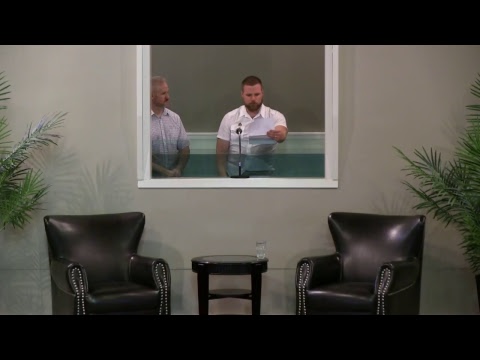
Livestream - Baptism: Wim Kerkhoff
Acts 8:26–40 records the conversion and baptism of the Ethiopian eunuch, and this exposition sets that account against its Old Testament backdrop in Isaiah 53 and Isaiah 56 to show that what is happening is not merely one man's conversion but the fulfillment of covenant promises: the inclusion of those doubly excluded from the assembly of Israel. The sermon works through three movements — the divine appointment of the contact, the gospel communication beginning from Isaiah 53, and the conversion issuing in immediate baptism upon confession of faith. The central application is that God is characteristically and eagerly a saving God, that believers' baptism follows faith as its ordained external sign, and that no sinner — whether powerful or poor, crisis-converted or quietly brought to faith — is beyond the reach of sovereign grace.