
Topic
Christian Living
1,140 sermons · All topics

The Healing of the Nobleman's Son

John 4:43–54 records the second sign Jesus performed in Galilee: the healing of a royal official's son from a distance of sixteen miles. The passage exposes both the deficient faith that demands visible proof before believing and the sufficient power of Christ's spoken word, which heals without physical presence. The nobleman's earnest intercession for his dying son becomes a pointed application for parents to implore God persistently for their children's spiritual wellbeing. The sign itself points beyond physical healing to the life given to all who believe the word of Christ.
Clip: How to pray for civil government during persecution
How should the church pray for civil government, especially under persecution? Drawing from Acts 4:29, 1 Timothy 2:1-7, Proverbs 21:1, Psalm 74:11, and 1 Corinthians 13, this sermon clip presents three biblically grounded petitions — redemption, restraint, and removal — as legitimate and distinct prayers the people of God may bring before the Lord concerning their civil rulers. The clip closes by returning to the early church's example in Acts 4, where the believers, rather than invoking judgment on the Sanhedrin, turned their petition inward, asking God to make them faithful witnesses in the midst of opposition.
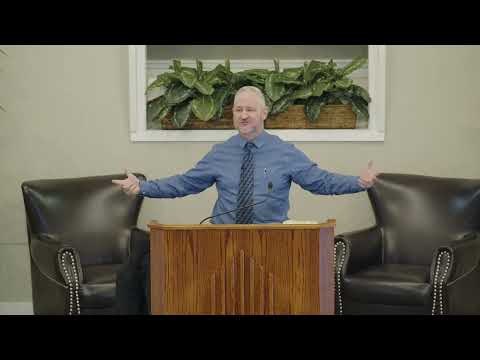
The Prayer of the Persecuted Church
When the early church faced arrest and official prohibition of gospel preaching, its first instinct was corporate prayer — not political agitation or fearful compliance. This exposition of Acts 4:23–31 traces the structure of that prayer: an invocation of God as sovereign Creator, an exposition of Psalm 2 applied to the conspiracy against Christ and his people, and a pointed supplication not for safety or comfort but for boldness to declare the word. The sermon calls the contemporary church to the same God-centred prayer, understanding persecution as something always beneath the sovereign hand of God, and faithfulness in proclamation as the unchanging vocation of every Christian steward.
Clip: God isn't crippled, hindered, silent, or absent
The early church in Acts 4:23–31 prayed not as though God had been caught off guard by persecution, but as though the God who created and governs all things remained sovereignly in control of even the threats of the Sanhedrin. This clip draws out the church's invocation of divine sovereignty as the theological ground of confident petition: to pray is to address the one with absolute ability to fulfill what he has promised and purposed. The application is direct — believers do not come to a God who is crippled, hindered, or absent, but to the sovereign Lord who holds the hearts of all men in his hand.
Exhortations in light of so Great a Salvation

Peter's exhortations in 1 Peter 1:13–16 are grounded in the prior theological indicatives of the epistle: the elect have been saved by the triune God, unto an incorruptible inheritance, and must now respond with corresponding imperatives. Two commands govern this passage — set your hope fully on the grace to be revealed at Christ's return, and live a holy life in all your conduct — each requiring mental intentionality, self-control, and an understanding of the regenerate nature as 'children of obedience.' The sermon argues that sanctification involves both mortification of former lusts and vivification of the new nature of obedience, while insisting that this holiness contributes nothing to justification, which rests wholly on Christ's perfect active obedience and atoning death.

December 15, 2021 - Wednesday Night Bible Study - Exodus 20:7 & 3rd Commandment
The third commandment — 'You shall not take the name of the Lord your God in vain' — is examined through its prohibition, its rationale, and its positive demands. The names of God in Scripture are not arbitrary labels but revelatory vehicles disclosing his being, perfections, and covenant faithfulness; to misuse them is therefore to assault God himself. The sermon surveys specific violations — blasphemy, unlawful oaths, the manipulation of God's name for personal ends, misapplication of providence, and doctrinal heresy — before turning to the positive uses Scripture requires: reverent prayer, lawful oaths, proper worship, and a life of sincere profession that does not give occasion to the enemies of the Lord to blaspheme.

December 1, 2021 - Wednesday Night Bible Study - Exodus 20:1-3 (1st Commandment)
Exodus 20:3 — 'You shall have no other gods before me' — is expounded through both its prohibitions and its positive demands. The first commandment condemns atheism, polytheism, syncretism, idolatry, sorcery, and heresy, while positively requiring the knowledge, love, fear, obedience, trust, and worship of the one true and living God alone. The sermon draws on Romans 1:18-32 to show that ungodliness — disordered thinking about God — is the root from which all societal unrighteousness springs. The sermon closes with a call to repentance, to flee to Christ as the remedy for every violation of this commandment, and to cultivate the knowledge of God as the chief guard against idolatry in its ancient and modern forms.
The Appointment of the Seven
Acts 6:1–7 records the Jerusalem church's response to a logistical crisis that threatened to pull the apostles away from prayer and the ministry of the Word. The passage establishes the diaconate in seed form: men of good reputation, full of the Holy Spirit and wisdom, appointed to serve the practical needs of the congregation so that those charged with preaching and teaching may be undistracted. Expounding 1 Timothy 3:8–13 alongside the Acts text, this sermon examines the qualifications, function, and appointment of deacons, and the connection between a biblically ordered church — with both elders and deacons — and the advance of the gospel.

Introduction to the Decalogue
Exodus 20:1–2, the preface to the Decalogue, reveals God as the sovereign Lawgiver who redeems before He commands — a pattern in which grace precedes obligation that runs from Sinai through the new covenant. The sermon examines three classical uses of the Ten Commandments (civil, pedagogical, and normative) and the threefold division of the law (moral, ceremonial, judicial), demonstrating that the moral law alone abides in its full binding force for all people and all ages. Believers are not justified by the law but are directed by it as the objective standard of sanctification, so that love for God and neighbor is never left undefined or sentimental.

The Conduct of a Faithful Minister
What does faithfulness look like in the life and ministry of a gospel minister? Expounding 1 Timothy 4:12–16 as a capstone to a study of elder qualifications in 1 Timothy 3:1–7, this sermon examines four dimensions of ministerial conduct: the minister's example before the congregation, his public ministry of reading, exhortation, and doctrine, his personal growth through sustained meditation on the Word, and his perseverance in both personal piety and sound teaching. The closing application extends these same marks to the congregation, calling the saints to receive the Word with joy, reject heresy with discernment, pursue Christian virtue, and prize the public means of grace.

Live Stream - Nov 14, 2021
What did the Old Testament prophets understand about the salvation they foretold, and what does their searching mean for believers today? Expounding 1 Peter 1:10–12, this sermon argues that the prophets fully understood they were prophesying of a coming Messiah-King, but lacked the complete revelation of who he would be and when he would come — a fullness disclosed only in the New Testament through the apostolic proclamation of Jesus Christ. The pattern of Christ's sufferings followed by glory is the pattern appointed for all who are in him, so that present trials are not anomalies but the ordained path to the inheritance. Believers are called to diligent study of the completed revelation, to be astonished by so great a salvation, and to endure suffering with joy by fixing their gaze on what the prophets longed to see and the angels strain to behold.

The Church's Compassion for Sufferers
Hebrews 13:3 commands believers to remember imprisoned and mistreated Christians not merely as a cognitive acknowledgment but as an active, embodied solidarity — 'as if chained with them.' The sermon expounds the duty, the objects, and the reason for this command, tracing the antithesis between the seed of the woman and the seed of the serpent from Genesis 3:15 through the New Testament persecution accounts. Drawing on 1 Peter 4, Hebrews 11, and Acts 12, the preacher grounds the church's compassion for sufferers in the one-body reality of 1 Corinthians 12, calling believers to importunate intercession for the persecuted church worldwide and to trust that God gives sustaining grace in the moment of trial.

The Testimony Concerning the Bridegroom
John 3:22–30 presents the final recorded testimony of John the Baptist in the Fourth Gospel, in which John responds to his disciples' anxious complaint that all are coming to Jesus rather than to him. John's response is structured around four declarations: the sovereignty of God governs the origin and success of every ministry; his own role was never to be the Christ but the forerunner sent before him; his joy is that of the friend of the bridegroom who delights simply to stand in the presence of the bridegroom and hear his voice; and therefore Christ must increase while he must decrease. The sermon draws out both the Christological weight of the bridegroom image — rooted in the Old Testament covenant between God and Israel and fulfilled in Christ and his church — and its practical implications for how ministers and all God's people resist pride by being increasingly occupied with Christ rather than with themselves.

Exodus 17
Exodus 17 presents Israel's double failure at Rephidim: a murmuring complaint against Moses for lack of water, and then the subsequent victory over the Amalekites through Moses's upraised rod and Joshua's sword. The murmuring is exposed not merely as weakness but as theological insult — the question 'Is the Lord among us or not?' impugns the faithfulness of a God who has already split the sea, rained bread from heaven, and sworn to bring His people to the land of promise. The sermon draws out two counterbalancing lessons: the unrelenting faithfulness of God despite His people's unbelief, and the Reformed doctrine that divine sovereignty does not eliminate the use of means — Israel must both hold up the rod in dependence on God and swing the sword in disciplined obedience.

The Qualifications of Elders, Part 3
What qualifies a man for the office of elder extends far beyond his pulpit gifts — Paul's requirements in 1 Timothy 3:1–7 encompass his household, his maturity in the faith, and his standing before outsiders. This third installment in an expository series on elder qualifications examines three remaining criteria: the man's domestic faithfulness (ruling his wife and children well), his experience in the faith (not a novice), and his testimony among those outside the church. The sermon draws on Ephesians 5–6, Titus 1, Proverbs, and Spurgeon's 'Lectures to My Students' to show that these qualifications protect both the church and the man being considered for ministry.
Exodus 16 - Bread from heaven
Exodus 16 records Israel's complaint in the wilderness and God's provision of quail and manna, revealing that grumbling against His appointed servants is ultimately grumbling against God Himself. The chapter is expounded under three headings: the promise of bread (vv. 1–12), the presence of bread (vv. 13–31), and the preservation of bread (vv. 32–36). The manna narrative carries a Sabbatarian argument — the double portion on the sixth day presupposes Sabbath observance that predates Sinai, pointing back to Genesis 2 and forward to Exodus 20 and Hebrews 4. The episode also functions typologically, anticipating Christ as the true bread from heaven in John 6, and calls God's people in every covenant administration to daily dependence on their Provider rather than grumbling against His providence.

The Qualifications of Elders, Part 2
What does Scripture require of those who lead and teach the church? Expounding 1 Timothy 3:1–7, this sermon works through the apostle Paul's qualifications for the elder-bishop-pastor office, arguing that these standards are not perfectionist ideals but demonstrated graces and virtues that the church must require of any man considered for gospel ministry. The qualifications are examined under four heads: the man's desire and its right motives, his personal conduct, his domestic faithfulness, and his testimony among outsiders, with particular attention given to the distinction between blamelessness and sinlessness, the meaning of 'husband of one wife,' and the danger of a Gnostic misreading of the prohibition on wine. The sermon closes with a call to churches to pursue both the edification of the saints and the evangelistic mission that God ordained through the office of pastor-teacher.

A Practical Example for the Suffering Christian
Psalm 61 presents David at the edge of the wilderness — heart overwhelmed, throne usurped, kingdom collapsing — as a concrete example of what it looks like for a suffering believer to cry out to God, refocus on covenant faithfulness, and be brought from despair to joyful praise. The sermon traces three movements in the psalm: the cry for help from the brink of despair (vv. 1–2), the deliberate refocusing on God's past faithfulness, the Davidic covenant, and the eternal inheritance of the Messiah's kingdom (vv. 3–7), and the resulting resolve of praise (v. 8). David's process is not mystical — it is conscious, disciplined engagement with the means of grace: prayer, meditation on covenant promises, and fixing the mind on the eternal kingship of Christ. Suffering Christians are exhorted to follow that same pattern rather than abandoning the means of grace at the very moment they are most needed.

Exodus 14
Exodus 14 records the crossing of the Red Sea — a chapter whose driving theme is not merely Israel's deliverance but God's self-glorification over Pharaoh and his army. The exposition works through two main movements: the plan of God (vv. 1–14), in which God sovereignly directs Israel's route and hardens Pharaoh's heart so that He may gain honor, and the power of God (vv. 15–31), in which divine promise, protection, and action result in the salvation of Israel and the destruction of Egypt. Israel's fear and complaint throughout the chapter expose a chronic lack of faith, while Moses' brief but confident exhortation — 'Do not be afraid; stand still and see the salvation of the Lord' — models the response that faith in God's promises produces.
Exodus 13 - The consecration of the firstborn
Exodus 13 grounds the consecration of Israel's firstborn in the redemptive logic of the tenth plague: because God spared Israel's firstborn while striking Egypt's, Israel's firstborn belong to him — to be set apart, sacrificed if clean, or redeemed if human or unclean. The chapter's twin emphases on perpetual remembrance through the Feast of Unleavened Bread and the catechetical instruction of children press the same truth across generations: God's people are defined by what God has done for them, not by their own merit or strength. The typological weight of substitutionary redemption — one life in the place of another — finds its terminus in the Lamb of God who takes away the sin of the world, making these ordinances intelligible only in light of Christ. Practically, the sermon calls the congregation to remember the mighty works of God, to sacrifice freely in gratitude for redemption received, and to pass this theological inheritance faithfully to the next generation.

The Pharisee and the Publican
This exposition of Luke 18:9–14 examines the parable of the Pharisee and the publican as a penetrating diagnosis of self-righteousness and a declaration of justification by faith alone. The sermon works through the occasion of the parable, the contrasted characters of the two men, and Christ's concluding verdict that the tax collector — not the Pharisee — went home justified. The central contention is that acceptance before God rests entirely on the imputed righteousness of Christ received through faith, not on any moral performance or religious accomplishment, and that those who understand this will be marked by humility rather than contempt toward others.

Live Stream - August 22, 2021

Joy and grief can coexist in the Christian life because they draw from different sources: grief responds to the realities of the temporal realm, while joy is rooted in the heavenly realities secured by Christ's resurrection and ascension. Expounding 1 Peter 1:6–9, this sermon works through three movements: the paradox of Christian experience (simultaneous rejoicing and grieving), the purpose of trials (proving and purifying genuine faith as gold is proved by fire), and the principle of maintaining joy (a growing, knowledge-grounded faith in Christ). The congregation is called to resist both stoic denial of suffering and carnal despair, and instead to cultivate an ever-deepening knowledge of Christ through the Word, prayer, and the local church, so that joy — rooted in the guaranteed inheritance awaiting believers — remains constant through manifold trials.

1 Peter 1:6-9
The paradox of simultaneously rejoicing and grieving marks the Christian life as Peter describes it in 1 Peter 1:6–9. Trials are not accidents of providence but a necessary divine instrument: God uses suffering to prove and purify a faith that is more precious to Him than refined gold is to men, and that tested faith will issue in praise, honor, and glory at the revelation of Jesus Christ. The principle for maintaining joy amid suffering is not mere willpower but a growing, knowledge-grounded faith fixed on Christ — His cross, His resurrection, and the inheritance He has secured — so that joy becomes the constant fruit of right focus rather than a fluctuating response to circumstances.
1 Peter 1:3-5
The believer's hope of glory, grounded in 1 Peter 1:3–5, is not a vague aspiration but a certain inheritance secured by God's sovereign mercy and the resurrection of Christ. Peter's doxology unfolds the doctrine of salvation under three headings: God the Father as its author, the nature of that salvation as a living hope pointing to a new creation, and the certainty of preservation by divine power. Because both the inheritance and the heirs are kept — the one reserved in heaven, the other shielded by omnipotence through faith — believers facing trial are called to reorient every earthly sorrow toward the glory that is to come.

Live Stream - August 15, 2021
Drawing from 2 Timothy 1:8–12, this sermon confronts the church's tendency to romanticize suffering in the abstract while shrinking from it in practice. The gospel of Christ is inherently shameful by the world's measure — Christ died as a condemned man, bearing public disgrace — and those who hold to it will face ridicule, social pressure, and even imprisonment. The only ground for standing firm under such conditions is not personal resolve but the power of God, who purposed salvation in Christ before time began, abolished death through his appearing, and promises to preserve his gospel and his church until the last day.
2 Timothy 1
Paul's final letter charges Timothy — and every believer — not to be ashamed of Christ's gospel or of those who suffer for it. Expounding 2 Timothy 1:8–12, this sermon confronts the tendency to romanticize persecution in the abstract while failing to stand when actual pressure comes, drawing pointed application from recent governmental restrictions on church gatherings. The ground of unashamed endurance is the gospel itself: God's eternal purpose of grace, accomplished in Christ who has abolished death and brought immortality to light, and entrusted to a church that shall never finally fail. Christians are called to pray for courage in times of peace precisely so they do not waver when suffering arrives.
The Departure of Paul
Paul's farewell words in 2 Timothy 4:6–8 — poured out as a drink offering, having fought the good fight, finished the race, and kept the faith — are examined as a model of faithful perseverance unto death. The sermon argues that the confidence Paul expresses at the 11th hour of his life was inseparable from the faithfulness he exercised throughout every preceding hour, and that the crown of righteousness he anticipates is entirely a gift of God's grace, not a payment for services rendered. Believers are called to examine whether they are now fighting, running, and keeping the faith so that they may, by grace, make the same confession at the end of their days; and unbelievers are warned to consider the infinite worth of Christ, the certainty of judgment, and the righteousness the righteous Judge freely offers in the gospel.

The Neglect of Weighty Matters
Jesus condemns the scribes and Pharisees in Matthew 23:23–24 not for tithing mint, anise, and cumin, but for doing so while neglecting the weightier matters of the law: justice, mercy, and faith. The Pharisaic imbalance is neither ancient nor extinct — the same tendency to obsess over religious minutiae while bypassing the moral and covenantal substance of God's law persists in the church today. Drawing on Micah 6:8, Hosea 6:6, and the broader prophetic tradition, this exposition argues that genuine obedience to God is universal and balanced, not selective and performative.

The Ministry of the Word
What is the basis and method of God's ordained means for saving sinners? This sermon on 2 Timothy 4:2 argues that the preaching of the Word stands as the primary instrument through which God saves the lost and builds his church, grounding that claim in the logical chain of Romans 10, the divine pleasure announced in 1 Corinthians 1, and the final apostolic charge of Paul to Timothy. The sermon challenges the contemporary drift toward audience-driven church strategies, calling both preachers and hearers to fidelity to the proclaimed Word as the irreplaceable means of grace.

The Elements of Family Worship
Deuteronomy 6:6–7 commands parents to teach God's word diligently to their children in every season of daily life, and this sermon traces that mandate across both Testaments — from Abraham's household religion in Genesis 18, through the Psalms and Proverbs, to Paul's charge in Ephesians 6:4 and the example of Timothy's mother and grandmother. The preacher argues that family worship is a clear biblical obligation whose specific form is left to the conscience, and that failure to instruct children in the fear of God — illustrated negatively by Eli and Samuel's sons — leaves them unguarded against a culture actively hostile to Christ. Fathers and mothers are exhorted to commit first to public Lord's Day worship, to honour the sanctification of the Sabbath, and then to establish a family altar consisting of Scripture reading, prayer, and singing — scaled appropriately for their household — as the primary means of passing covenant knowledge to the next generation.