
Topic
Assurance
15 sermons · All topics
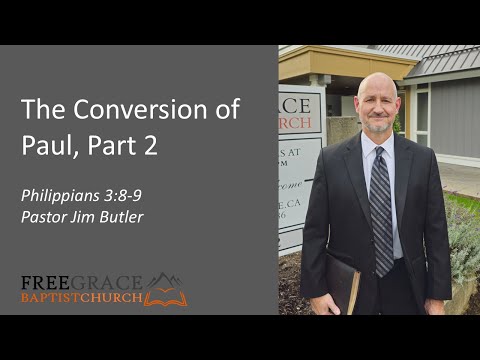
The Conversion of Paul, Part 2

Philippians 3:8–9 presents the Apostle Paul's radical revaluation of all things in light of the surpassing worth of knowing Christ Jesus as Lord. Working through verse 8, this sermon traces three movements: Paul's declaration that he counts all things loss, his motivation in the excellence of the knowledge of Christ, and his conviction that everything else — past religious pedigree, present suffering, future comfort — is rubbish compared to gaining Christ. The sermon argues that justification by faith alone is the sole ground of acceptance with God, the only defense against the devil's accusations, the only source of true peace, and the only sure foundation of assurance — grounding each application in Paul's own apostolic biography and in Romans 8 and Romans 5.

The Crucifixion of Christ, Part 4
The sixth saying of the Lord Jesus Christ on the cross — 'It is finished' (John 19:30) — is not a cry of defeat but a declaration of completed victory. The single Greek word tetelestai, a perfect tense verb signifying a past completed action with abiding present results, encompasses the fulfillment of all Old Testament Scripture, the completion of Christ's earthly suffering, the full accomplishment of the Father's will, and the definitive salvation of his people. The sermon works through the typological witness of the law (Passover, Day of Atonement, the bronze serpent, the sacrificial system), the prophetic witness of Isaiah and Jeremiah, and the Psalms, showing that Christ's cry from the cross brings every shadow and promise to its intended end. The application presses the finished work as the sole ground of justification, assurance, peace with God, and security against every accusation — calling both believer and unbeliever to look to Christ alone and live.

Ask FGBC #38: Faith vs Trust, Are They the Same?
Faith and trust are examined as near-synonymous terms in the Greek New Testament, with the threefold schema of assent, belief, and trust acknowledged but handled with care lest 'trust' become a works-oriented addition to saving faith. The sermon addresses whether doubt and fear disqualify a person from genuine saving faith, arguing from Matthew and Luke that believers in Scripture feared and doubted while possessing true faith. Perseverance is grounded not in the strength of a believer's grip on Christ but in the immutability of God's electing decree, the intercession of Christ, and the abiding of the Spirit, as articulated in 1689 LBCF 17.2. The practical counsel given is to strengthen weak faith through Scripture memory, doctrine, and the means of grace.

Ask FGBC #32: Are there different types of faith? Ie. temporary, historical, saving
Scripture distinguishes several types of faith, and only saving faith — the kind that receives and rests upon Jesus Christ — differs qualitatively, not merely in degree, from historical or temporary faith. Historical faith acknowledges the facts about Christ without personal trust; temporary faith produces an apparent profession that does not endure. Saving faith, even in its weakest form, is united to Christ as its object and is accompanied by all other saving graces, working through love. The 1689 London Baptist Confession of Faith chapter 14 paragraph 3 grounds the distinction: even weak saving faith is different in kind from the faith of temporary believers, and it will ultimately attain full assurance through Christ, the author and finisher of our faith.

Chapter 17 - of the Perseverance of the Saints (part 1)
The 1689 London Baptist Confession chapter 17 on the perseverance of the saints is examined through its first two paragraphs, grounding the doctrine in the preserving power of the triune God rather than in the free will of the believer. The Confession is shown to be both rigorously doctrinal and remarkably practical, acknowledging the storms, unbelief, and apparent withdrawal of God that saints genuinely experience while insisting that these cannot sever the elect from grace. The foundation of perseverance is traced through the immutability of the decree of election, the merit and intercession of Christ, the abiding of the Spirit, and the nature of the covenant of grace — directly opposing both Roman Catholic and Arminian accounts that make final salvation contingent on human cooperation. Believers are exhorted to feed their souls on the promises of the covenant of grace precisely because perseverance is secured by God's unchangeable love, not by their performance.

March 24, 2024

Romans 5:1 declares that justification by faith produces peace with God through the Lord Jesus Christ — a peace that assumes a prior condition of enmity, guilt, and divine wrath. This sermon traces that peace through the whole of Scripture, from its Old Testament promise in Isaiah and Micah, through its announcement at the nativity, to its accomplishment in Christ's active and passive obedience. The principal pastoral application is that Christian assurance rests not on the ebb and flow of one's walk but on the immutability of the divine decree, the intercession of the ascended Christ, and the covenant of grace.

Ask FGBC #4: Is accepting salvation a choice? (Hyper-Calvinism)
Is accepting salvation a choice, and does that choice conflict with divine election? This Q&A addresses the relationship between the general call of the gospel and the effectual call of God, arguing that human faith is a real act of the will, but one that presupposes prior regeneration — sinners are dead in trespasses and sins and must be born again before they can believe. The discussion also addresses the pastoral problem of assurance, directing struggling believers away from introspection and personal performance toward the objectivity of Christ's finished work and his ongoing intercession as High Priest and advocate.
Is Your's a Borrowed Faith?

The narrative of Joash in 2 Chronicles 24 raises a searching question for every professing believer: is your faith genuinely your own, or have you been living on the borrowed spiritual capital of a godly mentor? Conrad Mbewe traces three lessons from the passage — the providential gift of godly role models, the dangerous possibility of a faith that is merely reflected rather than rooted, and the grace of God that erects barriers of conscience and prophetic warning along the road of unbelief. The sermon closes with a direct appeal: while godly influences remain within reach, now is the moment to examine whether your faith is a living reality wrought by the Spirit through regeneration, and if not, to come to Christ with all your brokenness.

Free Grace Baptist Church - October 22, 2017 PM
First John 2:3–6 confronts a perennial problem: people who claim to know Christ while living in blatant disregard of his law. The sermon works through two tests John gives for genuine knowledge of God — keeping Christ's commandments as an evidence of salvation (not its ground), and walking as Christ walked as a fruit of union with him. Obedience is not the condition for knowing God but the necessary mark and assurance of it, grounded not in human effort but in the imputed righteousness of Christ and the sanctifying work of the Holy Spirit.

Free Grace Baptist Church - February 21, 2016 PM
1 Timothy 1:15 — 'This is a faithful saying and worthy of all acceptance, that Christ Jesus came into the world to save sinners' — is expounded as a self-contained creedal summary of the gospel. The sermon moves through three structural heads: the introduction to the creed (its truthfulness and trustworthiness), the creed itself (the person of Christ, the doctrine of the Incarnation, and the certainty of his saving work), and the demonstrable confirmation of the creed in the conversion of Paul as chief of sinners. Hearers are called to rest their assurance not in inward evidences but solely in the finished, effectual work of Christ Jesus, and unbelievers are urged to receive the only Savior who saves to the uttermost.
Of Adoption (12.1)
The doctrine of adoption — that God, by free grace, receives the justified into the number and privileges of His sons — is the subject of 1689 London Baptist Confession chapter 12, paragraph 1. The teaching works through five aspects of adoption: its origin in God's eternal loving-kindness and decree, its procurement by the Lord Jesus Christ, the Holy Spirit's role as guarantor and testifier, the recipients (the elect alone), and its nature as an objective legal determination made by God as Father. The doctrine is grounded in the ordo salutis, follows logically from justification, and calls believers to be grounded in the joy of adoption, to walk as children of God, to welcome fatherly chastisement, and to love their brothers and sisters in the household of God.

The Comprehensiveness of Salvation
Jude 1–2 presents a compressed theology of salvation — the called, sanctified, and preserved — that serves as the launching pad for a full-orbed defense of the perseverance of the saints. Drawing on the golden chain of Romans 8:29–30, the new covenant promises of Jeremiah 31 and 32, the priestly intercession of Hebrews 7, and the doxology of 1 Peter 1:3–5, the sermon argues that perseverance is grounded not in the believer's own holiness but in the inviolable, triune work of God from election to glorification. The doctrine is presented under four heads — the perfect plan, promise, performance, and power of God — and applied as the only sure ground of soul comfort, soul-stirring doxology, and gospel-worthy conduct.
The Covenant of Redemption
The Covenant of Redemption (pactum salutis) is the eternal, intra-trinitarian pact in which the Father gave a definite people to the Son, the Son covenanted to serve as their surety and mediator, and the Spirit proceeds to apply the accomplished redemption — forming the unchanging foundation upon which the Covenant of Grace rests in history. Working through key texts in John, Hebrews, Ephesians, Philippians, and Acts, the sermon demonstrates that Christ's obedience, death, and exaltation were not afterthoughts but the execution of a pre-temporal divine agreement. Because salvation rests on the Father's eternal purpose and the Son's perfect obedience rather than on the believer's performance, the doctrine of the Covenant of Redemption is presented as the primary ground of lasting Christian comfort, peace, and perseverance.
The Two Claims
Matthew 7:21–23 presents one of the most sobering scenes in Scripture: a multitude of religious professors standing before Christ on the day of final judgment, presenting their prophesying, exorcisms, and miraculous works as credentials for entrance into the kingdom — only to hear the words, 'I never knew you.' This sermon argues that Jesus is not here calling his people to try harder or obey more, but is exposing and condemning works righteousness as the very lawlessness he will judge. The false professors' error is not a lack of religious activity but a failure to rest in Christ alone, whose perfect obedience is the sole ground of the sinner's acceptance before God. Assurance of salvation is found not in rigorous self-examination of one's works but in extra-spective faith resting on the free promises of God in the person and work of Jesus Christ.
Sheep Don't Hit the Fence
Romans 8:28–39 serves as the launching text for a defense of the doctrine of the perseverance of the saints — that true Christians do not totally or finally fall away from the faith, but are certainly kept unto eternal salvation. The sermon addresses common objections (biblical admonition to persevere, and texts such as Hebrews 6:4–8) before tracing five objective grounds of perseverance: the immutability of God's eternal decree of election, the perfection of Christ's cross work and intercessory work, the oath of God, the abiding of the Holy Spirit as seal and guarantor, and the nature of the covenant of grace as expressed in the New Covenant. The hearer is called to rest assurance not on inward evidences but on these objective, Trinitarian, and covenantal foundations, and the unbeliever is urged to believe on Christ and so enter into that certain keeping.