
The Christian Mother

What does it mean to be a Christian mother, and where does a mother's calling derive its power? Preaching from Proverbs 31:30, this sermon argues that a woman who fears the Lord is the only adequate foundation for the vocation of motherhood — not sentimentality, moral effort, or natural affection. Four aspects of the Christian mother are examined in order: her spiritual condition (she is saved by grace, not by good mothering), her influence (immeasurable and God-ordained), her authority (grounded in the Fifth Commandment itself), and her responsibility to instruct, model, discipline, and love her children in light of law and gospel. Mothers are urged to find their ultimate encouragement not in their own performance but in the righteousness of Christ imputed to them by faith alone.
The Lord's Concern for Widows, Part 1
The fifth commandment's requirement to honor parents grounds the Apostle Paul's instruction in 1 Timothy 5:3–8 that widows who are 'really widows' — left alone, without family, trusting in God — be financially supported first by their believing children and grandchildren, and only then by the church. The word 'honor' in verse 3 carries the same material force it bears in verse 17, meaning tangible provision of food, clothing, and shelter, not mere esteem. God's covenantal concern for the defenseless widow runs from Deuteronomy through the Gospels, establishing that care for widows is an expression of genuine piety, not an optional act of charity. The sermon presses the sobering warning of verse 8: to neglect one's widowed mother or grandmother is not merely a lapse in duty but a denial of the Christian faith itself, placing the professing believer below the standard even pagans maintain.
Judges 12
Judges 12 brings the Jephthah cycle to its close with a civil war provoked by Ephraimite pride, the famous shibboleth test, and the sparse notices of three minor judges. The Ephraimite confrontation exposes a recurring flaw — the desire for personal glory rather than gratitude to God for deliverance — and Jephthah's response with the sword rather than diplomacy reveals both his character and the escalating moral disorder of the period. The absence of the formulaic 'rest in the land' after Jephthah's judgeship signals Israel's deepening Canaanization. Throughout the study, the central interpretive principle is maintained: the judges, however flawed, are not the heroes — Yahweh is, and they point forward to the true deliverer, the Lord Jesus Christ.

The One Who Justifies the Ungodly
Romans 4:5 announces that God justifies the ungodly — a declaration that seems to violate the standard of Proverbs 17:15, which condemns justifying the wicked. The doctrine of imputation resolves the apparent tension: God reckons, credits, and accounts righteousness to sinners not on the basis of moral transformation but on the basis of Christ's active and passive obedience received through faith alone. Three acts of imputation structure the biblical argument — Adam's sin imputed to his posterity, the elect's sin imputed to Christ, and Christ's righteousness imputed to the elect — establishing that the gospel upholds rather than undermines divine justice. This sermon was preached in the context of a Lord's Supper service, directing communicants away from any sense of personal worthiness and toward the finished work of Christ as the sole ground of acceptance before God.

The Appointment of the Seven
Acts 6:1–7 presents the appointment of the first seven men set apart to serve the Jerusalem church, men whom later apostolic instruction in 1 Timothy 3:8–13 would identify as deacons in the formal sense. The sermon works through three movements: the temporal problem of neglected widows that threatened to consume the apostles' calling, the apostolic proposal demanding spiritually qualified men of good reputation full of the Holy Spirit and wisdom, and the divine provision confirmed by the spread of the Word. The governing argument is that the diaconate exists precisely to guard the church's primary ministries of prayer and gospel proclamation, freeing elders to devote themselves continually to those ends. The sermon concludes by directing both the newly installed deacons and any unconverted hearer to Christ, the Son of Man who came not to be served but to serve and to give His life a ransom for many.
Judges 11:29-40
Judges 11:29–40 presents one of the most disputed passages in the Old Testament: Jephthah's vow and its fulfillment. This study argues, against the view that Jephthah's daughter was merely consecrated to perpetual virginity, that the plain meaning of the text — confirmed by the language of burnt offering, the grief of the father, the lamentation of the daughters of Israel, and the brevity of the narrative's account of her death — demands the literal interpretation that Jephthah carried out a human sacrifice. The vow is shown to be unnecessary, manipulative, presumptuous, and wicked, yet God's sovereign deliverance of Israel is not thereby frustrated, and Jephthah's presence in Hebrews 11 demonstrates that the sins of the godly do not utterly extinguish their faith. The episode ultimately points beyond Jephthah to the perfect Deliverer who, in Gethsemane, made no rash bargain with his Father but submitted in full obedience.
The Feeding of the Five Thousand
The feeding of the five thousand in Matthew 14:13–21 is not merely a record of physical provision but a visible parable designed to compel a verdict about the identity of Jesus Christ. His compassion toward an interrupting crowd, his sovereign command over the multitudes, and his multiplication of five barley loaves and two fish to satisfy more than five thousand people together demonstrate that he is the greater Moses and the greater Elisha — the Son of God in whom all sufficiency resides. The bread-of-life discourse of John 6 shows that those who received loaves and fish without receiving the Savior had missed the point entirely, and the sermon closes with Peter's confession as the model response: 'Lord, to whom shall we go? You have the words of eternal life.'
Judges 11:1-28
Judges 11:1–28 presents Jephthah as an unlikely deliverer — a man born of a harlot, expelled from his father's house by his half-brothers, who nonetheless rises to lead Israel against Ammonite aggression. The passage is read in two parts: first, the character and commissioning of Jephthah as a figure who typifies Christ in rejection and subsequent exaltation; second, Jephthah's remarkable diplomatic appeal to the king of Ammon, in which he dismantles the Ammonite territorial claim through history, theology, and legal precedent. The session closes with the observation that Israel's pattern of approaching God only in distress — mirrored in Gilead's approach to Jephthah — is a warning against a manipulative, technique-driven relationship with God, calling hearers instead to faithful, consistent submission to His lordship.

The Fact of the Resurrection
John 20:1–23 presents three convergent lines of evidence for the bodily resurrection of Jesus Christ: the empty tomb witnessed by Peter and John, the personal appearance to Mary Magdalene, and the appearance to the assembled disciples. The sermon examines each episode as a first-hand historical account, noting the specific details — the folded grave clothes, the testimony of a woman, the skepticism of the disciples — that authenticate rather than undermine the record. Running throughout is an apologetic case against the mass-hallucination and grave-robber theories, grounded in the nature, variety, and consequences of the post-resurrection appearances. The resurrection is shown to be the Father's public vindication of the Son's substitutionary work, and hearers are called to trust the living Christ whose empty tomb guarantees both judgment for unbelievers and justification for all who believe.

The Significance of the Resurrection
Romans 4:25 presents what Charles Hodge called 'a comprehensive statement of the Gospel': Christ was delivered up because of our offenses and raised because of our justification. This sermon expounds the two parallel clauses of that verse, arguing that the death of Christ was a particular, substitutionary, propitiatory sacrifice for the definite sins of God's elect, and that the resurrection is the Father's public attestation that the atonement was fully accepted and justification secured. The practical implication is that justified sinners — not improved moralists — have peace with God and an unshakeable hope grounded not in exemplary preaching but in the historical, redemptive work of Christ.
Judges 10
Judges 10 presents two minor judges (Tola and Jair), a deepened cycle of Israelite apostasy, and a divine response that exposes the difference between genuine repentance and utilitarian manipulation of God. The chapter shows Israel pursuing every available idol — seven foreign pantheons catalogued to underscore total spiritual corruption — and God threatening judicial abandonment before relenting not because of Israel's sincerity but because of his own covenantal faithfulness to Abraham's seed. The lesson driven home is that God's deliverance does not rest on the quality of the people's repentance but on the intensity of his compassion and his commitment to preserve a people through whom Christ the deliverer would come.

The Murder of John the Baptist
Matthew 14:1–12 narrates the imprisonment and beheading of John the Baptist by Herod Antipas, and this exposition argues that the account is ultimately about Jesus Christ — the fate of the forerunner foreshadows the fate of the Coming One. The sermon traces three movements: the imprisonment of John for faithful law-preaching, the morally depraved celebration that occasions his murder, and the execution itself, which Matthew frames as a typological preview of the crucifixion. The characters of Herod and Herodias are examined as New Testament counterparts to Ahab and Jezebel, whose guilt-driven conspiracy to silence God's law illustrates that no sin can be covered except through the death of Christ. Hearers are called to forsake self-made coverings for sin and to believe on the one in whom alone is forgiveness and the gift of righteousness.

The Justice of God in His Merciful Election

Romans 9:14–18 confronts the charge that God acts unjustly in electing particular sinners to salvation while passing over others. Drawing on God's declaration to Moses in Exodus 33 and His purpose in raising up Pharaoh, the sermon argues that divine election is just precisely because God, as the omnipotent Creator and sovereign Judge, retains the absolute right to bestow mercy on whom He wills and to harden whom He wills — a right He expressly claims and which no creature may dispute. The sermon situates election within the full ordo salutis and the pactum salutis, showing predestination to be the eternal foundation of every benefit of salvation applied in history. Hearers are called to find assurance in the marks of grace, to trust God's immutable purposes, and to proclaim the gospel as the ordained means by which the elect are called forth.
Judges 9
Judges 9 narrates the brutal rise and fall of Abimelech, the illegitimate self-appointed king of Israel who murders 69 of his half-brothers and terrorizes the city of Shechem before meeting his end beneath a millstone dropped by a woman in Thebes. The chapter is examined under four headings: the state of Israel at Gideon's death, Abimelech's treachery, Jotham's fable and curse, and the divine judgment that fulfills that curse in precise detail. Central to the exposition is Jotham's parable of the trees and the bramble, which indicts not merely Abimelech's usurpation but the folly of those who appoint unqualified men to lead. The sermon closes with application to church governance: qualified leadership according to Scripture is not optional, and God's people bear responsibility when they place brambles in positions of authority.

The Excellence, the Wonder, and the Glory

Hebrews 1:1–4 presents the glory of Jesus Christ as the culmination and surpassing excellence of all divine revelation, redemption, and reign. This sermon works through the opening verses of Hebrews under three headings: the excellence of Christ's revelation over the partial and preparatory word of the prophets, the wonder of his redemption accomplished by one who is simultaneously the radiance of the Father's glory and the sovereign upholder of the universe, and the glory of his present reign at the right hand of the Majesty on high. Believers are called to rejoice in the removal of the guilt of sin through Christ's exclusive and perfectly executed atoning work, while those outside Christ are warned that to neglect so great a salvation leaves no escape.

The Betrayal and Arrest of Jesus
John 18:1–11 records the betrayal and arrest of Jesus, yet John's Gospel frames the scene not primarily as a display of suffering but as a revelation of divine glory. The great I AM steps forward to meet his captors, causes a detachment of soldiers to fall to the ground by the mere utterance of his name, and willingly drinks the cup of God's wrath — not as a victim, but as the covenant mediator and surety who executes the eternal decree of the Father. The sermon calls hearers to resist a narcissistic reading of the passion narratives and instead to bow in worship before the obedient Son of God, whose vicarious, substitutionary death is the sole ground of the sinner's justification.

The Deliverance of Israel by Barak (and Jael)
Judges 4 presents the recurring cycle of Israel's sin, oppression, and God-wrought deliverance — here through Barak and Jael against the Canaanite commander Sisera. The chapter resists two common misreadings: that Deborah is the judge-deliverer, and that Jael's act was treacherous murder. Both women serve as agents of Yahweh's sovereign agenda, not champions of social revolution. The sermon traces how God's sovereign grace operates through improbable instruments, always ensuring that the glory of victory belongs to Him alone, and calls the congregation to faithful obedience while trusting Christ, the second Adam, to subdue the nations.

The Rejection at Nazareth
Matthew 13:54–58 records the rejection of Jesus Christ in his hometown of Nazareth, where familiarity with his person produced not neutrality but active offense and opposition. The sermon traces the movement from initial astonishment at Christ's wisdom and mighty works to suspicion, critical questioning, and full-scale rejection — demonstrating that curiosity about Christ, apart from saving faith, inevitably hardens into hostility. The passage is read through the lens of Isaiah 53:3, with Christ's dishonor in Nazareth understood as a fulfillment of the suffering servant's rejection. Hearers are pressed to reckon with whether they are with Christ or against him, warned that unbelief hardens with each exposure to the gospel, and called to believe on the Lord Jesus Christ while it is still the day of grace.
Judges 8
Judges 8 traces Gideon's final chapter as a military judge — his diplomatic handling of Ephraim's wounded pride, his severe punishment of the treasonous towns of Sukkoth and Penuel, the execution of the Midianite kings, and his morally ambiguous twilight years marked by the making of an idolatrous ephod and the accumulation of royal trappings he formally disclaimed. The sermon presses two sober warnings from Israel's failure: the spiritually deadening power of prosperity, which produces forgetfulness of God and ingratitude toward his instruments, and the inability of any merely human deliverer to save finally and completely. Every flawed judge in the book of Judges points beyond himself to the one Champion who does not disappoint — the Lord Jesus Christ, who breaks the back of sin itself rather than merely a Midianite army.

The Parables of the Dragnet and Scribe
Matthew 13:47–53 closes the kingdom parables with two final teachings: the dragnet and the scribe. The dragnet parable presses the certainty of coming judgment — at the end of the age, angels will separate the wicked from the just and cast the wicked into the furnace of fire — a reality Jesus repeats deliberately so that no hearer can ignore it. The parable of the scribe then turns to those entrusted with the mysteries of the kingdom: disciples who have understood these truths bear a corresponding responsibility to function as faithful householders, bringing out of the treasure things new and old. The sermon calls every hearer either to flee to Christ as the only refuge from the wrath to come, or, if already a believer, to take seriously the stewardship of gospel knowledge.
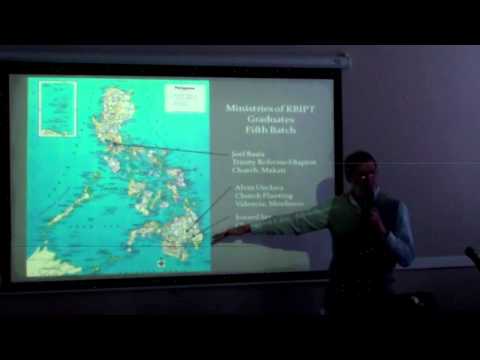
Free Grace Baptist Church - March 21 Missions Event
A Reformed Baptist missionary with thirty years of service in the Philippines presents an overview of the work in Metro Manila and beyond: church planting, a three-year pastoral training institute covering biblical languages and systematic theology, and itinerant teaching among pastors in remote provinces. The presentation is grounded in Revelation 5 and Romans 10 — Christ has purchased a people from every tribe, tongue, and nation, and messengers must be sent to gather them. The evening closes with prayer requests for the elders of Moonwalk Community Bible Church, the graduates scattered across the Philippine islands, and the ongoing effort to bring the gospel to Roman Catholics, Muslims, and those ensnared in health-and-wealth Christianity.
Judges 7
Judges 7 recounts God's reduction of Gideon's army from 32,000 to 300 men before Israel's victory over 120,000 Midianites — a disparity that is not incidental but theologically deliberate. The controlling principle of the entire chapter is verse 2: God whittled down Israel's forces so that the nation would not claim glory for itself, demonstrating that divine strength is perfected through human weakness. The lappers and kneelers are not to be distinguished by vigilance or virtue; the selection is simply a sovereign means to reduce the army to a number that makes self-congratulation impossible. God's patient encouragement of the fearful Gideon along the way reveals not only His sovereignty but His kindness, and the judges as a whole point typologically to the Lord Jesus Christ, the final deliverer who saves His people from sin rather than merely from earthly oppressors.

The Parables on the Value of the Kingdom
Matthew 13:44–46 presents two parables in which men sell everything they possess to acquire a hidden treasure and a pearl of great price — both illustrating the supreme value of the kingdom of heaven. The sermon argues that coming to Christ is never a loss: the sinner who forsakes all gains everything, and joy rather than grief ought to mark that transaction. Drawing on Moses in Hebrews 11, Paul in Philippians, and the attributes of the triune God from the 1689 confession, the sermon calls both the unconverted to seek Christ urgently and the believer to rest in the surpassing worth of what they already possess.

The Gospel's Prophetic Prologue
Mark 1:1–4 introduces the gospel not as a literary convention but as the announcement of a real, historical event: the life, death, and resurrection of Jesus Christ, the Son of God. This passage establishes that the gospel's ministerial beginning is rooted in prophetic fulfillment, as both Malachi 3 and Isaiah 40 foresaw a wilderness messenger who would prepare the way of Yahweh himself. The identity of Jesus as the divine Son of God is not incidental to the gospel but is its very foundation — without his deity, there is no sufficient Redeemer. The sermon closes with a call for believers to know and proclaim the gospel precisely, to walk in a manner worthy of it, and for unbelievers to turn from sin and believe on Christ alone.

From Alienation to Reconciliation
Colossians 1:21–22 sets the alienation and enmity of sinners against the sovereign, monergistic reconciliation God effects through the incarnate death of His Son. The sermon moves through three aspects of the Colossian believers' transformation: their previous state as those alienated from God, hostile in mind, and outwardly manifesting wicked works; their present status as those God has reconciled through the physical, substitutionary death of Christ; and their future blessedness as those being presented holy, blameless, and above reproach — a goal that is the consequence of reconciliation, never its cause. Communion is the occasion for this exposition, pressing believers to remember the depth of the grace that drew them out of enmity and into fellowship with God.

The Parable of the Tares Explained
Matthew 13:34–43 records Christ's private explanation of the parable of the wheat and tares to His disciples, and the sermon works through that explanation in two movements: the purpose of parabolic teaching and the seven details of the parable itself. The disciples' question falls on the tares, not the wheat, and the sermon follows that emphasis — the final destiny of the wicked, cast into the furnace of fire, stands at the center of the exposition. The identity of the sons of the kingdom and the sons of the wicked one is traced from Genesis 3:15 through the New Testament, establishing that the antithesis between the two seeds runs the entire length of redemptive history. The sermon closes with urgent evangelistic appeal: flee to Christ now, for every person will stand before the Son of Man who is both Savior and Judge.
Judges 4 & 5
Judges 4 exposes the recurring cycle of Israel's sin, oppression, and divine deliverance, demonstrating that God is the sovereign architect of both judgment and rescue. The narrative centers on Barak as the appointed judge-deliverer, with Deborah functioning as prophetess and Jael as instrument of God's final blow against Sisera — neither woman is a proto-feminist heroine but an agent of the divine agenda against oppressive Canaanites. God's sovereignty over history is traced from the raising up of Jabin's iron-chariot army to the flooding of the Kishon River and the tent peg in Sisera's temple, with the summary of verses 23–24 deliberately crediting no human agent. The study calls hearers to rest in the warrior-God who delivers His people by means as minute as a relocated tent and as decisive as a sleeping general's death.
The Description of Israel's Apostasy
Israel's apostasy in Judges 2:7–3:6 is traced to a second generation that possessed cognitive knowledge of Yahweh but had no experiential, saving faith — a spiritual death that issued inevitably in Baal worship, covenant judgment, and escalating moral degradation. The passage unfolds three movements: the root of apostasy in the failure to know the Lord, the description of that apostasy in the service of Baals and Ashtoreths, and the divine response of covenant judgment followed by sovereign, gracious deliverance through imperfect human judges. Each judge prefigures the one deliverer — Jesus Christ — who alone can break the power of reigning sin where no left-handed savior can. The sermon calls believers to mortify spiritual amnesia through faithful use of the means of grace, and calls the unconverted to believe the gospel of Christ rather than await a full intellectual resolution of divine sovereignty.
Judges 3:7-31
Judges 3:7–31 presents the first three judges of Israel — Othniel, Ehud, and Shamgar — as instruments of divine deliverance in a recurring cycle of sin, oppression, and rescue. The study examines how God sovereignly raises up unlikely, even morally complex figures to save a people who cry out not in repentance but in pain, underscoring that the emphasis of the book falls entirely on divine grace rather than human merit or spiritual recovery. The satirical portrayal of Eglon and the vivid detail of Ehud's assassination are treated not as embarrassments but as deliberate literary devices designed to humble Israel and magnify God. Each earthly deliverer points typologically to Christ, the only Savior capable of breaking the deeper bondage of sin itself.
The Conduct of the Good Minister, Part 1
What marks a minister as truly 'good' in the sight of God? Expounding 1 Timothy 4:6–11, this sermon argues that ministerial faithfulness is defined not by popularity, giftedness, or leadership skill, but by the diligent instruction of the congregation in sound doctrine — the words of faith and good teaching. The pursuit of godliness, understood as rigorous training for the unhindered service of God, surpasses all bodily discipline because it carries promise for both the present life and the age to come. The sermon concludes by addressing the contested phrase 'Savior of all men' in verse 10, rejecting universalism and unlimited atonement in favour of a reading grounded in God's common grace and providential preservation, with special and saving grace belonging distinctively to those who believe.