
Topic
Soteriology
2,239 sermons · All topics

Chap. 15 - Of Repentance unto Life and Salvation

1689 London Baptist Confession chapter 15 treats repentance not as a meritorious work but as an evangelical grace — a gift sovereignly granted by God through the Holy Spirit, inseparable from saving faith. This study walks through all five paragraphs of the chapter, distinguishing the Greek definition of repentance as a change of mind from its fruits, exposing the danger of collapsing that distinction into a salvation-by-works scheme. The covenant of grace is shown to be the practical ground by which God provides and sustains both faith and repentance for the elect throughout their lives, including ongoing repentance for remaining sin.

The Arrest of Peter and John
Acts 4:1–12 presents the arrest of Peter and John by the Sanhedrin and Peter's Spirit-filled defense before the council, in which he declares Jesus of Nazareth — crucified and risen — as the sole name under heaven by which men must be saved. The sermon traces two movements: the sovereign advance of God's word despite the imprisonment of its preachers (the number of believers growing to five thousand), and the christological and soteriological content of Peter's address, which grounds salvation exclusively in Christ's active obedience, atoning death, and resurrection. The stone rejected by the builders has become the chief cornerstone, and those who refuse him will ultimately be crushed by him. The sermon applies these realities to the perpetual persecution of the church, the exclusivity of the gospel, and the urgent call to believe on Christ alone for salvation.

Live Stream - July 03, 2022
Joshua 2 narrates the story of Rahab the Harlot, a Canaanite prostitute who sheltered the Israelite spies and confessed Yahweh as 'God in heaven above and on earth beneath.' This sermon exposits the chapter under three heads — the contact with Rahab, her confession of faith, and the covenant contract made with her — arguing that the chapter interrupts the conquest narrative to magnify the sovereign mercy of God toward an outsider who was utterly without covenant standing. The sermon concludes by tracing Rahab's place in the messianic genealogy and applying her conversion to the gospel call: Christ saves to the uttermost all who come to him, and the church is a refuge for sinners, not a club for the respectable.

The Conversion of Matthew
Matthew 9:9–13 records the sovereign call of a tax collector — among the most despised and morally compromised figures in first-century Jewish society — to follow Christ and ultimately to author the first Gospel. The sermon works through three movements: Christ's effectual call of Matthew to discipleship, the feast Matthew hosts to honour Christ and evangelize his associates, and the confrontation with the Pharisees in which Jesus declares the nature of his mission — not to call the self-righteous but sinners to repentance. The account is pressed into seven marks of genuine discipleship, closing with an appeal to the unconverted to look to Christ as the great physician of sin-sick souls.

The Conversion of Rahab the Harlot
Joshua 2 presents the conversion of Rahab the harlot as a sovereign interruption of divine mercy within the context of holy war and Israelite conquest. Before Israel kills a single Canaanite, the narrative compels the reader to stand in awe of a God who justifies a pagan prostitute by grace through faith alone — faith that is demonstrated by treason against Jericho and the sheltering of two spies. Rahab's confession that Yahweh is God in heaven above and on earth beneath places her alongside the great confessions of Scripture, and her inclusion in the Messianic genealogy of Matthew 1 reveals that the conquest was always inseparable from the redemptive purposes of God. The sermon calls hearers to resist self-righteous judgmentalism, to trust in a Christ who saves to the uttermost, and to marvel that the ancestress of Jesus was the shady lady of Jericho.
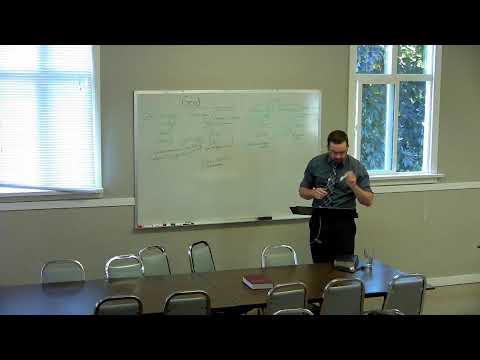
June 26, 2022 - Sunday School Confession Study (2LCF 7)
The covenant of works and the covenant of grace are not competing arrangements but sequentially related covenants that together explain why Christ had to become a man, obey the law perfectly, and bear its curse. Working through 2LCF Chapter 7, this study traces the Creator-creature distinction that grounds the covenant of works, the fall that rendered humanity incapable of meeting its terms, and the covenant of grace wherein God freely transfers sinners from Adam's representation to Christ's through spiritual regeneration and faith. The Abrahamic and Mosaic covenants are examined as historical types that reveal but do not constitute the covenant of grace — a distinction with direct bearing on the Reformed Baptist rejection of paedobaptist covenant structures.

Live Stream - June 26, 2022

Isaiah 42:1–13, one of the great servant songs, presents the commissioning, mission, and victory of the Servant of Yahweh—the Lord Jesus Christ. The passage moves from the Servant's humility and compassion toward the bruised and broken, through Yahweh's sovereign upholding of him as Creator, to the certain, universal advance of his spiritual kingdom to the coastlands and ends of the earth. Christ is no meek idealist but a divine warrior who will not fail nor be discouraged until every last one of his people is conquered out of the kingdom of darkness and the kingdom is presented whole to the Father.

Live Stream - June 26, 2022
What does it mean that the church is a 'chosen generation, a royal priesthood, a holy nation, his own special people'? Expounding 1 Peter 2:9–10, this sermon traces those titles through their deep roots in the Abrahamic covenant, the tower of Babel, and Mosaic Israel, arguing that the church is the true Israel of God — the spiritual nation God rescued from the kingdom of darkness to be his special possession. Peter's Jewish audience is shown that their comfort does not rest in a plot of land in the Middle East but in an incorruptible, eternal inheritance secured by Christ the last Adam, the greater Son of David and true cornerstone. The sermon closes by calling believers to rejoice in election, to proclaim the excellencies of Christ to all nations, and to offer spiritual sacrifices as a holy priesthood under their mediator.

The New People of God: Part 2
The titles given to the church in 1 Peter 2:9–10 — chosen generation, royal priesthood, holy nation, and his own special people — are drawn directly from Old Testament Israel typology and applied to all who believe in Christ. Working through Deuteronomy 32, Exodus 19, 2 Samuel 7, and the Abrahamic covenant, the sermon traces how God's act of separating Israel from the nations at Babel prefigures his rescue of the spiritual Israel — the church — from the dominion of darkness into the marvelous light of Christ. The sermon argues that the new covenant fulfils what the old covenant typified: believers now constitute the household of God, the spiritual temple, and a royal priesthood whose commission is to proclaim the excellencies of the one who called them out of darkness. This demands that the church pursue its prophet-priest-king calling not through military or political dominion but through the proclamation of the gospel of King Jesus to every tribe, tongue, people, and nation.
An Introduction to Covenant Theology (2LCF7)
Covenant theology stands or falls on the careful distinction between the covenant of works, the covenant of grace, and the historical covenants that progressively reveal it. This lesson works through 2LCF Chapter 7, tracing the terms, parties, and rewards of each covenant from Adam through the Abrahamic and Mosaic administrations, and grounding the whole in the eternal covenant of redemption between the Father and the Son. The controlling argument is that the Abrahamic covenant — entered by natural generation, maintained by works, and breakable — cannot be identified with the covenant of grace, and that this distinction exposes the internal contradictions of paedobaptist covenant structures. The practical takeaway is that salvation has always been by grace through faith alone, because Christ as the second Adam is the only one who has met and can meet the terms of the covenant of works on behalf of the elect.

The Commissioning of the Servant of Yahweh
Isaiah 42:1–13 presents the first servant song of Isaiah as Yahweh's formal commissioning of his servant — the Lord Jesus Christ — to bring righteous rule, freedom from spiritual darkness, and universal dominion to the Gentiles. The sermon traces three movements: the presentation of the servant in his humility, compassion, and unfailing determination (vv. 1–4); the mission given to him by Yahweh the Creator, including the gift of an everlasting righteousness and conquest of the kingdom of darkness (vv. 5–9); and the victorious global praise that flows from his completed mission (vv. 10–13). The listener is called either to look to Christ in faith as the one who will not break a bruised reed, or to reckon soberly with the warrior-king who will prevail against every enemy that remains in rebellion.
Wedding Stream
Paul's prayer in Ephesians 3:14–19 frames the theological heart of this wedding message: that the strength, knowledge, and fullness believers need for godly marriage flow entirely from what God has accomplished in salvation. The sermon moves from the doctrinal foundation of Ephesians 1–2 through the spiritual petitions of chapter 3, arriving at the practical marital responsibilities of Ephesians 5 — the wife's submission and respect, the husband's sacrificial love and leadership after the pattern of Christ and the church. Drawn from Luther's counsel and the creation account in Genesis, the message calls both husband and wife to reflect the mystery of Christ's covenant union with his bride in the daily conduct of their marriage.
Live Stream - June 19, 2022
What does it mean that Christ is the 'chief cornerstone' laid in Zion, and how does that ancient prophecy from Isaiah 28 apply to the church today? Working through 1 Peter 2:6–8, this sermon grounds the doctrine of the church firmly in the Old Testament by tracing the biblical-theological arc from Adam's failed dominion mandate in Genesis, through Israel's covenantal history as a type of that failure and restoration, to Christ as the one who has come to accomplish what Adam could not — building a global kingdom of redeemed image-bearers out of the darkness of sin and death. The sermon applies the doctrines of God's sovereignty in history, the unity of the biblical storyline, and the believer's unshakeable standing in Christ to encourage the church that those who trust in this cornerstone will never be put to shame, while those who reject him do so to their own ruin.

The New People of God, Part 1
What does it mean for the church to be built on Christ as a living cornerstone, and how does the Old Testament ground that identity? Expounding 1 Peter 2:6–8, this sermon traces the biblical-theological arc from Adam's failed dominion mandate in Genesis through Israel's typological history—law-giving, exile, and restoration—to the fulfilment of Isaiah's cornerstone prophecy in the Lord Jesus Christ. Israel's covenant history is shown to be a historical type of the cosmic reality: the broken covenant of works and its restoration by the Messiah, who is now building a global kingdom of redeemed image-bearers out of every tribe and tongue. Believers are called to marvel at God's sovereignty over history, over the kingdom of darkness, and over the unified message of Scripture that runs from Genesis 3:15 to the church as the true Israel of God.
Brotherly Love - 1 Peter 1:22-25
What does it mean to love the brethren, and what is the source of that love? Expounding 1 Peter 1:22–25, this sermon works through three interlocking realities: the common Christian experience of soul-purification through Spirit-wrought faith alone, the command to love one another with a fervent, self-sacrificial agape love, and the regenerate new birth through the incorruptible word of God that grounds and generates that love. The exhortation is concrete: foster genuine fellowship, receive as well as give, and resist the tendency to confine brotherly love within the narrow boundaries of denomination, theological system, or Christian liberty — for our identity is in Christ, not in any confessional tradition.
God the Righteous Judge
Psalm 94 presents God as the righteous judge who hears the cry of His oppressed people, sees the wickedness of their persecutors, and will not ultimately abandon His inheritance. This expository treatment works through the chiastic structure of the psalm, showing how the cry for justice (vv. 1–3) is answered by justice administered (vv. 20–23), and how the folly of those who deny God's omniscience mirrors the divinely-given wisdom of His people. The sermon draws out the covenant comfort of God's chesed — His steadfast faithfulness to those He has chosen — as the ground of peace in the midst of affliction, and closes with a direct call to repentance for any who remain outside of Christ.

Live Stream - June 12, 2022
Psalm 29 presents Yahweh's sovereign majesty over creation through the imagery of a Mediterranean storm tracking north to south across the land of Israel. The psalm functions as a polemic against Baal, the Canaanite weather god, demonstrating that Yahweh alone is the uncreated Creator while all rival 'gods' are derivative, created beings. The sermon draws this ancient conflict forward into the present spiritual warfare Paul describes in Ephesians 6, calling believers to neither panic nor despair at the apparent power of the kingdom of darkness, because the same God who sent Baal fleeing sits enthroned above every principality and power. The concluding application warns that a coming storm of divine wrath is approaching, from which only the righteousness of Christ provides shelter.

Live Stream - June 12, 2022
Spiritual growth is not merely a personal benefit but the primary means by which the church of Christ is built up as a strong, enduring structure. Expounding 1 Peter 2:1–5, this sermon argues that believers are called to mortify the self-serving sins of malice, deceit, hypocrisy, envy, and evil speaking — all of which collapse the very foundation upon which other believers must stand — and to cultivate an insatiable desire for the pure word of God as their appointed means of growth. Christ is the chief cornerstone and the ultimate builder of his church; believers are living stones whose solidity or weakness determines what the next generation inherits. The congregation is exhorted to press on in sanctification and doctrinal growth not to earn their justification — which rests on faith alone in Christ alone — but to be the solid building blocks upon which children, new believers, and future generations of the church may be securely built.

The Call for Christian Growth
Unrepentant sin and a failure to desire the Word of God are the chief hindrances to Christian growth — and that growth is not merely a personal blessing but a corporate responsibility. Working through 1 Peter 2:1–5, this sermon argues that believers are living stones being built into a spiritual house, and that weak, doctrinally shallow Christians produce a structurally unsound church. The exhortation is concrete: mortify the sins of malice, deceit, hypocrisy, envy, and slander; cultivate an insatiable hunger for the pure milk of the Word; and do so knowing that justification rests on faith alone while sanctification calls every believer to steady, disciplined growth.

The Sovereignty of Yahweh of Israel
Psalm 29 is a polemic against the Canaanite storm god Baal, written by David to demonstrate that Yahweh alone is Creator and sovereign King over all powers—heavenly and earthly. The seven-fold repetition of 'the voice of the Lord' traces a storm from the Mediterranean through Lebanon, the supposed abode of Baal, into the wilderness of Kadesh, showing at each point that Baal is no rival but a fleeing creature before the Creator. The same sovereignty that sent Baal running and that enthroned God over Noah's flood is the ground of the church's peace amid the spiritual and geopolitical chaos of the present age. Those outside Christ are warned that a greater storm—the wrath of God—is coming, and the only shelter is repentance and faith in the Lord Jesus Christ.

Live Stream - June 05, 2022
Romans 3:21–28 is expounded in the context of a communion service, grounding the Lord's Supper in the doctrine of justification by faith alone. The sermon traces Paul's argument that all humanity stands guilty before God, that God's own righteousness demands the punishment of sin without exception, and that the cross of Christ is the propitiation by which God is both just and the justifier of the ungodly. The righteousness credited to the believer is entirely the work of Christ — received through faith, purchased by blood, and offered freely to all without merit or prerequisite.
Live Stream - June 05, 2022
First Peter 1:22–25 grounds the command to fervent brotherly love in the doctrine of regeneration. The passage distinguishes between the natural, emotional bond of phileo and the deliberate, self-sacrificing agape the redeemed are called to exercise toward one another within the covenant community. Justification is by faith alone — faith understood not as a meritorious act but as passive reception of Christ's finished work, wrought in the heart by the Holy Spirit's regenerating power. The sermon closes with exhortations to pursue unhypocritical, reciprocal, cross-denominational love, and with a warning to those who have heard the gospel preached and have yet to submit to it in faith.

The Glorious Gospel of Jesus Christ
How can a perfectly just God forgive guilty sinners without compromising his justice? Romans 3:21–28 answers that question by tracing the righteousness God provides in the gospel: revealed in Christ, received through faith, and grounded in a propitiatory sacrifice that fully satisfies divine justice. The sermon expounds the forensic declaration of justification, the redemption accomplished by Christ's blood, and the vindication of God's righteousness at the cross — showing that boasting is excluded entirely because the righteousness that avails before God is supplied by Christ alone and received freely by grace through faith. Hearers are called to trust in Christ's finished work as the sole ground of their standing before God, and to come to the Lord's Supper remembering that in our place condemned he stood.

Chap. 14 - Of Saving Faith
Saving faith is the gracious gift of the Holy Spirit, worked in the hearts of the elect through the ministry of the Word, enabling them to trust in Christ alone for justification, sanctification, and eternal life. This study of 1689 London Baptist Confession chapter 14 distinguishes true saving faith from temporary or false faith, establishes that faith is built on knowledge rather than religious emotion or experience, and traces the three classical elements of faith — notitia, assensus, and fiducia — while guarding against both the mysticism that smuggles emotion into the essence of faith and the rationalism that mistakes bare intellectual assent for it. The practical burden throughout is that the proper object of saving faith is Christ and his work alone, and that assurance, while distinct from faith itself, grows through the appointed means of grace.
Brotherly Love
What grounds the command to love fellow believers, and what does that love look like in practice? Expounding 1 Peter 1:22–25, this sermon argues that brotherly love among believers is not merely a moral duty but flows necessarily from regeneration — the purification of the soul through faith worked by the Holy Spirit. The sermon carefully distinguishes passive, receiving faith from any works-based or neonomian construal of 'obeying the gospel,' grounding the command to love in the incorruptible seed of the new birth. Application presses toward sincere, unhypocritical, self-sacrificial love that crosses denominational and theological-liberty lines, because the bond of the brethren is founded on the eternal word of God, not on natural or doctrinal affinity.

The Need for Gospel Ministers
Matthew 9:35–38 presents Christ surveying the multitudes of Galilee and responding not primarily to their political oppression but to their spiritual destitution — harassed and scattered like sheep without a shepherd because Israel's religious leaders had failed and become predators of the very flock they were charged to keep. The sermon traces the shepherd-and-harvest imagery through Numbers 27, 1 Kings 22, Jeremiah 23, and Micah 5 to demonstrate that God's remedy for faithless shepherds has always been the raising up of faithful men under the Messiah's authority. Christ's compassion, exercised according to his human nature, issues not in mere sympathy but in effective action: commanding his disciples to pray the Lord of the harvest to send out laborers, then immediately appointing and commissioning the Twelve. The congregation is called to share Christ's own compassion for the spiritually destitute, to believe that the harvest is genuinely plentiful across every tribe and nation, and to pray, give, identify, train, and send qualified men into gospel ministry.

The Conduct of a Faithful Minister
Paul's charge to Timothy in 1 Timothy 4:12–16 sets forth the pattern for every faithful gospel minister: exemplary character, diligent public ministry, ongoing personal growth, and tenacious perseverance to the end. Preached at an ordination service for a newly commissioned pastor, this exposition works through each element of the apostle's command — from the six spheres of a minister's example (word, conduct, love, spirit, faith, purity) to the three pillars of public ministry (reading, exhortation, doctrine). The sermon insists that Christian virtue, however admirable, cannot save souls; it is the word of God, proclaimed boldly and accurately, that the Spirit uses as the instrument of salvation. The congregation is charged alongside the minister: receive the word with joy, reject heresy, prize the public means of grace, and honour those who watch for your souls.

The Greatest Commandments
Matthew 22:34–40 records a Pharisaic lawyer testing Jesus with the question of which commandment is greatest. Jesus answers by citing the Shema from Deuteronomy 6:4–5 and the neighbor-love command from Leviticus 19:18, thereby summarizing the entire Decalogue under two heads: love to God and love to man. This sermon argues that Christ's endorsement of these two commandments confirms the abiding validity of the moral law for New Covenant believers, who are called to keep it not as a means of justification but as the Spirit-wrought response of those already justified by faith alone. The hearer is pressed to recognize that the law's demand — to love God with the whole self and the neighbor as oneself — drives the believer perpetually to Christ, in whom alone that demand has been perfectly met.

May 22nd - Sun AM Webcast
John 6:60–71 presents the sharpest crisis of Jesus's Bread of Life discourse: the mass departure of superficial disciples and the steadfast confession of the Twelve. This sermon traces three interrelated truths in Jesus's response — the life-giving Spirit as the sole agent of spiritual understanding, total depravity as the explanation for unbelief, and the sovereign grace of the Father as both the cause of faith and the ground of its perseverance. The application presses the church not to soften biblical truth before a resistant generation, but to press it, trusting that the Spirit alone opens the hearts of the dead to receive the words of eternal life.

The Apostle's Prayer for the Ephesians, Part 2
Ephesians 1:19–23 presents the climax of Paul's apostolic prayer: that believers would know the exceeding greatness of God's power. This sermon expounds three demonstrations of that power in Christ — his resurrection from the dead, his current session at the right hand of the Father, and his dominion over all things for the sake of the church. The doctrines of inseparable operations and appropriations ground the Trinitarian account of these events, while the universal and eternal sovereignty of the enthroned Christ is set forth as the foundation for perseverance, praise, and fearlessness in the face of hostile spiritual and civil powers.