
Topic
Sanctification
1,682 sermons · All topics

The Believer's Response to Trials

James 1:2–8 addresses the Christian's response to trials — not with grief or complaint, but with counted joy grounded in a clear theological understanding of God's purpose in suffering. The sermon works through two movements: the believer's response to trials in verses 2–4 (identifying, expecting, and rightly receiving them) and the believer's request during trials in verses 5–8 (seeking wisdom from a generous God and coming in faith without double-mindedness). The central application is that Christians must lay up this theology before trials arrive, so that when affliction comes, they are equipped to respond with settledness, faith, and prayer rather than anger or despair.

Trinitarian Assurance

Ephesians 1:3–14 presents a Trinitarian doxology in which the Father's election and predestination, the Son's redemption through His blood, and the Spirit's sealing together constitute the full ground of the believer's assurance. The passage resists any reduction of the three persons to isolated roles, insisting on inseparable operations even as Paul shines distinct light on each person's work. The sermon argues that the Christian's assurance must be anchored not in self-examination of fruit-bearing but in the objective, Trinitarian work of God accomplished entirely outside of us in Christ.

The Joy of the Gospel
Ephesians 2:1–10 presents the whole arc of redemption in miniature: total depravity, sovereign grace, and the new life of sanctification. This sermon works through that arc by contrasting the bad news of verses 1–3 — that every human being is spiritually dead, enslaved to fleshly desires, complicit with satanic powers, and deserving of divine wrath — with the good news of verses 4–10, where God's rich mercy, unearned grace, and sovereign bestowal of faith rescue sinners who had nothing to offer Him. The central application is that the regenerate life is marked not by boasting but by the Spirit's fruit, and that the gathered church is itself a foretaste of the eternal communion for which God has prepared His people in Christ.

Livestream - February 16
Galatians 2:11–16 records the Apostle Paul's public confrontation of the Apostle Peter at Antioch, where Peter's hypocritical withdrawal from table fellowship with Gentile believers was silently but powerfully undermining the doctrine of justification by faith alone. Paul's rebuke exposes that any action compromising the gospel — even short of openly denying it — is a serious offense, because justification rests solely upon the imputed righteousness of Christ and the pardon of sins secured by his active and passive obedience, received through faith apart from works of the law. The sermon traces the five-fold reiterative emphasis of verse 16 and grounds the necessity of this doctrine in the immutable character of God himself, who cannot justify the wicked apart from the perfect satisfaction rendered by the Lord Jesus Christ. Saints are exhorted to rest their peace not in any degree of personal obedience but entirely in the finished work of Christ, and sinners outside of Christ are called to believe on him as the only ground of justification.

The Conversion of Matthew
Matthew 9:9-13 presents the sovereign call of Christ to Matthew, a tax collector despised in first-century Jewish society as a collaborator with Gentile oppressors and a companion of sinners. The sermon traces three movements in the passage: the authoritative call that produced immediate discipleship, the feast Matthew threw to honor Christ and evangelize his former associates, and Christ's threefold response to the Pharisees' complaint — identifying himself as a physician to the sick, appealing to Hosea 6:6 against mere external religion, and declaring his mission to call sinners to repentance. The central application is that no sinner is too notorious to be received by Christ, and Matthew's immediate rising and following is held up as the pattern for genuine repentance and faith.
The Law Concerning Offerings and Vows
Numbers 28–30 presents the divinely regulated calendar of offerings and the law governing vows in Old Covenant Israel, both of which underscore that Israel was not merely a migrating people but a covenant community ordered by the worship of God. The offerings — daily, Sabbath, monthly, and the seven yearly feasts — served to remind Israel of their redemptive history, promote joy and community, resist idolatry, and ensure rest in God's presence, all of which find their fulfillment in Christ. The law of vows in chapter 30 teaches the sanctity of truth, the binding nature of solemn commitments made before God, and the complementarian order in which a woman's vow was subject to the authority of her father or husband. Together these chapters call the New Covenant believer to faithful, regulated worship, truthful speech, and lives of sanctification that flow from justification by grace alone through faith alone in Christ alone.

Baptism - Chauncey Knegt
Three believers are baptized by immersion upon personal profession of faith and repentance, following the pattern of believers' baptism as confessed in the 1689 London Baptist Confession of Faith. Each candidate gives testimony to the sovereign grace of God in their conversion — from effectual calling under the preached word, to assurance grounded in the finished work of Christ, to the covenant obligations of church membership. The service underscores that baptism is a sign of union with Christ in his death and resurrection, a public act of obedience to Christ's command, and the believer's entry into the mutual accountabilities of a local church.

The Idolatry of Solomon
Solomon's reign, celebrated across 1 Kings 3–10 as a golden age of wisdom and divine blessing, collapses in chapter 11 under the weight of multiplied foreign wives and the idolatry they drew him into — a direct violation of the Mosaic prohibitions in Deuteronomy 7 and 17. The sermon traces the idolatry itself (vv. 1–8) and the divine response (vv. 9–13), showing that Solomon's sin was aggravated by his knowledge of the law, the good example of his father David, and two personal appearances of God. From this sobering case the sermon draws eight practical warnings: that experience, godly example, knowledge, and wisdom are not in themselves sufficient to secure present faithfulness, and that the believer's only safeguard is constant dependence on the Holy Spirit and a mind rooted in Scripture.

The 2nd Census, Inheritance Laws, and Succession
Numbers 26–27 records the second census of Israel and two consequential legal rulings issued on the plains of Moab as the nation prepares to enter Canaan. The census serves a dual purpose: numbering able-bodied fighting men for the conquest and apportioning the land by tribal size, fulfilling the judgment pronounced in Numbers 14 that the entire first generation — save Caleb and Joshua — would die in the wilderness. The inheritance case of Zelophehad's daughters establishes precedent-setting case law affirming that land inheritance passes to daughters when no son exists, with typological significance pointing forward to equal inheritance in Christ (Galatians 3:26–29). The appointment and public ordination of Joshua as Moses' successor reveals both Moses' pastoral heart for the flock and the continuity of Spirit-empowered leadership necessary for the conquest.

The High Priestly Prayer, Part 1
John 17:1–5 records the opening of Christ's high priestly prayer, in which the Lord Jesus — praying according to His humanity as the Mediator of the New Covenant — petitions the Father for glory, because glory given to the Son redounds to the glory of the Father. The sermon works through the occasion of the prayer, the derived and delegated authority granted to Christ over all flesh, and the particular redemptive purpose for which that authority was given: that He should grant eternal life to all whom the Father has given Him. Particular redemption is grounded in the text itself, and the sermon closes by pressing the definition of eternal life in verse 3 — the knowledge of God and of Jesus Christ — as a summons to pursue theology, Scripture reading, and corporate worship with renewed seriousness.

Ask FGBC #34: How Much Marriage Counselling Should Pastors Provide?
A pastor and elder discuss the appropriate scope of pastoral marriage counselling, framing the pastor's role on the model of a general practitioner who handles common presenting problems but refers complex cases to specialists. Most marital conflict, they argue, traces back to a failure to obey the clear biblical commands of Ephesians 5 — husbands failing to love sacrificially, wives failing to submit willingly — making the pastoral response straightforward in principle even where circumstances are complex. The conversation resists both an over-medicalised model that sidelines the pastor and a naive model that refuses any referral.

Ask FGBC - Dec 2024 Podcast with Pastors Butler and Porter, Batch 4
A panel of two pastors works through a batch of listener-submitted questions spanning baptism and the Lord's Supper, the eternity of hell, church membership, faith and fear, the unpardonable sin, images of Christ, dry preaching, and extra-biblical theological vocabulary. Across each topic the answers are grounded in Scripture and the 1689 London Baptist Confession, with particular attention to second-commandment concerns, the nature of saving faith, and the perseverance of the saints. Listeners are urged to anchor their assurance not in the strength of their own grip on Christ but in the immutable decree of election and the intercession of the Triune God.

The Harlotry of Israel in Moab
Numbers 25 records the final plague upon the first generation of Israel: sexual harlotry with the women of Moab leading directly to idolatrous worship of Baal of Peor, the very site where God had been blessing Israel through Balaam's compelled oracles. The chapter unfolds in three movements — the sin of the people, the zealous intercession of Phinehas, and the commanded judgment on Midian — each illuminated by the Apostle Paul's use of this passage in 1 Corinthians 10 as a warning to the new covenant church. Phinehas, acting as a priestly guardian of the sanctuary with divinely commended zeal, typifies Christ's priestly office and intercession, pointing forward to the one whose unchangeable priesthood averts the wrath of God from new covenant Israel through his life, death, and resurrection. The passage calls the church to flee idolatry, to marry only in the Lord, and to perfect holiness in the fear of God, lest spiritual harlotry — defection from the living God through unholy alliances — repeat in the new covenant community what it wrought in the old.

The Authenticity of Paul's Gospel, Part 2

Galatians 1:18–2:10 records Paul's autobiographical defense of justification by faith alone against Judaizers who insisted that circumcision and adherence to Mosaic precepts were necessary for salvation. The sermon traces Paul's independence from the Jerusalem apostles, the uncompromising refusal to circumcise Titus, and the apostolic unity between Paul and the Jerusalem pillars — all marshaled to prove that Paul's gospel came by divine revelation, not human tradition, and that it stands as the only true gospel. The application presses both the vital importance of the doctrine of justification and the necessity of an uncompromising ministry: Christian peace rests solely in Christ's perfect obedience and atoning death, not in the ebbing and flowing of personal works or church attendance.

The Glory of Christ's Departure, Part 2
John 16:29–33 closes the Upper Room Discourse with two movements: the disciples' partial yet progressing confession of Christ's omniscience, authority, and divine origin, and Christ's triumphant declaration that he has overcome the world. The disciples' imperfect understanding — soon to be perfected on the day of Pentecost through the Spirit's coming — is met not with rebuke but with Christ's desire for their peace, even as he foreknows their abandonment of him at the cross. The sermon grounds Christian courage in the face of tribulation not in human resolve but in the objective, accomplished victory of the enthroned Christ, whose current session at the Father's right hand is the only sufficient foundation for the church's advance through suffering.

The Unity of the Church
Philippians 2:1–4 grounds the church's unity in the Trinitarian realities of consolation in Christ, the comfort of the Father's love, and the fellowship of the Holy Spirit — not in human sentiment. The passage moves through a commendation of unity (vv. 1–2) and a cultivation of unity (vv. 3–4), showing that selfish ambition and conceit are the precise enemies of the love and one-mindedness the apostle commands. The sermon concludes that humility, self-denial, and others-mindedness are not optional graces but the indispensable conditions for a church that advances the cause of Christ — and that none of these can be pursued apart from the ongoing work of the Holy Spirit.

The Sixth Commandment
The Sixth Commandment — 'You shall not murder' (Exodus 20:13) — addresses far more than the physical act of killing; it presupposes the dignity of every human being as an image-bearer of God and condemns unrighteous hatred of the heart. This sermon expounds the Hebrew word for murder, distinguishing it from lawful killing in capital punishment, just war, and self-defense, before pressing the command's indictment of abortion and euthanasia as violations of the sanctity of life. Jesus's teaching in Matthew 5 extends the commandment's reach to unwarranted anger and character assassination, and the three uses of the law — civil, pedagogical, and normative — frame both the church's public witness and the believer's ongoing sanctification. The sermon closes by insisting that the most faithful response to a death culture is to preach both the law and the cross of Christ.

Divine Protection for Weary Travelers

Psalm 121, a Song of Ascents, is read against the sweep of redemptive history: from Adam's failure to fulfill his mandate in the garden to the Last Adam, Christ, who descends, redeems, and ascends to bring his people into the presence of God. The sermon traces the 'climbing the mountain' motif through Eden, Israel's temple worship, and the new covenant church to show that every believer is presently on a pilgrimage toward glory. Because Yahweh — the self-existent Creator of heaven and earth — is the keeper of his people, they are promised protection from stumbling, shade from the heat of affliction, and preservation from the very judgment their sins deserve. The practical call is to look to Zion rather than to the surrounding mountains of fear, to value the Lord's Day as a weekly foretaste of that final rest, and to press on in the strength God supplies.
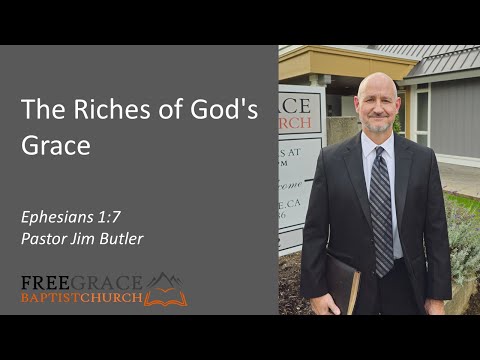
The Riches of God's Grace
Ephesians 1:7 declares that believers possess redemption through Christ's blood and the forgiveness of sins according to the riches of God's grace. This sermon works through the triune shape of salvation in Ephesians 1:3–14, arguing that the redeemed are not a class of morally capable people who needed modest assistance, but guilty sinners who required blood atonement, divine election, and the sealing of the Holy Spirit. The cross is shown to satisfy divine justice as well as display divine love — God is both just and the justifier of the one who has faith in Jesus, as Paul argues in Romans 3:21–26. The sermon closes with a direct application to baptism, presenting the ordinance as an outward declaration of the inward forgiveness and righteousness received through union with Christ.

Ask FGBC - July 2024 Podcast with Pastors Butler and Kirkpatrick
Two pastors work through a wide-ranging set of questions submitted by listeners, covering the Reformed doctrine of the will, repentance and faith, holy days, Christian political engagement, believers' baptism, the New Covenant, forgiveness of unrepentant offenders, ongoing confession of sin, witnessing to homosexual neighbors, the Sabbath shift from Saturday to Sunday, the day of the Lord, the beatific vision, common grace, saving versus temporary faith, and the holy walk. Throughout, the answers are grounded in the 1689 London Baptist Confession and exposit the relevant biblical texts, consistently distinguishing the Reformed Baptist position from Arminian, dispensationalist, and paedobaptist alternatives. The session serves as accessible catechetical instruction for believers at all stages while modeling how confessional Reformed Baptist theology addresses both doctrinal and practical questions.

The Enthronement of the King-Priest
Psalm 110 is the most frequently quoted Old Testament text in the New Testament, and for good reason: it presents the Lord Jesus Christ in his twofold office as enthroned King and eternal Priest. This exposition works through all seven verses under three headings — the enthronement of Christ at the Father's right hand (vv. 1–3), the Melchizedekan priesthood sworn by God's oath (v. 4), and the triumph of Christ over all his enemies (vv. 5–7). The sermon calls believers entering a new year to fix their minds on the reigning King-Priest rather than on the hostility of the present evil age, and urges the unconverted to come to Christ in faith on the grounds that God's saving purpose is irreversible.

Ask FGBC #32: Are there different types of faith? Ie. temporary, historical, saving
Scripture distinguishes several types of faith, and only saving faith — the kind that receives and rests upon Jesus Christ — differs qualitatively, not merely in degree, from historical or temporary faith. Historical faith acknowledges the facts about Christ without personal trust; temporary faith produces an apparent profession that does not endure. Saving faith, even in its weakest form, is united to Christ as its object and is accompanied by all other saving graces, working through love. The 1689 London Baptist Confession of Faith chapter 14 paragraph 3 grounds the distinction: even weak saving faith is different in kind from the faith of temporary believers, and it will ultimately attain full assurance through Christ, the author and finisher of our faith.

The Conduct of the Believer
Philippians 1:27–30 presents a twofold exhortation to the church: that believers conduct themselves in a manner worthy of the gospel, and that they do so with courage in the face of adversaries. The sermon expounds the Greek word for citizenship as the governing concept of verse 27, grounding the call to worthy conduct in the reality of justification by faith — the life of sanctification flows necessarily from what God has graciously accomplished in the believer. Corporate unity in striving together for the faith of the gospel, and undaunted boldness before enemies, are shown to be not optional virtues but demonstrable proofs of sovereign grace at work in God's people.

The Glory of Christ's Departure, Part 1
John 16:25–28 records the climactic doctrinal statement of the Upper Room Discourse, in which Christ declares His eternal generation from the Father, His incarnation into the world, and His impending ascension back to the Father. The sermon works through three heads: the manner of Christ's instruction in figurative language and the Spirit's coming role in illuminating the disciples; the access believers have to the Father through the Son in prayer; and the doctrinal creed embedded in verse 28, treating eternal generation, incarnation, and ascension in sequence. The unchanging love of the Father for those who are in Christ by grace through faith is held out both as the chief encouragement for disciples going into a world of tribulation and as the ground of the gospel call to sinners to look to Christ for blood and righteousness.

The Wars of the LORD
Numbers 21 traces Israel's journey through military victory over the Canaanites, the punishment and grace of the bronze serpent, and the conquest of the Amorite kings Sihon and Og. The bronze serpent — condemned people bitten by fiery serpents, healed only by looking in faith to the remedy God prescribed — is taken up by Jesus in John 3:14 as a type of his own crucifixion, teaching that salvation comes by divine initiative alone, received through faith, not works. The same recurring sins of complaint, lack of faith in providence, and idolatry that marked the first generation persist in the second, warning the church that these corruptions follow the sin nature across every generation. The chapter closes with God's sovereign hardening of Sihon and the defeat of the giant Og, both down payments on the promised conquest and demonstrations of God's faithfulness, sovereignty, and goodness to his people.

The Future Prospect of the Apostle, Part 2
Philippians 1:21–26 presents Paul's conviction and anticipation as an apostle facing imprisonment and the real prospect of execution. The sermon works through Paul's declaration 'for to me to live is Christ, and to die is gain,' showing that his union with Christ in life and his glory with Christ in death make it impossible for any earthly power to harm or stop him. The intermediate state — the soul's immediate presence with Christ at death — is set against the benefit of continued gospel ministry, and Paul's others-minded anticipation of release grounds his confidence that the Philippians' progress in faith and joy will abound. The sermon closes by pressing the question whether each hearer can say with honest self-examination that Christ is their all in life and death.

The Waters at Meribah
Numbers 20 records a pivotal transition: the first generation of Israel is dying off, yet the second generation repeats the same sins — grumbling, blaming Moses and Aaron, and longing to return to Egypt. At the waters of Meribah, Moses himself falls under divine chastisement for failing to hallow God before the people, striking the rock rather than speaking to it and presumptuously attributing the miracle to himself and Aaron. The chapter closes with the death of Aaron, whose priestly garments pass to his son Eleazar — a token of covenantal continuity pointing forward to the greater High Priest who stands between the dead and the living. The recurring lesson for the people of God in every generation is that the hardships of the wilderness are not evidence of divine abandonment but instruments of providence by which God conforms his people to the image of his Son.

Ask FGBC #30: What does a holy walk look like in a Christian?
What does a holy walk look like for the Christian? This Q&A response argues that holiness is neither mystical nor monastic but is concretely shaped by three coordinates: conformity to Christ, regulation by the law of God, and the practice of ordinary good works in every sphere of life. The discussion draws on Romans 8, Romans 12–13, 1 Peter 1–2, and Galatians 5 to show that holy living begins with the renewal of the mind and expresses itself in the dignity of daily work, household relationships, and engagement with the world as pilgrims and sojourners.

Sons and Daughters of God
What does it mean that sinners dead in trespasses can be called children of God? Expounding 1 John 3:1, this sermon works through five elements of the verse: the imperative weight of 'behold,' the immeasurable and immutable love of God rooted in his own essential being, the unmerited bestowal of that love upon the undeserving, the Christian's status as adopted sons and daughters in union with Christ, and the world's consequent ignorance and enmity toward believers. The sermon grounds adoption in the eternal predestinating love of the Father, the incarnation and obedience of the Son, and the indwelling of the Spirit — and closes with a call to behold these realities with eyes of faith as the only ground of encouragement for a church opposed by the world.

Ask FGBC #27: Why the shift from Saturday to Sunday worship?
Why did Christian worship shift from the seventh day to the first day of the week? This Q&A response argues that Sunday observance is not an abolition of the fourth commandment but its new-covenant fulfillment, grounded in Christ's resurrection as the inauguration of new creation. The moral principle embedded in the fourth commandment — one day in seven set apart for the worship of God — transcends any particular covenant, while the positive element specifying which day shifts from Saturday to Sunday in light of Christ's finished work and rest. Drawing on Hebrews 4, the eighth-day Sabbath typology of the Old Testament, and the 1689 LBCF's treatment of the Lord's Day, the speaker urges believers to receive Sunday worship not as a burden but as the highest delight and privilege available to the people of God.