
Topic
Hermeneutics
37 sermons · All topics

Ask FGBC #58: How to Start Reading the Bible?

How should a person begin reading the Bible — and how should they read it once they have opened it? This Q&A exchange addresses both the unbeliever encountering Scripture for the first time and the new believer seeking a starting point, recommending the law of God as a mirror of sin and the Gospels as the answer to that conviction. The discussion extends to the manner of reading: attending to the sense intended by the divine author rather than the nakedness of individual words, reading within the interpretive community of the church, and approaching the text through prayerful dependence that guards against the pride produced by knowledge acquired without humility. Practical counsel on guarding reading habits against the fragmenting effects of social media closes the exchange.

Ask FGBC #55: How Many Valid Interpretations Can A Bible Passage Have?
How many valid meanings does a Bible passage have? Drawing on 1689 LBCF Chapter 1, paragraph 9, this Q&A session argues that Scripture has one intended meaning — the meaning the Holy Spirit inscribed — but that this single meaning carries a full sense that unfolds through continued study and canonical cross-reference. The difference between exegesis and eisegesis is examined, with the warning that preconceptions and pet doctrines distort rather than discover the text's meaning. Christ's gift of teachers to the church means that 'Scripture alone' as the infallible rule of interpretation does not license a 'me and my Bible alone' approach divorced from creeds, confessions, and faithful expositors.

The Regulations for Life in Canaan
Numbers 32–36 closes the book with regulations governing Israel's entry into Canaan: the Transjordanian tribal allotments, the itinerary of the wilderness journey, the boundaries of the land, Levitical cities, cities of refuge, and the inheritance rights of female heirs. The legislation on cities of refuge anchors a sustained exposition of the distinction between murder and manslaughter, grounded in the Noahic covenant of Genesis 9:6, and carries forward the biblical case for capital punishment as a perpetual civil obligation. The study closes by tracing Christ through Numbers — as the guiding presence, the compassionate shepherd, the greater Joshua, the great high priest, and the brazen serpent lifted up for the life of the world — and applies the wilderness pattern to the new covenant people who must persevere through present affliction toward an eternal Canaan.

Ask FGBC #14: How do we connect modern day Israel to Old & New Covenant Promises?
How should Christians understand the modern state of Israel, the Abrahamic and Davidic covenants, and the land promises in light of the New Testament? This Q&A exchange argues that the church is not a replacement for Israel but is the eschatological Israel of Old Testament prophecy — one people of God, Jew and Gentile together, united in Christ. Dispensationalism's two-peoples-of-God framework is evaluated and rejected on hermeneutical grounds, with Romans 11, the Davidic covenant, and the land promise examined in turn. The conversation broadens into the necessity of reading Scripture canonically and horizontally, the value of confessionalism, and the danger of allowing political rhetoric to distort biblical interpretation.

Ask FGBC #12: Can I apply Old Testament promises to my life?
The question of whether Old Testament promises — such as Jeremiah 29:11 — can be applied by Christians today requires careful attention to covenantal epochs, the progress of revelation, and the organic unity of Scripture. The discussion distinguishes between positive laws tied to Israel's tenure in the land, moral principles embedded within those laws that endure, and the climactic focus of all Scripture on the incarnation, sufferings, and glory of Christ (Galatians 4:4). The Old Testament is affirmed as the Christian's book, but application must reckon with the difference between Old Covenant and New Covenant rather than collapsing that distinction into a flat one-for-one transference. Faithful reading looks first for something larger than the reader — the mediator of salvation — and from that vantage point finds genuine ground for hope and doxology.

Ask FGBC - Podcast with Jim Butler, Dr James Renihan, Dr Richard Barcellos
This roundtable conversation between three pastors and theologians addresses a wide range of questions submitted by church members, covering biblical theology, covenant theology, baptism, eschatology, and Christian living. The discussion moves from how Christ fulfills Old Testament Israel, through the covenantal basis for believers' baptism, to the nature of the eternal state, the hermeneutics of applying Old Testament promises, the place of ethnic Israel in relation to the church, and the means of grace for raising covenant children. Throughout, the speakers return to a consistent Reformed hermeneutic: Christ is the true and greater fulfillment of all Old Testament promise, the church is the eschatological Israel of prophetic expectation, and the ordinary means of grace — Word, prayer, and faithful worship — remain God's appointed instruments for the conversion and nurture of his people.

CTF 2024 Session 5 - Confessional Guidelines for Scripture Interpretation

Christ is the scopus scripturae — the bullseye around which the entire canon coheres. Drawing on Luke 24, John 5, and Acts 2, this lecture argues that the Old Testament was a messianic document independent of Christ's own self-witness, and that the apostles, particularly Peter, interpreted Scripture exactly as Jesus taught them: finding the sufferings and glory of Christ throughout the law, prophets, and writings. The session establishes that when Scripture cites and explains Scripture, the explanatory words need not appear in the cited text — a pattern that legitimates expository preaching and creedal formulation alike.

CTF 2024 Session 6: Further Explorations in Scripture Interpretation
Christ is the scope of the whole of Scripture — this is the claim Peter makes in Acts 3 and unpacks theologically in 1 Peter 1:10–12, and it is the claim this session presses upon interpreters of the Bible today. Beginning with Peter's sermon in Acts 3 and moving to his mature reflection in 1 Peter 1, the lecture traces how God spoke through the writing prophets from Moses onward concerning the sufferings and glory of Christ, how those prophets studied one another's writings in search of a fuller understanding, and how the coming of Christ together with the New Testament's explanatory revelation made explicit what was implicit in the Old Testament all along. The session closes with several hermeneutical implications: the analogy of Scripture is not a Reformation invention but a prophetic practice; the Old Testament contains a surplus of divinely embedded meaning that awaits later revelation to unveil; and subsequent revelation does not reinterpret the Old Testament but fulfils and illuminates the meaning that was always there.

CTF 2024 Session 7 - Q&A Panel Discussion
A conference Q&A panel addresses a wide range of confessional, theological, and pastoral questions arising from lectures on the 1689 Second London Baptist Confession and its relationship to broader Reformed orthodoxy. Topics range from the nature of creedal subscription and what it means to be Reformed, to the hermeneutics of typology, the mystery language of Ephesians 3, the humanity and knowledge of Christ, divine immutability and impassibility, and the differences between the Second London Confession and the Three Forms of Unity. The panel consistently grounds its answers in the churchly authority of confessions over individual interpretation, the centrality of the means of grace for generational faithfulness, and the necessity of theological humility before the accumulated witness of the church.

CTF 2024 Session 2: Jesus Christ as the Scope of Scripture
What does the 1689 Second London Baptist Confession mean when it says 'the scope of the whole is to give all glory to God'? This lecture argues that Christ — specifically his incarnation, sufferings, and entrance into glory — is the scopus scripturae, the bullseye to which every part of Scripture aims. Drawing on the First Helvetic Confession, William Ames, John Owen, and Luke 24, the speaker demonstrates that Jesus himself read the entire Old Testament canon as pointing to his own sufferings and resurrection glory, and that the apostles after Pentecost interpreted Scripture in precisely the same way. The governing hermeneutical principle is that subsequent revelation often makes explicit what is implicit in antecedent revelation, so that Scripture is organically unified, self-interpreting, and consummated in the person and work of the Son of God.

Introduction to Biblical Hermeneutics
What does it mean to interpret the Bible correctly, and how does the 1689 London Baptist Confession of Faith guide that task? Working through paragraphs 5 to 10 of Chapter 1, this study introduces the discipline of hermeneutics — the science of biblical interpretation — by tracing six principles the Confession sets forth: the scope of Scripture (the glory of God in the salvation of sinners through Christ), the sufficiency of Scripture (expressly stated and necessarily implied), the perspicuity of Scripture (clear enough for the unlearned on all saving matters), the translation of Scripture (grounded in divine inspiration and providential preservation), the interpretation of Scripture (the analogy of Scripture and the analogy of faith), and the finality of Scripture (Holy Scripture as the supreme judge over all councils, creeds, and private opinion). The practical burden is that a faulty hermeneutic produces bad doctrine, and that reading the Old Testament through the lens the New Testament apostles themselves provide is not optional but the pattern Christ himself commanded.

2LCF Chapter 1:5-10 - Hermeneutics
Paragraphs 5–10 of the Second London Confession's first chapter contain an implicit hermeneutical program that governs all responsible reading of Scripture. This session works through those paragraphs to identify six distinct interpretive principles: the Christocentric scope of all Scripture, the extent and finality of Scripture's sufficiency, the perspicuity of Scripture for salvation, the availability of Scripture through faithful translation, the analogy of Scripture and faith as the rule of interpretation, and the supreme judicial authority of Scripture over all human councils and traditions. The practical thrust is that every reader, learned or unlearned, is equipped by ordinary means and the Spirit's illumination to understand what God has revealed — and that bad presuppositions inevitably produce bad theology.

Book introduction: The Mystery of Christ, His Covenant, and His Kingdom
Samuel Renihan introduces his book 'The Mystery of Christ, His Covenant, and His Kingdom,' explaining its origins in his seminary-era dissatisfaction with both pedobaptist and Baptist covenantal literature. He argues that historical particular Baptist covenant theology has been largely forgotten, and that modern Reformed Baptist literature has suffered from poor historical theology, excessive polemicism, and conclusions stated without premises. The book is structured by biblical theology rather than systematic theology, tracing three covenantal kingdoms — creation, Israel, and Christ — and contends that the concept of mystery in Paul is essential to a properly calibrated covenant theology that distinguishes the old covenants from the new covenant without collapsing the progressive development of divine revelation.
Clip: Flyover of Covenant Theology (2LBC Chapter 7)
Covenant theology serves as the central hermeneutical architecture of Scripture, and this introductory flyover situates it against competing systems — dispensationalism and New Covenant theology — before tracing its practical consequences for continuity between the Testaments, the role of ethnic Israel, the subjects of baptism, and the law of God in the new covenant. Two key distinctions between the 1689 London Baptist Confession and the Westminster Confession are noted: the particular Baptists' omission of an explicit covenant of works statement in Chapter 7, and their refusal to identify the Old Covenant as an administration of the covenant of grace. The sermon locates covenant theology not merely in academic method but in pastoral comfort, grounding the blood-bought people of God in the assurance that God is in Christ reconciling the world to himself.
1689 2LBC - Chapter 1 - Hermeneutical Principles
Hermeneutics — the science of biblical interpretation — stands at the center of this study through paragraphs 5 to 10 of Chapter 1 of the 1689 London Baptist Confession of Faith. The session works through five principles: the scope of Scripture (Christ as its organizing center), the sufficiency of Scripture (including good and necessary consequences), the perspicuity of Scripture, the availability of Scripture through faithful translation, and the two classical interpretive rules — the analogy of Scripture and the analogy of faith. The study closes by defending the proper use of creeds, confessions, and the writings of faithful theologians as gifts Christ has given to his church, while insisting that Holy Scripture alone is the supreme and final judge in all controversies of religion.

2nd London Baptist Confession of Faith (1689) - Sunday School Study - July 18, 2021
The self-authenticating authority of Scripture cannot be separated from sound principles for reading it. This 1689 London Baptist Confession of Faith Sunday school study works through chapter one, paragraphs five through ten, drawing out the hermeneutical principles the divines embedded there: the scope of Scripture (all glory to God through Christ), the sufficiency of Scripture (confined to God's glory, man's salvation, faith, and life), the perspicuity of Scripture (salvation truths are plain even to the unlearned), and the availability of Scripture in translation. The session also addresses textual criticism, the transmission history of the biblical manuscripts, and the distinction between necessary inference and explicit statement as sources of scriptural authority. Hearers are called to come to the biblical text with humility, the illumination of the Spirit, and a due use of ordinary means rather than intellectual pride or lazy avoidance.

The Council at Jerusalem, Part 3
James closes the Jerusalem Council (Acts 15:13–21) by grounding the inclusion of Gentiles in the covenant people of God not in human experience alone but in the prophetic word of Amos 9:11–12 and in the eternal decree of God. The rebuilding of David's tabernacle is the spiritual kingdom of Christ, which was purposed in eternity, announced through the prophets, and executed in the crosswork and exaltation of the Son. From this doctrinal foundation James renders a definitive verdict against Judaizing — that justification is by faith alone, apart from circumcision or the ceremonies of Moses — and then offers practical accommodations to facilitate communion between Jewish and Gentile believers in the one new humanity Christ has made.

The First Missionary Journey, Part 2
Paul's sermon in the synagogue at Pisidian Antioch (Acts 13:13–41) opens with a sweeping sketch of Israel's redemptive history — election, deliverance from Egypt, wilderness forbearance, the land promise, the judges, the monarchy, and the Davidic covenant — all converging on one point: the law and the prophets inevitably lead to Jesus Christ. The sermon examines why Paul structures his argument this way, showing that a correct hermeneutic always produces a Christocentric reading of Scripture and that God's faithfulness in the lesser promises guarantees his faithfulness in the greater seed promise. Along the way, the exposition confronts the temptation to doubt God's sustaining care in hard seasons, insisting that God never abandons his people and that every believer can rest on his unwavering covenant faithfulness. The sermon closes with a direct appeal drawn from verse 38: forgiveness of sins — which the law of Moses could never provide — is freely available through this man, Jesus Christ.
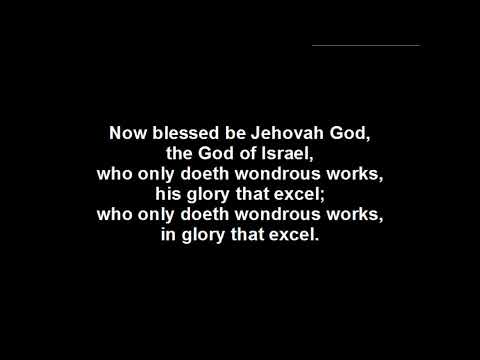
Free Grace Baptist Church - June 9, 2019 AM
The Christological unity of Scripture — the truth that the Old Testament prophets testified to Christ by the Spirit of Christ — grounds the believer's hope under suffering and shapes a properly Christocentric hermeneutic. Drawing from 1 Peter 1:10–12, this sermon argues that the Spirit of Christ was personally present in and through the prophets, disclosing the sufferings of Christ and the glories that follow, so that the Old Testament is not Israel-centric but Christ-centric in its ultimate focus. The sermon calls believers to read Scripture not merely for cognitive information but as a supernatural encounter with Christ himself, whose revealed glory transforms the reader into his likeness and sustains eschatological hope in the face of suffering and persecution.

The Application of Psalm 16 to Jesus Christ
Peter's sermon at Pentecost in Acts 2:24–32 hinges on a single exegetical claim: Psalm 16 is not about David but about the Messiah, and the Messiah is Jesus of Nazareth. The sermon works through Peter's two-part argument — the declaration of the resurrection in verse 24 and the prophetic proof from Psalm 16 in verses 25–32 — showing that it was impossible for death to hold Christ because the Father had sworn otherwise in the Davidic covenant. Believers are urged to pray Psalm 16 as their own, trusting that the same God who raised Christ from the grave is their preserver, their joy, and their confident hope through death and into resurrection.

The Nature of Saving Faith, Part 1
James 2:14–17 has provoked sharp disagreement in the history of the church, with readers perceiving a direct contradiction between James and Paul on the doctrine of justification. This sermon works through five hermeneutical tools for harmonizing the two apostles — the unity of Scripture, the internal consistency of James's own doctrine of salvation, the immediate context, the different audiences and purposes of each writer, and the statement of 1689 LBCF 11.2 — before turning to the question James poses in verses 14–17 concerning the validity of a particular species of faith. The central distinction is not faith versus works or faith plus works, but false faith versus true faith: genuine saving faith is never alone in the person justified, but is always accompanied with all other saving graces, producing the practical Christianity James demands.
Of the Holy Scriptures (2LCF 1.5-10)
The 1689 London Baptist Confession of Faith, paragraphs 5–10, sets out a comprehensive doctrine of Holy Scripture, and this study draws out the hermeneutical principles embedded in each paragraph. The scope of Scripture is theocentric and Christocentric — all of it tends toward the glory of God through the mission of Christ — and every other interpretive concern flows from that governing conviction. The sufficiency of Scripture encompasses both explicit texts and implicit doctrine derived by good and necessary consequence, while the perspicuity of Scripture assures even the unlearned that the things necessary for salvation are clearly propounded. The analogy of Scripture and the analogy of faith together form the infallible rule by which obscure passages are interpreted through clearer ones and through the theological sense of the whole.
The Olivet Discourse, Part 8
Matthew 24:29 presents one of the most contested verses in the Olivet Discourse: does its cosmic imagery — a darkened sun, a moonless sky, falling stars, and shaken heavens — describe a literal end-of-the-world event, or does it employ a well-established grammar of Old Testament prophetic language? This sermon argues the preterist case that verse 29 deploys figurative apocalyptic language drawn from Isaiah, Ezekiel, Joel, Amos, and others to announce the covenantal destruction of Old Covenant Israel in AD 70, immediately after the tribulation of those days. Five considerations are developed: the two time-markers tethering verse 29 to its context, the figurative meaning of cosmic collapse language, the extensive Old Testament background, the role-reversal of Israel becoming Babylon, and the implications for continuity in the new heavens and new earth. The sermon closes with a direct summons from Amos 5 — that there will be no escape on the final day of judgment, and that faith in Jesus Christ alone is the only refuge.

The Olivet Discourse, Part 7
Matthew 24:22–28 addresses the days of the great tribulation surrounding the destruction of Jerusalem in A.D. 70, and Jesus' warnings against false Christs who would arise during the siege. Taking a preterist hermeneutic, this exposition argues that the shortening of those days (v. 22) reflects God's sovereign limitation of covenant judgment for the elect's sake, and that the lightning metaphor of verse 27 describes not Christ's final physical return but a judgment-coming executed from His enthroned position at the Father's right hand. The carcass-and-eagles image of verse 28 is read against Deuteronomy 28 and Habakkuk 1 as a covenant-curse idiom for the Roman armies as instruments of divine vengeance. Throughout, the passage is applied evangelically: the only refuge from any coming judgment is flight to Christ alone, by grace alone, through faith alone.

The Olivet Discourse, Part 6
Matthew 24:21–22 describes a 'great tribulation' and its sovereign limitation — but what event does this language describe? Working through a preterist reading of the Olivet Discourse, this sermon argues that verse 21's unparalleled tribulation language refers to the destruction of Jerusalem in AD 70, not to a future global event. Drawing on parallel idioms in Exodus 11, Ezekiel 5, Ezekiel 7, and Daniel 9, the sermon demonstrates that such hyperbolic judgment language is standard biblical speech for covenantal catastrophe, and that the AD 70 destruction constituted the decisive covenantal transformation by which the kingdom was taken from old covenant Israel and given to the church. The sermon closes with a direct call to sinners to flee to Christ, whose promise in John 6:37 and 1 John 3:23 provides the warrant for faith.
The Olivet Discourse, Part 5
Matthew 24:15–20 presents Christ's command to flee Jerusalem when the abomination of desolation appears — a command the preterist interpretation locates in the first-century siege and destruction of the city by Rome in AD 70, not in a distant eschatological future. Working through the prophetic background in Daniel 9 and 12, the parallel account in Luke 21, and the covenant-curse framework of Deuteronomy 28 and Leviticus 26, this exposition argues that every detail in the passage — the reference to Judea, the architectural urgency, the concern for pregnant women, the prayer about winter and the Sabbath — is intelligible only as instruction addressed to first-century disciples facing a localized, historical judgment. The AD 70 destruction functions typologically, however, pressing every hearer to flee now to Christ, the only refuge when he comes in glory to judge the living and the dead.

Free Grace Baptist Church - October 2, 2016 AM
Matthew 24:15–20 is examined through a preterist lens, arguing that Christ's warning about the 'abomination of desolation' and the command to flee Judea were fulfilled in the Roman destruction of Jerusalem in AD 70, not in a yet-future dispensational timeline. The sermon draws on Daniel 9, 11, and 12, Luke 21, Deuteronomy 28, and Lamentations to establish that Jesus was answering his disciples' first-century questions about the temple's destruction — a covenantal judgment on Israel for breaking the Mosaic covenant and rejecting the Messiah. The pre-tribulation Rapture and futurist readings of the Olivet Discourse are assessed as systems imposed on the text rather than drawn from it, while the preterist interpretation is defended as the most exegetically responsible reading of the parallel Gospel accounts. The sermon closes by applying the typological weight of AD 70 to the final judgment, urging hearers to flee now to Christ, the only safe refuge when he comes in glory to judge the living and the dead.

Free Grace Baptist Church - September 4, 2016 AM
Matthew 24:1-3 opens the Olivet Discourse — the fifth of five Matthean discourses — with Jesus departing the temple, pronouncing its coming destruction, and receiving the disciples' questions about its timing and the sign of his coming. This sermon argues for a preterist interpretation: the discourse's primary referent is the AD 70 destruction of Jerusalem and its temple, understood as the covenantal judgment of God upon apostate Israel, the fulfilment of the covenant curses of Deuteronomy 28, and the conclusive transition from the Old Covenant to the New. Practically, this reading simultaneously refutes anti-Semitism and Christian Zionism, and calls every hearer to reckon with the Prophet-Christ who speaks with divine authority and the Priest-Christ who bore the wrath due to sinners.
Of the Church (2LCF 26.13)
The conduct required of an offended church member, and the proper interpretation of Matthew 7:1–6 in relation to church discipline, stand at the center of this study of 2LCF 26.13. The confession forbids the offended party from absenting themselves from worship or disturbing church order while awaiting the church's further proceeding, and calls them instead to wait upon Christ. Matthew 7:1–6 is not a blanket prohibition against all judgment but a condemnation of the censorious, nitpicking, fault-finding spirit that disregards the law of God and one's own sin. The sermon closes with the exhortation to remove the plank of self-righteous censoriousness before seeking to help a brother with his speck.
1 Samuel 15, Part 2
Divine impassibility — the classical Christian doctrine that God does not undergo emotional changes — stands at the center of a textual tension in 1 Samuel 15: verses 11 and 35 record that God 'greatly regrets' making Saul king, while verse 29 declares that the Strength of Israel 'will not lie nor relent, for he is not a man that he should relent.' This study argues that there is no contradiction, paradox, or problem in the text, but that the apparent tension is resolved by understanding anthropopathism (the ascription of human emotions to God in Scripture as accommodated language), the priority of divine-essence texts in interpretation, and the inseparable relationship between impassibility and immutability. The practical stakes are high: to modify impassibility is to unravel divine simplicity, omniscience, independence, and eternity, and ultimately to rob God of his divine nature and religion of its firm foundation and assured comfort.