
Topic
Eschatology
512 sermons · All topics

Bible Study - Exodus 8
Exodus 8 records the second, third, and fourth plagues against Egypt — frogs, lice, and flies — each following a recurring pattern: divine command, Pharaoh's refusal, the plague's execution, a show of compliance, and a return to hardness of heart. The plagues are not merely natural disasters but a direct assault upon the gods of Egypt, demonstrating that Yahweh alone is the true and living God in the midst of the land. The hardening of Pharaoh's heart is an act of divine justice against an already guilty sinner, not arbitrary cruelty, and the distinction God draws between Goshen and Egypt anticipates the covenant blessing that separates his people from those under his wrath. The repeated failure of miracles to produce repentance in Pharaoh — even when his own magicians confess 'this is the finger of God' — establishes that new birth, not spectacle, is what makes a believer.

The Lord's Arrest in the Garden

Matthew 26:50–56 records the arrest of Jesus in Gethsemane, and this exposition works through four movements in the passage: Peter's misguided sword-stroke, Christ's rebuke concerning the nature of the messianic kingdom, his rhetorical indictment of the mob's hypocrisy, and the disciples' desertion. The sermon shows that Christ's surrender was entirely voluntary, governed by the covenant of redemption and the fulfillment of prophetic Scripture, not by any inability to resist. Hearers are warned against mistaking external proximity to Christ for saving grace, called to zeal tempered by theological knowledge, and directed to the Lord's Supper as an occasion to 'kiss the Son' in faith rather than in the betrayal of a Judas.

The Whole Armor of God
Ephesians 6:10–20 calls the people of God to don the whole armor of God — not as an invitation to physical combat, but as a summons to faithful spiritual warfare against the devil and his hosts. The sermon works through three movements: the commands to be strong in the Lord and to put on the armor, the reasons rooted in the nature of the spiritual enemy, and a pastoral survey of each piece of armor from the belt of truth to the sword of the Spirit and prayer. The controlling emphasis falls on standing — not heroics, but covenantal steadfastness in union with Christ, who is already exalted far above all principalities and powers.
Nations Rage, God Mocks

Psalm 2 confronts the rage of earthly rulers against God and His anointed with a sober theological question: why do the nations engage in so futile an endeavor? The sermon expounds the psalm under three headings — the rebellion of earthly kings, the reign of the heavenly king, and the recognition of the true king — tracing the Davidic covenant through its fulfillment in the resurrection and exaltation of Christ. The Covenant of Redemption grounds the certainty of Christ's present reign at the right hand of the Father, and that certainty is the sole comfort available to God's people as nations continue to rage and the history of the church runs red with the blood of martyrs. Hearers are called either to kiss the Son in filial fear and find blessing, or to perish in the way of the ungodly.
Stewards of the Mystery
1 Corinthians 4:1–5 presents ministers of Christ not as celebrities or gurus but as servants and stewards entrusted with the mystery of the gospel — a role demanding faithfulness, not worldly success. Against the backdrop of the factionalism at Corinth, where worldly wisdom had infiltrated the church's evaluation of apostles, Paul asserts that the only judge competent to assess a steward's motives is the Lord himself. The sermon traces three movements: the nature of the steward's calling, the irrelevance of human verdict, and the eschatological praise that awaits the faithful at Christ's return.

Pressing On In Christ for Sanctification

Philippians 3:10–21 sets out the doctrine of sanctification as the necessary and purposeful continuation of justification — not its cause. The justified believer, having been conformed to Christ's death by the Spirit's regenerating work (Romans 6), is called to press forward in mortification of the old nature and vivification of the new, never resting in past attainments. Christ's purpose in saving sinners is not merely to deliver them from hell but to conform them to his image for the glory of God — the ordo salutis moving through justification and sanctification toward final glorification. The sermon calls believers to disciplined, Christ-dependent pressing on through Word, prayer, church attendance, and zealous good works, while warning that those who corrupt the gospel by mingling works with grace are enemies of the cross whose end is destruction.

The Thief on the Cross
What does the conversion of a man guilty of insurrection and murder on the day of his execution reveal about the grace of God? This exposition of Luke 23:39–43 traces the marks of sovereign grace in the dying thief — his fear of God, his ownership of personal guilt, his acknowledgment of Christ's sinlessness, and his faith cast entirely upon a crucified Lord — before turning to the willing and able Savior who, in the extremity of his own suffering, assures a notorious criminal of immediate paradise. The sermon argues that justification is by faith alone, apart from works, baptism, or religious knowledge, and that the distinguishing mercy shown to one thief and withheld from the other is the clearest emblem of sovereign grace. Hearers are pressed not to presume on a deathbed conversion but to cast themselves now, by grace, upon the mercy of Christ.

The Messiah, The Baptist, And The Kingdom
Matthew 11:2–15 presents three interlocking questions: who is Jesus the Messiah, who is John the Baptist, and what is the nature of the kingdom of heaven? The sermon works through John's imprisoned inquiry — not as rank unbelief but as a struggle with the shape of the messianic agenda — and Christ's answer, which grounds assurance in fulfilled Old Testament prophecy rather than in political deliverance. John is then assessed by Christ himself as more than a prophet, the very subject of Malachi's covenant-messenger prophecy, a man of unflinching courage who stands as a model for preachers and all believers. The enigmatic kingdom-violence saying of verse 12 is read as a positive-negative pairing: the kingdom forcefully advances through proclamation and regeneration, but violent men persist in opposing and plundering it until Christ's enemies are made his footstool.
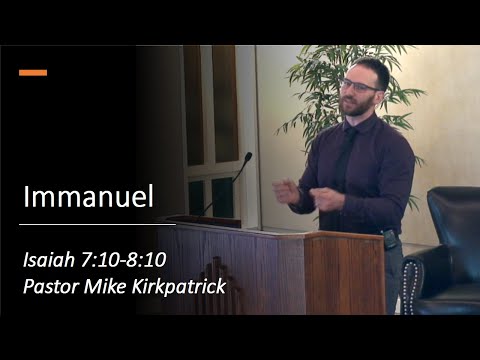
Immanuel
Isaiah 7:10–8:10 presents the Immanuel prophecy not as a comfortable seasonal text but as a word of judgment against Ahaz's faithless trust in Assyria and a word of hope for the covenant remnant. The sermon traces two contrasting realities: 'Assyria with us,' the consequence of royal unbelief, and 'God with us,' the promise that anchors the remnant through exile and desolation. The Immanuel sign finds its definitive fulfillment in Matthew 1, where the virgin-born Son saves his people from sin rather than merely political oppression — a truth that remains the ground of steadfastness for the church in every era of suffering and exile.
Psalm 46
Psalm 46 presents God as the impenetrable refuge and omnipotent strength of His people in the midst of natural catastrophe, national upheaval, and personal affliction. The study works through four heads: the assurance of God's presence (vv. 1, 7, 11), the demonstration of God's power (vv. 2–6), the invitation to behold God's works (vv. 8–9), and the command to rest in God's sovereignty (v. 10). Covenant theology is not merely a theoretical construct but the very ground of the believer's comfort — the God of Jacob is a covenant-keeping God whose purposes cannot be frustrated by any earthly power. The congregation is called to the practical discipline of theology proper: to know God deeply so that the soul is stabilized, not paralyzed, in times of trouble.

The Second Missionary Journey, Part 7
Paul's sermon at the Areopagus (Acts 17:22–34) confronts Athenian idolatry by grounding the Christian worldview in the doctrines of creation, providence, and judgment. He establishes the Creator-creature distinction against both Epicurean deism and Stoic pantheism, exposes the guilt of all men through natural revelation and their own poets, and calls all men everywhere to repentance because God has appointed both a day of judgment and its judge — the resurrected Christ. The sermon closes by applying the abiding prohibition of idolatry from the Decalogue to contemporary life, pressing hearers toward faith in Christ as the only corrective to the idolatry that already invites God's temporal and eternal judgment.

Genesis 49
Genesis 49 presents Jacob's deathbed blessings and prophetic declarations over each of the twelve tribes of Israel, reaching its theological apex in the Shiloh prophecy of verses 8–12, which identifies the tribe of Judah as the royal line from which Messiah will come. The scepter's promised continuity in Judah until 'Shiloh comes' is shown to anticipate not only David's dynasty but the obedience of all peoples — Jew and Gentile — to the Lord Jesus Christ, the Lion of the tribe of Judah. Jacob's closing instructions concerning his burial in the cave of Machpelah reaffirm Israel's legal title to the promised land and underscore that Egypt is only a sojourn, not a destiny. The chapter closes with a call to confidence in God grounded in a lifetime of witnessed divine faithfulness, expressed in Jacob's peaceful death and his declaration, 'I have waited for your salvation, O Lord.'

The Manifestation of God's Grace
Titus 2:11–15 presents God's grace not merely as the ground of salvation but as the very teacher of holy living. This exposition traces four aspects of grace in the passage: its appearance in the incarnation and atoning work of Christ, its instruction toward denial of ungodliness and worldly lusts and pursuit of sober, righteous, and godly life, its demonstration in the deity of the returning Christ and the definite redemption he accomplished, and its proclamation through authoritative gospel ministry. The controlling hermeneutical key is the grammatical and theological priority of the indicative over the imperative: believers obey not in order to be saved but because they have been saved, and inverting that order collapses the gospel into moralism.

Genesis 48:1-22
Genesis 48 records Jacob's adoption of Joseph's two sons, Ephraim and Manasseh, as tribal heads within Israel, and his deliberate bestowal of the greater blessing on the younger Ephraim — a pattern running throughout Genesis that the covenant blessings are dispensed not by birth order but by sovereign divine election. The chapter's vocabulary of "firstborn" is examined in light of Colossians 1:15, demonstrating that the term denotes preeminence rather than creaturely origin, directly refuting the Arian Christology of Jehovah's Witnesses. Jacob's deathbed testimony — praising God who fed him all his life and whose Angel redeemed him from all evil — is held up as a model for how the people of God should rehearse divine faithfulness at the close of life.

The Empty Tomb and the Risen Lord
The resurrection of Jesus Christ from the dead is not a cunningly devised fable but a historically attested and theologically necessary event that vindicates Christ's person and work. Expounding Matthew 28:1–10, this sermon examines the discovery of the empty tomb — the descent of the angel, the commission to the women, and the flight of the guards — and then the appearance of the risen Lord to the women, who held him by the feet and worshipped him. The hypostatic union underlies that act of worship: they touch his human feet while adoring the second person of the Trinity. Because Christ is risen, believers need not fear, have an advocate with the Father when they sin, and possess a hope that is grounded in historical reality and not mere sentiment.

The Council at Jerusalem, Part 3
James closes the Jerusalem Council (Acts 15:13–21) by grounding the inclusion of Gentiles in the covenant people of God not in human experience alone but in the prophetic word of Amos 9:11–12 and in the eternal decree of God. The rebuilding of David's tabernacle is the spiritual kingdom of Christ, which was purposed in eternity, announced through the prophets, and executed in the crosswork and exaltation of the Son. From this doctrinal foundation James renders a definitive verdict against Judaizing — that justification is by faith alone, apart from circumcision or the ceremonies of Moses — and then offers practical accommodations to facilitate communion between Jewish and Gentile believers in the one new humanity Christ has made.

The Institution of the Lord's Supper
Matthew 26:26–30 records the institution of the Lord's Supper by Christ on the night of Passover, and this sermon works through that text to establish the supper's setting, its elements, and its eschatological horizon. The bread and cup are not transformed in substance — transubstantiation is explicitly repudiated as repugnant to Scripture, reason, and the 1689 confession — but are consecrated from common use to signify Christ's broken body and shed blood. The blood of the new covenant is shed 'for many,' not all without exception, anchoring the supper in the doctrine of particular redemption and the forgiveness of sins as the chief covenantal benefit. Believers are exhorted to receive the supper not as a reward for good behavior but as a means of grace by which God strengthens, fortifies, and confirms the faith of His pilgrim people.

Free Grace Baptist Church - December 29, 2019 PM
Hosea 11:1–11 sets before us the indictment of Israel as a wicked, ungrateful son who responded to the Father's covenant love with relentless idolatry, earning the just sentence of Assyrian exile. Yet the passage turns on the sovereign mercy of God, whose holy love — not Israel's repentance — is the sole ground of restoration. The sermon traces the typological arc from the Exodus through the exile to Matthew 2:15, arguing that Jesus Christ is the true Israel, the obedient Son called out of Egypt, who absorbs the exile his people deserve and so secures their passage through the final judgment. The application is that false worship earns the displeasure of a holy God, while those who cling to Christ alone — justified by his merits, not their own — shall never be handed over.

The Covenant with David
The Davidic Covenant in 2 Samuel 7:1–17 is a sovereign promise by God to David that a seed from his line will establish an eternal kingdom — a promise that cannot be annulled by death, destroyed by sin, or exhausted by time. The sermon traces the historical background of the covenant (the ark's wandering, God's presence with his pilgrim people, David's own rise from the sheepfold), then unfolds the triple meaning of 'house' — physical dwelling, dynastic succession, and temple — showing that God's answer to David's desire to build for him is instead to build a dynasty for David. Covenant theology frames the whole: the Davidic covenant is not a new or separate covenant of grace but a further discovery of the one covenant purpose moving from Genesis 3:15 through Abraham and David to its full realization in the Lord Jesus Christ, the son of David who now reigns over a kingdom without end. The sermon closes with Jeremiah 23:5–6 — the Lord our righteousness — pressing hearers to rest in Christ's imputed righteousness as the ground of their entry into that everlasting kingdom.

The First Missionary Journey, Part 6
Paul's sermon in the synagogue at Pisidian Antioch reaches its practical climax in Acts 13:38–43, where he preaches forgiveness of sins and justification by faith alone — two distinct yet inseparable blessings secured by Christ's active and passive obedience. The law of Moses cannot justify; it can only expose the sinner's inability and drive him to Christ, in whom every believer is declared righteous by the imputation of Christ's righteousness received through faith alone. Paul's warning from Habakkuk 1:5 presses the point home: to despise this gospel is to invite a judgment more severe than the Babylonian captivity. The sermon closes by tracing the same doctrine of justification through the vision of Joshua the high priest in Zechariah 3, and exhorts believers to continue in the grace of God as the only ground of perseverance.

Genesis 36
Genesis 36 presents the genealogy of Esau (Edom), a passage easily dismissed as a bare list of names. This study examines why Moses inserts this extended genealogy at the precise hinge between the narrative of Isaac and the narrative of Jacob, arguing that it serves as a demonstration of divine faithfulness: God fulfilled every promise made to the non-elect son — nationhood, territorial blessing, and temporal prosperity — which grounds the believer's confidence that His covenant promises to the elect will be no less certainly realized. The contrast between Esau's temporal inheritance and Jacob's spiritual and eternal inheritance sharpens the distinction between common providence and saving grace, and the goodness God shows even to the reprobate is intended to lead sinners to repentance.

Genesis 35
Genesis 35 traces Jacob's return to Bethel, the deaths of Rachel and Isaac, the treachery of Reuben, and the enumeration of Jacob's twelve sons. The chapter centers on God's sovereign renewal of His covenant with Jacob — reiterating the promises of seed and land given to Abraham and Isaac — at precisely the moment Jacob is most fearful and morally compromised. The sermon argues that God's repetition of covenant promises is not for His own memory but for the stabilization of His people's faith, and that the means of grace — Scripture, prayer, corporate worship, and the Lord's Supper — function as God's appointed conduits for fortifying His people to persevere through affliction, loss, and moral failure.

The Enthronement of the Messiah
Psalm 110 presents the enthroned Messiah as divine King, eternal Priest, and triumphant Conqueror — a vision the early church clung to precisely because they suffered under Rome and unbelieving Israel. This exposition traces the three offices of the Mediator through seven verses, showing that Christ's present session at the right hand of the Father is not a passive waiting but an active subjugation of all enemies. The sermon rebukes a domesticated, sentimental Christology and calls believers to confident, volunteer service under the sovereign who must reign until every enemy is made his footstool.
The Past as a Present Reminder
Hebrews 10:32–39 calls suffering believers to recall God's proven faithfulness in former days as the present ground for ongoing endurance. The apostle first rehearses the Hebrew Christians' early trials — public reproach, solidarity with persecuted brothers, and joyful acceptance of plundered possessions — showing that heavenly-mindedness, not stoic willpower, sustained them then and must sustain them now. He then exhorts them not to cast away their confidence, grounding Christian perseverance not in moral grit but in faith in the Son of God who loved and gave himself for his people. The sermon applies this to every believer: remember what God has done, set your hope on the enduring possession in heaven, and press forward by faith rather than drawing back to perdition.

Genesis 25:1-34
Genesis 25 records the closing of Abraham's life and the opening of Isaac's story, setting the stage for the covenant line to advance through election rather than nature or merit. The passage contrasts Ishmael's twelve princes — fulfilling God's promise to Hagar — with Isaac's barren household, where twenty years of earnest prayer precede the miraculous conception of twin sons whose prenatal struggle prefigures the enmity between Israel and Edom. The chapter culminates in the profaneness of Esau, who despises his birthright for a single meal, illustrating the danger of immediate gratification over covenant inheritance — a warning the author of Hebrews applies directly to apostasy. God's sovereignty in election, his faithfulness across generations, and the incremental advance of the covenant promise toward Christ are the governing themes throughout.

The LORD is my Shepherd
Psalm 23 is examined as a hymn of trust composed amid difficulty rather than prosperity, arguing that David's confident confession — 'The Lord is my shepherd, I shall not want' — is made precisely in the shadow of danger, not in spite of it. The sermon expounds the psalm under two headings: the covenant Lord as the shepherd who provides daily physical and spiritual provision, and as the gracious host who prepares a table in the presence of enemies. Christians are exhorted to make diligent use of the means of grace — private prayer and Scripture, corporate worship, the preached word, and the Lord's Supper — as the God-ordained way to walk with Christ through the valley of the shadow of death toward their eternal dwelling in the house of the Lord.
The Two Builders
Matthew 7:24–29 closes the Sermon on the Mount with a parable that presses every hearer to examine the foundation of their life before God. Both builders hear the words of Christ, but only the wise builder obeys them — and that obedience, rooted not in moral effort but in faith in Christ alone, is the mark that distinguishes genuine discipleship from hollow profession. The foolish builder is not a pagan but a hearer who pays lip service to the Word without submitting to it, a condition Ezekiel 33 and James 1 both diagnose with sobering precision. The sermon calls every listener to repent, believe the gospel, and rest on Christ as the only foundation that will withstand the final storm of God's holy wrath.

The Judgment Seat of Christ
Matthew 7:21–23 is often misread as a warning to believers to produce more good works, but the passage concerns entrance into the kingdom of heaven and exposes the damning error of self-righteousness. The false professors are condemned not because they lacked works but because they rested their hope for acceptance with God on those works rather than on Christ's blood and righteousness — a form of lawlessness that is an assault on the cross. The will of the Father in Matthew 7:21, rightly understood through John 6:28–40, is to believe on the Son whom He sent; justification is by faith alone, received once, and the Sermon on the Mount functions as law to drive sinners to the foot of the cross rather than to self-congratulation.

Psalm 130
Psalm 130 traces the soul's movement from the depths of distress to triumphant hope, and this exposition works through the psalm's four movements: an intense cry to God from affliction, a humble confession resting on God's forgiving character, a trusting watchfulness grounded in God's Word, and a joyful expectation rooted in divine mercy and abundant redemption. The sermon grounds assurance not in personal performance but in the believer's covenant union with Christ, whose blood has sealed the pardon that God delights to bestow. Hearers are called to be people of the Word and of prayer, waiting expectantly upon a covenant-keeping God whose faithfulness is more certain than the rising of the morning.
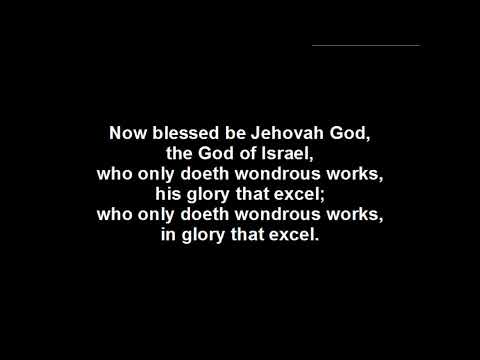
Free Grace Baptist Church - June 9, 2019 AM
The Christological unity of Scripture — the truth that the Old Testament prophets testified to Christ by the Spirit of Christ — grounds the believer's hope under suffering and shapes a properly Christocentric hermeneutic. Drawing from 1 Peter 1:10–12, this sermon argues that the Spirit of Christ was personally present in and through the prophets, disclosing the sufferings of Christ and the glories that follow, so that the Old Testament is not Israel-centric but Christ-centric in its ultimate focus. The sermon calls believers to read Scripture not merely for cognitive information but as a supernatural encounter with Christ himself, whose revealed glory transforms the reader into his likeness and sustains eschatological hope in the face of suffering and persecution.