
Topic
Biblical Theology
1,075 sermons · All topics
2 Samuel 20

Second Samuel 20 continues the unrelenting sequence of trials that mark the consequences of David's sin: no sooner does David return to Jerusalem after Absalom's rebellion than Sheba the son of Bichri, a Benjamite opportunist, exploits inter-tribal tension to launch a fresh secession against the Davidic throne. The chapter traces five movements — Sheba's rebellion, the reminder of David's sin through the fate of the concubines, Joab's cold-blooded murder of Amasa, the wise woman of Abel-Beth-Maacah who ends the revolt, and the list of David's officers — each illuminating how God preserves His kingdom despite the sinfulness of its human participants. Typologically, the chapter anticipates the rejection and vindication of David's greater Son: the worthless rebel who rises against God's anointed receives a mortal head wound, echoing the protoevangelion promise of the seed of the woman crushing the serpent's head.
2 Samuel 19:9-43
Second Samuel 19:9–43 narrates David's return to Jerusalem after Absalom's failed rebellion, exposing both the political complexity of restoring a dethroned king and the deeper spiritual condition of those who surround him. Three figures — Shimei, Mephibosheth, and Barzillai — are studied as contrasting portraits: pragmatic self-interest, costly loyalty, and contented faithfulness. The passage closes with a petty tribal quarrel between Israel and Judah that foreshadows Sheba's rebellion in chapter 20, illustrating that division in the covenant community is driven by the craving for position and prestige rather than submission to God's king. The application is direct: examine whether your allegiance to Christ is a matter of genuine conviction or merely policy, and cultivate the decreasing posture of John the Baptist.

Free Grace Baptist Church - July 24, 2016 PM
Matthew 4:1-11 is not primarily a moral example but a substitutionary act: Christ enters the wilderness as the second Adam and the true Israel, undergoing probationary testing in order to render the perfect covenantal obedience that Adam and Israel failed to render. Seven interlocking theological observations — divine sovereignty, the Spirit's ministry in Christ's life, the hypostatic union, the probative nature of the episode, Christ's fulfillment of Old Testament types, the seed-and-serpent motif, and the substitutionary character of his obedience — are drawn from the text to show that this wilderness battle is a prelude to Calvary's victory. The primary application is not moralism but adoration: Christ did all these things for his people, and his imputed obedience is the ground on which sinners may confidently rest.

Free Grace Baptist Church - July 24, 2016 AM
Matthew 4:1-11 presents the wilderness temptation of Christ not merely as a moral battle against sin but as a divinely ordained probationary test in which the Son of God proves himself the obedient Israel where the first Israel perpetually failed. The sermon traces each of Satan's three assaults against the backdrop of Israel's wilderness failures in Exodus and Deuteronomy, showing Christ as the covenant-keeping second Adam whose steadfast obedience secures a righteousness his people could never produce. The post-victory report — angels ministering to Christ — fulfills the very promises Satan had twisted, vindicating God's timing against all satanic shortcuts to glory. Hearers are called to find their exclusive champion in this Christ and to answer every temptation as he did: with the word of the living and true God.

The Lament Over Jerusalem
Matthew 23:37–39 records Christ's lament over Jerusalem — a cry of sorrow that follows directly upon the severest condemnations he has pronounced against the scribes and Pharisees. The sermon traces Jesus' prophetic lament through its Old Testament antecedents in Jeremiah, Ezekiel, and the Psalms, arguing that Christ speaks here according to his human nature, expressing genuine grief over a city that has killed the prophets and now rejects the Messiah himself. The declaration 'your house is left to you desolate' marks a decisive redemptive-historical shift: as in Ezekiel 8–11, the withdrawal of God's glory precedes the destruction of the temple, and that withdrawal is enacted when Christ departs to the Mount of Olives. The sermon closes by refuting the Arminian use of 'you were not willing' as a proof text for free will, showing instead that the text confirms total depravity and that the free and genuine offer of Christ to sinners is fully consistent with the Reformed doctrine of sovereign grace.
2 Samuel 18-19:8
David's army defeats Absalom in the woods of Ephraim, but Absalom's death — hanging from a terebinth tree, killed by Joab in defiance of David's orders — reduces a day of military triumph to one of royal mourning. This exposition of 2 Samuel 18–19:8 argues that David's inconsolable grief over Absalom is not mere paternal sentiment but is inflamed by the guilt of his own sin in 2 Samuel 12, where Nathan pronounced that the sword would never depart from his house. The study applies two lessons to the congregation: a biblical realism about the inconsistency of every human being, and a call to faithful parenting in the fear of God.

The Day of Atonement
Leviticus 16, the Day of Atonement, stands at the literary and theological center of the Pentateuch, resolving the tension left at the close of Exodus 40 where God dwells among Israel but cannot be approached. The ceremony instructs Israel — and the church — in four realities: the holiness of God, the pervasive power of sin, the necessity of blood for atonement, and the blessing that flows from expiation. Every element of the ritual — the high priest's own sin offering, the two goats, the blood sprinkled on the mercy seat, and the scapegoat driven into the wilderness — is a type pointing forward to the once-for-all sacrifice of Christ, whose atoning work alone renders sinful men fit for communion with a thrice-holy God.
The Conversion of the Ethiopian Eunuch
Acts 8:26–40 records the Spirit-orchestrated conversion of an Ethiopian eunuch through Philip's proclamation of Christ from Isaiah 53. The passage is set within the fulfillment of Isaiah 56's promise that eunuchs and Gentiles would be brought near to God in the messianic age — a promise Luke deliberately highlights as the risen and exalted Christ builds his kingdom to the uttermost parts of the earth. The sermon expounds the substitutionary suffering of the servant of Yahweh as the content of Philip's evangelism, the great exchange of 2 Corinthians 5:21 as the ground of justification, and the proper order of faith then baptism as the pattern of apostolic practice. Hearers are pressed to ask whether they understand the gospel, to believe it without delay, and — if already believing — to submit to baptism as an act of obedience and a means of grace.
2 Samuel 17
Second Samuel 17 narrates the competing counsel of Ahithophel and Hushai during Absalom's rebellion against David, but the narrator's own theological commentary in verse 14 reveals that the decisive factor is neither military strategy nor political cunning — it is the sovereign purpose of Yahweh. God defeats good counsel to bring disaster on His enemies and preserve His anointed king, and He does so through entirely ordinary, hidden means. The sermon draws out the hiddenness of divine providence, the certainty of judgment upon all who oppose God's kingdom, and the comfort that the kingdom of Christ will never be destroyed.

Free Grace Baptist Church - June 26, 2016 PM
Matthew 28:18-20, the Great Commission, grounds the church's mission in the sovereign authority, command, and presence of the risen Lord Jesus Christ. The sermon works through three points: the post-resurrection exaltation of Christ as mediator — established by Philippians 2:5-11, Daniel 7:13-14, and Hebrews 1 — demonstrates that all authority given to the ascended Son pertains specifically to his mediatorial office rather than to any deficiency in his eternal deity. The sovereign command to make disciples of all nations, to baptize in the triune name, and to teach obedience to all Christ has commanded establishes the church's mission and the regulative principle of worship against human traditions. Christians are called to confidence and courage in a hostile world on the basis of Christ's abiding promise — 'lo I am with you always, even to the end of the age' — while unbelievers are confronted with the same authority as the ground of coming judgment and the only sufficient ground of saving grace.

The Impending Judgment of Israel
Matthew 23:34–36 records Christ's announcement of impending divine judgment upon the generation of Israel that would reject him and murder his sent messengers. The sermon traces three interlocking movements: the rejection of the prophets Christ sends in the new covenant era, the accumulation of blood-guilt from Abel to Zechariah spanning the entire Hebrew canon, and the prophetic assurance — sealed with Christ's own 'amen' — that all these things would fall upon that first-century generation in the destruction of AD 70. The exposition situates Matthew 23 within a consistent covenantal pattern running from the Mosaic curses through the Assyrian and Babylonian captivities to AD 70, and closes with a direct call to flee to the Righteous One whose shed blood is the only escape from the condemnation of hell.
2 Samuel 16
When David flees Jerusalem, he encounters three enemies — Ziba the manipulator, Shimei the curser, and Ahithophel the treacherous counselor — yet his response to each reveals a man who trusts the sovereign hand of God rather than the sword of his own men. This study of 2 Samuel 16 traces how David's suffering under divine chastisement, provoked by his own sin in 2 Samuel 11–12, fulfills Nathan's prophetic word and demonstrates a practical faith in God's comprehensive sovereignty over the wicked acts of men. David's refusal to retaliate against Shimei and his hope that God might 'repay him with good' prefigures Christ, who when reviled did not revile in return but committed himself to him who judges righteously. The study closes by urging believers to read the Psalms in light of their historical background, to embrace God's sovereignty over trials, and to cast themselves upon divine mercy when waves of affliction come together.

The Condemnation of the Religious Leaders, Part 5
Matthew 23:29–33 records the eighth and final woe Jesus pronounces against the scribes and Pharisees, and this sermon works through the passage under three headings: their professed allegiance to the prophets, their protested dissociation from their fathers' murders, and Christ's prophetic assertion of their guilt. The hypocrisy at the centre of the woe is that these men honoured dead prophets with tombs and monuments while plotting the murder of the greatest prophet, the Lord Jesus Christ himself. The sermon draws sustained parallels from Ezra 9, Daniel 9, 2 Kings 17, and 2 Chronicles 36 to show that Israel's rejection of the prophets had always preceded covenantal judgment, and that Matthew 23 sets the ground for the destruction of Jerusalem prophesied in Matthew 24. Hearers are pressed by Christ's own question — 'How can you escape the condemnation of hell?' — and directed to faith in Christ alone as the only answer.
2 Samuel 15
Second Samuel 15 records Absalom's carefully orchestrated conspiracy to usurp David's throne and David's subsequent flight from Jerusalem. The chapter is expounded against the backdrop of God's word of judgment through Nathan in 2 Samuel 12, showing how divine sovereignty works through the wickedness of responsible human agents without excusing that wickedness. David's submission to God's sovereign will in sending the Ark back to Jerusalem, his prayer against the counsel of Ahithophel, and his use of Ittai, Zadok, and Hushai as instruments of providence together model a robust, active faith that casts itself entirely upon God rather than upon religious superstition or human cleverness. The passage closes with typological overtones, as David's weeping ascent of the Mount of Olives anticipates his greater Son's own rejected kingship and lament over Jerusalem.
2 Samuel 14
Second Samuel 14 records Joab's scheme to engineer Absalom's return from exile through the parable-like appeal of a wise woman from Tekoa, David's capitulation, and the uneasy non-reconciliation that follows. The chapter exposes David's chronic inactivity as a father and king — his refusal either to punish or fully forgive Absalom producing the very bitterness that will fuel Absalom's usurpation in chapter 15. The narrator's portrait of Absalom's stunning appearance, his family, and his manipulative conduct warns that outward impressiveness without inward submission to God is a recipe for leadership disaster, a theme that runs from Saul through Eliab to Absalom himself. Parents and leaders alike are called to deal decisively with sin rather than tolerate the "no man's land" between justice and mercy.

Free Grace Baptist Church - June 5, 2016 AM
Matthew 23:23-24 records Christ's fifth woe against the scribes and Pharisees: meticulous in tithing garden herbs, yet negligent of justice, mercy, and faith — the weightier matters of the law. The sermon situates this condemnation within the biblical pattern of covenantal lawsuit, tracing the same triadic demand through Genesis 18, Deuteronomy 10, Hosea 12, Micah 6, and Zechariah 7, showing that Christ speaks precisely as the prophets before him. The qualification is as important as the condemnation: Jesus does not abolish the minor obligations but subordinates them to the greater, insisting both must be kept. The application presses the congregation to examine whether any diligent religious practice — tithing, doctrinal precision, liturgical scruple — is being used consciously or unconsciously to mask the neglect of love to neighbour and faith toward God, and closes with the reminder that neither the majors nor the minors constitute the ground of salvation, which is grace alone through faith alone in Christ alone.
2 Samuel 13:23-39
2 Samuel 13:23–39 narrates the premeditated murder of Amnon by Absalom, the flight of Absalom to Geshur, and David's paralysis as father and king. The passage exposes how unaddressed sin compounds — David's failure to punish Amnon's rape of Tamar creates the conditions for Absalom's vigilante vengeance, fulfilling Nathan's prophetic word that the sword would not depart from David's house. Absalom's two years of nursed hatred illustrate Paul's warning in Ephesians 4 that unresolved anger gives place to the devil, and the passage ends by pointing the faithful forward to the promised Messiah, the son of David who will reign with the righteousness and justice no merely human king can sustain.

Free Grace Baptist Church - May 29, 2016 PM
Hebrews 12:1-2 issues a command to run with endurance the race set before believers, and the preacher works through the incentives the apostle supplies for doing so. The sermon focuses on the cloud of witnesses from Hebrews 11, arguing that their function is not to cheer runners on as spectators but to testify — as witnesses — to the faithfulness of God Most High. By surveying Abel, Enoch, Noah, Abraham, Moses, Rahab, the judges, David, and others, the sermon presses the congregation to internalize the consistent testimony of God's people through redemptive history and to lay aside every weight and besetting sin in order to persevere to the end.
2 Samuel 13:1-22
The rape of Tamar by her half-brother Amnon (2 Samuel 13:1–22) is examined as the beginning of God's covenantal judgment on David's house, fulfilling the word of Nathan the prophet in 2 Samuel 12. Before entering the narrative, the study clears apparent contradictions in the Mosaic legislation on rape and incest (Deuteronomy 22; Leviticus 18; 20), demonstrating that the Pentateuch treats rape as equivalent in gravity to murder and that the disputed passage in Deuteronomy 28–29 describes consensual seduction, not rape. The passage is then worked through under four headings — Amnon's lust, Jonadab's counsel, the act itself, and its aftermath — with sustained attention to what each character reveals about the nature of sin, the failure of justice, and the sovereignty of God even in sordid judgment.

The Condemnation of the Religious Leaders, Part 1
Matthew 23:13 introduces the first of eight woes Christ pronounces upon the scribes and Pharisees — men who, rather than opening the kingdom of heaven, slammed its door in the faces of those seeking entrance. The sermon establishes the prophetic precedent for Christ's condemnation by tracing the woe-oracle tradition through Isaiah and Habakkuk, and by grounding Christ's authority in the Deuteronomy 18 promise of the coming prophet. The first woe is shown to encapsulate all the rest: the religious leaders shut out others through hypocrisy, legalism, doctrinal heresy, and above all their rejection of Jesus as the Messiah. The sermon closes with a direct call to believe the gospel — to look to Christ and live, as Israel once looked to the bronze serpent in the wilderness.
2 Samuel 11
2 Samuel 11 records David's descent from idleness into adultery with Bathsheba and premeditated murder of Uriah the Hittite. The narrative's deliberate pacing and ironic contrasts expose David functioning as a lawless pagan king while Uriah — a foreign-born mighty man — embodies covenantal integrity. The study traces three movements: the sin itself, the escalating cover-up, and the divine verdict, warning that sin's hardening deceitfulness compounds rather than resolves itself, and that standing against temptation depends not on willpower but solely on the grace of God.

The Kindness Shown to Mephibosheth
David's covenant with Jonathan, sealed decades before 2 Samuel 9, drives him to seek out Mephibosheth — a lame, fearful descendant of his enemy Saul — and lavish upon him protection, restored inheritance, and a permanent seat at the royal table. The Hebrew word hesed (covenant faithfulness, steadfast love) names a kindness that goes far beyond bare duty, and David's exercise of it toward an unworthy enemy typifies the grace that Christ, David's greater Son, bestows upon helpless, ungodly sinners. The sermon presses two practical conclusions: covenant promises are perpetually binding regardless of changed circumstances or the passage of time, and the grace received from God must become grace poured out toward others.
2 Samuel 10
2 Samuel 10 records David's embassy of covenantal kindness to Hanun of Ammon, its shameful rejection, and the subsequent wars with the Ammonite-Syrian coalition. The chapter functions as the literary backdrop for the David-Bathsheba-Uriah narrative of chapters 11–12, while also foreshadowing David as a type of Christ in his kindness to enemies and in the nations' rebellion against the Lord's anointed. The theological high point comes unexpectedly from Joab, whose battle-cry — 'May the Lord do what is good in His sight' — models sovereign-trust that holds together confident faith in God's promises with humble uncertainty about the specific means of His providence, a pattern the sermon applies to the Christian life through Romans 8:28.

Free Grace Baptist Church - April 10, 2016 PM
Paul's final personal requests in 2 Timothy 4:9–13 reveal the apostle's heart in his last imprisonment: his longing for Christian fellowship, his grief over Demas's love of the present world, his gracious restoration of John Mark, and his practical wisdom in calling for a cloak and books. The sermon presses hearers to value the assembling of the saints, to guard against worldliness, to refuse to hold grudges against those who have stumbled, and to follow Paul's example of tireless gospel strategizing even in the eleventh hour.
The Question Concerning the Messiah
Matthew 22:41–46 records the final public controversy between Jesus and the religious leaders, in which Jesus turns from defendant to questioner and asks: 'What do you think about the Christ? Whose Son is He?' The Pharisees answer correctly but incompletely — 'the Son of David' — and Jesus presses Psalm 110:1 upon them to show that David, writing in the Spirit, calls the Messiah his Lord, which demands that the Messiah be not merely a human descendant but also the divine Son of God. The sermon traces Matthew's sustained identification of Jesus as both Son of David and Son of God, explains the Hebrew distinction between Yahweh and Adonai in Psalm 110:1, and grounds the hypostatic union in that one verse. Believers are called to love this God-man with whole-hearted devotion; unbelievers are urged to reckon with the Christ who alone could fulfill the law and bear the wrath owed to sinners.

Free Grace Baptist Church - April 10, 2016 AM
Matthew 22:41–46 records the final public controversy between Jesus and the religious leaders, in which Christ turns from defendant to questioner and presses the Pharisees with a two-fold inquiry: whose son is the Messiah, and how does David in the Spirit call him Lord in Psalm 110:1? Working through the Hebrew distinction between Yahweh and Adonai, the sermon demonstrates that David's son is simultaneously David's Lord — the hypostatic union in seed form — and that the Pharisees' silence is itself a figurative fulfillment of the very footstool imagery they could not refute. Believers are called to examine whether their confession that Jesus is both Son of David and Son of God issues in whole-souled love, discipleship, and the ordering of all of life under his Lordship.
2 Samuel 8:1-18
2 Samuel 8 records David's military conquests as the God-ordained stabilization of Israel's land in preparation for Solomon's temple-building, rooted in the promises of the Davidic covenant in 2 Samuel 7. The chapter is expounded under three headings: the advancement of the kingdom through David's campaigns from north to south, the stability of the kingdom seen in the dedication of spoils to Yahweh and the administration of judgment and justice, and the power behind the kingdom — not David's military skill, but Yahweh's faithful preservation of His servant wherever he went. David's reign is treated as typologically anticipatory of Christ's kingdom: conflict precedes conquest, the wealth of the nations is consecrated to Israel's God, and the Son of David exercises universal dominion in judgment and justice as promised in Psalm 2 and Isaiah 9 and 11. The study closes with a call to recover the church-militant posture, trusting the same God who gave David victory to bring victory to the new covenant church through the weapons of prayer, preaching, and faithful witness.

The Lawyer and the Great Commandment
Matthew 22:34–40 records a Pharisaic lawyer testing Jesus with the question of which commandment is greatest — a live dispute in rabbinic Judaism with deadly intent behind it. Jesus answers by citing the Shema (Deuteronomy 6:4–5) as the first and great commandment and Leviticus 19:18 as its inseparable companion, demonstrating that the whole Decalogue hangs on love to God and love to neighbor. The sermon argues that these two commandments expose every person's total failure to render the perfect, personal obedience God demands, driving the hearer to the only One whose obedience is reckoned to all who trust Him. Believers are exhorted to examine whether their love to God is genuine and whole-hearted, expressed in Sabbath observance, rejection of idolatry, and tangible love for the brethren.
2 Samuel 7:18-29
David's prayer in 2 Samuel 7:18–29, offered in response to the Davidic covenant, models the proper shape of Christian prayer: confession of unworthiness before God, ascription of greatness to God alone, and petition grounded in God's own promises rather than personal merit. The sermon traces how David's prayer moves from humble acknowledgment of grace, through a declaration that God's incomparable greatness is displayed in Israel's redemption and preservation, to specific petitions that mirror the structure of the Lord's Prayer. Particular attention is given to the scope of the Davidic covenant as a charter for all humanity — elect from every tribe, tongue, people, and nation — fulfilled ultimately in the Lord Jesus Christ. The sermon calls hearers to bring God's promises back to Him in prayer, to prioritize praise before petition, and to understand redemption as liberation unto possession, not liberation unto autonomy.
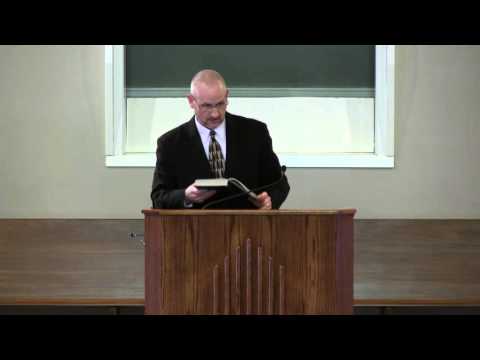
Free Grace Baptist Church - March 27, 2016 PM
The Davidic covenant of 2 Samuel 7 is not merely an episode in Israel's history but the foundation upon which the kingship of the Lord Jesus Christ rests. God's refusal to let David build a temple is not a rejection but a reversal: before Israel can build a house for God, God himself will build a house — a dynasty — out of David, culminating in the Son who would construct the true temple of God's dwelling. The sermon traces that promise from its initial revelation to Nathan, through its perpetuity secured against death, sin, and time, to its New Testament fulfillment in Christ's resurrection-enthronement at the Father's right hand and his building of the church. Believers are called to recognize their saving interest in this covenant and to read the Old Testament as the unfolding of the glory, majesty, and beauty of Jesus Christ.