
Topic
Apologetics
374 sermons · All topics

The Good Soldier of Jesus Christ

The qualifications and character of faithful gospel ministry are examined through 2 Timothy 2:1–7, where Paul gives Timothy three interlocking commands: be strong in the grace of Christ, commit sound doctrine to faithful men who can teach others, and endure hardship as a soldier of Jesus Christ. Three metaphors — the devoted soldier, the disciplined athlete, and the diligent farmer — together with the dedication of the disciple, frame what faithfulness in pastoral ministry demands. The sermon presses both pastors and congregations to resist the pressure of cultural and governmental opposition, to identify and train men for ministry, and to understand that the dignity of gospel preaching warrants the highest standards of devotion, discipline, and endurance.

The Defense in Jerusalem
Acts 22 records Paul's defense before the Jerusalem mob and his invocation of Roman citizenship before the commander, and this exposition traces both movements as a pattern for how believers engage hostile civil and religious authorities. Paul's account of his conversion — his Jewish upbringing under Gamaliel, his confrontation with the risen Christ on the Damascus road, his instruction through Ananias, and his temple vision — demonstrates that he is not an enemy of Israel but rather the fulfillment of what a faithful reading of the Old Testament demands. The crowd's fury erupts not over Paul's biography but over Christ's commission to the Gentiles, exposing their rejection of covenant promises made to Abraham and repeated through the Psalms and prophets. The sermon closes by pressing Paul's gospel — blood atonement, imputed righteousness, and salvation by grace through faith — upon every hearer, including the worst of sinners.

The Utility of Confessions and Introduction to the Second London Baptist Confession
Confessions of faith are not competitors to Scripture but are faithful summaries of biblical doctrine, and the church has historically depended on them for good reason. This address introduces the Second London Baptist Confession of 1689, tracing its historical origins among the Particular Baptists of the 17th century and its relationship to the Westminster Confession and the Savoy Declaration. Five interlocking uses of a confession are then examined: defining church doctrine, defending it against error, discriminating between members and officers on doctrinal grounds, disciplining departures from orthodoxy, and distinguishing confessed doctrine from matters of Christian liberty. The goal is not confessional enslavement but confessional clarity — guardrails that protect the church and free her members to worship and grow in the grace and knowledge of Christ.

Bible Study - Exodus 5
Exodus 5 narrates the first confrontation between Moses and Aaron and Pharaoh, ending not in liberation but in intensified oppression and blame directed at the very messengers God had sent. The chapter exposes a recurring pattern in the life of the covenant community: when God's promised deliverance does not come immediately, his people tend to murmur against his instruments rather than wait upon his sovereign hand. Drawing on John Calvin's commentary, the study identifies six reasons God permitted things to grow worse before they grew better — including the demonstration of divine power, the testing of his people's patience, and the inexcusability of Pharaoh's hardness — and calls believers to feed on the promises of God so that faith produces courage rather than cowardice.

The Victory of David Over Goliath, Part 2
David's victory over Goliath in 1 Samuel 17 is fundamentally a theological event, not a heroic self-help narrative. The sermon works through David's preparation, his declaration of faith in the name of the Lord of hosts, the decisive defeat of Goliath, and the rout of the Philistines, arguing that the emphasis falls squarely on who Yahweh is rather than on what David achieves. The fatal headshot dealt to Goliath is then traced through the biblical-theological thread of Genesis 3:15, illustrated in Judges 4 and 9, and shown to culminate in Christ's crushing of the serpent's head through His own suffering, death, and resurrection — the definitive victory to which David's victory is typological.

Bible Study - Exodus 7
Exodus 7 presents the reassurance of Israel's deliverance, the opening sign before Pharaoh, and the first plague — the turning of the Nile to blood. The sermon works through God's sovereign purpose in hardening Pharaoh's heart, arguing that this was an act of righteous judgment upon an already-guilty idolater, not arbitrary cruelty, and that the ten plagues constitute a direct assault upon the gods of Egypt to vindicate God's elect and instruct Egypt in who the Lord truly is. The satanic origin of the magicians' counterfeit signs is examined through Deuteronomy 13, Deuteronomy 18, 1 Samuel 28, Matthew 24, and 2 Thessalonians 2. Romans 9:14–18 frames the theological conclusion: God's sovereignty in hardening and in showing mercy is absolutely righteous, and every act of judgment against God's enemies is simultaneously a mercy toward his people.

Sunday School - Biblical view of self-defense, part 2
Matthew 5:38–42 is frequently misread as a blanket prohibition against self-defense, capital punishment, and just war — three instances of justifiable homicide that Scripture plainly upholds. This exposition argues that Jesus is not contradicting the lex talionis (the law of retribution found in Exodus, Leviticus, and Deuteronomy) but is correcting the Pharisaic misapplication of a civil-judicial principle to everyday interpersonal conduct. The passage addresses four specific situations — insult, litigation, conscription, and benevolence — and calls believers to a disposition of forbearance in personal relations, while leaving entirely untouched the legitimacy of lawful self-defense, just war, and capital punishment as administered by the civil magistrate.

Bible Study - Exodus 4
Exodus 4 continues the call narrative begun in chapter 3, tracing Moses' repeated reluctance to accept the commission to deliver Israel from Egypt and God's patient, sovereign response to each objection. God confirms Moses' authority through three authenticating signs — the rod becoming a serpent, the leprous hand, and water turned to blood — not as ends in themselves but as instruments to authenticate Moses as God's spokesman, consistent with the function of signs throughout Scripture. The chapter's second half traces Moses' return to Egypt, including the judicial hardening of Pharaoh's heart as an act of divine justice rather than injustice, Israel's identification as God's firstborn, and the concluding scene of Israel's elders bowing in worship upon receiving Moses and Aaron's testimony. The sermon calls hearers to find comfort in the absolute sovereignty of God over nature, disease, human speech, and pagan rulers, and to let that knowledge shape reverent, joyful corporate and private worship.

The Third Missionary Journey, Part 3
Acts 19:21–41 records Paul's final days in Ephesus, culminating in a riot instigated by the silversmith Demetrius, whose financial interests were threatened by the gospel's advance against idolatry. The passage is examined under four headings: Paul's strategic plans for further ministry, the anger of the silversmiths rooted in profit dressed as piety and patriotism, the confused uproar in the theater, and the intervention of the city clerk whose cool legal reasoning protected the church. The exposition draws out the apologetic purpose of Luke's account — demonstrating that Roman civil authority found no legal fault with Christianity — and closes with an urgent call to forsake every idol and trust the righteousness of Christ alone.

The Third Missionary Journey, Part 2
Acts 19:11–22 presents four movements in Paul's ministry at Ephesus: the unusual miracles God works through him, the humiliating defeat of the itinerant Jewish exorcists who invoke Christ's name without saving faith, the voluntary burning of occult books by Ephesian believers as fruits of genuine repentance, and a Lukan progress report declaring that the word of the Lord grew mightily and prevailed. The sermon argues for cessationism — that the apostolic sign-gifts authenticated the apostles and their message and have ceased with the closing of the canon — while exposing the fraudulence of those who imitate them today. Believers are called to examine all teachers by Scripture, to expect progressive fruits of repentance throughout the Christian life, and to take confident hope from the unstoppable advance of the gospel.
Psalm 46
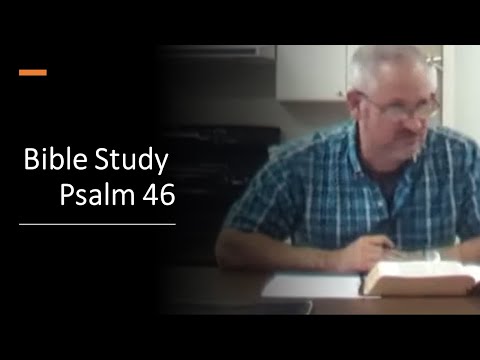
Psalm 46 presents God as the impenetrable refuge and omnipotent strength of His people in the midst of natural catastrophe, national upheaval, and personal affliction. The study works through four heads: the assurance of God's presence (vv. 1, 7, 11), the demonstration of God's power (vv. 2–6), the invitation to behold God's works (vv. 8–9), and the command to rest in God's sovereignty (v. 10). Covenant theology is not merely a theoretical construct but the very ground of the believer's comfort — the God of Jacob is a covenant-keeping God whose purposes cannot be frustrated by any earthly power. The congregation is called to the practical discipline of theology proper: to know God deeply so that the soul is stabilized, not paralyzed, in times of trouble.

Man's Responsibility and Rejection of Christ
Human responsibility before God stands alongside divine sovereignty — neither cancels the other. Drawing on Ezekiel 33, Psalm 2, Isaiah 45 and 55, and the gospel invitations of Christ, this address confronts the perennial tendency of sinners to evade accountability by deflecting blame onto circumstances, other people, or divine predestination itself. The hearer is called to abandon every such evasion, acknowledge personal guilt before the moral Governor of the universe, and flee to King Jesus Christ for mercy, grace, and peace with God.

The Second Missionary Journey, Part 9
Acts 18:12–28 traces the close of Paul's second missionary journey through three episodes: his trial before the Roman proconsul Gallio, his departure from Corinth back to Antioch, and a preview of the Alexandrian Jewish teacher Apollos. The exposition treats Gallio's dismissal of the Jewish charge against Paul as a model of properly bounded civil authority — punishing wrongdoing, not regulating theology — while also exposing Gallio's failure to protect Sosthenes as a departure from impartial justice. Paul's continued residence in Corinth after the hearing illustrates faith in the sustaining promises of Christ, and the sermon closes with a call to pray for faithful gospel preachers and an obedient people who respond to their ministry.

The Second Missionary Journey, Part 8
Acts 18:1–11 records Paul's arrival and eighteen-month ministry in Corinth, one of the most morally degenerate cities of the ancient world. The sermon traces Paul's gospel strategy — reasoning in the synagogue, enduring Jewish opposition, and turning to the Gentiles — before dwelling on Christ's night vision to Paul: 'Do not be afraid, for I have many people in this city.' The doctrine of election explains how Christ could speak with certainty of many yet-unconverted people awaiting the call; the gospel, not moral reform or civil intervention, is the sole instrument for transforming a corrupt culture. The sermon closes with a call to pray for and to be men who preach Christ and Him crucified, stand under opposition, persevere in weakness, and believe the promise that Christ is present with His church in the great commission.

The Second Missionary Journey, Part 7
Paul's sermon at the Areopagus (Acts 17:22–34) confronts Athenian idolatry by grounding the Christian worldview in the doctrines of creation, providence, and judgment. He establishes the Creator-creature distinction against both Epicurean deism and Stoic pantheism, exposes the guilt of all men through natural revelation and their own poets, and calls all men everywhere to repentance because God has appointed both a day of judgment and its judge — the resurrected Christ. The sermon closes by applying the abiding prohibition of idolatry from the Decalogue to contemporary life, pressing hearers toward faith in Christ as the only corrective to the idolatry that already invites God's temporal and eternal judgment.

Genesis 48:1-22
Genesis 48 records Jacob's adoption of Joseph's two sons, Ephraim and Manasseh, as tribal heads within Israel, and his deliberate bestowal of the greater blessing on the younger Ephraim — a pattern running throughout Genesis that the covenant blessings are dispensed not by birth order but by sovereign divine election. The chapter's vocabulary of "firstborn" is examined in light of Colossians 1:15, demonstrating that the term denotes preeminence rather than creaturely origin, directly refuting the Arian Christology of Jehovah's Witnesses. Jacob's deathbed testimony — praising God who fed him all his life and whose Angel redeemed him from all evil — is held up as a model for how the people of God should rehearse divine faithfulness at the close of life.

The Empty Tomb and the Risen Lord
The resurrection of Jesus Christ from the dead is not a cunningly devised fable but a historically attested and theologically necessary event that vindicates Christ's person and work. Expounding Matthew 28:1–10, this sermon examines the discovery of the empty tomb — the descent of the angel, the commission to the women, and the flight of the guards — and then the appearance of the risen Lord to the women, who held him by the feet and worshipped him. The hypostatic union underlies that act of worship: they touch his human feet while adoring the second person of the Trinity. Because Christ is risen, believers need not fear, have an advocate with the Father when they sin, and possess a hope that is grounded in historical reality and not mere sentiment.

The Council at Jerusalem, Part 1
Acts 15:1–5 introduces the Jerusalem Council by presenting the Judaizing heresy in its starkest form: certain men from Judea taught that circumcision must be added to faith in Christ for salvation, striking simultaneously at the law's proper use and at the sufficiency of Christ's finished work. The passage is set in its chronological context, distinguishing the events of Galatians 2 from the council itself, and showing that the problem was not merely one of Jewish-Gentile social relations but a soteriological crisis with eternal consequences. Paul and Barnabas respond with uncompromising confrontation, the church at Antioch sends delegates to Jerusalem, and the passage closes with the same Judaizing demand surfacing within the Jerusalem church — demonstrating the universality and perpetuity of the tendency to add human merit to sovereign grace. The exhortation is to resist every form of works-righteousness and to preach the law and gospel in their proper distinction, so that sinners are directed to Christ alone.

The Eighth Commandment
The eighth commandment — 'You shall not steal' — prohibits not only acts of theft such as burglary, robbery, kidnapping, and fraud, but also the inner dispositions of covetousness, discontentedness, and the idolatry of mammon. The sermon works through the prohibition, its theological rationale in God's sovereignty over property and the dignity of image-bearers, and the positive duties the commandment requires: diligent labor, charitable giving, and biblical contentment. Three uses of the law — civil, pedagogical, and normative — frame the concluding application, pointing sinners to justification by grace alone through faith alone in Christ alone, and directing the justified toward a life of honest industry and generosity.
Free Grace Baptist Church - February 16, 2020 AM
Acts 14:8–18 records Paul and Barnabas at Lystra, where the healing of a congenitally lame man provokes the pagans to identify the apostles as Zeus and Hermes and prepare to offer sacrifice. The sermon works through three movements: the miraculous healing and the greater spiritual reality it signifies, the apostles' repudiation of the attempted worship, and Paul's positive proclamation of the Living God to a fully pagan audience. Central to the exposition is the doctrine of divine impassibility — grounded in Paul's declaration that the apostles are 'men of like passions' and the obvious implication that the true God is not — which the preacher traces through the 1689 Second London Confession, Numbers 23:19, 1 Samuel 15:29, Malachi 3:6, and James 1:17, arguing that a God who changes states cannot be the unfailingly just, merciful, and forgiving God the gospel requires. The congregation is exhorted to repent of idolatry in all its modern forms, to study the doctrine of God rather than settle for a domesticated deity, and to trust the gospel of the Lord Jesus Christ as the only way of escape from wrath.

Genesis 41
Genesis 41 narrates the providential exaltation of Joseph from prison to vice-regent of Egypt through his God-given interpretation of Pharaoh's two dreams. The chapter's three movements — the report of the dreams, their explanation, and their fulfillment — together demonstrate that the sovereignty of God is not a speculative doctrine but a force working through every human contingency toward the preservation of His church. The sermon draws out three concluding applications: the wisdom that comes from God alone surpasses all human learning; God's blessing outlasts and outweighs His servant's affliction; and divine sovereignty never collapses into passivity — Joseph's predestined knowledge of famine calls forth prudent human action, not hyper-Calvinist resignation.

The Sixth Commandment
The sixth commandment, 'You shall not murder,' forbids not only the external act of taking innocent life but also the internal dispositions of hatred, unwarranted anger, and character assassination that flow from the same malicious heart. The sermon distinguishes murder from three lawful forms of killing — capital punishment, just war, and self-defense — grounding each in the abiding authority of Scripture from the Noahic Covenant through the New Testament. The image of God in every human being is the theological foundation for the commandment's reach across abortion, euthanasia, and the neglect of capital punishment. Hearers are called to clarity on the law's three uses, to renounce internal murder within the church, and to find in the gospel the only remedy for sinners who have violated this commandment in heart or deed.

Genesis 40:1-23
Genesis 40 records the imprisonment of Pharaoh's chief butler and chief baker alongside Joseph, the dreams God gave them, and Joseph's divinely sourced interpretation of those dreams. The chapter turns on Joseph's declaration that interpretations belong to God alone — a polemical claim against Egyptian dream-divination — and on the bitter irony that the butler, restored exactly as Joseph predicted, promptly forgot the man who served him. Working through the three movements of the chapter (the imprisonment, the dreams, and their fulfillment), this study shows God's providence operating through every injustice and disappointment to advance Joseph toward his appointed exaltation, demonstrating that God never forsakes his people even in the deepest pit.
The First Missionary Journey, Part 4
Acts 13:26–37 records Paul's synagogue sermon in Pisidian Antioch, in which he explains the two pivotal events of Israel's Messiah: the crucifixion and the resurrection. The Jerusalem rulers condemned Jesus without cause, yet in doing so they fulfilled the very prophetic scriptures they heard read every Sabbath, demonstrating the sovereign providence of God working through the wickedness of men. Paul marshals Psalm 2:7 to establish the eternal generation of the Son and his fitness as mediator, then Psalm 16:10 to prove that David's body saw corruption while Christ's did not, and Isaiah 55 to ground the sure mercies of the Davidic covenant in the risen servant of Isaiah 53. The sermon drives toward justification by faith alone in Christ alone, urging hearers not to repeat Jerusalem's fatal error of rejecting the one through whom alone there is forgiveness of sins.
The Persecution of the Church and the Power of God
Acts 12:1–24 presents the early church under coordinated assault from the civil state: Herod Agrippa I executes James, imprisons Peter, and accepts divine honors from a crowd — yet the chapter closes with Herod dead, Peter free, and the word of God multiplied. The sermon traces three movements in the passage: the persecution of the church, the miraculous deliverance of Peter, and the judicial destruction of Herod, arguing throughout that no civil power can ultimately frustrate the advance of Christ's kingdom. Listeners are called to persistent intercessory prayer for the persecuted church, confident that the same sovereign God who struck down Herod continues to reign over every enemy of his people.

Free Grace Baptist Church - November 3, 2019 AM
Acts 12 presents the first major instance of civil opposition to the church, as Herod Agrippa I executes James and imprisons Peter. This exposition traces the passage through four movements: the persecution of the church, Peter's miraculous deliverance, the swift judgment of God upon Herod, and the unstoppable advance of the Word. The sermon grounds the church's response to persecution in constant, corporate intercession — not as a last resort but as the primary weapon of spiritual warfare — and applies the triumph of Acts 12 to the present reality of the International Day of Prayer for the Persecuted Church.

The Builder of the Church
Peter's confession in Matthew 16:13–18 — 'You are the Christ, the Son of the living God' — is the theological axis around which the identity, foundation, builder, and triumph of the church all turn. The sermon expounds Christ as the rock on which the church is built, arguing against the Roman Catholic identification of Peter as that foundation and for the Protestant position that the church rests on Christ himself, the fulfillment of the Davidic covenant promise in 2 Samuel 7. The gates of Hades function as a defensive posture, not an offensive one, meaning the church is on mission against a kingdom that cannot finally hold, because its builder is King Jesus. The call to hearers is to make Peter's confession their own — that Christ is the Son of the living God — since no defective ecclesiology is fatal, but a wrong Christ is.

The First Commandment
The First Commandment — 'You shall have no other gods before me' (Deuteronomy 5:7) — demands both the rejection of every rival and the cultivation of genuine knowledge of the true and living God. The sermon works through the specific sins condemned by the commandment (atheism, polytheism, syncretism, idolatry, sorcery, heresy, and creature-worship), grounding each in Old and New Testament texts, before turning to the positive obligations the commandment requires: knowing God as Trinity, knowing His divine perfections, and knowing His external works in creation, providence, and redemption. The commandment functions pedagogically to expose humanity's chronic unfaithfulness and drive sinners to repentance, and normatively to call the redeemed to a rigorous, lifelong growth in the knowledge of who Yahweh is.
The Conversion of Cornelius, Part 1
Acts 10:1–8 records the opening of the Cornelius narrative, which Luke presents as the pivotal, formal inclusion of Gentiles in the covenant of grace. This sermon examines Cornelius's identity and his preparatory vision, arguing from five lines of evidence within Acts 10–11 that Cornelius was not yet saved before Peter's arrival — his devout almsgiving, prayer, and God-fearing religion notwithstanding. The passage is set against contemporary Catholic and Protestant inclusivism, which the sermon rejects in favour of the exclusive claim that remission of sins comes only through conscious faith in Christ. The practical call is to refuse the delusion that religious conduct commends a sinner to God, and to rest instead in the blood and righteousness of Jesus Christ alone.
Free Grace Baptist Church - September 15, 2019 AM
Acts 10:1–8 introduces Cornelius the centurion — a devout, God-fearing Gentile who prays, gives alms, and teaches his household — yet the passage presses a decisive question: was he already saved? This sermon argues from five lines of evidence within Acts 10–11 that Cornelius was not yet in covenant with Christ, and that the chapter's primary emphasis is the formal inclusion of the Gentiles in the covenant of grace through the preaching of the gospel. Against Roman Catholic inclusivism and Protestant pluralism alike, the sermon insists that remission of sins comes only through faith in the name of Jesus Christ, as Peter declares in verse 43, and that God honors the ordained means of gospel preaching as the instrument of that salvation.