

2,065 sermons · All speakers

The Mission of the Disciples, Part 2
John 14:16–18 presents Christ's promise to send the Holy Spirit as the resource by which the disciples would carry out the greater works of the gospel mission. This sermon works through the foundation of that promise — salvation by grace through faith in Christ alone, the love that flows from justification as the animating power of obedience and mission — before pausing to mount a sustained defense of Trinitarian theology proper. The preacher argues that biblicism without creedal guardrails, anti-intellectualism, and laziness have left the contemporary church vulnerable to the same Trinitarian errors the Nicene and Chalcedonian fathers labored to foreclose, and calls the congregation to pursue the knowledge of the triune God as the very substance of eternal life.
The Depths of Sin and the Riches of Grace
Psalm 130 moves from the depths of spiritual distress to the heights of pardoning grace, and this exposition traces that movement through three divisions: the psalmist's cry of distress (vv. 1–2), his recognition of divine justice and divine forgiveness (vv. 3–4), and his patient exhortation to all Israel (vv. 5–8). The sermon establishes that the believer's remaining corruption should drive him not to silence but to earnest prayer, since the only remedy for sin is the grace of God. The justice of God is never mitigated in the gospel: at the cross, strict justice was satisfied upon Christ as substitute and curse-bearer, so that God is simultaneously just and the justifier of the one who has faith in Jesus. The sermon closes with an appeal both to the struggling believer — do not make peace with remaining sin, but cry out to God — and to the unconverted, for whom the same abundant redemption is freely available in Christ.

The Triumph of the Church
What is the church, who builds it, and can anything destroy it? Expounding Matthew 16:13–18, this sermon works through Peter's confession of Christ as the Messiah and Son of the living God, traces the promise of the Davidic Covenant in 2 Samuel 7 to its fulfilment in Christ's declaration to build His church, and refutes the Roman Catholic claim that Peter is the rock upon which the church rests. The sermon closes with the triumph of the church: Christ owns it, Christ builds it, and the gates of Hades shall not prevail against it.

The Empty Tomb and the Risen Lord
The empty tomb of Matthew 28:1–10 is not a symbol or a felt experience but a historical event on which the entire Christian gospel stands or falls. Working through the arrival of the women, the descent of the angel, and the appearance of the risen Lord, this exposition shows that the resurrection was predicted by Christ, attested by angels, and confirmed by the physical presence of the one who holds his disciples as brethren even after their desertion. The sermon closes by grounding the believer's freedom from fear, confidence in advocacy, and obligation to proclamation in the fact that Jesus was raised for our justification.

The Great Commission
Matthew 28:11–20 presents two responses to the resurrection of Christ: the fraudulent suppression of the evidence by the chief priests and elders, and the Great Commission given by the risen Lord to his disciples. The passage exposes the lie concocted by the Sanhedrin as historically incoherent and theologically revealing — a judgment of God upon covenant-breaking Israel. The Great Commission is then unfolded through its four-fold use of 'all': Christ's absolute authority as mediator grounds the command to go, make disciples, baptize believers as new covenant members, and teach them to observe all that he has commanded.

Ask FGBC #4: Is accepting salvation a choice? (Hyper-Calvinism)
Is accepting salvation a choice, and does that choice conflict with divine election? This Q&A addresses the relationship between the general call of the gospel and the effectual call of God, arguing that human faith is a real act of the will, but one that presupposes prior regeneration — sinners are dead in trespasses and sins and must be born again before they can believe. The discussion also addresses the pastoral problem of assurance, directing struggling believers away from introspection and personal performance toward the objectivity of Christ's finished work and his ongoing intercession as High Priest and advocate.

The Whole Armor of God, Part 2
The sword of the Spirit and the necessity of prayer form the offensive weapons of the whole armor of God in Ephesians 6:17–24. This exposition argues that the church is constituted as the pillar and ground of the truth and must wield the Word of God against spiritual enemies rather than substituting entertainment, therapeutic programming, or institutional management for gospel proclamation. Prayer is examined through its manner — constant, Spirit-dependent, watchful, and persevering — and its objects: intercession for all the saints and for gospel boldness in the ministry of the Word. The close of the epistle is read as a benediction grounding grace and peace in the Trinitarian life of God.

The Mission of the Disciples, Part 1
John 14:12–15 addresses the mission Christ assigns to His disciples and the obedience He requires of them in light of His imminent ascension. The 'greater works' the disciples will perform are not a competition with Christ's own ministry but are the works of the ascended, reigning Christ accomplished through His disciples by the power of the Holy Spirit sent from the Father. Prayer in Christ's name is examined in its tight missional context — the asking that drives the greater works — and is shown to be governed by the will of God rather than functioning as a blank check. The sermon closes by distinguishing loving obedience as the fruit, not the ground, of justification by faith alone, grounding the entire missionary enterprise in the grace that has already been given.
The Covenantal Status of Israel in the Parable of the Vineyard
Matthew 21:33–46 presents the Parable of the Wicked Vinedressers as a compressed history of Old Covenant Israel — a nation privileged with God's presence, prophets, and promises, yet persistently covenant-breaking and finally guilty of rejecting the Messiah himself. The parable is read against Isaiah 5 and fulfilled in the AD 70 destruction of Jerusalem, which is the covenantal judgment pronounced in verse 43: the kingdom of God is taken from ethnic Israel and given to the church, the true Israel of God. The New Covenant people — constituted by faith in Christ, not ethnic descent — are that nation bearing fruit, identified as such in 1 Peter 2 and Galatians 6:16. The sermon argues that any future geopolitical restoration of Old Covenant Israel with a rebuilt temple and renewed sacrificial system would be a reversal of redemptive history, and that ethnic Jews today stand in need of the gospel like every other nation.

The Pharisee and the Publican
Luke 18:9–14 sets before the reader two men whose manner of prayer exposes the only two grounds on which a person can seek acceptance with God: self-righteousness or the imputed righteousness of Christ. The Pharisee's boastful rehearsal of his own religious merits and his contempt for the publican show that pride and the despising of others are inextricably joined. The publican, who can do nothing but beat his breast and cry for propitiation, goes home justified — declared righteous not by what he was or did, but by the alien righteousness of another received through faith alone. The sermon calls hearers to examine whether they stand before God as the Pharisee or the publican, and to come to the Lord's Supper not as a reward for good behavior but as those who rest entirely on Christ's doing and dying.

The Revelation of the Father
John 14:7–11 presents Christ's claim that knowledge of the Son is knowledge of the Father, and that the Father dwells in the Son and the Son in the Father — a claim no mere creature could make. The sermon works through three confirmations of this unity: the nature of the Son (his consubstantiality with the Father), the words of the Son (which are the Father's words by virtue of shared essence, not mere instrumentality), and the works of the Son (which the Father performs through the Son as one divine operation). The Trinitarian theology at stake is not speculative — it is the doctrinal ground upon which the disciples, and all believers, stand when the world collapses in on them, because the Son who is God of God, light of light, very God of very God, is the one who came down 'for us and for our salvation.'

What is Hyper-Calvinism?
Hyper-Calvinism so elevates the sovereignty of God that it cancels out the responsibility of man, producing a fatalism that paralyses sinners rather than calling them to repentance and faith. Over against both hyper-Calvinism and Arminianism, apostolic gospel preaching holds divine sovereignty and human responsibility as 100% true simultaneously — friends, not rivals requiring balance. The gospel is propositional revelation concerning Christ's life of perfect obedience, substitutionary death, and bodily resurrection, and sinners are commanded to believe and repent on the authority of that word alone. The brazen serpent of Numbers 21 illustrates the point: the remedy is look and live, not first examine yourself and then look.

Ask FGBC #2: Is pouring or sprinkling sufficient for Baptism?
The proper mode of Christian baptism — immersion, sprinkling, or pouring — is examined through the lens of Scripture, Baptist confession, and the symbolism of Romans 6. The discussion distinguishes between the validity of baptism (requiring a credible profession of faith) and the propriety of its mode, arguing that the Greek term baptizō, the baptismal accounts in the Gospels and Acts, and the death-burial-resurrection imagery of Romans 6 all converge on full immersion as the biblically warranted mode. Sprinkling and pouring, while practiced in paedo-baptist traditions, fail to embody the confessional standard of 'due administration' and obscure the visible word that baptism is meant to declare.
2LCF Chapter 21: Of Christian Liberty and Liberty of Conscience
Christian liberty, properly understood, is not primarily about matters of lifestyle preference but about the freedom Christ has purchased for believers: freedom from the guilt, power, and punishment of sin, and freedom for joyful, childlike access to and obedience toward God. The 1689 London Baptist Confession chapter 21 unfolds this in three movements — the definition of Christian liberty (paragraph 1), the protection of liberty of conscience (paragraph 2), and the qualification that Christian liberty is never a license to sin (paragraph 3). Central to paragraph 2 is the confession's axiomatic claim that God alone is Lord of the conscience, which means neither civil authority nor ecclesiastical authority may bind the conscience beyond or against the Word of God. The practical application presses believers to distinguish between God's explicit commands and their own preferences, and to resist the near-universal temptation to elevate personal opinion to the status of thus saith the Lord.

2024 Conference Theme - Of the Holy Scriptures
This brief conference introduction previews a study of the Second London Baptist Confession of Faith (1689), Chapter 1, 'Of the Holy Scriptures.' The discussion covers the authority, canon, sufficiency, and interpretation of Scripture, with particular attention to the confessional principle that Scripture interprets Scripture (analogia scripturae). Two scholars — one specializing in historical theology and one in hermeneutics — will situate Chapter 1 in its seventeenth-century context and apply its interpretive principles to the contemporary church.

CTF - Promoting unity among Reformed churches
This conference Q&A exchange addresses how a Confession of Faith Conference can foster unity among Reformed and Presbyterian churches by drawing attention to the 1689 London Baptist Confession of Faith as a historic confessional document standing in deliberate continuity with the Westminster Confession, the Savoy Declaration, and the Three Forms of Unity. The speakers note that the 1689 Confession was written not to introduce novelty but to demonstrate solidarity with broader Reformed orthodoxy, as its own preface states: 'we have no itch to clog religion with new words.' The discussion concludes that the Reformed churches share an overwhelming doctrinal heritage, and that remaining differences — including baptism — should not prevent mutual recognition and brotherly regard among confessional Christians.

Ask FGBC #1 - What is a Reformed Baptist?
What distinguishes a Reformed Baptist from a generic Calvinist or a generic Baptist? This question-and-answer exchange works through the defining marks of the Reformed Baptist tradition: the supreme authority of Scripture, covenant theology, the regulative principle of worship, the centrality of preaching, believers' baptism by immersion, and congregational church polity. The 1689 Second London Baptist Confession is identified as the clearest doctrinal touchstone, held not loosely but in full subscription — not as an authority alongside Scripture, but because it faithfully summarises Scripture's teaching. The historical designation 'Particular Baptist' is also commended as an accurate and less confusing alternative label for the same tradition.
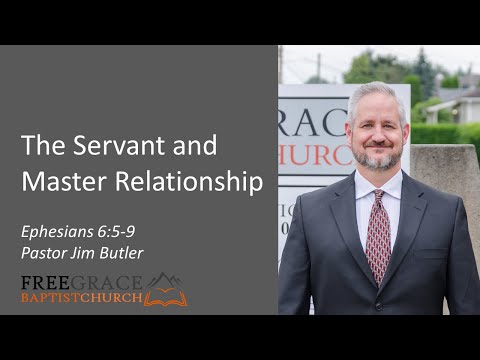
Live Stream - February 25, 2024
Jesus prepares his troubled disciples for his imminent departure by directing their faith toward two great realities: the Father's house with its many mansions, and his own identity as the exclusive and accessible way to the Father. Working through John 14:1–6, this sermon traces the exhortation against soul-trouble to its remedy in believing on God and on Christ as the equal object of saving faith, the preparation of heaven through the cross, resurrection, and ascension, and the surpassing claim that Christ himself — as the way, the truth, and the life — is both the sole path to the Father and the ground of the believer's unshakeable comfort in every trial.

The Way, the Truth, and the Life
John 14:1–6 presents Jesus preparing his disciples for his imminent departure by addressing their soul trouble with both an exhortation and an encouragement. The preparation of heaven is not a logistical arrangement but the accomplishment of the cross, resurrection, and ascension — Christ himself is the way to the Father, the truth that undergirds every promise, and the life that sinners desperately need. The exclusivity of the gospel ('no one comes to the Father except through me') is inseparable from its accessibility: there are many mansions, and the door is the Lord Jesus Christ alone. The sermon calls believers to vanquish soul trouble through faith, to persevere in light of the certain return of Christ, and to offer the way of salvation freely to all who are dead in trespasses and sins.

The Whole Armor of God, Part 1
Ephesians 6:10–17 calls the believer to armed, active resistance against a spiritual enemy whose power and cunning exceed any merely human opposition. The sermon works through three movements in the passage: the necessity of the armor (vv. 10–11a), the reason for it in the reality of demonic spiritual warfare (vv. 11b–12), and the meaning of each defensive piece — truth, righteousness, the gospel of peace, faith, and salvation — drawn from both Old Testament background and Paul's wider corpus. Against the tendency toward either passive Christianity or an obsessive preoccupation with demonic activity, the text calls every believer to stand, hold ground, and advance, doing so entirely in dependence on the power of the risen and ascended Christ who reigns over all principalities and powers.

Introduction to Biblical Hermeneutics
What does it mean to interpret the Bible correctly, and how does the 1689 London Baptist Confession of Faith guide that task? Working through paragraphs 5 to 10 of Chapter 1, this study introduces the discipline of hermeneutics — the science of biblical interpretation — by tracing six principles the Confession sets forth: the scope of Scripture (the glory of God in the salvation of sinners through Christ), the sufficiency of Scripture (expressly stated and necessarily implied), the perspicuity of Scripture (clear enough for the unlearned on all saving matters), the translation of Scripture (grounded in divine inspiration and providential preservation), the interpretation of Scripture (the analogy of Scripture and the analogy of faith), and the finality of Scripture (Holy Scripture as the supreme judge over all councils, creeds, and private opinion). The practical burden is that a faulty hermeneutic produces bad doctrine, and that reading the Old Testament through the lens the New Testament apostles themselves provide is not optional but the pattern Christ himself commanded.
CLIP: Cultivating self-control in this evil age
Self-control is the foundation beneath all rightly ordered relationships — between spouses, parents and children, and masters and servants. Drawing from Ephesians 6:5–9 and the wisdom literature of Solomon, this clip argues that every level of human government — federal, provincial, familial, and ecclesiastical — rises or falls on the quality of self-government in individuals. The church must recover a robust biblical ethic of self-discipline as the antidote to social and moral disorder.

The Servant and Master Relationship
Ephesians 6:5–9 concludes Paul's household code by addressing the obligations of both bondservants and masters in first-century Greco-Roman society. The passage insists that redemption in Christ does not dissolve temporal social obligations: the slave must obey with a heartfelt, Christ-centered, and eschatologically grounded sincerity, while the master must forsake threatening and govern with the knowledge that he too stands under an impartial heavenly Master. The sermon applies this to the modern employer-employee relationship through four principles drawn from Proverbs and the parallel passage in Colossians 3: the condemnation of laziness, the commendation of diligence, the consideration of Christ in all things, and the cultivation of self-control as the Spirit-wrought fruit that undergirds every godly social relation.

The Necessity of Brotherly Love
John 13:31–38 presents Jesus addressing his disciples immediately after Judas's departure, speaking with striking intimacy on three subjects: the glory of the Son secured through the cross, the new commandment to love one another, and the foretelling of Peter's denial. The new commandment does not merely repeat the Levitical call to love one's neighbor as oneself — its newness lies in the standard, the self-sacrificial, constant, sinner-directed love of Christ himself. The passage closes with an irony the sermon drives home: Peter boasts he will lay down his life for the Savior, but the entire point of the hour is that the Savior lays down his life for Peter — a pattern that distinguishes the Christian religion from every other.

Introducing the Confessing the Faith Conference
This introductory video presents the Confessing the Faith Conference, a new Reformed Baptist conference based in Western Canada. The conference is structured around the 1689 Second London Confession of Faith, beginning with Chapter 1 on Holy Scripture, and features Dr. Richard Barcelos and Dr. James Renahan as speakers. Its three stated aims are: fostering unity among Reformed Baptist pastors in Western Canada, promoting fraternal relations with the broader Reformed church, and providing a confession-centered gathering open to all believers — not limited to pastors or scholars.

The Lawful Use of Vows in Israel
Leviticus 27 addresses the Israelite practice of making vows to God — acts of religious zeal, often rash or imprudent, by which persons consecrated people, animals, houses, or land to the Lord. The chapter does not license vow-breaking but rather underscores the gravity of vowing by legislating a costly redemption mechanism, warning the would-be vower to count the cost before speaking. The sermon situates the passage within the 1689 LBCF chapter 23 framework distinguishing oaths from vows, then draws three applications against popish monastical vows, Protestant legalistic vows, and pietistic circumventions of God's law — all forms of man-made religion condemned repeatedly in Scripture.

The Child and Parent Relationship, Part 2
Ephesians 6:4 commands fathers not to provoke their children to wrath, but to bring them up in the training and admonition of the Lord — a positive obligation grounded in the fifth commandment and the sanctifying work of the Spirit in the believer's life. This sermon expounds that single verse within the broader household code of Ephesians 5:22–6:9, situating Christian parenting as a fruit of sovereign grace rather than a means of earning it. The prohibition against provoking children is unpacked through five practical failures — unrighteous anger, unbiblical discipline, inconsistency, partiality, and imbalance of law and gospel — before the exhortation to train and admonish is developed from the book of Proverbs under four marks of a faithful parent. The sermon closes with concrete applications: pray for children, provide for them, protect them, preach law and gospel to them, and be present with them.

The Announcement of the Betrayal
John 13:18–30 records Jesus announcing the betrayal of Judas Iscariot in the upper room, and this exposition works through the passage in two movements: the announcement of the betrayal (vv. 18–20) and the identification of the betrayer (vv. 21–30). Three features of the announcement receive careful attention — the fulfillment of Psalm 41:9 in Christ's passion, the absolute divinity of Christ declared in the repeated 'I am' of verse 19 (grounded in Exodus 3:14), and the nature of apostolic discipleship as delegated ambassadorship. The removal of Judas from the disciple group exposes the distinction between holding church office and possessing saving grace, a distinction pressed as a question of self-examination for every hearer.

The Promise of Blessings and Cursing, Part 2
Leviticus 26:14–46 sets forth the covenant curses God threatened against Israel for breaking the Mosaic Covenant — a covenant of works — escalating through drought, wild animals, war, cannibalism, wholesale destruction, and exile. These curses came to historical fulfillment in the fall of the Northern Kingdom to Assyria in 722 BC, the fall of the Southern Kingdom to Babylon in 586 BC, and the destruction of Jerusalem by Rome in AD 70 — events prophesied in the Olivet Discourse and confirmed by Paul in 1 Thessalonians 2. The chapter closes with a promise of restoration conditioned on Israel's humble repentance and God's fidelity to the Abrahamic covenant. Believers under the New Covenant are freed from these covenant curses because Christ bore them fully, fulfilling the demands of the law and standing as the surety of a better covenant.

Live Stream - February 04, 2024
John 13:1–17 presents the foot washing not merely as an act of hygiene but as a layered emblem pointing to the Incarnation, the passion of Christ, and the ongoing realities of regeneration, justification, and sanctification. The Son of God who stoops to wash the dirt from disciples' feet is the same one who goes to the cross to wash the guilt from their hearts, fulfilling the servant-song Messianism of Isaiah and the promised cleansing of Ezekiel and Zechariah. Peter's impetuous refusal and subsequent wholehearted submission illustrate the sinner's need for a part with Christ — union and communion grounded in spiritual washing, received through faith. The discourse then turns practical: those who have been so served by their Lord are obligated to advance his cause not through power or coercion but through humble, self-sacrificing service to one another and to the world.