

Our Response to Our Shepherd

Psalm 23 sets before the believer not merely a catalogue of divine blessings but a model of how those blessings ought to shape the believer's whole inner and outer life. Drawing from David's own experiential response to his blessedness, this exposition identifies four corresponding responses the Lord's sheep must cultivate: strong confidence in God amid every trial and dark valley, active praise that declares truth about God with joy and adoration, genuine delight in God's presence expressed in real fellowship with him, and obedient following in the paths of righteousness for his name's sake. The sermon closes with a direct call to the unconverted to come to their senses and trust the Good Shepherd who laid down his life to rescue, forgive, and transform sinners.

Free Grace Baptist Church - September 19, 2018 Bible Study
Genesis 6:8–22 presents the flood narrative not primarily as natural history but as a theological tableau of human depravity, divine justice, and sovereign grace. The passage establishes a foundational biblical pattern: grace precedes and produces righteous conduct, so that Noah is not found righteous because he earned grace, but rather found blameless because God first granted him grace. The sermon traces the stark literary contrast between Noah, a man made just by divine mercy, and an earth filled with corruption and violence ripe for God's wrathful judgment, while drawing typological connections between Noah as a second Adam and the Ark as a figure of Christ, the shelter from divine wrath. Hearers are called to recognise that the same grace operative in Noah is the only distinction between the redeemed and the condemned, and to remain faithful in a faithless generation by looking beyond present trials to the God who sovereignly guides his people through judgment to life.
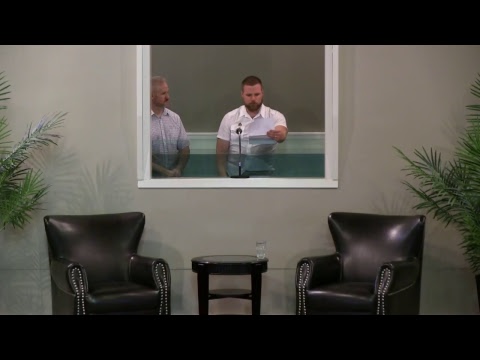
Livestream - Baptism: Wim Kerkhoff
Acts 8:26–40 records the conversion and baptism of the Ethiopian eunuch, and this exposition sets that account against its Old Testament backdrop in Isaiah 53 and Isaiah 56 to show that what is happening is not merely one man's conversion but the fulfillment of covenant promises: the inclusion of those doubly excluded from the assembly of Israel. The sermon works through three movements — the divine appointment of the contact, the gospel communication beginning from Isaiah 53, and the conversion issuing in immediate baptism upon confession of faith. The central application is that God is characteristically and eagerly a saving God, that believers' baptism follows faith as its ordained external sign, and that no sinner — whether powerful or poor, crisis-converted or quietly brought to faith — is beyond the reach of sovereign grace.

The Wisdom of Little Things

Proverbs 30:24–28 presents four creatures — the ant, the rock badger, the locust, and the spider — each marked by a specific weakness yet compensating for it with exceeding wisdom. The sermon argues that God instructs his people through the created order, calling them to self-awareness of their own limitations and to the cultivation of corresponding wisdom: industry, caution, unity, and persistence. These virtues apply both to temporal life and to the eternal — preparing for judgment, fleeing temptation by hiding in Christ the Rock, advancing together under his kingship, and persisting in grace after failure. The unconverted are pressed to prepare for the coming day of God's judgment while the summer of opportunity remains.

Genesis 6:1-8
Genesis 6:1–8 presents some of the most contested verses in the Pentateuch alongside some of the clearest. The identity of the 'sons of God' in verses 1–4 has generated three major interpretive traditions — angelic beings, tyrannical rulers, and the godly line of Seth intermarrying with the ungodly line of Cain — and the sermon surveys each view while favouring the Sethite interpretation without demanding confessional certainty on it. Verses 5–8 then deliver an unambiguous portrait of universal human depravity and the righteous judgment of God, interpreted through the theological categories of anthropomorphism and anthropopathism to guard the immutability and impassibility of God against misreading. The sermon closes by showing that grace precedes conduct in Noah's case, establishing the pattern that runs through all of Scripture: God's sovereign grace produces the righteousness it requires.

The Apostolic Address to the Council
Peter's address to the Sanhedrin in Acts 4:5–12 is examined under three headings: the declaration of the name of Jesus Christ as the power behind the healing of the lame man, the prophetic witness drawn from Psalm 118:22, and the exclusive sufficiency of that name for salvation. The sermon argues that Peter, filled with the Holy Spirit, does not merely defend himself before the council but effectively places his persecutors on trial, indicting them for rejecting the chief cornerstone while simultaneously holding out the gospel to them. The exclusivity of Christ as the only name under heaven given for salvation is pressed against religious pluralism and any notion that sinners must achieve moral readiness before coming to Christ — the call is simply to hear and believe.

The Diligence of the Ant
Proverbs 6:6–11 and 26:13–16 present the ant as a model of self-directed industry and the sluggard as a figure of moral and practical ruin. The sermon traces four marks of the lazy man — excuse-making, love of sleep, inability to complete tasks, and self-congratulating conceit — before turning to the genuine blessings diligence brings: material provision, the dignity of honest labor, and the honor of excellent work. The exposition closes by applying the same categories spiritually: the sinner who makes excuses before Christ and the drowsy saint grown cold in the means of grace are both called to a diligence that flees to the Savior and feeds on the Word.

Genesis 5:1-32
Genesis 5 presents the genealogy of Adam through the godly line of Seth, tracing the covenant community from creation to Noah and ultimately to the Lord Jesus Christ. The relentless refrain 'and he died' across eight patriarchs confirms the execution of the curse pronounced in Genesis 3, while the singular exception of Enoch — who walked with God and was translated without death — serves as a visible foretaste of resurrection and eternal life. Walking with God, as Enoch's life demonstrates, is not reserved for extraordinary vocations but is the calling of every believer in every station of life, actuated by faith in Christ and ordered by the law of God as the rule of life.

Free Grace Baptist Church - September 2, 2018 PM
The wisdom of God in the gospel is displayed not in the nobility, intelligence, or virtue of those he saves, but in his sovereign, gracious election of the weak, the base, and the despised — so that no flesh might glory in his presence. Expounding 1 Corinthians 1:26–31, this sermon identifies the three spiritual blessings Christ has become for his people — righteousness (justification by imputed obedience), sanctification, and redemption (glorification) — as the full ordo salutis secured in union with Christ. The ground of salvation is traced through Romans 5, Philippians 3, Zechariah 3, and Acts 13 to demonstrate that the entire plan of redemption flows from God's sovereign grace, not human merit. The inevitable and proper response of those who have received these blessings is to glory in the Lord alone, not in themselves.

The Arrest of Peter and John
The arrest of Peter and John in Acts 4:1–4 is not a setback to the mission of Christ but an instrument of its advance. The religious leaders of Israel — Sadducees especially — are provoked by the apostolic proclamation of resurrection in Jesus, yet even as the preachers are jailed, the Word of God prevails and the number of believers swells to five thousand. The sermon draws out from this episode the sovereignty of Christ over his church, the doctrine of justification by faith alone secured by Christ's active and passive obedience, and the pattern of suffering through which the gospel spreads. The hearer is called to present faithfulness as the only credible preparation for future persecution, and to trust that what is preached in chains cannot itself be chained.

The First Murder
Genesis 4:1–16 records the first fratricide in human history, and this exposition reads that account as a theological document revealing the rapid escalation of sin from the fall in chapter 3. Cain's rejection is traced not to his vocation as a farmer but to his faithlessness — Abel's offering was accepted because it was offered in faith (Hebrews 11:4), while Cain's externalism and lack of genuine faith made his sacrifice an abomination. God's patient, gracious overtures to Cain before the murder underscore divine long-suffering, while Cain's murder of Abel illustrates the antithesis of Genesis 3:15 — the seed of the serpent attacking the seed of the woman — and the sermon closes by setting the blood of Abel, which cries out for condemnation, against the blood of Jesus, which speaks forgiveness.

Free Grace Baptist Church - August 19, 2018 AM
Acts 3:17–21 grounds the call to repentance in three realities: the culpable yet not innocent ignorance of those who crucified the Lord of glory, the sovereign plan of God who overruled their wickedness to fulfill all that the prophets foretold concerning a suffering Messiah, and the rich blessings promised to all who repent and turn to God — the blotting out of sins, times of refreshing from the presence of the Lord, and the ongoing presence of Christ with his church by Word and Spirit until the restoration of all things. The sermon presses the hearer, whether long-churched or unconverted, to cease the willful ignorance that resists the scriptural testimony to Jesus Christ and to come to him as the only one who gives rest to sin-burdened souls.

The Consequences of the Fall
Genesis 3:14–24 records the divine sentences upon the serpent, the woman, and the man after the fall, but within those judgments God announces the first gospel promise. The Proto-Evangelion of verse 15 — that the seed of the woman will crush the head of the serpent — is the programmatic nucleus of all subsequent redemptive history, finding its fulfilment in the death and resurrection of the Lord Jesus Christ. Headship and labor, often misread as punishments of the fall, are shown to be pre-fall ordinances whose distortion, not existence, is the consequence of sin. The sermon closes with the coats of skin as an enacted prophecy of blood atonement and the expulsion from Eden as a mercy that preserves fallen man until the Second Adam secures permanent access to the tree of life.
The Sermon in Solomon's Porch, Part 2
Peter's sermon in Solomon's Porch confronts Jerusalem sinners with the necessity of repentance, pressing three realities upon them: their ignorance was willful, not innocent; God's sovereign providence overruled even their wickedness in crucifying Christ to fulfill all that the prophets foretold; and the call to repent and turn carries with it the promised blessings of sins blotted out, times of refreshing from the Lord's presence, and the indwelling presence of Christ by Spirit and Word until the restoration of all things. The exposition of Acts 3:17–21 drives toward a direct appeal: those burdened with sin must repent and turn to Christ, the only one in whom those blessings are found.

The Sermon in Solomon's Porch, Part 1
Peter's sermon in Solomon's Porch (Acts 3:11–21) opens with a pointed denial: the healing of the congenitally lame man was not accomplished by apostolic power or godliness, but by the name of Jesus Christ, the glorified servant of Yahweh announced throughout the Old Testament prophets. The sermon works through three considerations in verses 11–16 — the God who glorified the servant, the sinners who rejected him, and the servant who healed the lame man — showing that Peter's staccato recitation of Jerusalem's guilt is not cruelty but evangelism: men must know the weight of their sin before the call to repent and be converted carries any urgency. The healing itself illustrates the completeness of Christ's saving work — perfect soundness, public and undeniable — and the authority he exercises from the right hand of the Father is the same authority by which sinners are saved today.

The Fall of Man
Genesis 3:1–13 confronts the reader with the anatomy of humanity's first rebellion against God: the serpent's subtle theological assault on God's word, the creature's willing capitulation, and the sinner's instinctive flight from the Creator. The sermon traces three movements — the temptation to sin (vv. 1–5), the fall into sin (vv. 6–7), and the reckoning with God (vv. 8–13) — showing how Satan's tactics in Eden (insinuating doubt about God's word, denying divine judgment, impugning divine goodness) remain the pattern of every temptation. The doctrines of federal headship, original sin, and divine sovereignty over the fall are drawn out from the text, and the Adam-Christ parallel of Romans 5 frames the only remedy: the skull-crushing seed of the woman who succeeds where Adam failed.

Matthew 8:23-27
Matthew 8:23–27 presents the stilling of the storm on the Sea of Galilee as a window into both the true humanity and the full divinity of the Lord Jesus Christ. The passage exposes the disciples' little faith — not absent faith — and rebukes the perennial temptation to treat temporal prosperity as the measure of God's favor. Christ's presence in the boat does not exempt believers from storms, but it does guarantee that he will see them through every trial he ordains for their conformity to himself.

Free Grace Baptist Church - August 5, 2018 AM
Acts 3:1–26 presents the healing of the lame man at the Beautiful Gate as both a sovereign act of grace and a type of spiritual restoration — the same word that restored the man's limbs pierces the soul and raises the spiritually dead to everlasting life. The sermon works through three movements: the setting of the miracle (vv. 1–2), its execution (vv. 3–7), and the response it provoked (vv. 8–10), before drawing out Peter's sermon in the portico of Solomon. Central to the exposition is the claim that the church's primary calling is the proclamation of Christ crucified and risen, not the amelioration of temporal needs — silver and gold the apostles did not have, but what they had they gave. The congregation is exhorted to treasure the public means of grace, to repent and believe, and to expect that those truly conquered by grace will be worshippers, not merely debaters.
The Healing of the Lame Man
Acts 3:1–10 records the healing of a man lame from birth at the gate called Beautiful, and this exposition argues that the miracle is not an isolated wonder but a typological and redemptive event that displays the name and power of Jesus Christ while setting the stage for apostolic gospel proclamation. The man's condition — congenital, public, and long-standing — ensures that the miracle is conspicuous and undeniable, functioning to authenticate the apostles as God's spokesmen and to magnify the glory of the enthroned Christ. The church's calling, illustrated by Peter's declaration that he possesses no silver or gold but only the name of Christ, is the proclamation of the gospel and the forgiveness of sins, not the amelioration of every temporal need society presents. Those genuinely conquered by sovereign grace, like the healed man, are marked by worship, praise, and desire for the public means of grace.

A Psalm of the Cross
Psalm 22 is a prophetic psalm of David that transcends David's own experience to describe with precision the suffering, death, and exaltation of the Messiah. The sermon examines the cry of dereliction ('My God, my God, why have you forsaken me?') with theological care, rejecting the notion that the Father abandoned the Son in any way that ruptured the Trinity or dissolved the hypostatic union, and instead grounding the forsakenness in the Son's substitutionary bearing of the wrath due his people. Three features of Messianic confidence sustain Christ through his ordeal — the holiness of God, the past faithfulness of God, and the invoked presence of God — and the congregation is called to meet their own trials with the same theological ballast that sustained the Savior on the cross.

Genesis 4:16-26
Genesis 4:16–26 traces two diverging lines from Adam: the ungodly line of Cain, marked by escalating sin, polygamy, and bloodlust, and the godly line of Seth, which ends with men calling on the name of the Lord. The passage raises questions about cultural achievement, common grace, and the preservation of God's people in the midst of rampant wickedness. Eve's naming of Seth reveals genuine covenant faith in the promise of Genesis 3:15, trusting that God would yet raise up the seed of the woman. The sermon calls believers to grow in faith as those who possess not only the promise of the Redeemer but its fulfillment in Christ.

The Sight of Salvation

How do believers apprehend Christ now, before the sight of glory? Expounding 1 Peter 1:8–9, this sermon traces the apostle Peter's contrast between the present age — marked by faith, love, and unspeakable joy in an unseen Christ — and the age to come, when faith reaches its divinely appointed telos in the full, final, and bodily sight of the glorified Mediator. Faith is shown to be the foundation of every other grace: love for Christ and joy in Christ are impossible apart from it, and both are sovereign gifts of divine mercy, not works stirred up from within the believer. The sermon closes by pressing the necessity of saving faith as the only preparation for glory, calling the unconverted to flee to Christ and assuring the tried believer that no promise of God in Christ will fail.

Wisdom from Above
James 3:13–18 presents heavenly wisdom in direct contrast to the earthly, sensual, and devilish wisdom that breeds jealousy, faction, and confusion. This exposition identifies four fundamental features of wisdom from above: it is communicated from the triune God through His Word and Spirit; it is a copy of God's own pure, immutable wisdom suited to finite creatures; it is contemplative, engaging the regenerate mind to perceive all things in relation to God; and it is consequential, bearing the practical fruit of peace, meekness, mercy, and a good life ordered by God. The sermon calls hearers to test whether they possess this wisdom by asking whether they trust Christ alone, love God, and earnestly seek to frame their lives in the order God has established.

Free Grace Baptist Church - July 22, 2018 PM
A borrowed faith collapses when the godly influences that sustained it are removed, while a living faith — wrought by the Holy Spirit through regeneration — endures. Expositing 2 Chronicles 24, this sermon traces the rise and catastrophic fall of King Joash: zealous for temple restoration under the mentorship of the priest Jehoiada, yet an idol-worshipper immediately after Jehoiada's death. Three lessons emerge: the indispensable role of godly role models in the life of faith, the sobering possibility of sustaining an outwardly faithful life on nothing more than borrowed conviction, and the patient, pursuing grace of God who sends prophets to arrest the backslider before judgment falls. Hearers are urged to examine whether their faith is genuinely Spirit-given or merely the reflection of another's godliness, and to seek Christ now — with all their brokenness — before the godly influences in their lives are gone.
Is Your's a Borrowed Faith?

The narrative of Joash in 2 Chronicles 24 raises a searching question for every professing believer: is your faith genuinely your own, or have you been living on the borrowed spiritual capital of a godly mentor? Conrad Mbewe traces three lessons from the passage — the providential gift of godly role models, the dangerous possibility of a faith that is merely reflected rather than rooted, and the grace of God that erects barriers of conscience and prophetic warning along the road of unbelief. The sermon closes with a direct appeal: while godly influences remain within reach, now is the moment to examine whether your faith is a living reality wrought by the Spirit through regeneration, and if not, to come to Christ with all your brokenness.

07-22-2018 Am
Psalm 34 is an acrostic poem written by David to commemorate a low and shameful moment — his feigned madness before Abimelech recorded in 1 Samuel 21 — yet David weaves none of his own disgrace into the psalm, choosing instead to erect a memorial to God's mercy alone. The sermon works verse by verse through the psalm's two major divisions: verses 1–10, a hymn in which David praises God and exhorts the godly to constancy in faith, and verses 11–22, a sermon addressed to the people of God on how to live before the Lord. The central pastoral burden is that God's redeemed children, whatever the difficulty of their present circumstances, have every reason to bless the Lord at all times, cry to Him in their troubles, and rest assured that none who trust in Him shall ever be condemned.

Genesis 4:9-16
Genesis 4:9–16 records the arraignment, indictment, and punishment of Cain following the murder of Abel — the first trial and sentencing in Scripture. The passage exposes the pattern of sin's progression: outright denial before God, arrogant rhetoric, and complaint against righteous punishment rather than repentance. God's response demonstrates that He prizes human life even after death, that undealt-with guilt produces consuming fear, and that sin drives man ever further from the presence of the Lord.

Free Grace Baptist Church - July 15, 2018 PM
Hebrews 12:1 calls the people of God to run with endurance the race that is set before them, laying aside every weight and entangling sin. This exposition of the verse's first incentive — the great cloud of witnesses from Hebrews 11 — argues that those Old Testament saints are not spectators watching believers run, but witnesses testifying to the faithfulness of God in every circumstance of trial, hardship, and suffering. The sermon moves through Abel, Enoch, Noah, Abraham, Sarah, Joseph, Moses, Rahab, David, the three Hebrew youths, Habakkuk, Job, and the martyrs to demonstrate that the consistent, unanimous testimony of the faithful is that Yahweh upholds those who persevere, whatever their lot. The exhortation is concrete: lay aside weights and sin, fix your gaze on Christ, listen to the testimony of the cloud of witnesses, and press on toward the finish with disciplined, unglamorous, daily faithfulness.

Free Grace Baptist Church - July 15, 2018 AM
Luke 7:36–50 presents three parties — a converted sinner, a self-righteous Pharisee, and the altogether lovely Savior — whose interaction illustrates the Reformation doctrine of justification by grace alone through faith alone. The woman's extravagant acts of worship are not the cause of her forgiveness but the consequence: she loves much because she has been forgiven much. Believers are summoned to examine whether their own devotion to Christ reflects the logic of the parable — that those freely forgiven of the greater debt respond with the greater love.
The Believer's Race
Hebrews 12:1 calls the people of God to run the Christian race with endurance, laying aside every weight and entangling sin. This sermon expounds the first of three incentives the author of Hebrews sets before believers: the great cloud of witnesses from Hebrews 11, who function not as spectators watching the runner, but as witnesses testifying to the faithfulness of God through every trial and affliction. Drawing on Abel, Enoch, Noah, Abraham, Sarah, Jacob, Joseph, Moses, Rahab, David, Job, Habakkuk, and the martyrs Polycarp and Thomas Hawkes, the sermon presses believers to receive the unanimous testimony of the saints — that God is faithful, God sustains runners, and God will bring them through to the end — and to run without quitting, because the Christian life is a marathon requiring daily faithfulness, not a glamorous sprint.