
Topic
Covenant Theology
1,714 sermons · All topics

CTF 2024 Session 2: Jesus Christ as the Scope of Scripture

What does the 1689 Second London Baptist Confession mean when it says 'the scope of the whole is to give all glory to God'? This lecture argues that Christ — specifically his incarnation, sufferings, and entrance into glory — is the scopus scripturae, the bullseye to which every part of Scripture aims. Drawing on the First Helvetic Confession, William Ames, John Owen, and Luke 24, the speaker demonstrates that Jesus himself read the entire Old Testament canon as pointing to his own sufferings and resurrection glory, and that the apostles after Pentecost interpreted Scripture in precisely the same way. The governing hermeneutical principle is that subsequent revelation often makes explicit what is implicit in antecedent revelation, so that Scripture is organically unified, self-interpreting, and consummated in the person and work of the Son of God.

CTF 2024 Session 4: The Uniting Power of our Reformed Confessions
The ecumenical creeds of the first five centuries — the Apostles' Creed, the Nicene Creed, the Chalcedonian Definition, and the Athanasian Creed — form the doctrinal bedrock upon which the Reformation confessions, including the Westminster Confession, the Savoy Declaration, and the Second London Confession of Faith, were deliberately built. This address traces the historical controversies (Arianism, Eutychianism, Monophysitism, Monothelitism) that provoked each creed, demonstrates the precise linguistic dependence of the 1689 LBCF upon creedal formulations, and argues that this shared inheritance constitutes genuine theological unity among confessional Reformed and Reformed Baptist churches. The practical conclusion is that ministers must teach these creeds and their underlying doctrines — Trinitarian theology, the hypostatic union — as the bedrock of Christian comfort, not merely as academic curiosity.

CTF 2024 Session 1: An Engaging Overview of the Second London Confession of Faith
The Second London Confession of Faith (1689) did not arise in a vacuum but was forged in response to specific doctrinal crises and pastoral needs within the 17th-century particular Baptist churches. This address traces the historical circumstances behind the Confession's 1677 publication — including the Christological heresies of Thomas Collier and Matthew Caffin, the threat of Quaker mysticism, fear of Roman Catholic resurgence, and the pastoral concern for family catechesis. The speaker then surveys the Confession's 32 chapters as a coherent theological architecture, showing how its structure reflects the covenant of grace viewed from both divine and human perspectives. Listeners are urged to recover the Confession as a living instrument of orthodoxy, protection, instruction, and proclamation for the church today.

CTF 2024 Session 3: A Robust Defense of the Scriptures
Creeds and confessions are not supplements to Scripture but summaries of its central propositional content, necessary for intelligent faith, faithful evangelism, and the defense of orthodoxy. Drawing on Romans 12:1-2, James Renihan argues that right living always flows from right believing, and that the theological, ethical, and redemptive-historical dimensions of Scripture all demand that Christians be able to articulate the facts of the faith. Confessions function positively to state the contents of the faith and connect believers across time and place, and negatively to identify error and mark the boundaries of true Christianity. The session closes with a survey of confessional language embedded in the New Testament itself — from the Shema to the apostolic christological summaries — demonstrating that creeds are not a human invention imposed on Scripture but a distillation of what Scripture already teaches.

Ask FGBC #8 - How could one man pay for the sins of the world in 36 hours?

How could one man's death over a finite span of time pay for the sins of billions who deserve eternal punishment? The answer turns on two doctrines: federal headship and the infinite dignity of Christ's person. As Adam stood as covenant head for his posterity, so Christ — the eternal Son of God united to human nature in one person — stands as the last Adam, whose active and passive obedience together provide both forgiveness and a righteousness imputed to all who believe. The infinite nature of the sin and the infinite nature of the person who bears it are the key to understanding why the atonement is sufficient.
Live Stream - April 21, 2024
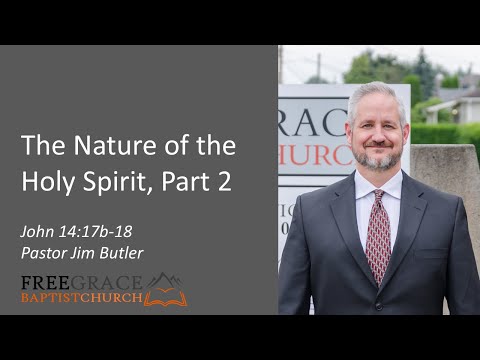
John 14:17b-18 confronts the church with two contrasting realities: the world's incapacity to receive the Spirit of Truth, and the disciples' assured possession of him. Working through the upper room discourse, this exposition grounds the church's dependence on the Holy Spirit in the doctrines of divine sovereignty, Trinitarian theology, and the inseparability of the divine operations. The sermon closes with the promise of Christ's permanent presence with his people — by the Spirit, in preaching, in the sacraments, and in discipline — as the antidote to spiritual orphanhood, and with a direct call to sinners to receive justification by faith alone, which brings not only forgiveness but the imputed righteousness of Christ.

The Nature of the Holy Spirit, Part 2
Jesus' promise in John 14:17–18 — that the Spirit of truth cannot be received by the world, yet dwells with and will be in his disciples — grounds the church's dependence on sovereign grace for all gospel ministry. The sermon works through the doctrine of inseparable operations and appropriations to protect both the unity of the Godhead and the distinction of persons, before applying the Spirit's indwelling to the perseverance of the saints and the sufficiency of the gospel. The closing exhortation presses both believers and unbelievers: the Spirit abides forever, justification is by faith alone, and the righteousness of Christ is imputed — not merely forgiveness extended — to all who come to him.

The Regulation of the Church's Worship, Part 2
What right does a congregation have to alter, add to, or subtract from the worship God has ordained for His house? Expounding 1 Timothy 3:14–16, this sermon establishes that Paul's instructions carry divine necessity — the church is the house of God, the pillar and ground of the truth, governed by Christ its head — and that the church's common confession centres on the person and work of the Lord Jesus Christ: His incarnation, vindication, proclamation, and the faith He sovereignly produces in the world. The regulative principle of worship follows directly: only what God commands in Holy Scripture is acceptable worship, a principle demonstrated from the Decalogue, Deuteronomy 12:32, Leviticus 10, 1 Samuel 13, and Hebrews 12, and confessionally formulated in chapter 22 of the 1689 London Baptist Confession of Faith.

2LCF Chapter 18 - Of the Assurance of Grace and Salvation
The 1689 London Baptist Confession Chapter 18 grounds the assurance of salvation not in emotional experience but in the blood and righteousness of Jesus Christ as the objective foundation, confirmed by the inward evidences of the Spirit's work in regeneration. The chapter distinguishes between the false presumption of unregenerate men and the genuine, infallible assurance available to true believers through faith in Christ. Assurance does not belong to the essence of faith — a true believer may struggle and doubt without thereby forfeiting salvation — yet the confession calls every believer to diligent pursuit of settled assurance as a duty. The subjective evidences of grace (repentance, love for Christ, good works, the Spirit's testimony of adoption) are consequential to the objective ground, never a replacement for it.

2LCF Chapter 12 - Of Adoption
The doctrine of adoption, as set forth in chapter 12 of the 1689 London Baptist Confession of Faith, is grounded exclusively in the justified sinner's union with Christ and utterly excludes human merit, free will, or moral achievement as its basis. Drawing on both Pauline and Johannine categories — legal adoption and organic new birth — the sermon demonstrates that these are complementary facets of the single truth that God receives sinners into His family as sons and heirs. The benefits of adoption are fourfold: inclusion in the family of God, reception of the Spirit of adoption with access to the Father, fatherly treatment (pity, protection, provision, and chastening), and the sealed inheritance of everlasting salvation. Adopted sons and daughters are therefore called to walk in love, light, and wisdom — not as a condition of sonship, but as its proper fruit.

The Nature of the Holy Spirit
How does Jesus comfort his disciples in the upper room by pointing them to the Holy Spirit, and what does that reveal about who God is? Expounding John 14:16–18, this sermon works through four aspects of the Spirit's nature drawn from the text: the distinction of persons in the Godhead, the unity of the Godhead, the world's ignorance of the Spirit, and the believer's knowledge of him. The eternal processions — the Father unbegotten, the Son eternally begotten, the Spirit proceeding from Father and Son — ground the temporal missions in which the Father sends the Son and the Father and Son send the Spirit for the salvation of God's people. The congregation is called to hold fast to the Trinitarian guardrails of the creeds and the 1689 confession, to resist the modalism and Arianism that perennially distort who God is, and to rest in the gospel of free and sovereign grace through faith in the one who declared 'I am.'

The Authority of the Church
Christ's promise in Matthew 16:19 to give 'the keys of the kingdom of heaven' to the church raises two perennial dangers: authoritarian abuse of ecclesiastical power and the outright abdication of it. This sermon expounds the identity of those entrusted with these keys (apostles, elders, and the gathered congregation together), the nature of the authority delegated (binding and loosing through preaching and discipline), and the proper ground of confidence when the church acts — not sacerdotal infallibility, but the assurance that heaven ratifies the church's faithful obedience to Scripture. The practical conclusion is that the keys are exercised through the proclamation of the Word, the admission and exclusion of members, and the administration of the sacraments — never through entertainment, self-help, or moral do-goodery.

The Triumph of the Church
What is the church, who builds it, and can anything destroy it? Expounding Matthew 16:13–18, this sermon works through Peter's confession of Christ as the Messiah and Son of the living God, traces the promise of the Davidic Covenant in 2 Samuel 7 to its fulfilment in Christ's declaration to build His church, and refutes the Roman Catholic claim that Peter is the rock upon which the church rests. The sermon closes with the triumph of the church: Christ owns it, Christ builds it, and the gates of Hades shall not prevail against it.

The Great Commission
Matthew 28:11–20 presents two responses to the resurrection of Christ: the fraudulent suppression of the evidence by the chief priests and elders, and the Great Commission given by the risen Lord to his disciples. The passage exposes the lie concocted by the Sanhedrin as historically incoherent and theologically revealing — a judgment of God upon covenant-breaking Israel. The Great Commission is then unfolded through its four-fold use of 'all': Christ's absolute authority as mediator grounds the command to go, make disciples, baptize believers as new covenant members, and teach them to observe all that he has commanded.
March 24, 2024

Romans 5:1 declares that justification by faith produces peace with God through the Lord Jesus Christ — a peace that assumes a prior condition of enmity, guilt, and divine wrath. This sermon traces that peace through the whole of Scripture, from its Old Testament promise in Isaiah and Micah, through its announcement at the nativity, to its accomplishment in Christ's active and passive obedience. The principal pastoral application is that Christian assurance rests not on the ebb and flow of one's walk but on the immutability of the divine decree, the intercession of the ascended Christ, and the covenant of grace.
March 24 AM
What does it mean to be justified before God, and on what ground does that justification rest? Working through Romans 4:23–5:1 against the broader backdrop of Romans 3:19–5:5, this sermon expounds four heads: the nature of justification, the receiving instrument of justification, the perfect ground of justification, and the blessed result. Justification is by an act of imputation — the sins of all who believe are reckoned to Christ and His righteousness is reckoned to them — not by any admixture of human works. The resurrection of Christ stands as the divine vindication that the work of atonement is complete, and the call goes forth to believer and unbeliever alike to rest in Christ alone.

March 17
Paul's rehearsal of the Lord's Supper institution in 1 Corinthians 11:23–26 exposes the Corinthians' wretched conduct precisely because the ordinance comes by divine apostolic command and carries the full weight of Christ's atoning death. The sermon traces four aspects of the Supper: its character as a divine command, as a remembrance generally, as a remembrance of Christ specifically, and as a proclamation of His death until He comes. Christians who absent themselves from this ordinance rob themselves of the Spirit-wrought strengthening that God has annexed to this living symbol of the gospel.

March 17 PM
The Lord's Supper rests on a layered theological foundation that most communicants have never fully considered. Drawing from 1 Corinthians 11:23-26, this sermon traces six doctrinal streams — Scripture's divine inspiration, the perfections of God, the person of Christ, covenant theology, the substitutionary cross, and communion with God as a means of grace — showing how all of them converge in the ordinance. Transubstantiation is rejected on the grounds of Chalcedonian Christology, and the new covenant ratified in Christ's blood is anchored exegetically in Jeremiah 31:31-34. Hearers are called to approach the Lord's Table with an informed and joyful obedience, knowing that in this ordinance the risen Christ, by His Spirit, feeds and strengthens the faith of His people.
The Covenantal Status of Israel in the Parable of the Vineyard
Matthew 21:33–46 presents the Parable of the Wicked Vinedressers as a compressed history of Old Covenant Israel — a nation privileged with God's presence, prophets, and promises, yet persistently covenant-breaking and finally guilty of rejecting the Messiah himself. The parable is read against Isaiah 5 and fulfilled in the AD 70 destruction of Jerusalem, which is the covenantal judgment pronounced in verse 43: the kingdom of God is taken from ethnic Israel and given to the church, the true Israel of God. The New Covenant people — constituted by faith in Christ, not ethnic descent — are that nation bearing fruit, identified as such in 1 Peter 2 and Galatians 6:16. The sermon argues that any future geopolitical restoration of Old Covenant Israel with a rebuilt temple and renewed sacrificial system would be a reversal of redemptive history, and that ethnic Jews today stand in need of the gospel like every other nation.

2LCF Chapter 11 - Of Justification
How is a guilty sinner declared righteous before a holy God? This study of 1689 London Baptist Confession chapter 11 works through the six paragraphs on justification, giving careful attention to the three pairs of denials and affirmations in paragraph one. The confession is set against the Roman Catholic conflation of justification and sanctification, Socinian and Arminian errors regarding faith and evangelical obedience as the ground of justification, and the doctrine of eternal personal justification. The sole ground of the sinner's acceptance before God is the imputed active and passive obedience of Christ, received through faith alone — itself a gift of God — so that God is glorified as both perfectly just and richly gracious in the justification of sinners.

The Pharisee and the Publican
Luke 18:9–14 sets before the reader two men whose manner of prayer exposes the only two grounds on which a person can seek acceptance with God: self-righteousness or the imputed righteousness of Christ. The Pharisee's boastful rehearsal of his own religious merits and his contempt for the publican show that pride and the despising of others are inextricably joined. The publican, who can do nothing but beat his breast and cry for propitiation, goes home justified — declared righteous not by what he was or did, but by the alien righteousness of another received through faith alone. The sermon calls hearers to examine whether they stand before God as the Pharisee or the publican, and to come to the Lord's Supper not as a reward for good behavior but as those who rest entirely on Christ's doing and dying.

What is Hyper-Calvinism?
Hyper-Calvinism so elevates the sovereignty of God that it cancels out the responsibility of man, producing a fatalism that paralyses sinners rather than calling them to repentance and faith. Over against both hyper-Calvinism and Arminianism, apostolic gospel preaching holds divine sovereignty and human responsibility as 100% true simultaneously — friends, not rivals requiring balance. The gospel is propositional revelation concerning Christ's life of perfect obedience, substitutionary death, and bodily resurrection, and sinners are commanded to believe and repent on the authority of that word alone. The brazen serpent of Numbers 21 illustrates the point: the remedy is look and live, not first examine yourself and then look.

Ask FGBC #2: Is pouring or sprinkling sufficient for Baptism?
The proper mode of Christian baptism — immersion, sprinkling, or pouring — is examined through the lens of Scripture, Baptist confession, and the symbolism of Romans 6. The discussion distinguishes between the validity of baptism (requiring a credible profession of faith) and the propriety of its mode, arguing that the Greek term baptizō, the baptismal accounts in the Gospels and Acts, and the death-burial-resurrection imagery of Romans 6 all converge on full immersion as the biblically warranted mode. Sprinkling and pouring, while practiced in paedo-baptist traditions, fail to embody the confessional standard of 'due administration' and obscure the visible word that baptism is meant to declare.
2LCF Chapter 21: Of Christian Liberty and Liberty of Conscience
Christian liberty, properly understood, is not primarily about matters of lifestyle preference but about the freedom Christ has purchased for believers: freedom from the guilt, power, and punishment of sin, and freedom for joyful, childlike access to and obedience toward God. The 1689 London Baptist Confession chapter 21 unfolds this in three movements — the definition of Christian liberty (paragraph 1), the protection of liberty of conscience (paragraph 2), and the qualification that Christian liberty is never a license to sin (paragraph 3). Central to paragraph 2 is the confession's axiomatic claim that God alone is Lord of the conscience, which means neither civil authority nor ecclesiastical authority may bind the conscience beyond or against the Word of God. The practical application presses believers to distinguish between God's explicit commands and their own preferences, and to resist the near-universal temptation to elevate personal opinion to the status of thus saith the Lord.

Ask FGBC #1 - What is a Reformed Baptist?
What distinguishes a Reformed Baptist from a generic Calvinist or a generic Baptist? This question-and-answer exchange works through the defining marks of the Reformed Baptist tradition: the supreme authority of Scripture, covenant theology, the regulative principle of worship, the centrality of preaching, believers' baptism by immersion, and congregational church polity. The 1689 Second London Baptist Confession is identified as the clearest doctrinal touchstone, held not loosely but in full subscription — not as an authority alongside Scripture, but because it faithfully summarises Scripture's teaching. The historical designation 'Particular Baptist' is also commended as an accurate and less confusing alternative label for the same tradition.

CTF - Promoting unity among Reformed churches
This conference Q&A exchange addresses how a Confession of Faith Conference can foster unity among Reformed and Presbyterian churches by drawing attention to the 1689 London Baptist Confession of Faith as a historic confessional document standing in deliberate continuity with the Westminster Confession, the Savoy Declaration, and the Three Forms of Unity. The speakers note that the 1689 Confession was written not to introduce novelty but to demonstrate solidarity with broader Reformed orthodoxy, as its own preface states: 'we have no itch to clog religion with new words.' The discussion concludes that the Reformed churches share an overwhelming doctrinal heritage, and that remaining differences — including baptism — should not prevent mutual recognition and brotherly regard among confessional Christians.

2024 Conference Theme - Of the Holy Scriptures
This brief conference introduction previews a study of the Second London Baptist Confession of Faith (1689), Chapter 1, 'Of the Holy Scriptures.' The discussion covers the authority, canon, sufficiency, and interpretation of Scripture, with particular attention to the confessional principle that Scripture interprets Scripture (analogia scripturae). Two scholars — one specializing in historical theology and one in hermeneutics — will situate Chapter 1 in its seventeenth-century context and apply its interpretive principles to the contemporary church.

Introduction to Biblical Hermeneutics
What does it mean to interpret the Bible correctly, and how does the 1689 London Baptist Confession of Faith guide that task? Working through paragraphs 5 to 10 of Chapter 1, this study introduces the discipline of hermeneutics — the science of biblical interpretation — by tracing six principles the Confession sets forth: the scope of Scripture (the glory of God in the salvation of sinners through Christ), the sufficiency of Scripture (expressly stated and necessarily implied), the perspicuity of Scripture (clear enough for the unlearned on all saving matters), the translation of Scripture (grounded in divine inspiration and providential preservation), the interpretation of Scripture (the analogy of Scripture and the analogy of faith), and the finality of Scripture (Holy Scripture as the supreme judge over all councils, creeds, and private opinion). The practical burden is that a faulty hermeneutic produces bad doctrine, and that reading the Old Testament through the lens the New Testament apostles themselves provide is not optional but the pattern Christ himself commanded.

2LCF Chapter 10 - Of Effectual Calling
2LCF Chapter 10 expounds the doctrine of effectual calling — the sovereign, monergistic act by which God brings elect sinners from spiritual death to life in Jesus Christ. The chapter is read in full and examined in four paragraphs, with sustained attention given to the definition of effectual calling (paragraph 1) and its exclusively divine power (paragraph 2). God calls none but the predestinated, acts in his own appointed time, works through Word and Spirit, and employs no less power than that which raised Christ from the dead — leaving no room for human agency or merit in salvation. The session closes with brief pastoral notes on elect infants and the non-effectual gospel call, followed by congregational questions on infant salvation and the theology of divine simplicity undergirding unconditional election.

Book recommendations related CTF 2024 and the Holy Scriptures
Two teachers discuss book recommendations for those preparing for or following up on a conference treating the Holy Scriptures, with particular focus on expositions of the relevant confession chapter and works on the doctrine of Scripture. Recommendations span classical Reformed confession commentaries, treatments of divine inspiration and inerrancy, and a sixteenth-century disputation on Scripture by William Whitaker. The conversation is a brief supplementary resource guide rather than an expository sermon.