
Theological term
Justification by Faith Alone
247 sermons · All terms

The Citizenship of the Believer

The enemies of the cross of Christ are not merely mistaken but are heading toward eternal destruction — and the Apostle Paul warns of them with tears. Expounding Philippians 3:18–21, this sermon identifies the Judaizers as those enemies: their god is their belly, their glory is in their shame, and their minds are set on earthly things. Against that dark backdrop, the believer's citizenship in heaven is a present legal possession that demands an eager anticipation of Christ's return, a purifying of life in light of that coming, and a deliberate seeking out of godly examples to follow rather than the many who walk the broad road to destruction.

The Pattern for the Christian Life
Philippians 3:17 calls believers to join in following the Apostle Paul's example and to identify others in the local church who walk the same way. The sermon argues that faithful Christian examples are not found among social-media influencers but among ordinary, persevering saints whose lives are grounded in justification by faith alone, followed by sanctification, perseverance, and glorification. Paul's example is examined across four dimensions — his conversion, his life as a believer, his ministry, and his suffering — with particular attention to the courage and gospel-centrality displayed throughout Acts. The sermon's application presses the responsibility squarely on individual believers: they must actively seek out faithful examples in the congregation rather than waiting for examples to come to them.

The Conversion of Paul, Part 4
Philippians 3:10–11 presents sanctification and glorification as necessary and inseparable consequences of justification by faith alone (v.9). The knowledge of Christ described in verse 10 is experiential, practical, theologically correct, and constitutes the very essence of eternal life — but it includes not only the power of Christ's resurrection (newness of life, union with Christ, definitive breach with sin) but also the fellowship of His sufferings and conformity to His death, which are not redemptive but inevitable for all who side with a crucified Savior in a hostile world. Verse 11 then sets forth glorification — the resurrection of the righteous — as the confident hope that sustains perseverance through the difficulties of sanctification. The sermon draws on 1689 LBCF 11.2 and Westminster Larger Catechism 77 to show that faith which justifies is alone as an instrument, yet never alone in the person justified, being ever accompanied by all other saving graces.

The Promise of the Covenant of Grace

Galatians 3:15–18 presents Paul's covenantal argument that the Mosaic law, given 430 years after the Abrahamic promise, cannot annul the covenant of grace nor supplement faith with legal works as the ground of justification. The sermon traces four interlocking points: the immutability of God's redemptive promise, the nature of Abraham's faith in Christ as the singular promised seed, the pedagogical and temporary character of the Mosaic covenant as a distinct covenant of works, and the inheritance as freely given by promise rather than earned by law. The pastoral application is a call to rest entirely on Christ, the champion of the covenant of grace, and to resist every system that adds law-keeping or circumcision to faith as the basis of standing before God.
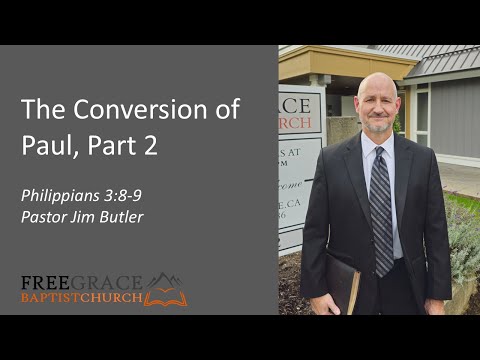
The Conversion of Paul, Part 2
Philippians 3:8–9 presents the Apostle Paul's radical revaluation of all things in light of the surpassing worth of knowing Christ Jesus as Lord. Working through verse 8, this sermon traces three movements: Paul's declaration that he counts all things loss, his motivation in the excellence of the knowledge of Christ, and his conviction that everything else — past religious pedigree, present suffering, future comfort — is rubbish compared to gaining Christ. The sermon argues that justification by faith alone is the sole ground of acceptance with God, the only defense against the devil's accusations, the only source of true peace, and the only sure foundation of assurance — grounding each application in Paul's own apostolic biography and in Romans 8 and Romans 5.

The Conversion of Paul
Paul's pre-conversion résumé in Philippians 3:4–8 reveals that the 'chief of sinners' was not a libertine but a fastidiously religious man — circumcised, a Benjamite, a Pharisee, blameless by the external standard of the Mosaic law, and violently zealous in persecuting the church. This sermon traces that résumé through Acts, Galatians, and 1 Timothy to establish a single point: it is not one's sins but one's trust in one's own righteousness that keeps a sinner from Christ. On the road to Damascus, Paul counted every credential as loss, because acceptance with God is grounded solely in the active and passive obedience of the Lord Jesus Christ received by faith alone.
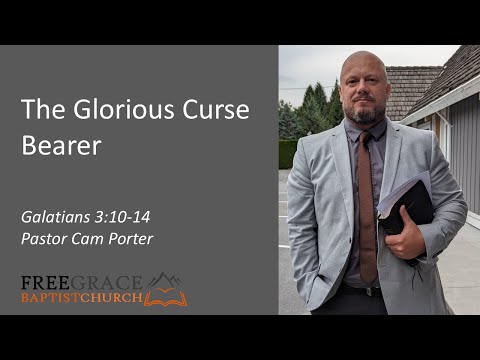
The Glorious Curse Bearer
Galatians 3:10–14 presents the law's curse as a judicial sentence of divine condemnation from which no sinner can escape by obedience, since perfect and perpetual law-keeping is universally failed. Christ, the covenant champion, redeemed his elect by becoming a curse in their place — bearing the wrath due them, answering on a mountain at a tree the curse that entered the world on a mountain at a tree. The blessing of Abraham — the imputation of Christ's righteousness received through faith alone — comes not through circumcision, ceremony, or ethnic connection to the covenant community, but through union with the crucified and risen Christ. Those outside Christ remain justly under divine condemnation; those in him are freed from the curse and heirs of all the promises of God.

The Crucifixion of Christ, Part 4
The sixth saying of the Lord Jesus Christ on the cross — 'It is finished' (John 19:30) — is not a cry of defeat but a declaration of completed victory. The single Greek word tetelestai, a perfect tense verb signifying a past completed action with abiding present results, encompasses the fulfillment of all Old Testament Scripture, the completion of Christ's earthly suffering, the full accomplishment of the Father's will, and the definitive salvation of his people. The sermon works through the typological witness of the law (Passover, Day of Atonement, the bronze serpent, the sacrificial system), the prophetic witness of Isaiah and Jeremiah, and the Psalms, showing that Christ's cry from the cross brings every shadow and promise to its intended end. The application presses the finished work as the sole ground of justification, assurance, peace with God, and security against every accusation — calling both believer and unbeliever to look to Christ alone and live.

The Description of Discipleship
Matthew 16:24–27 sets out the terms of Christian discipleship: self-denial, cross-bearing, and the daily following of Christ. The sermon distinguishes a superficial willingness to die for Jesus from the harder, quieter obedience of living for him — reading Scripture, praying, attending the assembly, and ordering family life under the Word. The whole argument is framed by the eschatological contrast between temporal gain and eternal loss, with the coming judgment of the Son of Man serving as the decisive motivation for prioritising Christ over wealth, comfort, and self. Justification by faith alone is never undermined; rather, the life of discipleship is presented as the necessary and inevitable fruit of genuine saving grace.

The Clarity of Apostolic Preaching - Galatians 3:1-4
Paul's rebuke in Galatians 3:1–4 confronts the Galatian churches for being 'bewitched' away from a gospel that had been proclaimed to them with unmistakable clarity. The sermon traces three elements: the pastoral severity of Paul's charge of folly, the transparent sufficiency of apostolic preaching that set Christ crucified visibly before the Galatians, and Paul's measured appeal to their own experience of receiving the Spirit through faith rather than works. The central burden is that any addition to the finished work of Christ — however subtle — is not a lesser error but a bewitching delusion that empties the cross of its glory and replaces the peace of the gospel with bondage.

The Crucifixion of Christ, Part 2
The crucifixion scene in John 19:23–27 contains two theologically freighted details: the seamless tunic cast for by lot, and Christ's provision for his mother from the cross. The tunic, described in terms that evoke the high-priestly garments of the Old Covenant, calls the reader to see Christ functioning as the perfect, perpetual high priest whose once-for-all sacrifice accomplishes what Leviticus 16 could only foreshadow. The division of his garments fulfills Psalm 22:18 exactly as God predetermined, underscoring that the cross was never plan B. The sermon concludes by pressing four implications of the gospel: substitutionary atonement, justification by faith alone, the reordering of priorities at the foot of the cross, and the binary demand that every hearer either look to Christ in faith or remain under divine wrath.

The Warning Against Judaizers
Philippians 3:1–3 contains the only sustained polemical section in the epistle, and the apostle Paul deploys it as a warning against Judaizers — those who insisted that faith in Christ must be supplemented by Mosaic ceremonies such as circumcision for acceptance with God. Working through Paul's strategy in verse 1, his three-fold warning in verse 2, and his corrective in verse 3, the sermon demonstrates that the Judaizing error — whether in its first-century form, in Roman Catholicism, or in modern movements such as the New Perspective on Paul and Federal Vision — nullifies the grace of God by refusing to let Christ be a whole Savior. The church's only boast, identity, and worship are grounded in Christ alone, received through faith alone, apart from any confidence in the flesh.

The Bronze Serpent
Numbers 21:1–9 records Israel's sin of grumbling in the wilderness, God's judgment through fiery serpents, and the divinely prescribed remedy: look at the bronze serpent lifted on a pole and live. The sermon traces this narrative in two movements — the defeat of the Canaanites in verses 1–3, where Israel prays and trusts God, contrasted with the failure of verses 4–9, where they grumble despite God's provision. The bronze serpent functions as a type of Christ, as Jesus himself declares in John 3:14, and the sermon presses the application that justification is by faith alone — not by prior works, not by self-examination of the wound, but by looking to the one lifted up. Weak faith does not disqualify the sinner; even a feeble look at the appointed remedy brings the sinner into peace with God.

The Example of the Savior, Part 3
Philippians 2:8 presents the humility of Christ not as incidental biography but as the doctrinal and ethical foundation for the church's conduct. This sermon examines first the declaration of Christ's humility — that he humbled himself voluntarily, according to his human nature as covenant mediator, in active obedience to every demand of God's law from his mother's womb — and then its demonstration in the extent of that humiliation: even the death of the cross, a death cursed by the law and laden with shame. The active and passive obedience of Christ, taken together, are the sole ground of justification by faith alone, which is why the Lord's Supper is received not as a reward for good conduct but as a proclamation of what the Savior accomplished on behalf of his people.

The High Priestly Prayer, Part 8
John 17:21–23 records Christ's high priestly petition for the unity of all believers across every age — a unity patterned on the mutual indwelling of the Father and the Son. The sermon works through the petition ('that they all may be one'), the divine paradigm (the perichoretic union of the Father and Son as the exemplar for creaturely unity), and the missional purpose (a unified church publishes to the world the reality of the Incarnation and the love of the Father). Believers are called to pursue a common faith, a common orientation, and a common goal — the glory of God — knowing that their corporate life is itself a testimony to the mission of the sent Son.

Galatians 2:17–21 — Justification by Faith Alone
Galatians 2:17–21 closes Paul's autobiographical defense of justification by faith alone, and these five verses press three weighty questions: Is Christ a minister of sin when believers forsake the Mosaic ceremonies? Who is the true transgressor? And what does Judaizing heresy actually do to the cross of Christ? The sermon argues that to impose any measure of works upon the economy of salvation — whether old-covenant ceremony or its modern legalistic counterpart — is to render the incarnation, the perfect obedience, and the atoning death of the Son of God as vanity. The single ground of the believer's justification, assurance, and perseverance is the Son of God who loved us and gave himself for us, in whom alone everlasting righteousness is found.
The Use of the 2nd London Confession
A confession of faith is not a human addition to Scripture but a tool the church uses to define, defend, discriminate, discipline, and delimit its doctrine. Drawing on passages from the Pastoral Epistles, Jude, and Ephesians 4, this Sunday School address argues that the Second London Baptist Confession of 1689 serves the local church in six concrete ways: it establishes doctrinal boundaries, equips members for apologetics, vets candidates for ministry, grounds church discipline, protects Christian liberty by identifying what lies outside its purview, and anchors the church in the catholicity of the Reformed tradition. The session closes with a call to reject autonomous biblicism in favour of confessional theology understood as the fruit of the Spirit's ongoing work in the teaching ministry of Christ's church.

2LCF Chapter 32 - Of the Last Judgement
2 London Baptist Confession of Faith Chapter 32 examines the doctrine of the Last Judgment under three heads: the concept of the Day of Judgment (its divine appointment, its agent in Christ, and its comprehensive scope over angels and all humanity), the goal of that day (the manifestation of God's mercy in the eternal salvation of the elect and his justice in the eternal damnation of the reprobate), and its practical relevance (deterring sin, consoling the afflicted people of God, and keeping believers watchful). The session concludes with a survey of the three millennial positions and four interpretive approaches to the book of Revelation, explaining why the Confession deliberately avoids resolving those disputes in order to function as a broad consensus document. The consistent ethical burden throughout is that contemplation of the coming judgment should shape present conduct: purifying the elect, driving evangelism, and giving the suffering saints confidence that divine justice will prevail.

The Apostolic Magnitude of Justification
Paul's confrontation of Peter at Antioch in Galatians 2:11–16 is not merely a biographical episode but a defence of the doctrine of justification by faith alone. Peter's hypocritical withdrawal from table fellowship with Gentile believers, driven by fear of the circumcision party, was not an open denial of the gospel but a compromise of it — and Paul's rebuke exposes how even the appearance of impropriety can bring the truth of the gospel into disrepute. The sermon then turns to the apostolic doctrine set forth in verses 15–16, tracing the five-fold reiterative negation and affirmation of justification by faith and not by the works of the law, grounding Christian peace in the imputation of Christ's active and passive obedience. Hearers are exhorted to carry the doctrine of justification beyond the service itself, resting their peace not on any measure of personal performance but on the sole and complete work of the Lord Jesus Christ.

The High Priestly Prayer, Part 2
John 17:4–5 records Christ's proleptic and covenantal claim to have glorified the Father and finished the work given him — a claim that opens into the full theology of active obedience and its indispensable place in justification by faith alone. The sermon demonstrates that Jesus was not merely an ethical example but the obedient substitute whose 33 years of perfect law-keeping is imputed to the elect alongside the forgiveness secured by his blood. Verse 5 is examined against the kenosis error: Christ does not pray to recover a lost glory but to be manifested as the glorified God-man and mediator who has accomplished the covenant of redemption. Believers are exhorted to pursue the knowledge of God and Christ as the essence of eternal life; unbelievers are called to look to the only Savior in whom alone there is both forgiveness and a righteousness that avails before God.

The Authenticity of Paul's Gospel, Part 2
Galatians 1:18–2:10 records Paul's autobiographical defense of justification by faith alone against Judaizers who insisted that circumcision and adherence to Mosaic precepts were necessary for salvation. The sermon traces Paul's independence from the Jerusalem apostles, the uncompromising refusal to circumcise Titus, and the apostolic unity between Paul and the Jerusalem pillars — all marshaled to prove that Paul's gospel came by divine revelation, not human tradition, and that it stands as the only true gospel. The application presses both the vital importance of the doctrine of justification and the necessity of an uncompromising ministry: Christian peace rests solely in Christ's perfect obedience and atoning death, not in the ebbing and flowing of personal works or church attendance.

Ask FGBC - July 2024 Podcast with Pastors Butler and Kirkpatrick
Two pastors work through a wide-ranging set of questions submitted by listeners, covering the Reformed doctrine of the will, repentance and faith, holy days, Christian political engagement, believers' baptism, the New Covenant, forgiveness of unrepentant offenders, ongoing confession of sin, witnessing to homosexual neighbors, the Sabbath shift from Saturday to Sunday, the day of the Lord, the beatific vision, common grace, saving versus temporary faith, and the holy walk. Throughout, the answers are grounded in the 1689 London Baptist Confession and exposit the relevant biblical texts, consistently distinguishing the Reformed Baptist position from Arminian, dispensationalist, and paedobaptist alternatives. The session serves as accessible catechetical instruction for believers at all stages while modeling how confessional Reformed Baptist theology addresses both doctrinal and practical questions.

The Authenticity of Paul's Gospel
Paul's vigorous autobiographical defense in Galatians 1:11–24 establishes that his gospel did not originate from any human source but came by direct revelation of Jesus Christ — a claim with profound implications for the doctrine of justification. The sermon works through three arguments for gospel authenticity: the nature of the gospel itself as something no man would invent, Paul's pre-conversion conduct as a violent persecutor of the church, and his post-conversion movements that deliberately bypassed human instruction. The application presses the congregation to hold with confidence to a gospel that rests on the triune God's sovereign grace alone, not on human tradition or legal observance, and to hope for the conversion of even the most hardened opponents of the truth.

The Wars of the LORD
Numbers 21 traces Israel's journey through military victory over the Canaanites, the punishment and grace of the bronze serpent, and the conquest of the Amorite kings Sihon and Og. The bronze serpent — condemned people bitten by fiery serpents, healed only by looking in faith to the remedy God prescribed — is taken up by Jesus in John 3:14 as a type of his own crucifixion, teaching that salvation comes by divine initiative alone, received through faith, not works. The same recurring sins of complaint, lack of faith in providence, and idolatry that marked the first generation persist in the second, warning the church that these corruptions follow the sin nature across every generation. The chapter closes with God's sovereign hardening of Sihon and the defeat of the giant Og, both down payments on the promised conquest and demonstrations of God's faithfulness, sovereignty, and goodness to his people.

The Future Prospect of the Apostle, Part 2
Philippians 1:21–26 presents Paul's conviction and anticipation as an apostle facing imprisonment and the real prospect of execution. The sermon works through Paul's declaration 'for to me to live is Christ, and to die is gain,' showing that his union with Christ in life and his glory with Christ in death make it impossible for any earthly power to harm or stop him. The intermediate state — the soul's immediate presence with Christ at death — is set against the benefit of continued gospel ministry, and Paul's others-minded anticipation of release grounds his confidence that the Philippians' progress in faith and joy will abound. The sermon closes by pressing the question whether each hearer can say with honest self-examination that Christ is their all in life and death.

Baptism - Shannon
Baptism is an ordinance of the New Covenant ordained by Jesus Christ, administered by immersion to those who actually profess repentance, faith, and obedience to the Lord Jesus Christ. Drawing from chapter 29 of the 1689 London Baptist Confession of Faith, this administration of the ordinance situates believer's baptism within the broader Reformed confessional tradition, noting the Baptists' deliberate alignment with Presbyterian and Congregationalist Brethren on the doctrines of justification, the Trinity, and much else, while differing on the proper subjects and mode of baptism. The outward sign of immersion into water visibly expresses Christ's death, burial, and resurrection, grounded in Romans 6, as the candidate publicly professes faith in Christ alone for salvation.

The Covenant Ceremony With Abraham
Genesis 15 records the covenant ceremony by which God confirmed his promises of seed and land to Abram — not with a bilateral oath, but with a unilateral, self-maledictory act in which God alone passed between the divided animals. The sermon traces Abraham's justification by faith alone in verse 6, examines the ancient covenant-ratification ritual as a type of Christ bearing the covenant curse, and shows that the smoking oven and burning torch passing through the pieces preaches the substitutionary atonement of the Lord Jesus Christ. The application presses believers to rest their assurance not in their own covenant faithfulness but in the faithfulness of the God who swore by himself and sealed that oath in the blood of his Son.

The Salvation of Sinners on Pentecost
Peter's sermon on the day of Pentecost (Acts 2:22–42) declares the life, death, resurrection, and exaltation of Jesus Christ as the exclusive ground of salvation, and calls sinners to repentance and faith. The sermon examines what genuine repentance means — a change of mind inseparable from faith, not a prior moral reformation — and argues that baptism is the sign of what God has already accomplished internally, not the instrument of forgiveness. Acts 2:39 is addressed directly against paedobaptist appeals, with the promise of the Spirit shown to belong to all who are effectually called, not to the physical infants of believers. The sermon closes with an exhortation to follow the Pentecost pattern: preach the gospel, baptize disciples, and teach them in the church.

2LCF Chapter 27 – Of the Communion of Saints
The communion of saints, as confessed in 2LCF Chapter 27, is grounded in the believer's union with Christ by the Spirit and through faith — a union that conveys participation in His graces, sufferings, death, resurrection, and glory without any divinization of the creature or diminishment of Christ's divinity. From that vertical union flows a horizontal obligation: holy fellowship in corporate worship, mutual edification through rightly ordered spiritual gifts, and material relief distributed according to ability and necessity. A necessary qualification guards the confession against both spiritual individualism and collectivist error: the communion of saints neither licenses neglect of public worship nor grants any person a right to another's private property, placing both socialism and communism in direct conflict with the Eighth and Tenth Commandments.

The Martyrdom of Stephen
Acts 7:54–8:1 records the martyrdom of Stephen, the first Christian martyr, whose death exposes the murderous hatred that unbelieving Israel bore toward the Messiah and those who bore witness to Him. Standing alone before the Sanhedrin, Stephen receives a vision of the glory of God and the Son of Man standing at the right hand of the Father — confirming his theology of temple, rebuking his executioners, and manifesting the presence of the triune God with His servant in extremity. His dying words, mirroring Christ's own prayers from the cross, demonstrate that true temple worship — the meeting of God and sinners in prayer and forgiveness — is found not in any physical structure but in the Lord Jesus Christ. The passage calls believers to theological preparedness, courageous witness, and dependence on the triune God in the face of opposition, however severe.