
Theological term
Covenant Theology
136 sermons · All terms
2LCF - Introduction to the 1689 London Confession of Faith

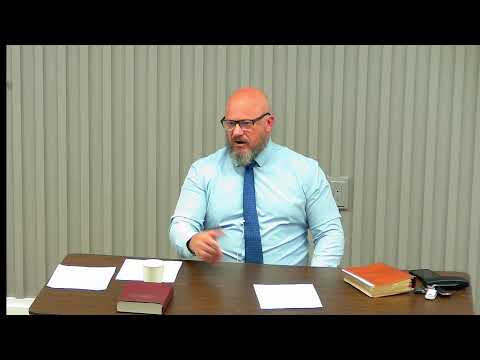
The 1689 London Baptist Confession of Faith (properly the 1677 Confession) did not arise in a vacuum: it was a deliberate act of theological stewardship by particular Baptists who stood inside the Reformed Protestant consensus, followed the Westminster Assembly and the Savoy Declaration in structure and wording, and published their confession to correct heterodoxy, serve a new generation, and demonstrate solidarity with fellow persecuted Protestants. This introductory session reads the original epistolary preface to the confession in full and then surveys its argument under five headings — continuity, catholicity, candor, confirmation, and conversation — showing how the confessors understood creeds and confessions as the church's Berean effort to articulate what the Bible says, not to add to it. The session closes with a call to receive the confession in the same spirit in which it was written: not contention, but a whole-souled, humble, and Spirit-dependent owning of the faith once for all delivered to the saints.

Ask FGBC Batch 8: Church Planting, Creation, Imprecatory Psalms & More | Reformed Baptist Theology
This Q&A episode addresses ten questions spanning ecclesiology, pneumatology, soteriology, and worship, drawing on confessional Reformed Baptist commitments throughout. Topics range from church planting and confessional subscription to the nature of saving faith versus assurance, the love of God for the non-elect, literal six-day creation, the theology of imprecatory psalms, and the regulative principle of worship as it applies to musical instruments and the offering. The consistent thread is that Scripture and the 1689 London Baptist Confession provide the sufficient framework for answering practical and doctrinal questions facing Reformed Baptist churches today.

The Sanctifying Benefit of the Gospel

Romans 6:1–4 confronts the objection that justification by faith alone licenses continued sin, and Paul's answer is grounded not in moral resolve but in the gospel itself. The sermon traces the inextricable link between justification and sanctification: those united to Christ by faith have died, been buried, and been raised with him, and Christian baptism is the appointed sign and symbol of that union. Because the Christ who secured justification gives his Spirit to effect sanctification, the two benefits are inseparable — the same gospel that frees believers from the penalty of sin is the power that breaks sin's dominion. The primary application is that believers fight sin first by reckoning themselves dead to it in Christ, not merely by external restraint.
Ask FGBC 70: Is Progressive Covenantalism Compatible with the 1689?
Progressive Covenantalism and New Covenant theology are examined against the standard of the 1689 London Baptist Confession of Faith, with particular attention to whether either system can consistently affirm the covenant of works, the covenant of redemption, and the law/Sabbath chapters of the Confession. The discussion traces the hermeneutical root of these systems — a tendency toward biblicism that resists theological vocabulary not found verbatim in Scripture — and argues that their own best instincts, illustrated by Gary Long's late work on the Adamic covenant and the creation rest, point toward the fuller confessional expression of covenant theology. The conversation closes by considering the covenant of redemption and whether collapsing it into the eternal decree is adequate, finding devotional and doxological value in the anthropomorphic language of the pactum salutis even where precise metaphysics must be qualified.
Ask FGBC 67: Are Piper and MacArthur Reformed Baptists?
What separates a confessional Reformed Baptist church from a Calvinistic Baptist church associated with figures like John Piper or John MacArthur? This conversation argues that Calvinism, properly understood, is not reducible to the five points of Dort but entails a whole confessional heritage — covenant theology (including the covenant of works), cessationism, the regulative principle of worship, and adherence to one of the great Protestant confessions. The Second London Baptist Confession of 1689 is presented as the most mature expression of that heritage, providing a theological anchor that protects congregations from pastoral personality-driven ministry and binds them to the cumulative wisdom Christ has given his church through the ages.
Ask FGBC 69: Is the Threefold Division of the Law Biblical?
The threefold division of the law — moral, ceremonial, and judicial — is examined as a biblically grounded framework rooted not in Westminster Assembly invention but in the canonical structure of Scripture itself, traceable through the patristics and medieval scholastics. The discussion distinguishes natural or moral law (written on the heart by virtue of creation) from positive laws that are covenantally bounded and therefore terminable, using circumcision, dietary laws, and the Sabbath as test cases. The conversation addresses how the apostolic hermeneutic applies the moral principle behind positive laws (such as the ox-muzzling text) without collapsing into theonomy. Listeners are pressed to engage the exegetical evidence rather than dismissing the framework as "too tidy."

Ask FGBC Batch 7: Anabaptists, Calvinism, Sincere Offer & More | Reformed Baptist Theology
This panel discussion brings together three Reformed Baptist pastors to address questions submitted to Free Grace Baptist Church on confessional identity, soteriology, covenant theology, and Lord's Day worship. The conversation distinguishes Particular Baptists from Anabaptists on historical-documentary grounds, examines the relationship between Calvinism and confessional Reformed Baptist identity, and evaluates the free and sincere offer of the gospel against what the panelists regard as the theological liabilities of well-meant-offer language. The discussion also treats the threefold division of the law, prosopological exegesis, and the scriptural rationale for two Lord's Day services, consistently grounding each answer in the 1689 Second London Baptist Confession and the exegetical tradition of the Particular Baptists.

What Is Confessing the Faith 2026? | Understanding God's Decree | Reformed Baptist
This episode of Ask Free Grace Baptist Church introduces the 2026 Confessing the Faith conference (April 10–11, Chilliwack, BC), which will focus on 1689 London Baptist Confession chapter 3, the doctrine of God's decree. Three speakers — Dr. Jim Renihan and Dr. Richard Barcelos of the International Reformed Baptist Seminary, and Pastor David Charles — will address the biblical, historical, and pastoral dimensions of the decree. The conversation explains why the doctrine matters: God's sovereign ordination of all things is not fate or impersonal force but the purposeful governance of the God revealed in Scripture, producing stability, peace, and worship in his people.

The Refuge for God's People
Psalm 46 sets an axiomatic foundation — God is our refuge and strength, a very present help in trouble — from which the necessary inference follows: therefore we will not fear. This sermon works through the psalm's four movements: the affirmation of God's presence (vv. 1, 7, 11), the demonstration of God's power amid cosmic and political chaos (vv. 2–6), the contemplation of God's proven works in history (vv. 8–9), and the sovereign command of verse 10. The titles 'Lord of hosts' and 'God of Jacob' ground the psalm's confidence in both the divine warrior who fights for his people and the covenant Lord who cannot be separated from them — a comfort the New Covenant believer holds with even greater fullness in Christ.
The Appearance of Christ to Thomas
John 20:24–31 presents Thomas not merely as a doubter but as an obstinate man who refuses to believe the resurrection unless his own conditions are met — rejecting the Old Testament prophets, the repeated predictions of Christ, and the apostolic testimony of ten eyewitnesses. Christ responds not with rebuke but with sovereign grace, appearing again on the Lord's Day and inviting Thomas to examine the wounds that sealed a finished atonement. The confession that follows — 'My Lord and my God' — is the theological and experiential crown of the fourth gospel, answering John's own stated purpose in verses 30–31: that through the written word, those who have not seen may nevertheless believe and have life in Christ's name.
The Power and Wisdom of God
How can God justify the ungodly without compromising his justice, and why does the design of salvation leave no room for human boasting? Expounding 1 Corinthians 1:30–31 against the backdrop of Paul's extended contrast between divine and worldly wisdom, this sermon traces the source, content, and goal of every spiritual blessing the believer possesses. Christ is shown to be the believer's righteousness, sanctification, and redemption not as a description of the Christian's progress but as an objective account of what he accomplished as the covenant head of his people. The sermon concludes that because union with Christ is the sole ground of salvation, all glory belongs to God alone — a truth Paul anchors in Jeremiah's call to glory only in the Lord who exercises lovingkindness, judgment, and righteousness in the earth.

2LCF Chapter 7 - Of God's Covenant
God's covenant with humanity is not an afterthought to the fall but the divinely ordained means by which the Creator bridges the infinite distance between himself and the creature. This study of 2LCF Chapter 7 traces three movements: the necessity of covenant rooted in the creator-creature distinction, the necessity of a covenant of grace arising from man's fall and God's sovereign pleasure to save, and the progressive revelation of that covenant from the protevangelium in Genesis 3 through its ratification in the blood of Christ at Calvary. The sermon insists that the covenant of grace is not merely administered across multiple Old Testament epochs but revealed through them and finally ratified — not administered — in the new covenant, a distinctively Reformed Baptist reading of covenant theology. The hearer is called to rest entirely on the covenant obedience of Christ, the only mediator, rather than on any obedience of their own.

The Necessity of Faithful Obedience, Part 2
Moses concludes the historical prologue of Deuteronomy with a programmatic warning to the second generation of Israel: idolatry will bring exile, but repentance will meet a merciful God. The sermon expounds Deuteronomy 4:25–49, tracing the consequences of covenant-breaking, the grounds of covenant mercy, and the incomparability of Israel's God as the only legitimate basis for obedience. The practical application presses the necessity of self-government, the danger of forgetfulness, and the trans-covenantal obligation of parents to pass covenant instruction to their children.

ARBCWC - Pastors' Updates April 2025
Pastors and church leaders from Reformed Baptist congregations across Western Canada and beyond gather to report on the state of their churches and give thanks to God for his faithfulness. The reports span church plants in Regina, Medicine Hat, Armstrong, Weyburn, Lethbridge, Moose Mountain, Dryden (Ontario), and Tama (Iowa), with recurring themes of slow but steady growth, the challenges of introducing confessional Reformed Baptist practice in broadly evangelical contexts, the encouragement of associational fellowship, and shared prayer for gospel advance, church planting, and the conversion of souls.

2LCF Introduction and Preface to the 1689 Second London Baptist Confession
The Second London Baptist Confession of Faith (1689) did not arise in a vacuum — it was forged under persecution, shaped by theological antiquity, and published to correct misrepresentations of Particular Baptist doctrine. This study introduces the Confession through its original preface, examining the necessity and utility of creeds and confessions, the historical context of 17th-century England, and the specific additions, changes, and deletions the Particular Baptists made to the Westminster Confession and Savoy Declaration. The Confession stands as a faithful summary of biblical doctrine and a demonstration that Particular Baptists stood firmly within the stream of historic Protestant orthodoxy, differing from their Presbyterian and Congregationalist brethren only on baptism, church polity, and certain covenant theology distinctions.

2LCF Chapter 32 - Of the Last Judgement
2 London Baptist Confession of Faith Chapter 32 examines the doctrine of the Last Judgment under three heads: the concept of the Day of Judgment (its divine appointment, its agent in Christ, and its comprehensive scope over angels and all humanity), the goal of that day (the manifestation of God's mercy in the eternal salvation of the elect and his justice in the eternal damnation of the reprobate), and its practical relevance (deterring sin, consoling the afflicted people of God, and keeping believers watchful). The session concludes with a survey of the three millennial positions and four interpretive approaches to the book of Revelation, explaining why the Confession deliberately avoids resolving those disputes in order to function as a broad consensus document. The consistent ethical burden throughout is that contemplation of the coming judgment should shape present conduct: purifying the elect, driving evangelism, and giving the suffering saints confidence that divine justice will prevail.

The 2nd Census, Inheritance Laws, and Succession
Numbers 26–27 records the second census of Israel and two consequential legal rulings issued on the plains of Moab as the nation prepares to enter Canaan. The census serves a dual purpose: numbering able-bodied fighting men for the conquest and apportioning the land by tribal size, fulfilling the judgment pronounced in Numbers 14 that the entire first generation — save Caleb and Joshua — would die in the wilderness. The inheritance case of Zelophehad's daughters establishes precedent-setting case law affirming that land inheritance passes to daughters when no son exists, with typological significance pointing forward to equal inheritance in Christ (Galatians 3:26–29). The appointment and public ordination of Joshua as Moses' successor reveals both Moses' pastoral heart for the flock and the continuity of Spirit-empowered leadership necessary for the conquest.

2LCF Chapter 26 - Of the Church
What is the church, who belongs to it, and how is it governed? Working through 2LCF Chapter 26, this session surveys the doctrine of the church from its universal and invisible reality in Christ to its visible, local expression — arguing that the church is constituted exclusively of regenerate believers, is headed solely by the Lord Jesus Christ, and is rightly governed by elders and deacons within an independently organized yet associationally connected congregation. The session highlights the sharp departure from the Westminster Confession's inclusion of covenant children in the visible church, grounding the Baptist position in a proper doctrine of covenant theology, baptism, and regenerate church membership.

Ask FGBC #14: How do we connect modern day Israel to Old & New Covenant Promises?
How should Christians understand the modern state of Israel, the Abrahamic and Davidic covenants, and the land promises in light of the New Testament? This Q&A exchange argues that the church is not a replacement for Israel but is the eschatological Israel of Old Testament prophecy — one people of God, Jew and Gentile together, united in Christ. Dispensationalism's two-peoples-of-God framework is evaluated and rejected on hermeneutical grounds, with Romans 11, the Davidic covenant, and the land promise examined in turn. The conversation broadens into the necessity of reading Scripture canonically and horizontally, the value of confessionalism, and the danger of allowing political rhetoric to distort biblical interpretation.

Ask FGBC #21: Is baptism in the new covenant the new circumcision?
Is baptism the new covenant counterpart to circumcision? This episode argues the answer is no: the type-antitype relationship runs from circumcision to the circumcision of the heart, not to water baptism. Colossians 2:11-12 is examined closely to show that baptism in that passage is connected to the circumcision made without hands — an inward, heavenly work — rather than to physical circumcision. The Old Testament ritual washings and purity system are identified as the proper typological background for baptism, and Acts 22:16 is discussed as evidence that baptism signifies the washing away of sins as an outward sign of inward cleansing.

Ask FGBC #10: Why should only believers be baptized?
This Q&A episode addresses the Reformed Baptist argument that only professing believers are proper subjects of baptism. Drawing on the distinction between moral law and positive law, and grounding baptism firmly in the New Covenant rather than the Abrahamic covenant, the speaker argues that circumcision was an ordinance tied to a specific historical covenant now abrogated, and that its recipient-list cannot be transferred to baptism. The episode also traces the historical development of paedobaptism from pre-Reformation sacerdotalism to the covenantal argument codified in the Westminster Confession.

The Parable of the Wedding Feast
The Parable of the Wedding Feast in Matthew 22:1–14 sets the rejection of Messiah by old covenant Israel within the full sweep of redemptive history, showing that their unwillingness, indifference, and violent opposition to Christ fulfilled the covenant-curse terms announced in Leviticus 26 and Deuteronomy 28, culminating in the destruction of Jerusalem in AD 70. The second invitation extends the gospel indiscriminately to Jew and Gentile alike, yet the man without a wedding garment — representing those who lack the imputed righteousness of Christ — is cast into outer darkness, demonstrating that entrance to the marriage supper of the Lamb requires being washed in Christ's blood and clothed in his alien righteousness. The closing verse, 'many are called but few are chosen,' is read as a specific condemnation of first-century Israel rather than a general statement about the smallness of the elect. The sermon closes with a call to receive the general and effectual calls of the gospel in gratitude, and transitions into the Lord's Supper as a foretaste of that feast.

Ask FGBC #9 - How is Jesus the greater fulfillment of the Old Testament Israel?
How does the New Testament present Jesus as the fulfillment of Old Testament Israel? This question-and-answer exchange traces the biblical-theological thread from Adam as 'son of God' in Luke 3:38, through Israel as God's firstborn son in Exodus 4, through the Exodus typology developed by the prophets, to Jesus as the obedient new Israel and last Adam who accomplishes what both God's first son and corporate Israel failed to do. The discussion concludes with the observation that the apostles read the Old Testament through Christ because he is their Lord — what one participant calls 'lordship hermeneutics.'
The True Vine, Part 2
Jesus' declaration 'I am the true vine' (John 15:1) is not a free-standing metaphor but the culmination of a redemptive-historical pattern running from Adam through Old Covenant Israel to the Last Adam. The sermon traces the vine imagery through the Psalter and the Prophets — Psalm 80, Isaiah 5, Jeremiah 2, Ezekiel 15 and 17 — to show that Israel was the vine God tended, judged, and finally condemned for covenant unfaithfulness. Christ as the true vine fulfills what both Adam and ethnic Israel forfeited, and those united to him by faith are therefore identified by the apostles as the Israel of God, the new covenant people who inherit all the promises. The sermon closes with a direct application: ethnic Jews today are to be called to repent and believe on Jesus Christ, not treated as a covenant people apart from faith in Him.

The True Vine
When Jesus declares 'I am the true vine' in John 15:1, he is not merely offering a pastoral metaphor — he is making a claim that draws together the entire sweep of Old Testament revelation. This sermon traces the two categories of 'I am' statements in John's Gospel, first the absolute 'I am' without a predicate (rooted in Exodus 3:14 and the Isaianic Yahweh-speeches), and then the seven predicative 'I am' statements, culminating in the vine. The second half sets that declaration in its biblical-theological frame: Old Covenant Israel was named God's firstborn son (Exodus 4:22), and Matthew's Gospel deliberately patterns the opening of Jesus' ministry — the flight to Egypt, the passage through water, the wilderness temptation — on Israel's national history, identifying Jesus as the true and obedient Israel who succeeds where Adam and Israel failed. The sermon calls hearers to believe on the one who says 'if you do not believe that I am, you will die in your sins,' and to worship him as the fulfillment of every covenant promise.

The Regulative Principle of Worship, Part 3
Deuteronomy 12:32 commands that nothing be added to or taken from what God has appointed for worship — a principle this sermon grounds in covenant theology and traces from the moral demands of natural law through the abrogation of the Old Covenant into the simplicity of New Covenant worship. The shift from Old Covenant to New Covenant is not a loosening of God's requirements but a fulfilment: the ceremonial positive law governing tabernacle, priesthood, sacrifice, and feasts has been abrogated by Christ, leaving the New Covenant church with the elements Christ himself has appointed — prayer, singing, Scripture reading, preaching, and the sacraments. The elements-and-circumstances distinction closes the argument: only what the divine Lawgiver has commanded in the New Covenant may govern the church's worship, and nothing may be added or taken away.

CTF 2024 Session 7 - Q&A Panel Discussion
A conference Q&A panel addresses a wide range of confessional, theological, and pastoral questions arising from lectures on the 1689 Second London Baptist Confession and its relationship to broader Reformed orthodoxy. Topics range from the nature of creedal subscription and what it means to be Reformed, to the hermeneutics of typology, the mystery language of Ephesians 3, the humanity and knowledge of Christ, divine immutability and impassibility, and the differences between the Second London Confession and the Three Forms of Unity. The panel consistently grounds its answers in the churchly authority of confessions over individual interpretation, the centrality of the means of grace for generational faithfulness, and the necessity of theological humility before the accumulated witness of the church.

Ask FGBC #8 - How could one man pay for the sins of the world in 36 hours?
How could one man's death over a finite span of time pay for the sins of billions who deserve eternal punishment? The answer turns on two doctrines: federal headship and the infinite dignity of Christ's person. As Adam stood as covenant head for his posterity, so Christ — the eternal Son of God united to human nature in one person — stands as the last Adam, whose active and passive obedience together provide both forgiveness and a righteousness imputed to all who believe. The infinite nature of the sin and the infinite nature of the person who bears it are the key to understanding why the atonement is sufficient.

The Theological Foundations of the Lord's Supper
The Lord's Supper rests on a layered theological foundation that most communicants have never fully considered. Drawing from 1 Corinthians 11:23-26, this sermon traces six doctrinal streams — Scripture's divine inspiration, the perfections of God, the person of Christ, covenant theology, the substitutionary cross, and communion with God as a means of grace — showing how all of them converge in the ordinance. Transubstantiation is rejected on the grounds of Chalcedonian Christology, and the new covenant ratified in Christ's blood is anchored exegetically in Jeremiah 31:31-34. Hearers are called to approach the Lord's Table with an informed and joyful obedience, knowing that in this ordinance the risen Christ, by His Spirit, feeds and strengthens the faith of His people.

Ask FGBC #1 - What is a Reformed Baptist?
What distinguishes a Reformed Baptist from a generic Calvinist or a generic Baptist? This question-and-answer exchange works through the defining marks of the Reformed Baptist tradition: the supreme authority of Scripture, covenant theology, the regulative principle of worship, the centrality of preaching, believers' baptism by immersion, and congregational church polity. The 1689 Second London Baptist Confession is identified as the clearest doctrinal touchstone, held not loosely but in full subscription — not as an authority alongside Scripture, but because it faithfully summarises Scripture's teaching. The historical designation 'Particular Baptist' is also commended as an accurate and less confusing alternative label for the same tradition.