
Theological term
Covenant of Works
267 sermons · All terms

2LCF Chapter 4 - Of Creation

Creation is not a brute fact but a deliberate act of the undivided Trinity — Father, Son, and Holy Spirit — for the manifestation of His eternal power, wisdom, and goodness. This study of 2LCF Chapter 4 traces what creation is (all things not God, made ex nihilo and from previously created matter), who created (the triune God whose immutability and eternality mean creation produced no change in Him), and what man is within creation (a being made male and female, bearing reasonable and immortal souls, the image of God in knowledge, righteousness, and true holiness). The chapter culminates in the covenant of works: man was not created in covenant but was brought into covenant by God's voluntary condescension, establishing the pre-fall communion whose loss in Adam and recovery in the second Adam frames the entire remainder of the confession.

The Rich Young Ruler

What must a man do to inherit eternal life? The rich young ruler's question exposes the deepest error of fallen religion: the assumption that man possesses the moral ability to commend himself to a holy God. This sermon expounds Matthew 19:16–22, tracing Christ's deliberate use of the law — particularly the tenth commandment — not as a path of salvation but as a hammer to shatter the young man's self-righteousness and drive him to seek grace outside himself. The central application is urgent: stop asking what you shall do and ask instead in whom you shall believe, for justification is by faith alone in Christ alone, whose righteousness becomes yours and whose cross bears your sin.

The Vainglorious Quest, The Virtuous Path, and The Veracious Contemplation
Jeremiah 9:23–24 issues a threefold structure: a prohibitive warning against glorying in wisdom, might, or riches; a prescriptive call to glory in the understanding and knowledge of God; and a veracious contemplation of who God is and what He does. The sermon situates these commands within their covenantal context — the inevitable Babylonian judgment upon covenant-breaking Israel under the curses of Deuteronomy 28 — demonstrating that wisdom, strength, and riches will not avail in the face of irreversible divine justice. True glorying is exclusively God's due, and the knowledge of the one living and true God — Father, Son, and Holy Spirit — is the only wisdom, strength, and riches that profit eternally. Hearers are called to cast off vainglory, grow earnestly in the knowledge of God, and trust in Christ alone, in whom are found all true wisdom, strength, and riches.

2LCF Chapter 1 - Of the Holy Scriptures, Part 1
The necessity of Holy Scripture, as confessed in 2LCF Chapter 1, paragraph 1, arises from the insufficiency of general revelation to communicate saving knowledge. While creation and providence manifestly display God's goodness, wisdom, and power — leaving all men without excuse — they do not and cannot reveal blood atonement, the incarnation, or justification by faith alone. It therefore pleased God to commit His will to writing, producing a Scripture that is the only sufficient, certain, and infallible rule of all saving knowledge, faith, and obedience. The session closes with extended discussion of cessationism, the distinction between inerrancy and infallibility, and the hermeneutical principle that Scripture interprets Scripture.

Introduction to the Book of Leviticus
The book of Leviticus resolves a theological tension created at the close of Exodus: the tabernacle has become God's dwelling place, but no Israelite — not even Moses — can enter it. This introductory exposition surveys Leviticus 1:1 and the book as a whole, tracing three dominant theological themes: the holiness of God, the sacrificial system as God's own provision for sinful man's access to His presence, and the purity required of His covenant people. The Levitical types find their antitypes in the Lord Jesus Christ, who is simultaneously the high priest and the sacrificial victim, and whose atoning work is the substance toward which the entire ceremonial law pointed.

The Conduct of the New Man, Part 2
Ephesians 4:29–32 calls believers to put off corrupt speech and bitter dispositions and to put on edifying words and a forgiving heart — not as conditions for salvation, but as conduct that flows necessarily from it. The sermon exposits the structure of Paul's exhortations: a prohibition, a positive exhortation, and a motivation in each subsection. Corrupt speech grieves the Holy Spirit, who has sealed believers for the day of redemption; and bitterness, wrath, clamor, and evil speaking are symptoms of the old man that must be mortified. The sermon closes with the ground of all Christian forgiveness: God in Christ has already forgiven us, and that forgiveness is the cause, not the goal, of our forgiveness toward others.
The Tabernacle Erected, and the Glory of God
Exodus 35–40 records the construction, assembly, and divine consecration of the Israelite tabernacle, culminating in the glory cloud filling the completed dwelling place. This session surveys those chapters as the climax of the book of Exodus, tracing the biblical-theological theme of God's dwelling with his people from Eden through the tabernacle, the Solomonic temple, and forward to the incarnate Word who tabernacled among us. A sustained exegetical focus falls on the tension in Exodus 40:35 — Moses unable to enter the glory-filled tabernacle — and its resolution in Leviticus 9, where blood atonement transforms God's dwelling place into a meeting place. The session closes by drawing out the regulative principle of worship, the typological significance of the tabernacle as a shadow of Christ, and the necessity of blood atonement for sinful creatures to approach a holy God.
The Promise of God's Presence
Exodus 33 confronts Israel with the consequences of the golden calf: God threatens to withhold His special presence, lest He consume a stiff-necked people in the wilderness. Moses responds not with passive acceptance but with escalating, bold intercession — arguing from grace received, from Israel's covenant identity, and finally from a desire to see God's glory itself. The sermon traces God's anthropomorphic self-disclosure, His accommodation of Moses' three petitions, and His self-proclamation as the God of sovereign grace and compassion. The controlling application is that it is the Giver, not the gift, that the people of God must desire above all things — and that access to His presence now comes through the mediation of Christ alone.
The Idolatry of Israel, Part III
Exodus 32:30–35 presents Moses interceding for Israel after the golden calf debacle, confessing their great sin and offering himself to be blotted out of God's book on their behalf. The sermon works through Moses's rebuke, his request, and God's response, giving particular attention to the theological question of whether God blots names from the Book of Life — resolving the tension by distinguishing the conditional Old Covenant (a covenant of works securing physical blessings) from the unconditional New Covenant, in which the elect are eternally secure in Christ. The Mosaic intercession is read typologically as pointing to Christ, who was, in effect, blotted out on behalf of his people. The sermon closes with application to the gravity of idolatry drawn from Romans 1 and a quote from John Stott.

The Idolatry of Israel, Part 1
Exodus 32:1–14 records the catastrophic breach of Israel's covenant oath, sworn only weeks earlier in Exodus 24, as the people demand a visible god and Aaron fashions the golden calf. The passage exposes the persistent human tendency toward idolatry — rooted in total depravity and inflamed by impatience, carnality, and the craving for a manageable deity — and demonstrates that their sin was not a denial of Yahweh but a second-commandment violation: representing the true God by a forbidden image. The sermon then turns to Moses' masterful intercession, grounded in appeals to God's power, his glory before the nations, and his covenant oath to the patriarchs, and concludes with extended treatment of divine immutability and anthropopathism to explain why Exodus 32:14 ('the Lord relented') cannot be made to teach flux or change in God.

The Ratification of the Covenant, Part I
Exodus 24:1–8 records the formal ratification of the old covenant at Sinai, and this expository study examines three elements the text presents: God's instructions structuring nearness and distance on the mountain, Moses' compliance in writing the covenant words and erecting the altar and twelve pillars, and the blood-sprinkling ceremony that sealed the covenant between Yahweh and Israel. The sermon argues that the old covenant, far from being a mere administration of the covenant of grace, is a republication of the covenant of works — a position the 1689 LBCF reflects in distinction from the Westminster Confession. The blood of the ratification ceremony finds its antitype in the blood of Christ, whose once-for-all sacrifice inaugurates the new covenant in which believers stand accepted not by their own obedience but by that of their covenant head.
The Astonishment of the Apostle
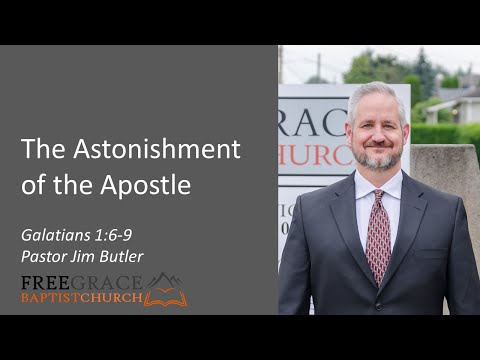
Paul's opening salvo in Galatians 1:6–9 registers apostolic astonishment at the speed with which the Galatian churches were deserting the gospel of free grace for a Judaizing supplement of circumcision and Mosaic law-keeping. The sermon expounds why any addition to the finished work of Christ — however small — is not a variation of the gospel but its outright denial, because a man must choose either perfect law-keeping or the wholly sufficient righteousness of Christ received by faith alone. The anathema Paul pronounces in verses 8–9, drawn out through the Hebrew concept of ḥērem and its New Testament cognate anathema, exposes the perverter of the gospel not merely to church discipline but to the judicial wrath of God. The sermon closes with an urgent call to doctrinal vigilance: to resist indifference, imprecision, compromise, and novelty, and to hold fast to justification by faith alone as the very heart of the Christian religion.

The Promise of the Conquest
Exodus 23:20–33 records God's promises and warnings to Israel on the eve of the conquest of Canaan. The passage presents God as the divine initiator of the conquest — sending the Angel of the Lord (identified as the pre-incarnate Christ) to guide and fight for Israel — and then enumerates blessings contingent on covenant obedience: provision, health, fruitfulness, and the gradual dispossession of the Canaanites. The sermon exposes the Mosaic covenant as a covenant of works in which blessings follow obedience and curses follow infidelity, and closes by contrasting Israel's inevitable failure under that arrangement with the covenant of grace secured by Christ on behalf of his people.

The Preservation of Love and Unity
Ephesians 4:1–3 opens Paul's extended practical section (chapters 4–6) with a call to walk worthy of the effectual calling by which God has saved His people. This sermon expounds the three virtues—lowliness, gentleness, and long-suffering—that must characterize the redeemed, and the two corresponding conducts—bearing with one another in love and zealously keeping the unity of the Spirit in the bond of peace—that follow from those virtues. The theological order is insisted upon throughout: justification precedes sanctification, the indicative grounds the imperative, and none of these commands are the basis of salvation but the fruit of it. The practical burden is that disunity, bitterness, and the failure to pursue reconciliation according to Matthew 18 or to let love cover offenses according to 1 Peter 4 grieves the Holy Spirit and undermines the church's witness as the end-time temple of God.

The Freedom in Receiving the Son
John 8:30–36 sets before the reader a sharp contrast between the blessedness of spiritual liberty and the wretchedness of spiritual slavery. This sermon expounds the theological order of salvation — justification by grace alone through faith alone precedes and produces the disciple's abiding in Christ's word, not the reverse — and then traces what that freedom means: deliverance from the curse of the law, the condemnation of sin, the wrath of God, and the tyranny of the devil. The church's calling to be the pillar and ground of the truth (1 Timothy 3:15) demands that she identify, propagate, contend for, and protect that truth in every generation.
2LCF Chapter 20 - Of the Gospel and of the Extent of the Grace Thereof
2 London Baptist Confession of Faith Chapter 20, 'Of the Gospel and of the Extent of the Grace Thereof,' addresses a chapter absent from the Westminster Confession but added by the Congregationalists in the Savoy Declaration and retained by the Particular Baptists to combat incipient deism and the General Baptist doctrine that sinners may be saved through general revelation alone. The sermon traces the chapter's four paragraphs through Romans 10, Luke 24, John 5, and Psalm 19 to demonstrate that the gospel of Christ has been the sole substance of special revelation since the protevangelium of Genesis 3:15, that general revelation is categorically insufficient to make Christ known, that God distributes gospel light with absolute sovereignty, and that effectual grace is indispensable alongside that revelation for the conversion of dead sinners. The double theme of the chapter — the necessity of special gospel revelation and the necessity of the Spirit's insuperable work — magnifies divine grace, grounds the missionary enterprise, and exposes the doctrine-of-sin deficiencies latent in every scheme that allows salvation apart from hearing Christ proclaimed.

2LCF Chapter 19 - Of the Law of God, Part II
The moral law of God — given to Adam at creation, codified at Sinai in the Ten Commandments, and written on the hearts of New Covenant believers — perpetually binds all people everywhere, justified and unjustified alike, by virtue of God's authority as Creator. This study of 2LCF Chapter 19, paragraphs 5–7, works through 1 Timothy 1:8–10 to distinguish the three uses of the law (civil, pedagogical, and normative) and expounds Jeremiah 31, Matthew 5, Romans 3, Romans 6, Galatians 3, Romans 13, and Ephesians 6 to demonstrate that Christ and the gospel do not dissolve but rather strengthen the law's obligation. The session exposes the errors of dispensationalism and antinomianism, showing that the Spirit of Christ enables believers to obey freely and cheerfully the very law that condemns the unbeliever. The application presses Christians to declare God's law publicly — to believers for sanctification and to unbelievers for conviction — never separating law from gospel in proclamation.

The Woman Caught in Adultery
John 8:1–11 presents the Pharisees placing Christ on the horns of a dilemma: uphold the law of Moses and condemn the woman caught in adultery, or show compassion and be exposed as an antinomian. This sermon works through the passage in two movements — the woman brought to Christ (vv. 1–6) and the woman forgiven by Christ (vv. 7–11) — demonstrating that Jesus resolves the dilemma not by choosing one horn but by upholding both simultaneously. He appeals to the Mosaic witness laws of Deuteronomy 17 and 19 to silence the hypocritical accusers, then pronounces forgiveness, illustrating that the gospel pattern is 'get and do' rather than 'do and get.' The passage stands as a vivid display of Christ as both the holy lawgiver who writes with his finger and the friend of sinners who bids the thirsty come and drink.

2LCF Chapter 19 - Of the Law of God
The law of God — its origin, divisions, and enduring obligations — is examined through 2LCF Chapter 19, tracing the moral law from its inscription on Adam's heart in the garden through its codification at Sinai and into the life of the justified believer. The confession distinguishes three categories of Mosaic law: the perpetually binding moral law, the abrogated ceremonial law, and the expired judicial law whose general equity retains moral usefulness. A sustained argument from Galatians demonstrates that the law's demand is personal, entire, exact, and perpetual obedience — a standard no sinner meets — establishing the absolute necessity of justification by faith alone in Christ alone. The session closes with Machen's warning that a low view of the law produces legalism rather than grace, pressing the congregation to preach the Decalogue faithfully so that sinners see their need for the Savior.

The Gentiles and the Covenant of Grace, Part 1
Ephesians 2:11–13 presents the former covenantal destitution of Gentile believers and the transforming power of Christ's blood that brought them near to God. The passage shows that Gentiles suffered two compounding liabilities: individual deadness in sin and corporate exclusion from the commonwealth of Israel and the covenants of promise. Against this bleak background, the apostle's 'but now' in verse 13 declares that union with Christ — secured through his atoning blood — has abolished the alienation and incorporated believing Gentiles into the one new humanity. The sermon argues that this covenantal reversal should evoke perpetual humility and gratitude in every believer, and calls the unbeliever to come to the Father through the Son in the Spirit.

The Saving Grace of God, Part 3
Ephesians 2:8–10 demolishes every notion that the sinner contributes to his own salvation, whether by supplying the faith or by bringing meritorious works. This sermon works through the passage in two movements: the application of redemptive grace in verses 8–9, where salvation is shown to be by grace alone through a faith that is itself God's gift and not the sinner's offering, and the consequence of redemptive grace in verse 10, where the good works of the justified are presented not as the cause or condition of salvation but as its God-prepared effect. The controlling purpose is doxological — that in every age where sinners are saved, the exceeding riches of God's grace in Christ Jesus are displayed, and God alone receives the glory.

The Saving Grace of God, Part 1
Ephesians 2:1–3 confronts the reader with a precise diagnosis of humanity's condition apart from saving grace: spiritual death in Adam, slavery to the world-system, subjection to Satan, and liability to the wrath of God. The sermon grounds this diagnosis in the covenant of works, the doctrine of original sin, and the federal headship of Adam, drawing on Romans 5 and 1 Corinthians 15 to show that all humanity stands condemned either in Adam or justified in Christ. Total depravity is shown to be comprehensive — corrupting not only outward conduct but the mind and heart — making sovereign grace the only remedy for sinners who are, apart from Christ, lifeless, helpless, and hopeless.
2LCF Chapter 16 - Of Good Works, Part 1
Good works in the Christian life must be carefully defined, grounded, and distinguished from every meritorious scheme if the glory of Christ is to be preserved. This study of 2nd London Baptist Confession chapter 16 works through the definition of good works (their substance, manner, and definitive character as fruits and evidences of a lively faith), the necessary foundation of good works in the enabling power of the Holy Spirit, and the non-meritorious nature of good works as plainly asserted in Romans 3 and Galatians 2. The central burden is that no work of the creature — however sincere, however commanded — can merit pardon of sin or eternal life before God, because the only works that avail with divine justice are the active and passive obedience of Christ alone imputed to the believer by faith.

The Conversion of Matthew
Matthew 9:9–13 records the sovereign call of a tax collector — among the most despised and morally compromised figures in first-century Jewish society — to follow Christ and ultimately to author the first Gospel. The sermon works through three movements: Christ's effectual call of Matthew to discipleship, the feast Matthew hosts to honour Christ and evangelize his associates, and the confrontation with the Pharisees in which Jesus declares the nature of his mission — not to call the self-righteous but sinners to repentance. The account is pressed into seven marks of genuine discipleship, closing with an appeal to the unconverted to look to Christ as the great physician of sin-sick souls.

The Commissioning of the Servant of Yahweh

Isaiah 42:1–13 presents the first servant song of Isaiah as Yahweh's formal commissioning of his servant — the Lord Jesus Christ — to bring righteous rule, freedom from spiritual darkness, and universal dominion to the Gentiles. The sermon traces three movements: the presentation of the servant in his humility, compassion, and unfailing determination (vv. 1–4); the mission given to him by Yahweh the Creator, including the gift of an everlasting righteousness and conquest of the kingdom of darkness (vv. 5–9); and the victorious global praise that flows from his completed mission (vv. 10–13). The listener is called either to look to Christ in faith as the one who will not break a bruised reed, or to reckon soberly with the warrior-king who will prevail against every enemy that remains in rebellion.
2LCF Chapter 7 - Of God's Covenant
Covenant theology stands or falls on the careful distinction between the covenant of works, the covenant of grace, and the historical covenants that progressively reveal it. This lesson works through 2LCF Chapter 7, tracing the terms, parties, and rewards of each covenant from Adam through the Abrahamic and Mosaic administrations, and grounding the whole in the eternal covenant of redemption between the Father and the Son. The controlling argument is that the Abrahamic covenant — entered by natural generation, maintained by works, and breakable — cannot be identified with the covenant of grace, and that this distinction exposes the internal contradictions of paedobaptist covenant structures. The practical takeaway is that salvation has always been by grace through faith alone, because Christ as the second Adam is the only one who has met and can meet the terms of the covenant of works on behalf of the elect.

The New People of God, Part 1
What does it mean for the church to be built on Christ as a living cornerstone, and how does the Old Testament ground that identity? Expounding 1 Peter 2:6–8, this sermon traces the biblical-theological arc from Adam's failed dominion mandate in Genesis through Israel's typological history—law-giving, exile, and restoration—to the fulfilment of Isaiah's cornerstone prophecy in the Lord Jesus Christ. Israel's covenant history is shown to be a historical type of the cosmic reality: the broken covenant of works and its restoration by the Messiah, who is now building a global kingdom of redeemed image-bearers out of every tribe and tongue. Believers are called to marvel at God's sovereignty over history, over the kingdom of darkness, and over the unified message of Scripture that runs from Genesis 3:15 to the church as the true Israel of God.

The Glorious Gospel of Jesus Christ
How can a perfectly just God forgive guilty sinners without compromising his justice? Romans 3:21–28 answers that question by tracing the righteousness God provides in the gospel: revealed in Christ, received through faith, and grounded in a propitiatory sacrifice that fully satisfies divine justice. The sermon expounds the forensic declaration of justification, the redemption accomplished by Christ's blood, and the vindication of God's righteousness at the cross — showing that boasting is excluded entirely because the righteousness that avails before God is supplied by Christ alone and received freely by grace through faith. Hearers are called to trust in Christ's finished work as the sole ground of their standing before God, and to come to the Lord's Supper remembering that in our place condemned he stood.

The Greatest Commandments
Matthew 22:34–40 records a Pharisaic lawyer testing Jesus with the question of which commandment is greatest. Jesus answers by citing the Shema from Deuteronomy 6:4–5 and the neighbor-love command from Leviticus 19:18, thereby summarizing the entire Decalogue under two heads: love to God and love to man. This sermon argues that Christ's endorsement of these two commandments confirms the abiding validity of the moral law for New Covenant believers, who are called to keep it not as a means of justification but as the Spirit-wrought response of those already justified by faith alone. The hearer is pressed to recognize that the law's demand — to love God with the whole self and the neighbor as oneself — drives the believer perpetually to Christ, in whom alone that demand has been perfectly met.

Book introduction: The Mystery of Christ, His Covenant, and His Kingdom
Samuel Renihan introduces his book 'The Mystery of Christ, His Covenant, and His Kingdom,' explaining its origins in his seminary-era dissatisfaction with both pedobaptist and Baptist covenantal literature. He argues that historical particular Baptist covenant theology has been largely forgotten, and that modern Reformed Baptist literature has suffered from poor historical theology, excessive polemicism, and conclusions stated without premises. The book is structured by biblical theology rather than systematic theology, tracing three covenantal kingdoms — creation, Israel, and Christ — and contends that the concept of mystery in Paul is essential to a properly calibrated covenant theology that distinguishes the old covenants from the new covenant without collapsing the progressive development of divine revelation.