
Theological term
Covenant of Redemption
282 sermons · All terms

The Trial Before Pilate, Part 3

Matthew 27:24–26 records the sentencing of Jesus by Pontius Pilate — the culmination of a trial in which the governor thrice declared the accused innocent yet delivered him to crucifixion anyway. The sermon examines Pilate's hypocritical self-absolution by the washing of hands, the crowd's willing acceptance of blood-guilt and its ominous extension to their children, and the formal scourging and condemnation of Christ. Throughout, the exposition presses the double benefit of the gospel: the forgiveness of sins and the imputation of Christ's righteousness received by faith alone, both grounded in the penal substitutionary atonement symbolised by Barabbas going free while the just one goes to the cross.

The Mission of the Word, Part 1
John 1:6–9 introduces John the Baptist not as an independent figure but as a divinely commissioned witness whose entire ministry exists to point to the Word made flesh. This sermon examines the origin, nature, and function of that witness ministry, demonstrating that the Baptist's testimony belongs to a network of overlapping witnesses — Father, Son, Holy Spirit, Scripture, and signs — that ground saving faith in historical reality rather than a blind existential leap. The function of John's witness is inseparable from its purpose: that sinners would believe on Christ as the Lamb of God who takes away the sin of the world, not merely imitate him as a moral example. The sermon closes with a call to keep law and gospel in their proper places, so that sinners driven by the law's killing power may look by grace to the one who is both the true light and the only hope of the world.

The Trial before Pilate, Part 1
Matthew 27:11–14 records the first stage of Jesus' trial before Pontius Pilate — his interrogation by the Roman governor. The passage unfolds in three movements: Pilate's opening question and Christ's guarded affirmation that he is indeed King of the Jews, the formal accusations brought by the chief priests and elders against which Jesus remains silent, and Pilate's astonished second question met again with silence. Christ's silence before Pilate is not passivity but purposeful obedience — fulfilling the fourth servant song of Isaiah 53 and accomplishing the active righteousness that is imputed to his people in justification. The sermon drives toward the twin realities of forgiveness and positive imputation: Christ's silence secured not only the remission of sins but the righteousness that avails with God, so that his people stand before the Father clothed in another's merit rather than their own.

The Empty Tomb and the Risen Lord
Matthew 28:1–10 narrates not the resurrection itself but the discovery of the empty tomb and Christ's first post-resurrection appearance — and the distinction matters theologically. This sermon works through the arrival of the women, the descent of the angel, the angelic announcement, and Christ's own greeting, demonstrating that the resurrection is attested historical fact whose denial collapses justification, undermines the prophetic witness, and renders the Christian hope pitiable. The risen Christ's address to the women — calling the disciples 'my brethren' despite their desertion — is shown to be a concentrated display of the grace and advocacy that sustains every believer who has sinned against the Lord he professes to love.

The Cross Predicted and Rejected

Mark 8:31-33 records Jesus' first explicit prediction of His suffering, death, and resurrection — a proclamation that shattered every nationalist expectation of a triumphant Messiah. The sermon works through two movements: the cross predicted (vv. 31-32a), where Jesus identifies Himself as the suffering Son of Man whose death and resurrection were decreed by God from eternity, and the cross rejected (vv. 32b-33), where Peter's rebuke earns the reply 'Get behind me, Satan' because man's thoughts about the Messiah stand in direct opposition to God's. Rooted in Isaiah 53, Daniel 7, Hosea 6, and Psalm 118, the exposition argues that penal substitutionary atonement — the Son of Man bearing the wrath sinners deserve — is the only ground of eternal life, and that the same Christ who prepared His disciples for His own suffering now calls His people to take up their crosses in this present evil age.

The Lord's Arrest in the Garden
Matthew 26:50–56 records the arrest of Jesus in Gethsemane, and this exposition works through four movements in the passage: Peter's misguided sword-stroke, Christ's rebuke concerning the nature of the messianic kingdom, his rhetorical indictment of the mob's hypocrisy, and the disciples' desertion. The sermon shows that Christ's surrender was entirely voluntary, governed by the covenant of redemption and the fulfillment of prophetic Scripture, not by any inability to resist. Hearers are warned against mistaking external proximity to Christ for saving grace, called to zeal tempered by theological knowledge, and directed to the Lord's Supper as an occasion to 'kiss the Son' in faith rather than in the betrayal of a Judas.

The Lord's Betrayal in the Garden
Matthew 26:47–50, read alongside John 18:1–11, presents the betrayal of the Son of God in Gethsemane as the arrival of the cup of divine wrath — the hour for which he came. The sermon traces three aspects of the betrayal: its significance as the fulfillment of prophecy and the onset of Messianic suffering, the diabolical plan coordinated by Judas and the religious leaders, and the execution of that plan through a hypocritical kiss. The exposition then turns to John 18 to show that even as Christ surrendered, he revealed his divine identity by the words 'I Am,' causing the armed mob to draw back and fall to the ground — a display of the glory that will be fully manifested at his return. The central application is twofold: believers are called to stand in awe of the active obedience and voluntary self-surrender of Christ whose righteousness is imputed to them, and unbelievers are warned that the only preparation for facing that glory is faith in the Lord Jesus Christ.
Nations Rage, God Mocks
Psalm 2 confronts the rage of earthly rulers against God and His anointed with a sober theological question: why do the nations engage in so futile an endeavor? The sermon expounds the psalm under three headings — the rebellion of earthly kings, the reign of the heavenly king, and the recognition of the true king — tracing the Davidic covenant through its fulfillment in the resurrection and exaltation of Christ. The Covenant of Redemption grounds the certainty of Christ's present reign at the right hand of the Father, and that certainty is the sole comfort available to God's people as nations continue to rage and the history of the church runs red with the blood of martyrs. Hearers are called either to kiss the Son in filial fear and find blessing, or to perish in the way of the ungodly.

The Lord's Prayer in Gethsemane
What does the agony of Christ in Gethsemane reveal about who He is and what He accomplishes? Expounding Matthew 26:36–46, this sermon traces the Savior's three prayers against the disciples' repeated failure to watch, showing that Christ's soul-sorrow is perfectly consistent with His true humanity, while His unwavering resolve to drink the cup of divine wrath flows from His eternal commitment as covenant mediator. The cup is not metaphor for mere suffering but the concentrated fury of God upon a sinless substitute — which explains both why martyrs die differently than Christ and why the imputation of His active obedience is as necessary as the forgiveness of sins. Believers are called to marvel at His sufficiency, to watch and pray with sobriety about their own weakness, and to rest entirely on the righteousness of Another.

The Prediction of Desertion and Denial
Matthew 26:31–35 records Jesus predicting both the desertion of all His disciples and the specific denial of Peter on the night of His arrest. The passage demonstrates that the salvation accomplished at the cross was entirely the work of Christ alone — His friends fled, leaving no horizontal assistance — and that Scripture, citing Zechariah 13:7, had appointed this scattering from eternity. The sermon draws out the persistent problem of remaining corruption in the regenerate: the pride, self-confidence, and lofty self-assessment that Peter epitomizes are not unique to him but are symptomatic of all God's people. The remedy is not stronger resolution but a biblical self-assessment that drives the believer away from confidence in the flesh and toward continual dependence on the grace and Spirit of God.

Introduction to the Book of Exodus
The book of Exodus is not a standalone document but the second movement of the Pentateuch, continuing the story of the covenant people from Genesis through to their deliverance from Egypt, the giving of the law at Sinai, and the construction of the tabernacle. This introductory study surveys the book's structure through three themes — deliverance, demand, and dwelling — and traces how each anticipates Christ: Moses as covenant mediator prefiguring the greater Mediator, the Passover lamb pointing to the sacrifice of Christ, and the tabernacle foreshadowing the incarnation. The threefold division of God's law (moral, judicial, ceremonial) is explained with reference to the 1689 London Baptist Confession of Faith, with particular attention to why the moral law remains perpetually binding while the judicial and ceremonial laws have expired. The study closes by applying the Immanuel principle — that God redeems his people in order to commune with them — to the corporate worship of the New Covenant church.

Genesis 49
Genesis 49 presents Jacob's deathbed blessings and prophetic declarations over each of the twelve tribes of Israel, reaching its theological apex in the Shiloh prophecy of verses 8–12, which identifies the tribe of Judah as the royal line from which Messiah will come. The scepter's promised continuity in Judah until 'Shiloh comes' is shown to anticipate not only David's dynasty but the obedience of all peoples — Jew and Gentile — to the Lord Jesus Christ, the Lion of the tribe of Judah. Jacob's closing instructions concerning his burial in the cave of Machpelah reaffirm Israel's legal title to the promised land and underscore that Egypt is only a sojourn, not a destiny. The chapter closes with a call to confidence in God grounded in a lifetime of witnessed divine faithfulness, expressed in Jacob's peaceful death and his declaration, 'I have waited for your salvation, O Lord.'

The Manifestation of God's Grace
Titus 2:11–15 presents God's grace not merely as the ground of salvation but as the very teacher of holy living. This exposition traces four aspects of grace in the passage: its appearance in the incarnation and atoning work of Christ, its instruction toward denial of ungodliness and worldly lusts and pursuit of sober, righteous, and godly life, its demonstration in the deity of the returning Christ and the definite redemption he accomplished, and its proclamation through authoritative gospel ministry. The controlling hermeneutical key is the grammatical and theological priority of the indicative over the imperative: believers obey not in order to be saved but because they have been saved, and inverting that order collapses the gospel into moralism.
The Introduction to the Book of Titus
Titus 1:1–4 contains one of Paul's longer epistolary introductions, and the reason is pastoral and strategic: Paul is authenticating the ministry of Titus among a difficult, newly-planted congregation on Crete by anchoring his own apostolic authority in the eternal decree of God. The sermon surveys the historical and biographical background of the pastoral epistles before working through Paul's self-designation as bondservant and apostle, his two-fold apostolic purpose (the salvation and sanctification of God's elect), and the grounding of that purpose in the covenant of redemption purposed before time began. The greeting's triad of grace, mercy, and peace — flowing from both God the Father and the Lord Jesus Christ, each called 'Savior' — opens a rich vein of covenant theology, Christology, and soteriology that will run through the entire book.

The Enthronement of the Messiah
Psalm 110 presents the enthroned Messiah as divine King, eternal Priest, and triumphant Conqueror — a vision the early church clung to precisely because they suffered under Rome and unbelieving Israel. This exposition traces the three offices of the Mediator through seven verses, showing that Christ's present session at the right hand of the Father is not a passive waiting but an active subjugation of all enemies. The sermon rebukes a domesticated, sentimental Christology and calls believers to confident, volunteer service under the sovereign who must reign until every enemy is made his footstool.

Genesis 27
Genesis 27 presents the deception of Isaac by Rebekah and Jacob to secure the patriarchal blessing, and a careful reading reveals that every member of the family acts in an unprincipled manner — yet God's covenantal promise advances without interruption. The blessing conveyed upon Jacob is the Abrahamic covenant itself being passed to the son of promise, a line that runs through Israel and terminates in the Lord Jesus Christ as the seed of Genesis 3:15. Ambrose's allegory, endorsed by Calvin, illuminates the typological force of the episode: as Jacob entered the presence of his father clothed in borrowed garments carrying their distinctive odor, so believers enter the presence of the heavenly Father clothed in the imputed righteousness of Christ. The chapter is a sustained argument for the sovereignty of divine election and the grace of God, which operates not because of human virtue but in spite of its spectacular absence.
The Sovereignty of God
Proverbs 3:19–20 grounds God's sovereignty not merely in creation but in every sphere of existence — the world was founded by divine wisdom, and that same sovereign wisdom governs all of history and secures the redemption of His people. Drawing widely from Proverbs alongside Genesis, the Psalms, Daniel, and Romans, this sermon traces three distinct expressions of God's sovereignty: His free, unconstrained creation of all things; His comprehensive providence over human affairs including civil government; and His eternal purpose in redemption, centred in the pre-existent Christ of Proverbs 8. The practical force of the message is that divine sovereignty — rightly understood — produces neither fatalism nor hyper-Calvinist passivity, but rather deep comfort, stable faith, and the use of appointed means, all to the glory of God.

Free Grace Baptist Church - April 3, 2019 Bible Study
Genesis 17 presents the formal ratification of the covenant of circumcision with Abraham and his descendants, distinguished carefully from the covenant of grace revealed within it. The sermon traces the progressive enhancement of God's promises — seed, fruitfulness, kings, land, and the covenant formula 'I will be their God' — while insisting that the covenant of circumcision operates simultaneously on physical and spiritual levels without the two being conflated. Drawing on Galatians 3–5 and Nehemiah Cox, the exposition argues that to identify the covenant of circumcision with the covenant of grace is an exegetical misstep that yields infant baptism and mingles the law principle with the grace principle in a way the Apostle Paul expressly forbids.

The Inclusion of Wretches in God's Covenant
Ephesians 2:1–10 presents the full arc of redemption — from the total deadness of sinners to their gracious vivification in Christ — and this exposition traces that arc through the origin, objects, and execution of salvation. The sermon grounds the covenant of grace in the prior covenant of redemption (Ephesians 1:3–14), showing that the Father's election, the Son's redemption, and the Spirit's sealing together exclude every contribution of the sinner. Salvation is by grace alone through faith alone, with faith itself a gift conveyed by God to the spiritually dead — not a human instrument brought to the table that God then rewards. The exposition closes by distinguishing justification from sanctification and warning against both Roman Catholic and Federal Vision distortions of grace, anchoring the believer's final acceptance before God solely in the active and passive obedience of Christ.
The Great Commission
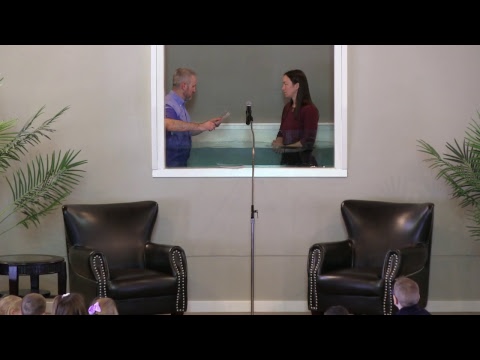
Christ's Great Commission in Matthew 28:18–20 provides the church with her complete marching orders: go, make disciples, baptize those disciples, and teach them to observe all that Christ commanded. The authority behind the commission belongs to the risen and exalted Christ, who possesses all authority in heaven and earth; the assurance sustaining it is His promise of perpetual presence to the end of the age. The sermon treats the specific focus of the commission in sequence, defending believers' baptism by immersion as the pattern demanded by the text and the order it establishes — make disciples first, then baptize — against both baptismal regeneration and paedobaptism. The Trinitarian formula of baptism occasions an extended treatment of theology proper, including divine simplicity, impassibility, and the unity of essence in three persons, with warnings against tritheism, modalism, and subordinationism.
The Glory of the Father and the Son
John 17:1–5 opens Christ's high priestly prayer with a petition that the Father glorify the Son so that the Son may glorify the Father — a reciprocal glorification whose goal is the glory of God Most High. The sermon works through three grounds for this petition: the salvation of the elect given to the Son in the covenant of redemption, the accomplishment of Christ's active and passive obedience as the basis of justification, and the restoration of the Son's pre-incarnate glory. The full deity of Christ is defended against subordinationist readings by surveying New Testament texts where the title theos is applied directly to Jesus, and the sermon closes with the call to pursue the knowledge of God and Christ as the very essence of eternal life — through Scripture reading, prayer, and faithful attendance upon the means of grace.

The Thief on the Cross

The salvation of the dying thief in Luke 23 is examined as one of the most concentrated demonstrations of vital theology in all the gospel narratives, showing that salvation is by grace alone through faith alone in Christ alone and that the sufficiency of Christ's atoning work requires no supplementary priesthood or sacrifice. The sermon moves through the sobering inscription over Christ's cross, the unrepentant blasphemy of the cursed robber as a window into total depravity, and the remarkable conversion of the penitent thief — a reviler turned praiser — as evidence of sovereign, effectual grace. The thief's confession is shown to be theologically substantive: he acknowledges the fear of God, owns the justice of his condemnation, confesses Christ's innocence, and calls upon Christ as Lord and King. Hearers are called to remember their former state of spiritual bondage, to glory in the amazing grace that has brought them from reviling to worshiping, and to rest in Christ's word to the thief — 'today you will be with me in paradise' — as a word addressed to all who trust in Him.

A Psalm of the Cross
Psalm 22 is a prophetic psalm of David that transcends David's own experience to describe with precision the suffering, death, and exaltation of the Messiah. The sermon examines the cry of dereliction ('My God, my God, why have you forsaken me?') with theological care, rejecting the notion that the Father abandoned the Son in any way that ruptured the Trinity or dissolved the hypostatic union, and instead grounding the forsakenness in the Son's substitutionary bearing of the wrath due his people. Three features of Messianic confidence sustain Christ through his ordeal — the holiness of God, the past faithfulness of God, and the invoked presence of God — and the congregation is called to meet their own trials with the same theological ballast that sustained the Savior on the cross.

The Exaltation of Christ
Peter's Pentecost sermon in Acts 2:33–36 reaches its climax in the exaltation of Christ to the right hand of the Father. This exposition works through three movements: the supreme dignity conferred on Christ at his ascension, the fulfillment of Psalm 110:1 as ancient prophecy now openly vindicated, and the unavoidable implication for guilty hearers that this Jesus whom they crucified is both Lord and Christ. The current session of Christ — his ongoing reign, intercession, gathering of the church, and conquest of every enemy — is pressed as the ground of the believer's confidence and the urgent call for the unconverted to repent and call upon the name of the Lord.

The Purpose of the Proverbs
Proverbs 1:2–7 sets out both the purpose and the prerequisite of the entire book of Proverbs. The purpose is comprehensive — to impart wisdom, instruction, and just judgment to the simple, the young, the wise, and every condition of man — while the prerequisite is singular: the fear of the Lord, which is not a natural attainment but a gracious work of God in the soul. The fear of God is shown to be the epistemological foundation of all true knowledge, the animator of righteous conduct, and the preserver of the soul — available only through repentance and faith in the Lord Jesus Christ, the one greater than Solomon in whom all the treasures of wisdom and knowledge are hidden.

Genesis 2:15-17
Genesis 2:15–17 presents Adam not merely as a gardener but as a priest-guardian of a garden-temple, placed under a divine probation that Reformed theology identifies as the Covenant of Works. The study defends the presence of a genuine covenant in this passage despite the absence of the word 'covenant,' marshalling the elements of covenant structure, the covenantal name Yahweh Elohim, and later biblical commentary in Hosea 6:7, Isaiah 24, and Romans 5. The argument presses to a pointed soteriological conclusion: a deficient understanding of the Covenant of Works predictably produces a deficient understanding of the Covenant of Grace, opening the door to the error of faith plus works in justification. The remedy is to see the Covenant of Grace as the Covenant of Works kept for sinners by the Lord Jesus Christ, whose active and passive obedience is imputed to all who believe.

The Liberality of God and the Believer's Security
Romans 8:31–39 confronts the believer with a single overwhelming argument: because the Father did not spare His own Son but delivered Him up for all the elect, He will most certainly freely give them everything else they need. The sermon works through three movements — the declaration of God's liberality in the gift of His Son, the implication that every lesser need is thereby guaranteed, and the application to the believer's unassailable security against accusation, condemnation, and separation. Drawing on the language of propitiation, penal substitution, and the Ordo Salutis, the exposition insists that the believer's confidence rests not on personal virtue or perseverance but on the justifying grace of God and the interceding, unchanging love of Christ.

The Defense of the Faith
Jude 3 issues a universal call—addressed not to clergy alone but to every believer, the 'beloved'—to contend earnestly for the faith once for all delivered to the saints. The sermon works through three movements: the exhortation itself and its five implications, the reason for that exhortation in the apostates of verse 4, and the practical preparedness of the contender outlined in verses 20 and 21. Doctrinal fidelity is not optional maintenance for specialists; it is the privilege and duty of every member of the covenant community, sustained by Scripture reading, prayer, and a constant looking to Christ. The sermon closes with a direct call to the unconverted to flee to the Lord Jesus Christ, in whom alone forgiveness of sins and the imputation of his righteousness are received by faith alone.

The Empty Tomb and the Risen Lord
The empty tomb of Matthew 28:1–10 is not merely an absence but a proclamation: Christ was raised bodily from the dead by the Father, vindicating His atoning work and confirming every prophetic word He spoke. The sermon works through the discovery of the empty tomb by the women and the appearance of the risen Lord, attending carefully to the apologetic weight of the narrative details — the guards' terror, the invitation to examine the tomb, the folded graveclothes, and the physical feet of Jesus grasped in worship. The message closes with 1 Corinthians 15, pressing the stakes of the resurrection: without it, faith is futile and sin remains unatoned; because Christ is risen, justification, sanctification, and glorification are secured for all His brethren.
I Am the Gate of the Sheep
How does a sinner enter into heaven? John 10:7–10 presents Christ's self-declaration 'I am the door of the sheep' as the exclusive answer to that question, set against the backdrop of Israel's false shepherds (Ezekiel 34; Jeremiah 23) and the Pharisees who taught salvation by works. The sermon expounds two contrasting realities: the false entrance into heaven pursued by thieves and imposters who climb in by their own merits, and the right entrance secured by Christ alone — the one gate through whom his elect sheep receive salvation, covenant security, and everlasting pasture. The application presses both the unbeliever to look to Christ as the only narrow way and the believer to rest in the security and nourishment that the Good Shepherd provides for all who enter through him.