
Theological term
Church Discipline
64 sermons · All terms

Free Grace Baptist Church - April 21, 2019 PM
Ephesians 4:7–16 presents the ascended Christ as the sovereign giver of gifts to his church — gifts that are men appointed to the ministry of the Word. This exposition argues that the purpose of those gifts is not to provide an outlet for individual expression but to bring about corporate maturity, doctrinal stability, and Christlikeness among the people of God. Listeners are pressed to examine whether they genuinely value word-based ministry, hold fast to the unity of the faith, and live as model members of Christ's new-creation temple.
The Judgment of God in the Early Church

Acts 5:1–11 records the deaths of Ananias and Sapphira, struck down by God for lying to the Holy Spirit. This sermon works through the passage under two headings: the deceitfulness of the couple (vv. 1–4) and the death they suffered by God's direct judgment (vv. 5–11). The preacher grounds the episode in a high doctrine of God — holy, just, and a consuming fire — and insists that the primary practical lesson is the fear of God, not merely ethical instruction about honesty. The sermon closes with the gospel: no one can stand before this holy Lord God except Christ alone, and all who are savingly united to Him by faith stand in Him.

The Importance of Keeping the Heart
Proverbs 4:23–27 commands God's people to keep their hearts with all diligence, because the heart is the source from which all conduct flows — mouth, eyes, and feet are merely its outlets. Drawing on the warnings of Jeremiah 17:9, the illustrations of Proverbs 7, and Christ's own teaching in Matthew 15, this exposition argues that total depravity makes diligent heart-keeping not optional but urgent. The sermon closes by pressing that this command can only be obeyed through constant dependence on God's Word and Spirit, and that apart from Christ we can do nothing.

Of Good Works (2LCF16.13)
Matthew 7:1, 'Judge not that you be not judged,' is one of the most frequently misapplied verses in Scripture, often weaponized to prohibit every form of ecclesiastical discernment and render church discipline illegitimate. This session from a study of the 1689 London Baptist Confession examines 2LCF 26.13 on the conduct of the offended church member, then exegetes Matthew 7:1–6 to show that Christ forbids a nitpicking, censorious, fault-finding spirit toward fellow believers — not the lawful exercise of judgment required by Matthew 18, 1 Corinthians 5, and 1 Timothy 5. The positive application calls believers to mortify the censorious plank in their own eye, apply biblical law rather than personal preference to matters of judgment, cultivate humility, and look to Christ and his gospel as the continual remedy for self-righteousness.

2LCF Chapter 26 - Of the Church, Part 12
Church discipline is not an optional appendage to church life but one of the three marks of the true church, alongside pure preaching and right administration of the sacraments. This exposition of 2LCF 26.12 and Matthew 18:15 establishes first that formal church membership is a biblical obligation for all believers — evidenced from Acts, Hebrews, and the Thessalonian epistles — and then that membership entails real liability to the church's censures and government. The sermon focuses on the first step of Matthew 18's disciplinary process: private confrontation, its proper aim (winning a brother), its proper disposition (humility, love, and a willingness to be shown a misunderstanding), and the complementary obligations of the one being rebuked.

The Preaching of Peter on Pentecost
Acts 2:37–42 records the first gospel sermon of the apostolic church and the conversion of three thousand souls on the day of Pentecost. This exposition works through Peter's proclamation — centering the gospel in the life, death, resurrection, and ascension of Christ — and his call to repentance and baptism, showing that sin must be named plainly before the Savior can be received gladly. The sermon draws on John Bunyan's 'The Jerusalem Sinner Saved' to press the point that Christ's mercy is offered most conspicuously to the vilest of sinners, and closes with a direct call to believe, repent, and be baptized.

The Denial of Christ by Peter
Peter's threefold denial of Christ in Matthew 26:69–75 exposes both the anatomy of a disciple's fall and the magnitude of divine grace that restores the fallen. The sermon traces Peter's descent from evasive mumbling to sworn denial, showing how self-confidence, prayerlessness, and neglect of the Word prepared him for catastrophic failure before a servant girl. The contrasting thread throughout is the mercy of Christ — his look of 'sorrow, pity, love, and forgiveness' — which, together with the remembered word, brought Peter to godly repentance and eventual restoration. Hearers are exhorted to watch and pray, to hide the Word in their hearts, and to flee to the Christ who does not cast out those who come to him.

The Prohibition Against Judgmentalism
Matthew 7:1–5 contains not a universal ban on discernment but a precise prohibition against the censorious, fault-finding spirit that delights in the shortcomings of others. Working through three movements — the prohibition itself, Christ's explanation of its consequence, and the plank-and-speck illustration — the sermon establishes that judgmentalism is a serious sin condemned by Christ on the Mount, one attended by self-righteousness, a lack of charity, and a practical denial of remaining corruption in oneself. The application calls believers to seek the Spirit's influence, apply biblical law evenhandedly, pursue humility, and let the cross be the death knell of self-righteousness.

Free Grace Baptist Church - July 31, 2016 PM
Psalm 67 is a missionary psalm framing the church's reception of divine mercy, blessing, and communion not as ends in themselves but as the grounds and means of global gospel proclamation. Working through the psalm's two movements — the petitions of verses 1–5 and the promises of verses 6–7 — the sermon argues that the church's prayer for herself is inseparable from her obligation to make the way of God known among all nations. The application is pointed: the church's mission is the proclamation of salvation by grace alone through faith alone in Christ alone, and she must pray the psalms boldly, believing that God can turn idolaters — whether ancient Canaanites or modern Islam — to the living God through the foolishness of preaching.
Spiritual Discernment and the Limits of Judgment
Matthew 7:6 — 'Do not give what is holy to the dogs, nor cast your pearls before swine' — is not a withdrawal from gospel witness but a call to Spirit-given discrimination between brothers in Christ and hardened enemies of the gospel. The sermon works through the contrast between Matthew 7:1–5 (censorious judgment toward brothers) and 7:6 (the prohibition against treating dogs and pigs as brothers, and vice versa), showing that the same Jesus who forbids a judgmental spirit also forbids a naive one. Drawing on Calvin, Spurgeon, and the apostolic precedents in Acts and the Pauline epistles, the exposition applies the text in three directions: guard against judgmentalism toward brethren, remove your own plank before correcting others, and seek wisdom to identify genuine enemies of the gospel without lazily writing off ordinary sinners.
2LCF Chapter 26 - Of the Church, Part 13
The conduct required of an offended church member, and the proper interpretation of Matthew 7:1–6 in relation to church discipline, stand at the center of this study of 2LCF 26.13. The confession forbids the offended party from absenting themselves from worship or disturbing church order while awaiting the church's further proceeding, and calls them instead to wait upon Christ. Matthew 7:1–6 is not a blanket prohibition against all judgment but a condemnation of the censorious, nitpicking, fault-finding spirit that disregards the law of God and one's own sin. The sermon closes with the exhortation to remove the plank of self-righteous censoriousness before seeking to help a brother with his speck.
2LCF Chapter 26 - Of the Church, Part 12
Church discipline is not the invention of elders or ecclesiastical tradition but the revealed mind of Christ, set forth in Matthew 18:15-17 and grounded in the covenantal logic of church membership. This session of a confession study on 2LCF Chapter 26 walks through the escalating steps of discipline — private confrontation, the introduction of witnesses, and the appeal to the whole church — demonstrating that each step is designed for the recovery of the offender, not his destruction. The session concludes by addressing the implications of the final step of excommunication: what it means to treat a man as a heathen and tax collector, whether he may still attend worship, and how the confession itself provides redress when church authority is abused.
2LCF Chapter 26 - Of the Church, Part 12
Church membership is not an optional preference for believers but a biblical obligation that makes church discipline both possible and meaningful. This exposition of 2LCF 26.12 establishes church membership as the prerequisite to all formal discipline, then works through Matthew 18:15 to show how private confrontation — grounded in Leviticus 19:17 and shaped by love, humility, and a commitment to God's law rather than personal preference — is the first and foundational step in recovering an offending brother. The sermon closes with practical counsel on the disposition required of both the offended and the offender, calling every church member to deal faithfully with sin rather than avoiding, broadcasting, or bitterly nursing it.
2LCF Chapter 26 - Of the Church

The doctrine of the church, ecclesiology, is inseparable from every other locus of Christian theology: the doctrine of God, Scripture, Christ, and salvation all converge in what the church is and how it is ordered. This session walks through all fifteen paragraphs of 2LCF Chapter 26, tracing a threefold outline — the universal (Catholic) church, Christ as sole head, and the local church — while marking the distinctives of Baptist ecclesiology over against Presbyterian and Episcopalian forms. The governing conviction throughout is that the church is constituted by believers alone, is called and preserved by Christ through Word and Spirit, and is ordered by his appointment for mutual edification, the due administration of ordinances, and the proclamation of the gospel to the world.
The Parable of the Unforgiving Servant
Peter's question about the limits of forgiveness — 'up to seven times?' — draws from Christ the parable of a servant forgiven an astronomically unpayable debt who then seizes a fellow servant over a trifling sum. This sermon works through Matthew 18:21–35 in three movements: the setting of Peter's question, the three scenes of the parable itself, and the concluding verdict of verse 35. The central argument is that the forgiven community must be a forgiving community — not by counting to 490, but by forgiving without counting — and that a professing Christian who withholds forgiveness from a repentant brother thereby gives evidence that he himself has never truly received the grace of God.

The Possession of the Church's Authority
Christ's declaration in Matthew 18:18 — 'whatever you bind on earth will be bound in heaven' — establishes that the local church possesses a real, though delegated, authority to exercise the keys of the kingdom through gospel preaching and church discipline. Drawing on the parallel passage in Matthew 16:19 and the Heidelberg Catechism's definition of the keys, the sermon argues that binding and loosing refer to the church's authority to exclude the unrepentant and restore the repentant, always in accordance with God's word and never by arbitrary preference. Verses 19 and 20 ground this authority in the corporate prayer and the promised presence of Christ himself among his people when they faithfully implement these keys. The sermon closes with a summons to love the church, exercise its authority prayerfully, and pursue its three primary duties — preaching, discipline, and the administration of the sacraments — without addition or subtraction.

The Solid Foundation of God
The apostle Paul's charge to Timothy in 2 Timothy 2:16–19 to shun profane and idle babblings confronts the church with two realities: the devastating spread of doctrinal heresy and the unshakeable solidity of God's foundation. Paul names Hymenaeus and Philetus as concrete examples of men who, by denying the future bodily resurrection, not only increase in ungodliness themselves but overthrow the faith of others — a danger compared to gangrene consuming a body. Against this alarm, verse 19 supplies a double seal of comfort: the doctrine of election (the Lord knows those who are His) and the doctrine of sanctification (those who name Christ depart from iniquity), grounding the confidence that no heretical assault can ultimately destroy what God has established. The sermon applies these truths by calling the church both to vigilant doctrinal discipline and to fearless trust in God's sovereign preservation of His people.

The Procedure for Church Discipline, Part 3
Church discipline in Matthew 18:15–17 follows a divinely ordered three-step procedure: private confrontation, the involvement of witnesses, and finally the public action of the gathered church. This sermon works through the second and third steps, examining the Old Testament warrant for the two-or-three-witness requirement (Deuteronomy 19:15) and the nature of the church's decisive judgment to treat the unrepentant as a heathen and tax collector. The goal at every stage remains the recovery of the sinning brother, and excommunication — a corporate act of the whole congregation, not merely the elders — is understood as an expression of love and a means God may use to bring a rebel to repentance. The sermon closes with an evangelistic warning: the church's earthly excommunication is a pale shadow of the final excommunication pronounced by Christ on the last day.

The Procedure for Church Discipline, Part 2
Church discipline is not optional for any believer — Matthew 18:15 commands the offended party to go directly and privately to the one who has sinned against them, before any witnesses or congregational involvement. This sermon works through the situation, command, and outcome of that first private confrontation, distinguishing between genuine sin and mere preference, and between the path of direct rebuke and the path of love covering a multitude of sins. The goal throughout is not excommunication or the infliction of pain, but the recovery of a sinning brother and the preservation of the purity and peace of Christ's church.

The Procedure for Church Discipline, Part 1
Matthew 18:15 introduces Christ's binding procedure for church discipline within the local church — a subject that exposes both the authority of the head of the church and the love that drives the restoration of erring brothers. Four introductory matters are addressed before the first step is reached: the definition of formative and corrective discipline, the necessity of discipline as obedience to Christ, key presuppositions (including five biblical arguments for defined church membership), and the practice considered against common misreadings of Matthew 7 and Matthew 13. The purpose of discipline is shown to be threefold: the reconciliation and restoration of the offender, the purity of Christ's church for the glory of God, and the protection of the people of God from the spread of unchecked sin.

The Warning Against Causing Offense
Matthew 18:5–9 confronts the damning danger of causing offense — the Greek scandalon — to Christ's 'little ones,' those who believe in him. The passage divides the threat into two categories: offenses arising from a godless world that inevitably opposes the people of God, and offenses that arise from within the covenant community through moral corruption and intellectual perversion. Jesus' language is extreme by design — a millstone pulled by a donkey hung around one's neck and cast into the depths of the sea is declared preferable to the eternal consequences awaiting those who ensnare a brother or sister in sin. The sermon calls believers to receive one another with genuine humility, to deal radically with whatever personal sin or liberty causes another to stumble, and to take seriously the eternal weight of their influence within the church.

The Authority of the Church
Christ's declaration in Matthew 16:19–20 invests the church with delegated authority — expressed through the metaphor of keys — to bind and to loose in the kingdom of heaven. This authority is not absolute and belongs to no single officer; it is entrusted to the church as a whole to be exercised through the faithful preaching of the gospel and the discipline of the membership. The sermon works through three observations: identifying the stewards of this authority, the nature of the authority delegated, and the specific functions of binding and loosing. The congregation is called to prize Christ's church, exercise her God-given authority through the Word alone, and testify freely that Jesus is the Christ, the Son of the living God.

The Duties Toward Elders: Ordination
Careful, unhurried ordination is not a bureaucratic nicety but a biblical obligation: 1 Timothy 5:22–25 commands the church to refuse hasty laying on of hands, because careless ordination makes the ordaining elders accessories to whatever sins an unvetted man brings into the office. The sermon works through four considerations under the prohibition against hastiness — the connection with prior discipline, the nature of the laying on of hands, the danger of implicating oneself in another's sin, and a parenthetic qualification on Timothy's abstinence from wine — before turning to God's providential coordination with the church's diligent use of means in vetting elders. The governing application is that the church must be ruled by the qualifications of 1 Timothy 3:1–7, not by felt need, public opinion, or subjective impulse, trusting that patient obedience to the prescribed process allows God's providence to make evident both the sins and the good works of men being considered for office.

The Duties Toward Elders: Discipline
First Timothy 5:19–21 establishes a precise, legally grounded process for receiving accusations against elders, publicly rebuking those found guilty, and doing so without partiality or personal prejudice. The passage roots its discipline procedure in the Old Testament two-or-three-witnesses requirement (Deuteronomy 17; 19), which Paul applies through the same logic as Matthew 18, protecting both the accused elder from frivolous charges and the congregation from the corruption of unchecked sin in its leadership. The sermon argues that church discipline is not a pastoral option but a solemn obligation, witnessed by God the Father, the Lord Jesus Christ, and the elect angels — as binding on Timothy as the charge to preach the word. The controlling application is that congregations must follow biblical due process faithfully, neither shielding sinning elders behind their gifts nor condemning them on the basis of unverified accusation.
Free Grace Baptist Church - March 21 Missions Event
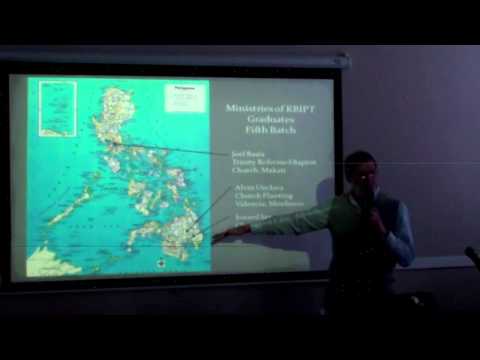
A Reformed Baptist missionary with thirty years of service in the Philippines presents an overview of the work in Metro Manila and beyond: church planting, a three-year pastoral training institute covering biblical languages and systematic theology, and itinerant teaching among pastors in remote provinces. The presentation is grounded in Revelation 5 and Romans 10 — Christ has purchased a people from every tribe, tongue, and nation, and messengers must be sent to gather them. The evening closes with prayer requests for the elders of Moonwalk Community Bible Church, the graduates scattered across the Philippine islands, and the ongoing effort to bring the gospel to Roman Catholics, Muslims, and those ensnared in health-and-wealth Christianity.
The Parable of the Wheat and Tares
Matthew 13:24–30 presents the parable of the wheat and tares, in which Christ teaches that his kingdom advances through a world — and a visible church — where genuine believers co-exist with those sown by the devil. The sermon addresses the theodicy embedded in the parable: God's sovereignty over evil does not mean the immediate expulsion of wickedness, but its certain, final judgment at the eschaton. Hearers are called to grow as wheat, to resist an overly censorious spirit toward apparent tares, and to trust that the Master has the harvest entirely under his control.
Joshua 22
Joshua 22 narrates the potential fracture and ultimate preservation of unity among the tribes of Israel over a misunderstood altar erected by the Transjordanian tribes near the Jordan. The chapter turns on the regulative principle of worship — Israel's requirement to sacrifice only at the central sanctuary — and the Western tribes' willingness to investigate before making war reveals both the gravity of corporate apostasy and the wisdom of disciplined diplomacy. The Eastern tribes' explanation exposes a legitimate pastoral concern: preserving covenant identity and the fear of the Lord across generations. The resolution, where Phinehas perceives the Lord's presence through the obedience and unity of his people, carries a direct word for the New Covenant church.
Wage the Good Warfare
Paul's charge to Timothy in 1 Timothy 1:18–20 — to wage the good warfare — is the ground for a sustained argument that gospel ministry requires both the positive exposition of truth and the courageous refutation of error. The sermon works through the basis of that charge (prophetic appointment), its necessary instruments (faith and a good conscience), and the catastrophic consequences of rejecting those instruments, illustrated by the named cases of Hymenaeus and Alexander. Church discipline, including excommunication into the realm of Satan, is presented not merely as punitive but as remedial — aimed at the repentance and restoration of the erring sinner. Every Christian, not only ordained ministers, is called to maintain fidelity to Christ and his gospel as soldiers and sailors in a genuine spiritual combat.
Deuteronomy 17:8-20
Deuteronomy 17:8–20 sets forth two connected institutions for Israel's civil life: a central tribunal empowered to adjudicate cases too difficult for local courts, and a set of governing principles for the monarchy Israel would eventually request. The passage establishes that both judicial authority and royal office are subordinate to the law of God, and that contempt for divinely instituted authority — whether in court or in kingship — carries grave consequence. The same pattern carries into the New Testament, where submission to governing authorities (Romans 13) and church discipline (Matthew 18; 1 Timothy 5) reflect identical principles of evidence, procedure, and obedience. The sermon's driving application is that trust placed in any human institution — monarchy, military, wealth, or political alliance — rather than in the living God is the root of covenant unfaithfulness.
The Demand for Discernment
Matthew 7:6 stands in deliberate tension with the prohibition against judgmentalism in verses 1–5: the same Christ who forbids a censorious spirit toward brothers commands his disciples to exercise discernment toward those who are enemies of the gospel. The sermon traces the identity of the 'dogs' and 'swine' — not ordinary unbelievers, but those whose hardened contempt for God makes continued proclamation a cause for further blasphemy and personal danger. Working through the ministries of Jesus and Paul in the Gospels, Acts, and 2 Timothy, the sermon demonstrates that this principle is not theoretical but was applied repeatedly in apostolic practice. The hearer is called to pursue wisdom through prayer, to refuse political correctness as a guide for gospel witness, and to maintain the balance Christ himself models: compassion toward weak brethren, patient witness to ordinary unbelievers, and principled restraint before confirmed enemies of the truth.