
Cited in sermons
Francis Turretin
171 sermons · All people cited

The Ninth Commandment

The Ninth Commandment—'You shall not bear false witness against your neighbor' (Deuteronomy 5:20)—extends far beyond courtroom perjury to govern every word spoken about another person. This sermon works through the prohibition in two directions: first, the specific offenses the commandment forbids (perjury, lying, slander, gossip, and tailbearing, including both their active propagation and their passive reception); second, the positive duties the commandment requires (truth-telling under oath, honest speech in all of life, charitable restraint, and the active discouragement of slanderers). Because no hearer perfectly fulfils Psalm 15's portrait of the righteous man, the sermon closes by directing the conscience to Christ, whose active obedience and atoning death cover the very sins of the tongue that the law condemns.

The Sixth Commandment
The sixth commandment, 'You shall not murder,' forbids not only the external act of taking innocent life but also the internal dispositions of hatred, unwarranted anger, and character assassination that flow from the same malicious heart. The sermon distinguishes murder from three lawful forms of killing — capital punishment, just war, and self-defense — grounding each in the abiding authority of Scripture from the Noahic Covenant through the New Testament. The image of God in every human being is the theological foundation for the commandment's reach across abortion, euthanasia, and the neglect of capital punishment. Hearers are called to clarity on the law's three uses, to renounce internal murder within the church, and to find in the gospel the only remedy for sinners who have violated this commandment in heart or deed.

The Death Penalty
Genesis 9:6 grounds the biblical mandate for capital punishment in the image of God: to shed human blood unlawfully is to assault God himself, and the prescribed penalty reflects the weight of that offense. This sermon works through the Noahic covenant as a common-grace ordinance never abrogated, traces the continuity of capital punishment into the New Testament through Romans 13, and then systematically answers both biblical and pragmatic objections — including the mistranslation of Exodus 20:13, the pacifist reading of Matthew 5:38–42, and the woman caught in adultery in John 8. Believers are called to submit to the whole counsel of God on this issue, even where it cuts against cultural sentiment, because consistency with Scripture requires affirming what God has commanded for the governance of civil society.

The Fourth Commandment
The Fourth Commandment's call to observe the Sabbath is not a Mosaic innovation for Israel alone but a creation ordinance rooted in God's own rest and ratified across redemptive history. This sermon surveys Old Testament Sabbath theology — from Genesis 2 through the prophets Isaiah and Jeremiah — arguing that the Ten Commandments carry trans-covenantal moral force and that the Sabbath commandment retains binding validity for New Covenant Christians. Christ's defense of Sabbath in Mark 2 is shown to confirm rather than abolish the commandment, clearing away Pharisaic distortion while pointing back to the creational gift given for man as man, not Jew as Jew. Hearers are called to call the Sabbath a delight, to work diligently the six days, and to gather with the covenant community on the Lord's Day in holy worship.

The Third Commandment
The Third Commandment — 'You shall not take the name of the Lord your God in vain' (Deuteronomy 5:11) — grounds its prohibition and its positive demands in the theological weight of the divine name itself: God's name is the vehicle by which He reveals His nature, being, and attributes to His creatures, so every misuse is a direct offense against God. The sermon works through five concrete violations (blasphemy, false oaths, magic and sorcery, misapplication of providence, and misinterpretation of Scripture) before turning to the positive duties of reverent use, worshipful fear, and a sincere profession of faith matched by answerable conduct. Throughout, the law-gospel distinction is maintained: no sinner is accepted by God on the basis of keeping this commandment, but on the basis of Christ's perfect obedience rendered in the sinner's place; those united to Christ by grace through faith are then pointed back to the law as a rule of grateful living.

The Second Commandment
The second commandment forbids both the manufacture of idols and the worship of the true God by means of visible representations — a distinction the first commandment does not address. Working through Deuteronomy 5:8–10, this sermon grounds the regulative principle of worship in the doctrine of God: because God is incorporeal, incomprehensible, and infinite, any attempt to represent Him in image or statue is a theological assault on His nature, not merely a liturgical irregularity. The sermon applies this principle to Roman Catholic image-veneration, depictions of the Lord Jesus Christ (including the 'Jesus film' and similar media), and the broader failure of evangelical worship to ask what God has actually commanded.

The Gracious Invitation of Christ
Matthew 11:25–30 sets before the reader three interlocking realities that ground Christian thanksgiving: the sovereign will of the Father who hides gospel truth from the self-sufficient and reveals it to the humbled, the mediatorial office of the Son who alone has authority and power to reveal the Father to sinners, and the gracious invitation of Christ who calls the weary and sin-laden to come, receive rest, take His yoke, and learn from Him. The sermon works through six observations on verses 28–30 — the exhortation to come, the persons addressed, the promise of rest, the call to submit, the invitation to learn, and the light burden of discipleship — demonstrating that justification precedes sanctification and that the gospel call is issued indiscriminately to all. Hearers are urged to study the law until the weight of sin is felt, to flee to Christ rather than away from Him, and to respond to sovereign grace with daily, unreserved thanksgiving.

The First Commandment
The First Commandment — 'You shall have no other gods before me' (Deuteronomy 5:7) — demands both the rejection of every rival and the cultivation of genuine knowledge of the true and living God. The sermon works through the specific sins condemned by the commandment (atheism, polytheism, syncretism, idolatry, sorcery, heresy, and creature-worship), grounding each in Old and New Testament texts, before turning to the positive obligations the commandment requires: knowing God as Trinity, knowing His divine perfections, and knowing His external works in creation, providence, and redemption. The commandment functions pedagogically to expose humanity's chronic unfaithfulness and drive sinners to repentance, and normatively to call the redeemed to a rigorous, lifelong growth in the knowledge of who Yahweh is.

The Preface to the Ten Commandments
Deuteronomy 5:1–6 opens the Ten Commandments with a preface that sets law within the context of grace: God identifies himself as the one who redeemed Israel from Egypt before issuing a single command. This sermon introduces a new series on the Decalogue by situating it within its canonical, covenantal, and historical setting — tracing the narrative from Exodus through Numbers to Deuteronomy's second giving of the law. The preface establishes the lawgiver's identity (Yahweh, the covenant God), his personal involvement with his people, and the redemptive act that grounds all the commandments that follow. The threefold use of the law — civil, pedagogical, and normative — frames how believers are to receive and apply the Decalogue in the new covenant era.

The Worship of God in Private Families
Family worship — the regular practice of reading Scripture, praying, and singing with one's household — is grounded in a consistent biblical pattern running from Abraham in Genesis 18 through the Apostle Paul's commands in Ephesians 6. This topical survey traces the biblical warrant for family worship through key Old Testament figures and texts, examines the elements that should mark it, and presses the duty home with both positive examples and negative warnings. Parents and grandparents are called to diligent, consistent instruction of their children in law and gospel, with the sobering reminder that neglect — not busyness — is the real obstacle.

The Joy of Keeping God's Law
Proverbs 29:18 sets before us two contrasting conditions: the lawlessness that follows the absence of God's revealed word, and the happiness that accompanies obedience to that word. This sermon works through the classic Reformed threefold use of the law — civil/political, pedagogical, and normative — applying the first two uses to the unbeliever and the third to the justified believer. The practical conclusion is that keeping God's law is simultaneously a consequence of justifying faith, a means of promoting assurance of salvation, and an expression of gratitude to God for sovereign grace.
The Great Commission
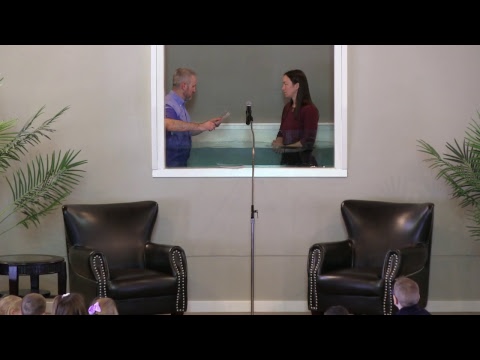
Christ's Great Commission in Matthew 28:18–20 provides the church with her complete marching orders: go, make disciples, baptize those disciples, and teach them to observe all that Christ commanded. The authority behind the commission belongs to the risen and exalted Christ, who possesses all authority in heaven and earth; the assurance sustaining it is His promise of perpetual presence to the end of the age. The sermon treats the specific focus of the commission in sequence, defending believers' baptism by immersion as the pattern demanded by the text and the order it establishes — make disciples first, then baptize — against both baptismal regeneration and paedobaptism. The Trinitarian formula of baptism occasions an extended treatment of theology proper, including divine simplicity, impassibility, and the unity of essence in three persons, with warnings against tritheism, modalism, and subordinationism.

The Dedication of the Temple
Solomon's dedicatory prayer in 1 Kings 8:22–53 is examined as a model of theological depth and dependent petition. The prayer opens by rehearsing God's incomparability, faithfulness, transcendence, and imminence — attributes that ground every request that follows. Six petitions structured around covenant curse and restoration (Leviticus 26; Deuteronomy 28) demonstrate that forgiveness is the central burden of the prayer, and that affliction is a designed instrument for drawing God's people back to dependence on Him. Practical applications press the congregation toward reverent worship, heart-obedience rooted in justification by Christ's righteousness alone, daily confession of sin, and confidence in God's unfailing covenant fidelity.
Genesis 9:1-7
Genesis 9:1–7 establishes the Noahic Covenant, which mandates capital punishment as a universal and perpetual ordinance rooted in the image of God — not merely an Old Covenant provision for Israel. This study addresses common biblical objections (Exodus 20:13, Matthew 5:38–42, John 8) and pragmatic objections (deterrence, innocence, forgiveness), arguing that none successfully overthrow the divine mandate of Genesis 9:6, which is confirmed and not abrogated by the New Testament. The session urges listeners to think carefully from Scripture rather than from cultural sentiment, trusting that God's law concerning criminal justice reflects his character and serves the stability of the created order.

Genesis 6:1-8
Genesis 6:1–8 presents some of the most contested verses in the Pentateuch alongside some of the clearest. The identity of the 'sons of God' in verses 1–4 has generated three major interpretive traditions — angelic beings, tyrannical rulers, and the godly line of Seth intermarrying with the ungodly line of Cain — and the sermon surveys each view while favouring the Sethite interpretation without demanding confessional certainty on it. Verses 5–8 then deliver an unambiguous portrait of universal human depravity and the righteous judgment of God, interpreted through the theological categories of anthropomorphism and anthropopathism to guard the immutability and impassibility of God against misreading. The sermon closes by showing that grace precedes conduct in Noah's case, establishing the pattern that runs through all of Scripture: God's sovereign grace produces the righteousness it requires.

The Exaltation of Christ
Peter's Pentecost sermon in Acts 2:33–36 reaches its climax in the exaltation of Christ to the right hand of the Father. This exposition works through three movements: the supreme dignity conferred on Christ at his ascension, the fulfillment of Psalm 110:1 as ancient prophecy now openly vindicated, and the unavoidable implication for guilty hearers that this Jesus whom they crucified is both Lord and Christ. The current session of Christ — his ongoing reign, intercession, gathering of the church, and conquest of every enemy — is pressed as the ground of the believer's confidence and the urgent call for the unconverted to repent and call upon the name of the Lord.

The Ascension of Christ
The ascension of Christ in Acts 1:9–11 is no mere epilogue to the resurrection but a theologically freighted event with direct consequences for how believers understand Christ's present reign, the Lord's Supper, intercession, and final glorification. Working through the passage, the sermon establishes that the ascension was visible, local, bodily, and glorious — witnessed by the apostles and interpreted by angelic messengers who announce Christ's return in like manner. The ascension completes Christ's earthly mediatorial work, secures the gift of the Spirit, and grounds the believer's assurance in a high priest who always lives to make intercession — the pledge that those whom He justified He will also glorify.

Genesis 1:1-2
Genesis 1:1–2 demands that the people of God hold tenaciously to the doctrine of creation, because what is affirmed or denied there reverberates through the whole of Scripture and Christian ethics. This study surveys the doctrine of creation through the lens of 1689 LBCF chapter 4, paragraph 1, examining the time, author, purpose, and scope of God's creative act, before turning to the precise structure of Genesis 1:1–2 and the arguments for six-day creation. The session closes with two applications: maintaining the aseity and immutability of God, and preserving the Creator-creature distinction against any notion that God is merely the most excellent member of a chain of being.

The Liberality of God and the Believer's Security
Romans 8:31–39 confronts the believer with a single overwhelming argument: because the Father did not spare His own Son but delivered Him up for all the elect, He will most certainly freely give them everything else they need. The sermon works through three movements — the declaration of God's liberality in the gift of His Son, the implication that every lesser need is thereby guaranteed, and the application to the believer's unassailable security against accusation, condemnation, and separation. Drawing on the language of propitiation, penal substitution, and the Ordo Salutis, the exposition insists that the believer's confidence rests not on personal virtue or perseverance but on the justifying grace of God and the interceding, unchanging love of Christ.

The Defense of the Faith
Jude 3 issues a universal call—addressed not to clergy alone but to every believer, the 'beloved'—to contend earnestly for the faith once for all delivered to the saints. The sermon works through three movements: the exhortation itself and its five implications, the reason for that exhortation in the apostates of verse 4, and the practical preparedness of the contender outlined in verses 20 and 21. Doctrinal fidelity is not optional maintenance for specialists; it is the privilege and duty of every member of the covenant community, sustained by Scripture reading, prayer, and a constant looking to Christ. The sermon closes with a direct call to the unconverted to flee to the Lord Jesus Christ, in whom alone forgiveness of sins and the imputation of his righteousness are received by faith alone.

The Great Commission, Part 3
Matthew 28:19 commands that disciples be baptized into the singular name of the Father, Son, and Holy Spirit — a text that stands as one of Scripture's clearest witnesses to the doctrine of the Trinity. This sermon works through the baptismal formula to establish what the one name and three persons require the Christian to confess: one divine essence, three distinct subsistences, free from the errors of tritheism, modalism, and subordinationism. The active obedience of Christ is exposited as the ground of the righteousness imputed to sinners in justification, showing that the gospel itself is inseparable from a right doctrine of God. The congregation is urged to study the confession's chapters on theology proper and Christology, and to hold the doctrine of the Trinity as a white-knuckle conviction worth dying for.

The Glory of the Lamb of God
John 1:29 — 'Behold, the Lamb of God who takes away the sin of the world' — cannot be rightly understood apart from the Prologue that precedes it. The eternal Word who was with God and was God became flesh, was eternally begotten of the Father, and stands as the covenantal head of the new covenant before he is identified as the Lamb whose violent, substitutionary death takes away the sin of the world. The scope of that sin-bearing is not every individual without exception but persons without distinction — Jews and Gentiles alike — as the consistent use of 'world' in John's Gospel and the song of the redeemed in Revelation 5 make clear. The proper response is to place the cross in its full Trinitarian, Christological, and covenantal context and to worship the one who left the eternal life of God to enter our flesh and save us from our sins.

Of the Civil Magistrate (2LCF24)
The civil magistrate exists by divine appointment, not by social contract or popular consent, and this confession-study exposition of 2LCF Chapter 24 establishes the theological ground for that claim from Romans 13, 1 Peter 2, Proverbs 8, and Genesis 9. Three questions are addressed in sequence: the divine origin of civil government, the lawfulness of Christian participation in public office, and the Christian's duty of submission to governing authorities. The power of the sword — including capital punishment and just war — is shown to belong to the magistrate's God-given office, rooted in the Noahic covenant and confirmed in the New Testament. Christians are called to submit to all lawful civil commands, to refuse only what requires disobedience to God, and to pray persistently for those in authority.

The Resurrection and Justification by Faith
Romans 4:25 presents what the commentators Matthew Poole and Charles Hodge each called an abridgment or comprehensive statement of the whole gospel: Christ was delivered up because of our offenses and raised because of our justification. The sermon works through both halves of this verse to show that the death of Christ was a substitutionary, propitiatory sacrifice satisfying divine justice on behalf of the elect, and that his bodily resurrection is the Father's public declaration that the sacrifice was accepted and justification secured. Four theological connections between resurrection and justification are drawn out: the resurrection declares Christ to be the Son of God with power, testifies that his sacrifice was accepted, confirms that satisfaction was rendered, and demonstrates that redemption was fully accomplished. The sermon closes at Romans 5:1 with the fruit of the whole discussion — peace with God through our Lord Jesus Christ — applied to those who once stood condemned as ungodly offenders.

The Sixth Commandment
The sixth commandment, 'You shall not murder' (Deuteronomy 5:17), rests upon the foundation of the imago Dei — the conviction that every human being, from the pre-born to the elderly, bears the image of the Creator, and that to assault an image-bearer is to assault God himself. The sermon distinguishes murder from lawful killing, arguing from Genesis 9, Exodus 22, and Romans 13 that capital punishment, self-defense, and just war are not violations of the commandment but are grounded in the same principle that makes murder heinous: the sanctity of human life. Modern applications — abortion, euthanasia, and the neglect of capital punishment — are examined in light of both Old and New Testament texts, and the sermon closes by directing those who have participated in these sins to the pardoning grace of Christ.
OF Christ the Mediator (2LCF 8)

The doctrine of the Incarnation — that the eternal Son of God took to himself a full human nature, body and soul, yet without sin — is one of the two great mysteries of the Christian faith alongside the Trinity. This confession study works through 1689 London Baptist Confession of Faith Chapter 8, Paragraph 2, establishing first what the Incarnation does not mean (mutation of the divine nature, mere appearance, assumption of body only, full humanity without exception, addition to divine being) before drawing out five positive theological entailments: it is the Son alone who became incarnate through the undivided work of the triune God; it is the divine Son who assumed flesh; the assumed humanity is full and complete; Christ is sinless in that humanity; and the two natures are united in one person without conversion, composition, or confusion. The whole doctrine is shown to be the necessary foundation of the Christian gospel, since only a mediator who is truly and fully God, truly and fully man, and wholly without sin can accomplish the redemption of fallen humanity.

The Crucifixion of Jesus, Part 3
Matthew 27:45–46 records the darkest three hours of history and the lone saying of Christ that Matthew preserves from the cross: 'My God, my God, why have you forsaken me?' This sermon works through the cry of dereliction with careful attention to what the text does and does not teach, ruling out any ontological division within the Trinity, any dissolution of the hypostatic union, and any notion that all three persons suffered at Calvary. The forsakenness Christ voiced was real — a qualified withdrawal of the Father's consolatory smile and favour, not an abandonment of love — because Christ stood as the covenant surety of his people, bearing the punishment of loss that sinners deserve. The gospel comfort that follows is decisive: because Christ cried 'Why have you forsaken me?' those united to him by faith will never have to.

Of Religious Worship and the Sabbath Day (2LCF22)
The Sabbath commandment is a moral, positive, and perpetual law binding all men in all ages — not a distinctively Jewish institution abolished with the Mosaic economy, but a creation ordinance blessed and sanctified by God from the beginning and carried forward into the New Covenant era. Working through 2LCF chapter 22, paragraphs 7 and 8, this session traces a biblical theology of the Sabbath from Genesis 2 through Isaiah and Jeremiah, establishing both the moral principle (one day in seven) and its positive element (the particular day). The shift from Saturday to Sunday is grounded in creation and redemption as the twin rationales for the commandment, anticipating the resurrection of Christ as the basis for Lord's Day worship. Hearers are called to receive the Sabbath not as a burden but as a gift given by God for the good of His creatures.
2LCF Chapter 22 - Of Religious Worship and the Sabbath Day
The Regulative Principle of Worship, grounded in the Second Commandment and confessed in Chapter 22 of the 1689 London Baptist Confession of Faith, holds that God alone determines the acceptable way in which He is to be worshipped — nothing more, nothing less, and nothing else than what He has commanded in Scripture. Working through paragraphs 1 and 2 of the confession, this session distinguishes the first commandment (who is to be worshipped) from the second (how God is to be worshipped), showing from Romans 1, Deuteronomy 12, 1 Timothy 3, Hebrews 12, and the narrative of Saul that innovation in worship — however well-intentioned — constitutes a form of idolatry. The practical application is that the elements of corporate worship must be drawn from Scripture alone: prayer, the reading and preaching of the Word, singing, and the sacraments — with no addition, subtraction, or substitution from the imaginations and devices of men.

The Truth Concealed and Revealed
Matthew 11:25–30 presents three interlocking realities that together form the foundation of gospel rest: the sovereign will of the Father in concealing and revealing gospel truth, the exclusive mediatorial office of the Son as the only means of access to the Father, and the gracious invitation of Christ to sinners burdened by sin. The sermon argues that a right understanding of divine sovereignty — including both election and reprobation — should produce not polemical pride but the thankfulness and praise modeled by Christ himself in verse 25. Sinners are called to come to Christ by faith alone, receiving rest from the burden of sin, and to take up his yoke in discipleship, which the Savior himself declares easy and light.