

Stephen's Defense, Part 9

Acts 7:51–53 records the climactic conclusion of Stephen's defense before the Sanhedrin, in which he reverses the charge of blasphemy against Moses and the temple by indicting the council itself for idolatry. Each epithet Stephen employs — 'stiff-necked,' 'uncircumcised in heart and ears,' and 'always resisting the Holy Spirit' — is drawn from the Old Testament vocabulary of Exodus, Leviticus, Deuteronomy, and the Psalms, showing that the council stands in unbroken solidarity with the idolatrous generations before them. The pinnacle of their guilt is the betrayal and murder of the Just One, the Messiah foretold by the prophets, whose coming was the very purpose of the law and the temple they claimed to defend. The sermon calls hearers to recognize that the law of Moses and the temple of God both point inexorably to Christ, and that to reject him is to break the law one professes to uphold.

The Believer's Gratitude toward God
Colossians 1:12–20 presents the believer's gratitude as an essential component of a walk worthy of the Lord — not a sentimental add-on but a theological necessity rooted in what God has actually done. Paul prays that the Colossians would be fruitful, growing, strengthened, and thankful, with gratitude serving as the lens through which sovereign grace becomes visible. This exposition works through two grounds for thanksgiving — inheritance and deliverance — before tracing the movement of Paul's prayer into the great Christological hymn of verses 15–20, where Christ as Creator, Sustainer, and Redeemer becomes the ultimate reason for the believer's praise. The sermon applies throughout with the exhortation to rehearse these redeemed blessings, particularly in the context of the Lord's Supper.

Free Grace Baptist Church - April 3, 2019 Bible Study
Genesis 17 presents the formal ratification of the covenant of circumcision with Abraham and his descendants, distinguished carefully from the covenant of grace revealed within it. The sermon traces the progressive enhancement of God's promises — seed, fruitfulness, kings, land, and the covenant formula 'I will be their God' — while insisting that the covenant of circumcision operates simultaneously on physical and spiritual levels without the two being conflated. Drawing on Galatians 3–5 and Nehemiah Cox, the exposition argues that to identify the covenant of circumcision with the covenant of grace is an exegetical misstep that yields infant baptism and mingles the law principle with the grace principle in a way the Apostle Paul expressly forbids.

The Ark of God in Philistia
When the Philistines captured the Ark of the Covenant and placed it beside Dagon in his temple, they intended to display Yahweh's subservience to their god — but twice Dagon fell prostrate before the Ark, and on the second occasion his head and hands broke off. This sermon expounds 1 Samuel 5 in two movements: the humiliation of Dagon in his own house (vv. 1–5), and the heavy hand of Yahweh striking Ashdod, Gath, and Ekron with devastating judgment (vv. 6–12). The text teaches both the self-sufficiency and supremacy of God, who needs no one to prop him up, and the inexcusable folly of every form of idolatry — including the subtler, coercive idolatry of seeking to manipulate God for personal comfort that threatens the professing church today.
Stephen's Defense, Part 8
Stephen's defense before the Sanhedrin turns on a single argument: the tabernacle and temple were never ends in themselves but types pointing forward to Jesus Christ, so the Sanhedrin's attachment to the temple above the one the temple signified exposes them as the true anti-temple party. Working through Acts 7:46–50 against the background of the Davidic Covenant in 2 Samuel 7, the sermon traces how David's desire to build a house for God is fulfilled typically in Solomon and ultimately in the Lord Jesus Christ, who as the Son of God builds the church as the true dwelling place of God Most High. The testimony of Isaiah 66:1–2 then seals the point: God who fills heaven and earth cannot be confined to any man-made structure, yet this same transcendent God condescends to dwell with the poor and contrite in spirit — a reality now fully realized in new covenant worship through Christ.
Free Grace Baptist Church - March 31, 2019 AM
Stephen's defense before the Sanhedrin in Acts 7:44–53 serves as a window into the Old Testament's typological structure, tracing the Davidic covenant from 2 Samuel 7 through the construction of Solomon's temple to its ultimate fulfillment in Jesus Christ. The sermon argues that both tabernacle and temple functioned as types and shadows pointing forward to Christ, and that Israel's idolatrous attachment to the physical temple — trusting the structure rather than the God it signified — mirrors the Sanhedrin's rejection of the very Messiah those institutions were designed to anticipate. Drawing on Isaiah 66, Solomon's dedicatory prayer, and Matthew 16, the preacher shows that Christ is himself the true temple, the Son of David who builds the house of God, and that all the promises of God find their 'yes and amen' in him. The application is direct: neglect of the Old Testament impoverishes Christian experience, and those still outside Christ are called to look to him — as Israel looked to the bronze serpent — for forgiveness and righteousness received by faith alone.

The Capture of the Ark
Israel's decision to fetch the Ark of the Covenant as a battlefield talisman in 1 Samuel 4 exposes a perennial human tendency: taking the good gifts of God and treating them as instruments of manipulation rather than means of worship. The chapter's three movements — Israel's defeat, Eli's death, and the naming of Ichabod — together declare that God will not be controlled by technique, and that He would sooner allow the symbol of His presence to fall into pagan hands than permit His people to profane it through superstition. The sermon presses believers to examine whether their own acts of piety — prayer, fasting, corporate worship — are genuine communion with God or covert attempts to secure desired outcomes from Him.
Stephen's Defense, Part 7
The tabernacle and temple of Israel were not ends in themselves but types pointing forward to the Lord Jesus Christ as the true dwelling place of God with his people. Expounding Acts 7:44–45, this sermon traces Stephen's defense against the charge of being anti-Temple by surveying the tabernacle in the wilderness (Exodus 25–40), the Levitical sacrificial system as the God-ordained means of approaching a holy God, and the conquest of Canaan under Joshua as the triumph of Yahweh's strength over Israel's enemies. The central application is that sinful men may dwell with God only through the blood of Jesus Christ — the substance to which every tabernacle, temple, sacrifice, and conquest pointed — and that the same sovereign God who drove out the Canaanites is the God who mortifies sin in his people by his Spirit.

Free Grace Baptist Church - March 24, 2019 AM
Stephen's defense before the Sanhedrin in Acts 7:44–45 opens a window into the Old Testament theology of divine dwelling — tabernacle, temple, and conquest — showing that God's entire redemptive economy pointed forward to Christ as the true temple. Working through Exodus 25, 29, 40, Leviticus 9–10, 16, and Joshua 3–24, the sermon traces how the tabernacle of witness was given by divine command, designed for the purpose of God dwelling among his people, and completed under Moses only to reveal a new tension: even the godliest man could not enter the glory-filled sanctuary without atoning blood. The Book of Leviticus resolves that tension by prescribing the bloody knife and smoking altar that typified Christ's substitutionary sacrifice, and Joshua shows that the conquest of Canaan was accomplished by the strong arm of Yahweh alone — a pattern that mirrors the believer's ongoing mortification of sin by the Spirit. The application is direct: attachment to types and shadows after Christ has come is idolatry, and the only way to dwell in the presence of God — now or in the New Jerusalem — is through faith in the Lord Jesus Christ.

Free Grace Baptist Church - March 20, 2019 Bible Study
Genesis 16 exposes the impatience of Sarai and Abram as they resort to human ingenuity — surrogate motherhood through Hagar — to secure the seed God had promised rather than waiting upon him to fulfill it in his own time and means. The passage is set against the backdrop of Genesis 15, where God had already specified that the heir would come supernaturally from Abram's own body, making their scheme not merely socially problematic but a failure of faith in the very word of God. Yet the same chapter that records their faithlessness also records God's faithfulness: the angel of the Lord meets the fleeing Hagar, names her unborn son, and promises a multitude of descendants — a display of divine common grace extended even to the non-elect. The exhortation is to believe the promises of God, use lawful means, and refuse to substitute human engineering for patient trust in divine sovereignty.

Free Grace Baptist Church - March 17, 2019 PM
Romans 1 confronts humanity with the universal condemnation that falls upon Jew and Gentile alike: God's righteousness is revealed in the gospel precisely because all people suppress the truth of God in unrighteousness. The sermon traces Paul's argument from general revelation — God's invisible attributes made plain in creation — through the progressive moral descent that follows the rejection of the Creator, culminating in divine judgment expressed as God giving humanity over to its disordered desires. The remedy is the righteousness of God revealed through faith in Jesus Christ alone, which the apostle sets against the backdrop of universal guilt in order to magnify the grace of justification freely given.
The Judgment of God upon Idolaters
Romans 1:18–32 expounds Paul's indictment of Gentile idolatry as the root of all human unrighteousness, demonstrating that ungodliness — the rejection of the true and living God — inevitably produces the full range of moral disorder catalogued in verses 29–31. General revelation renders every person without excuse before God, yet it is insufficient to save; only the special revelation of the gospel, culminating in the propitiation of Romans 3:21–26, provides the antidote to mankind's idolatrous condition. The sermon traces the descent from suppressed knowledge of God through exchanged glory, divine abandonment, and catalogued vice, and closes by calling hearers to identify their own idols — theological, material, and self-oriented — and to look to Christ alone for justification.

Stephen's Defense, Part 6
Acts 7:37–43 records Stephen's appeal to the wilderness generation as the climax of his defense before the Sanhedrin, demonstrating that Israel's persistent idolatry — not Stephen's teaching — represents the true rejection of Moses and of God. Stephen cites Deuteronomy 18:15 to show that Moses himself predicted the coming of Christ, the prophet like Moses, so that the council's rejection of Jesus is simultaneously a rejection of Moses and of the living God who sent him. The sermon traces Israel's descent from refusing Moses' word, to fashioning the golden calf, to God judicially giving them over to worship the host of heaven, drawing a direct line from Exodus 32 through Amos 5 to the very council Stephen addresses. The practical summons is double: flee idolatry in all its forms, whether tangible or inward, and flee to the God who, even in righteous judgment, remains ready to pardon.

Free Grace Baptist Church - March 13, 2019 Bible Study
Genesis 15 presents the Abrahamic covenant in two movements: the reiteration of God's promise of seed and land to a childless and landless Abram (vv. 1–6), and the solemn ratification of that covenant through a self-maledictory oath ceremony (vv. 7–17). Verse 6 — 'he believed in the Lord, and He accounted it to him for righteousness' — is expounded as the locus classicus of justification by faith alone, with faith understood as the empty instrument that receives an alien righteousness imputed from Christ, not a meritorious work brought to God. The unilateral passing of the divine presence between the animal pieces is shown to anticipate Calvary, where Christ became the curse for covenant-breakers, sealing in blood what God swore to Abraham.
Stephen's Defense, Part 5
Stephen's defense before the Sanhedrin in Acts 7:30–36 draws on the call and rejection of Moses to demonstrate that the very history Israel appeals to condemns their rejection of Jesus. The sermon expounds six attributes of God revealed in the burning bush — God as revelatory, covenantal, holy, compassionate, delivering, and the self-existent I Am — showing that Moses received a theophany of the pre-incarnate Christ in Gentile territory, dismantling the council's temple-centered objections. Moses functions as a deliberate type of Christ: called by God, rejected by the people, and authenticated by signs and wonders. The sermon closes by applying the typology directly: as Moses was sent to deliver Israel from earthly bondage, Christ is sent to deliver sinners from the bondage of sin, and the call to come to him is extended to all who are weary and heavy laden.

Free Grace Baptist Church - March 10, 2019 AM
Stephen's defense before the Sanhedrin in Acts 7:30–36 centers on the call and rejection of Moses as a deliberate typological argument: the same Israel that rejected Moses now rejects Jesus, and in doing so rejects the very law and temple they claim to honor. The sermon works through six attributes of God revealed in the burning-bush theophany — God as revelatory, covenantal, holy, compassionate, delivering, and self-existent (I AM) — showing that this theology proper undergirds Moses's commission and, by extension, Christ's. The typological parallel between Moses (ruler and deliverer) and Jesus (ruler and Savior) anchors Stephen's defense and issues a direct summons: the same Christ who heard Israel's groaning in Egypt hears the groaning of sinners in spiritual bondage today, and he has both the compassion and the power to deliver.

The Christian Mother
Proverbs 31:28–30 sets forth the fear of the Lord as the defining virtue of a godly mother — the root from which her influence, authority, and responsibility toward her children flow. The sermon works through four observations: her condition before God (saved by grace and walking in the fear of Yahweh), her God-given influence over her children, her God-given authority over her children (grounded in the fifth commandment), and her responsibility to instruct, set an example, and discipline them. Fathers are called to honor and encourage their wives, children to express gratitude, and mothers to persevere in a calling that is difficult, often thankless, and of the utmost importance.

Genesis 14:17-24
Genesis 14:17–24 presents two contrasting encounters after Abram's defeat of the eastern coalition: the blessing of Melchizedek, king of Salem and priest of God Most High, and the cold demand of the king of Sodom. The study traces the typological significance of Melchizedek through Psalm 110:4 and Hebrews 6–7, arguing that this enigmatic figure prefigures Christ as the royal priest appointed not by Levitical lineage but by the sworn oath of God. Abram's refusal of Sodom's goods and his tithe to Melchizedek together illustrate faith's dependence on God Most High rather than on human patronage. The sermon closes with an application to persevering faith under trial, drawing on the whole of Genesis 14 as evidence that the life of faith is marked by difficulty, not prosperity.

Free Grace Baptist Church - March 3, 2019 PM
Ephesians 2:1–10 expounds the salvation of individual sinners by tracing its origin in the triune God's eternal counsel, its objects in spiritually dead and demonic-oriented rebels, and its execution by divine love, resurrection power, and sovereign grace. Salvation is received through faith as an instrument, never as a human contribution, because dead sinners possess nothing to bring to God. The sermon corrects both Roman Catholic and Federal Vision distortions by insisting that justification rests solely on the active and passive obedience of Christ, while affirming that genuine saving faith is necessarily accompanied by sanctification and good works.

Free Grace Baptist Church - March 3, 2019 AM
Stephen's defense before the Sanhedrin in Acts 7:17–29 turns on a single argument: Israel's own history condemns the council, not Stephen. Working through the birth, protection, and first visitation of Moses, the sermon traces how God's sovereign Providence preserved his appointed deliverer at the precise moment when every circumstance appeared most hostile to that possibility. The parallel is explicit — just as Israel rejected Moses the deliverer, the Sanhedrin is rejecting Jesus, the one Moses wrote about. The congregation is called to patience in God's timetable, trust in his Providence, and above all to receive rather than reject the salvation offered in Christ.
The Inclusion of Wretches in God's Covenant
Ephesians 2:1–10 presents the full arc of redemption — from the total deadness of sinners to their gracious vivification in Christ — and this exposition traces that arc through the origin, objects, and execution of salvation. The sermon grounds the covenant of grace in the prior covenant of redemption (Ephesians 1:3–14), showing that the Father's election, the Son's redemption, and the Spirit's sealing together exclude every contribution of the sinner. Salvation is by grace alone through faith alone, with faith itself a gift conveyed by God to the spiritually dead — not a human instrument brought to the table that God then rewards. The exposition closes by distinguishing justification from sanctification and warning against both Roman Catholic and Federal Vision distortions of grace, anchoring the believer's final acceptance before God solely in the active and passive obedience of Christ.
Stephen's Defense, Part 4
Stephen's defense before the Sanhedrin in Acts 7:17–29 centers on the birth, education, and first visits of Moses to his enslaved brethren — a narrative Stephen deploys not to instruct the Council in history they already knew, but to indict them for repeating the same rejection of God's appointed deliverer. The sermon traces two structural pillars: God's sovereign faithfulness to Abrahamic covenant promises across four centuries of bondage, and Israel's willful incomprehension of Moses as the pattern for the Sanhedrin's rejection of Jesus. The typological connection is explicit — Moses as redeemer-reconciler rejected by those he came to save is the Old Testament shadow of Christ rejected by the very people who claimed allegiance to Moses. Hearers are called to resist the impulse to drive away the deliverer and instead flee to the Lord Christ, in whom all the promises of God find their yes and amen.
Free Grace Baptist Church - February 24, 2019 PM
Proverbs 18:17 and its companion verse 13 provide the biblical foundation for two bedrock principles of due process: the requirement of cross-examination and the presumption of innocence. The sermon moves from Solomon's wisdom to the Mosaic law of witnesses in Deuteronomy 19 and the regulation of corporal punishment in Deuteronomy 25, arguing that Western juridical civilization is built on these scriptural foundations. The congregation is exhorted to resist the rush to judgment — whether in civil society or within the church — and to recognize that Christ alone perfectly fulfills the integrity demanded by Psalm 15, so that believers stand before God on the basis of his righteousness, not their own.
Stephen's Defense, Part 3
Stephen's defense before the Sanhedrin, as recorded in Acts 7:9–16, turns on the narrative of Joseph: a man chosen by God, sent to his people, and rejected by his own brothers. The sermon traces two movements in Stephen's argument — the patriarchs' envious rejection of Joseph, and God's sovereign providence overruling that evil for the preservation of Israel — and shows how each element constitutes a deliberate typological indictment of the council that condemned Jesus. The controlling hermeneutical claim is that Christ is the proper key to the Old Testament, and that the ceremonial law and the temple were always types pointing forward to him, not ends in themselves.
The Need for Due Process
Proverbs 18:17 establishes that the first to state a case seems right until cross-examination occurs — a principle with profound implications for personal conduct, church life, and civil justice. This sermon expounds that verse alongside Deuteronomy 19:15–21 and Deuteronomy 25:1–3 to demonstrate that due process — including cross-examination, the two-or-three-witness rule, proportionate punishment, and the preservation of human dignity — is grounded in the law of God, not in modern legal convention. The Old Testament judicial laws are shown to protect the accused, deter false witness, and honor image-bearers even in their guilt. The sermon closes with a Christological application: Psalm 15 describes the perfectly law-keeping Mediator, and union with him by grace through faith is the only ground on which any person stands before God.

Genesis 14:1-16
Genesis 14:1–16 presents Abram's military deliverance of his nephew Lot as a showcase of divine providence operating through human means. Though God is not named until Melchizedek's blessing, his sovereign hand is visible in every detail: the abduction that draws Abram onto the world stage, the survival of the messenger, and the victory of 318 servants over a coalition that had crushed five kings. The sermon traces four qualities of Abram's response — immediacy, armament, strategy, and victory — and draws from them the lesson that the sovereignty of God is not a warrant for passivity but the very foundation for the faithful use of means. Lot's progressive entanglement with Sodom warns against decisions that privilege outward advantage over the soul's good, while Abram's refusal of the king of Sodom's goods illustrates dependence on God Most High rather than human patronage.

Free Grace Baptist Church - February 17, 2019 PM
Proverbs 6:20–35 presents a father's urgent warning to his son against the sin of adultery, grounding the exhortation in the law of God as a lamp, a guide, and a restraint. The sermon works through two movements: the necessity of internalising God's Word as a preventive against sexual sin, and the inevitable consequences — social ruin, the fury of an offended husband, and the judgment of God — that attend the adulterer. The application is direct: parents must instruct their children in sexual purity, married persons must cultivate faithfulness, and all who have fallen must look to Christ, in whose name fornicators and adulterers have been washed, sanctified, and justified.
The Great Commission
Christ's Great Commission in Matthew 28:18–20 provides the church with her complete marching orders: go, make disciples, baptize those disciples, and teach them to observe all that Christ commanded. The authority behind the commission belongs to the risen and exalted Christ, who possesses all authority in heaven and earth; the assurance sustaining it is His promise of perpetual presence to the end of the age. The sermon treats the specific focus of the commission in sequence, defending believers' baptism by immersion as the pattern demanded by the text and the order it establishes — make disciples first, then baptize — against both baptismal regeneration and paedobaptism. The Trinitarian formula of baptism occasions an extended treatment of theology proper, including divine simplicity, impassibility, and the unity of essence in three persons, with warnings against tritheism, modalism, and subordinationism.
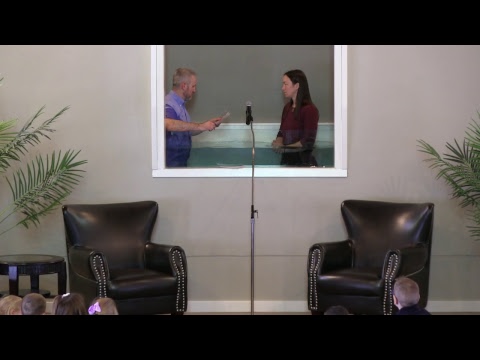
Livestream - Baptism: Carrie Lawson, Catharine Shook
The Great Commission of Matthew 28:18–20 defines the church's narrow, ordered mission: make disciples, baptize those disciples, and teach them to observe all Christ has commanded. This expository treatment of the Commission frames a baptism service for two women who profess saving faith in Christ, arguing that believer's baptism by immersion is the proper New Testament pattern — the sign of a new covenant already sealed by sovereign grace, not a sacrament of hopeful inclusion. The sermon draws on the doctrine of divine simplicity, the Trinity, and the covenant promises to Abraham to show that baptism is administered into the one name of Father, Son, and Holy Spirit, and that this triune God is himself the substance of eternal life.

Stephen's Defense, Part 2
Stephen's defense before the Sanhedrin in Acts 7:2–8 turns on a redemptive-historical reading of Abraham that dismantles the charges of blasphemy against the law and the temple. The sermon traces three movements: the call of Abraham (vv. 1–4), the promise of land and descendants made to a childless man (vv. 5–7), and the covenant of circumcision (v. 8). Central to the exposition is the argument that God appeared to Abraham outside the land and apart from any temple, that both circumcision and temple find their terminus in Christ, and that Abraham's justification was by faith alone — his obedience being the fruit, never the ground, of that faith. Listeners are urged to trust not in any outward religious token but in the God of Abraham who sent his Son to fulfill every covenantal obligation his people could not meet.