
Topic
Soteriology
2,252 sermons · All topics

Hyper-Calvinism's Root Error
Hyper-Calvinism and Arminianism are identified as mirror-image errors: Arminianism over-weights human agency, while Hyper-Calvinism rests on a false conception of God and his ways in the world. The root error of Hyper-Calvinism is traced to speculation about what God has not revealed, producing conclusions that contradict Scripture.

The Psalmist's Contemplation on the Revelation of God, Part 3

Psalm 19:9–14 presses the believer to consider both the benefits of Scripture and the right response to divine revelation. The fear of the Lord, pure and enduring, is the fruit of sovereign grace working through a word that is perfect, sure, right, and pure — a word more valuable than gold and sweeter than honey. David's closing petitions in verses 12–14 trace a graduated reckoning with sin — secret faults, presumptuous sins, and the dominion of sin — answered not by human resolve but by pardoning, preventing, and restraining grace grounded in God as rock and redeemer. The sermon calls believers to prize Scripture above every temporal good, to deal honestly with remaining corruption, and to rest the whole petition for acceptance on Christ, the true David, whose imputed righteousness alone makes the prayer of Psalm 19 fully and finally ours.
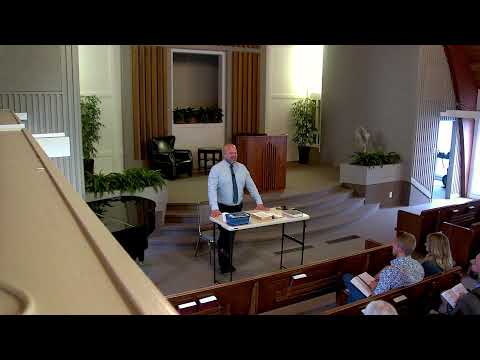
2LCF Chapter 30 - Of the Lord's Supper

The Lord's Supper is a divine command, a perpetual memorial of Christ's atoning sacrifice, and a genuine means of grace by which the Holy Spirit nourishes believers' souls with the benefits of Christ's redemption. This confession-study exposition works through all eight paragraphs of 2LCF Chapter 30, contrasting the biblical Reformed view of spiritual presence against transubstantiation, consubstantiation, and the purely commemorative position. The Christian necessity of observing the Lord's Supper is argued on three grounds: its institution by Christ as the only lawgiver, its character as a high and worshipful remembrance of Christ's person and work, and its function as a means of grace through which faith is increased and strengthened. Believers are urged to approach the Table not in rote external compliance but with understanding, faith, reverence, and godly fear, availing themselves of real spiritual communion with the triune God.

The Psalmist's Contemplation on the Revelation of God, Part 2
Psalm 19:7–11 presents four attributes of Scripture — perfect, sure, right, and pure — and traces the effects each produces in the souls of those the Spirit converts. The sermon argues that 'law' in this psalm comprehends the entirety of God's Word, including the gospel, and that the attributes ascribed to Scripture are inseparable from the perfections of its divine Author. Against a merely convicting or condemning view of the law, the preacher demonstrates that the same Word that exposes sin is the instrument through which the Holy Spirit effectually converts, enlightens, and rejoices the heart of the sinner. Hearers are pressed to receive the Word with joy rather than religious duty, and any who are yet dead in sin are called to cast themselves upon the Lord Jesus Christ, in whom a willing and rejoicing Savior stands ready to save.

Deuteronomy 16:1-17 - The Annual Feasts of Israel
Deuteronomy 16:1–17 presents three annual feasts — Passover and Unleavened Bread, Weeks, and Tabernacles — as divinely ordained memorials calibrated to keep Old Covenant Israel's allegiance fixed on Yahweh. Each feast commemorates a distinct aspect of God's redemptive work: deliverance from Egypt, provision at harvest, and sustenance through wilderness wandering. The Passover's substitutionary logic — where efficacy rested in God's provision rather than the offerer's moral worthiness — typologically prefigures Christ as the Lamb whose blood alone secures the sinner's safety. The sermon draws out the connection between the central sanctuary requirement of Deuteronomy 12 and the New Covenant church as the God-ordained means by which worship is preserved from corruption and believers are hedged against apostasy.

The Psalmist's Contemplation on the Revelation of God, Part 1
Psalm 19:1–6 presents the doctrine of general revelation — God's self-disclosure through the created order — and David's prophetic anticipation of the gospel's universal proclamation. The sermon traces the content, constancy, and comprehensive scope of general revelation, grounding each observation in Paul's parallel argument in Romans 1:18–32. The expositor then argues, against Calvin's merely comparative reading, that Paul's citation of Psalm 19:4 in Romans 10:18 legitimizes a Christological interpretation of verses 4b–6, in which the sun typifies Christ the Son of Righteousness, the great Bridegroom of his church, whose gospel goes forth conquering to the ends of the earth. Hearers are called to receive the Son whose rays of saving grace cannot be stopped any more than the circuit of the sun.

The Trial of Jesus Before the Jews
John 18:13–27 interweaves two scenes: Jesus standing firm under unlawful interrogation before Annas, and Peter collapsing three times before servants in a courtyard. The passage exposes the trial of Jesus before the Jews as a juridical farce engineered to secure a death warrant from Pontius Pilate, while the Sanhedrin — the very experts in the law — trample every evidentiary requirement their own law demanded. Peter's threefold denial is set in deliberate contrast to Christ's unflinching confession, calling believers to examine whether a willingness to die for Jesus necessarily includes the daily courage to live and testify for Him.

The Gospel's Precious Liberty Part 2
Paul's warning in Galatians 5:2–6 is stark: to submit to circumcision as necessary for salvation is to forfeit Christ entirely and to incur an obligation to keep the whole law perfectly. This sermon expounds the twofold warning (estrangement from Christ; falling from grace understood not as loss of salvation but as abandonment of the gospel's scheme of grace), the perseverance of the saints confirmed by John 6, John 10, Romans 8, and Hebrews 7, and the exercise of Christian liberty in spirit-wrought confidence and a faith that works through love. True confidence rests not in the flesh or in any obedience of our own, but in the person, blood, sacrifice, and righteousness of Christ received by faith alone.

The Holy Confidence
Jeremiah 9:23–24 confronts the hollow complacency of boasting in wisdom, might, and riches — the carnal securities that cannot avert the certain judgment of God — and calls God's people instead to a holy confidence whose sole ground is the knowledge of the Lord who exercises lovingkindness, judgment, and righteousness. The sermon traces a threefold structure: the folly of earthly boasting illustrated from Scripture and the case of Nebuchadnezzar, the necessity of glorying in God alone as the antidote to every false confidence, and the hallowed contemplations — lovingkindness, judgment, and righteousness — that are to fill the believing mind. The Christward trajectory of the passage is pressed home: Christ secures the lovingkindness, bears the judgment, and provides the righteousness that alone avails before God, so that the promise 'believe on the Lord Jesus Christ and you will be saved' is as certain as every judgment God has already executed.
2LCF Chapter 29 - Of Baptism
The 1689 London Baptist Confession chapter 29 sets forth a thoroughgoing Baptist doctrine of baptism: its nature as a New Covenant ordinance ordained by the incarnate mediator, its proper recipients as professing believers alone, its proper element and Trinitarian formula, and its proper mode as immersion. The study presses the case for believers-only baptism across five arguments — from covenant theology, federal headship, the doctrine of salvation, New Testament clarity, and the regulative principle of worship — demonstrating that paedo-baptism is not merely a secondary matter but a violation of Christ's express institution. The session closes with extended Q&A engaging questions about baptismal regeneration, the formula 'in the name of Jesus only,' and the standing of paedobaptist believers.

The Importance of Our Knowledge of Christ, Part 2
Philippians 3:8 frames the Apostle Paul's claim that the knowledge of Christ possesses surpassing worth above all things. This sermon completes a seven-point exposition by arguing that Christ is the sum and substance of the Christian gospel (established from 1 Corinthians 15 and the book of Acts), the head and savior of the church (seen in the Great Commission, worship, baptism, and the Lord's Supper), and the ground of both the believer's present hope and future glory (grounded in 1 Timothy 1:1 and 1 Peter 1:3-5). The Christian's knowledge of Christ is not a cold intellectual exercise but the natural expression of a heart that has found in Christ the one who is precious, and that knowledge ought to animate every dimension of calling — preaching, praying, giving, and testifying.

Ask FGBC Batch 8: Church Planting, Creation, Imprecatory Psalms & More | Reformed Baptist Theology
This Q&A episode addresses ten questions spanning ecclesiology, pneumatology, soteriology, and worship, drawing on confessional Reformed Baptist commitments throughout. Topics range from church planting and confessional subscription to the nature of saving faith versus assurance, the love of God for the non-elect, literal six-day creation, the theology of imprecatory psalms, and the regulative principle of worship as it applies to musical instruments and the offering. The consistent thread is that Scripture and the 1689 London Baptist Confession provide the sufficient framework for answering practical and doctrinal questions facing Reformed Baptist churches today.

The Sin of David and the Grace of God
David's adultery with Bathsheba and the murder of Uriah the Hittite stand as the gravest sins of Israel's greatest king, yet 2 Samuel 12:1–15 is ultimately a text about the pursuing grace of God. Through Nathan's carefully constructed parable, God exposes David's sin in all its senselessness and treachery — making clear that to despise the commandment of God is to despise God himself. The sermon traces three movements in the passage: God's confrontation through his servant Nathan, the full indictment of David's covenant treachery, and the stunning declaration that the Lord has put away David's sin — a declaration that underlies David's celebration of forgiveness throughout the Psalter and points forward to the atoning work of David's greater Son.

The Conversion of Lydia
Acts 16:6–15 presents the Macedonian call and the conversion of Lydia as twin demonstrations of divine sovereignty in the advance of the gospel. The Holy Spirit's redirection of Paul's itinerary, the night vision, and the sovereign opening of Lydia's heart at the Philippian riverside together show that gospel missions proceeds by God's appointment, not human initiative or chance. Lydia's conversion illustrates the full ordo of grace: effectual calling, forgiveness in Christ's blood, and the imputation of his righteousness received by faith alone — all confirmed outwardly in her immediate baptism and hospitality. The sermon presses the church to embrace both the means of gospel preaching and confidence in God's sovereign grace as the only ground of missionary hope.

The Arrest of Jesus
John 18:1–12 records the arrest of Jesus, and the passage confronts the reader with a Savior who is not a hapless victim but the sovereign I AM who initiates, controls, and willingly enters every step of His own arrest. The sermon works through three movements: the betrayal by Judas and the convergence of internal, external, and spiritual threats upon Jesus; the glory of Christ displayed in His divine self-declaration that drives His captors to the ground; and the arrest itself, where the cup of divine wrath — not Peter's sword — is shown to be the true focus of the scene. The controlling application is that Christ's covenantal resoluteness in going to the cross for the salvation of His people is the proper ground for approaching the Lord's Supper with joy.

The Deliverance of the Psalmist, Part 4
Psalm 18:46–50 closes with a threefold ascription of praise to the God who delivers His anointed King — a King who is not merely David but David's greater Son, the Lord Jesus Christ. The passage is expounded under four movements: the praise of God as the living Rock (v. 46), God as the God of vengeance and victory (v. 47), God as the God of deliverance and destruction (v. 48), and God as the God of grace and glory (v. 49), all grounded in the Davidic covenant of 2 Samuel 7. The sermon presses the church to find in the invincibility of God's covenant kingdom the steel needed to persevere through present affliction, and to ground all worship in the theological confession that the Lord lives, that Christ's righteousness is imputed to His people, and that God's promises are yea and amen in His Son.

2LCF Chapter 28 - Of Baptism and the Lord's Supper
Chapter 28 of the Second London Confession of Faith introduces baptism and the Lord's Supper as the two ordinances of the New Testament church, distinguishing the particular Baptist position from both Roman Catholic sacramentalism and paedobaptist covenant theology. The Baptists' deliberate use of 'ordinance' rather than 'sacrament,' and their inclusion of 'positive institution,' reflects a credobaptist insistence that only regenerate believers can obey these commands of Christ, the sole lawgiver of his church. The confession grounds both ordinances in Christ's mediatorial work, connects them to the means by which faith is increased and preserved (2LCF 14.1, 17.3), and reserves their administration for those qualified and called according to Christ's commission. Neglecting these ordinances is not a minor failure but a forfeiture of appointed means of grace and a disservice to the covenant community.

The Gospel Foundation for Corporate Prayer
The apostle Paul grounds the church's corporate prayer in a three-part theological rationale drawn from 1 Timothy 2:3–7: the nature of God, the office of Christ, and the ministry of Paul. The phrase 'all men' in verses 1–4 refers not to every individual without exception but to all kinds of men without distinction — Jew and Gentile, slave and king — a reading demanded by Paul's own doctrine of reprobation in Romans 9 and confirmed by the scope of his apostolic commission to the Gentiles. Christ's mediatorship is shown to require both a divine and a human nature, and his ransom is definite in its design — paid for all kinds of men, not all men without exception — precluding both universalism and any notion of unmet desires in God. The sermon closes by pressing the congregation to show up for corporate prayer, to pray specifically for the salvation of those in civil authority, and to exhort all around them to flee to Christ.

The Deliverance of the Psalmist, Part 3
Psalm 18:31–50 brings the psalm's three-part structure to its close, presenting Christ's resurrection, heavenly session, and sovereign reign over all nations as the fulfilment of what David celebrated in type. The sermon expounds four movements in the text: the divine power equipping the King for battle (vv. 31–42), the submission of peoples to the King (vv. 43–45), the praise due to the God of the King (vv. 46–49), and the covenant promise that undergirds the King's advance (v. 50). Throughout, David's victories serve as historically grounded prefigurations of Christ's definitive triumph over sin, death, and every opposing power. The application presses the congregation to lean on God's strength in spiritual warfare, to guard the church against both internal and external threats, and to rest in the alien righteousness of Christ credited to every believer by faith alone.

2LCF Chapter 27 - Of the Communion of the Saints
Chapter 27 of the 1689 London Baptist Confession teaches that the communion of the saints is grounded in the believer's union with Jesus Christ as mediator — a union that is real and transforming but does not divinize the believer or diminish Christ. From that foundation flow concrete obligations: corporate worship, mutual edification, relief of temporal need, and the exercise of gifts and graces for one another's good. Private property is affirmed against any communistic reading of Acts 2 and 4, and the discussion concludes with pastoral cautions against both antinomian indifference and Pharisaic legalism in measuring one another's communion.

The Gospel's Precious Liberty
Galatians 5:1–6 commands believers to stand fast in the liberty Christ has purchased, refusing any entanglement with a yoke of bondage. This sermon traces the full weight of Paul's argument through Galatians to show that Christian liberty is freedom from the dominion, guilt, and condemnation of sin, from the grip of the devil, and from the yoke of the ceremonial law. The forfeiture of that liberty — by adding circumcision or any other work to the ground of justification — renders Christ of no profit and leaves the soul estranged from grace. Seven means by which believers stand fast in this liberty are set out, all grounded in the Spirit's sustaining work through the means of grace.

The Deliverance of the Psalmist, Part 2
Psalm 18:20–30 presents the righteousness of the psalmist not primarily as David's own moral record but as a prophetic description of the Lord Jesus Christ, the last Adam and covenantal representative. David's language of blamelessness and perfect obedience in verses 20–24 transcends anything David himself could claim, pointing forward to the active obedience of Christ, whose spotless life and atoning death constitute the sole ground of justification for all who believe. The sermon argues that the deliverance celebrated in verses 1–19 is grounded in the righteousness declared in verses 20–24 — precisely as Romans 5:18–19 teaches — so that the church reads this psalm not as a moral target to reach but as the righteousness of their surety freely imputed to them by faith. The vivid illustration of Zechariah 3 anchors the application: filthy garments removed, rich robes bestowed — justification by God's grace alone, through faith alone, in Christ alone.

The Deliverance of the Psalmist, Part 1
Psalm 18:1–19 presents David's praise to God for deliverance from all his enemies, and the psalm functions typologically: David points forward to his greater Son, the Lord Jesus Christ, whose sufferings, death, and resurrection are the ultimate fulfillment of what the psalmist describes. Working through three divisions — the occasion of praise (the superscription), the declaration of praise (vv. 1–3), and the motivation for praise (vv. 4–19) — the sermon demonstrates that David's deliverance rests not on David's own prowess but on the sovereign power and delight of Yahweh. The sermon calls believers to love God with the love that is the chief fruit of faith, to cry out to God in distress rather than to despair, and to find consolation in the reality that God moves heaven and earth to vindicate his people and vanquish their enemies.

The Expectation of the Righteous One
Psalm 17 is approached as primarily the prayer of the Lord Jesus Christ according to his human nature — a perfectly righteous man crying to his Father for vindication, protection, and ultimate glorification. The sermon works through three movements: the psalmist's petition grounded in his righteousness, prayerfulness, and defenselessness (vv. 1–9); the character and violence of his enemies (vv. 10–12); and the psalmist's expectation of judgment on the wicked and resurrection presence with God (vv. 13–15). Because Christ's righteousness is imputed to believers by faith alone, the psalm becomes the church's prayer — a call to earnest, importunate intercession, patient endurance in a hostile age, and fixed hope in the resurrection rather than in temporal prosperity.

The Conversion of Rahab the Harlot
Joshua 2 presents the conversion of Rahab the harlot as a deliberate theological interruption in Israel's conquest narrative — not incidental color, but a magnification of the sovereign, free grace of Yahweh toward a Gentile prostitute. The sermon works through her fear, confession, and covenant with the spies to demonstrate that salvation is by grace alone through faith alone, a faith that inevitably produces works, as James 2 and Hebrews 11 confirm. Rahab's inclusion in the genealogy of Christ in Matthew 1 seals the point: the God of heaven and earth is also the God of sinful Gentile harlots, and His grace toward her is a standing summons for sinners to come immediately to the Lord Jesus Christ.

The Insurrectionist and the King
Luke 23:32–43 sets two criminals beside the crucified Christ — one blaspheming, one confessing — and leaves no neutral ground between them. This exposition works through the passage under three headings: the setting at Calvary (its geography, its Old Testament typology, and the fulfillment of prophecy in the crowd's mockery), the scoundrels (the total depravity of the blaspheming robber, and the remarkable faith of the converted one), and the Savior's response (certainty, immediacy, and felicity in the words 'today you will be with me in paradise'). The sermon closes with an urgent call to believe on Christ now, finding in the dying thief a picture of salvation by grace alone through faith alone in Christ alone.

The Instructions of Calvary
Luke 23:32–43 presents, in twelve verses, a concentrated display of the doctrines that define the gospel: total depravity, effectual grace, justification by faith alone, the hypostatic union of Christ's two natures, assurance, and immediate conscious glory at death. The sermon traces seven theological loci arising from the conversion of the penitent thief, demonstrating that the entire redemptive narrative of Scripture converges at Calvary. The penitent thief is not an extreme case or a last-minute exception but a paradigm of every sinner who comes to Christ with nothing in hand and receives everything by sovereign, irresistible grace.

The Resurrection-Hope of the Righteous One
Psalm 16:7–11 presents the steadfast confidence of the righteous sufferer, who is ultimately the Lord Jesus Christ himself — the Holy One whose soul the Father would not abandon to Sheol nor allow to see corruption. Working through the psalm's declaration of praise in verse 7, the stability and hope of the psalmist in verses 8–11, and the apostolic interpretation of these verses in Acts 2 and Acts 13, the sermon argues that Christ's bodily resurrection is the very foundation of the resurrection-hope his people now possess. The practical force is twofold: unbelievers are called to repent and believe on Christ, through whom alone sins are forgiven and justification is received; believers are called to heavenly-minded confidence grounded in the word, power, and promises of God.

The Exhortation to Wage the Good Warfare
The closing verses of 1 Timothy 1 resume Paul's charge to Timothy to wage the good warfare against false teaching in Ephesus. This exposition works through two movements: the charge itself (vv. 18–19a), grounded in Timothy's apostolic authority and prophetic calling, and the conflict that necessitates it (vv. 19b–20), illustrated in the defection and discipline of Hymenaeus and Alexander. The sermon argues that gospel ministry in every age requires holding the objective content of the Christian faith, maintaining a good conscience, and exercising church discipline against those who blaspheme by contradicting the truth of Christ.

The Freeness of the Priceless Feast, Part 2
Isaiah 55:3–13 grounds the free gospel summons in the covenant of grace secured by Jesus Christ, the greater David and covenant champion. The sure mercies of David — an everlasting covenant made with Christ and all the elect in him — are fulfilled in the resurrection of the Son, as Paul's sermon in Acts 13 makes plain. The response to that summons is fourfold: seek, call, forsake, and return — not as the price of the feast, but as the fruit of regenerating grace. The passage closes with the guarantee that God's word never returns void, that the redeemed go out in joy and peace, and that Christ the second Adam has reversed the curses of Genesis 3, securing an abundant, priceless feast for all who believe.