
Topic
Justification
418 sermons · All topics

The Nature of the Holy Spirit, Part 2

Jesus' promise in John 14:17–18 — that the Spirit of truth cannot be received by the world, yet dwells with and will be in his disciples — grounds the church's dependence on sovereign grace for all gospel ministry. The sermon works through the doctrine of inseparable operations and appropriations to protect both the unity of the Godhead and the distinction of persons, before applying the Spirit's indwelling to the perseverance of the saints and the sufficiency of the gospel. The closing exhortation presses both believers and unbelievers: the Spirit abides forever, justification is by faith alone, and the righteousness of Christ is imputed — not merely forgiveness extended — to all who come to him.
The Depths of Sin and the Riches of Grace
Psalm 130 moves from the depths of spiritual distress to the heights of pardoning grace, and this exposition traces that movement through three divisions: the psalmist's cry of distress (vv. 1–2), his recognition of divine justice and divine forgiveness (vv. 3–4), and his patient exhortation to all Israel (vv. 5–8). The sermon establishes that the believer's remaining corruption should drive him not to silence but to earnest prayer, since the only remedy for sin is the grace of God. The justice of God is never mitigated in the gospel: at the cross, strict justice was satisfied upon Christ as substitute and curse-bearer, so that God is simultaneously just and the justifier of the one who has faith in Jesus. The sermon closes with an appeal both to the struggling believer — do not make peace with remaining sin, but cry out to God — and to the unconverted, for whom the same abundant redemption is freely available in Christ.

March 24, 2024

Romans 5:1 declares that justification by faith produces peace with God through the Lord Jesus Christ — a peace that assumes a prior condition of enmity, guilt, and divine wrath. This sermon traces that peace through the whole of Scripture, from its Old Testament promise in Isaiah and Micah, through its announcement at the nativity, to its accomplishment in Christ's active and passive obedience. The principal pastoral application is that Christian assurance rests not on the ebb and flow of one's walk but on the immutability of the divine decree, the intercession of the ascended Christ, and the covenant of grace.
March 24 AM
What does it mean to be justified before God, and on what ground does that justification rest? Working through Romans 4:23–5:1 against the broader backdrop of Romans 3:19–5:5, this sermon expounds four heads: the nature of justification, the receiving instrument of justification, the perfect ground of justification, and the blessed result. Justification is by an act of imputation — the sins of all who believe are reckoned to Christ and His righteousness is reckoned to them — not by any admixture of human works. The resurrection of Christ stands as the divine vindication that the work of atonement is complete, and the call goes forth to believer and unbeliever alike to rest in Christ alone.

The Mission of the Disciples, Part 1
John 14:12–15 addresses the mission Christ assigns to His disciples and the obedience He requires of them in light of His imminent ascension. The 'greater works' the disciples will perform are not a competition with Christ's own ministry but are the works of the ascended, reigning Christ accomplished through His disciples by the power of the Holy Spirit sent from the Father. Prayer in Christ's name is examined in its tight missional context — the asking that drives the greater works — and is shown to be governed by the will of God rather than functioning as a blank check. The sermon closes by distinguishing loving obedience as the fruit, not the ground, of justification by faith alone, grounding the entire missionary enterprise in the grace that has already been given.

The Pharisee and the Publican
Luke 18:9–14 sets before the reader two men whose manner of prayer exposes the only two grounds on which a person can seek acceptance with God: self-righteousness or the imputed righteousness of Christ. The Pharisee's boastful rehearsal of his own religious merits and his contempt for the publican show that pride and the despising of others are inextricably joined. The publican, who can do nothing but beat his breast and cry for propitiation, goes home justified — declared righteous not by what he was or did, but by the alien righteousness of another received through faith alone. The sermon calls hearers to examine whether they stand before God as the Pharisee or the publican, and to come to the Lord's Supper not as a reward for good behavior but as those who rest entirely on Christ's doing and dying.

2LCF Chapter 11 - Of Justification
How is a guilty sinner declared righteous before a holy God? This study of 1689 London Baptist Confession chapter 11 works through the six paragraphs on justification, giving careful attention to the three pairs of denials and affirmations in paragraph one. The confession is set against the Roman Catholic conflation of justification and sanctification, Socinian and Arminian errors regarding faith and evangelical obedience as the ground of justification, and the doctrine of eternal personal justification. The sole ground of the sinner's acceptance before God is the imputed active and passive obedience of Christ, received through faith alone — itself a gift of God — so that God is glorified as both perfectly just and richly gracious in the justification of sinners.
2LCF Chapter 21: Of Christian Liberty and Liberty of Conscience
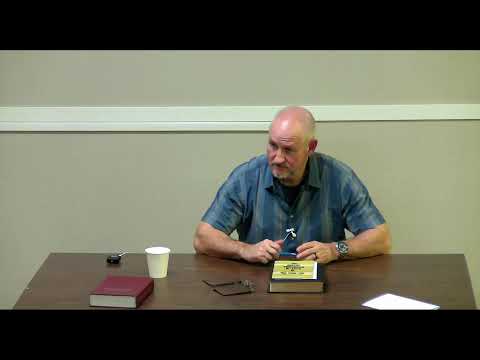
Christian liberty, properly understood, is not primarily about matters of lifestyle preference but about the freedom Christ has purchased for believers: freedom from the guilt, power, and punishment of sin, and freedom for joyful, childlike access to and obedience toward God. The 1689 London Baptist Confession chapter 21 unfolds this in three movements — the definition of Christian liberty (paragraph 1), the protection of liberty of conscience (paragraph 2), and the qualification that Christian liberty is never a license to sin (paragraph 3). Central to paragraph 2 is the confession's axiomatic claim that God alone is Lord of the conscience, which means neither civil authority nor ecclesiastical authority may bind the conscience beyond or against the Word of God. The practical application presses believers to distinguish between God's explicit commands and their own preferences, and to resist the near-universal temptation to elevate personal opinion to the status of thus saith the Lord.

Live Stream - February 04, 2024
John 13:1–17 presents the foot washing not merely as an act of hygiene but as a layered emblem pointing to the Incarnation, the passion of Christ, and the ongoing realities of regeneration, justification, and sanctification. The Son of God who stoops to wash the dirt from disciples' feet is the same one who goes to the cross to wash the guilt from their hearts, fulfilling the servant-song Messianism of Isaiah and the promised cleansing of Ezekiel and Zechariah. Peter's impetuous refusal and subsequent wholehearted submission illustrate the sinner's need for a part with Christ — union and communion grounded in spiritual washing, received through faith. The discourse then turns practical: those who have been so served by their Lord are obligated to advance his cause not through power or coercion but through humble, self-sacrificing service to one another and to the world.
CLIP: Jesus is the Best
The supremacy of Christ over all things is the ground on which sinners must rest. Drawing from Peter's response to foot-washing in John 13 and Paul's declaration in 1 Corinthians 6:9-11, this clip argues that what Jesus accomplished is not merely ceremonial cleansing but the total washing, sanctification, and justification of guilty sinners. To possess Christ by faith is to receive every spiritual blessing, because he saves to the uttermost.
The Ministry in Pisidia Antioch
Paul's evangelistic address in the synagogue at Pisidia Antioch reaches its climax in Acts 13:38–43 with two inseparable gospel blessings: the forgiveness of sins and justification by faith alone apart from the works of the law. The sermon traces the inability of the Mosaic law to justify — not because the law is defective, but because sinners cannot render the perfect, entire, and perpetual obedience it demands — and shows how Christ's active and passive obedience supply precisely what the law exposes as lacking. The response of the Gentiles, who begged to hear the gospel again, is held up as a rebuke to any preaching that substitutes self-help or moralism for the proclamation of free acceptance with God through Christ alone.

The Promise of Blessings and Curses (Part 1)
Leviticus 26:1–13 opens with a promise of blessing conditioned on Israel's obedience — a structure that raises the question of how the Old Covenant relates to the New. This study expounds the covenantal framework underlying Leviticus 26, arguing that the Old Covenant operated as a covenant of works at the national level, distinct from the covenant of grace realized in Christ. The blessings of rain, peace, and God's presence promised to Israel find their fulfillment in the New Covenant, where the obedience that secures blessing is Christ's own, imputed to his people by faith alone.

2LCF Chapter 8 - Of Christ, the Mediator (Part 5)
The work of Christ as Mediator — his active and passive obedience, definite atonement, and threefold office as prophet, priest, and king — is the subject of this exposition of 2 London Baptist Confession of Faith Chapter 8, paragraphs 4 through 10. The confession traces Christ's voluntary humiliation, his satisfaction of divine justice as a propitiation, and the retroactive efficacy of that work for Old Covenant saints who looked forward to him through promises, types, and sacrifices. Paragraph 8's teaching that Christ certainly and effectually applies redemption to all for whom he obtained it grounds the assurance of salvation entirely in the sovereign purpose of God rather than foreseen conditions in the sinner. The threefold office — prophet to instruct the ignorant, priest to reconcile the alienated, king to subdue and preserve the unwilling — frames the believer's comprehensive dependence on Christ alone.

The Appearance of the Love of God
Though mankind stands condemned under the description of Titus 3:3 — foolish, disobedient, enslaved to lusts and malice — the kindness and love of God the Father appeared supremely in the incarnation of the Son to rescue dead sinners by sovereign mercy alone. This sermon expounds Titus 3:4–8 under three headings: the appearance of the love of God, the application of the grace of God in regeneration and justification, and the affirmation of the gospel as the faithful saying ministers must constantly proclaim. The ordered sequence of the text is decisive: justification by grace through faith is the condition; good works are the consequent fruit, never the ground.

Live Stream - January 07, 2024

Hosea 7:8 declares that Ephraim is 'a cake unturned' — an image of something prepared but ruined through neglect and wrong ingredients. This sermon expounds that analogy to show that Israel's mixing with surrounding nations, their violation of God's moral, civil, and ceremonial law, made them as displeasing to God as a half-baked, burnt pancake. The sermon then turns the mirror on every human being: God created us as image bearers, demands perfect conformity to his law, and every sin — however small — renders us unacceptable before him. The remedy is not moral improvement but faith in Christ alone, whose perfect life of obedience and atoning death constitute the only offering God accepts, so that all who trust him are received as 'accepted in the Beloved.'

The Conclusion of Jesus's Public Ministry, Part 2
John 12:44–50 records the conclusion of Jesus' public ministry, and in it He reiterates the three controlling themes of the entire Gospel: His identity as the eternal Son who is consubstantial with the Father, His mission as the Light of the world who came not to judge but to save those abiding in darkness, and His authority as the one who speaks the very words of God. The unbelief described in the surrounding context — including the merely historical faith of rulers who loved the praise of men — sets the stage for Jesus' final public proclamation. Those who reject the Son reject the Father; those who receive Him by grace through faith pass from darkness into everlasting life.

Live Stream - November 26, 2023
Colossians 1:13–20 sets forth one of the richest concentrations of Christology in the New Testament, and this exposition works through it under three heads: the concise statement of salvation as divine deliverance from darkness into the kingdom of the Son, an expansion on the identity and work of that Son (his essential Divine Majesty, his mediatorial kingship, and his Redemptive Excellence in the crosswork), and finally the apostolic proclamation of this same Christ as the proper content of all Christian preaching. The sermon argues throughout that the errors threatening the Colossian church — and the church today — are answered not by novelty but by a high and uncompromising Christology that refuses to bring Christ down from his throne. The closing application draws from Hebrews 5: Christians are to press on from milk to solid food, growing in the knowledge of Christ so as to speak truthfully of the King of Kings to a world that in the Christmas season catches only a blurred glimpse of a babe in a manger.

The Gospel According to Hosea: Part 1
Hosea 2:14–23 presents the gospel in the form of an ancient Near Eastern marriage sequence — courtship, betrothal, and consummation — in which Yahweh pursues His unfaithful bride with an offer of abundant and eternal life. The passage is read as a mirror, not a window: the same spiritual harlotry that defined Israel before God defines every human being who has followed Adam into exile from God's presence. Justification is the legal transaction by which the sinner entrusts herself to God as husband, not master — received by faith alone, sealed by Christ's atoning work as the bride price of righteousness and mercy. The sermon closes with an urgent call to the unbeliever to accept the offer of eternal life, and with an exhortation to the believer to press on in anticipation of the consummation still to come.

The Explanation of the Hour
John 12:27–36 presents Christ at the threshold of the cross, his soul genuinely troubled yet wholly resolved to do the Father's will. This sermon expounds the theological weight of that moment: the true humanity of the Son of God, the Old Testament prophecy that framed his mission, and the glory of the Father as the animating purpose behind Calvary. The cross is not an accident or a tragedy — it is the hour for which the eternal Son entered time, bearing the cup of divine wrath as the only sufficient substitute for sinners who cannot redeem themselves. Unbelievers are pressed with urgency: while the light remains, believe on Christ and become sons of light.
The Gratitude of God's People
Colossians 1:10–14 presents Paul's apostolic prayer as a template for Christian growth, identifying four marks of a walk worthy of the Lord: fruitfulness in good works, increase in the knowledge of God, divine strengthening for patience and longsuffering, and giving thanks to the Father. The sermon argues that justification by faith alone issues necessarily in sanctification, and that gratitude is not an optional emotional response but the fitting conclusion of a life shaped by the gospel. Believers are called to thankfulness on the basis of three specific gospel realities Paul enumerates: qualification for a heavenly inheritance, deliverance from the dominion of darkness, and transfer into the kingdom of the Son of God's love — all grounded in the redemption accomplished by Christ's blood.

The Glorious Exchange
Zechariah 3 presents a courtroom scene in which the high priest Joshua stands before the angel of the Lord clothed in filth while Satan waits to bring his accusation — and God silences the devil not by appealing to Israel's performance but by sovereignly removing the filthy garments and clothing Joshua in rich robes. This fourth night vision of Zechariah illustrates what Luther called the glorious exchange: the sinner's guilt imputed to Christ and Christ's righteousness imputed to the believer, received by faith alone. The sermon traces this double imputation through Romans 5, 1 Corinthians 1, 2 Corinthians 5, Galatians 2, and Philippians 3, and refutes the New Perspective on Paul's rejection of forensic imputation. The exhortation is plain: when the adversary accuses, the Christian's only answer is not performance but the gospel of sovereign grace in Christ the Branch.

Live Stream - September 10, 2023
What is the gospel, and why does it hold primacy of place in Christian proclamation? Expounding 1 Corinthians 15:1–4, this sermon argues that the gospel — the death, burial, and resurrection of the incarnate Son of God — is the indispensable ground of salvation and the lifeblood of the Christian faith. The person of Christ is examined as very God and very man, his obedience at Calvary as substitutionary curse-bearing, his burial as the reversal of the Adamic curse, and his resurrection as the vindication of completed atonement and the declaration of the justification of all who believe. Sinners are called to believe on Christ alone, and saints are exhorted to regard the gospel not as routine doctrine but as the very air they breathe.

The Rich Young Ruler
What must a man do to inherit eternal life? The rich young ruler's question exposes the deepest error of fallen religion: the assumption that man possesses the moral ability to commend himself to a holy God. This sermon expounds Matthew 19:16–22, tracing Christ's deliberate use of the law — particularly the tenth commandment — not as a path of salvation but as a hammer to shatter the young man's self-righteousness and drive him to seek grace outside himself. The central application is urgent: stop asking what you shall do and ask instead in whom you shall believe, for justification is by faith alone in Christ alone, whose righteousness becomes yours and whose cross bears your sin.

Live Stream - July 30, 2023
Second Samuel 22:21–25 presents David's claim that God rewarded him according to his righteousness — a claim that stands in apparent tension with his adultery, conspiracy to murder, and failure to act justly in the rape of Tamar. This sermon argues that David's righteousness is not a profession of sinlessness but a celebration of imputed righteousness: the perfect obedience of Christ credited to the believing sinner by faith alone, the same basis on which every saint in every covenant has ever stood before God. Drawing on Romans 4, 2 Corinthians 5:21, and Philippians 3:9, the sermon shows that David possessed a thorough theology of sin, atonement, and justification by faith alone — and calls both the unconverted and the believing congregation to rest in and pursue the God whose grace is capacious enough to cover even the most public and heinous failures.

The Righteousness of David
David's declaration in 2 Samuel 22:21–25 that God rewarded him according to his righteousness stands in apparent tension with his gross sins of adultery, murder, and failure to act in the rape of Tamar. This sermon resolves that tension through the theology of justification by faith alone, demonstrating from Romans 4 that David, like Abraham, was accepted by God not on the basis of personal moral achievement but through the imputed righteousness of Christ received by faith — the same way any sinner in any covenant has ever entered the presence of God. David's own writings, particularly Psalm 32 and Psalm 51, confirm that he understood his standing before God to rest on atonement, forgiveness, and the crediting of another's righteousness, not sinless perfection. The sermon closes with a call to treasure public worship as David did, and to bring great sin to the great Savior who justifies the ungodly.
The Arrival of the Hour
John 12:20–26 presents the arrival of the appointed 'hour' — the cross — through two interconnected scenes: Gentile Greeks seeking an audience with Jesus, and Christ's own declaration that the Son of Man must be glorified through death. The universal scope of redemption, foreshadowed throughout the Old Testament and confirmed in the Greeks' arrival, demonstrates that Israel's Messiah is the Savior of every tribe, tongue, people, and nation. Christ's death is not merely exemplary but substitutionary and necessary — the grain of wheat that must fall and die to produce much fruit — grounding both the imputation of His righteousness to believers and the certainty of their eternal union with Him. Genuine discipleship flows from this: those who by grace receive Christ are marked by a radical reorientation away from self-love and this present evil age toward willing service and following of the Lamb.

The Riches of God's Grace
David's fall into adultery and murder in 2 Samuel 11 sets the stage for one of Scripture's most striking displays of divine grace in 2 Samuel 12:1–15. Nathan's parable exposes David's sin through the unstoppable initiative of God, and the prophet's indictment demonstrates that David's wickedness was aggravated, not mitigated, by the abundant grace God had already shown him. David's two-word confession — 'I have sinned against the Lord' — is met immediately with pardon, not because the confession was elaborate, but because forgiveness rests entirely on the atoning work of Christ, to whom David looked in faith through the promises of the Davidic covenant. The sermon calls both believer and unbeliever to receive the same grace: real forgiveness for real sinners, grounded in the righteousness of Christ imputed through faith alone.
Live Stream - June 18, 2023
Justification by faith alone — grounded in both the active and passive obedience of Christ — is the doctrinal foundation on which three believers are publicly baptized. The sermon works through two passages in Matthew's Gospel: the water baptism of Jesus by John, which marks the beginning of his active obedience in fulfilling all righteousness on behalf of sinners, and his metaphorical 'baptism' of suffering and death, which satisfies the wrath of God and secures redemption for his people. The double imputation — of Christ's righteousness credited to the believer and of the believer's sin laid upon Christ — is the only ground on which a guilty sinner can stand before a holy God, and baptism is the public emblem of that inward, Spirit-wrought reality.

The Active and Passive Obedience of Christ
The obedience of Christ — both active and passive — is the sole foundation of justification by faith alone. Working through two texts in Matthew's Gospel, this sermon expounds the theological distinction between Christ's active obedience, in which He fulfilled all righteousness on behalf of His people, and His passive obedience, in which He drank the cup of divine wrath and was overwhelmed by death as a ransom for many. Sinners cannot contribute a righteousness of their own; they need both the imputed righteousness of Christ's perfect life and the cleansing of His atoning blood. The occasion of three baptisms serves as the concrete illustration: the water publicly declares what God has accomplished inwardly through the finished work of the Savior.

The Resurrection and the Life, Part 4
The resurrection of Lazarus in John 11:38–46 sets before the reader the full display of Christ's two natures: the true humanity revealed in groaning, weeping, prayer, and command, and the true divinity revealed in the life-giving voice that draws a four-day-dead man from the tomb. The miracle is not a parlor trick but a deliberate act of the mediator, performed to glorify the Father and to call sinners to believe that Jesus is the Christ, the Son of God. The raised Lazarus is an analogy of the effectual call — the voice that issues the command carries with it the power to enable compliance — and a prefiguring of the general resurrection to come. The passage summons every hearer to confess with Martha, 'Thou art the Christ, the Son of God,' and to come forth from the grave clothes of sin into life in His name.