
Topic
Hamartiology
705 sermons · All topics

The Warning Against Adultery

Proverbs 6:20–35 presents a father's urgent warning against adultery, grounding it in the necessity and blessing of God's law as a constant guide and protector. The passage moves from the internal heart lust prohibited by the Tenth Commandment, through vivid analogies of fire and hot coals, to the devastating consequences adultery brings upon the adulterer, the violated party, and society. Solomon's contrast between the pitied thief who steals from hunger and the despised adulterer who steals from pure wickedness sharpens the moral weight of the Seventh Commandment. The sermon closes with three practical means of protection — remove, rejoice, remember — and with the gospel assurance that the blood of Christ cleanses even these sins upon repentance and faith.

The Penalty for Blasphemy
Leviticus 24 addresses both the daily obligations of tabernacle worship and the capital penalty for blasphemy, grounding each in the direct speech of God to Moses. The chapter's narrative pivot — an incident in which a man of mixed Israelite and Egyptian descent blasphemes the name of Yahweh — becomes the occasion for case-law application of the third commandment, surrounded by reminders of the lex talionis and the equal accountability of stranger and native-born alike. The typological furniture of the holy place (lampstand and showbread) points forward to Christ as the true light and bread of life, while the blasphemy legislation, with its witness requirements and retributive principle, reveals a God who guards his own honour and structures justice with both severity and safeguard. The sermon exhorts hearers to put away every profane use of the divine name and to cultivate a reverent, wholehearted employment of it in thought, word, and worship.

Israel, the Unturned Pancake

Hosea 7:8 delivers a striking verdict against Israel: 'Ephraim is a cake unturned' — a half-baked pancake, burnt on one side and raw on the other, displeasing and fit to be pushed away. The sermon expounds this image as God's indictment against a people who had mixed the practices of surrounding nations into their moral, civil, and ceremonial life, violating the law that was meant to reflect the character of Yahweh. The analogy is then pressed upon every hearer: all humanity, created as image-bearers, has similarly mixed sin into the batter of life and stands displeasing before a holy God who demands perfect obedience. The remedy is not self-reformation but Christ alone — the one who lived in perfect obedience, presented himself as a sweet-smelling offering, and paid for every failure of his people, so that all who believe are accepted in him and then called to pursue intentional conformity to his image.

Live Stream - December 17, 2023
Genesis 3:14–24 contains the first announcement of the gospel — what theologians call the Protoevangelium — in which God pronounces judgment on the serpent and promises that the seed of the woman will crush the serpent's head, suffering a wound in the process. The sermon traces four observations from verse 15: the Redeemer would be a man born of a woman, he would accomplish victory through suffering, through death, and ultimately through total triumph over the devil — a victory confirmed by the cross, resurrection, and Christus Victor texts of the New Testament. The remaining verses (16–24) unfold the consequences of the fall for the serpent, the woman, and the man, while the animal-skin coverings of verse 21 typologically anticipate the necessity of blood atonement for fellowship between God and man. Sinners are urged to believe on the Lord Jesus Christ, the skull-crushing seed of the woman, who alone can do what Adam and Eve — and we — could not do for ourselves.

The Promise of the Messiah
Genesis 3:14–24 contains the first announcement of the gospel — the proto-evangel — in which God promises that the seed of the woman will crush the head of the serpent, though at the cost of his own suffering and death. The sermon traces four observations from verse 15: the Redeemer would be a man born of a woman, would accomplish victory through suffering, through death, and in total victory over the devil. The latter half of the passage is then examined for the hope that extends beyond the fall: Adam's naming of Eve as 'mother of all living' as an act of faith in God's promise, and God's provision of tunics of skin as a typological foreshadowing of blood atonement. The hearer is urged to cast faith upon the seed of the woman — the Lord Jesus Christ — who has done what Adam and Eve, and what every sinner, could not do for themselves.

The Problem of Sin and the Mercy of God
Proverbs 28:13 identifies sin as the universal human problem and prescribes confession and forsaking of sin as the divinely appointed remedy. The sermon examines four aspects of the problem — the twin assumptions of universal sinfulness and the instinct to conceal it, biblical examples of attempted cover-up from Genesis to Acts, the common methods by which sinners suppress or redefine sin, and the cursed outcome of impenitence in both this age and the age to come. The remedy is traced through the exercise of faith (confession as agreement with God and trust in Christ's blood and righteousness), genuine repentance (forsaking sin rather than merely regretting it), and the certain merciful result — not a possibility but a promise — for all who lay hold of Christ as surety.

Death Penalty, Part 3
Romans 13:1–7 furnishes the New Testament's clearest warrant for civil government bearing the sword, including capital punishment — yet common objections, both biblical and pragmatic, continue to challenge this teaching. This third installment of a study arising from Leviticus 20 addresses the two most significant biblical objections: the pacifist misreading of Matthew 5:38–42 and the attempt to leverage John 8:1–11 against lawful execution. The sermon argues that Jesus in the Sermon on the Mount is correcting the misapplication of the lex talionis to personal relationships, not dismantling civil jurisprudence, and that his handling of the woman caught in adultery actually upholds Mosaic evidentiary law rather than nullifying capital punishment. Five pragmatic objections — that the death penalty is incompatible with Christian forgiveness, lacks mercy, risks executing the innocent, fails to deter, and forecloses salvation — are each answered from Scripture and reason.

Leviticus 20 - the Death Penalty
Leviticus 20 catalogues capital offenses under the Mosaic law — idolatry, witchcraft, adultery, incest, homosexuality, and bestiality — and provides the occasion for a sustained biblical-theological treatment of the death penalty across the covenants. The study traces the authorization of capital punishment from the Noahic Covenant in Genesis 9 through the Mosaic legislation and into the New Covenant via Acts 25 and Romans 13, arguing that the death penalty remains a binding obligation upon civil magistrates. Romans 13 is read as the New Testament's clearest statement that the sword entrusted to the civil magistrate is God's instrument for executing wrath upon evildoers in history, not merely a sign of general authority. Hearers are called to think biblically about the proper and limited role of civil government, to resist the conflation of civil submission with capitulation to tyranny, and to uphold the abiding moral normativity of capital punishment for murder and other heinous crimes.

The Explanation of the Jews' Unbelief
John 12:37–41 presents a theology of unbelief: despite the abundance of miraculous signs performed before their eyes, the Jewish contemporaries of Jesus refused to believe. The sermon examines their question about the Messiah's death in verses 34–36, shows their partial but deficient grasp of Old Testament prophecy, and then expounds John's double appeal to Isaiah — Isaiah 53:1 on the rejection of the servant's report, and Isaiah 6:9–10 on the divine judicial hardening of those who persistently resist. The unbelief of Jesus' hearers was not a failure of his ministry but the precise fulfillment of what God had foretold through his prophet, confirming that regeneration and faith are gifts of sovereign grace, not products of evidential persuasion. The sermon closes with a direct call to believe in the light while it may be found, grounded in the glory of the incarnate Son that Isaiah himself beheld in the throne room.

Wednesday Night Bible Study - November 8, 2023
Leviticus 20 prescribes specific penal sanctions for covenant violations, and this study surveys those sanctions before turning to the broader biblical teaching on capital punishment. The Noahic Covenant (Genesis 9:6), understood as a universal common grace covenant never abrogated, grounds the death penalty for murder in the imago Dei and assigns its execution to the civil magistrate. Old Covenant Israel adds further distinctions — between accidental homicide and murder, between first-table and second-table offenses — and Numbers 35 establishes that no monetary ransom may substitute for the execution of a murderer. The study closes by noting that blood guilt defiles the land and can only be expiated by the blood of the one who shed it, setting up a subsequent session on the New Testament's treatment of capital punishment.
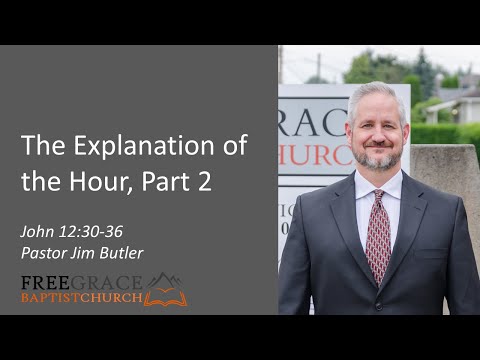
The Explanation of the Hour, Part 2
John 12:31–32 sets forth three consequences of Christ's lifting up on the cross: the judgment of the world, the triumph over the devil, and the salvation of sinners drawn to him by effectual calling. The cross is not one event among many but the focal point of all history — the hour in which the world is judged, Satan is cast out, and God sovereignly draws his elect from every nation to himself. The sermon closes with an urgent call to believe in Christ while the light remains, receiving by faith alone the forgiveness and alien righteousness his death and life secure.
Holiness in the daily lives of Old Covenant Israel
Leviticus 19:19–37 presents a series of miscellaneous laws governing mixed breeding, pagan practices, sacred prostitution, necromancy, care for the elderly and the stranger, and fair trade — all set within the covenant calling of Israel to be holy as God is holy. These laws are classified under the threefold Reformed distinction of moral, ceremonial, and judicial law, with the ceremonial portions fulfilled and abrogated in Christ while their embedded moral duties remain, traceable to the Ten Commandments. The passage is expounded to show that Israel's separation from surrounding nations was not arbitrary but theologically grounded in God's own act of separating Israel as his covenant people. The enduring application is that the law's pedagogical function — exposing sin and driving the people to the Lamb of God — is as operative for the New Covenant believer as it was for ancient Israel.
2LCF Chapter 6 - The Fall of Man, Sin, and Punishment Thereof
The fall of man, sin, and the punishment thereof — explored through 2LCF Chapter 6 — answers the fundamental question of why the Lord Jesus Christ came in His first advent. This study traces the confession's argument from the fall as God's wise and holy counsel in paragraph 1, through the representative sin of Adam and its covenantal consequences in paragraphs 2–3, to the doctrine of original sin, total depravity, and total inability in paragraph 4, and finally to the remaining corruption that persists in the regenerate throughout this life in paragraph 5. The doctrine of imputation — both of Adam's guilt to his posterity and of Christ's righteousness to His people — is shown to be the theological nerve running through the whole chapter. The study closes with the pastoral application that an honest reckoning with one's own remaining corruption ought to produce charity and grace toward fellow believers rather than a Pharisaical demand for perfection in others.

Sunday School Confession Study - Oct 15, 2023
The 1689 London Baptist Confession of Faith, chapter 5, 'Of Divine Providence,' paragraphs 2–7 sets the agenda for this study. After reviewing paragraph 1's foundational statement that God upholds, directs, and governs all creatures by his most wise and holy Providence, the study works through the confession's treatment of second causes, the ordinary use of means, the relation of Providence to sin (both in its general scope and in the specific cases of believers and unbelievers), and the special providential care God exercises over his church. The central concern throughout is theodicy properly grounded: that God's absolute sovereignty over first and second causes does not make him the author or approver of sin, while also refusing the weak refuge of 'bare permission.' The study closes with the encouragement that whatever befalls the elect is by God's appointment for his glory and their good, and that Providence's ultimate telos is the perfecting of the church as the bride of the Lamb.

Laws concerning sexual relations
Leviticus 18 regulates sexual morality within the structure of a covenant document, moving from preamble to prohibition to sanction. The chapter forbids incest, adultery, child sacrifice, homosexuality, and bestiality — not as arbitrary decrees but as God's just response to the documented wickedness of Egypt and Canaan, with the land itself serving as the instrument of covenantal judgment. Paul's invocations of Leviticus 18:5 in Romans 10 and Galatians 3 reveal that the chapter's 'do this and live' principle exposes the impossibility of law-keeping as a ground of justification, driving the reader to salvation by grace through faith in Christ alone. The abominations condemned here are not confined to the Mosaic code but are binding legislation upon all people at all times, as their reappearance in the New Testament epistles confirms.

Wednesday PM - Sept 27, 2023
Leviticus 17 governs the sacrificial use of blood among the covenant people of Israel, and this exposition traces three interlocking regulations: the prohibition against slaughtering sacrificial animals outside the Tabernacle, the prohibition against ingesting blood, and the rules for handling game animals. The central rationale is penal substitution — the blood of the animal represents life given in the place of the worshiper's life, prefiguring the atoning work of Christ. The Holiness Code of Leviticus 17–26 functions as the ethical imperative that follows the indicative of sacrificial forgiveness, a pattern that anticipates the New Covenant movement from justification into sanctification.

Wednesday Night Bible Study - Leviticus 1-16
Leviticus 16, the Day of Atonement, stands at the theological center of both the book and the Pentateuch, answering the question Exodus leaves unresolved: how may sinful man enter the presence of a holy God. This session reviews the whole of Leviticus 1–16, tracing the book's structure from the sacrificial system and the institution of the priesthood through the laws of cleanness, showing that every element of the ceremonial apparatus — offering, priest, atonement — was divinely instituted, not humanly devised. The Nadab and Abihu incident demonstrates that unauthorized worship is mortal transgression, while the two-goat ritual of chapter 16 pictures both propitiation and expiation, all pointing forward to the once-for-all sacrifice of the Lord Jesus Christ.
Judge Not

Matthew 7:1–6 is among the most misquoted passages in Scripture, weaponized by unbelievers to silence any moral reproof. This sermon works through four questions the text raises — why not judge, by what standard will we be judged, why do we judge, and how can we judge — and argues that Christ's caution is not a prohibition on all moral discernment but a warning against hypocritical, merciless condemnation that ignores one's own greater guilt before God. The solution lies in true repentance: only when the beam has been removed from one's own eye — by grace, through Christ — can a believer see clearly enough to restore a sinning brother with humility.

The Woman and the Pharisee
Luke 7:36–50 sets two figures in sharp contrast: a nameless woman whose many sins have been forgiven and a self-righteous Pharisee who sees no need of a Savior. The parable of the two debtors exposes the principle that those forgiven much love much, while those who imagine themselves barely indebted show no love at all. Christ's declaration — 'Your faith has saved you; go in peace' — demonstrates that forgiveness is received through God-given faith alone, not through any merit or priestly mediation. The sermon calls believers to let the magnitude of their own forgiveness produce humble, lavish love for Christ and gracious dealings with fellow sinners.

Live Stream - August 20, 2023
Numbers 21:4-9 records Israel's sin of complaining against God and Moses in the wilderness, God's judgment of fiery serpents, and the divinely appointed remedy of a bronze serpent lifted on a pole. This sermon argues that complaining against God and his appointed authorities is a serious transgression that violates both the first and tenth commandments, and that God in sovereign mercy provides healing through ordained means that require faith to embrace. The exposition is the first part of a two-part message; gospel application connecting Numbers 21 to John 3:14-16 is reserved for the evening service.

The Context of John 3:16, Part 1
John 3:16 opens with the word 'for,' marking it as a continuation of a preceding argument — yet the verse is almost universally quoted without its Old Testament context. This sermon expounds Numbers 21:4–9, the account of the bronze serpent in the wilderness, which Jesus himself cites in John 3:14 as the direct backdrop for his declaration of the gospel to Nicodemus. The sin of Israel — grumbling against a gracious God despite his continual provision — brought deadly judgment in the form of fiery serpents, and the God-ordained remedy was not the removal of the snakes but a look of faith toward a bronze serpent lifted on a pole. Hearers are called to repent of complaining against God and the authorities he has appointed, and to return for the evening service where the typological fulfillment in the lifting up of the Son of Man will be applied to the gospel.

The Context of John 3:16, Part 2
John 3:14–16 is set against the backdrop of Numbers 21, where God appointed a single, unlikely remedy for snake-bitten rebels in the wilderness — a bronze serpent lifted on a pole. The sermon argues that humanity's condition before God is morally terminal, that God alone has planned the only rescue in His Son, and that this rescue is as unlikely in human reckoning as a bronze snake healing the dying. Saving faith is a gift from God, its sole object is Jesus Christ the only begotten Son, and the imputed righteousness He secured is the believer's standing before God — sufficient ground for perseverance and the rejection of every false remedy.

Live Stream - August 13, 2023
The contest at Mount Carmel in 1 Kings 18 sets the living God of Israel against the false prophets of Baal and Asherah, exposing the utter futility of idolatry and demanding undivided allegiance to Yahweh. Elijah's brief, confident prayer stands in deliberate contrast to the frenzied, all-day invocations of Baal's prophets, demonstrating that God is not manipulable by human religious technique. The fire that falls from heaven is not merely a proof of Yahweh's power but a display of his grace, confirming that he receives sinners through the sacrifice he himself ordains. The sermon closes with a direct call: halt no longer between two opinions, but come to the Lord Jesus Christ, in whom alone there is justification, peace with God, and every spiritual blessing.

The Rich Young Ruler
What must a man do to inherit eternal life? The rich young ruler's question exposes the deepest error of fallen religion: the assumption that man possesses the moral ability to commend himself to a holy God. This sermon expounds Matthew 19:16–22, tracing Christ's deliberate use of the law — particularly the tenth commandment — not as a path of salvation but as a hammer to shatter the young man's self-righteousness and drive him to seek grace outside himself. The central application is urgent: stop asking what you shall do and ask instead in whom you shall believe, for justification is by faith alone in Christ alone, whose righteousness becomes yours and whose cross bears your sin.

Live Stream - July 30, 2023
Second Samuel 22:21–25 presents David's claim that God rewarded him according to his righteousness — a claim that stands in apparent tension with his adultery, conspiracy to murder, and failure to act justly in the rape of Tamar. This sermon argues that David's righteousness is not a profession of sinlessness but a celebration of imputed righteousness: the perfect obedience of Christ credited to the believing sinner by faith alone, the same basis on which every saint in every covenant has ever stood before God. Drawing on Romans 4, 2 Corinthians 5:21, and Philippians 3:9, the sermon shows that David possessed a thorough theology of sin, atonement, and justification by faith alone — and calls both the unconverted and the believing congregation to rest in and pursue the God whose grace is capacious enough to cover even the most public and heinous failures.

Live Stream - July 16, 2023
Second Samuel 12:1–15 records Nathan's confrontation of David following his adultery with Bathsheba and the murder of Uriah the Hittite. The sermon expounds three movements in the passage: the instruction of God's servant Nathan through the parable of the ewe lamb, the indictment of God's king through Nathan's direct accusation and rehearsal of divine grace, and the implementation of God's grace in David's brief but genuine confession and Nathan's declaration of pardon. The central argument is that David's recovery from grievous sin was initiated entirely by God's sovereign grace, not by David's own contrition, and that the pardon pronounced over David rests ultimately on the atoning work of Christ, the greater Son of David. Hearers are called to see in David a concrete illustration that God is a real Savior for real sinners, and to cast themselves on that same grace rather than on any supposed sufficiency of their own works or contrition.

The Riches of God's Grace
David's fall into adultery and murder in 2 Samuel 11 sets the stage for one of Scripture's most striking displays of divine grace in 2 Samuel 12:1–15. Nathan's parable exposes David's sin through the unstoppable initiative of God, and the prophet's indictment demonstrates that David's wickedness was aggravated, not mitigated, by the abundant grace God had already shown him. David's two-word confession — 'I have sinned against the Lord' — is met immediately with pardon, not because the confession was elaborate, but because forgiveness rests entirely on the atoning work of Christ, to whom David looked in faith through the promises of the Davidic covenant. The sermon calls both believer and unbeliever to receive the same grace: real forgiveness for real sinners, grounded in the righteousness of Christ imputed through faith alone.

The Vainglorious Quest, The Virtuous Path, and The Veracious Contemplation

Jeremiah 9:23–24 issues a threefold structure: a prohibitive warning against glorying in wisdom, might, or riches; a prescriptive call to glory in the understanding and knowledge of God; and a veracious contemplation of who God is and what He does. The sermon situates these commands within their covenantal context — the inevitable Babylonian judgment upon covenant-breaking Israel under the curses of Deuteronomy 28 — demonstrating that wisdom, strength, and riches will not avail in the face of irreversible divine justice. True glorying is exclusively God's due, and the knowledge of the one living and true God — Father, Son, and Holy Spirit — is the only wisdom, strength, and riches that profit eternally. Hearers are called to cast off vainglory, grow earnestly in the knowledge of God, and trust in Christ alone, in whom are found all true wisdom, strength, and riches.

The Triumph of Samson at Gaza
Judges 16 records the final chapter of the Samson cycle, moving from the removal of Gaza's city gates through Samson's betrayal by Delilah to his death in the destruction of the temple of Dagon. Against readings that reduce Samson to a figure of ungoverned sexual appetite, this exposition argues that Samson is a faithful judge of Israel, Spirit-empowered and strategically purposeful, whose every encounter with the Philistines is ordered by divine providence toward the deliverance of God's people. The departure of Yahweh from Samson is traced not to moral degeneracy but to Samson's disclosure of the sign of his Nazirite vow, which jeopardized the mission for which he was set apart. Throughout, Samson is presented as a type of the Lord Jesus Christ, whose greater deliverance through death saves more than his life alone could accomplish.

The Judicial Decision to Murder Jesus
The Sanhedrin's formal decree to execute Jesus, recorded in John 11:47–57, is the most extreme miscarriage of justice in human history — a body constituted to administer God's law plotting the murder of the only innocent man who ever lived. The sermon expounds the irony that Caiaphas, driven entirely by political self-preservation, nevertheless prophesied accurately: one man would die for the nation, and not for that nation only, but to gather the scattered children of God from every tribe, tongue, people, and nation. John's theological commentary on the high priest's words (vv. 51–52) unpacks the doctrinal heart of penal substitutionary atonement — the just for the unjust, the holy and harmless for the thoroughly defiled. The passage calls believers to stand in awe that Christ willingly walked into this kangaroo court, refused self-defense, and bore the wrath of godless men so that sinners might be freed from the wrath of God.