
Topic
Hamartiology
705 sermons · All topics

The Sixth Commandment, Part 5

The sixth commandment, 'You shall not murder' (Deuteronomy 5:17), is grounded not in mere legal convention but in the theological reality that man bears the image of God — an image that persists from conception through old age, in sickness and health, in the handicapped and the mentally ill. Drawing on Genesis 1, 5, and 9, alongside Jesus' exposition in Matthew 5:21-22 and John's application in 1 John 3, this study traces the commandment's reach inward to unwarranted anger and character assassination, and outward to the present cultural crises of abortion, euthanasia, and the neglect of capital punishment. Because the image of God is the theological rationale for both the prohibition of murder and the mandate of capital punishment, opposition to abortion and support for the death penalty are not contradictory positions but necessary corollaries of the same conviction about the sanctity of human life.

Deuteronomy 5:17 - 6th Commandment Part 4
Deuteronomy 5:17 forbids murder, not all killing, and the Westminster Larger Catechism identifies three exceptions: public justice, lawful war, and necessary defense. This sermon, the fourth in a series on the sixth commandment, examines the scriptural warrant for lawful war, moving from Old Testament legislation governing warfare and holy war through New Testament evidence of a consistently favorable view of the military. The argument concludes that Romans 13 authorizes civil government to wield the sword against both criminal offenders and foreign invaders, that this function is wholly consistent with the personal ethic of Matthew 5 and Romans 12, and that criteria derived from Augustine, Aquinas, and Turretin provide a biblical framework for distinguishing just from unjust war.
The Sixth Commandment, Part 3
The sixth commandment, 'You shall not murder' (Deuteronomy 5:17), prohibits unlawful killing with premeditation and malice, but the Bible distinguishes murder from lawful taking of life in capital punishment, self-defense, and just war. This study works through the Old Testament legal framework for self-defense, particularly Exodus 22:2–3, alongside several narrative examples, to establish that defensive homicide is not forbidden by Scripture. The teaching of Jesus in Matthew 5:38–42 is examined carefully to show that the Sermon on the Mount addresses personal, interpersonal ethics — not a universal prohibition on self-defense — and that Jesus himself assumes people will protect themselves and others. The study concludes with a call to think with biblical clarity on these matters in an age of muddled Christian ethics.
2LCF Chapter 9, Of Free Will

2LCF Chapter 9 ('Of Free Will') presents the doctrine of human will through four covenantal states: innocency, sin, grace, and glory. Reformed Christianity does not deny free will but insists that the will is conditioned entirely by the state in which man finds himself — created upright yet mutable, fallen into total inability, sovereignly freed by effectual grace, and finally made perfectly and immutably free to good alone in glory. The session traces this framework against the errors of Pelagius, Arminius, the Socinians, and the Jesuits, grounding the Reformed Baptist rejection of paedobaptism in the same biblical anthropology: there are only two states for man, dead in Adam or alive in Christ, leaving no room for an external covenant category for the children of believers.
The Conversion of Paul, Part 2
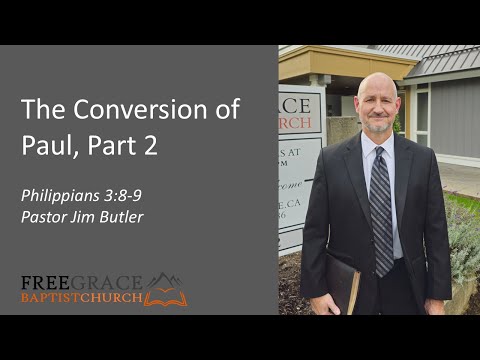
Philippians 3:8–9 presents the Apostle Paul's radical revaluation of all things in light of the surpassing worth of knowing Christ Jesus as Lord. Working through verse 8, this sermon traces three movements: Paul's declaration that he counts all things loss, his motivation in the excellence of the knowledge of Christ, and his conviction that everything else — past religious pedigree, present suffering, future comfort — is rubbish compared to gaining Christ. The sermon argues that justification by faith alone is the sole ground of acceptance with God, the only defense against the devil's accusations, the only source of true peace, and the only sure foundation of assurance — grounding each application in Paul's own apostolic biography and in Romans 8 and Romans 5.

The Sixth Commandment, Part 1
The sixth commandment, 'You shall not murder' (Deuteronomy 5:17), forbids not only the external act of unlawful killing but also the internal dispositions of hatred, unwarranted anger, and the assassination of another's character. The sermon establishes that the Hebrew term rendered 'murder' carries the specific sense of premeditated, intentional killing, thereby distinguishing murder from accidental homicide, negligent homicide, and three categories of lawful killing: capital punishment, just war, and self-defense. The bulk of the study undertakes a biblical theology of the death penalty, tracing it from the Noahic covenant in Genesis 9:6 through the Mosaic legislation and into the New Testament witness of Acts 25 and Romans 13:1–4, arguing that capital punishment is a non-abrogated, common-grace ordinance binding on all civil governments. Christians are called to think biblically about civil government, to pray for just magistrates, and to reject the cultural sentimentalism that has displaced God's revealed standard for the punishment of murderers.
The Glorious Curse Bearer
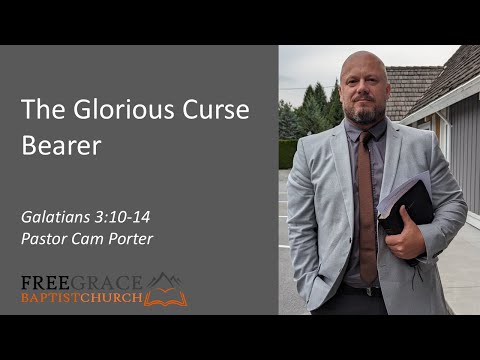
Galatians 3:10–14 presents the law's curse as a judicial sentence of divine condemnation from which no sinner can escape by obedience, since perfect and perpetual law-keeping is universally failed. Christ, the covenant champion, redeemed his elect by becoming a curse in their place — bearing the wrath due them, answering on a mountain at a tree the curse that entered the world on a mountain at a tree. The blessing of Abraham — the imputation of Christ's righteousness received through faith alone — comes not through circumcision, ceremony, or ethnic connection to the covenant community, but through union with the crucified and risen Christ. Those outside Christ remain justly under divine condemnation; those in him are freed from the curse and heirs of all the promises of God.

The Cry of Dereliction
What does Christ mean when he cries 'My God, my God, why have you forsaken me?' from the cross? This sermon on Matthew 27:45–46 carefully distinguishes what the cry of dereliction does not mean — no ontological division within the Trinity, no dissolution of the hypostatic union, no suffering of all three persons — before arguing that it expresses Christ's true humanity as our surety bearing the punishment of loss: the withdrawal of the Father's smiling favor and consolatory presence as the Son satisfies divine justice for the sins of his people. The sermon draws extensively on Psalm 22 to show that the forsakenness is covenantal and substitutionary, not metaphysical, and closes with a call to believe on the crucified and risen Christ who cried this cry so that his people never will.

The Youngest Son's Journey: Craving, Choices, and Consequences
The parable of the prodigal son in Luke 15 opens a searching examination of the youngest son's craving for the world, his reckless squandering of his inheritance, and the providential famine that reduces him to feeding pigs. The sermon traces how unchecked desire leads to impulsive departure from the father's house, wasteful living, and humiliating destitution. The application is immediate: the youngest son's trajectory is recognisable in any heart that dreams of a 'far country' and resists the safety and provision of home.

The Crucifixion of Christ
How did it come to pass that the only holy, harmless, and undefiled man who ever lived was led out to be crucified between two criminals? John 19:16–24 answers on two levels: on the surface, the wickedness of men — Pilate's cowardice, the Sanhedrin's envy, the multitudes' manipulation — and beneath it, the sovereign, predetermined purpose of God who sent His Son to be the Lamb of God, the substitute for sinners. The sermon traces the location at Golgotha as the fulfillment of Genesis 3:15, the charge written by Pilate as an unwitting confession of Christ's kingship, and the conversion of the dying thief as the paradigm case of saving faith — seeing nothing but a bloodied, dying man on a cross and confessing Him as Lord of a kingdom.

Hitting Rock Bottom: A Story of Redemption and Hope
The parable of the prodigal son illustrates the depth of human sin and the sovereign grace that brings a sinner to repentance. The younger son's descent into destitution — feeding pigs in a far country, longing to eat their food — pictures the miserable estate of every soul apart from God. Godly sorrow, distinguished from mere regret, drives the son to confess sin against both his father and against heaven. The sermon presses the listener to consider whether they have yet come to themselves, recognizing their own ruin and the mercy that awaits in the Father's house.

The Decision of Pilate
Pilate's encounter with the condemned Christ in John 19:5–16 exposes three interlocking realities: Pilate's own tension between justice and political cowardice, the divine authority behind all earthly power, and the sovereign verdict that sends the Son of God to the cross. The crowd's cry "Crucify him" and Pilate's capitulation, far from frustrating God's plan, enact it — the last Adam standing in judgment to accomplish what the first Adam forfeited. The sermon calls every hearer to look in faith to the one delivered up by divine appointment, receiving through his blood the forgiveness and imputed righteousness that alone secures acceptance before God.
2LCF Chapter 6: Of the fall of man, of sin, and of the punishment thereof
The fall of Adam and Eve was not an unforeseen catastrophe but an event God sovereignly permitted according to his wise and holy counsel to order to his own glory. Working through all five paragraphs of 2LCF Chapter 6, this study traces the anatomy of the fall — from man's original uprightness under the covenant of works, through the willful transgression of the law of their creation, to the imputation of guilt and conveyance of corrupt nature to all of Adam's posterity by ordinary generation. The totality of sin's consequences — total depravity, total inability, spiritual death, and the inheritance of wrath — makes the second and last Adam, Jesus Christ, the only and necessary answer, whose active and passive obedience reverses both the imputation and the inheritance fallen humanity bears in the first Adam.

The Scourging and Mockery of Jesus
What was Pilate attempting when he ordered Jesus scourged and permitted the soldiers' mock enthronement? This exposition of John 19:1–4 argues that Pilate's scourging of Jesus was a failed act of crowd appeasement by a governor who knew he was condemning an innocent man, while the soldiers' mockery staged a deliberate parody of royal investiture against one they took for a pretender to Jewish kingship. The sermon draws Isaiah 50 and 53 and Psalm 109 into the foreground to show that these sufferings were neither accidental nor outside the decree of God — the Father delivered up the Son, the Servant of Yahweh gave his back to those who struck him, and the imprecatory prayer of Psalm 109 illuminates the inner life of Christ before his accusers. The application presses the congregation to feel the weight of substitutionary suffering, to resist a superficial Christianity untouched by the cost of redemption, and to confess Christ's lordship now rather than in the judgment.

The Trial Before Pilate, Part 3
John 18:39–40 records Pilate's offer to release Jesus under the Passover custom, and the crowd's choice of Barabbas instead — a transaction that serves as an emblem of substitutionary atonement: the just taking the place of the unjust, the holy bearing what the unholy deserves. Drawing on Matthew 27:15–26 to amplify the scene, the sermon traces the envy of the religious leaders, the warning of Pilate's wife, the manipulation of the multitudes, Pilate's cowardly self-absolution, and the crowd's terrible cry of blood-guilt. The central application is that the believer stands before God not on the ground of personal righteousness but solely on account of Christ's vicarious obedience and death — the glorious exchange in which our sin is laid on him and his righteousness is credited to us.

2LCF Chapter 5, Of Divine Providence
Divine providence — God's upholding, directing, disposing, and governing of all creatures and all their actions — is the subject of 2LCF Chapter 5. The chapter moves from a general statement of providence in paragraph 1 through the relationship of first and second causes, the use of means, and the hardest pastoral question: how God's sovereign decree relates to sin in general, in believers, and in unbelievers. The session closes by grounding the doctrine in the particular care God exercises over his church, whose history is the key to all human history.

The Trial Before Pilate, Part 1
John 18:28–32 records the delivery of Jesus to Pontius Pilate, an event framed by both human wickedness and divine sovereignty. The sermon surveys the prior trial before the Sanhedrin in Matthew 26, exposing the false charges, the deliberate misquotation of Jesus's words about the temple, and the formal charge of blasphemy — then turns to John's account of the hypocrisy, lawlessness, and impotence of the Jewish authorities before Pilate. Against that backdrop of gross injustice, verse 32 grounds the entire episode in divine decree: the very words Jesus had spoken concerning his death were being fulfilled, and the wrath of men was being overruled by the providence of God for the salvation of the elect. The chief application is adoration — the redeemed sinner is called to see how far the Savior went to secure redemption, and the unbeliever is called to come to the one who will not cast out any who come to him in faith.

The Prodigal Son
Luke 15:11–32, the parable of the prodigal son, confronts two kinds of lostness: the deliberate rebellion of a son who demands his inheritance while his father still lives, and the self-righteous resentment of an elder son who cannot rejoice at his brother's return. The sermon traces the younger son's descent, his coming to himself in godly sorrow and repentance, and the father's extravagant, undeserved welcome as a picture of God's readiness to receive returning sinners. The older son's unresolved anger is pressed upon those whose confidence rests in their own moral performance rather than in grace. The sermon closes by pointing to Christ as the true older brother who, unlike his counterpart in the parable, laid down his life to make repentant sinners co-heirs with himself.

The Trial Before the Jews
John 18:13–27 presents the trial of Jesus before the Jewish authorities alongside Simon Peter's three denials, and John's deliberate interweaving of the two scenes forces the reader to measure Peter's cowardice against his Master's composed, unflinching faithfulness. Jesus, the true high priest, stands before the illegitimate proceedings of Annas and Caiaphas — proceedings marked by false witnesses, unprovoked violence, and a verdict predetermined by envy — and yet he defends his disciples, demands lawful evidence, and maintains his identity without wavering. Peter, by contrast, cannot acknowledge his Lord to a servant girl, illustrating the fickleness that characterises even redeemed sinners. The sermon closes by calling believers to remember both the rooster's rebuke of unfaithfulness and the grace of a Saviour who restores the very disciples who forsook him.

Julian and Raelene's Wedding
A Reformed Baptist wedding homily expounds the institution of marriage in Genesis 2:18-25, the fall into sin in Genesis 3, and the first gospel promise of Genesis 3:15 as the theological ground on which Christian marriage stands. The sermon traces how the Apostle Paul's teaching in Ephesians 5:22-33 — the husband to lovingly lead, the wife to honor and submit — flows from the creation order and points beyond itself to Christ and his church. The homily closes by calling every attendee, believer and unbeliever alike, to look to the Lord Jesus Christ, whose obedient life, atoning death, and resurrection are the only answer to the sin that corrupts marriage and every human relationship.

The Introduction to the Ten Commandments
The Ten Commandments stand apart from all other Mosaic legislation as the moral law of God — written by God himself on two tablets of stone, binding on all humanity in every age, and distinct from the ceremonial and judicial laws that have either been fulfilled in Christ or expired with the Old Covenant commonwealth. This study works through the introduction to the Decalogue in Deuteronomy 5, establishes the threefold division of the law, and then traces the threefold use of the moral law: its civil function as a restraint on sin in society, its pedagogical function in driving sinners to Christ, and its normative function as the pattern for the believer's sanctification. Four classical principles for interpreting the commandments are introduced to guide the series ahead, drawn from the Westminster Larger Catechism and Reformed exegetical tradition.

The Arrest of Jesus
John 18:1–12 presents the arrest of Jesus not as a defeat but as a sovereign, voluntary act of the divine-human Mediator. The passage is expounded under three headings: the betrayal of Jesus by Judas and his coalition of enemies, the glory of Jesus manifested in his command of the situation and his 'I am' declaration that felled the arresting party to the ground, and the arrest proper in which Jesus rebukes Peter's sword and embraces the cup of the Father's wrath. The sermon closes by tracing three layers of antitypical significance — the greater-David typology of 2 Samuel 15, the binding of Isaac in Genesis 22, and the garden of Eden in Genesis 1–3 — to show that the arrest of Christ is the hinge on which God's eternal purpose to save his people from their sins turns.

CLIP: An URGENT Plea With Unbelievers (Isaiah 55)
Isaiah 55 issues an urgent, time-sensitive call to unbelievers: the window of grace will close, and those who die outside of Christ will face the wrath of a thrice-holy God. The sermon confronts common self-excuses for delaying repentance — including the notion that one's sins are too great — and answers them with the inexhaustible pardoning grace of God. Every sinner is summoned to seek the Lord while he may be found, flee to Christ immediately, and rest in the abundance of his mercy.
Live Stream - April 27, 2025
Psalm 90, the only psalm of Moses in the psalter, confronts a rootless and ruined people with the brevity of life, the severity of divine wrath against sin, and the sufficiency of God himself as the only eternal dwelling place. Moses moves through an eternal dwelling (vv. 1–2), a brief journey (vv. 3–6), a hard journey (vv. 7–11), and the way back home (vv. 12–17), showing that death is not a natural development of human nature but a judicial sentence executed by God upon sinners in Adam. The psalm's petitions find their definitive answer in Christ, whose baptism fulfills Isaiah's cry that God would rend the heavens and come down, and in whom God once again dwells with his people. Those who number their days wisely will seek to be rich toward God, labor heartily unto him, and anticipate the endless joy that far outweighs this brief and difficult sojourn.

Our Eternal Dwelling Place

Psalm 90, the only psalm of Moses in the Psalter, confronts the brevity and bitterness of human life and points the wandering soul to the only dwelling place that neither crumbles nor wears out — God himself. The sermon moves through four movements: God's eternal being as the refuge of his people, the astonishing shortness of every human life, the hard reality that death is not natural entropy but divine judgment upon sin, and finally the hopeful petitions with which the psalm closes. Every petition in the psalm's closing verses finds its definitive answer in the person of Christ, in whom God has once again opened heaven and called sinners to dwell with him in peace.

The Necessity of Faithful Obedience
Deuteronomy 4 closes Moses' historical prologue with an urgent exhortation to the second generation of Israel on the necessity of faithful covenant obedience before crossing the Jordan. The chapter's three movements — the necessity of obedience (vv. 1–8), the dangers of idolatry (vv. 9–31), and the incomparability of Israel's God (vv. 32–40) — are treated as an impassioned speech by a man who lived the history he recounts. Scripture's sufficiency is defended against every form of addition or subtraction, and the regulative principle of worship is grounded in God's self-revelation at Sinai as a consuming fire who receives no image.

2LCF Chapter 1: Of the Holy Scriptures, Paragraphs 1-3
Philippians 2:8 presents Christ's humiliation as a twofold act: the declaration that he humbled himself voluntarily, and the demonstration that this humility extended from the womb to the cross through entire, exact, and perpetual obedience. The sermon carefully distinguishes the obedience rendered according to Christ's humanity as covenant mediator from any eternal subordination within the Godhead, rejecting eternal functional subordination as a departure from classical theism. The active obedience of Christ — his positive fulfilment of God's law throughout his life — and his passive obedience in his atoning death together constitute the sole ground of justification, which believers receive by faith alone and commemorate in the Lord's Supper.

Ask FGBC #41: Why Does The Devil Hate Women So Much?
The question of why women have historically suffered disproportionate oppression and violence is examined through a biblical theological lens. Two theological threads are drawn out: Satan's covenantal enmity against the woman whose seed would crush him (Genesis 3:15), and the doctrine of total depravity, which explains how sinful men exploit the physically weaker vessel Peter describes in 1 Peter 3. The discussion concludes that the abuse of women is a symptom of human rebellion against God's creational order of male headship and protection.
Ask FGBC #39: What Does The Bible Mean By The Unforgiveable Sin?
What is the unforgivable sin, and should a troubled conscience fear having committed it? Drawing on Matthew 12:31-32 and the apostasy warnings of Hebrews 6 and 10, this Q&A response argues that blasphemy against the Holy Spirit is not a momentary verbal offense but a wholesale, persistent rejection of the redemptive work of God in Christ — impugning the Spirit's testimony to Christ's works and glory. The defining mark of a genuine apostate is not anguish or doubt but a hardened, unrepentant contempt, like those who cried 'crucify him.' Anyone asking whether they have committed this sin gives evidence by that very asking that they have not.

The War Against the Midianites
Numbers 31 records God's command to execute vengeance upon the Midianites for their role in seducing Israel into idolatry and apostasy at Baal-peor — a crime instigated by Balaam that caused 24,000 Israelites to perish under divine judgment. The study argues that the severity of Moses' orders upon return from battle is not arbitrary cruelty but the just execution of God's judicial wrath against specific criminal offenders. Three passages from Deuteronomy (chapters 13, 20, and 21) are examined to demonstrate that Israel's normal wartime ethic was governed by humane principles that distinguished her from surrounding nations, underscoring that the Midianite war was a unique act of covenantal vengeance rather than a general template for holy war. The session closes by grounding these difficult texts in the consistency of God's justice, goodness, and faithfulness in bringing his people to the land of promise.