
Topic
Ecclesiology
1,163 sermons · All topics
Acts 4:24-31

Acts 4:24–31 records the corporate prayer of the Jerusalem church after Peter and John were threatened by the Sanhedrin for preaching Christ. The passage is examined in four movements: the congregation's unity in one accord, their confidence in God as sovereign creator, sovereign revelator, and sovereign governor, their specific requests for divine justice and boldness in proclamation, and God's immediate answer in the shaking of the place, the filling of the Spirit, and the resultant boldness. The sermon draws out that a high and uncompromised doctrine of divine sovereignty — God's decree extending even to the crucifixion and to all opposition against his church — is the very ground of Christian courage in the face of persecution, not a source of passivity.
The Christian Mother

What does it mean to be a Christian mother, and where does a mother's calling derive its power? Preaching from Proverbs 31:30, this sermon argues that a woman who fears the Lord is the only adequate foundation for the vocation of motherhood — not sentimentality, moral effort, or natural affection. Four aspects of the Christian mother are examined in order: her spiritual condition (she is saved by grace, not by good mothering), her influence (immeasurable and God-ordained), her authority (grounded in the Fifth Commandment itself), and her responsibility to instruct, model, discipline, and love her children in light of law and gospel. Mothers are urged to find their ultimate encouragement not in their own performance but in the righteousness of Christ imputed to them by faith alone.
The Lord's Concern for Widows, Part 1
The fifth commandment's requirement to honor parents grounds the Apostle Paul's instruction in 1 Timothy 5:3–8 that widows who are 'really widows' — left alone, without family, trusting in God — be financially supported first by their believing children and grandchildren, and only then by the church. The word 'honor' in verse 3 carries the same material force it bears in verse 17, meaning tangible provision of food, clothing, and shelter, not mere esteem. God's covenantal concern for the defenseless widow runs from Deuteronomy through the Gospels, establishing that care for widows is an expression of genuine piety, not an optional act of charity. The sermon presses the sobering warning of verse 8: to neglect one's widowed mother or grandmother is not merely a lapse in duty but a denial of the Christian faith itself, placing the professing believer below the standard even pagans maintain.

The Appointment of the Seven
Acts 6:1–7 presents the appointment of the first seven men set apart to serve the Jerusalem church, men whom later apostolic instruction in 1 Timothy 3:8–13 would identify as deacons in the formal sense. The sermon works through three movements: the temporal problem of neglected widows that threatened to consume the apostles' calling, the apostolic proposal demanding spiritually qualified men of good reputation full of the Holy Spirit and wisdom, and the divine provision confirmed by the spread of the Word. The governing argument is that the diaconate exists precisely to guard the church's primary ministries of prayer and gospel proclamation, freeing elders to devote themselves continually to those ends. The sermon concludes by directing both the newly installed deacons and any unconverted hearer to Christ, the Son of Man who came not to be served but to serve and to give His life a ransom for many.

The Fact of the Resurrection
John 20:1–23 presents three convergent lines of evidence for the bodily resurrection of Jesus Christ: the empty tomb witnessed by Peter and John, the personal appearance to Mary Magdalene, and the appearance to the assembled disciples. The sermon examines each episode as a first-hand historical account, noting the specific details — the folded grave clothes, the testimony of a woman, the skepticism of the disciples — that authenticate rather than undermine the record. Running throughout is an apologetic case against the mass-hallucination and grave-robber theories, grounded in the nature, variety, and consequences of the post-resurrection appearances. The resurrection is shown to be the Father's public vindication of the Son's substitutionary work, and hearers are called to trust the living Christ whose empty tomb guarantees both judgment for unbelievers and justification for all who believe.
Judges 9
Judges 9 narrates the brutal rise and fall of Abimelech, the illegitimate self-appointed king of Israel who murders 69 of his half-brothers and terrorizes the city of Shechem before meeting his end beneath a millstone dropped by a woman in Thebes. The chapter is examined under four headings: the state of Israel at Gideon's death, Abimelech's treachery, Jotham's fable and curse, and the divine judgment that fulfills that curse in precise detail. Central to the exposition is Jotham's parable of the trees and the bramble, which indicts not merely Abimelech's usurpation but the folly of those who appoint unqualified men to lead. The sermon closes with application to church governance: qualified leadership according to Scripture is not optional, and God's people bear responsibility when they place brambles in positions of authority.

The Parables of the Dragnet and Scribe
Matthew 13:47–53 closes the kingdom parables with two final teachings: the dragnet and the scribe. The dragnet parable presses the certainty of coming judgment — at the end of the age, angels will separate the wicked from the just and cast the wicked into the furnace of fire — a reality Jesus repeats deliberately so that no hearer can ignore it. The parable of the scribe then turns to those entrusted with the mysteries of the kingdom: disciples who have understood these truths bear a corresponding responsibility to function as faithful householders, bringing out of the treasure things new and old. The sermon calls every hearer either to flee to Christ as the only refuge from the wrath to come, or, if already a believer, to take seriously the stewardship of gospel knowledge.
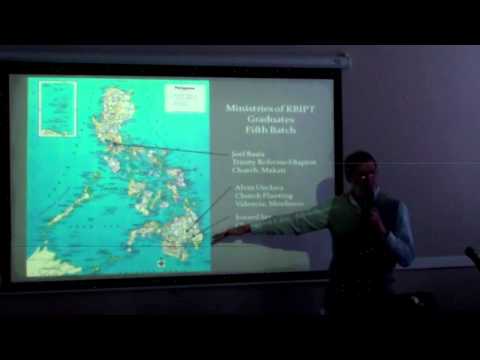
Free Grace Baptist Church - March 21 Missions Event
A Reformed Baptist missionary with thirty years of service in the Philippines presents an overview of the work in Metro Manila and beyond: church planting, a three-year pastoral training institute covering biblical languages and systematic theology, and itinerant teaching among pastors in remote provinces. The presentation is grounded in Revelation 5 and Romans 10 — Christ has purchased a people from every tribe, tongue, and nation, and messengers must be sent to gather them. The evening closes with prayer requests for the elders of Moonwalk Community Bible Church, the graduates scattered across the Philippine islands, and the ongoing effort to bring the gospel to Roman Catholics, Muslims, and those ensnared in health-and-wealth Christianity.
The Description of Israel's Apostasy
Israel's apostasy in Judges 2:7–3:6 is traced to a second generation that possessed cognitive knowledge of Yahweh but had no experiential, saving faith — a spiritual death that issued inevitably in Baal worship, covenant judgment, and escalating moral degradation. The passage unfolds three movements: the root of apostasy in the failure to know the Lord, the description of that apostasy in the service of Baals and Ashtoreths, and the divine response of covenant judgment followed by sovereign, gracious deliverance through imperfect human judges. Each judge prefigures the one deliverer — Jesus Christ — who alone can break the power of reigning sin where no left-handed savior can. The sermon calls believers to mortify spiritual amnesia through faithful use of the means of grace, and calls the unconverted to believe the gospel of Christ rather than await a full intellectual resolution of divine sovereignty.

The Parables of Seed and Leaven
The two briefest parables in Matthew 13's kingdom discourse — the mustard seed and the leaven — address a perennial temptation: to judge the kingdom of God by its small and seemingly insignificant beginnings. This exposition argues that both parables teach the same essential truth: the kingdom inaugurated by Christ begins imperceptibly but grows inevitably and pervasively, and its lowly origin in the incarnation, ministry, and crucifixion of Jesus is not a contradiction of royal power but its very pattern. The sermon concludes with a threefold application — the parables explain Christ's ministry, call the church to resist discouragement, and confront the unconverted with the call to believe on the Lord Jesus Christ.
The Conduct of the Good Minister, Part 1
What marks a minister as truly 'good' in the sight of God? Expounding 1 Timothy 4:6–11, this sermon argues that ministerial faithfulness is defined not by popularity, giftedness, or leadership skill, but by the diligent instruction of the congregation in sound doctrine — the words of faith and good teaching. The pursuit of godliness, understood as rigorous training for the unhindered service of God, surpasses all bodily discipline because it carries promise for both the present life and the age to come. The sermon concludes by addressing the contested phrase 'Savior of all men' in verse 10, rejecting universalism and unlimited atonement in favour of a reading grounded in God's common grace and providential preservation, with special and saving grace belonging distinctively to those who believe.
The Parable of the Wheat and Tares
Matthew 13:24–30 presents the parable of the wheat and tares, in which Christ teaches that his kingdom advances through a world — and a visible church — where genuine believers co-exist with those sown by the devil. The sermon addresses the theodicy embedded in the parable: God's sovereignty over evil does not mean the immediate expulsion of wickedness, but its certain, final judgment at the eschaton. Hearers are called to grow as wheat, to resist an overly censorious spirit toward apparent tares, and to trust that the Master has the harvest entirely under his control.
The Parable of the Sower Explained
Matthew 13:18–23 presents Christ's own interpretation of the Parable of the Sower, identifying four types of hearers who encounter the Word of the kingdom. The sermon argues that the parable was given primarily to explain the widespread rejection of Jesus in his own ministry, and secondarily to prepare and embolden the disciples against future discouragement. Working through each soil in turn, the exposition exposes the hardened unbeliever, the shallow apostate scandalized by trial, the fruitful-appearing hypocrite choked by carnal anxiety and prosperity, and the genuine believer who hears, understands, and bears fruit — all as a summons to honest self-examination before the Word.
The Ninth Commandment
The ninth commandment, 'You shall not bear false witness against your neighbor' (Deuteronomy 5:20), governs far more than courtroom testimony — it encompasses every form of lying, slander, backbiting, gossip, hypocrisy, and doctrinal heresy. Three grounds obligate God's people to truth-telling: God himself is truth, man bears God's image and his reputation is inviolable, and the stability of every social order depends on trust. The positive demand of the commandment calls believers to speak truth in all spheres of life, to discourage slander, and to resist the co-opting of humanist language that obscures biblical categories.
The Parable of the Sower Stated
Matthew 13:1–17 presents the parable of the sower and Christ's explanation of why he teaches in parables. The sermon works through two sections: the parable itself (vv. 1–9), exposing four types of hearers — hardened, shallow, crowded, and fruitful — and the purpose of parabolic teaching (vv. 10–17), which is both to reveal kingdom mysteries to the converted and to conceal them from the unconverted by divine design. The two-fold purpose of parables is grounded in sovereign election, drawing on Isaiah 6:9–10 and the language of Matthew 11:25–27, pressing hearers to examine whether they are genuinely receptive soil and to submit to the Godhood of God rather than resist his sovereign purposes in grace.
Joshua 24
Joshua 24 presents Israel's covenant renewal ceremony at Shechem, where Joshua rehearses the sovereign grace of God from Abraham's call out of idolatry through the conquest of Canaan, drawing out the logical demand for exclusive covenant fidelity. The chapter is examined as a formal covenant document — preamble, historical prologue, stipulations, and ratification — and shown to anticipate the same gospel pattern Paul unfolds in Romans: God's gracious act precedes and grounds the required response. Joshua's warning that Israel cannot serve the Lord apart from grace exposes the bankruptcy of emotional self-confident religion and points forward to the need for a covenant head, the Lord Jesus Christ, who alone can satisfy the terms of the covenant of grace.
The Murder of the Preborn, Part 1
Exodus 21:22–25 provides the case-law context for examining what Scripture teaches about the sanctity of human life, the personhood of the preborn, and the biblical prohibition against abortion. The sermon grounds the argument against abortion in the imago Dei — man is not merely made in God's image but is the image of God, a dignity that extends from conception through old age and that no civil court or medical consensus can override. The preborn child is demonstrated to be a full human person through the consistent testimony of Genesis, the Psalms, the Prophets, and the New Testament, while the Lex Talionis of Exodus 21 establishes that taking the life of a child in the womb carries the full capital sanction reserved for murder. Hearers are called to understand, articulate, and act upon this biblical truth — in their prayer closets, at the ballot box, and in their own personal holiness.
The Family of Christ
Matthew 12:46–50 presents Christ identifying his true family not by bloodline but by faith — those who do the will of his Father in heaven. The sermon expounds this text in two movements: the approach of Jesus' physical family (vv. 46–47) and his instruction concerning his spiritual family (vv. 48–50), demonstrating that entry into this family is by faith alone in Christ alone, not by moral achievement. The doctrine of adoption grounds the exposition: chosen in eternity, secured by the Son, sealed by the Spirit, the believer is called brother, sister, and mother by the holy Lord of heaven — not begrudgingly, but because of sovereign grace. The sermon closes with a threefold application: marvel at the privileges of belonging to God's family, bear its responsibilities faithfully, and above all behold the glory of the Christ who is not ashamed to call sinners his own.
The Identity and Confession of the Church
Paul's instructions to Timothy in 1 Timothy 3:14–16 ground the order and conduct of the local church in two anchoring realities: the church's identity as the house of the living God, pillar and ground of the truth, and the church's confession of the mystery of godliness centered on the person and work of Christ. The sermon presses the regulative principle of worship against pragmatism and innovation, arguing that how the church prays, orders its gender distinctions, and qualifies its officers is not optional but divinely mandated. Verse 16's early creedal fragment — God manifested in the flesh, justified in the Spirit, received up in glory — is shown to be the doctrinal center of gravity that holds the whole letter together and explains why ordered church life matters.
Joshua 22
Joshua 22 narrates the potential fracture and ultimate preservation of unity among the tribes of Israel over a misunderstood altar erected by the Transjordanian tribes near the Jordan. The chapter turns on the regulative principle of worship — Israel's requirement to sacrifice only at the central sanctuary — and the Western tribes' willingness to investigate before making war reveals both the gravity of corporate apostasy and the wisdom of disciplined diplomacy. The Eastern tribes' explanation exposes a legitimate pastoral concern: preserving covenant identity and the fear of the Lord across generations. The resolution, where Phinehas perceives the Lord's presence through the obedience and unity of his people, carries a direct word for the New Covenant church.
The Qualifications for Deacons
What qualifies a man to serve as a deacon in the church of Christ? Expounding 1 Timothy 3:8–13 in the context of Acts 6 and Philippians 1:1, this sermon argues that the diaconate is a divinely instituted office of service whose holders must meet specific biblical qualifications — not merely be willing volunteers or practically skilled men. Five categories of qualification are examined in sequence: personal character, doctrinal conviction, proven faithfulness, domestic situation, and the promised standing and boldness that belong to those who serve well. The sermon closes with a call for every Christian, not only aspiring deacons, to pursue the virtues Paul sets forth here.
The Incarnation, Ascension, and Triumph of Christ
Revelation 12 sets before the church a cosmic drama: the incarnate Son of God, born into a world where the dragon stood ready to devour him, ascends to the throne of God Most High and casts Satan out of heaven. The decisive act securing this victory — and silencing the accuser of the brethren — is the blood of the Lamb shed at Calvary. The same triumph that expels the devil from heaven intensifies his rage against the church on earth, so that the suffering of believers is not a sign of Satan's victory but of the saints' participation in Christ's cross. The sermon calls the church to persevere in the wilderness of this age, armed with the knowledge that the foe has been defeated and the messianic King reigns at the right hand of God.
Joshua 18-21
Joshua 18–21 records the distribution of the remaining tribal allotments, the establishment of cities of refuge, the assignment of Levitical cities, and a concluding theological summary of the entire book. The seven tribes' failure to claim their inheritance is exposed as unbelief and ingratitude, while Caleb and Joshua stand as models of faith that acts upon the promises of God. The cities of refuge illumine God's justice — distinguishing murder from manslaughter, protecting the innocent, and underscoring the sanctity of human life made in God's image. The passage closes with the theological heart of the book: not one word of God's promise failed, a principle that extends through the new covenant to the final defeat of all Christ's enemies and the rest that awaits the people of God.
The Qualification for Elders
What does Scripture require of a man before he can lawfully serve as an elder in Christ's church? Working through 1 Timothy 3:1–7, this exposition first establishes five elements of a genuine call to the ministry — desire born of right motives, graces indicating genuine Christian experience, gifts indicating divine provision, providential opportunity, and recognition by the local church — before moving through the text's qualifications under five headings: personal holiness, domestic faithfulness, experience in the faith, testimony toward outsiders, and the one indispensable gift of being able to teach. Throughout, the point is pressed that these virtues are not merely a checklist for candidates but the standard of godliness every Christian man and woman ought to be pursuing.
Through Wilderness and War
Joshua 14 presents Caleb's request for Hebron not merely as an episode of tribal land distribution but as a portrait of faith persevering through forty-five years of wilderness and war. Caleb wholly followed the Lord because he lived by the Word of God's promises rooted in the redemptive act of the Exodus, drawing on the covenant means of grace — Word, circumcision, and Passover — as the spiritual engine of his endurance. The sermon argues that the Lord's Supper functions for New Covenant believers precisely as those old covenant means functioned for Caleb: it roots the mind in the great redemptive act of Christ crucified, feeds faith with the promises of God's faithfulness, and supplies staying power for the wilderness and war of the Christian life. Those who have not believed the gospel are exhorted not to take the Supper but to flee to the Savior and believe.
The Unpardonable Sin
Matthew 12:31–32 contains Christ's solemn warning about the blasphemy against the Holy Spirit — the one sin that will not be forgiven in this age or the age to come. This exposition sets the saying in its Matthean context: the Pharisees, having witnessed the Spirit-empowered works of the Davidic Son, willfully and self-consciously attributed those works to Beelzebub. Drawing on parallel passages in Mark 3, Hebrews 6, Hebrews 10, and 1 John, the sermon distinguishes this sin from sins of ignorance and ordinary moral failure, showing that the unpardonable sin is not a moment's rashness but a settled, knowing rejection of the gospel accompanied by an irreversible hardening of heart. The sermon closes with a dual application: believers are urged to use the means of grace and guard against spiritual stagnation, while unbelievers are warned that persistent rejection only hardens the heart, and are called to flee to Christ while there is still time.
Women, the Word, and the Ministry
First Timothy 2:11–15 sets out Paul's prohibition against women teaching or exercising authority over men in the gathered church, grounding the rule not in first-century Ephesian culture but in the creation order of Genesis 2 and the fall of Genesis 3. The sermon works through three movements: Paul's exhortation that women receive the Word in submission, his double prohibition against women teaching men or holding authority over them, and his appeal to Adam's prior formation and Eve's deception as the theological rationale. Complementarian church governance is shown to be neither novel nor culturally conditioned but the normative, historically consistent pattern binding on every local church in every age. The closing treatment of verse 15 presents both the 'preservation in domestic faithfulness' reading and the 'messianic childbearing' interpretation, with the preacher siding with the latter.
Modesty and Good Works
Paul's instructions to women in 1 Timothy 2:9–10 are grounded in one controlling concern: corporate worship is about God, not the worshipper. This sermon works through the passage under three headings — the general principles of adornment, the specific applications Paul names (braided hair, gold, pearls, costly clothing), and the reorientation Paul commands toward good works. A biblical theology of jewelry demonstrates that Scripture nowhere condemns adornment as such; the prohibition targets ostentatiousness — the deliberate drawing of attention to oneself, whether through sexuality or the display of wealth — that distracts men from worship and provokes covetousness in sisters. The sermon closes by calling the Christian woman to pursue modesty, self-control, and good works as the true adornment of a gospel profession.
A Manifestation of Brotherly Love
Hebrews 13:3 commands believers to 'remember the prisoners as if chained with them' — not as a passive acknowledgement that suffering exists, but as an active, continual intercession on behalf of persecuted brothers and sisters. The sermon situates this command within the broader biblical pattern of enmity between the seed of the woman and the seed of the serpent (Genesis 3:15), arguing that persecution is the expected and normal experience of the godly throughout redemptive history. Three considerations structure the exposition: the duty to remember, the objects of remembrance (prisoners and the mistreated), and the reason for remembrance ('as if chained with them' — intense identification through shared membership in the body of Christ). Ten practical applications are drawn out, from intercessory prayer and letter-writing to praying for the conversion and restraint of persecutors, with the governing motive that Christ Himself is worth any suffering His people are called to endure.
Malachi 1
Malachi 1:6–14 indicts Israel's priests and people for offering blind, lame, and stolen animals at the altar — worship that was external in form but contemptuous in heart. This study works through three features of the passage: God's complaint against those who despise his name, the people's defensive response, and five observations about the nature of careless worship. The central application is that careless, heartless, or self-serving worship — whether in ancient Israel or the contemporary church — is not merely negligence but a form of evil that provokes the wrath of God, and that the blood-bought people of God ought to find the corporate worship of the Sabbath a delight, not a burden.