
Theological term
True Humanity of Christ
6 sermons · All terms

The Lament of the Psalmist

Psalm 13 is a lament psalm of David that moves through raw grief — the perceived forgetfulness of God, the daily sorrow of the soul, and the threat of encroaching enemies — to a resolved trust in the covenant mercy of God. The sermon traces this trajectory through the true humanity of Christ, who himself prayed lamentingly in Gethsemane and on the cross, establishing lament as a legitimate and God-given vehicle of prayer for his people. Lament is distinguished sharply from whining: whining refuses to petition God and ends in despair, while biblical lament drives the soul toward God and terminates in doxology. The congregation is called to bring their distress boldly to the throne of grace, resting in the hesed of God covenanted to all who are found in Christ.

The Psalmist's Cry in an Age of Deceit
Psalm 12 presses the question Psalm 11 leaves open: not what becomes of the wicked in the end, but how the people of God survive and remain faithful in the present evil age. The sermon traces two movements in the psalm — the destruction of foundations (vv. 1–4), marked by idle speech, flattery, and the proud autonomy of godless men, and the preservation of the righteous (vv. 5–8), grounded in God's arising to deliver the oppressed and in the utter purity of his Word. David's prayer is read through a Christological lens: the psalm is supremely the prayer of Christ in his earthly ministry, opposed at every step, yet sustained by the Father's Word and promise. The congregation is urged to respond to cultural and ecclesiastical decay not by retreat or despair but by theology, prayer, and dependent trust in the pure and preserving Word of God.

The Challenge and Confidence of the Psalmist
Psalm 10 presents a twofold movement: the challenge of the psalmist in verses 1–11, and the confidence of the psalmist in verses 12–18. The sermon argues that this psalm is not primarily about David's historical circumstances but about the earthly ministry of the Lord Jesus Christ — his humanity, his experience of apparent divine withdrawal, and his witness to the wickedness of those who conspired against him. The church, as joined to Christ, prays these words as her own, setting the promises of God against the troubled testimony of sense and experience, and resting in the certain reign of the Lord who will one day cause the man of the earth to oppress no more.

The Confirmation of His Death
John 19:31–37 records the confirmation of Christ's death by Roman soldiers and the apostle John, providing decisive historical and theological testimony against any swoon theory or denial of His true humanity. The soldiers' breaking of the legs of the other condemned men — but not of Jesus, who was already dead — and the piercing of His side with a spear fulfills two strands of Old Testament prophecy: the unbroken bones of the Passover lamb (Exodus 12:46; Numbers 9:12) and the piercing of Israel's Messiah (Zechariah 12:10). John's eyewitness testimony is given with a stated evangelistic purpose — 'that you may believe' — grounding the gospel call in verified historical fact. The sermon closes with an exhortation to confident, prayer-filled gospel proclamation on the basis of Christ's finished, sovereign work of redemption.
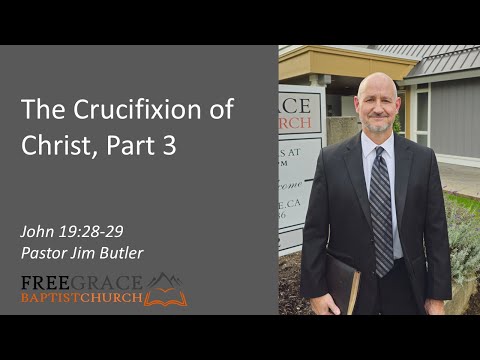
The Crucifixion of Christ, Part 3
John 19:28–29 records the fifth of the seven sayings of Christ from the cross: 'I thirst.' This exposition examines Christ's sovereign knowledge that all things were accomplished, the fulfillment of Old Testament Scripture — particularly Psalm 69 — in his cry, and the significance of the sour wine offered on hyssop. The sermon argues that Christ's thirst demonstrates both his true humanity and the completion of his redemptive mission, and calls both believers and unbelievers to come boldly to the throne of the sympathetic Savior who drained the cup of divine wrath on behalf of his people.

The High Priestly Prayer, Part 5
Christ's high priestly prayer in John 17:11–16 reveals two central petitions: that the Father would preserve the disciples by His name, and that He would protect them from the evil one — not by removing them from the world, but by keeping them within it. The sermon traces three arguments for preservation: Christ's own keeping of the disciples during His earthly ministry, His impending physical departure, and the world's settled hatred of those who belong to Him. Against this backdrop, the interceding Christ prays not merely for survival but for joy — that His people would suffer without losing sight of the strength that joy in God provides. The application is direct: Christians are left in the world for a reason, and the mission of gospel proclamation gives meaning to every trial they endure.