
Theological term
Total Depravity
306 sermons · All terms

The Unholy Alliance Seeks a Sign

Matthew 16:1–4 records a politically improbable coalition — the theologically opposed Pharisees and Sadducees — uniting in their demand that Jesus produce a sign from heaven. The sermon traces three features of this encounter: the nature of their demand, the hypocrisy Jesus exposes in their selective discernment, and the gravity of his description of their generation as wicked and adulterous. Jesus refuses to satisfy carnal curiosity or submit to carnal scrutiny, responding instead with the sign of the prophet Jonah — the death and resurrection of the Son of Man — the very gospel that calls every hearer to repent and flee to Christ rather than bargain with God.
The Lord's Prayer, Part 3
What does it mean to pray 'Your kingdom come'? This Bible study on Matthew 6:10 works through the second petition of the Lord's Prayer, distinguishing the universal providential kingdom, the present kingdom of grace, and the coming kingdom of glory, drawing on the Westminster Larger Catechism's answer to question 191. The session applies this petition at three levels — the individual believer, the local church, and the civil order — pressing the congregation toward a kingdom mindset that is expressed in doctrine, churchmanship, evangelistic prayer, and loyalty to the reign of Christ.

Do this in Remembrance of Me

The command of Christ to 'do this in remembrance of me' (1 Corinthians 11:24–25) grounds the Lord's Supper as an act of joyful obedience, not arbitrary religious imposition. Working through Paul's corrective to the Corinthians, the sermon examines three dimensions of the ordinance: its divine authority as a positive institution of Christ, its character as a memorial of the once-for-all sacrifice at Calvary in direct contradiction to the Roman Catholic Mass, and its Christ-centeredness as an extrospective gaze upon the perfections of the Redeemer rather than an introspective audit of the self. Christians are called to cultivate the habit of historical retrospect — remembering the full scope of Christ's messianic work — and warned that forgetfulness of the Savior is a perennial danger that the Lord's Supper is designed by God to remedy.
Judges 21
Judges 21 closes the appendix of the book of Judges (chapters 17–21) with a portrait of a nation morally unmoored: the eleven tribes, grieving the near-extinction of Benjamin, pursue the preservation of that tribe through oath-keeping so selective it becomes its own form of wickedness. The chapter exposes the pattern of sin snowballing from small beginnings into national catastrophe, the inconsistency of piecemeal holiness, and the horror of unrestrained human depravity. Yet God's sovereignty overrules the chaos, preserving the tribe of Benjamin — from which both King Saul and the apostle Paul would come — and the passage closes with the theological verdict of verse 25: without a king, every man does what is right in his own eyes.
2LCF Chapter 1 - Of the Holy Scriptures, Part 2
What gives the church the right to declare these 27 books—and no others—the Word of God? This session works through 1689 London Baptist Confession of Faith chapter 1, paragraphs 2 and 3, to answer that question by examining the origins of the New Testament canon and the three attributes by which canonical books are recognized: divine qualities, corporate reception, and apostolic origin. Drawing extensively on Michael Kruger's scholarship, the lesson demonstrates that the canon was neither a fourth-century political invention nor a community preference, but a self-authenticating body of Scripture whose recognition by the church was providentially prepared for from within the structure of redemptive history itself. The closing application presses the hearer to see that no argument for canonicity finally persuades apart from the inward testimony of the Holy Spirit.

The Instruction Concerning Defilement
True defilement, according to Jesus in Matthew 15:10–20, does not originate in ceremonially unwashed hands but in the corrupt human heart. This sermon works through the confrontation between Christ and the Pharisees to show that external religious observance — however scrupulous — cannot address the root problem of moral and spiritual depravity. The text exposes the wretchedness of fallen human nature through the catalog of sins Jesus names in verses 18–19, and drives the hearer to recognize that only the atoning work of Christ — his perfect obedience, substitutionary death, and resurrection — provides the remedy an unwashed heart requires.

The Content of Doxology
Jude's closing doxology (vv. 24–25) is not mere liturgical ornament but a theologically loaded ascription of praise to the Lord Jesus Christ that answers the heresy Jude has been combating throughout the epistle. The sermon works through three observations: Christ's exclusive preservation of his people, his singular greatness as the only God, the only Savior, and the only wise one, and the deserved praise that flows from those realities. The practical force is that the Christian's confidence under trial and the church's resistance to false teaching both rest on this one Christ, who keeps, presents faultless, and reigns with glory, majesty, dominion, and power, both now and forever.
The Feeding of the Five Thousand
The feeding of the five thousand in Matthew 14:13–21 is not merely a record of physical provision but a visible parable designed to compel a verdict about the identity of Jesus Christ. His compassion toward an interrupting crowd, his sovereign command over the multitudes, and his multiplication of five barley loaves and two fish to satisfy more than five thousand people together demonstrate that he is the greater Moses and the greater Elisha — the Son of God in whom all sufficiency resides. The bread-of-life discourse of John 6 shows that those who received loaves and fish without receiving the Savior had missed the point entirely, and the sermon closes with Peter's confession as the model response: 'Lord, to whom shall we go? You have the words of eternal life.'

The Significance of the Resurrection
Romans 4:25 presents what Charles Hodge called 'a comprehensive statement of the Gospel': Christ was delivered up because of our offenses and raised because of our justification. This sermon expounds the two parallel clauses of that verse, arguing that the death of Christ was a particular, substitutionary, propitiatory sacrifice for the definite sins of God's elect, and that the resurrection is the Father's public attestation that the atonement was fully accepted and justification secured. The practical implication is that justified sinners — not improved moralists — have peace with God and an unshakeable hope grounded not in exemplary preaching but in the historical, redemptive work of Christ.

The Justice of God in His Merciful Election

Romans 9:14–18 confronts the charge that God acts unjustly in electing particular sinners to salvation while passing over others. Drawing on God's declaration to Moses in Exodus 33 and His purpose in raising up Pharaoh, the sermon argues that divine election is just precisely because God, as the omnipotent Creator and sovereign Judge, retains the absolute right to bestow mercy on whom He wills and to harden whom He wills — a right He expressly claims and which no creature may dispute. The sermon situates election within the full ordo salutis and the pactum salutis, showing predestination to be the eternal foundation of every benefit of salvation applied in history. Hearers are called to find assurance in the marks of grace, to trust God's immutable purposes, and to proclaim the gospel as the ordained means by which the elect are called forth.
Free Grace Baptist Church - March 21 Missions Event
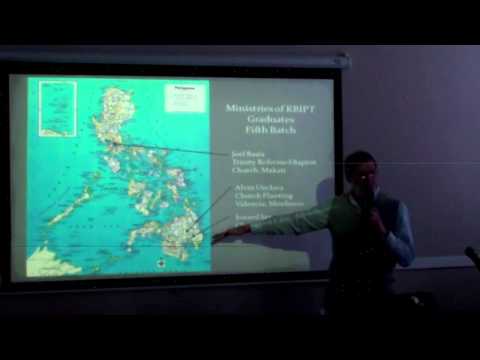
A Reformed Baptist missionary with thirty years of service in the Philippines presents an overview of the work in Metro Manila and beyond: church planting, a three-year pastoral training institute covering biblical languages and systematic theology, and itinerant teaching among pastors in remote provinces. The presentation is grounded in Revelation 5 and Romans 10 — Christ has purchased a people from every tribe, tongue, and nation, and messengers must be sent to gather them. The evening closes with prayer requests for the elders of Moonwalk Community Bible Church, the graduates scattered across the Philippine islands, and the ongoing effort to bring the gospel to Roman Catholics, Muslims, and those ensnared in health-and-wealth Christianity.

The Parables on the Value of the Kingdom
Matthew 13:44–46 presents two parables in which men sell everything they possess to acquire a hidden treasure and a pearl of great price — both illustrating the supreme value of the kingdom of heaven. The sermon argues that coming to Christ is never a loss: the sinner who forsakes all gains everything, and joy rather than grief ought to mark that transaction. Drawing on Moses in Hebrews 11, Paul in Philippians, and the attributes of the triune God from the 1689 confession, the sermon calls both the unconverted to seek Christ urgently and the believer to rest in the surpassing worth of what they already possess.
Judges 3:7-31
Judges 3:7–31 presents the first three judges of Israel — Othniel, Ehud, and Shamgar — as instruments of divine deliverance in a recurring cycle of sin, oppression, and rescue. The study examines how God sovereignly raises up unlikely, even morally complex figures to save a people who cry out not in repentance but in pain, underscoring that the emphasis of the book falls entirely on divine grace rather than human merit or spiritual recovery. The satirical portrayal of Eglon and the vivid detail of Ehud's assassination are treated not as embarrassments but as deliberate literary devices designed to humble Israel and magnify God. Each earthly deliverer points typologically to Christ, the only Savior capable of breaking the deeper bondage of sin itself.
The Demand for a Sign
Matthew 12:38–45 exposes the demand of the scribes and Pharisees for a sign as a mask for ethical rebellion: the problem is not insufficient evidence but an unwillingness to fear God and repent. Christ identifies them as an evil and adulterous generation, declares that his death and resurrection will be the only sign given, and warns that Gentiles — the Ninevites and the Queen of Sheba — will rise in judgment to condemn those who rejected far greater light. The passage closes with a parable warning that moral reformation without the conquering grace of the gospel leaves a man in a worse condition than before, and the application presses hearers to believe the word, flee moral reform as a substitute for the gospel, and reckon with the greater condemnation that falls on those who enjoy greater privilege.
The Tree and Its Fruits
Matthew 12:33–37 confronts every hearer with the inseparable connection between the inner condition of the heart and the words that proceed from it. Working through Christ's fourfold address to the Pharisees — exhortation to repent, condemnation of their wickedness, explanation of the heart's role as the source of speech, and anticipation of the Day of Judgment — the sermon establishes that words are not morally neutral but are the public evidence of what a person truly is before God. The doctrines of total depravity and total inability undergird the exposition: no one can speak good things from an evil heart, and only sovereign regeneration — God removing the heart of stone and giving a heart of flesh — can change the root so that the fruit changes. The only shelter from that coming day of accounting is the Lord Jesus Christ, the one man who never spoke an idle word, whose righteousness alone justifies the ungodly.
The Emancipating King
John 8:31–36 confronts two realities simultaneously: the totality of human bondage to sin and the sufficiency of Christ as the sole emancipating King. The sermon expounds five headings — the evidence of true discipleship, its blessing, the false assessment of unbelief, the divine assessment of unbelief, and the divine sovereignty in conquering unbelief — demonstrating that abiding in Christ's word is the evidence, not the cause, of regenerate discipleship. The liberation Christ brings is not social or political but forensic and spiritual: freedom from sin's guilt, power, and condemnation, purchased on Calvary and applied by sovereign grace alone. Hearers are called to know the truth, rejoice in it as the only lasting joy, and rest in the emancipating King rather than in any self-assessed freedom of will.
The Indictment of Israel's Unbelief
Israel's rejection of both John the Baptist and Jesus Christ is the subject of Matthew 11:16–19, where Jesus indicts his generation as incorrigible — stubbornly unresponsive to the mourning of the Baptist and the celebration of the Son of Man alike. The parable of children in the marketplace exposes the fatal irony: the very charge Israel leveled against Jesus — that he was a glutton and a drunkard, a friend of sinners — echoes the language of Deuteronomy 21's incorrigible son, the language that rightly belongs to Israel herself. Christ alone is the obedient Son who lived in perfect submission to the Father, providing the righteousness and forgiveness that rebellious sinners require. The sermon closes with a direct summons to repentance, warning that greater privilege under gospel preaching brings greater accountability on the day of judgment.
Come to the Savior
Isaiah 55 presents one of the Old Testament's most explicit gospel invitations: a universal summons to sinners of every nation to come, without price or merit, to receive the mercy secured by the suffering Servant of Isaiah 53. The sermon expounds the chapter under two main movements — the invitation to come (vv. 1–5) and the call to believe and repent (vv. 6–13) — demonstrating that what appears to be merely an offer to Israel in Babylonian exile is in fact the covenant of grace proclaimed to all humanity, grounded in Christ's substitutionary work. Particular attention is given to the folly of seeking satisfaction in anything other than God, the abundant pardon He promises to the vilest sinners who seek Him, and the absolute efficacy of His Word to accomplish the purpose for which He sends it. Hearers are urged to call upon God while He is near, to repent of sin, and to trust Christ alone for justification and eternal life.
Words to Live By
Four terse imperatives close Paul's first letter to Corinth — 'be watchful, stand firm in the faith, act like men, be strong' — and each one names an indispensable quality of the Christian life. This sermon works through 1 Corinthians 16:13-14 by unpacking vigilance, faithfulness, courage, and strength as the four great principles believers must pursue, set against the twin dangers of a deceitful heart and a culture bent on denying God's reality and authority. The exposition concludes with 1 Corinthians 13, showing that all four watchwords must be permeated by love, lest strength become harshness and courage become aggression.
Justification By Faith Alone
Philippians 3:7–11 presents the Apostle Paul's own testimony as the sharpest exposition of justification by faith alone: he counted every religious credential as loss in order to be found in Christ, 'not having my own righteousness, which is from the law, but that which is through faith in Christ.' The sermon works through Paul's possession of Christ (vv. 7–8), his position in Christ (v. 9), and his privileges in Christ (vv. 10–11), giving sustained attention to the forensic character of justification — pardon of sin and imputation of Christ's righteousness — as defined by the 1689 London Baptist Confession 11.1 and the Westminster Shorter Catechism Q33. The Roman Catholic doctrine of justification, as codified at the Council of Trent (Canons 9 and 11), is examined as a counter-example, demonstrating that any conflation of justification with sanctification destroys assurance and leaves the dying sinner without the comfort of Romans 8:1.
Thy Kingdom Come
The second petition of the Lord's Prayer — 'Thy kingdom come' — presses the believer to understand what the kingdom of God actually is before praying for it with any intelligence. This sermon traces three biblical dimensions of the kingdom: God's universal providential reign over all things, the already-present kingdom of grace inaugurated at Christ's first coming, and the not-yet consummated kingdom of glory awaiting his return. With that theological foundation laid, the sermon moves through concrete, structured applications for how the individual believer, the local church, and the wider world ought to be brought before God under this single petition.
The Crucifixion of the Bridegroom
John 19:16–24 records the crucifixion of the Lord Jesus Christ, whom Matthew 9:15 identifies as the Bridegroom taken away from his people. This exposition works through four elements of the passage — the setting, the crucifixion itself, the charge written over the cross, and the division of Christ's garments — to show that every detail fulfills the predetermined plan of God and the prophetic word of Scripture. The cross is not a scene for sentimental passion mysticism but the place where the Son bore the wrath of the Father as the substitute for sinners, and where sovereign grace, human depravity, and the glory of Christ are simultaneously on display. Believers are called to worship and marvel; those outside of Christ are called to look and live.
Christ and the Paralytic
The forgiveness of sins, not physical healing, is the central miracle of Matthew 9:1–8. Christ's pronouncement to the paralytic — 'Son, be of good cheer, your sins are forgiven you' — exposes sin as the problem worse than paralysis and declares the primary mission of Matthew's Gospel: Jesus saves His people from their sins. The scribes' charge of blasphemy is answered not refuted by argument but by the visible healing of the paralytic, which serves as public proof that the Son of Man possesses on earth the divine authority to forgive sins. The proper response to this authority is the response of the multitude: marvel and fear that together fuel genuine worship and praise.
Deuteronomy 26
Deuteronomy 26 brings the stipulation section of the Mosaic covenant to its close with two liturgical obligations — the offering of firstfruits and the triennial tithe — followed by a formal ratification of the covenant in verses 16–19. The chapter follows the recurring biblical pattern of guilt, grace, and gratitude: God's prior redemptive act (the Exodus) is the stated ground for every act of worship and giving, never a mechanism for earning blessing. The worshiper's verbal rehearsal of redemptive history — from Jacob's sojourn in Egypt to the conquest of Canaan — serves as a type of the New Covenant believer's recollection of Christ's work in the Lord's Supper, demonstrating that Christianity is never mindless religion but a filling of the mind and heart with the facts of divine redemption. The law's pedagogical function, Israel's failure to keep covenant, and Christ's fulfillment as the second Adam who succeeds where Israel failed are each drawn out as the chapter's deeper theological logic.
The Demonstration of God's Love
Romans 5:8 encapsulates the entire gospel in a single verse: God demonstrates his own love toward us in that while we were still sinners, Christ died for us. This sermon works through Romans 5:6–11 to establish that the objects of God's redeeming love were helpless, ungodly, sinners, and active enemies of God — leaving no ground for human merit in salvation. The demonstration of that love at Calvary is the sole foundation of justification, reconciliation, and assurance, and it calls the redeemed to a joy that fuels genuine gospel holiness rather than moralistic striving.
The Cross as the Manifestation of God's Love
John 3:16 — the most familiar verse in Scripture — is not a proof text for universal atonement but a declaration that the cross is God's appointed remedy flowing from His own gracious initiative toward a sinful world. Working through the passage in six movements, the sermon grounds God's love in the particular design of definite atonement: 'world' denotes all men without distinction, not all men without exception, and the believing one — regenerated by the Spirit before he ever looks to Christ — receives eternal life. The sermon calls both the unbeliever to flee to Christ and the Christian to return constantly to Calvary as the only sufficient display of God's immeasurable love.
The Announcement of the Coming King
Isaiah 9:6–7 announces a coming King whose titles — Wonderful Counselor, Mighty God, Everlasting Father, Prince of Peace — identify both his divine nature and his redemptive office. Preached against the backdrop of the 2012 Sandy Hook tragedy, this exposition argues that the world's violence and depravity find their only explanation in the doctrine of human sin and their only remedy in the incarnate Son of God. The sermon works through seven descriptors of Christ in verse 6 and five characteristics of his kingdom in verse 7, culminating in the assurance that the zeal of the Lord of Hosts — not human effort — secures and advances Christ's everlasting reign.
Thanksgiving in Thessalonica
Paul's thanksgiving in 2 Thessalonians 2:13–14 is directed Godward and grounded in the sovereign saving activity of the triune God — not in the virtue of the Thessalonians. This sermon examines the persons addressed (Christians as brethren beloved by the Lord), the proper direction of thanksgiving (always toward God, never toward self or others), and the rich theological content of that thanksgiving: sovereign election, sanctification by the Spirit, the gift of faith, effectual calling, and glorification. The application presses believers to reflect on their pre-Christian condition, their remaining corruption, and the mercies of God in Christ, so that gratitude is grounded in redemptive history rather than in future relief from present trouble.
John 1:12-13
What is saving faith, and how does it relate to knowledge, truth, and the new birth? Expounding John 1:12–13, this study argues that saving faith is not a leap into uncertainty, a vague encounter with a divine person, or something greater than opinion but less than knowledge — it is genuine knowledge of revealed truth, specifically the propositional truths of Holy Scripture concerning Jesus Christ. The study establishes four foundational principles: regeneration must precede faith, truth is the instrumental cause and object of faith, Jesus Christ is the central content of that truth, and faith ordinarily comes through the preaching of the word.
The Two Trees
Matthew 7:15–20 records Christ's warning against false prophets who enter the community of disciples disguised as sheep while remaining ravenous wolves within. The sermon works through two broad sections: the nature of false prophets (their deception, intention, and manifestation) and the parable of the two trees, arguing that the 'fruit' by which false prophets are known is primarily their doctrine rather than their outward conduct. Believers are not left helpless — Christ assumes his people, equipped with Scripture and the Spirit, are able to identify and resist false teachers whose ultimate end, along with those who follow them, is eternal destruction.