
Theological term
Substitutionary Atonement
222 sermons · All terms
The Resurrection and Justification

Romans 4:25 declares that Christ 'was delivered up because of our offenses and was raised because of our justification' — a verse Charles Hodge called a comprehensive statement of the gospel and Matthew Poole called an abridgment of the whole. The sermon works through two inseparable redemptive realities: the substitutionary, particular atonement accomplished in Christ's death, and the five-fold testimony of the resurrection to the validity of that work. The central application is that a robust grasp of justification by faith alone — the imputation of Christ's righteousness received through faith — is the irreplaceable foundation for Christian stability, comfort, and peace with God.
The Only Redeemer of God's Elect
Galatians 3:10–14 sets law and gospel in sharp contrast, demonstrating that justification before God is entirely excluded from the domain of law-keeping. Paul's threefold appeal to Deuteronomy 27, Habakkuk 2:4, and Leviticus 18:5 establishes that the law demands perfect, perpetual, and entire obedience — an impossibility for sinners in Adam. The only hope lies in Christ's substitutionary, curse-bearing work: he bore the imputed sin of his people, exhausted the wrath of God in their place, and secured for them both the blessing of Abraham and the gift of the Holy Spirit. The sermon calls hearers to abandon every form of faith-plus-works supplementation and to rest wholly in the particular redemption accomplished by Christ alone.

The Baptisms of Jesus Christ
What is the theological basis for believers' baptism? This sermon argues that Christians are baptized because of the two baptisms of Jesus Christ: his water baptism in Matthew 3, which inaugurated his life of active obedience by fulfilling all righteousness on behalf of his people, and his metaphorical baptism of suffering in Matthew 20, which points to his passive obedience in drinking the cup of divine wrath on the cross. Sinners possess no righteousness of their own sufficient to stand before a holy God; they are clothed entirely in Christ's alien righteousness, imputed to them through faith. The practical exhortation to those who have believed is to follow Christ in believer's baptism as an act of public obedience, not as a means of salvation but as its public confession.

The Conversion of Cornelius, Part 3
Peter's sermon to the household of Cornelius in Acts 10:34–43 marks a watershed moment in redemptive history: the formal, Spirit-ordained inclusion of Gentiles in the covenant of grace, without circumcision or submission to the ceremonial law. The sermon examines the providential convergence of Peter and Cornelius, the content of apostolic gospel preaching — the peace, person, work, and prophetic witness to Christ — and the doctrinal significance of justification by faith alone apart from ethnic or ceremonial identity. The central application is urgent: because Christ is ordained as judge of the living and the dead, sinners of every tribe and nation must believe now and receive remission of sins through His name alone.

The Suffering Servant
1 Peter 2:21–25 sets forth Christ's suffering as redemptive before it is exemplary: Peter's primary purpose is not to give believers a moral template but to ground their conduct in the substitutionary, sin-bearing work of the Servant prophesied in Isaiah 53. The sermon traces the description of Christ's redemptive suffering — his sinlessness, his silence under reviling, and his substitutionary death on the tree — before turning to its results: the freedom of God's people from sin's penalty and power, and the recovery of straying sheep by the Shepherd and Overseer of their souls. Believers are therefore called not to whine or revile under unjust treatment, but to commit themselves to him who judges righteously, following the pattern of the one whose stripes have healed them.

The Conversion of the Ethiopian Eunuch
Acts 8:26–40 records the Spirit-directed encounter between the evangelist Philip and an Ethiopian eunuch, a man doubly excluded from Israel's assembly by Deuteronomy 23:1 yet drawn by God's sovereign grace into the new-covenant community. The sermon traces three movements in the narrative — the providential meeting, the expository dialogue from Isaiah 53, and the eunuch's confession and baptism — arguing that the passage is not merely a quotation but a fulfillment of Isaiah 56, in which eunuchs and foreigners are brought near through the blood of Christ. Against any notion of baptism as a converting ordinance, the preacher grounds believers' baptism in the pattern of faith preceding baptism throughout Acts, Calvin's own concession that immersion was the ancient mode, and the 1689 LBCF's definition of baptism as an ordinance primarily for the party baptized. The sermon closes with an indiscriminate call to all sinners to relinquish their own righteousness and rest in the imputed righteousness of Jesus Christ.

From Alienation to Reconciliation
Colossians 1:21–23 sets the condition of fallen humanity — alienated from God, hostile in mind, and characterised by wicked works — against the sovereign act of divine reconciliation accomplished through the incarnation and substitutionary death of Christ. This sermon works through Paul's three-part description of man's former state before turning to the means and goal of reconciliation: the bodily death of Christ to present his people holy, blameless, and above reproach. The exposition closes with a call to perseverance grounded not in the believer's resolve but in the completed work of the one who reconciles, redeems, and saves to the uttermost.

Genesis 22:1-24
Genesis 22 presents the testing of Abraham's faith as the pinnacle of the patriarch's walk with God — a command so severe that it required Abraham to march three days to Mount Moriah to offer up Isaac, the son of promise. The narrative is read as dense with typological significance: Abraham foreshadows the Father who gives his only Son, Isaac prefigures Christ who carries his own wood and submits as a willing victim, and the substitutionary ram points forward to the Lamb of God who takes away the sin of the world. The obedience of Abraham is shown not to establish his righteousness before God but to manifest the validity of the faith already credited to him as righteousness in Genesis 15, consistent with James 2 rightly read against any Roman Catholic scheme of initial faith sustained by subsequent merit. The sermon closes with a call to faithful perseverance under trial, grounded in the confidence that God provides and that Christ has borne what no angel stayed.

The Believer's Gratitude toward God
Colossians 1:12–20 presents the believer's gratitude as an essential component of a walk worthy of the Lord — not a sentimental add-on but a theological necessity rooted in what God has actually done. Paul prays that the Colossians would be fruitful, growing, strengthened, and thankful, with gratitude serving as the lens through which sovereign grace becomes visible. This exposition works through two grounds for thanksgiving — inheritance and deliverance — before tracing the movement of Paul's prayer into the great Christological hymn of verses 15–20, where Christ as Creator, Sustainer, and Redeemer becomes the ultimate reason for the believer's praise. The sermon applies throughout with the exhortation to rehearse these redeemed blessings, particularly in the context of the Lord's Supper.

Stephen's Defense, Part 7
The tabernacle and temple of Israel were not ends in themselves but types pointing forward to the Lord Jesus Christ as the true dwelling place of God with his people. Expounding Acts 7:44–45, this sermon traces Stephen's defense against the charge of being anti-Temple by surveying the tabernacle in the wilderness (Exodus 25–40), the Levitical sacrificial system as the God-ordained means of approaching a holy God, and the conquest of Canaan under Joshua as the triumph of Yahweh's strength over Israel's enemies. The central application is that sinful men may dwell with God only through the blood of Jesus Christ — the substance to which every tabernacle, temple, sacrifice, and conquest pointed — and that the same sovereign God who drove out the Canaanites is the God who mortifies sin in his people by his Spirit.

Free Grace Baptist Church - March 13, 2019 Bible Study
Genesis 15 presents the Abrahamic covenant in two movements: the reiteration of God's promise of seed and land to a childless and landless Abram (vv. 1–6), and the solemn ratification of that covenant through a self-maledictory oath ceremony (vv. 7–17). Verse 6 — 'he believed in the Lord, and He accounted it to him for righteousness' — is expounded as the locus classicus of justification by faith alone, with faith understood as the empty instrument that receives an alien righteousness imputed from Christ, not a meritorious work brought to God. The unilateral passing of the divine presence between the animal pieces is shown to anticipate Calvary, where Christ became the curse for covenant-breakers, sealing in blood what God swore to Abraham.

Stephen's Defense, Part 2
Stephen's defense before the Sanhedrin in Acts 7:2–8 turns on a redemptive-historical reading of Abraham that dismantles the charges of blasphemy against the law and the temple. The sermon traces three movements: the call of Abraham (vv. 1–4), the promise of land and descendants made to a childless man (vv. 5–7), and the covenant of circumcision (v. 8). Central to the exposition is the argument that God appeared to Abraham outside the land and apart from any temple, that both circumcision and temple find their terminus in Christ, and that Abraham's justification was by faith alone — his obedience being the fruit, never the ground, of that faith. Listeners are urged to trust not in any outward religious token but in the God of Abraham who sent his Son to fulfill every covenantal obligation his people could not meet.
The Apostles' Defense before the Council
Acts 5:27–32 records the apostles' second arraignment before the Sanhedrin and their bold proclamation of the gospel under direct threat of punishment. Peter's reply — 'we ought to obey God rather than men' — establishes a permanent principle for the church: when civil or religious authority commands disobedience to God, the Christian is bound to God alone. The sermon expounds Peter's gospel proclamation in verses 30–32, treating the incarnation, crucifixion, exaltation, and gift of repentance as a coherent apostolic witness, and closes with exhortations to prepare for persecution, persevere in bold proclamation, and believe the message of forgiveness through Christ.
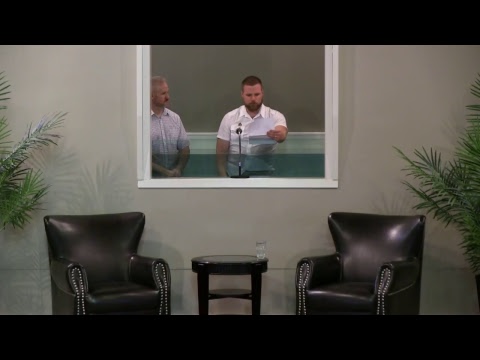
Livestream - Baptism: Wim Kerkhoff
Acts 8:26–40 records the conversion and baptism of the Ethiopian eunuch, and this exposition sets that account against its Old Testament backdrop in Isaiah 53 and Isaiah 56 to show that what is happening is not merely one man's conversion but the fulfillment of covenant promises: the inclusion of those doubly excluded from the assembly of Israel. The sermon works through three movements — the divine appointment of the contact, the gospel communication beginning from Isaiah 53, and the conversion issuing in immediate baptism upon confession of faith. The central application is that God is characteristically and eagerly a saving God, that believers' baptism follows faith as its ordained external sign, and that no sinner — whether powerful or poor, crisis-converted or quietly brought to faith — is beyond the reach of sovereign grace.

The Apostolic Address to the Council
Peter's address to the Sanhedrin in Acts 4:5–12 is examined under three headings: the declaration of the name of Jesus Christ as the power behind the healing of the lame man, the prophetic witness drawn from Psalm 118:22, and the exclusive sufficiency of that name for salvation. The sermon argues that Peter, filled with the Holy Spirit, does not merely defend himself before the council but effectively places his persecutors on trial, indicting them for rejecting the chief cornerstone while simultaneously holding out the gospel to them. The exclusivity of Christ as the only name under heaven given for salvation is pressed against religious pluralism and any notion that sinners must achieve moral readiness before coming to Christ — the call is simply to hear and believe.

The Sermon in Solomon's Porch, Part 2
Peter's sermon in Solomon's Porch confronts Jerusalem sinners with the necessity of repentance, pressing three realities upon them: their ignorance was willful, not innocent; God's sovereign providence overruled even their wickedness in crucifying Christ to fulfill all that the prophets foretold; and the call to repent and turn carries with it the promised blessings of sins blotted out, times of refreshing from the Lord's presence, and the indwelling presence of Christ by Spirit and Word until the restoration of all things. The exposition of Acts 3:17–21 drives toward a direct appeal: those burdened with sin must repent and turn to Christ, the only one in whom those blessings are found.

A Psalm of the Cross
Psalm 22 is a prophetic psalm of David that transcends David's own experience to describe with precision the suffering, death, and exaltation of the Messiah. The sermon examines the cry of dereliction ('My God, my God, why have you forsaken me?') with theological care, rejecting the notion that the Father abandoned the Son in any way that ruptured the Trinity or dissolved the hypostatic union, and instead grounding the forsakenness in the Son's substitutionary bearing of the wrath due his people. Three features of Messianic confidence sustain Christ through his ordeal — the holiness of God, the past faithfulness of God, and the invoked presence of God — and the congregation is called to meet their own trials with the same theological ballast that sustained the Savior on the cross.
The Precious Blood of Christ

1 Peter 1:18–20 presents the redemption accomplished by Christ as grounded in the infinite value of his sinless sacrifice, the eternal decree of the triune God, and the certainty of its historical occurrence. This sermon expounds three dimensions of the 'precious blood of Christ': its surpassing worth measured against corruptible earthly things; its origin in the determined counsel of God before the foundation of the world; and its singular reality as a manifest historical event attested by eyewitnesses. The Lord's Supper, observed the same evening, provides the pastoral occasion for calling both believers to joyful reflection on the blood that cleanses from all iniquity and unbelievers to repentance and faith in the one Lamb without blemish and without spot.
The Death, Burial, and Resurrection of Christ
What is the gospel, and why does its content matter for the Lord's Supper? Expounding 1 Corinthians 15:1–20 with focused attention on verses 3–4, this sermon argues that the gospel is defined by three inseparable historical and theological events: the death, burial, and resurrection of Christ. Each event carries precise atoning weight — the death is substitutionary, propitiatory, and expiatory; the burial confirms the reality of that death and sets the stage for resurrection; the resurrection vindicates Christ's saving work, bears witness to the justification of his people, and establishes him as judge of the living and the dead. Delivered in the context of the Lord's Supper, the sermon calls believers to a wonder-filled, theologically informed observance of the ordinance, and warns unbelievers that the risen Christ who died for sinners will also be their judge.

Genesis 3:14-24
Genesis 3:14–24 records the consequences of the fall, and the heart of this study is the protoevangelium of Genesis 3:15 — the first gospel promise in Scripture. God's curse upon the serpent contains within it an announcement of the Messiah: the seed of the woman who would crush the serpent's head, accomplishing total victory through suffering and death. The sermon traces this skull-crushing seed through the biblical narrative — from the typological head-wounds of Judges and David's defeat of Goliath, to New Testament fulfillment in Colossians, Hebrews, 1 John, and Revelation 12 — demonstrating that the cross of Christ is the decisive blow against the devil foreshadowed in Eden. The study closes by examining the consequences for the woman and the man in verses 16–19, situating the tensions of marriage and labor in a post-lapsarian world that Christ's redemptive work is already beginning to address.

The Resurrection and Justification by Faith
Romans 4:25 presents what the commentators Matthew Poole and Charles Hodge each called an abridgment or comprehensive statement of the whole gospel: Christ was delivered up because of our offenses and raised because of our justification. The sermon works through both halves of this verse to show that the death of Christ was a substitutionary, propitiatory sacrifice satisfying divine justice on behalf of the elect, and that his bodily resurrection is the Father's public declaration that the sacrifice was accepted and justification secured. Four theological connections between resurrection and justification are drawn out: the resurrection declares Christ to be the Son of God with power, testifies that his sacrifice was accepted, confirms that satisfaction was rendered, and demonstrates that redemption was fully accomplished. The sermon closes at Romans 5:1 with the fruit of the whole discussion — peace with God through our Lord Jesus Christ — applied to those who once stood condemned as ungodly offenders.

The Three-Fold Exhortation
Hebrews 10:19–25 sets forth a two-fold foundation and a three-fold exhortation for corporate Christian life. The foundation is Christ's blood-purchased boldness of access into the holiest and His abiding high-priestly intercession — both of which make the old-covenant sacrificial system not merely obsolete but inferior in kind, not degree. From that foundation the apostle issues three commands: draw near with a true heart in full assurance, hold fast the confession of hope without wavering, and (deferred to a subsequent sermon) consider one another to stir up love and good works. The sermon presses hearers to root their weekly confidence not in the quality of their obedience but in the dignity of Christ's person and the virtue of His once-for-all sacrifice.

The Sacrifice Remembered
What does it mean to remember the death of Christ at the Lord's Supper? Examining 1 Peter 1:18–20, this sermon traces three dimensions of that remembrance: the incomparable value of Christ's precious blood over all corruptible earthly things, the eternal and love-driven divine purpose behind the atonement foreordained before the foundation of the world, and the singular historical reality of the incarnation and sacrifice. The congregation is called to prize Christ above every earthly attachment and to observe the Lord's Supper with the gravity and joy befitting so great a Savior.
The Crucifixion of Jesus, Part 5
Matthew 27:51–56 records a cluster of supernatural signs accompanying the death of Christ — the rending of the temple veil, the earthquake, the splitting of rocks, and the resurrection of saints — each of which publicly attests the efficacy of Christ's atoning work. The torn veil simultaneously signals the judgment of God upon apostate Israel and the opening of access to the Father through Christ's blood, marking the covenantal transition from the old order of sacrifice to the new covenant inaugurated at Calvary. The centurion's confession, 'Truly this was the Son of God,' demonstrates that the cross reaches sinners from every tribe and tongue, while the faithful women at a distance stand as witnesses to Christ's death, burial, and resurrection. The sermon calls every hearer to receive the torn veil as God's own invitation to draw near through the finished work of the Lord Jesus Christ.

The Crucifixion of Jesus, Part 4
Matthew 27:47–50 records the final moments before Christ's death on the cross — the mockery of bystanders who misheard his cry of dereliction as a call for Elijah, the offering of sour wine, and his loud, voluntary yielding of his spirit. The sermon examines what the cry of dereliction does and does not teach: it does not indicate a division within the Trinity, a dissolution of the hypostatic union, or patripassianism, but it does express the qualified, temporary withholding of the Father's favour from the Son as he bore the punishment due to his people. Christ's loud cry at the moment of death demonstrates that he laid down his life sovereignly and willingly, not as a victim overcome by suffering but as a priest offering himself as substitute. The only fitting response to this substitutionary sacrifice is not moral self-improvement but worship, gratitude, and faith in the one who was forsaken so that his people would never be forsaken.

Free Grace Baptist Church - October 22, 2017 AM
Matthew 27:32–54 records the crucifixion of Christ amid layered mockery from three distinct groups — passers-by, the religious establishment, and the two robbers. This exposition argues that each taunt ironically confirms what it intends to deny: that Jesus is the Son of God, the true temple-builder, and the Saviour of Israel. The sermon draws out the substitutionary logic of the cross — that Christ remained on it not despite his divine sonship but because of it, bearing the wrath owed to his people so that divine justice might be satisfied in him rather than in the sinner.

Free Grace Baptist Church - October 15, 2017 AM
Matthew 27:32–38 presents the crucifixion of Jesus Christ as the central event in redemptive history, the long-anticipated fulfillment of Old Testament promise from Genesis 3:15 through Isaiah 53. The sermon traces two movements: the way to the cross — bearing, location, and the bitter drink — and the act of crucifixion itself, attending to the division of garments, the watching guards, the charge above his head, and the company of criminals. Throughout, the visible shame of the Son of God is shown to be the appointed means by which he crushes the serpent's head, satisfies divine justice, and secures justification for all whom the Father gave him. Hearers are called to abandon every notion of contributing to their own salvation and to look in faith to the crucified Christ alone.

Free Grace Baptist Church - October 8, 2017 AM
The mock enthronement of Jesus recorded in Matthew 27:27–31 simultaneously exposes the comprehensive guilt of every human participant — Pilate, the soldiers, the Jewish leaders, and the elect whose sins were heaped upon the Savior — and reveals the ironic glory of the King who would actually bear every emblem the soldiers placed on him in jest. The sermon argues that what the soldiers devised as dishonor — the robe, the crown of thorns, the reed — were unwitting foreshadowings of Christ's true royal majesty as depicted in the book of Revelation, where he reigns with golden crown, glorious robe, and iron scepter. The exposition closes with three applications under the gravity, the glory, and the gratitude of the scene, pressing both unbelievers to flee to the Savior from the coming wrath and believers to exceed the soldiers' inventiveness in devising honor for their King.

Free Grace Baptist Church - October 1, 2017 PM
This Lord's Supper service exposition of 2 Samuel 6 traces three movements in the account of David bringing the Ark of the Covenant to Jerusalem: the desire for God's presence, the reminder of God's holiness in the death of Uzzah, and the celebration of God's goodness in David's exuberant worship. The Uzzah incident grounds an extended defense of the regulative principle of worship — God demands precise, commanded obedience, not well-intentioned innovation — while David's dancing in a linen ephod demonstrates that such precision does not exclude but rather secures gladness and joy. Each movement is drawn into parallel with the Lord's Supper: believers come seeking the presence of Christ, they are reminded that his body was broken and blood shed because God is holy and just, and they receive the Supper as a means of covenant renewal and joyful commemoration of the once-for-all sacrifice.

The Trial before Pontius Pilate, Part 3
Matthew 27:24–26 records Pontius Pilate's attempt to wash his hands of Christ's blood, the crowd's acceptance of blood-guilt upon themselves and their children, and the formal sentencing of Jesus to scourging and crucifixion. This sermon exposes Pilate's self-absolution as rank hypocrisy — he declares innocence while simultaneously ordering the execution — and traces the crowd's fearful cry ('His blood be on us and on our children') as an omen fulfilled in the destruction of Jerusalem in AD 70. The passage is set within the larger framework of substitutionary atonement: Christ, the only truly innocent man, willingly bore the penalty owed to guilty sinners, satisfying divine justice on behalf of His people. Hearers are called to see their own culpability in the cross and to repent and be converted, trusting in the sufficiency of Christ's shed blood for the remission of sins.