
Theological term
Sovereignty
8 sermons · All terms

The Priority in the Believer's Life

Jesus prohibits anxiety over material provision in Matthew 6:25–34, grounding that prohibition in the sovereign care of a Father who already knows what His people need. The passage is expounded under two heads: the repeated prohibition against worry concerning life, body, and tomorrow (vv. 25–32), and the governing principle that believers are to seek first the kingdom of God and His righteousness (vv. 33–34). The sermon argues that chronic anxiety about temporal things is functionally Gentile thinking — a failure to translate sound doctrine of divine sovereignty and providence into the ordinary rhythms of daily life. The remedy is not mere willpower but a rightly ordered theology: what a man truly believes about God will determine whether he lives as a kingdom-seeking servant or as one paralyzed by the concerns of this world.

2LCF Chapter 5 - God's Providence
God's providence, as defined in 2LCF Chapter 5, is not blind fate or impersonal chance but the active upholding, directing, disposing, and governing of all creatures and things by the good Creator, according to his infallible foreknowledge and the free and immutable counsel of his own will. The chapter roots providence in the eternal decree of Chapter 3 and traces its scope across four domains: the whole system in general, fortuitous events, the free actions of men, and even the sinful actions of men — the last illustrated supremely by the crucifixion of Christ in Acts 2:23, where God's absolute sovereignty and man's full culpability are held together without cancelling either. The session works through paragraph 1 of the chapter in detail, drawing on Psalm 73, Isaiah 46, Daniel 4, Acts 17, Proverbs 16 and 21, Ephesians 1 and 2, Philippians 2, and Genesis 50 to show that Scripture, not merely the confession, grounds these claims. Believers are exhorted to interpret every circumstance — including political wickedness and social evil — through the axiomatic principle that God is good, while continuing to pray, preach the gospel, and live according to God's revealed will rather than retreating into fatalism.
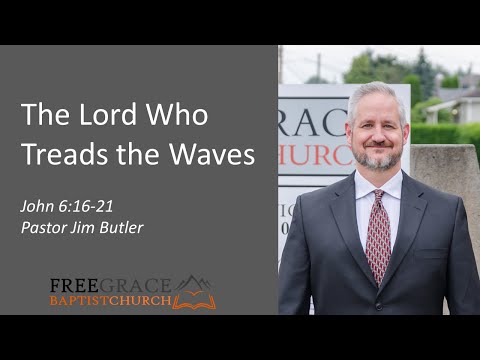
The Lord Who Treads the Waves
John 6:16–21 records the fifth of the seven signs in John's Gospel: Jesus walking on the Sea of Galilee toward his storm-tossed disciples. The sermon works through two movements — the disciples' vulnerability in the storm and the Savior's sovereign approach across the water — to establish that Jesus, by treading the waves, enacts what the Old Testament attributes exclusively to Yahweh (Job 9:8; Psalm 77:19; Isaiah 43:16), thereby demonstrating his consubstantiality with the Father and his lordship over the natural order. The divine self-disclosure 'I am' (ego eimi), voiced both here and at key junctures throughout John's Gospel, is shown to be Jesus' deliberate appropriation of the covenant name revealed to Moses in Exodus 3:14. The sermon closes by pressing the theological remedy for the fear that afflicts God's people: a right knowledge of Christ as the great I AM displaces anxiety about trials, persecutions, and earthly circumstances.
2LCF Chapter 3 - Of God's Decree
Peter's Pentecost sermon in Acts 2 simultaneously affirms God's comprehensive sovereignty over the crucifixion and demands personal repentance from those who crucified Christ. Hyper-Calvinism distorts both truths by collapsing human responsibility into divine decree, leaving sinners with no reason to repent. The sermon argues that Scripture holds divine sovereignty and human accountability together without theodicy or apology, and calls every hearer to repent and believe the gospel.

The Healing of Naaman
The healing of Naaman in 2 Kings 5 is exposited as a portrait of sovereign, free, and humbling grace that reaches beyond Israel to a Gentile enemy — a Syrian military commander who is not only cleansed of leprosy but converted from idolatry to the living God. The sermon traces God's providential orchestration through a nameless captive servant girl, Elisha's deliberate absence from the healing, and Naaman's progression through fury, submission, confession, gratitude, and resolution — all paralleled with the offense and power of the New Covenant gospel. The contrast between the converted pagan Naaman and the perverted Israelite Gehazi underscores that Yahweh's grace is free and cannot be bought, bartered, or manipulated. Hearers are called to recognize in Naaman's conversion the marks of genuine saving faith: humble confession, gratitude, and a sensitive conscience toward the one true God.
1 Samuel 17, Part 2
1 Samuel 17 is not a self-help narrative about overcoming personal obstacles; it is a demonstration of the sovereignty and majesty of Yahweh, who consistently works through weakness to magnify his own glory. This expository study of the latter half of the chapter — from the arming of David through the rout of the Philistines — traces five movements in the battle account and concludes that the chapter's governing theme is David's declaration in verses 46–47: that all the earth would know there is a God in Israel, and that the Lord does not save by sword and spear. The contrast between Israel's paralyzing fear and David's unwavering trust in Yahweh is shown to be the interpretive key to the whole narrative, and David himself is read as a pattern anticipating the champion from Bethlehem who came in apparent weakness to secure a greater victory.
The Lord's Prayer, Part 1
The preface to the Lord's Prayer — 'Our Father in heaven' — calls the believer to ground every act of prayer in sound theology proper before a single petition is offered. Against both the hypocrite's ostentation and the heathen's vain repetition, the Lord Jesus provides a model that is at once personal and majestic: the One addressed is Father by adoption through the redemptive work of Christ, and He is in heaven, sovereign over all creation. This study traces six qualities of 'Our Father' — that He is personal, gracious, hearing, caring, loving, and the exclusive object of prayer — before turning to 'in heaven' as the warrant for approaching God with both filial confidence and reverential awe.
The Preface to the Lord's Prayer
What does it mean to address God as 'Our Father in heaven' before a single petition is spoken? This sermon on Matthew 6:9 argues that the preface to the Lord's Prayer is not a formality but a theological foundation: the invocation shapes the entire posture of prayer. Six truths embedded in the two words 'Our Father' are examined — that God is personal, gracious, hearing, caring, loving, and alone to be addressed — followed by two truths in the phrase 'in heaven': that God is transcendent and omnipotent. The sermon closes with a pointed call to examine whether one can honestly pray 'Our Father' at all, since access to the Father comes only through faith in the Son.