
Theological term
Sovereign Grace
194 sermons · All terms

The Second Missionary Journey, Part 2

Acts 16:6–15 traces the divine hand behind the second missionary journey's westward turn into Macedonia and the conversion of Lydia in Philippi. The Spirit's successive prohibitions of ministry in Asia and Bithynia are not judgments on those regions but demonstrations that God actively directs the missionary enterprise according to his sovereign purpose. The conversion of Lydia — a woman whose heart was dead in trespasses until God opened it to receive Paul's preaching — illustrates that the efficient cause of every conversion is divine grace, not human ingenuity, while the instrumentality of gospel proclamation and the responsibility of hearers to believe remain fully intact. The sermon calls the church to define missionary work precisely as the Spirit-sent, church-commissioned preaching of Christ crucified, rejecting both Arminian confidence in the sinner's free will and hyper-Calvinist reluctance to call sinners to faith.

The Second Missionary Journey, Part 1
Acts 15:36–16:5 records the opening of Paul's second missionary journey — beginning with a sharp contention between Paul and Barnabas over John Mark, continuing through Paul's recruitment and circumcision of Timothy in Lystra, and concluding with a summary report of churches strengthened and growing daily. The sermon argues that God's sovereign providence overruled the division between two godly men to send out two missionary teams, and that Timothy's circumcision was a strategic pastoral act entirely consistent with Paul's settled rejection of Judaizing. Throughout, the exposition presses the congregation toward a recovery of faithful, word-centered ministry as the only legitimate means of church growth and stability.
The Qualifications for Elders (Part 1)
What qualifies a man to serve as an elder in the church of Jesus Christ? Expounding 1 Timothy 3:1–7 as an excursus from a series through Acts, this sermon establishes that the New Testament uses 'elder,' 'overseer,' and 'pastor' as synonymous titles for one office, and then works through five of the six qualifications Paul sets out for that office: the man's desire, his personal holiness, and his domestic faithfulness. The sermon is equally concerned with what these qualifications are not — they are not a standard of sinless perfection, nor a popularity contest, nor a direct transfer of worldly competence — and applies the passage by urging the church to vet candidates by Scripture alone, not by affection or likability.

The Anointing at Bethany
Sandwiched between the conspiracy of the religious leaders and the betrayal of Judas, the anointing at Bethany (Matthew 26:6–13) presents an act of extravagant devotion that Christ himself defends, interprets, and immortalizes. The sermon works through three movements: the act itself, the disciples' indignant complaint, and Christ's authoritative response, showing that what pragmatic men call a waste Christ calls a good work. Against the tendency toward either-or Christianity, the passage enforces both fervent worship of Christ and genuine care for the poor as inseparable obligations. The abiding lesson is that no expenditure of time, wealth, or devotion directed to the Lord of glory can ever constitute a waste, because he is chief among ten thousand and altogether lovely.

The Conversion of Rahab the Harlot
Joshua 2 presents the conversion of Rahab the harlot as a sovereign display of divine grace toward an unlikely recipient — a Canaanite prostitute who heard of Yahweh's mighty acts, confessed His majesty, and cast herself upon His mercy. The sermon traces the contact, confession, and contract with Rahab, arguing that her faith — evidenced by works — is a paradigm case of salvation by grace alone through faith alone, consistent with both Paul and James. The closing application calls believers to ground their relationship with God not in their pursuit of holiness but in the righteousness of Christ alone, lest gospel-forgetfulness corrupt their devotion into self-congratulation.

Genesis 34:1-31
Genesis 34 presents one of the more disturbing episodes in the patriarchal narrative: the rape of Dinah, the calculated retaliation by Simeon and Levi, and Jacob's conspicuous failure of leadership. The exposition argues that the sons of Jacob were not acting out of unbridled blood vengeance but engaged in a deliberate, tactical mission to liberate their sister from what amounted to a hostage situation — an argument that reframes the deceit and slaughter as purposive rather than criminal. Jacob's response stands in sharp contrast to his spiritual high points in chapters 32–33, exposing the ebbs and flows of genuine faith and the truth that God's preservation of his people rests entirely on sovereign grace, not the consistency of the saints.

The First Missionary Journey, Part 2
Acts 13:4–12 records the opening episode of Paul and Barnabas's first missionary journey: their arrival in Cyprus, their preaching in the synagogues of Salamis, and the dramatic confrontation at Paphos with Bar-Jesus, a Jewish sorcerer and false prophet who attempted to prevent the proconsul Sergius Paulus from hearing the gospel. The sermon examines three movements — the journey to Cyprus, the arrival at Salamis, and the confrontation at Paphos — with extended attention to Paul's Spirit-empowered rebuke of Elymas and the resulting judgment miracle. Central to the exposition is the insistence that the Word of God preached is the irreplaceable means of salvation, that Satan's primary strategy is to obstruct its reception, and that divine sovereignty rather than human merit accounts for every conversion, including that of a powerful Roman official.

The Persecution of the Church and the Power of God
Acts 12:1–24 presents the early church under coordinated assault from the civil state: Herod Agrippa I executes James, imprisons Peter, and accepts divine honors from a crowd — yet the chapter closes with Herod dead, Peter free, and the word of God multiplied. The sermon traces three movements in the passage: the persecution of the church, the miraculous deliverance of Peter, and the judicial destruction of Herod, arguing throughout that no civil power can ultimately frustrate the advance of Christ's kingdom. Listeners are called to persistent intercessory prayer for the persecuted church, confident that the same sovereign God who struck down Herod continues to reign over every enemy of his people.

Genesis 29:31 - 30:24
Genesis 29:31–30:24 records the birth of the twelve tribal patriarchs of Israel through a household marked by rivalry, deception, polygamy, and heartbreak — a far cry from the paradise setting one might expect for redemptive history's foundations. The sermon traces four movements: the opening of Leah's womb, Rachel's envious frustration and her recourse to surrogacy, Leah's counter-response through her own maid and the mandrake episode, and finally the long-awaited opening of Rachel's womb. The governing theological lesson is that the purely gracious character of Israel's election is on full display: the twelve tribes emerged not from human merit, virtue, or domestic harmony, but from God's sovereign purpose working through and despite profound human dysfunction. The passage calls believers to contentment in their circumstances, trust in divine providence, and wonder at a grace that accomplishes its ends in spite of fallen instruments.

The Builder of the Church
Peter's confession in Matthew 16:13–18 — 'You are the Christ, the Son of the living God' — is the theological axis around which the identity, foundation, builder, and triumph of the church all turn. The sermon expounds Christ as the rock on which the church is built, arguing against the Roman Catholic identification of Peter as that foundation and for the Protestant position that the church rests on Christ himself, the fulfillment of the Davidic covenant promise in 2 Samuel 7. The gates of Hades function as a defensive posture, not an offensive one, meaning the church is on mission against a kingdom that cannot finally hold, because its builder is King Jesus. The call to hearers is to make Peter's confession their own — that Christ is the Son of the living God — since no defective ecclesiology is fatal, but a wrong Christ is.
The First Commandment, Part 2
The First Commandment — 'You shall have no other gods before me' (Deuteronomy 5:7) — carries not only a prohibition but a cluster of positive obligations that define the redeemed creature's relationship to the Creator. This sermon works through five such positive aspects: the love of God, the fear of God, obedience to God, trust in God, and the proper worship of God, showing how each flows necessarily from the sovereign grace by which God conquers the sinner. The sermon concludes with a call to reject idolatry in all its forms — including mental idolatry constructed by false doctrine — and to cultivate a growing, confessional knowledge of the triune God.

Free Grace Baptist Church - October 6, 2019 PM
What does it mean that the Father has 'bestowed' his love on sinners so that they should be called children of God? Expounding 1 John 3:1 in the context of a Lord's Supper service, this sermon examines the divine love under four headings: the call to consider it, the object in view, the blessed result of adoption, and the attendant conflict with the world. The love of God is grounded in his impassibility and immutability — he is 'most loving' not as an emotional fluctuation but as an unchanging perfection — and the doctrine of adoption is carefully distinguished from and harmonized with John's language of new birth, following B.B. Warfield's analysis. The sermon closes by directing communicants to fix their minds on Christ rather than on themselves as they receive the bread and cup.

The Mission for Saul of Tarsus
Acts 9:10–16 records Christ's commission to Ananias concerning the newly converted Saul of Tarsus, and in it Jesus reveals a twofold purpose for his chosen vessel: to bear the name of Christ before Gentiles, kings, and the children of Israel, and to suffer greatly for that name. This sermon traces how that double calling — to preach and to suffer — was fulfilled across Paul's entire apostolic ministry, drawing on 2 Corinthians 11, Colossians 1, and 2 Timothy to show that affliction is not a contradiction of divine favor but an instrument of it. The sovereignty of Christ over conversion and calling stands as the controlling theme, pressing hearers to abandon every excuse for unbelief and to come to Israel's Messiah in faith.

The Conversion of Saul of Tarsus
Acts 9:1–9 confronts the reader with one of the most dramatic conversions in redemptive history: the sovereign arrest of Saul of Tarsus, the church's most ruthless persecutor, by the risen Lord Jesus Christ. The sermon traces Saul's murderous hostility toward the disciples before examining the divine initiative, interrogation, identification, and instruction Christ brings to bear on the road to Damascus. That Christ identifies himself with his suffering members ('I am Jesus whom you are persecuting') and overcomes Saul's resistance through effectual grace establishes that no sinner stands beyond the reach of sovereign mercy. The sermon closes with a call to repentance grounded in the certainty that the God who conquered the chief of sinners is able and willing to save all who come to Christ.

The Conversion of the Ethiopian Eunuch
Acts 8:26–40 records the Spirit-directed encounter between the evangelist Philip and an Ethiopian eunuch, a man doubly excluded from Israel's assembly by Deuteronomy 23:1 yet drawn by God's sovereign grace into the new-covenant community. The sermon traces three movements in the narrative — the providential meeting, the expository dialogue from Isaiah 53, and the eunuch's confession and baptism — arguing that the passage is not merely a quotation but a fulfillment of Isaiah 56, in which eunuchs and foreigners are brought near through the blood of Christ. Against any notion of baptism as a converting ordinance, the preacher grounds believers' baptism in the pattern of faith preceding baptism throughout Acts, Calvin's own concession that immersion was the ancient mode, and the 1689 LBCF's definition of baptism as an ordinance primarily for the party baptized. The sermon closes with an indiscriminate call to all sinners to relinquish their own righteousness and rest in the imputed righteousness of Jesus Christ.

The Good Soldier of Jesus Christ
Paul's commands to Timothy in 2 Timothy 2:1–7 address the inevitable reality of hardship in gospel ministry and Christian life, and the apostle equips believers to face it through three vivid analogies: the devoted soldier, the disciplined athlete, and the diligent farmer. A fourth consideration emerges from verse 7 — the dedicated disciple who both thinks seriously and depends on sovereign grace for understanding. The sermon applies these four models not only to ordained ministers but to every Christian, closing with a sustained exhortation to perseverance in the 'middle mile' of the Christian race, grounded in the 1689 London Baptist Confession's doctrine of the perseverance of the saints.

The Antithesis between the Upright and the Wicked
Proverbs 29:27 declares a mutual abomination between the upright and the wicked — a reality rooted not in mere personality conflict but in the God-ordained enmity of Genesis 3:15. This sermon traces that antithesis from its origin in the protoevangelium through its characteristics in Proverbs 30:11–14 (rebelliousness, self-righteousness, arrogance, and oppression), and into its New Testament confirmation in John 15 and 1 John 3. Believers are called to respond to a godless generation not with violence or character assassination, but with righteous indignation tempered by tears, faithful parental discipline, proclamation of God's law, and the preaching of the gospel of Jesus Christ.
Genesis 29:1-30
Genesis 29:1–30 narrates Jacob's arrival in Haran, his meeting with Rachel, and his marriages to both Leah and Rachel through the fraud of Laban. The passage is examined in three movements — arrival, meeting, and marriage — with particular attention to the irony that Jacob the deceiver is himself deceived by his father-in-law. The overarching application is the doctrine of divine providence: God works sovereignly through morally disordered and even perverse circumstances — the switched brides, Leah's unexpected marriage, the messianic line through Judah — to accomplish his redemptive purpose in Christ.

The Bible and Abortion
Abortion is not merely a political question but a theological one, demanding that Christians know what Scripture says about the pre-born. Working through Exodus 20:13 and Exodus 21:22–25, this sermon establishes the Sixth Commandment's prohibition of murder, grounds the sanctity of human life in the doctrine of the image of God (traced from creation through the incarnation), and demonstrates from the Mosaic case law that even accidental harm to a pre-born child carried the full force of the lex talionis — life for life. The sermon closes by addressing the church's responsibility to preach both law and gospel, to vote and live consistently with the conviction that abortion is both sin and crime, and to extend the forgiveness of Christ to those who have been party to this particular transgression.

The Divine Provision of Eternal Life
Isaiah 55 presents God's gracious and urgent invitation to sinners to receive the fullness of salvation — the refreshment, gladness, and nourishment of the gospel — entirely without cost, because the suffering servant of Isaiah 53 has already satisfied the purchase price. The sermon expounds the chapter in two movements: the invitation to come (vv. 1–5), grounded in the new covenant and secured by the Davidic king, and the call to faith and repentance (vv. 6–13), sustained by the sovereign power of God's Word. Believers are urged to treasure the abundance of every spiritual blessing already given in Christ, and unbelievers are warned not to squander their lives on what cannot satisfy while the Lord may yet be found.
The Judgment of God in the Early Church
Acts 5:1–11 records the deaths of Ananias and Sapphira, struck down by God for lying to the Holy Spirit. This sermon works through the passage under two headings: the deceitfulness of the couple (vv. 1–4) and the death they suffered by God's direct judgment (vv. 5–11). The preacher grounds the episode in a high doctrine of God — holy, just, and a consuming fire — and insists that the primary practical lesson is the fear of God, not merely ethical instruction about honesty. The sermon closes with the gospel: no one can stand before this holy Lord God except Christ alone, and all who are savingly united to Him by faith stand in Him.

Free Grace Baptist Church - October 14, 2018 PM
Depression — what Scripture calls a broken spirit or heavy heart — is a real affliction that has touched the lives of Elijah, Jeremiah, the Apostle Paul, and the Lord Jesus himself. Drawing from repeated passages in the book of Proverbs, alongside First Kings 19, Psalm 88, and Psalm 102, this exposition surveys both the presence of melancholy among the people of God and a range of strategies — physical, psychological, and spiritual — for those who suffer and for those who walk alongside them. The central application is that the sorrowful saint must not abandon the corporate means of grace — the Word, prayer, and the gathered church — which are God's appointed instruments for sustaining the broken spirit.
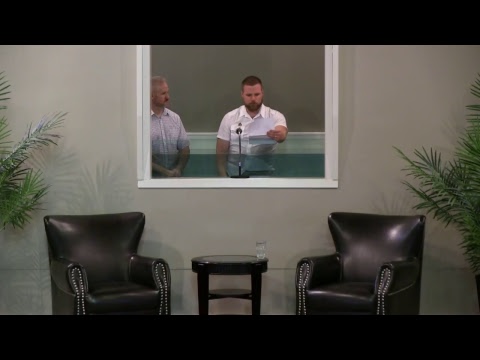
Livestream - Baptism: Wim Kerkhoff
Acts 8:26–40 records the conversion and baptism of the Ethiopian eunuch, and this exposition sets that account against its Old Testament backdrop in Isaiah 53 and Isaiah 56 to show that what is happening is not merely one man's conversion but the fulfillment of covenant promises: the inclusion of those doubly excluded from the assembly of Israel. The sermon works through three movements — the divine appointment of the contact, the gospel communication beginning from Isaiah 53, and the conversion issuing in immediate baptism upon confession of faith. The central application is that God is characteristically and eagerly a saving God, that believers' baptism follows faith as its ordained external sign, and that no sinner — whether powerful or poor, crisis-converted or quietly brought to faith — is beyond the reach of sovereign grace.

Free Grace Baptist Church - September 2, 2018 PM
The wisdom of God in the gospel is displayed not in the nobility, intelligence, or virtue of those he saves, but in his sovereign, gracious election of the weak, the base, and the despised — so that no flesh might glory in his presence. Expounding 1 Corinthians 1:26–31, this sermon identifies the three spiritual blessings Christ has become for his people — righteousness (justification by imputed obedience), sanctification, and redemption (glorification) — as the full ordo salutis secured in union with Christ. The ground of salvation is traced through Romans 5, Philippians 3, Zechariah 3, and Acts 13 to demonstrate that the entire plan of redemption flows from God's sovereign grace, not human merit. The inevitable and proper response of those who have received these blessings is to glory in the Lord alone, not in themselves.

The Healing of the Lame Man
Acts 3:1–10 records the healing of a man lame from birth at the gate called Beautiful, and this exposition argues that the miracle is not an isolated wonder but a typological and redemptive event that displays the name and power of Jesus Christ while setting the stage for apostolic gospel proclamation. The man's condition — congenital, public, and long-standing — ensures that the miracle is conspicuous and undeniable, functioning to authenticate the apostles as God's spokesmen and to magnify the glory of the enthroned Christ. The church's calling, illustrated by Peter's declaration that he possesses no silver or gold but only the name of Christ, is the proclamation of the gospel and the forgiveness of sins, not the amelioration of every temporal need society presents. Those genuinely conquered by sovereign grace, like the healed man, are marked by worship, praise, and desire for the public means of grace.

The Response to Peter's Sermon, Part 2
Acts 2:43–47 describes the ordinary but Spirit-wrought practice of the early Jerusalem church, and this exposition presses that description as a prescription for church life today. The sermon examines steadfastness in apostolic doctrine, fellowship, the Lord's Supper, and prayer; the fear of God that attends his presence; the voluntary charity of believers toward one another; and the public and private conduct of a congregation living under sovereign grace. Against both charismatic enthusiasm and worldly accommodation, the sermon argues that faithfulness in ordinary, Word-regulated worship and mutual edification — not signs, programs, or radical individualism — is the enduring mark of a church built by Christ.

Free Grace Baptist Church - May 13, 2018 PM
Philippians 1:27–30 calls the church to conduct worthy of the gospel and to receive suffering for Christ as a divine gift. Expounding these verses under two headings — worthy conduct and worthwhile suffering — the sermon argues that the local church, as a colony of heaven, is called to stand fast in unity against adversaries, and that both the initial grant of faith and the grant of suffering are gracious tokens of God's saving presence with his people. Persecution, far from being a mark of divine abandonment, is shown historically and biblically to be an assurance of salvation, a sign of perdition to those who oppose the gospel, and a means by which God strengthens his church.

The Trial before Pontius Pilate, Part 2
Matthew 27:15–23 presents Pontius Pilate's attempt to grant amnesty to Jesus through the Passover custom of releasing a prisoner — an attempt that collapses under the pressure of crowd manipulation and Pilate's own moral cowardice. The passage exposes the envy driving the religious leaders, the warning of Pilate's wife confessing Christ's righteousness, and the moral depravity of a multitude persuaded to choose a violent insurrectionist over the sinless Son of God. The repeated declarations of Christ's innocence — by Judas, Pilate's wife, and Pilate himself — are Matthew's design: the just stands for the unjust, and every voice proclaiming 'he has done no evil' opens the door to the gospel of substitutionary atonement. Hearers are called to see their own capacity for the crowd's guilt, to recognize total depravity in themselves, and to flee to the holy, harmless, undefiled Christ for forgiveness and righteousness.
2LCF Chapter 20 - Of the Gospel and of the Extent of the Grace Thereof

The gospel is necessary, revealed only through special revelation, and made effectual solely by the sovereign work of the Holy Spirit — natural law and general revelation are wholly insufficient for salvation. This session expounds 2LCF Chapter 20, tracing why John Owen and the Congregationalists added this chapter to address both the rise of salvation-through-natural-law teaching and the false charge that Reformed and Baptist churches were anti-missional. The sermon argues that the gospel advances to the ends of the earth through preaching, according to God's sovereign will, as the Spirit regenerates the elect who are dead in trespasses and sins. The practical burden is confidence and perseverance in gospel proclamation, grounded not in human ability or ecclesial authority but in the sovereignty of God.

The Rebellion of Moab
Matthew 27:1–5 exposes two devastating portraits set in immediate sequence: the murderous resolution of the Sanhedrin and the miserable end of Judas Iscariot. The sermon presses a distinction the text itself demands — that remorse, however acute, is not repentance, because genuine repentance moves God-ward and Christ-ward, apprehending the mercy of God in Christ, whereas Judas's guilt drove him only to self-destruction. Listeners are urged to see in Judas the bitter end of undealt-with sin, and to flee instead to the one who is altogether lovely and chief among ten thousand, trusting that saving faith and repentance are themselves gifts granted by sovereign grace.