
Theological term
Sola Fide
279 sermons · All terms

The Angelic Word & Song

What did the angels announce to the shepherds on the night of Christ's birth, and why does it matter for sinners today? Expounding Luke 2:10–14, this sermon traces the angelic word and the angelic song under two headings, showing that the announcement is one of greatest significance, greatest joy, universal scope, and divine salvation — a Savior who is Christ the Lord, born in fulfillment of Old Testament promise (2 Samuel 7, Isaiah 9:6, Micah 5:2) and condescending from infinite glory to a feed trough. The sermon calls hearers to hasten their gaze upon this Christ, to hitch the joy of their lives to the triune God and His gospel alone, and to believe on the Lord Jesus Christ for everlasting life.

The Conduct of a Faithful Minister

What does faithful gospel ministry look like in practice? Expounding 1 Timothy 4:12–16 at an ordination service, this sermon works through four apostolic charges Paul lays on Timothy: the minister must be an example to the flock in word, conduct, love, faith, and purity; he must give sustained public attention to Scripture reading, exhortation, and doctrine; he must meditate on these things and give himself entirely to personal growth in godliness; and he must persevere in both personal holiness and sound doctrine, because the stakes of gospel ministry extend to the eternal welfare of those who hear. The sermon closes with a direct charge to the ordinand and to the congregation forming a new church plant, and with an evangelistic appeal grounding the seriousness of the gospel ministry in God's concern to save sinners through it.
Free Grace Baptist Church - November 26, 2017 PM
Titus 3:3–7 expounds the full arc of sovereign grace: the grave former state of all believers in foolishness, disobedience, and depravity; the divine condescension by which God's kindness and love appeared in Christ; and the sovereign power of the Holy Spirit in washing and regenerating dead sinners to new life. Salvation is not by works of righteousness which we have done but entirely according to divine mercy, secured through Jesus Christ alone and applied by the Holy Spirit — a triunely accomplished redemption that eliminates all boasting in self and grounds the believer's perseverance in the immutability of God's electing love.

Free Grace Baptist Church - November 26, 2017 AM
Acts 3:11–15 presents the Apostle Peter's proclamation of Jesus Christ to a crowd of Israelites gathered at Solomon's Porch, astonished at the healing of a man lame from birth. The sermon examines three movements in Peter's address: the occasion for preaching Christ (the healing and the crowd's amazement), the correcting prologue (Peter redirecting attention from the miracle and its instruments to the God of the miracle), and the preaching of Christ itself, which identifies the God of Abraham, Isaac, and Jacob as the one who glorified his servant Jesus — the fulfillment of Isaiah's servant prophecies — and incriminates the audience for crucifying the Holy One and the Just in favor of a murderer. The vindication of Christ in his bodily resurrection is the cornerstone of apostolic proclamation: 'whom God raised from the dead, of which we are witnesses' grounds the veracity of the gospel and the confidence of every believer.
The Crucifixion of Jesus, Part 2
Matthew 27:39–44 records three distinct groups — passing bystanders, the chief priests and elders, and the two crucified robbers — each heaping mockery and blasphemy upon the Son of God while he hangs on the cross. The preacher demonstrates that in every taunt, the mockers unwittingly speak truth: he is the temple builder, the Savior of others, the King of Israel, and the Son of God — and it is precisely because he is all of these things that he must stay on the cross to satisfy divine justice for his people's sins. The irony Matthew constructs reaches its apex in the dying thief, who looks past the gore of the crucifixion and confesses Christ as Lord, while the religious leaders who possessed the very scriptures that prophesied this scene remain utterly blind to it. The sermon calls both unbelievers and believers to look to the crucified Christ by faith, to receive salvation as a gift rather than bargaining with God, and to find in this scene the unsurpassed measure of the Savior's love.

Free Grace Baptist Church - October 8, 2017 AM
The mock enthronement of Jesus recorded in Matthew 27:27–31 simultaneously exposes the comprehensive guilt of every human participant — Pilate, the soldiers, the Jewish leaders, and the elect whose sins were heaped upon the Savior — and reveals the ironic glory of the King who would actually bear every emblem the soldiers placed on him in jest. The sermon argues that what the soldiers devised as dishonor — the robe, the crown of thorns, the reed — were unwitting foreshadowings of Christ's true royal majesty as depicted in the book of Revelation, where he reigns with golden crown, glorious robe, and iron scepter. The exposition closes with three applications under the gravity, the glory, and the gratitude of the scene, pressing both unbelievers to flee to the Savior from the coming wrath and believers to exceed the soldiers' inventiveness in devising honor for their King.

2LCF Chapter 21 - Of Christian Liberty and Liberty of Conscience
Christian liberty is grounded not primarily in political or personal freedoms but in the perfect saving work of Christ, who has purchased freedom from the guilt, power, and punishment of sin for all his elect. This study works through 1689 London Baptist Confession of Faith chapter 21, paragraphs 1–3, tracing the biblical foundations of liberty of conscience against both Roman Catholic ecclesiastical imposition and antinomian abuse of grace. The New Testament enlarges the freedom already held by Old Testament believers by releasing them from the ceremonial law's yoke, granting bolder access to the throne of grace, and communicating the Spirit more fully. True Christian liberty issues not in licentiousness but in cheerful, childlike obedience to God, freed from slavish fear and self-imposed religious scrupulosity alike.

The Righteousness of David
Romans 4:5–8 announces that God justifies the ungodly, and the Apostle Paul calls David as a witness to that doctrine. This sermon works through the theology of David in 2 Samuel 22, Psalms 2, 18, 32, 51, 110, and 130 to show that David's celebrated righteousness is not his own moral achievement but the imputed righteousness of Christ, received by faith. David's recognition of his own sin, his understanding of atonement, his grasp of the doctrine of imputation, and his personal faith in the coming Messiah together resolve the apparent tension between his notorious moral failures and his claim to cleanness of hands. The sermon calls hearers to approach the Lord's Supper not in mere introspection over sin but in joyful confidence in the righteousness of David's greater Son.

The Unsurpassed Value of the Gospel
Paul's exhortation to Timothy not to be ashamed of the gospel in 2 Timothy 1:8–10 rests on the unsurpassed worth of the salvation it announces. The sermon works through the divine authorship of salvation, the basis of election in God's eternal purpose and grace rather than human works, and the pre-temporal covenant of redemption executed in the incarnation and atoning work of Christ. Because Christ has abolished death and brought life and immortality to light through the gospel, believers have every reason to suffer for it without shame, and unbelievers are called to look to Christ alone for justification by faith apart from works.

The Faithful Father
Colossians 3:20–21 places two commands at the center of household religion: children are to obey their parents in all things as an act pleasing to the Lord, and fathers are forbidden from provoking their children lest they become discouraged. This exposition traces the negative prohibition of Colossians 3:21 through its Old Testament background in Deuteronomy 21 and its positive counterpart in Ephesians 6:4, examining how unrighteous anger, unbiblical discipline, and passive abdication each provoke children toward despair and rebellion. The fifth commandment functions here both as a mirror to drive children to Christ and as a continuing standard to which the Spirit then empowers obedience. Fathers are called to fear God first, to exercise discipline within an atmosphere of love, and to provide spiritual instruction — in the home and through the church — as their highest earthly stewardship.

The Truth Concealed and Revealed
Matthew 11:25–30 presents three interlocking realities that together form the foundation of gospel rest: the sovereign will of the Father in concealing and revealing gospel truth, the exclusive mediatorial office of the Son as the only means of access to the Father, and the gracious invitation of Christ to sinners burdened by sin. The sermon argues that a right understanding of divine sovereignty — including both election and reprobation — should produce not polemical pride but the thankfulness and praise modeled by Christ himself in verse 25. Sinners are called to come to Christ by faith alone, receiving rest from the burden of sin, and to take up his yoke in discipleship, which the Savior himself declares easy and light.

The Prince of Life and the Penitent Thief
The conversion of the penitent thief on the cross presents what one 19th-century commentator called the finest demonstration of vital theology in all the gospel narratives. Working through Luke 23:38–43, this sermon examines four elements of that occasion: the ironic truth embedded in the inscription 'This is the King of the Jews,' the unrepentant blasphemy of the cursed robber as a mirror of unregenerate depravity, the dying thief's Spirit-wrought confession of God's holiness, Christ's innocence, and Christ's lordship, and the sovereign comfort of Christ's assurance that salvation rests on divine promise rather than human merit. The sermon is delivered in the context of a Lord's Supper service, and each point is drawn toward the ordinance as a call to remember the King, to recall one's former state of enmity, and to rest on the blood and righteousness of Christ alone.
Of Justification (2LCF 11)
Justification — the forensic declaration by which God accounts and accepts sinners as righteous — is examined through the 1689 London Baptist Confession of Faith, chapter 11. The confession distinguishes justification sharply from sanctification: it is not an infused or imparted righteousness but an imputed one, grounded entirely in Christ's active obedience to the law and passive obedience in His death. Faith, itself a gift of God and not a human contribution, is the sole instrument by which the justified receive and rest on Christ's righteousness. The sermon closes by tracing the ongoing practical realities of the justified life — including fatherly displeasure, confession, and the impossibility of falling from the state of justification — and by drawing on J.C. Ryle to clarify precisely how justification and sanctification are alike yet distinct.

The Prohibition Against Partiality, 2
James 2:5–13 grounds the prohibition against partiality in three interlocking arguments: a soteriological argument from God's sovereign election of the poor, a practical argument from the church's inconsistency in tolerating the very oppression it suffers, and a theological (decalogical) argument from the indivisibility of God's royal law. The sermon insists that partiality is not a minor social failing but a violation of the whole Decalogue, a rejection of the lawgiver himself, and a possible evidence of a heart still a stranger to sovereign grace. Because God has chosen the poor of this world to be rich in faith and heirs of the kingdom, his people must receive and honor those whom he has loved, letting the law of liberty — not license — regulate their conduct toward one another.
The Passover with the Disciples
Matthew 26:17–25 presents Jesus as the sovereign master of the Passover, not a hapless victim of events spiraling beyond his control. Working through the preparation for Passover and the announcement of betrayal, this exposition shows how Christ's active obedience to the law, his precise foreknowledge, and his willing submission to the Father's eternal decree together constitute the ground of redemption for his people. The contrast between Judas, whose hardened heart renders him a reprobate despite extraordinary privilege, and the eleven, whose sorrowful self-examination models the disposition of genuine faith, drives home two applications: trust in Christ alone, by grace through faith, for justification; and cultivate a healthy self-suspicion rather than a confident presumption of one's own standing before God.
The Betrayal of Christ by Judas
Judas Iscariot's betrayal of Christ for thirty pieces of silver exposes the deadly convergence of unrepented sin, satanic opportunism, and the utter insufficiency of religious privilege as a ground of salvation. Working through Matthew 26:14–16 in its narrative context, this sermon examines both the identity of the betrayer — his position, character, and the devil's capitalizing on his covetousness — and the mechanics of his conspiracy with the chief priests. The central application is that unconverted hearts, however outwardly privileged, will be seized upon by Satan through their ruling sin; the only remedy is sovereign grace received through faith in Christ alone.
The Prohibition Against Partiality
James 2:1–4 issues a direct prohibition against partiality — the sin of showing favoritism based on economic status, ethnicity, or social rank within the gathered assembly of Christ's body. The sermon works through the command of verse 1 and its illustrative example in verses 2–4, while devoting substantial attention to demonstrating that James's soteriology is fully consistent with Paul's: salvation is by sovereign grace alone, through faith alone, in Christ alone, with works serving as the necessary evidence of genuine saving faith rather than its ground. The persistent tendency to judge by externals and to divide the body of Christ into cliques and factions is exposed as a form of sinful judgmentalism that usurps God's own prerogative as judge.
The Privilege of Adoption
Galatians 3:26–29 brings the history of redemption into focus on the individual believer's standing before God: all who are in Christ by faith are sons of God, adopted into the divine family through the finished work of the one who became a curse for them. The sermon expounds three features of the believer's new identity — filial adoption by faith, redemptive unity across every human distinction, and covenantal solidarity as the seed of Abraham — while insisting that redemptive unity does not collapse the role distinctions God ordained in creation and confirmed in the apostolic letters. Theological, ethical, doxological, and eschatological implications of adoption are drawn out in the conclusion, calling believers to gratitude, godly conduct, and eschatological hope as blood-bought children of God Most High.
The Olivet Discourse, Part 16
Matthew 25:41–46 presents the judgment of the unrighteous as the precise structural mirror of the judgment of the righteous: those who depart into everlasting fire prepared for the devil and his angels are distinguished from those who inherit the kingdom not by degree of works but by the presence or absence of saving faith. The sermon defends, through nine arguments drawn from the text and from Galatians 2:21, that this passage does not teach justification by works — the sheep and goats are already determined, the kingdom is inherited not merited, and the good works function as evidence of faith rather than its ground. The 'least of these my brethren' is shown, through Matthew 10 and 12, to refer specifically to Christ's disciples, so that reception or rejection of them constitutes reception or rejection of Christ himself. The passage concludes by calling all hearers to be found in Christ — clothed not in their own righteousness but in the righteousness of God through faith — as the only preparation for the certain judgment to come.
The Olivet Discourse, Part 15
Matthew 25:31–46, the conclusion of the Olivet Discourse, presents the final judgment of the Son of Man — not as a basis for works-righteousness, but as the definitive revelation of what saving faith produces. The sermon argues that the sheep and goats are already distinguished before the throne, exposing the error of Roman Catholic and moralistic readings that treat the acts of charity as the ground of salvation. Christ's declaration 'come, you blessed of my Father, inherit the kingdom prepared for you from the foundation of the world' is the language of election and inheritance, not merit. The application is twofold: look to Christ alone in faith for justification, and let that faith show itself — as the confession states — 'no dead faith but worketh by love,' particularly toward the brethren in the local congregation.
The Olivet Discourse, Part 14
The Parable of the Talents (Matthew 25:14–30) is Christ's definition of watchfulness: not passive waiting for the Son of Man's return, but diligent, faithful stewardship of whatever the Master has entrusted. The sermon expounds the three servants in turn, establishing that talents are distributed according to God's sovereign wisdom rather than merit, that faithfulness rather than quantity of output determines commendation, and that the one-talent servant's condemnation flows directly from a defective doctrine of God. The central application is that justification by faith alone is never a license for inactivity — those truly justified will evidence it by serving the Master's interests in light of His coming.

Free Grace Baptist Church - December 18, 2016 AM
Luke 7:36–50 presents three parties whose interaction discloses the nature of saving grace: the notorious sinner whose transformed devotion exposes the bankruptcy of self-righteousness, the Pharisee whose surface-level hospitality masks a judgmental contempt for God's mercy, and the Savior who receives worship, pronounces forgiveness, and vindicates faith as the sole instrument of justification. The parable of the two debtors (vv. 41–43) governs the entire passage: the woman's extravagant love is the effect of prior forgiveness freely granted, not its cause or condition — a point the sermon drives against both Roman Catholic and Protestant moralistic misreadings. Believers are called to examine whether the depth of their love for Christ reflects a genuine reckoning with the magnitude of what has been forgiven.

Free Grace Baptist Church - November 20, 2016 AM
Philippians 2:6–11 contains one of the richest Christological confessions in all of Scripture, composed within two decades of the resurrection and already rehearsing Christ's pre-incarnate divine majesty, his voluntary humiliation, and his subsequent exaltation. This sermon opens the 'anatomy' of Paul's hymn to Christ as to God, establishing two foundational realities: the structural movement of the text from loftiness to lowliness to supreme exaltation, and the full, unqualified deity and equality of the Son with the Father. The church is called to hide these truths in their hearts against every heresy that diminishes Christ, and to find in his condescension the very ground and pattern of Christian humility and unity.

The Hymn to Christ as to God
Philippians 2:5–11, known in scholarly and devotional tradition as a hymn to Christ as to God, opens a series of expository studies through one of the most concentrated christological passages in the New Testament. This sermon establishes the exhortation's context within the letter to the Philippians — a message of thanksgiving and rejoicing addressed to a church facing external persecution but inward temptation toward pride and disunity — and then examines the exordium of verse 5: 'Let this mind be in you, which was also in Christ Jesus.' Three qualifications govern the use of Christ as example: He is not only nor primarily an example, Christians are called to imitate His disposition rather than duplicate His saving work, and this lowliness of mind is not the pathway to salvation but the characteristic mark of those already saved by grace through faith. The sermon closes with a direct call to humility modeled on Christ's condescension and an evangelistic summons to believe on the Lord Jesus Christ before that day when every knee shall bow in judgment.

The Reformation of the Church
What does it mean for the church to be 'the pillar and ground of the truth'? Expounding 1 Timothy 3:14–16, this sermon examines the identity and confession of the church through three descriptions Paul gives in verse 15 — the house of God, the church of the living God, and the pillar and ground of the truth — before applying the doctrinal legacy of the sixteenth-century Reformation to the contemporary church. The great Christological confession of verse 16 is shown to be the theological center around which all church conduct, worship, and proclamation must orbit. The sermon calls the church to guard sola scriptura, justification by faith alone, the regulative principle of worship, and a proper Christology against the perpetual drift toward pragmatism, experientialism, and Romanizing errors.
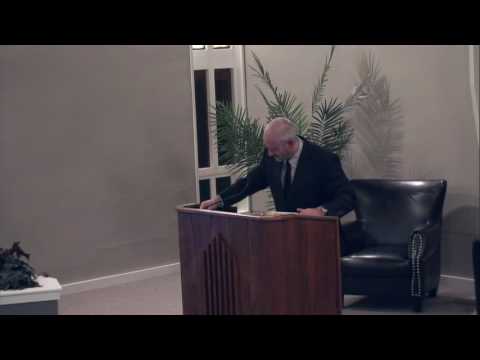
The Works of the Flesh
Galatians 5:19–21 presents a vice list Paul calls 'the works of the flesh,' catalogued here under four headings: sins of the flesh (adultery, fornication, uncleanness, lewdness), sins of religious apostasy (idolatry, sorcery, heresy), sins against personal relationships (hatred, contentions, jealousy, outbursts of wrath, selfish ambitions, dissensions, envy, murder), and sins of intemperance (drunkenness, revelries). The sermon distinguishes between remaining corruption — the ongoing struggle common to every justified believer — and reigning corruption, the habitual, unrepentant practice that characterises the unregenerate and excludes from the kingdom of God. Drawing on the Westminster Larger Catechism, Calvin, and Perkins, the preacher grounds each vice in the moral law and closes with a double summons: believers who have fallen into these sins are to repent and seek forgiveness through the blood of Christ; unbelievers are to see in the law their need for the Saviour.

The Olivet Discourse, Part 6
Matthew 24:21–22 describes a 'great tribulation' and its sovereign limitation — but what event does this language describe? Working through a preterist reading of the Olivet Discourse, this sermon argues that verse 21's unparalleled tribulation language refers to the destruction of Jerusalem in AD 70, not to a future global event. Drawing on parallel idioms in Exodus 11, Ezekiel 5, Ezekiel 7, and Daniel 9, the sermon demonstrates that such hyperbolic judgment language is standard biblical speech for covenantal catastrophe, and that the AD 70 destruction constituted the decisive covenantal transformation by which the kingdom was taken from old covenant Israel and given to the church. The sermon closes with a direct call to sinners to flee to Christ, whose promise in John 6:37 and 1 John 3:23 provides the warrant for faith.
Genesis 3:15
Genesis 3:15, the protevangelium, announces a Redeemer who would be born of a woman, accomplish victory through suffering and death, and crush the serpent's head — not a vague, undefined figure but a precisely identified Messiah. This Bible study traces the progressive covenantal narrowing of that promise from the seed of the woman (Genesis 3) through the Abrahamic, Mosaic, and Davidic covenants, the Psalms, and the prophets, demonstrating that Old Testament believers possessed substantial, detailed knowledge of the coming Christ. The study draws on Paul, John Owen, and the 1689 London Baptist Confession to show that salvation has always been by grace alone, through faith alone, in Christ alone, with no separate Old Testament economy of law-keeping. The closing application presses hearers toward Simeon-like doxology in response to the Christ who fulfills every promise of the Old Testament.

The Olivet Discourse, Part 2
Jesus' Olivet Discourse opens not with a timetable for the end of all things but with two commanding exhortations: 'Take heed that no one deceives you' and 'See that you are not troubled.' Expounding Matthew 24:4–8 within a preterist framework, this sermon argues that Christ's description of false messiahs, wars, famines, pestilences, and earthquakes depicts the conditions preceding the Roman destruction of Jerusalem in A.D. 70 — the covenant curses of Leviticus 26 and Deuteronomy 28 falling at last upon an apostate people who rejected their Messiah. The practical burden is twofold: guard theological sanity by submitting to the Word rather than to prophecy speculators, and guard emotional stability by resting in God's sovereign governance of history rather than panicking at world events.

The Most Important Question for Young People
Psalm 119:9 poses what the sermon calls the most important question for young people: 'How can a young man cleanse his way?' Before answering, the text forces an honest reckoning with the doctrine of total depravity and total inability — the way stands in need of cleansing precisely because every faculty of human nature is corrupted by the fall in Adam, and no sinner can commend himself to God apart from sovereign grace. The answer the psalmist gives, 'by taking heed according to Your Word,' encompasses both initial justification by grace through faith in Christ and ongoing sanctification by the same Word and Spirit. Parents and young people alike are exhorted to engage Scripture with the whole heart — obeying, memorizing, meditating, declaring, and delighting in it — as the only path to a cleansed way.