
Theological term
Sixth Commandment
27 sermons · All terms
Laws Concerning Homicide and Witnesses

Deuteronomy 19 applies three commandments of the Decalogue to the concrete conditions of civil life in Old Covenant Israel: the sixth commandment through legislation on cities of refuge distinguishing accidental homicide from murder, the eighth commandment through the prohibition on moving property landmarks, and the ninth commandment through the law of witnesses and its penalties for perjury. The sermon examines the distinction between manslaughter and premeditated murder, the role of the avenger of blood, the lex talionis as a limiting and proportional principle, and the blood-guiltiness that falls on a nation that fails to execute justice. The overarching application is that these laws reveal the sanctity of human life, the justice of God in civil society, and the sinfulness that made such detailed legislation necessary — all of which drives the hearer to the new covenant, in which Christ alone kept what Israel could not.

The Sin of David and the Grace of God
David's adultery with Bathsheba and the murder of Uriah the Hittite stand as the gravest sins of Israel's greatest king, yet 2 Samuel 12:1–15 is ultimately a text about the pursuing grace of God. Through Nathan's carefully constructed parable, God exposes David's sin in all its senselessness and treachery — making clear that to despise the commandment of God is to despise God himself. The sermon traces three movements in the passage: God's confrontation through his servant Nathan, the full indictment of David's covenant treachery, and the stunning declaration that the Lord has put away David's sin — a declaration that underlies David's celebration of forgiveness throughout the Psalter and points forward to the atoning work of David's greater Son.

The Sanctity of Life
The sixth commandment's prohibition of murder rests on the foundation that man is made in the image of God — a dignity that attaches to every human being at every stage of life, including the preborn child in the womb. Exodus 21:22–25 addresses the case of a pregnant woman injured during a fight, and the Hebrew text's use of normal birth language rather than miscarriage terminology establishes that the child in the womb is covered by the same lex talionis as any other person. The sermon works through the biblical witness to the imago Dei across the whole of human life — pre-fall, post-fall, in infancy, disability, sickness, old age, and the womb — before turning to the passage in Exodus as concrete civil legislation protecting that dignity. The law condemns the sin of abortion without reservation, yet the sermon closes by directing the guilty to the gospel: the blood of Christ cleanses from all sin, including this one.

Love your neighbour
Leviticus 19:9–18 sets out the concrete shape of neighborly love within the covenant community of Israel — not as sentiment, but as law. Working through gleaning regulations, prohibitions against theft, lying, exploitation, and a corrupt judiciary, the passage demonstrates that to love one's neighbor is to refrain from every breach of the second table of the Decalogue. The sermon shows that Jesus in the Sermon on the Mount and Paul in Romans 13 do not improve upon Moses but confirm what the moral law of God has always demanded: that love is the fulfilment of the law, and hatred of a brother is always a sixth-commandment violation.

The Conduct of the New Man, Part 1
Ephesians 4:25–28 grounds the Christian's ethical conduct not in legal compulsion but in the indicative of redemption: the old man has been put off, the mind is being renewed, and the new man has been put on. This sermon works through three prohibited actions — lying, sinful anger, and theft — each examined under its corresponding commandment from the Decalogue (the Ninth, Sixth, and Eighth), with a prohibition, an exhortation, and a motivation for each. The ethical demands of the New Covenant are not a new law but the restoration of the creational law now internalized by the Spirit according to Jeremiah 31:31–34. The hearer is called to put off deceit, guard against nursed anger that gives opportunity to the devil, and replace theft with diligent labor aimed at charitable surplus.
The Laws Concerning Homicide and Bodily Injury, Part 3
Exodus 21:33–22:15 sets out Israel's case laws governing property damage, animal theft, and home defense — laws designed not as an exhaustive legal code but as representative principles equipping judges to adjudicate equitably. Three features of biblical law emerge with force: the pervasive principle of restitution (the offender must make the victim whole, not merely 'pay a debt to society'), the absence of a prison system in the Mosaic economy, and the explicit legitimacy of lethal self-defense when a thief breaks in under cover of darkness. The sermon calls hearers to appreciate the pro-victim orientation of God's law and to think biblically about criminal justice, property rights, and self-defense in the present civil order.

The Laws Concerning Homicide and Bodily Injury, Part 2
Exodus 21:22–32 contains Israel's civil laws governing bodily injury to a pregnant woman, the discipline of servants, and liability for a goring ox — all concrete applications of the sixth commandment. The passage's language for premature birth employs the same Hebrew vocabulary used elsewhere in Genesis for childbirth, establishing that both mother and child (or children) are protected persons under the law, which the sermon applies directly to the ethics of abortion. The lex talionis (life for life, eye for eye) is examined not as a mandate for literal replication of injury but as a principle requiring proportionate punishment — neither too lenient nor excessive — a standard grounded in the dignity of every person as an image bearer of God.

The Woman Caught in Adultery
John 8:1–11 presents the Pharisees placing Christ on the horns of a dilemma: uphold the law of Moses and condemn the woman caught in adultery, or show compassion and be exposed as an antinomian. This sermon works through the passage in two movements — the woman brought to Christ (vv. 1–6) and the woman forgiven by Christ (vv. 7–11) — demonstrating that Jesus resolves the dilemma not by choosing one horn but by upholding both simultaneously. He appeals to the Mosaic witness laws of Deuteronomy 17 and 19 to silence the hypocritical accusers, then pronounces forgiveness, illustrating that the gospel pattern is 'get and do' rather than 'do and get.' The passage stands as a vivid display of Christ as both the holy lawgiver who writes with his finger and the friend of sinners who bids the thirsty come and drink.

The Things God Hates
Proverbs 6:16–19 presents a numerical list of seven things God hates and finds abominable — a proud look, a lying tongue, hands that shed innocent blood, a heart that devises wicked plans, feet swift in running to evil, a false witness who speaks lies, and one who sows discord among brethren. This sermon works through each item in canonical order, grounding the list in its immediate context (the portrait of the son of Belial in vv. 12–15) and in the broader testimony of Proverbs, the Psalms, and the New Testament. The abominable members (pride, lying, murder, the cunning heart, swift feet) and the abominable actions (perjury and discord) are each exposed and applied. The sermon concludes by urging hearers to pursue the opposites of each vice — humility, truth-telling, protection of innocent life, guarding the heart, swift pursuit of good, faithful witness, and peacemaking — and to rest in Christ, whose perfect obedience is the righteousness that covers remaining corruption in the believer.
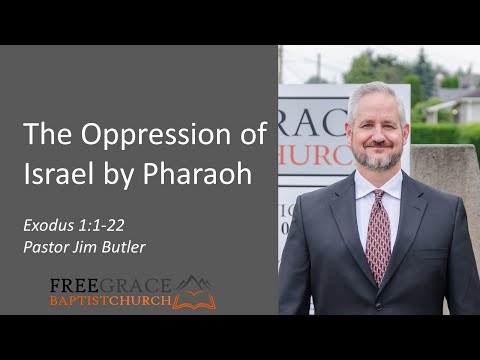
The Oppression of Israel by Pharaoh
Exodus 1 records the escalating oppression of Israel in Egypt — from the rise of an ignorant pharaoh, through forced labor, to an explicit policy of infanticide targeting Hebrew male infants. This exposition traces the passage in two movements: the connection between Exodus and the Abrahamic promises of Genesis, and the progressive stages of Pharaoh's tyranny, culminating in a national decree of genocide. The Hebrew midwives Shiphrah and Puah are held up as models of God-fearing civil disobedience, and the whole chapter is read typologically, anticipating the greater deliverance wrought through Moses and ultimately through the seed of Abraham, Jesus Christ. The congregation is called to imitate the courage of the faithful — to obey God rather than men in whatever sphere God has placed them.

The 6th Commandment
Exodus 20:13 — 'You shall not murder' — is one of the briefest commands in the Decalogue, yet it carries profound theological and legal weight. This expository Bible study examines the precise Hebrew terminology that distinguishes murder from other forms of killing, establishes the internal disposition (hatred, unrighteous anger, character assassination) as equally condemned by the sixth commandment alongside the external act, and then surveys three exceptions to the prohibition: capital punishment, just war, and self-defense. Each exception is grounded in both Old and New Testament texts, with sustained attention to the Noahic Covenant, Romans 13, and Exodus 22, demonstrating that the civil magistrate's sword is a God-ordained instrument of justice rather than a violation of the commandment.

If you aborted your baby, there is hope!
Abortion is a violation of the sixth commandment, but the blood of Christ cleanses from all sin — including this one. Preaching the law faithfully means following it immediately with the gospel, offering the forgiveness and rest Christ promises to every sinner who comes to him. The church's duty is not only to resist abortion politically and socially but to herald the sovereign grace of God to those broken by guilt and regret. There is hope in the person and work of the Lord Jesus Christ.
Clip: If You Aborted Your Baby, There Is Hope
The sixth commandment exposes abortion as a grievous violation of God's law, but the law's condemnation does not have the final word. This clip applies the gospel directly to those who have participated in abortion, grounding the offer of forgiveness in the atoning blood of Christ, the faithfulness of God to cleanse all unrighteousness, and the universal call of Christ to come to him. The church's responsibility is to preach both law and gospel together — the law that wounds and the gospel that heals.

Sanctity of Life
The Sixth Commandment — 'You shall not murder' (Exodus 20:13) — extends its protection to the pre-born, grounding the prohibition against abortion in the doctrine of man as image-bearer of God. This sermon works through three lines of argument: the precise meaning of the Hebrew word for murder, the consistent biblical testimony to the sanctity of human life at every stage from conception to old age, and the specific case law of Exodus 21:22–23, which affords the pre-born equal legal protection under the lex talionis. The sermon closes with a call to press the law upon a culture that celebrates abortion, while proclaiming that the blood of Christ is sufficient to forgive all who have participated in this sin.

The Bible and Abortion
Abortion is not a political issue but a theological and ethical one — a violation of the Sixth Commandment against murder and a direct assault on the image of God borne by every human being from conception. This sermon works through Exodus 21:22–25 to demonstrate that the Mosaic case law governing accidental injury to a pregnant woman treats the pre-born child as a full person, applying the lex talionis — life for life — when the child is killed. Supporting passages from Genesis, Job, Psalms, Jeremiah, Luke, and Paul establish the biblical case for the personhood and sanctity of the pre-born. The sermon closes by calling the church to preach the whole counsel of God on this subject, to pursue sexual fidelity, to pray for the end of abortion, and to proclaim the gospel's mercy to all who have sinned in this way.

Genesis 37:1-36
Genesis 37 presents the opening of the Joseph narrative: the dreams God gives to the favored son of Jacob, and the murderous hatred those dreams ignite in his brothers. The chapter lays bare the doctrine of total depravity — not as an abstraction, but as nine covenant sons who strip their brother, cast him into a pit, and sell him into slavery while eating a meal over his cries. Yet the brothers' treachery is the unwitting instrument of divine providence: they mean it for evil, but God overrules it for the very exaltation the dreams foretold. Joseph's story is also read as typology, with John Gill's extended parallel showing Joseph as a type of Christ — beloved son, rejected by his own, sold, reckoned dead, yet ultimately exalted.

The Bible and Abortion
Abortion is not merely a political question but a theological one, demanding that Christians know what Scripture says about the pre-born. Working through Exodus 20:13 and Exodus 21:22–25, this sermon establishes the Sixth Commandment's prohibition of murder, grounds the sanctity of human life in the doctrine of the image of God (traced from creation through the incarnation), and demonstrates from the Mosaic case law that even accidental harm to a pre-born child carried the full force of the lex talionis — life for life. The sermon closes by addressing the church's responsibility to preach both law and gospel, to vote and live consistently with the conviction that abortion is both sin and crime, and to extend the forgiveness of Christ to those who have been party to this particular transgression.

Genesis 4:16-26
Genesis 4:16–26 traces two diverging lines from Adam: the ungodly line of Cain, marked by escalating sin, polygamy, and bloodlust, and the godly line of Seth, which ends with men calling on the name of the Lord. The passage raises questions about cultural achievement, common grace, and the preservation of God's people in the midst of rampant wickedness. Eve's naming of Seth reveals genuine covenant faith in the promise of Genesis 3:15, trusting that God would yet raise up the seed of the woman. The sermon calls believers to grow in faith as those who possess not only the promise of the Redeemer but its fulfillment in Christ.

Genesis 4:1-8
Genesis 4:1–8 records the first brothers, the first offerings, and the first murder — and the passage exposes the difference between formal religious observance and genuine faith. The divine acceptance of Abel and rejection of Cain is explained not by vocation, bloodshed, or agricultural produce, but by Hebrews 11:4: by faith Abel offered a more excellent sacrifice, bearing witness that he was righteous before God. Cain's anger, falling countenance, and ultimate fratricide demonstrate that heartless, faithless worship produces not repentance but escalating sin. The study closes with the warning that sin is never dormant or manageable — its desire is always to rule over those who refuse to come to God in faith through Christ.

Free Grace Baptist Church - February 11, 2018 PM
James 4:1-6 exposes two devastating fruits of what James calls 'demonic wisdom': conflict with one another (vv. 1-2a) and enmity with God (vv. 2b-6). The source of both is unmortified lust — the unrestrained desire for pleasure, riches, and worldly greatness that breeds wars, fights, covetousness, and wicked prayer among professing believers. The sermon presses the congregation to trace every form of church conflict and spiritual adultery back to pride, and closes with the transitional mercy of verse 6: that despite all this, God gives more grace to the humble.

The Sixth Commandment
The sixth commandment, 'You shall not murder' (Deuteronomy 5:17), rests upon the foundation of the imago Dei — the conviction that every human being, from the pre-born to the elderly, bears the image of the Creator, and that to assault an image-bearer is to assault God himself. The sermon distinguishes murder from lawful killing, arguing from Genesis 9, Exodus 22, and Romans 13 that capital punishment, self-defense, and just war are not violations of the commandment but are grounded in the same principle that makes murder heinous: the sanctity of human life. Modern applications — abortion, euthanasia, and the neglect of capital punishment — are examined in light of both Old and New Testament texts, and the sermon closes by directing those who have participated in these sins to the pardoning grace of Christ.
The Bible and Abortion
Exodus 21:22–25 is examined as a direct biblical address to the ethics of abortion, situating the text within the Sixth Commandment's prohibition of murder and the broader biblical witness to the sanctity of human life from conception to death. The sermon argues that the Hebrew vocabulary of the passage — the language of childbirth rather than miscarriage — establishes that God's law affords protection, including capital sanction, to pre-born image-bearers of God. The image of God in man, displayed across every stage of human life from Genesis to James, grounds the absolute moral prohibition of abortion and exposes the moral bankruptcy of societies and churches that disregard it. Hearers are called to informed prayer, faithful proclamation of the law, sexual purity, and confidence in the sufficiency of Christ's blood to forgive even this sin.

The Shedding of Innocent Blood
The sixth commandment's prohibition of murder, grounded in the doctrine of man as image-bearer of God, applies with full force to abortion. This sermon works through Exodus 21:22–25 to demonstrate that the Mosaic civil law affords explicit legal protection to both mother and pre-born child, and that the correct translation of the passage — 'she gives birth prematurely' rather than 'she miscarries' — is exegetically decisive for the abortion debate. The sanctity of human life is established across the full range of human existence: before the fall, after it, in children, the pre-born, the handicapped, the sick, and the elderly — and is ultimately grounded in the Incarnation, by which Christ assumed and thereby dignified human flesh. The sermon closes by calling the church to informed prayer, chaste living, and flight to the cross, where there is full forgiveness even for those implicated in abortion.
The Bible and Abortion, Part 1
What does Scripture say about abortion, and does it offer a coherent case for the sanctity of unborn life? This sermon works through three interlocking biblical arguments: the sanctity of human life grounded in the imago Dei, the established personhood of the pre-born throughout both Testaments, and the specific prohibition against abortion implied in the case law of Exodus 21:22–25. The lex talionis applied to accidental premature birth demonstrates that God holds the life of the unborn equal in worth to the life of the mother, making intentional abortion a violation of the sixth commandment. The sermon closes by insisting that the only remedy for the guilt of a murderous culture is the gospel of Jesus Christ, who is a real Savior for real sinners.
Deuteronomy 22
Deuteronomy 22 presents two categories of miscellaneous Mosaic legislation: covenant community obligations (verses 1–12) and laws governing the integrity of marriage and sexual relationships (verses 13–30). The exposition examines each of the six laws in both categories, demonstrating that the principles underlying them — mutual care within the covenant community, God-ordained gender distinctions, sexual purity, and the protection of the innocent — remain directly applicable in the new covenant era. Sin is the constant in every generation, and God's law, rightly understood, punishes the guilty and protects the innocent, pointing his people toward holiness and away from the patterns of the surrounding nations.
Deuteronomy 20
Deuteronomy 20 sets forth three categories of principle governing Israel's holy warfare: a general call to fearlessness grounded in the presence and power of Yahweh, specific exemptions from military service, and regulations for engaging enemy cities. The chapter distinguishes between cities far from Canaan — to whom peace must first be offered — and the Canaanite nations under the ban, who were to be utterly destroyed lest they corrupt Israel's worship. Throughout, the text reveals a God who fights for His people, restrains their conduct in war by humanitarian concern, and warns that failure to execute the ban would produce exactly the idolatry Israel later fell into.
The Sixth Commandment
Jesus' exposition of the Sixth Commandment in Matthew 5:21–26 does not elevate Moses' law or introduce a new covenant standard — it clears away the scribal and Pharisaic misinterpretation that reduced 'You shall not murder' to a merely external prohibition. The commandment has always reached the heart: unwarranted anger, slander, and character assassination are violations of the Sixth Word no less than physical killing, because the law of God is, as the Psalmist declared, exceedingly broad. The sermon applies this in two directions: horizontal relationships broken by anger must be reconciled before worship can be acceptable to God, and the law's comprehensive reach exposes every hearer's guilt and drives them to the only one who perfectly kept it — the Lord Jesus Christ, the mighty Mediator who alone can plead not guilty before a holy God.