
Theological term
Servant Songs
14 sermons · All terms
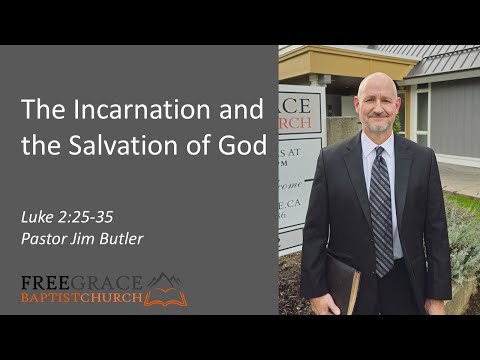
The Incarnation and the Salvation of God

Simeon's encounter with the infant Jesus in Luke 2:25–35 reveals the incarnation as the decisive fulfillment of every Old Testament promise — from Genesis 3:15 through the servant songs of Isaiah — and forces every hearer to declare whose side they stand on. The sermon expounds two movements in the passage: Simeon's confession that the child he holds is the salvation God prepared for all peoples, and Simeon's prophecy that this same child will cause the fall and rising of many, pierce Mary's soul, and expose the hidden allegiance of every heart. The call is direct: look to Christ by faith as Simeon did, die in peace as Simeon could, and do not be numbered among those who fell because they rejected the consolation of Israel.

The Demonstration of Servanthood
John 13:4–17 presents the foot washing not merely as an act of hospitality but as an emblem pointing simultaneously to the incarnation, the passion, regeneration, justification, and sanctification. The Son of God who stoops to wash the dirty feet of dirty men is the same Son of God who goes to the cross to wash the dirty hearts of dirty sinners. Peter's initial refusal and subsequent capitulation illustrate the sinner's need for union with Christ — a union granted only through being washed, born again, and cleansed by the blood of Christ. Disciples who have received this washing are therefore obligated to go and serve others in humility, self-sacrifice, and love as the means by which they advance the gospel.

The Explanation of the Jews' Unbelief
John 12:37–41 presents a theology of unbelief: despite the abundance of miraculous signs performed before their eyes, the Jewish contemporaries of Jesus refused to believe. The sermon examines their question about the Messiah's death in verses 34–36, shows their partial but deficient grasp of Old Testament prophecy, and then expounds John's double appeal to Isaiah — Isaiah 53:1 on the rejection of the servant's report, and Isaiah 6:9–10 on the divine judicial hardening of those who persistently resist. The unbelief of Jesus' hearers was not a failure of his ministry but the precise fulfillment of what God had foretold through his prophet, confirming that regeneration and faith are gifts of sovereign grace, not products of evidential persuasion. The sermon closes with a direct call to believe in the light while it may be found, grounded in the glory of the incarnate Son that Isaiah himself beheld in the throne room.

The Conversion of the Ethiopian Eunuch
Acts 8:26–40 records the conversion of an Ethiopian eunuch whose exclusion from the assembly of God under the Mosaic order (Deuteronomy 23) is overturned by the new-covenant fulfillment of Isaiah 56, as God sovereignly directs Philip to him on the Gaza road. The sermon traces three movements: the divine initiative behind the contact, the Christ-centered content of the communication from Isaiah 53, and the confession and baptism that mark the conversion itself. Throughout, the preacher insists that the eunuch's deepest problem was not his ethnicity or his condition but his sin, and that the only remedy—then as now—is faith in the Lord Jesus Christ, whose righteousness is received by grace through faith alone and sealed in believers' baptism by immersion.

The 4th Commandment (Part 3)
The Christian Sabbath is grounded in both creation and redemption, and the New Testament establishes Sunday — the Lord's Day — as the day of corporate worship by precedent and pattern rather than by bare precept. This third installment in a study of the Fourth Commandment examines three apostolic texts (Acts 20:7, 1 Corinthians 16:1–2, Revelation 1:10) that demonstrate the early church's practice of gathering on the first day of the week, then turns to two alleged anti-Sabbatarian passages (Romans 14 and Galatians 5) to show that neither addresses the weekly Sabbath but rather deals with Jewish calendar observances and the question of justification by works. The moral principle of one day in seven set apart for God remains binding on New Covenant believers, while the positive law has lawfully shifted the day from Saturday to Sunday in light of Christ's resurrection.

The Soldiers Mock Jesus
The mockery of Jesus by the Roman soldiers in Matthew 27:27–31 is examined as a Lord's Supper meditation, tracing the psychological and physical brutality inflicted on the Son of God after Pilate's verdict. The scene is read through the lens of fulfilled prophecy — Isaiah 50:6 and Isaiah 53 — and the covenant of redemption, in which Christ willingly undertook every indignity as the surety and substitute for his people. The sermon closes by turning to the book of Revelation to show that what the soldiers performed in jest — robing, crowning, and hailing a king — Christ possesses in eternal reality, and calls believers to respond with the genuine homage these soldiers withheld.

The First Missionary Journey, Part 7
Acts 13:44–52 records the second Sabbath in Pisidian Antioch, where almost the whole city gathered to hear Paul and Barnabas, provoking the envy and blasphemy of unbelieving Jews. This sermon works through three movements: the opposition of the Jews, the bold response of Paul and Barnabas, and the spread of the word. The exposition holds together the responsibility of those who judge themselves unworthy of eternal life (v. 46) and the absolute sovereignty of God in election (v. 48), demonstrating that consistent Reformed theology requires both without collapsing either into hyper-Calvinism or Arminianism. The closing application presses hearers toward faithfulness now as the surest preparation for future persecution, and calls the unconverted to look to Christ without waiting for a private disclosure of their election.

Isaiah 49:1-6

Isaiah 49:1–6 presents the second of Isaiah's four servant songs, in which the servant of the Lord addresses the nations directly, announcing that his mouth — made like a sharp sword and a polished shaft — is the weapon by which God will accomplish worldwide redemption. The servant is identified as the true Israel, fulfilling what national Israel failed to do, and his conquest extends not merely to the restoration of Jacob but to the Gentiles and the ends of the earth. Apparent failure and rejection, seen both in Isaiah's own ministry and in the Lord Jesus Christ's earthly preaching, do not negate the servant's mission, because his reward is with God. The sermon presses the church to faithfulness in preaching and hearing the Word of God as the appointed means by which the servant's conquest advances.

The Conversion of the Ethiopian Eunuch
Acts 8:26–40 records the Spirit-directed encounter between the evangelist Philip and an Ethiopian eunuch, a man doubly excluded from Israel's assembly by Deuteronomy 23:1 yet drawn by God's sovereign grace into the new-covenant community. The sermon traces three movements in the narrative — the providential meeting, the expository dialogue from Isaiah 53, and the eunuch's confession and baptism — arguing that the passage is not merely a quotation but a fulfillment of Isaiah 56, in which eunuchs and foreigners are brought near through the blood of Christ. Against any notion of baptism as a converting ordinance, the preacher grounds believers' baptism in the pattern of faith preceding baptism throughout Acts, Calvin's own concession that immersion was the ancient mode, and the 1689 LBCF's definition of baptism as an ordinance primarily for the party baptized. The sermon closes with an indiscriminate call to all sinners to relinquish their own righteousness and rest in the imputed righteousness of Jesus Christ.

The Mission of the Son of Man
Matthew 20:20–28 confronts the persistent problem of pride and the inverted logic of kingdom greatness. Against the backdrop of Christ's third passion prediction, the ambitious request of James and John exposes a desire common to all God's people: the crown without the cross. The sermon works through Christ's twofold instruction — rejecting the Gentile model of top-down authority and embracing servant-greatness — before landing on the theological heart of verse 28: the Son of Man gave his life as a ransom for many, a payment securing the definite salvation of his people and providing the interpretive key to the entire passion narrative of Matthew 21–27.
The Hearing before the Sanhedrin, Part 2
At the trial before the Sanhedrin, two false witnesses twist Christ's words about destroying the temple, and the high priest demands to know whether Jesus is the Christ, the Son of God. Christ's answer — 'it is as you said' — is an unambiguous messianic confession, immediately amplified by his identification of himself as the Son of Man of Daniel 7 enthroned at the right hand of the Father (Psalm 110:1), a claim that converges multiple streams of Old Testament prophecy. The sermon sets this confession against the backdrop of human sinfulness — visible in the kangaroo court's predetermined verdict and willingness to suborn perjury — and calls hearers to see in Christ the true temple-builder of the Davidic covenant, the substitutionary curse-bearer of Isaiah 53, and the only Savior in whom God and sinners dwell together.

The Conversion of the Ethiopian Eunuch
Acts 8:26–40 records the Spirit-orchestrated conversion of an Ethiopian eunuch through Philip's proclamation of Christ from Isaiah 53. The passage is set within the fulfillment of Isaiah 56's promise that eunuchs and Gentiles would be brought near to God in the messianic age — a promise Luke deliberately highlights as the risen and exalted Christ builds his kingdom to the uttermost parts of the earth. The sermon expounds the substitutionary suffering of the servant of Yahweh as the content of Philip's evangelism, the great exchange of 2 Corinthians 5:21 as the ground of justification, and the proper order of faith then baptism as the pattern of apostolic practice. Hearers are pressed to ask whether they understand the gospel, to believe it without delay, and — if already believing — to submit to baptism as an act of obedience and a means of grace.
The Conversion of the Ethiopian Eunuch
Acts 8:26–40 records the Spirit-directed encounter between Philip the evangelist and an Ethiopian eunuch who was reading Isaiah 53 on his return from Jerusalem. The sermon traces three movements in the passage: the Holy Spirit's sovereign direction of Philip to the eunuch, Philip's exposition of Isaiah 53 as fulfilled in the person and work of Christ, and the eunuch's conversion and subsequent baptism by immersion. The central burden is that Christ's atoning work — his obedient life, substitutionary death, and vindicating resurrection — is the only ground on which any sinner, however excluded by law or circumstance, may be forgiven and brought near to God, and that believer's baptism is the public, visible sign of that inward, Spirit-wrought grace.
The Servant Song of Matthew
Matthew 12:15–21 records Jesus withdrawing from the murderous rage of the Pharisees while multitudes — including Gentiles — follow Him for healing, and Matthew interprets this through the first Servant Song of Isaiah 42:1–7. The sermon works through six characteristics of the Servant of Yahweh as Matthew presents them: His excellence as the Father's chosen and beloved, His empowerment by the Holy Spirit, His message of justice to the Gentiles, His character and commitment as one who does not quarrel or cry out, His mercy toward bruised reeds and smoking flax, and His worldwide mission culminating in the Great Commission. Throughout, the preacher presses the comfort that weak faith — however small — is true faith, and that Christ as the great Savior of great sinners is the hermeneutical center of all Scripture.