
Theological term
Repentance
126 sermons · All terms

The Sin of David and the Grace of God

David's adultery with Bathsheba and the murder of Uriah the Hittite stand as the gravest sins of Israel's greatest king, yet 2 Samuel 12:1–15 is ultimately a text about the pursuing grace of God. Through Nathan's carefully constructed parable, God exposes David's sin in all its senselessness and treachery — making clear that to despise the commandment of God is to despise God himself. The sermon traces three movements in the passage: God's confrontation through his servant Nathan, the full indictment of David's covenant treachery, and the stunning declaration that the Lord has put away David's sin — a declaration that underlies David's celebration of forgiveness throughout the Psalter and points forward to the atoning work of David's greater Son.

Testimony, confession, and baptism: Hans
A baptismal service in which a new believer makes public profession of faith through immersion, grounded in the 1689 London Baptist Confession's teaching on baptism as a sign of union with Christ through his death and resurrection. The candidate recounts a providential journey from Eastern mysticism and Stoic philosophy to Scripture, tracing his conversion to a sermon on Matthew 24:15 and the destruction of Jerusalem in 70 AD as the demonstration of God's simultaneous justice and mercy. The confession of faith is administered through four credal questions, after which the candidate is baptized as a public declaration of a grace already received.

Ask FGBC #61: Conviction of Sin Before or After Regeneration?
The question of whether conviction of sin precedes or follows faith is examined through the lens of the ordo salutis. Conviction of sin necessarily precedes faith because without it the sinner would see no need for Christ, yet Scripture nowhere prescribes a fixed period of misery as a prerequisite for receiving the gift of faith. Conversion is the divine bestowal of the graces of faith and repentance together, not a staged sequence in which the sinner must accumulate sufficient guilt before God acts. The call of the gospel is not prolonged self-examination but immediate flight to Christ, and the doctrine of presumption that keeps sinners in unnecessary bondage is a Catholic, not Protestant, imposition on the gospel promise.

The Mission and Ministry of the Church
What is the mission and ministry of the church, and how does the apostolic pattern in Acts 2 define both? This sermon works through Acts 2:22–42, showing that the church's mission is the proclamation of Christ — his life, atoning death, resurrection, and exaltation — accompanied by the killing work of God's law that convicts sinners of their guilt and drives them to the Savior. The ministry that follows is shaped by the four marks of the early church in verse 42: steadfast continuance in the apostles' doctrine, fellowship, the breaking of bread, and prayer — the simple means by which God feeds his blood-bought people.
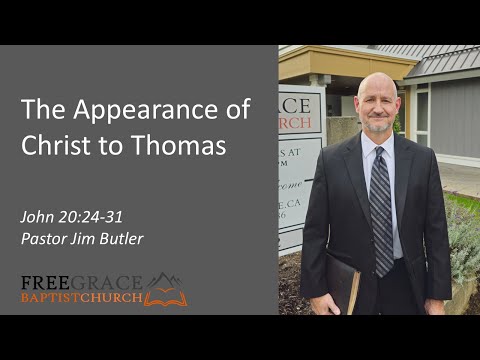
The Appearance of Christ to Thomas
John 20:24–31 presents Thomas not merely as a doubter but as an obstinate man who refuses to believe the resurrection unless his own conditions are met — rejecting the Old Testament prophets, the repeated predictions of Christ, and the apostolic testimony of ten eyewitnesses. Christ responds not with rebuke but with sovereign grace, appearing again on the Lord's Day and inviting Thomas to examine the wounds that sealed a finished atonement. The confession that follows — 'My Lord and my God' — is the theological and experiential crown of the fourth gospel, answering John's own stated purpose in verses 30–31: that through the written word, those who have not seen may nevertheless believe and have life in Christ's name.
Kept By The Power Of God

Acts 27:39–28:16 records the final leg of the Apostle Paul's journey to Rome — shipwreck, a viper's bite on the beach at Malta, miraculous healings, and at last the arrival that God had promised. The central question the passage forces upon every hearer is whether God keeps His promises when His servants suffer. Drawing on Ecclesiastes 9, John 9, and Luke 13, the sermon demonstrates that calamity falls on the righteous and the wicked alike without distinction, and that the right response to suffering is not to identify whose sin caused it but to seek God's glory in it. The believer's ground of confidence is 1 Peter 1:5 — that the people of God are kept by His power through faith, and that the same sovereign purpose which brought Paul safely to Rome will bring every trusting soul to its appointed end.

Hitting Rock Bottom: A Story of Redemption and Hope
The parable of the prodigal son illustrates the depth of human sin and the sovereign grace that brings a sinner to repentance. The younger son's descent into destitution — feeding pigs in a far country, longing to eat their food — pictures the miserable estate of every soul apart from God. Godly sorrow, distinguished from mere regret, drives the son to confess sin against both his father and against heaven. The sermon presses the listener to consider whether they have yet come to themselves, recognizing their own ruin and the mercy that awaits in the Father's house.

God's Unconditional Forgiveness: A Promise for ALL
The parable of the prodigal son proclaims that God's forgiveness is unconditional and extends to every category of sinner without exception. No depth of moral failure, addiction, or shame places a person beyond the reach of divine mercy. The sermon presses home that repentance — however hesitant — is met not with rejection but with restoration, and calls every hearer to turn from sin and trust the Savior who washes and purifies.

The Christian Husband and Father
Proverbs 4:1–9 opens a sermon that traces the pattern of transgenerational wisdom-transmission from David to Solomon to Solomon's children, and uses it as the framework for a thorough biblical account of what faithfulness looks like for a Christian husband and father. Drawing extensively from Proverbs, the sermon argues that a godly husband fears the Lord, deals honestly with his sin, loves his wife as a gift, provides for and protects her, communicates with kindness, and maintains sexual fidelity; and that a godly father extends that same godliness toward his children through love, instruction, and both verbal and corporal discipline exercised within an orbit of affection. The sermon is marked throughout by a Reformation soteriology — salvation is by grace through faith in Christ alone, not by exemplary parenting — and closes with direct exhortations to fathers, mothers, and young men preparing for marriage.

The Prodigal Son
Luke 15:11–32, the parable of the prodigal son, confronts two kinds of lostness: the deliberate rebellion of a son who demands his inheritance while his father still lives, and the self-righteous resentment of an elder son who cannot rejoice at his brother's return. The sermon traces the younger son's descent, his coming to himself in godly sorrow and repentance, and the father's extravagant, undeserved welcome as a picture of God's readiness to receive returning sinners. The older son's unresolved anger is pressed upon those whose confidence rests in their own moral performance rather than in grace. The sermon closes by pointing to Christ as the true older brother who, unlike his counterpart in the parable, laid down his life to make repentant sinners co-heirs with himself.

CLIP: An Urgent Plea With Unbelievers
Isaiah 55 issues an urgent, time-sensitive call to unbelievers: the window of grace will close, and those who die outside of Christ will face the wrath of a thrice-holy God. The sermon confronts common self-excuses for delaying repentance — including the notion that one's sins are too great — and answers them with the inexhaustible pardoning grace of God. Every sinner is summoned to seek the Lord while he may be found, flee to Christ immediately, and rest in the abundance of his mercy.

The Conversion of Matthew
Matthew 9:9-13 presents the sovereign call of Christ to Matthew, a tax collector despised in first-century Jewish society as a collaborator with Gentile oppressors and a companion of sinners. The sermon traces three movements in the passage: the authoritative call that produced immediate discipleship, the feast Matthew threw to honor Christ and evangelize his former associates, and Christ's threefold response to the Pharisees' complaint — identifying himself as a physician to the sick, appealing to Hosea 6:6 against mere external religion, and declaring his mission to call sinners to repentance. The central application is that no sinner is too notorious to be received by Christ, and Matthew's immediate rising and following is held up as the pattern for genuine repentance and faith.

The Free Offer of Eternal Life

Paul's defense of his ministry in 1 Thessalonians 2:1–4 is not merely self-vindication but a demonstration that the gospel he preached is categorically different from the self-serving philosophies of his day — it came without error, without moral corruption, and without deceit. The message cost Paul greatly to deliver, yet it costs the hearer nothing to receive, because Christ paid the full price. God himself, through appointed ambassadors, freely offers eternal life to sinners who will lay aside their rebellion and receive the gift by faith alone.

Ask FGBC - July 2024 Podcast with Pastors Butler and Kirkpatrick
Two pastors work through a wide-ranging set of questions submitted by listeners, covering the Reformed doctrine of the will, repentance and faith, holy days, Christian political engagement, believers' baptism, the New Covenant, forgiveness of unrepentant offenders, ongoing confession of sin, witnessing to homosexual neighbors, the Sabbath shift from Saturday to Sunday, the day of the Lord, the beatific vision, common grace, saving versus temporary faith, and the holy walk. Throughout, the answers are grounded in the 1689 London Baptist Confession and exposit the relevant biblical texts, consistently distinguishing the Reformed Baptist position from Arminian, dispensationalist, and paedobaptist alternatives. The session serves as accessible catechetical instruction for believers at all stages while modeling how confessional Reformed Baptist theology addresses both doctrinal and practical questions.

The Salvation of Sinners on Pentecost
Peter's sermon on the day of Pentecost (Acts 2:22–42) declares the life, death, resurrection, and exaltation of Jesus Christ as the exclusive ground of salvation, and calls sinners to repentance and faith. The sermon examines what genuine repentance means — a change of mind inseparable from faith, not a prior moral reformation — and argues that baptism is the sign of what God has already accomplished internally, not the instrument of forgiveness. Acts 2:39 is addressed directly against paedobaptist appeals, with the promise of the Spirit shown to belong to all who are effectually called, not to the physical infants of believers. The sermon closes with an exhortation to follow the Pentecost pattern: preach the gospel, baptize disciples, and teach them in the church.

Ask FGBC #25: How do I handle family members, friends, etc, not believing?
A questioner is grieved by family members and friends who refuse to believe the gospel, citing a theology that demands a prolonged crisis of sin and misery before conversion is credible. The response addresses both the pastoral burden of watching loved ones reject Christ and the theological confusion that treats immediate repentance and faith with suspicion. Practical counsel includes persisting in prayer, reading Scripture together rather than arguing theology, and pointing to the diverse conversion experiences in the New Testament and in works such as Pilgrim's Progress to show that Scripture nowhere requires a prescribed experiential cycle before a sinner may come to Christ.

Bible Study - Saul and the witch at Endor
King Saul's consultation with the witch at Endor (1 Samuel 28) illustrates the catastrophic spiritual consequences of persistent disobedience to God's revealed word. Having been cut off from God through compounding acts of rebellion — beginning in 1 Samuel 13 and 15 — Saul finds himself without prophetic word, priestly access, or divine dream, and turns in desperation to a source God had expressly condemned. The narrative is set in deliberate contrast with David, who, though not sinless, maintained communion with God through repentance and reliance on the means of grace. The lesson closes with a call to seek God earnestly through Scripture and prayer rather than turning to any substitute, however desperate the circumstances.
Ask FGBC #17: What does it mean to repent and believe?
Repentance and faith are two sides of the same coin in the gospel call, yet they are not equals: the principal act of conversion is faith, and justification is by faith alone apart from works. Repentance, properly understood, is a change of mind concerning sin — not a moral clean-up prerequisite — and is itself a gracious gift granted by God (Acts 11:18). The elements of the ordo salutis (regeneration, repentance, faith, justification, adoption, the beginning of sanctification) occur simultaneously, not sequentially, and neonomianism is identified as a live danger whenever repentance is turned into a condition the sinner must satisfy before coming to Christ.
The Ministry in Iconium, Part 1
Acts 14:1–7 records the ministry of Paul and Barnabas in Iconium during the first missionary journey, and this exposition focuses on God's blessing in verse 1 — specifically the sovereignty of God in salvation and the instrumentality of gospel preaching. Drawing on Acts 13:48, Acts 16:14, Romans 10, 1 Corinthians 1, and 2 Timothy 4, the sermon argues that while God alone opens hearts, He ordains the foolishness of preaching as the ordinary means of saving sinners. The sermon closes by examining the relationship between faith and repentance in Acts, contending that the two are inseparable sides of the same coin and that repentance must never be preached as a work the sinner performs before coming to Christ.

Paul in Athens
Paul's encounter with the philosophers and council of Athens in Acts 17:16–34 exposes the persistent and universal nature of idolatry, the sufficiency of general revelation to render all men without excuse, and the necessity of special revelation for salvation. The sermon traces Paul's Mars Hill address to show how the apostle grounds his proclamation in the doctrines of creation, providence, and divine aseity before pressing the call to repentance and warning of coming judgment. Where idolatry blurs the Creator-creature distinction, the gospel restores it — and the varied responses of the Athenians (mockery, curiosity, and saving faith) remind the church that conversion belongs to the Spirit of God, not to the eloquence of the preacher.

2LBC Chapter 17 - of the Perseverance of the Saints (part 2)
The 1689 London Baptist Confession's seventeenth chapter on the perseverance of the saints is honest about the real threats that confront the believer: the devil, the world, and the remaining corruption of the flesh, compounded by neglect of the means of grace. The life of David—adultery, murder, temporal judgments, and the sword that never departed from his house—is held up as a biblical case study for every consequence the confession names. Yet the chapter does not end in the catalogue of ruin: repentance itself is an evangelical grace given by God, and the preservation of God's elect is grounded not in their free will but in the immutability of election, the intercession of Christ, and the nature of the covenant of grace. The practical force of the doctrine is a call to use the ordained means—word, prayer, baptism, the Lord's Supper, corporate worship—as God-given instruments for persevering to the end.

2LCF Chapter 18 - Of the Assurance of Grace and Salvation
The 1689 London Baptist Confession Chapter 18 grounds the assurance of salvation not in emotional experience but in the blood and righteousness of Jesus Christ as the objective foundation, confirmed by the inward evidences of the Spirit's work in regeneration. The chapter distinguishes between the false presumption of unregenerate men and the genuine, infallible assurance available to true believers through faith in Christ. Assurance does not belong to the essence of faith — a true believer may struggle and doubt without thereby forfeiting salvation — yet the confession calls every believer to diligent pursuit of settled assurance as a duty. The subjective evidences of grace (repentance, love for Christ, good works, the Spirit's testimony of adoption) are consequential to the objective ground, never a replacement for it.

The Problem of Sin and the Mercy of God
Proverbs 28:13 identifies sin as the universal human problem and prescribes confession and forsaking of sin as the divinely appointed remedy. The sermon examines four aspects of the problem — the twin assumptions of universal sinfulness and the instinct to conceal it, biblical examples of attempted cover-up from Genesis to Acts, the common methods by which sinners suppress or redefine sin, and the cursed outcome of impenitence in both this age and the age to come. The remedy is traced through the exercise of faith (confession as agreement with God and trust in Christ's blood and righteousness), genuine repentance (forsaking sin rather than merely regretting it), and the certain merciful result — not a possibility but a promise — for all who lay hold of Christ as surety.

The Apostolic Sermon
Peter's sermon on the day of Pentecost, recorded in Acts 2:14–41, is the first apostolic proclamation of the risen Christ, and it follows a carefully constructed argument: correcting a false accusation, demonstrating from Old Testament Scripture who the Messiah is, and confronting the hearers with their guilt before the exalted Lord. The sermon examines how Peter builds his case through the life, death, resurrection, and ascension of Christ, drawing on Joel 2, Psalm 16, and Psalm 110 to show that every stage of Christ's humiliation and exaltation was foreordained. The hearers' anguished question — 'What shall we do?' — is answered with a call to repentance, faith, and baptism, which Peter grounds not in human decision alone but in the sovereign, effectual call of God. The application presses hearers to submit to Christ as Lord, to feel the weight of sin's horror, and to follow repentance and faith with public baptism and membership in the local church.
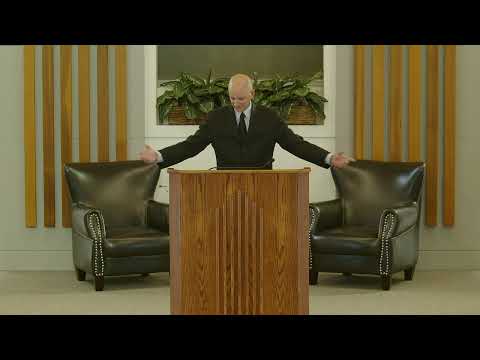
Judge Not

Matthew 7:1–6 is among the most misquoted passages in Scripture, weaponized by unbelievers to silence any moral reproof. This sermon works through four questions the text raises — why not judge, by what standard will we be judged, why do we judge, and how can we judge — and argues that Christ's caution is not a prohibition on all moral discernment but a warning against hypocritical, merciless condemnation that ignores one's own greater guilt before God. The solution lies in true repentance: only when the beam has been removed from one's own eye — by grace, through Christ — can a believer see clearly enough to restore a sinning brother with humility.

The Woman and the Pharisee
Luke 7:36–50 sets two figures in sharp contrast: a nameless woman whose many sins have been forgiven and a self-righteous Pharisee who sees no need of a Savior. The parable of the two debtors exposes the principle that those forgiven much love much, while those who imagine themselves barely indebted show no love at all. Christ's declaration — 'Your faith has saved you; go in peace' — demonstrates that forgiveness is received through God-given faith alone, not through any merit or priestly mediation. The sermon calls believers to let the magnitude of their own forgiveness produce humble, lavish love for Christ and gracious dealings with fellow sinners.

The Context of John 3:16, Part 1
John 3:16 opens with the word 'for,' marking it as a continuation of a preceding argument — yet the verse is almost universally quoted without its Old Testament context. This sermon expounds Numbers 21:4–9, the account of the bronze serpent in the wilderness, which Jesus himself cites in John 3:14 as the direct backdrop for his declaration of the gospel to Nicodemus. The sin of Israel — grumbling against a gracious God despite his continual provision — brought deadly judgment in the form of fiery serpents, and the God-ordained remedy was not the removal of the snakes but a look of faith toward a bronze serpent lifted on a pole. Hearers are called to repent of complaining against God and the authorities he has appointed, and to return for the evening service where the typological fulfillment in the lifting up of the Son of Man will be applied to the gospel.

The Riches of God's Grace
David's fall into adultery and murder in 2 Samuel 11 sets the stage for one of Scripture's most striking displays of divine grace in 2 Samuel 12:1–15. Nathan's parable exposes David's sin through the unstoppable initiative of God, and the prophet's indictment demonstrates that David's wickedness was aggravated, not mitigated, by the abundant grace God had already shown him. David's two-word confession — 'I have sinned against the Lord' — is met immediately with pardon, not because the confession was elaborate, but because forgiveness rests entirely on the atoning work of Christ, to whom David looked in faith through the promises of the Davidic covenant. The sermon calls both believer and unbeliever to receive the same grace: real forgiveness for real sinners, grounded in the righteousness of Christ imputed through faith alone.

The Righteous Reign of the Son of God
Psalm 2 presents the righteous reign of the Son of God against the backdrop of universal human rebellion. The nations rage, the kings conspire, and the political class unites in mutiny against Yahweh and His anointed — yet God laughs from the heavens, installs His Son on Zion, and promises Him the nations as His inheritance. The decree announced in verses 7–9 is rooted in the covenant of redemption: the Father gives a great multitude to the Son, who accomplishes their salvation through substitutionary obedience, death, and resurrection, and is then exalted to universal messianic kingship. The psalm closes with an evangelistic summons: be wise, serve the Lord with fear, and kiss the Son — for blessed are all those who put their trust in Him.

The Camel and the Needle
Luke 19:1–10 presents Zacchaeus — chief tax collector, rich man, notorious sinner — as a living demonstration of what Jesus declared in Luke 18:27: 'the things which are impossible with men are possible with God.' The sermon works through two movements: first, the person of Zacchaeus as the object of sovereign mercy, and second, the mission of Christ who seeks and saves the lost by divine initiative, not human worthiness. The effectual call of the Son of God upon Zacchaeus — who climbed the tree in curiosity but descended in love — illustrates that God's saving grace makes its object worthy rather than waiting to find one worthy.