
Theological term
Regulative Principle of Worship
195 sermons · All terms

The Problem Worse than Paralysis

The healing of the paralytic in Matthew 9:1–8 exposes a problem far deeper than physical disability: the guilt of sin before a holy God. Jesus pronounces forgiveness before He commands the man to rise, revealing that the greater miracle is not restored limbs but a cleansed soul — and that the Son of Man possesses divine authority on earth to forgive sins. The physical healing serves as demonstrable evidence of the greater, invisible reality: that Christ accomplished what His name declared He would do, saving His people from their sins. The right response to such power is not mere wonder but the fear-and-joy that drives genuine worship and sustains the believer's cheer through every temporal affliction.

The Lord's Instruction on Prayer
Matthew 6:5–13 contains Jesus' instruction on three aspects of prayer that the disciples must get right: the motivation that drives them to the closet, the manner they adopt when they arrive, and the model that frames their petitions. The sermon works through each in turn, contrasting godly prayer with the exhibitionism of the hypocrite and the manipulative vain repetition of the heathen — illustrated at length from the contest on Mount Carmel in 1 Kings 18. It closes with eight reasons why the sovereignty of God, far from making prayer unnecessary, is the very ground on which the believer brings every petition in faith.

The Second Missionary Journey, Part 1
Acts 15:36–16:5 records the opening of Paul's second missionary journey — beginning with a sharp contention between Paul and Barnabas over John Mark, continuing through Paul's recruitment and circumcision of Timothy in Lystra, and concluding with a summary report of churches strengthened and growing daily. The sermon argues that God's sovereign providence overruled the division between two godly men to send out two missionary teams, and that Timothy's circumcision was a strategic pastoral act entirely consistent with Paul's settled rejection of Judaizing. Throughout, the exposition presses the congregation toward a recovery of faithful, word-centered ministry as the only legitimate means of church growth and stability.
The Qualifications for Elders (Part 1)
What qualifies a man to serve as an elder in the church of Jesus Christ? Expounding 1 Timothy 3:1–7 as an excursus from a series through Acts, this sermon establishes that the New Testament uses 'elder,' 'overseer,' and 'pastor' as synonymous titles for one office, and then works through five of the six qualifications Paul sets out for that office: the man's desire, his personal holiness, and his domestic faithfulness. The sermon is equally concerned with what these qualifications are not — they are not a standard of sinless perfection, nor a popularity contest, nor a direct transfer of worldly competence — and applies the passage by urging the church to vet candidates by Scripture alone, not by affection or likability.

Profaning God's Name

Malachi 1:6–14 indicts the post-exilic priests and people of Judah for profaning God's name through corrupt, indifferent, and weary worship — offering blind, lame, and stolen animals while vowing better. The sermon expounds three forms of disordered worship: worship that is questionable in its offerings, worship that ignores God's coming universal praise among the Gentiles, and worship that is openly profane through contempt and deceit. The underlying diagnosis is a low view of God: when the covenant Lord is diminished in the mind, acceptable worship becomes impossible. The application presses the regulative principle of worship — that God is to be approached on his own revealed terms, not by pragmatic innovation or felt-need programming — and calls the congregation to a high view of divine majesty as the indispensable foundation of right worship.

The Fourth Commandment
The Fourth Commandment's call to observe the Sabbath is not a Mosaic innovation for Israel alone but a creation ordinance rooted in God's own rest and ratified across redemptive history. This sermon surveys Old Testament Sabbath theology — from Genesis 2 through the prophets Isaiah and Jeremiah — arguing that the Ten Commandments carry trans-covenantal moral force and that the Sabbath commandment retains binding validity for New Covenant Christians. Christ's defense of Sabbath in Mark 2 is shown to confirm rather than abolish the commandment, clearing away Pharisaic distortion while pointing back to the creational gift given for man as man, not Jew as Jew. Hearers are called to call the Sabbath a delight, to work diligently the six days, and to gather with the covenant community on the Lord's Day in holy worship.

The Third Commandment
The Third Commandment — 'You shall not take the name of the Lord your God in vain' (Deuteronomy 5:11) — grounds its prohibition and its positive demands in the theological weight of the divine name itself: God's name is the vehicle by which He reveals His nature, being, and attributes to His creatures, so every misuse is a direct offense against God. The sermon works through five concrete violations (blasphemy, false oaths, magic and sorcery, misapplication of providence, and misinterpretation of Scripture) before turning to the positive duties of reverent use, worshipful fear, and a sincere profession of faith matched by answerable conduct. Throughout, the law-gospel distinction is maintained: no sinner is accepted by God on the basis of keeping this commandment, but on the basis of Christ's perfect obedience rendered in the sinner's place; those united to Christ by grace through faith are then pointed back to the law as a rule of grateful living.
The Second Commandment, Part 2
The second commandment not only prohibits making and worshiping idols but supplies three reasons for that prohibition: the character of God as covenant Lord, the threat of transgenerational punishment for persistent idolatry, and the promise of mercy to thousands. This sermon works through Deuteronomy 5:8–10 to argue that God's 'jealousy' is an improper predication — an accommodation to human language that conveys his righteousness and justice without implying divine passibility — and that false worship, far from being a neutral innovation, constitutes an act of hatred toward God. The exposition draws on Deuteronomy 24, Ezekiel 18, Leviticus 10, and 1 Samuel 13 to demonstrate that the punishment threatened in the commandment is not a transgenerational curse but the judicial consequence of children imitating their parents' idolatry. Hearers are called to regulate corporate worship strictly by divine prescription, to teach their children true religion, and to approach God solely through faith in Jesus Christ.

The Second Commandment
The second commandment forbids both the manufacture of idols and the worship of the true God by means of visible representations — a distinction the first commandment does not address. Working through Deuteronomy 5:8–10, this sermon grounds the regulative principle of worship in the doctrine of God: because God is incorporeal, incomprehensible, and infinite, any attempt to represent Him in image or statue is a theological assault on His nature, not merely a liturgical irregularity. The sermon applies this principle to Roman Catholic image-veneration, depictions of the Lord Jesus Christ (including the 'Jesus film' and similar media), and the broader failure of evangelical worship to ask what God has actually commanded.
The First Commandment, Part 2
The First Commandment — 'You shall have no other gods before me' (Deuteronomy 5:7) — carries not only a prohibition but a cluster of positive obligations that define the redeemed creature's relationship to the Creator. This sermon works through five such positive aspects: the love of God, the fear of God, obedience to God, trust in God, and the proper worship of God, showing how each flows necessarily from the sovereign grace by which God conquers the sinner. The sermon concludes with a call to reject idolatry in all its forms — including mental idolatry constructed by false doctrine — and to cultivate a growing, confessional knowledge of the triune God.

The First Commandment
The First Commandment — 'You shall have no other gods before me' (Deuteronomy 5:7) — demands both the rejection of every rival and the cultivation of genuine knowledge of the true and living God. The sermon works through the specific sins condemned by the commandment (atheism, polytheism, syncretism, idolatry, sorcery, heresy, and creature-worship), grounding each in Old and New Testament texts, before turning to the positive obligations the commandment requires: knowing God as Trinity, knowing His divine perfections, and knowing His external works in creation, providence, and redemption. The commandment functions pedagogically to expose humanity's chronic unfaithfulness and drive sinners to repentance, and normatively to call the redeemed to a rigorous, lifelong growth in the knowledge of who Yahweh is.

Psalm 5
Psalm 5 is David's prayer tutorial, teaching the believer how to approach God in dangerous and difficult circumstances. The sermon works through four movements in the psalm: preparing prayer with ordered intentionality, grounding prayer in a precise knowledge of God's character, making requests on the basis of divine grace rather than personal merit, and declaring a confident assurance in Yahweh's protection of the righteous. Because God abhors not merely evil deeds but evildoers themselves outside of Christ, the believer can pray against oppression with holy boldness, resting in the promise that Yahweh's favor surrounds the righteous as an encompassing shield.

The Purity of God's Word
Proverbs 30:5–6 presents two inseparable claims: every word of God is pure, and God is a shield to those who trust him. This sermon expounds the purity of Scripture as an attribute derived from the character of God himself, extends it across every genre and testament, and anchors it in the New Testament's own witness to its inspiration and authority. The warning of verse 6 — that adding to God's words brings divine rebuke and the verdict of liar — is applied not only to unbelieving Judaism, Roman Catholic tradition, and Charismatic continuationism, but to the Reformed believer's own temptation to bind consciences where God has not legislated. Hearers are called to read the whole counsel of God daily, to rest in its sufficiency, and to resist every impulse to place human words on a level with or in competition with divine revelation.

The Duties of Christian Women
Titus 2:3–5 sets forth concrete duties for older and younger women within the covenant community, grounded not in cultural expectation but in the doctrine of grace. This exposition works through the instructions Paul gives to older women — reverence in conduct, guarded speech, sobriety, and the charge to teach younger women — before examining the cluster of virtues prescribed for younger women: love for husband and children, discretion, chastity, homemaking, goodness, and submission to their own husbands. The complementarian order is defended exegetically from 1 Timothy 2, 1 Corinthians 11 and 14, and 1 Peter 3, with creation and fall established as the theological foundation rather than cultural accommodation. The gospel itself is the undergirding motive: women are not saved by fulfilling these duties, but those redeemed by the grace that appeared in Christ are equipped by that same grace to adorn the doctrine of God their Savior in every sphere of life.

Stephen's Defense, Part 7
The tabernacle and temple of Israel were not ends in themselves but types pointing forward to the Lord Jesus Christ as the true dwelling place of God with his people. Expounding Acts 7:44–45, this sermon traces Stephen's defense against the charge of being anti-Temple by surveying the tabernacle in the wilderness (Exodus 25–40), the Levitical sacrificial system as the God-ordained means of approaching a holy God, and the conquest of Canaan under Joshua as the triumph of Yahweh's strength over Israel's enemies. The central application is that sinful men may dwell with God only through the blood of Jesus Christ — the substance to which every tabernacle, temple, sacrifice, and conquest pointed — and that the same sovereign God who drove out the Canaanites is the God who mortifies sin in his people by his Spirit.

Stephen's Defense, Part 6
Acts 7:37–43 records Stephen's appeal to the wilderness generation as the climax of his defense before the Sanhedrin, demonstrating that Israel's persistent idolatry — not Stephen's teaching — represents the true rejection of Moses and of God. Stephen cites Deuteronomy 18:15 to show that Moses himself predicted the coming of Christ, the prophet like Moses, so that the council's rejection of Jesus is simultaneously a rejection of Moses and of the living God who sent him. The sermon traces Israel's descent from refusing Moses' word, to fashioning the golden calf, to God judicially giving them over to worship the host of heaven, drawing a direct line from Exodus 32 through Amos 5 to the very council Stephen addresses. The practical summons is double: flee idolatry in all its forms, whether tangible or inward, and flee to the God who, even in righteous judgment, remains ready to pardon.
The Judgment of God upon Idolaters
Romans 1:18–32 expounds Paul's indictment of Gentile idolatry as the root of all human unrighteousness, demonstrating that ungodliness — the rejection of the true and living God — inevitably produces the full range of moral disorder catalogued in verses 29–31. General revelation renders every person without excuse before God, yet it is insufficient to save; only the special revelation of the gospel, culminating in the propitiation of Romans 3:21–26, provides the antidote to mankind's idolatrous condition. The sermon traces the descent from suppressed knowledge of God through exchanged glory, divine abandonment, and catalogued vice, and closes by calling hearers to identify their own idols — theological, material, and self-oriented — and to look to Christ alone for justification.

Stephen's Defense, Part 5
Stephen's defense before the Sanhedrin in Acts 7:30–36 draws on the call and rejection of Moses to demonstrate that the very history Israel appeals to condemns their rejection of Jesus. The sermon expounds six attributes of God revealed in the burning bush — God as revelatory, covenantal, holy, compassionate, delivering, and the self-existent I Am — showing that Moses received a theophany of the pre-incarnate Christ in Gentile territory, dismantling the council's temple-centered objections. Moses functions as a deliberate type of Christ: called by God, rejected by the people, and authenticated by signs and wonders. The sermon closes by applying the typology directly: as Moses was sent to deliver Israel from earthly bondage, Christ is sent to deliver sinners from the bondage of sin, and the call to come to him is extended to all who are weary and heavy laden.

Stephen's Defense, Part 2
Stephen's defense before the Sanhedrin in Acts 7:2–8 turns on a redemptive-historical reading of Abraham that dismantles the charges of blasphemy against the law and the temple. The sermon traces three movements: the call of Abraham (vv. 1–4), the promise of land and descendants made to a childless man (vv. 5–7), and the covenant of circumcision (v. 8). Central to the exposition is the argument that God appeared to Abraham outside the land and apart from any temple, that both circumcision and temple find their terminus in Christ, and that Abraham's justification was by faith alone — his obedience being the fruit, never the ground, of that faith. Listeners are urged to trust not in any outward religious token but in the God of Abraham who sent his Son to fulfill every covenantal obligation his people could not meet.

The Condemnation of Heartless Worship
Malachi 1:6–14 exposes a pattern of heartless worship among the priests and people of Israel who offered blind, lame, and stolen animals on God's altar — defective sacrifices that expressed contempt for God's table without a word being spoken. The sermon traces the prophetic structure of divine accusation, petulant human question, and divine refutation, then draws four implications: heartless worship is evil, it is common even among the redeemed, it reduces religion to external formalism, and it provokes the judgment of God. The application turns on the regulative principle of worship — that God alone defines acceptable approach to himself — and calls believers to pursue good theology, responsible leadership, and biblical worship, while calling the unconverted to look by faith to the Lamb of God.

The Continuing Growth of the Church
Acts 5:12–16 presents the continuing growth of the early church through signs and wonders performed by the apostles, the addition of believers to the Lord, and the healing of multitudes from Jerusalem and surrounding cities. The passage raises a sharp question about the nature and purpose of miraculous signs: were they a permanent feature of church life, or did they serve the specific redemptive-historical function of authenticating the apostolic word? This sermon argues that signs and wonders accompanied Moses, the prophets, Jesus, and the apostles precisely to confirm that God was speaking through them, and that the completed canon renders such confirming signs unnecessary — while the power of God continues in the gospel through the Spirit-wrought conversion of sinners. Believers are called to trust the sufficiency of Scripture, gather in unified worship, fear God genuinely, and rest their hope for salvation in faith in Christ alone.

Our Response to Our Shepherd

Psalm 23 sets before the believer not merely a catalogue of divine blessings but a model of how those blessings ought to shape the believer's whole inner and outer life. Drawing from David's own experiential response to his blessedness, this exposition identifies four corresponding responses the Lord's sheep must cultivate: strong confidence in God amid every trial and dark valley, active praise that declares truth about God with joy and adoration, genuine delight in God's presence expressed in real fellowship with him, and obedient following in the paths of righteousness for his name's sake. The sermon closes with a direct call to the unconverted to come to their senses and trust the Good Shepherd who laid down his life to rescue, forgive, and transform sinners.
Livestream - Baptism: Wim Kerkhoff
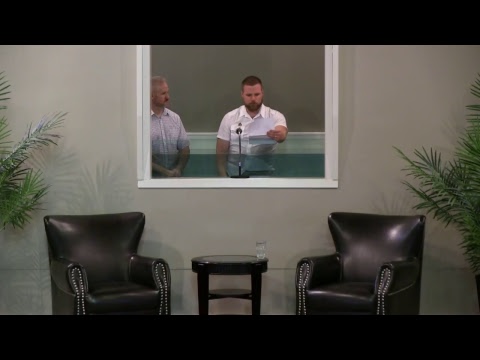
Acts 8:26–40 records the conversion and baptism of the Ethiopian eunuch, and this exposition sets that account against its Old Testament backdrop in Isaiah 53 and Isaiah 56 to show that what is happening is not merely one man's conversion but the fulfillment of covenant promises: the inclusion of those doubly excluded from the assembly of Israel. The sermon works through three movements — the divine appointment of the contact, the gospel communication beginning from Isaiah 53, and the conversion issuing in immediate baptism upon confession of faith. The central application is that God is characteristically and eagerly a saving God, that believers' baptism follows faith as its ordained external sign, and that no sinner — whether powerful or poor, crisis-converted or quietly brought to faith — is beyond the reach of sovereign grace.

Free Grace Baptist Church - September 2, 2018 PM
The wisdom of God in the gospel is displayed not in the nobility, intelligence, or virtue of those he saves, but in his sovereign, gracious election of the weak, the base, and the despised — so that no flesh might glory in his presence. Expounding 1 Corinthians 1:26–31, this sermon identifies the three spiritual blessings Christ has become for his people — righteousness (justification by imputed obedience), sanctification, and redemption (glorification) — as the full ordo salutis secured in union with Christ. The ground of salvation is traced through Romans 5, Philippians 3, Zechariah 3, and Acts 13 to demonstrate that the entire plan of redemption flows from God's sovereign grace, not human merit. The inevitable and proper response of those who have received these blessings is to glory in the Lord alone, not in themselves.

The Response to Peter's Sermon, Part 2
Acts 2:43–47 describes the ordinary but Spirit-wrought practice of the early Jerusalem church, and this exposition presses that description as a prescription for church life today. The sermon examines steadfastness in apostolic doctrine, fellowship, the Lord's Supper, and prayer; the fear of God that attends his presence; the voluntary charity of believers toward one another; and the public and private conduct of a congregation living under sovereign grace. Against both charismatic enthusiasm and worldly accommodation, the sermon argues that faithfulness in ordinary, Word-regulated worship and mutual edification — not signs, programs, or radical individualism — is the enduring mark of a church built by Christ.

Of Baptism (2LCF29)

Baptism, as confessed in chapter 29 of the Second London Baptist Confession of Faith (2LCF), is examined here as a divine and mediatorial ordinance instituted by Jesus Christ for the New Testament church. The exposition grounds the doctrine of baptism in a web of interconnected doctrines — Scripture, the covenant of grace, effectual calling, union with Christ, and the regulative principle of worship — demonstrating that believers' baptism by immersion is the necessary conclusion of consistently applied Reformed theology. The confession's fourfold structure is traced: what baptism is, to whom it is properly administered, in what element, and by what mode, with sustained argument from Romans 6, Galatians 3, Mark 16, and Matthew 28 that only professing believers are lawful recipients of the ordinance.

Free Grace Baptist Church - April 8, 2018 PM
The reception of God's written Word must move the covenant people to thoroughgoing, comprehensive reform—in worship, life, and the observance of the sacraments—regardless of whether such obedience will produce measurable results. Expounding 2 Kings 23, this sermon traces three movements in Josiah's reformation of Judah: a public covenant renewal ceremony, an extensive purge of idolatry from both the southern and northern territories, and the restoration of Passover. The driving lesson is that obedience to God's law is not grounded in pragmatic expectation of blessing but in the simple rightness of what God commands—a faithfulness the speaker calls 'obedience without incentives.'

2LCF Chapter 26 - Of the Church, Part 1
The universal church — its invisibility, its visible expression in the lives of professing saints, its perpetuity, and the exclusive headship of Christ — is the doctrinal territory of 1689 London Baptist Confession chapter 26, paragraphs 1 to 4. The confession grounds the church's existence not in voluntary human association but in the electing grace of God and the internal work of the Spirit, defining the church's members as those who profess the gospel and live in conformity with that profession. The distinction between the invisible universal church and visible saints is shown to carry a distinctively Baptist ecclesiological weight: church membership flows from credible profession, not covenant birth. Christ's absolute headship over the church — established by the Father as mediator — provides the foundation for the regulative principle of worship and stands in irreconcilable opposition to any papal claim to vicarship.

2 Kings 21:1-26
Manasseh's 55-year reign over Judah represents the nadir of covenant unfaithfulness in the southern kingdom, exceeding even the wickedness of the Canaanites whom God had expelled from the land. This expository study of 2 Kings 21 traces Manasseh's systematic religious innovations — reinstituting the high places, introducing Baal and Asherah worship into the temple, practicing child sacrifice and witchcraft, and shedding innocent blood — alongside the divine prophecy of inevitable, terrifying, and just judgment against Jerusalem. The chapter also demonstrates that Judah was not merely victimized by a wicked king but was itself seducible, having provoked God continuously since the exodus. The passage calls covenant people to resist practical atheism, to cherish God's promised blessings rather than forfeit them for the passing pleasures of sin, and to reckon seriously with the connection between idolatry and the collapse of ethical life.

2 Kings 17:27-41
The closing verses of 2 Kings 17 expose three interrelated failures in Israel's religion: a purely pragmatic desire to use God for personal relief, a syncretic manufacture of worship that blends Yahweh with self-made idols, and a defiant rejection of the exclusive covenant demands God laid upon Israel at Sinai. The passage's ironic declaration that the resettled nations 'feared the Lord' is not a commendation but a literary device the author immediately demolishes — true fear of God is incompatible with idolatry. These ancient patterns are alive in contemporary church culture wherever God is treated as a problem-solver, wherever worship is shaped by consumer preference, and wherever the regulative principle of worship is abandoned for pragmatic or syncretic innovation.