
Theological term
Regeneration
224 sermons · All terms
The Discourse on God's Salvation, Part 2

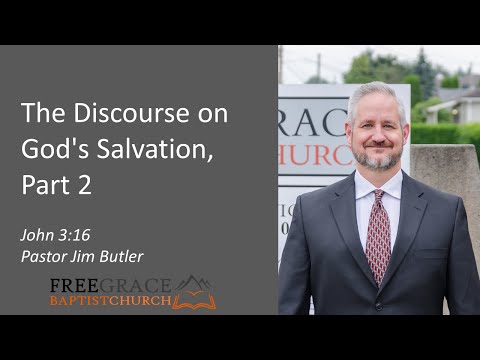
John 3:16 — Luther called it 'the Bible in miniature,' and this exposition treats it as precisely that: a compressed statement of the whole Christian gospel. The sermon moves through three divisions of the verse — the declaration of God's love, the demonstration of that love in the gift of the only begotten Son, and the description of those who receive God's redemptive love through faith. Central to the argument is the insistence that God's love is the source, not the consequence, of the atonement, and that 'the world' in John's vocabulary denotes persons from every tribe and tongue without ethnic distinction, not every individual without exception — a conclusion that grounds particular redemption in the wider theology of John's writings. The sermon closes with a direct appeal to unbelievers: the one way of salvation is to believe on Jesus Christ alone, whose active obedience supplies the righteousness that sinners need and whose substitutionary death removes the condemnation they deserve.

The Discourse on God's Salvation, Part 1
Jesus answers Nicodemus's question — 'How can these things be?' — by pointing to three realities: his own incarnation as the one who descended from heaven, the Old Testament typology of the bronze serpent in Numbers 21, and the necessity of his crucifixion as the antitype to whom sinners must look in faith. The sermon works through John 3:11–15, examining Christ's authority to speak of heavenly things, the doctrine of the hypostatic union and the communication of idioms, and the parallel between Israel's look-and-live prescription in the wilderness and saving faith in the crucified Son of Man. The application is direct: the antidote to sin is not moral reformation but faith in the lifted-up Christ, who alone secures justification and eternal life for believing sinners.

The Meeting with Nicodemus, Part 2
John 3:4–10 confronts every hearer with the absolute necessity of regeneration before any entrance into the kingdom of God. Working through Nicodemus's proud misunderstanding and Christ's patient explanation, this exposition argues that the new birth is entirely God's sovereign work — initiated by the Holy Spirit, prefigured in Ezekiel 36 and Deuteronomy 30, and entirely prior to saving faith. The sermon also draws out the Trinitarian theology embedded in Christ's wind analogy, showing that the Spirit's sovereign, effectual work in regeneration reveals who God is, not merely what He does.

The Meeting with Nicodemus
John 3:1–10 presents Jesus confronting Nicodemus — a ruler of the Sanhedrin sent by the Jerusalem religious leadership — with the doctrine of regeneration: that a man must be born again, born from above, before he can see or enter the kingdom of God. The sermon argues that the new birth is entirely a sovereign act of God Most High, not a command for the sinner to obey by his own power, and that regeneration logically precedes and produces saving faith rather than following it. Those born of God will evidence that new life through faith in Christ, a practice of righteousness, love for the brethren, and an overcoming of the world.

1 Peter 1:3-5

The believer's hope of glory, grounded in 1 Peter 1:3–5, is not a vague aspiration but a certain inheritance secured by God's sovereign mercy and the resurrection of Christ. Peter's doxology unfolds the doctrine of salvation under three headings: God the Father as its author, the nature of that salvation as a living hope pointing to a new creation, and the certainty of preservation by divine power. Because both the inheritance and the heirs are kept — the one reserved in heaven, the other shielded by omnipotence through faith — believers facing trial are called to reorient every earthly sorrow toward the glory that is to come.

1 Peter 1:6-9
The paradox of simultaneously rejoicing and grieving marks the Christian life as Peter describes it in 1 Peter 1:6–9. Trials are not accidents of providence but a necessary divine instrument: God uses suffering to prove and purify a faith that is more precious to Him than refined gold is to men, and that tested faith will issue in praise, honor, and glory at the revelation of Jesus Christ. The principle for maintaining joy amid suffering is not mere willpower but a growing, knowledge-grounded faith fixed on Christ — His cross, His resurrection, and the inheritance He has secured — so that joy becomes the constant fruit of right focus rather than a fluctuating response to circumstances.

2nd London Baptist Confession (Chapter 1) - June 20th
What makes Christian faith in the Bible something more than a blind leap? Working through the first five paragraphs of Chapter 1 of the 1689 London Baptist Confession of Faith, this exposition unpacks Sola Scriptura under three headings drawn from the Confession's opening line: the certainty, sufficiency, and infallibility of Holy Scripture as 'the only sufficient, certain, and infallible rule of all saving knowledge, faith, and obedience.' The sermon establishes that the Bible's authority rests on God himself as its author — not on church tradition, human reason, or self-referential claim — and that full persuasion of its divine origin comes through the inward testimony of the Holy Spirit (2LCF 1.5). Rational evidences — manuscript attestation, historical reliability, eyewitness testimony to the resurrection, and the fulfillment of prophecy — are presented not as the ground of faith but as means to bolster the believer's confidence and equip him to give a reasoned defense of the hope within him.

The Lord Jesus and the Demoniacs
Matthew 8:28–34 presents Christ's authority over demonic powers as a ground for confident trust in him as the Son of God. The demons' own confession — 'You Son of God' — exposes what the disciples have not yet grasped: that Jesus holds sovereign dominion over every spiritual power, including the devil himself. The exorcism at Gerasa is set within Matthew's sustained demonstration, across chapters 8–9, that the one who teaches with authority also acts with authority. If Christ has conquered death and the devil, every lesser affliction that threatens the people of God lies well within his sovereign reach.

The Mission of the Word, Part 2
John 1:10–13 presents two contrasting responses to the mission of the incarnate Word: the rejection of the world and of Israel, and the reception of those upon whom Christ confers the right to become children of God. The sermon works through the threefold use of 'world' in verse 10, the parallel between Israel's ancient rebellion and their rejection of the Messiah, and the sovereign grace underlying faith and new birth in verses 12–13. Central to the exposition is the Reformed insistence that regeneration precedes faith — those who receive Christ by believing do so because they have first been born of God — against both Pelagian and Arminian construals of conversion.

The Problem Worse than Paralysis
The healing of the paralytic in Matthew 9:1–8 exposes a problem far deeper than physical disability: the guilt of sin before a holy God. Jesus pronounces forgiveness before He commands the man to rise, revealing that the greater miracle is not restored limbs but a cleansed soul — and that the Son of Man possesses divine authority on earth to forgive sins. The physical healing serves as demonstrable evidence of the greater, invisible reality: that Christ accomplished what His name declared He would do, saving His people from their sins. The right response to such power is not mere wonder but the fear-and-joy that drives genuine worship and sustains the believer's cheer through every temporal affliction.

Pressing On In Christ for Sanctification
Philippians 3:10–21 sets out the doctrine of sanctification as the necessary and purposeful continuation of justification — not its cause. The justified believer, having been conformed to Christ's death by the Spirit's regenerating work (Romans 6), is called to press forward in mortification of the old nature and vivification of the new, never resting in past attainments. Christ's purpose in saving sinners is not merely to deliver them from hell but to conform them to his image for the glory of God — the ordo salutis moving through justification and sanctification toward final glorification. The sermon calls believers to disciplined, Christ-dependent pressing on through Word, prayer, church attendance, and zealous good works, while warning that those who corrupt the gospel by mingling works with grace are enemies of the cross whose end is destruction.

The Messiah, The Baptist, And The Kingdom
Matthew 11:2–15 presents three interlocking questions: who is Jesus the Messiah, who is John the Baptist, and what is the nature of the kingdom of heaven? The sermon works through John's imprisoned inquiry — not as rank unbelief but as a struggle with the shape of the messianic agenda — and Christ's answer, which grounds assurance in fulfilled Old Testament prophecy rather than in political deliverance. John is then assessed by Christ himself as more than a prophet, the very subject of Malachi's covenant-messenger prophecy, a man of unflinching courage who stands as a model for preachers and all believers. The enigmatic kingdom-violence saying of verse 12 is read as a positive-negative pairing: the kingdom forcefully advances through proclamation and regeneration, but violent men persist in opposing and plundering it until Christ's enemies are made his footstool.

The Third Missionary Journey, Part 2
Acts 19:11–22 presents four movements in Paul's ministry at Ephesus: the unusual miracles God works through him, the humiliating defeat of the itinerant Jewish exorcists who invoke Christ's name without saving faith, the voluntary burning of occult books by Ephesian believers as fruits of genuine repentance, and a Lukan progress report declaring that the word of the Lord grew mightily and prevailed. The sermon argues for cessationism — that the apostolic sign-gifts authenticated the apostles and their message and have ceased with the closing of the canon — while exposing the fraudulence of those who imitate them today. Believers are called to examine all teachers by Scripture, to expect progressive fruits of repentance throughout the Christian life, and to take confident hope from the unstoppable advance of the gospel.

The Lord's Instruction on Prayer
Matthew 6:5–13 contains Jesus' instruction on three aspects of prayer that the disciples must get right: the motivation that drives them to the closet, the manner they adopt when they arrive, and the model that frames their petitions. The sermon works through each in turn, contrasting godly prayer with the exhibitionism of the hypocrite and the manipulative vain repetition of the heathen — illustrated at length from the contest on Mount Carmel in 1 Kings 18. It closes with eight reasons why the sovereignty of God, far from making prayer unnecessary, is the very ground on which the believer brings every petition in faith.

The Appearance of the Love of God
Titus 3:4–8 sets the merciful act of divine salvation against the backdrop of human depravity, and this exposition works through that contrast under three heads: the appearance of God's love in verse 4, the application of God's grace in verses 5–7, and the affirmation of God's word in verse 8. The passage is shown to teach that salvation originates entirely in God's kindness and mercy — not in works done before or after conversion — applied through the washing of regeneration and the renewing of the Holy Spirit, and sealed by justification by grace through faith. The sermon closes by pressing the pastoral logic of verse 8: it is precisely the constant preaching of justification by grace, not moralistic exhortation, that empowers the life of good works among God's people.

The Christian's Duty toward Non-Christians
Titus 3:1–3 sets out the Christian's duty toward both civil government and all people outside the church. The sermon traces the divine origin of civil government from Genesis 9 through Romans 13 and 1 Peter 2, arguing from Francis Turretin's two-kingdom framework that Christ rules both the civil and spiritual spheres, and that the civil state therefore has no authority to command the church as church. Verse 3's catalogue of pre-conversion vices — foolishness, disobedience, malice, hatred — is read as a theological reason for patient, peaceable, and humble conduct toward non-Christians: believers were once exactly what they now struggle to bear in others, and those others may yet become objects of the same sovereign grace.

The Second Missionary Journey, Part 2
Acts 16:6–15 traces the divine hand behind the second missionary journey's westward turn into Macedonia and the conversion of Lydia in Philippi. The Spirit's successive prohibitions of ministry in Asia and Bithynia are not judgments on those regions but demonstrations that God actively directs the missionary enterprise according to his sovereign purpose. The conversion of Lydia — a woman whose heart was dead in trespasses until God opened it to receive Paul's preaching — illustrates that the efficient cause of every conversion is divine grace, not human ingenuity, while the instrumentality of gospel proclamation and the responsibility of hearers to believe remain fully intact. The sermon calls the church to define missionary work precisely as the Spirit-sent, church-commissioned preaching of Christ crucified, rejecting both Arminian confidence in the sinner's free will and hyper-Calvinist reluctance to call sinners to faith.
Genesis 31:22-55
Genesis 31:22–55 records the pursuit, confrontation, and covenant between Laban and the departing Jacob. The passage exposes Laban's hypocrisy, his powerlessness before the God of Israel, and his resort to a non-aggression covenant once he recognizes that divine providence has secured Jacob against him. Jacob's theology in verse 42 — confessing God's presence, power, and mercy — serves as the interpretive key to the whole chapter, pointing forward to the same God who will later see the affliction of Israel in Egypt and deliver them.

The Baptism of Saul of Tarsus
Acts 9:17–25 records the baptism and initial preaching of Saul of Tarsus following his encounter with the risen Christ on the Damascus road. Ananias addresses the former persecutor as 'brother Saul,' and Saul is immediately baptized — a pattern the sermon presses as normative: conversion precedes and grounds baptism, which is the public confession of a forgiven sinner, not a converting ordinance. The sermon then traces the character of Saul's early preaching: immediate, Christocentric, apologetic, and persuasive — proving from the Old Testament that Jesus is the Christ and the Son of God — while showing that the same mission statement of Acts 9:15–16 (preach and suffer) begins its fulfilment within hours of his conversion. Hearers are urged to confess Christ openly, to submit to baptism without delay, and to recover a persuasive, Scripture-grounded proclamation of the gospel rather than the entertainment-driven substitute that fills contemporary pulpits.

The Mission for Saul of Tarsus
Acts 9:10–16 records Christ's commission to Ananias concerning the newly converted Saul of Tarsus, and in it Jesus reveals a twofold purpose for his chosen vessel: to bear the name of Christ before Gentiles, kings, and the children of Israel, and to suffer greatly for that name. This sermon traces how that double calling — to preach and to suffer — was fulfilled across Paul's entire apostolic ministry, drawing on 2 Corinthians 11, Colossians 1, and 2 Timothy to show that affliction is not a contradiction of divine favor but an instrument of it. The sovereignty of Christ over conversion and calling stands as the controlling theme, pressing hearers to abandon every excuse for unbelief and to come to Israel's Messiah in faith.

Free Grace Baptist Church - April 10, 2019 Bible Study
Genesis 17:15–27 is examined within the framework of the Abrahamic covenant, with particular attention to the declaration concerning Isaac, the obedience of Abraham, and the theological relationship between circumcision and baptism. The study draws a careful distinction between the covenant of circumcision — which governed membership in Old Covenant Israel by a works principle (Genesis 17:14) — and the covenant of grace, arguing with Nehemiah Coxe that the two must not be conflated. Colossians 2:11–12 is then opened to demonstrate that spiritual circumcision (regeneration) is the antitype of physical circumcision, and that baptism is the retrospective outward sign of that inward grace already received through faith — a sign that presupposes faith and therefore cannot legitimately be administered to infants.

The Inclusion of Wretches in God's Covenant
Ephesians 2:1–10 presents the full arc of redemption — from the total deadness of sinners to their gracious vivification in Christ — and this exposition traces that arc through the origin, objects, and execution of salvation. The sermon grounds the covenant of grace in the prior covenant of redemption (Ephesians 1:3–14), showing that the Father's election, the Son's redemption, and the Spirit's sealing together exclude every contribution of the sinner. Salvation is by grace alone through faith alone, with faith itself a gift conveyed by God to the spiritually dead — not a human instrument brought to the table that God then rewards. The exposition closes by distinguishing justification from sanctification and warning against both Roman Catholic and Federal Vision distortions of grace, anchoring the believer's final acceptance before God solely in the active and passive obedience of Christ.

The Great Commission
Christ's Great Commission in Matthew 28:18–20 provides the church with her complete marching orders: go, make disciples, baptize those disciples, and teach them to observe all that Christ commanded. The authority behind the commission belongs to the risen and exalted Christ, who possesses all authority in heaven and earth; the assurance sustaining it is His promise of perpetual presence to the end of the age. The sermon treats the specific focus of the commission in sequence, defending believers' baptism by immersion as the pattern demanded by the text and the order it establishes — make disciples first, then baptize — against both baptismal regeneration and paedobaptism. The Trinitarian formula of baptism occasions an extended treatment of theology proper, including divine simplicity, impassibility, and the unity of essence in three persons, with warnings against tritheism, modalism, and subordinationism.

The Dying Thief and the Prince of Life

The crucifixion scene of Luke 23:38–43 presents three voices: the cursed robber who reviles Christ to his last breath, the dying thief who exercises remarkable faith in a bloodied and apparently defeated king, and the Prince of Life who responds with sovereign assurance. This sermon exposition focuses on Christ's words to the thief — 'Assuredly, I say to you, today you will be with me in paradise' — unpacking the divine promise, immutable love, and perfection of Christ's blood and righteousness that undergird that assurance. The confession of faith's teaching on the perseverance and assurance of the saints illuminates why the thief's salvation is certain, and the same certainty belongs to all who believe on the Lord Jesus Christ.

The Benefactions of the Ascended Christ
The ascended Christ does not cease his mediatorial activity after the resurrection — he pours out benefactions upon his church. Preaching through Acts 2:22–43, this sermon examines two of three categories of those gifts: his charismatic benefactions (the gift of preachers, the act of preaching, and the Spirit's empowerment for proclamation) and his soteriological benefactions (effectual calling and the forgiveness of sins). Believers are urged to pray for their preachers, to come eager to hear the Word preached, and to give thanks daily for the grace by which God raises dead sinners to life in Christ.

The Divine Provision of Eternal Life
Isaiah 55 presents God's gracious and urgent invitation to sinners to receive the fullness of salvation — the refreshment, gladness, and nourishment of the gospel — entirely without cost, because the suffering servant of Isaiah 53 has already satisfied the purchase price. The sermon expounds the chapter in two movements: the invitation to come (vv. 1–5), grounded in the new covenant and secured by the Davidic king, and the call to faith and repentance (vv. 6–13), sustained by the sovereign power of God's Word. Believers are urged to treasure the abundance of every spiritual blessing already given in Christ, and unbelievers are warned not to squander their lives on what cannot satisfy while the Lord may yet be found.

Wisdom from Above

James 3:13–18 presents heavenly wisdom in direct contrast to the earthly, sensual, and devilish wisdom that breeds jealousy, faction, and confusion. This exposition identifies four fundamental features of wisdom from above: it is communicated from the triune God through His Word and Spirit; it is a copy of God's own pure, immutable wisdom suited to finite creatures; it is contemplative, engaging the regenerate mind to perceive all things in relation to God; and it is consequential, bearing the practical fruit of peace, meekness, mercy, and a good life ordered by God. The sermon calls hearers to test whether they possess this wisdom by asking whether they trust Christ alone, love God, and earnestly seek to frame their lives in the order God has established.

Is Your Faith a Borrowed Faith?

The narrative of Joash in 2 Chronicles 24 raises a searching question for every professing believer: is your faith genuinely your own, or have you been living on the borrowed spiritual capital of a godly mentor? Conrad Mbewe traces three lessons from the passage — the providential gift of godly role models, the dangerous possibility of a faith that is merely reflected rather than rooted, and the grace of God that erects barriers of conscience and prophetic warning along the road of unbelief. The sermon closes with a direct appeal: while godly influences remain within reach, now is the moment to examine whether your faith is a living reality wrought by the Spirit through regeneration, and if not, to come to Christ with all your brokenness.
Free Grace Baptist Church - November 26, 2017 PM
Titus 3:3–7 expounds the full arc of sovereign grace: the grave former state of all believers in foolishness, disobedience, and depravity; the divine condescension by which God's kindness and love appeared in Christ; and the sovereign power of the Holy Spirit in washing and regenerating dead sinners to new life. Salvation is not by works of righteousness which we have done but entirely according to divine mercy, secured through Jesus Christ alone and applied by the Holy Spirit — a triunely accomplished redemption that eliminates all boasting in self and grounds the believer's perseverance in the immutability of God's electing love.

Free Grace Baptist Church - October 29, 2017 PM
John's call to love one another in 1 John 2:7–11 is neither a novel ethical program nor a mark of spiritual achievement — it is an ancient commandment that has taken on new shape in the light of Christ's own love, death, and resurrection. The sermon works through three movements: the nature of the commandment to love, the terrifying spiritual blindness of the one who hates his brother, and the assurance given to the one who loves. God's own electing, sacrificial love — not human moral effort — is the spring and motive of all genuine love for the brethren, and that love in turn becomes an evidence and assurance of saving faith.