
Theological term
Providence
277 sermons · All terms

The Tenth Commandment

The tenth commandment's prohibition of covetousness exposes the spirituality of God's law: external compliance is insufficient, for the law reaches the desires and affections of the heart. Covetousness is defined as inordinate desire for what belongs to a neighbor — whether his wife, his goods, or anything that is his — and its connection to the first commandment reveals that misplaced desire is a form of idolatry. The sermon traces covetousness through envy and discontentment, showing how inward sin often becomes the prelude to overt transgression. The positive counterpart calls believers to contentment grounded in God's sovereign ownership, his covenant promise of provision, the surpassing weight of eternal glory, and the cultivation of a genuinely charitable spirit toward others.
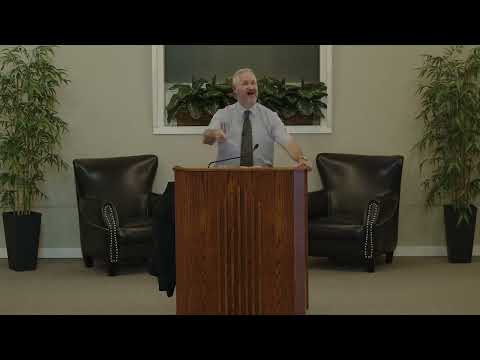
Clip: Theology is crucial for every church and believer
Theology proper — the knowledge of who God is as Father, Son, and Holy Spirit — is not an academic luxury but the essential foundation of Christian life, worship, and witness. This sermon clip from an exposition of Ephesians 1:3–14 argues that the church's tendency to rush past doxological passages to practical ethics has left believers spiritually thin, prone to a mercenary relationship with God rather than one grounded in the infinite riches of his grace. The preacher calls the congregation to disciplined study of the Trinity, warning that without it believers become vulnerable to ancient heresies and lose the impetus to proclaim Christ to a lost world.

The Denial of the Resurrection
Matthew 28:11–15 records the fabrication of the lie that Christ's disciples stole his body — the original counter-narrative to the resurrection. This sermon exposes the willful unbelief of the Jewish religious leaders, tracing their conspiracy as one episode in a sustained, devil-driven war against the truth of the gospel. The implausibility of the theft narrative is examined on apologetic grounds, and the sermon closes by contrasting the Counter Great Commission of bribe-funded deception with the Great Commission of Christ's abiding-presence-powered truth.

The Refuge for God's People
Psalm 46 sets the people of God in the midst of cosmic and political chaos and calls them to find their sole refuge in the Lord of hosts. This exposition works through four movements in the psalm — the assurance of God's presence, the demonstration of his power over creation and the nations, the invitation to rehearse his past works in redemptive history, and the command to be still and know that he is God. The sermon argues that Reformed Christians who rightly confess God's sovereignty in salvation must equally rest in that sovereignty under tyranny, pandemic, and war. The chief application is that the church must know God — his perfections, his names, his covenant fidelity — because it is the knowledge of God, not practical principles, that steadies the soul and fuels missionary confidence in the darkest of times.

The Prophet's Faith in a Time of Distress
Habakkuk 3 presents the prophet's response to the announced Babylonian invasion of Judah: not despair, but a structured movement from fearful petition through deliberate theological remembrance to confident refuge in God. The sermon traces three movements in the psalm — petition, remembrance of God's acts in redemptive history, and refuge — arguing that a perplexed faith steadies itself not by self-reflection but by rehearsing who God is and what He has done. The doctrine of justification by faith (Habakkuk 2:4), appropriated in the New Testament, is shown here in its practical dimension: the just do not merely begin by faith but continue to live and persevere by it through every extremity. The congregation is called to imitate the prophet by building their own 'collage' of God's mighty works in Scripture, thereby finding rest, joy, and stability in God alone when earthly supports fail.
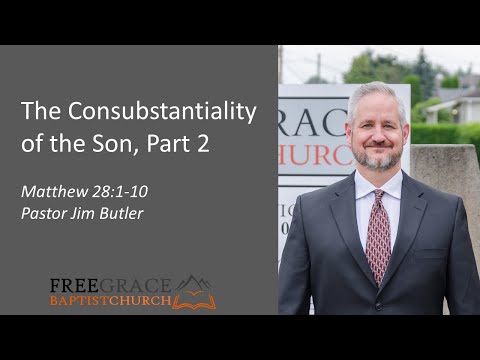
The Consubstantiality of the Son, Part 2
John 5:24–30 presents Jesus responding to the Jewish charge that he made himself equal with God — not by retreating, but by affirming it through two divine functions: authority over life and authority over judgment. This sermon works through the declaration of that authority in eternal life (vv. 24–25), the rationale grounded in the eternal generation of the Son from the Father (vv. 26–27), and the promise of his authority on the final day of judgment (vv. 28–30, previewed). Central to the argument is the doctrine of consubstantiality — that the Son shares the one simple undivided divine essence with the Father from all eternity — which grounds both his power to effectually call dead sinners to life and his right to preside as judge of all the earth. The sermon calls hearers to receive Christ by faith, since only God himself can save sinners, and it is the voice of the Son of God alone that awakens the spiritually dead.

The Healing of the Nobleman's Son
John 4:43–54 records the second sign Jesus performed in Galilee: the healing of a royal official's son from a distance of sixteen miles. The passage exposes both the deficient faith that demands visible proof before believing and the sufficient power of Christ's spoken word, which heals without physical presence. The nobleman's earnest intercession for his dying son becomes a pointed application for parents to implore God persistently for their children's spiritual wellbeing. The sign itself points beyond physical healing to the life given to all who believe the word of Christ.

The Healing of Naaman
The healing of Naaman in 2 Kings 5 exposes a pagan military commander who possesses everything except the one thing he needs: cleansing from leprosy and reconciliation to the living God. The passage traces the providence of God in orchestrating Naaman's encounter with Elisha, Naaman's fury at the simplicity of the cure, his genuine conversion and humble confession of faith in Yahweh alone, and finally the greed of Gehazi, whose attempt to put a price on God's free grace earns him the very disease Naaman was healed of. The sermon presses toward these gospel applications: sovereign grace humbles its recipients rather than inflating them, salvation is by grace alone through faith alone with nothing added, and God's grace is not a commodity to be bought, manipulated, or supplemented with human achievement.
Clip: God isn't crippled, hindered, silent, or absent
The early church in Acts 4:23–31 prayed not as though God had been caught off guard by persecution, but as though the God who created and governs all things remained sovereignly in control of even the threats of the Sanhedrin. This clip draws out the church's invocation of divine sovereignty as the theological ground of confident petition: to pray is to address the one with absolute ability to fulfill what he has promised and purposed. The application is direct — believers do not come to a God who is crippled, hindered, or absent, but to the sovereign Lord who holds the hearts of all men in his hand.

The Preservation of the Kingdom
2 Kings 11 records the near-extinction and miraculous preservation of the Davidic royal line under the murderous usurpation of Athaliah — and its theological significance reaches from Genesis 3:15 to the throne of the ascended Christ. The chapter is read as a node in the unbroken typological-covenantal chain running from the proto-evangelium through the Davidic covenant, the incarnation, and the present reign of the Lord Jesus at the Father's right hand. The sermon argues that every assault on the messianic line, whether Athaliah's massacre, Herod's slaughter of the innocents, or the devil's wilderness temptation, is overruled by the sovereign providence of God, who protects his kingdom through unexpected instruments and will advance it until every enemy is made a footstool. The congregation is exhorted to draw courage from this narrative in the face of present opposition to Christ's church, resting in the certainty that the zeal of the Lord of hosts will perform his promise.

The Conversion of the Philippian Jailer
Acts 16:16–34 presents the arrest and imprisonment of Paul and Silas as the God-ordained means by which a Roman jailer was brought to saving faith in Jesus Christ. The sermon traces two movements: the exorcism of a python spirit that provoked false charges and a severe beating, and the subsequent earthquake and gospel conversation that issued in the jailer's conversion and household baptism. Paul and Silas's midnight prayers and hymns amid unjust suffering demonstrate that Christ is worth all suffering, while the jailer's question — 'What must I do to be saved?' — receives the apostolic answer: believe on the Lord Jesus Christ. The sermon closes with three baptisms that embody the same gospel the Philippian jailer heard, illustrating that believers' baptism by immersion is the fitting public sign of union with Christ in His death and resurrection.

Exodus 17
Exodus 17 presents Israel's double failure at Rephidim: a murmuring complaint against Moses for lack of water, and then the subsequent victory over the Amalekites through Moses's upraised rod and Joshua's sword. The murmuring is exposed not merely as weakness but as theological insult — the question 'Is the Lord among us or not?' impugns the faithfulness of a God who has already split the sea, rained bread from heaven, and sworn to bring His people to the land of promise. The sermon draws out two counterbalancing lessons: the unrelenting faithfulness of God despite His people's unbelief, and the Reformed doctrine that divine sovereignty does not eliminate the use of means — Israel must both hold up the rod in dependence on God and swing the sword in disciplined obedience.
Exodus 16 - Bread from Heaven
Exodus 16 records Israel's complaint in the wilderness and God's provision of quail and manna, revealing that grumbling against His appointed servants is ultimately grumbling against God Himself. The chapter is expounded under three headings: the promise of bread (vv. 1–12), the presence of bread (vv. 13–31), and the preservation of bread (vv. 32–36). The manna narrative carries a Sabbatarian argument — the double portion on the sixth day presupposes Sabbath observance that predates Sinai, pointing back to Genesis 2 and forward to Exodus 20 and Hebrews 4. The episode also functions typologically, anticipating Christ as the true bread from heaven in John 6, and calls God's people in every covenant administration to daily dependence on their Provider rather than grumbling against His providence.

A Practical Example for the Suffering Christian

Psalm 61 presents David at the edge of the wilderness — heart overwhelmed, throne usurped, kingdom collapsing — as a concrete example of what it looks like for a suffering believer to cry out to God, refocus on covenant faithfulness, and be brought from despair to joyful praise. The sermon traces three movements in the psalm: the cry for help from the brink of despair (vv. 1–2), the deliberate refocusing on God's past faithfulness, the Davidic covenant, and the eternal inheritance of the Messiah's kingdom (vv. 3–7), and the resulting resolve of praise (v. 8). David's process is not mystical — it is conscious, disciplined engagement with the means of grace: prayer, meditation on covenant promises, and fixing the mind on the eternal kingship of Christ. Suffering Christians are exhorted to follow that same pattern rather than abandoning the means of grace at the very moment they are most needed.

Exodus 12, Part 2
Exodus 12:29–51 records the execution of the tenth plague, the departure of Israel from Egypt, and the regulations governing who may participate in the Passover. The death of every firstborn in Egypt—from Pharaoh's throne to the dungeon—is presented not as arbitrary cruelty but as the righteous retribution of a holy God against a nation that had enslaved and slaughtered His people, fulfilling the promise made to Abraham in Genesis 15. The Passover ordinance, with its requirements of circumcision for participation and the prohibition against breaking the lamb's bones, functions typologically to point forward to Christ, who is our Passover sacrificed for us, whose bones were not broken at the crucifixion.

Exodus 11
Exodus 11 announces and describes the tenth plague — the death of the firstborn throughout Egypt — which God executes directly and immediately, without mediation through natural means. The chapter is structured around three movements: the promise of liberty and prosperity to Israel, the announcement of sweeping judgment upon every household in Egypt, and Pharaoh's continued, God-ordained rebellion. The hardening of Pharaoh's heart is treated not as mere divine permission but as a just act of sovereignty, displaying God's power, holiness, and mercy simultaneously — mercy to Israel being inseparable from judgment upon her oppressors.

The Redemption of Boaz and the Hope of Christ the King

Ruth 4 culminates the book's central theme of redemption, showing how Boaz's costly love for Ruth and Naomi foreshadows the costlier love of Christ for his unlovely people. The kinsman-redeemer who willingly takes on an obligation he was not bound to fulfill — redeeming land, line, and a Moabite widow — points forward through the Davidic genealogy to the King who identifies with sinners and purchases his bride at the price of his own blood. God's sovereign providence moves through unsavory sinners and hopeless circumstances to build the royal line, a pattern that should silence despair among God's people in every age. The sermon calls believers to find their only settled hope in Christ the King, and invites the unbeliever to look to that same King and live.
Wednesday Night Bible Study (Exodus 11:1-10) - June 23, 2021
Exodus 11 presents the announcement of the tenth and decisive plague upon Egypt, the death of the firstborn, through which God simultaneously crushes Egyptian tyranny and liberates his covenant people Israel. The chapter is examined in three movements: the announcement of the plague with its accompanying promises of liberty and prosperity (vv. 1–3), the description of the plague emphasising God's immediate and sovereign action (vv. 4–8), and the rebellion of Pharaoh as the occasion for the multiplication of God's wonders (vv. 9–10). The sermon presses beyond the historical narrative to show how the destruction of God's enemies is inseparable from the blessing of God's people — a pattern running from Exodus through Joshua to Revelation — and grounds both divine sovereignty and human responsibility in the theological framework of the 1689 Second London Confession chapters 3 and 5.

The Ministry in Rome
Acts 28:11–31 records the Apostle Paul's arrival in Rome under house arrest and his sustained ministry to the Jewish leaders there, demonstrating that divine providence — not Roman law or Jewish opposition — governs the advance of the gospel. The sermon traces Paul's two meetings with the Roman Jews: his defence of his innocence and his grounding of the gospel in the hope of Israel, and then his full-day exposition of Christ from Moses and the prophets, which divides his hearers between belief and hardened unbelief. The open-endedness of Acts is shown to be deliberate fulfilment of Acts 1:8 — Christ's commission to witness from Jerusalem to the uttermost parts of the earth has been accomplished. Hearers are called to resist fear, to proclaim Christ from the Scriptures with confidence, and to rest in sovereign grace as the sole explanation for why any sinner believes.

The Deliverance of David by the Lord
The providential preservation of David under Saul's murderous pursuit, traced through 1 Samuel 19, illuminates how God delivers His people by ordinary and extraordinary means alike. Three escalating attempts on David's life — a thrown spear, messengers at his house, and a third company sent to Ramah — are each turned aside, culminating in the Spirit of God falling upon Saul's own men and upon Saul himself, rendering them incapable of violence. The chapter also traces the inverse arc of Saul's apostasy: his repeated, deliberate disobedience issues in a divine hardening that mirrors the 'giving over' of Romans 1. The central pastoral lesson is that the clearest evidence God has not deserted His servant is not that the trial is past, but that the servant is still standing in the middle of it.
Exodus 9
Exodus 9 records the fifth, sixth, and seventh plagues against Egypt — the death of livestock, the plague of boils, and the devastating hailstorm — each demonstrating that the Lord alone is the living and true God over all forces of nature. The plagues are not natural phenomena but direct sovereign acts of God, exposed as such by their precise timing, their discriminating effect on Egypt but not Israel, and the collapse of Egypt's magicians before their own affliction. God's hardening of Pharaoh's heart is treated not as injustice but as a righteous judicial act against a persistently rebellious sinner, a point Paul draws on in Romans 9 by quoting Exodus 9:16. The distinction between those Egyptians in verse 20 who feared the word of the Lord and those in verse 21 who did not becomes a pointed call to heed the gospel: Christ is the believer's Goshen, the place of safe refuge under the new covenant.

David's Rise and Saul's Resentment
1 Samuel 18 traces the beginning of David's rise to prominence and Saul's corresponding descent into envious rage. The chapter presents a sustained contrast between Jonathan's covenant faithfulness — his willing deferral to David as the Lord's anointed — and Saul's increasingly vicious antagonism, from murderous spear-throwing to cynical manipulation of marriage negotiations. The sermon draws out the theological spine of the narrative: the presence of Yahweh with David is both the cause of his success and the source of Saul's terror, a pattern that points forward to the New Covenant reality that those united to Christ by faith enjoy the peace, protection, and communion of God. Listeners are called to watch against both external and internal threats to the kingdom, and to pursue the God-fearing faithfulness modelled in David rather than the self-securing apostasy of Saul.

Bible Study - Exodus 5
Exodus 5 narrates the first confrontation between Moses and Aaron and Pharaoh, ending not in liberation but in intensified oppression and blame directed at the very messengers God had sent. The chapter exposes a recurring pattern in the life of the covenant community: when God's promised deliverance does not come immediately, his people tend to murmur against his instruments rather than wait upon his sovereign hand. Drawing on John Calvin's commentary, the study identifies six reasons God permitted things to grow worse before they grew better — including the demonstration of divine power, the testing of his people's patience, and the inexcusability of Pharaoh's hardness — and calls believers to feed on the promises of God so that faith produces courage rather than cowardice.

The Victory of David Over Goliath, Part 1
1 Samuel 17:1–37 is not a psychological self-help story about facing personal obstacles; it is a narrative of the glory of God. Goliath defies the armies of the living God, and David — a type of Christ — meets that defiance not with natural courage but with faith grounded in the proven faithfulness of Yahweh. The sermon traces the contrast between Israel's faithless paralysis and David's God-centred confidence, showing that apostasy produces cowardice while faith in the living God produces boldness. The practical summons is to walk by faith rather than by sight, to serve faithfully in ordinary providential callings, and to draw confidence for present trials from remembered past mercies.

The Believer's Gratitude Toward God
Psalm 103 grounds thanksgiving not in vague sentiment but in the specific mercies of a covenant-keeping God toward those He has redeemed. Working through David's threefold structure — the reminder to bless God, the reasons for blessing God, and the reflection on God's kingdom — the sermon traces the chief benefit of divine grace as the forgiveness of sins accomplished in Christ, before moving outward to temporal providences, divine mercy measured against human frailty, and the universal summons of all creation to praise. The sermon draws on Deuteronomy's warnings against forgetting God's benefits and Paul's account of the worthy walk in Colossians 1 to show that detailed, specific thanksgiving is a mark of those who have received grace. The congregation is called to speak to their own souls, directing them away from self-absorption and toward the God whose mercy extends from everlasting to everlasting.

The Anointing of David
God's rejection of Saul and anointing of David in 1 Samuel 16 sets the stage for one of the richest typological passages in the Old Testament. The sermon traces two movements — God's sovereign selection of David at Bethlehem and David's providential entry into Saul's court — to establish that God judges by the heart rather than outward appearance, that the reception of the Spirit precedes conflict rather than eliminating it, and that David's entire narrative points forward to his greater Son, the Lord Jesus Christ. Listeners are called to resist the health-and-wealth error that trials signal divine disfavor, to tend the inner man before God in private, and to rest in the one through whom the righteousness David celebrated by faith is actually accomplished and imputed.

The Third Missionary Journey, Part 3
Acts 19:21–41 records Paul's final days in Ephesus, culminating in a riot instigated by the silversmith Demetrius, whose financial interests were threatened by the gospel's advance against idolatry. The passage is examined under four headings: Paul's strategic plans for further ministry, the anger of the silversmiths rooted in profit dressed as piety and patriotism, the confused uproar in the theater, and the intervention of the city clerk whose cool legal reasoning protected the church. The exposition draws out the apologetic purpose of Luke's account — demonstrating that Roman civil authority found no legal fault with Christianity — and closes with an urgent call to forsake every idol and trust the righteousness of Christ alone.

The Second Missionary Journey, Part 9
Acts 18:12–28 traces the close of Paul's second missionary journey through three episodes: his trial before the Roman proconsul Gallio, his departure from Corinth back to Antioch, and a preview of the Alexandrian Jewish teacher Apollos. The exposition treats Gallio's dismissal of the Jewish charge against Paul as a model of properly bounded civil authority — punishing wrongdoing, not regulating theology — while also exposing Gallio's failure to protect Sosthenes as a departure from impartial justice. Paul's continued residence in Corinth after the hearing illustrates faith in the sustaining promises of Christ, and the sermon closes with a call to pray for faithful gospel preachers and an obedient people who respond to their ministry.

Genesis 50
Genesis 50 closes the book of Genesis with the deaths of Jacob and Joseph, and with Joseph's brothers at last seeking the forgiveness they had long withheld. The sermon traces three movements in the chapter — Jacob's burial in Canaan, the reassurance Joseph gives his fearful brothers, and Joseph's dying charge to carry his bones out of Egypt — and shows how each movement is anchored in the covenant faithfulness of God. Central to the exposition is Genesis 50:20, treated as the Old Testament counterpart to Romans 8:28: God overrules the wickedness of men not despite His goodness and omnipotence but because of them, working all things toward His glory and the good of His people. Hearers are called to confess sin honestly, forgive as they have been forgiven, and rest in the God whose promises — from Genesis 3:15 to the exodus and beyond — never fail.

Genesis 49
Genesis 49 presents Jacob's deathbed blessings and prophetic declarations over each of the twelve tribes of Israel, reaching its theological apex in the Shiloh prophecy of verses 8–12, which identifies the tribe of Judah as the royal line from which Messiah will come. The scepter's promised continuity in Judah until 'Shiloh comes' is shown to anticipate not only David's dynasty but the obedience of all peoples — Jew and Gentile — to the Lord Jesus Christ, the Lion of the tribe of Judah. Jacob's closing instructions concerning his burial in the cave of Machpelah reaffirm Israel's legal title to the promised land and underscore that Egypt is only a sojourn, not a destiny. The chapter closes with a call to confidence in God grounded in a lifetime of witnessed divine faithfulness, expressed in Jacob's peaceful death and his declaration, 'I have waited for your salvation, O Lord.'