
Theological term
Providence
277 sermons · All terms

The Maintenance of Justice (Higher Court and Monarchy)

Deuteronomy 17:8–20 establishes two institutions for the maintenance of justice in Old Covenant Israel: a higher court to adjudicate cases too complex for local tribunals, and a monarchy governed by the law of God. The higher court — composed of priests, Levites, and judges at the central sanctuary — held binding authority over difficult cases involving degrees of guilt, civil disputes, and punishments, with criminal contempt of that court carrying a capital sanction. The king was not an absolute sovereign but a servant under God's law, prohibited from multiplying horses, wives, and wealth as a guard against misplaced trust, and required to read the law of God daily so that fear of the Lord, not pride or military power, would govern his reign.

Testimony, confession, and baptism: Hans
A baptismal service in which a new believer makes public profession of faith through immersion, grounded in the 1689 London Baptist Confession's teaching on baptism as a sign of union with Christ through his death and resurrection. The candidate recounts a providential journey from Eastern mysticism and Stoic philosophy to Scripture, tracing his conversion to a sermon on Matthew 24:15 and the destruction of Jerusalem in 70 AD as the demonstration of God's simultaneous justice and mercy. The confession of faith is administered through four credal questions, after which the candidate is baptized as a public declaration of a grace already received.

The Psalmist's Cry in an Age of Deceit
Psalm 12 presses the question Psalm 11 leaves open: not what becomes of the wicked in the end, but how the people of God survive and remain faithful in the present evil age. The sermon traces two movements in the psalm — the destruction of foundations (vv. 1–4), marked by idle speech, flattery, and the proud autonomy of godless men, and the preservation of the righteous (vv. 5–8), grounded in God's arising to deliver the oppressed and in the utter purity of his Word. David's prayer is read through a Christological lens: the psalm is supremely the prayer of Christ in his earthly ministry, opposed at every step, yet sustained by the Father's Word and promise. The congregation is urged to respond to cultural and ecclesiastical decay not by retreat or despair but by theology, prayer, and dependent trust in the pure and preserving Word of God.

CTF 2026 - Session 1: God's Decree in the Puritan Confessions

The doctrine of God's eternal decree, as confessed in the Westminster Confession of Faith, the Savoy Declaration, and the Second London Baptist Confession of 1677/1689, is not a single isolated chapter but a thread woven through the entire fabric of Reformed confessional theology. Drawing on Isaiah 46:8–11, this study traces the decree from its grounding in the doctrine of divine simplicity through creation, providence, the fall, covenant, redemption, the ordo salutis, perseverance, the spread of the gospel, and final judgment. The three Puritan-era confessions are shown to form a deliberate family — Westminster as parent, Savoy as child, and the Second London as grandchild — sharing common language and structure while registering careful Baptist and Congregationalist revisions. The study calls hearers not to speculative curiosity but to humble worship before the sovereign God whose decree is simply God decreeing.

CTF 2026 - Session 3: Is God the Author of Sin?

Two difficult theological questions frame this conference session: Is God the author of sin, and do a believer's sins work together for good? Drawing on 1689 LBCF 3.1, Acts 2:23, Acts 17:28, and Romans 8:28, the session argues that God's comprehensive, eternal decree encompasses all things — including sin — without making God personally culpable for evil, because sin is a privation of good rooted in the creature's deformed nature rather than in God's infinitely good being. The session closes by showing from Romans 8:28, with support from Robert Haldane and Genesis 50:20, that God's overruling providence turns even the believer's own sins toward their ultimate good and his glory — not as license to sin, but as ground for humility, dependence, and hope.

The Believer's Contentment
Philippians 4:10–13 presents the contentment of the Apostle Paul not as an innate virtue but as a learned conviction forged through diverse and often severe circumstances. Working through Paul's expression of gratitude to the Philippians, his present situation, his learned conviction, his diverse circumstances, and his source of strength, this sermon argues that Christian contentment is utterly independent of circumstances because it is grounded in union with Christ — in justification, sanctification, and promised glorification. The practical exhortation confronts the common error of tying contentment to circumstances ('when I get married, then I will be content') and calls believers instead to submit sweetly to divine providence, rejoice in God's sovereign ownership of all things, and find their settled rest in Christ alone.

The Justice and Mercy of the Lord
Psalm 9 presents the Lord as both righteous Judge of the wicked and secure refuge for the afflicted — realities that are inseparable and must be held together. Interpreted through a Christocentric lens consistent with Luke 24:44, the psalm is understood as the voice of the Lord Jesus Christ in his earthly ministry, with David functioning typologically to foreshadow the sufferings and vindication of the Son of Man. The first half of the sermon (vv. 1–12) expounds the psalmist's confidence in God: his declaration of whole-hearted praise, his affirmation that God judges the nations, and his assurance that God is an unfailing refuge for those who seek him — grounded ultimately in the doctrine of justification by faith alone. Hearers are called to seek their refuge in God rather than in circumstance, and to rejoice openly in the justice and mercy that belong inseparably to the character of the Most High.

The Vindication of the Righteous One
Psalm 7 unfolds as a courtroom drama in which the psalmist — and, typologically, the Lord Jesus Christ — appeals to God for vindication against false accusers, refusing personal retaliation and casting the entire matter upon the justice of God. The sermon moves through three phases: the supplication of the righteous one, the assertion of innocence, and the extended vindication that grounds confidence in God's decreed judgment against the wicked. David functions as a type of Christ, whose spotless innocence alone fully satisfies the conditions of verses 3–4, and whose imputed righteousness is the sole ground on which the church may echo his plea. The practical summons is to resist paralysis or retaliation in the face of false accusation and social hostility, and instead to take refuge in the just God who is angry with the wicked every day and who has appointed a day of final judgment.

The Tenth Commandment
The Tenth Commandment's prohibition against coveting addresses not the external act but the internal disposition of the heart, making it the capstone over all the other commandments. Covetousness — the inordinate desire for anything belonging to one's neighbor — is at root an act of discontentedness with God's sovereign allotment and a form of idolatry, placing the creature above the Creator. The sermon works through the threefold use of the moral law: its civil function, its pedagogical role in driving sinners to the cross, and its normative function in calling the redeemed to diligent watchfulness over heart and soul.

What Is Confessing the Faith 2026? | Understanding God's Decree | Reformed Baptist
This episode of Ask Free Grace Baptist Church introduces the 2026 Confessing the Faith conference (April 10–11, Chilliwack, BC), which will focus on 1689 London Baptist Confession chapter 3, the doctrine of God's decree. Three speakers — Dr. Jim Renihan and Dr. Richard Barcelos of the International Reformed Baptist Seminary, and Pastor David Charles — will address the biblical, historical, and pastoral dimensions of the decree. The conversation explains why the doctrine matters: God's sovereign ordination of all things is not fate or impersonal force but the purposeful governance of the God revealed in Scripture, producing stability, peace, and worship in his people.

The Third Appearance of Christ to the Disciples, Part 3
John 21:20–25 closes the fourth gospel with two interlocking concerns: the sovereign headship of Christ over His church and the divine authority of Holy Scripture. Peter's question about John's fate draws a sharp rebuke — 'What is that to you? You follow me' — which exposes the temptation to play the victim of providence rather than the contented subject of Christ's will. The passage then grounds the church's authority in the eyewitness testimony of the beloved disciple, written by the Spirit for one declared purpose: that you may believe that Jesus is the Christ and have life in His name. The sermon closes with John's doxological acknowledgment that the infinite Word made flesh exceeds all possible description, and calls every hearer to follow Christ in their appointed station rather than fixate on the lot of others.

The Refuge for God's People
Psalm 46 sets an axiomatic foundation — God is our refuge and strength, a very present help in trouble — from which the necessary inference follows: therefore we will not fear. This sermon works through the psalm's four movements: the affirmation of God's presence (vv. 1, 7, 11), the demonstration of God's power amid cosmic and political chaos (vv. 2–6), the contemplation of God's proven works in history (vv. 8–9), and the sovereign command of verse 10. The titles 'Lord of hosts' and 'God of Jacob' ground the psalm's confidence in both the divine warrior who fights for his people and the covenant Lord who cannot be separated from them — a comfort the New Covenant believer holds with even greater fullness in Christ.

The 5th Commandment
The fifth commandment — 'Honor your father and your mother' (Deuteronomy 5:16) — demands far more than a recipe for happy families; it is a covenantal obligation rooted in God's own authority and binding on every generation. This study examines the command under three heads: its explanation (the Hebrew word for 'honor' connoting weightiness and reverence), its scope (extending beyond the family to all superior-inferior relationships in church, workplace, and commonwealth), and its sanction (from the rod of correction in Proverbs to the capital sentence of Deuteronomy 21). The promise appended to the command — long life and general wellbeing — is understood as a principle of divine providence, not an absolute guarantee, and the study closes with the duty of superiors to govern those beneath them in a godly and nurturing way.
Kept By The Power Of God

Acts 27:39–28:16 records the final leg of the Apostle Paul's journey to Rome — shipwreck, a viper's bite on the beach at Malta, miraculous healings, and at last the arrival that God had promised. The central question the passage forces upon every hearer is whether God keeps His promises when His servants suffer. Drawing on Ecclesiastes 9, John 9, and Luke 13, the sermon demonstrates that calamity falls on the righteous and the wicked alike without distinction, and that the right response to suffering is not to identify whose sin caused it but to seek God's glory in it. The believer's ground of confidence is 1 Peter 1:5 — that the people of God are kept by His power through faith, and that the same sovereign purpose which brought Paul safely to Rome will bring every trusting soul to its appointed end.

The Youngest Son's Journey: Craving, Choices, and Consequences
The parable of the prodigal son in Luke 15 opens a searching examination of the youngest son's craving for the world, his reckless squandering of his inheritance, and the providential famine that reduces him to feeding pigs. The sermon traces how unchecked desire leads to impulsive departure from the father's house, wasteful living, and humiliating destitution. The application is immediate: the youngest son's trajectory is recognisable in any heart that dreams of a 'far country' and resists the safety and provision of home.
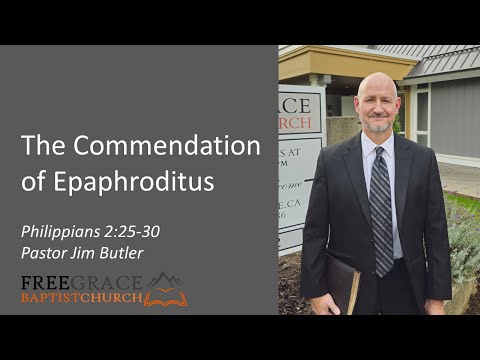
The Commendation of Epaphroditus
Philippians 2:25–30 presents Epaphroditus as a model of Christian ministry and other-mindedness, embodying the very exhortation Paul gave in Philippians 2:3–4 to esteem others above oneself. The sermon examines the three titles Paul assigns Epaphroditus in relation to himself — brother, fellow worker, fellow soldier — and his two roles in relation to the Philippian church — messenger and minister. The Christian life, and pastoral ministry in particular, is shown to be genuine warfare requiring devotion, discipline, and diligence. The church is called to receive and esteem men who hazard their lives for the work of Christ, recognising that to neglect such men is to demean the ascended Christ who gives them as gifts to his church.

The Believer in a Sinful Generation
Philippians 2:14–18 grounds the believer's daily conduct in a theology of sanctification and election: the command to do all things without complaining or disputing flows from the purpose of God to make his people blameless and harmless, validating their identity as children of God in a crooked and perverse generation. Drawing on the wilderness generation of Numbers and the Deuteronomy 32 backdrop Paul himself invokes, the sermon traces the catastrophic pattern of grumbling as a failure to submit to divine providence, and contrasts it with the church's calling to shine as lights and hold forth the word of life. The commendation of joy in verses 17–18 is grounded in Paul's readiness for martyrdom and his deep pastoral investment in the Philippians' growth, showing that the minister's eschatological joy is bound up with his people's faithful walk. The concrete application is simple: be blameless in yourself, peaceable toward the church, and a shining light in the world by faithful presence and gospel proclamation rather than withdrawal.
The Third Commandment
The Third Commandment — 'You shall not take the name of the Lord your God in vain' (Deuteronomy 5:11) — carries far greater weight than mere avoidance of profanity, because the divine name is not an arbitrary label but a revelation of God's very being, perfections, works, and decree. The sermon examines three aspects: the theological significance of God's name, the breadth of the prohibition (spanning blasphemy, frivolous speech, euphemisms, unlawful oaths, magic and sorcery, misapplication of providence, and maintenance of false doctrine), and the positive duty to use God's name reverently in prayer, praise, theological discourse, and the keeping of solemn oaths. The closing application presses hearers toward an 'answerable conversation' — a profession of faith matched by a life that gives no occasion to the enemies of the Lord to blaspheme.

The Trial Before Pilate, Part 1
John 18:28–32 records the delivery of Jesus to Pontius Pilate, an event framed by both human wickedness and divine sovereignty. The sermon surveys the prior trial before the Sanhedrin in Matthew 26, exposing the false charges, the deliberate misquotation of Jesus's words about the temple, and the formal charge of blasphemy — then turns to John's account of the hypocrisy, lawlessness, and impotence of the Jewish authorities before Pilate. Against that backdrop of gross injustice, verse 32 grounds the entire episode in divine decree: the very words Jesus had spoken concerning his death were being fulfilled, and the wrath of men was being overruled by the providence of God for the salvation of the elect. The chief application is adoration — the redeemed sinner is called to see how far the Savior went to secure redemption, and the unbeliever is called to come to the one who will not cast out any who come to him in faith.

Hope in the Lord - Psalm 131
Psalm 131 sets before the believer a threefold portrait of the soul at rest: what pride refuses to do, what humble trust actively does, and what Israel is therefore commanded to do. David's calm and quieted soul — like a weaned child beside its mother — is not the product of self-will but of covenant hope directed toward Yahweh and his promises, ultimately fulfilled in Jesus Christ, the great Son of David. The sermon closes with three warnings against losing that hope: refusing to humble the heart, expecting what God has not promised, and fixing hope on anything other than God through Christ.

Live Stream - April 27, 2025
Psalm 131 is a three-verse psalm of ascent in which David describes three things he did not do — lift up his heart in pride, raise his eyes in defiance, or occupy himself with matters too great and too marvelous — and one thing he did do: calm and quiet his soul like a weaned child beside its mother, in a silence of trust rather than fear. The sermon expounds all three verses, identifying hope in the Lord — grounded in who Yahweh is and in the promises of the new covenant secured by Jesus Christ, the faithful Son of David — as the active disposition that produces that inner calm. Three closing applications warn that we will lose our hope if we refuse to humble ourselves, if we expect what God has not promised, and if we place our hope in anything or anyone other than God through Jesus Christ.

Wilderness Wanderings
Deuteronomy 2–3 records Moses rehearsing the wilderness wanderings for the second generation of Israel, poised on the plains of Moab before the conquest of Canaan. God's multinational sovereignty is on display as He assigns territorial boundaries to Edom, Moab, and Ammon, then delivers Sihon and Og into Israel's hands — demonstrating that the God of Israel governs all nations, not merely His covenant people. The historical review functions both as a warning against repeating the unbelief of the first generation and as an encouragement to trust the same God who preserved Israel through forty years of wilderness trudging. New Covenant believers are called to the same posture: to dwell on the record of God's faithfulness in redemptive history so as to remain steadfast through present trials.

The Believer's Response to Trials
James 1:2–8 addresses the Christian's response to trials — not with grief or complaint, but with counted joy grounded in a clear theological understanding of God's purpose in suffering. The sermon works through two movements: the believer's response to trials in verses 2–4 (identifying, expecting, and rightly receiving them) and the believer's request during trials in verses 5–8 (seeking wisdom from a generous God and coming in faith without double-mindedness). The central application is that Christians must lay up this theology before trials arrive, so that when affliction comes, they are equipped to respond with settledness, faith, and prayer rather than anger or despair.

The Meeting Between Balak and Balaam
Numbers 22 introduces the Balaam narrative by establishing why a pagan seer is summoned to curse Israel and what unfolds before he ever arrives at Balak's court. The chapter exposes Balaam as a prophet for hire whose heart is drawn by greed even as he formally complies with Yahweh's directives — a tension the narrator signals subtly but the New Testament resolves with unmistakable condemnation. God's sovereignty over Balaam is dramatized in the donkey episode: the seer who cannot see is outperformed by the beast he threatens to kill, and the angel of the Lord stands as adversary to any who would curse the covenant people. The chapter's governing message is that no king's treasury and no hired soothsayer can neutralize a nation over whom the living God fights.

The Wars of the LORD
Numbers 21 traces Israel's journey through military victory over the Canaanites, the punishment and grace of the bronze serpent, and the conquest of the Amorite kings Sihon and Og. The bronze serpent — condemned people bitten by fiery serpents, healed only by looking in faith to the remedy God prescribed — is taken up by Jesus in John 3:14 as a type of his own crucifixion, teaching that salvation comes by divine initiative alone, received through faith, not works. The same recurring sins of complaint, lack of faith in providence, and idolatry that marked the first generation persist in the second, warning the church that these corruptions follow the sin nature across every generation. The chapter closes with God's sovereign hardening of Sihon and the defeat of the giant Og, both down payments on the promised conquest and demonstrations of God's faithfulness, sovereignty, and goodness to his people.

The Waters at Meribah
Numbers 20 records a pivotal transition: the first generation of Israel is dying off, yet the second generation repeats the same sins — grumbling, blaming Moses and Aaron, and longing to return to Egypt. At the waters of Meribah, Moses himself falls under divine chastisement for failing to hallow God before the people, striking the rock rather than speaking to it and presumptuously attributing the miracle to himself and Aaron. The chapter closes with the death of Aaron, whose priestly garments pass to his son Eleazar — a token of covenantal continuity pointing forward to the greater High Priest who stands between the dead and the living. The recurring lesson for the people of God in every generation is that the hardships of the wilderness are not evidence of divine abandonment but instruments of providence by which God conforms his people to the image of his Son.
The Priority of the Gospel for the Apostle
Paul's imprisonment in Rome, far from silencing the gospel, became the occasion for its advance — to the Praetorian Guard, and through the emboldened preaching of the wider brotherhood. Philippians 1:12–18 presents a progress report that reveals Paul's singular priority: the proclamation of Christ, regardless of the motives of those who preach him or the circumstances that surround the preacher. The sermon works through the paradox of fruitful suffering, the anatomy of bad and good ministerial motivation, and the theology of providence that sustains both. The congregation is called to the same pattern — faithfulness and perseverance to the end, interpreting all circumstances through the lens of God's sovereign purpose for the gospel.
The Intercession of Moses for the People, Judgement by God, and Folly of Israel
Numbers 14 records the aftermath of Israel's refusal to enter Canaan, and this exposition works through three movements in verses 11–45: Moses' intercession before a holy God, God's measured judgment upon the faithless generation, and Israel's final act of presumptuous folly. Moses' prayer is examined as a model of bold, Scripture-grounded intercession — appealing to God's reputation among the nations, His covenant character revealed in Exodus 34, and the precedent of His patient mercy. The chapter ultimately teaches that faithless cowardice is the fruit of rejecting the living God, that covenant-breaking brings assured judgment, and that faith in God's promises is the only ground of genuine courage.

The Reconnaissance of the Land
Numbers 13 records the reconnaissance of Canaan, in which twelve tribal leaders are sent to survey the land God had promised to Abraham, Isaac, and Jacob. Ten of the spies return with a report grounded not in the word of the living God but in an appeal to fear, functioning as anti-prophets who slander the land and paralyze the congregation — while Caleb calls the people to immediate, faith-driven obedience. The chapter exposes the difference between faithless fear and faithful courage as the decisive interpretive divide among those who witnessed the same evidence and held the same promise. The narrative calls believers to ground their courage not in the absence of obstacles but in the sovereign faithfulness of God, who has promised, guided, and proven himself in redemptive history.
Departure from Sinai
Numbers 10:11–36 records Israel's long-awaited departure from Sinai, the first movement of a covenant community organized around the visible presence of God. The passage is examined under three headings: the ordered departure of the tribes, Moses' invitation to Hobab as an exercise of providential wisdom, and the petitionary prayers at departure and rest that frame the entire march. The sermon draws out a sustained tension between the ideal covenant life depicted in the legislation of Exodus and Leviticus and the realistic failure narrated immediately in Numbers 11–12, pressing the parallel to New Covenant believers who are fickle yet sustained by a faithful God and the advocacy of Jesus Christ.