
Theological term
Proto-Gospel
4 sermons · All terms

The Conversion of the Apostle Paul

Paul's gratitude in 1 Timothy 1:12–14 is inseparable from the radicalism of his own conversion. Working through these three verses, this exposition traces the apostle's pre-conversion state — blasphemer, persecutor, and insolent man — as deliberately set up to magnify the sovereign mercy that overthrew him on the road to Damascus. The sermon gives careful attention to the nature of Paul's ignorance in unbelief, distinguishing it from the willful, light-rejecting sin of those who witnessed Christ's signs and wonders firsthand, and shows how effectual calling brought not only forgiveness but a hermeneutical key that unlocked the entire Old Testament. The governing application is that every believer, like Paul, stands before God not on the ground of moral reformation or law-keeping but solely on received mercy and exceedingly abundant grace — and that this reality is the wellspring of genuine Christian gratitude.

The Mission of the Son of God
John 1:29 presents the whole mission of the incarnate Son of God in a single declaration: 'Behold the Lamb of God who takes away the sin of the world.' This sermon expounds the Baptist's announcement as a statement loaded with Old Covenant freight — the sacrificial system, the Day of Atonement, and the Servant Songs of Isaiah — all converging on the one unblemished Lamb who bears sin to the cross and removes it through substitutionary atonement. The scope of 'the world' is shown to exclude universalism while affirming that Christ's atoning work reaches every tribe, tongue, people, and nation. The sermon closes with a theological account of believers' baptism as the external sign of the internal grace received through union with Christ in his death and resurrection.
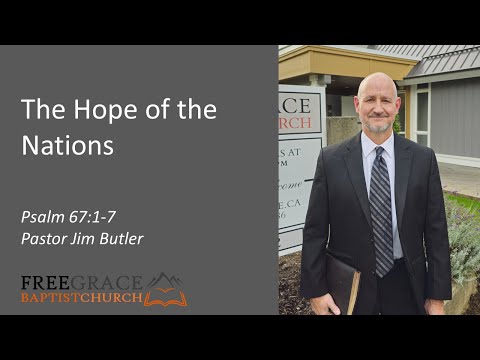
The Hope of the Nations
Psalm 67 is a missionary psalm in which the psalmist first petitions God on behalf of the church — for mercy, blessing, and the communion of God's presence — and then turns those blessings outward, praying that the nations would be saved, become worshipers of the true God, and come under His righteous rule. The Aaronic blessing of Numbers 6 stands behind verse 1, and the 'that' of verse 2 reveals the logic of all divine blessing: the church is enriched by God in order to become a conduit of His saving way to the ends of the earth. The sermon closes by calling the congregation to pray with the confident expectation of verses 6 and 7 — that God shall bless His people and all the ends of the earth shall fear Him — tying the psalm's vision directly to Christ's Great Commission.
Simeon and God's Salvation
The account of Simeon in Luke 2:25–35 presents a model of genuine biblical piety — a man who was just toward men and devout toward God because he was first rightly related to God by grace through faith in the promised Messiah. The sermon traces three features of Simeon's life: his character (just and devout), his conduct (waiting and worshiping in anticipation of the consolation of Israel), and his fourfold confession when he holds the infant Christ (the truth of God's word, the glory of God's salvation, the comprehensive mission of Christ to Jew and Gentile, and a prophetic word of sorrow to Mary). Listeners are called to examine whether their own character, conduct, and confession mirror Simeon's — living now in watchful, holy expectation of Christ's return, knowing that the only preparation for death is faith in the Lord Jesus Christ.