
Theological term
Perseverance
97 sermons · All terms

The Conduct of a Faithful Minister

Paul's charge to Timothy in 1 Timothy 4:12–16 sets forth the pattern for every faithful gospel minister: exemplary character, diligent public ministry, ongoing personal growth, and tenacious perseverance to the end. Preached at an ordination service for a newly commissioned pastor, this exposition works through each element of the apostle's command — from the six spheres of a minister's example (word, conduct, love, spirit, faith, purity) to the three pillars of public ministry (reading, exhortation, doctrine). The sermon insists that Christian virtue, however admirable, cannot save souls; it is the word of God, proclaimed boldly and accurately, that the Spirit uses as the instrument of salvation. The congregation is charged alongside the minister: receive the word with joy, reject heresy, prize the public means of grace, and honour those who watch for your souls.
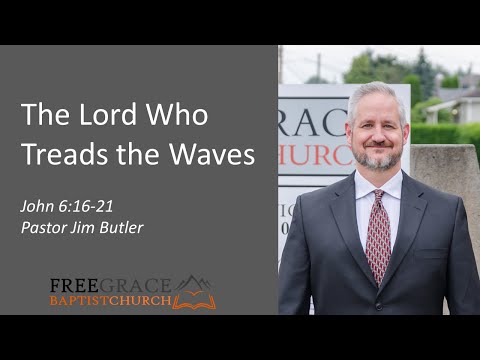
The Lord Who Treads the Waves
John 6:16–21 records the fifth of the seven signs in John's Gospel: Jesus walking on the Sea of Galilee toward his storm-tossed disciples. The sermon works through two movements — the disciples' vulnerability in the storm and the Savior's sovereign approach across the water — to establish that Jesus, by treading the waves, enacts what the Old Testament attributes exclusively to Yahweh (Job 9:8; Psalm 77:19; Isaiah 43:16), thereby demonstrating his consubstantiality with the Father and his lordship over the natural order. The divine self-disclosure 'I am' (ego eimi), voiced both here and at key junctures throughout John's Gospel, is shown to be Jesus' deliberate appropriation of the covenant name revealed to Moses in Exodus 3:14. The sermon closes by pressing the theological remedy for the fear that afflicts God's people: a right knowledge of Christ as the great I AM displaces anxiety about trials, persecutions, and earthly circumstances.

The Wisdom of Little Things
Proverbs 30:24–28 presents four creatures — ants, conies, locusts, and a spider or lizard — each marked by inherent weakness yet possessing a compensatory wisdom that enables them to thrive. Expounding Agur's numerical proverb, this sermon draws out four corresponding virtues for the people of God: industry in preparation, caution before danger, unity in cooperation, and persistence under adversity. Both temporal and spiritual dimensions of each lesson are developed — from Sabbatarian labor ethics and self-defense to readiness for the day of judgment and the endurance of the Christian race. The whole is gathered under a call to honest self-awareness: to know one's limitations, refuse indolence and complaint, and by grace overcome through wisdom.

The Conduct of a Faithful Minister
What does faithfulness look like in the life and ministry of a gospel minister? Expounding 1 Timothy 4:12–16 as a capstone to a study of elder qualifications in 1 Timothy 3:1–7, this sermon examines four dimensions of ministerial conduct: the minister's example before the congregation, his public ministry of reading, exhortation, and doctrine, his personal growth through sustained meditation on the Word, and his perseverance in both personal piety and sound teaching. The closing application extends these same marks to the congregation, calling the saints to receive the Word with joy, reject heresy with discernment, pursue Christian virtue, and prize the public means of grace.

The Good Soldier of Jesus Christ
The qualifications and character of faithful gospel ministry are examined through 2 Timothy 2:1–7, where Paul gives Timothy three interlocking commands: be strong in the grace of Christ, commit sound doctrine to faithful men who can teach others, and endure hardship as a soldier of Jesus Christ. Three metaphors — the devoted soldier, the disciplined athlete, and the diligent farmer — together with the dedication of the disciple, frame what faithfulness in pastoral ministry demands. The sermon presses both pastors and congregations to resist the pressure of cultural and governmental opposition, to identify and train men for ministry, and to understand that the dignity of gospel preaching warrants the highest standards of devotion, discipline, and endurance.

Bible Study - Exodus 5
Exodus 5 narrates the first confrontation between Moses and Aaron and Pharaoh, ending not in liberation but in intensified oppression and blame directed at the very messengers God had sent. The chapter exposes a recurring pattern in the life of the covenant community: when God's promised deliverance does not come immediately, his people tend to murmur against his instruments rather than wait upon his sovereign hand. Drawing on John Calvin's commentary, the study identifies six reasons God permitted things to grow worse before they grew better — including the demonstration of divine power, the testing of his people's patience, and the inexcusability of Pharaoh's hardness — and calls believers to feed on the promises of God so that faith produces courage rather than cowardice.

The Believer's Gratitude Toward God
Psalm 103 grounds thanksgiving not in vague sentiment but in the specific mercies of a covenant-keeping God toward those He has redeemed. Working through David's threefold structure — the reminder to bless God, the reasons for blessing God, and the reflection on God's kingdom — the sermon traces the chief benefit of divine grace as the forgiveness of sins accomplished in Christ, before moving outward to temporal providences, divine mercy measured against human frailty, and the universal summons of all creation to praise. The sermon draws on Deuteronomy's warnings against forgetting God's benefits and Paul's account of the worthy walk in Colossians 1 to show that detailed, specific thanksgiving is a mark of those who have received grace. The congregation is called to speak to their own souls, directing them away from self-absorption and toward the God whose mercy extends from everlasting to everlasting.

The Third Missionary Journey, Part 7
Acts 20:32–38 concludes Paul's farewell address to the Ephesian elders at Miletus, functioning as a pastoral charge that moves from doctrinal grounding to ethical example to affectionate departure. The sermon treats three movements: Paul's commendation of the elders to God and the Word of His grace as the only sufficient resource for long-term ministry, Paul's example of non-covetousness and manual labor as a rebuke against ministerial greed, and the tearful parting as a model of godly gratitude for the instruments of grace. A sustained excursus defends the biblical warrant for paying pastors from 1 Corinthians 9, 1 Timothy 5, and 2 Timothy 2, establishing that Paul's voluntary self-support was the exercise of a right, not the abolition of one. The sermon closes with a call to pray for faithful ministers and to value the means God ordains for the salvation of sinners.

The Whole Armor of God
Ephesians 6:10–20 calls the people of God to don the whole armor of God — not as an invitation to physical combat, but as a summons to faithful spiritual warfare against the devil and his hosts. The sermon works through three movements: the commands to be strong in the Lord and to put on the armor, the reasons rooted in the nature of the spiritual enemy, and a pastoral survey of each piece of armor from the belt of truth to the sword of the Spirit and prayer. The controlling emphasis falls on standing — not heroics, but covenantal steadfastness in union with Christ, who is already exalted far above all principalities and powers.

Pressing On In Christ for Sanctification

Philippians 3:10–21 sets out the doctrine of sanctification as the necessary and purposeful continuation of justification — not its cause. The justified believer, having been conformed to Christ's death by the Spirit's regenerating work (Romans 6), is called to press forward in mortification of the old nature and vivification of the new, never resting in past attainments. Christ's purpose in saving sinners is not merely to deliver them from hell but to conform them to his image for the glory of God — the ordo salutis moving through justification and sanctification toward final glorification. The sermon calls believers to disciplined, Christ-dependent pressing on through Word, prayer, church attendance, and zealous good works, while warning that those who corrupt the gospel by mingling works with grace are enemies of the cross whose end is destruction.

The Third Missionary Journey, Part 3
Acts 19:21–41 records Paul's final days in Ephesus, culminating in a riot instigated by the silversmith Demetrius, whose financial interests were threatened by the gospel's advance against idolatry. The passage is examined under four headings: Paul's strategic plans for further ministry, the anger of the silversmiths rooted in profit dressed as piety and patriotism, the confused uproar in the theater, and the intervention of the city clerk whose cool legal reasoning protected the church. The exposition draws out the apologetic purpose of Luke's account — demonstrating that Roman civil authority found no legal fault with Christianity — and closes with an urgent call to forsake every idol and trust the righteousness of Christ alone.

The First Missionary Journey, Part 8
Acts 14:1 records that Paul and Barnabas 'so spoke' in Iconium that a great multitude of both Jews and Greeks believed — a phrase that raises the question of the relationship between divine sovereignty and the ordained means of gospel preaching. This sermon works through a biblical theology of preaching drawn from Romans 10:14–17, 1 Corinthians 1:21–25, and 2 Timothy 4:1–8, arguing that God has foreordained not only the elect unto glory but also the means of their calling, supremely the faithful public proclamation of Christ crucified. Against moralistic preaching, life-as-gospel sentimentality, and entertainment-driven church culture, the sermon insists that only the verbal declaration of Christ's atoning work can save souls. Hearers are exhorted to pray for the raising up of qualified preachers, to support gospel church-planting, and to attend to the preached Word with the seriousness that faith coming by hearing demands.
The New and Living Way
Hebrews 10:19–25 presents two encouragements and three exhortations for the covenant people of God. The two encouragements — bold access into the holy of holies by the blood of Jesus, and the possession of a great high priest — ground the three commands that follow: draw near with a true heart in full assurance of faith, hold fast the confession of hope without wavering, and consider one another so as to stir up love and good works. Neglect of these exhortations is the path by which professing believers drift toward the apostasy warned against in verses 26–31, making faithful corporate worship, steadfast confession, and mutual encouragement indispensable means of perseverance.

The Baptism of Saul of Tarsus
Acts 9:17–25 records the baptism and initial preaching of Saul of Tarsus following his encounter with the risen Christ on the Damascus road. Ananias addresses the former persecutor as 'brother Saul,' and Saul is immediately baptized — a pattern the sermon presses as normative: conversion precedes and grounds baptism, which is the public confession of a forgiven sinner, not a converting ordinance. The sermon then traces the character of Saul's early preaching: immediate, Christocentric, apologetic, and persuasive — proving from the Old Testament that Jesus is the Christ and the Son of God — while showing that the same mission statement of Acts 9:15–16 (preach and suffer) begins its fulfilment within hours of his conversion. Hearers are urged to confess Christ openly, to submit to baptism without delay, and to recover a persuasive, Scripture-grounded proclamation of the gospel rather than the entertainment-driven substitute that fills contemporary pulpits.

The Chastening of the Lord
Proverbs 3:11–12 commands God's people not to despise or detest divine chastening, grounding that prohibition in the father-son love that moves God to correct those He has received into His family. Working through the Proverbs passages on correction and then taking up the New Covenant application in Hebrews 12:5–11, this sermon demonstrates that chastisement is not evidence of divine hostility but of divine fatherhood — a necessary instrument of sanctification flowing from sovereign, covenant love. The presence of chastening confirms a believer's legitimacy as an adopted child of God, while its fruit — conformity to Christ and the peaceable fruit of righteousness — far outweighs its momentary pain. Believers are therefore called to receive God's correcting hand with submissive trust, remembering that all things, including affliction, work together for good to those who are the called according to His purpose.

James 1:2-8
James 1:2–8 addresses the believer's response to trials and the request that should accompany them. The passage distinguishes trials as God-ordained testings of faith from temptations to sin, and calls believers to count such afflictions as joy because God uses them to produce endurance, maturity, and conformity to Christ. When wisdom is lacking in the midst of trial — as it invariably is — the believer is commanded to ask God, who gives liberally and without reproach to all who ask. That asking must be in faith, for the double-minded man who doubts will be unsettled, unanswered, and unstable in all his ways.

Genesis 22:1-24
Genesis 22 presents the testing of Abraham's faith as the pinnacle of the patriarch's walk with God — a command so severe that it required Abraham to march three days to Mount Moriah to offer up Isaac, the son of promise. The narrative is read as dense with typological significance: Abraham foreshadows the Father who gives his only Son, Isaac prefigures Christ who carries his own wood and submits as a willing victim, and the substitutionary ram points forward to the Lamb of God who takes away the sin of the world. The obedience of Abraham is shown not to establish his righteousness before God but to manifest the validity of the faith already credited to him as righteousness in Genesis 15, consistent with James 2 rightly read against any Roman Catholic scheme of initial faith sustained by subsequent merit. The sermon closes with a call to faithful perseverance under trial, grounded in the confidence that God provides and that Christ has borne what no angel stayed.

Free Grace Baptist Church - April 10, 2019 Bible Study
Genesis 17:15–27 is examined within the framework of the Abrahamic covenant, with particular attention to the declaration concerning Isaac, the obedience of Abraham, and the theological relationship between circumcision and baptism. The study draws a careful distinction between the covenant of circumcision — which governed membership in Old Covenant Israel by a works principle (Genesis 17:14) — and the covenant of grace, arguing with Nehemiah Coxe that the two must not be conflated. Colossians 2:11–12 is then opened to demonstrate that spiritual circumcision (regeneration) is the antitype of physical circumcision, and that baptism is the retrospective outward sign of that inward grace already received through faith — a sign that presupposes faith and therefore cannot legitimately be administered to infants.

James 1:2-8
James 1:2–8 addresses two inseparable realities in the Christian life: the believer's response to trials and the believer's request during trials. Trials are not anomalies but expected instruments of divine sanctification — God's means of producing endurance, maturity, and conformity to the image of Christ. When wisdom is lacking in the midst of affliction, the prescribed remedy is not complaint but prayer, offered in faith to a God who gives liberally and without reproach. The double-minded man who doubts will be unsettled, unanswered, and unstable — a sobering warning to approach God with single-minded faith.
The Apostles' Defense before the Council
Acts 5:27–32 records the apostles' second arraignment before the Sanhedrin and their bold proclamation of the gospel under direct threat of punishment. Peter's reply — 'we ought to obey God rather than men' — establishes a permanent principle for the church: when civil or religious authority commands disobedience to God, the Christian is bound to God alone. The sermon expounds Peter's gospel proclamation in verses 30–32, treating the incarnation, crucifixion, exaltation, and gift of repentance as a coherent apostolic witness, and closes with exhortations to prepare for persecution, persevere in bold proclamation, and believe the message of forgiveness through Christ.

Matthew 8:23-27
Matthew 8:23–27 presents the stilling of the storm on the Sea of Galilee as a window into both the true humanity and the full divinity of the Lord Jesus Christ. The passage exposes the disciples' little faith — not absent faith — and rebukes the perennial temptation to treat temporal prosperity as the measure of God's favor. Christ's presence in the boat does not exempt believers from storms, but it does guarantee that he will see them through every trial he ordains for their conformity to himself.

Free Grace Baptist Church - March 25, 2018 PM
Acts 4:23-31 records the early church's corporate prayer in the face of threats from the Jewish authorities, and this sermon expounds four dimensions of that prayer: its occasion, its character, its content, and God's answer to it. The congregation's prayer is marked by a deliberate unity of purpose — a one-accord rooted not in uniformity of voice but in a shared commitment to the faith of the gospel. The content of the prayer moves through invocation and recognition of God as sovereign Creator, rehearsal of his works in creation and revelation, and confidence in his decree and providence — culminating not in a petition for deliverance from danger but for boldness to continue proclaiming Christ in the midst of it. Christians are called to pattern their own prayers on this model: knowing their God, drawing confidence from that knowledge, and asking not for the removal of trials but for the strength and resolution to endure through them.

Free Grace Baptist Church - March 18, 2018 PM
James 5:7-12 calls the people of God to cultivate patience — toward one another and under affliction — in light of the imminent return of Christ as judge and deliverer. The sermon traces two obstacles that undermine patience: grumbling against fellow believers, which contradicts the love and long-suffering that Scripture everywhere demands, and careless or rash oath-taking, which reflects a failure to let the tongue conform to truth. The prophets and Job stand as biblical examples of endurance through suffering, with Job's trial yielding not merely restored prosperity but experiential knowledge of God — which James presents as the ultimate end the Lord intends. Believers are exhorted to establish their hearts, pursue direct reconciliation rather than complaint, and find fresh resolve in the gospel of Christ, whose blood cleanses all the impatience, grumbling, and falsehood that the passage exposes.

2 Kings 20:1-21
Second Kings 20 closes the account of Hezekiah's reign by exposing both the nobility and the inconsistency of one of Judah's best kings. The chapter is examined under three headings: the extension of Hezekiah's life through answered prayer, the folly of his alliance-seeking with Babylon, and the summary of his reign. The central lesson is that even a covenant-faithful king who trusts God in sickness can lapse into walking by sight in prosperity, and this inconsistency of consistency is the common condition of every believer who depends on the grace of Christ rather than on personal perfection.

2 Kings 18:1-37
Second Kings 18 introduces Hezekiah, one of Judah's most faithful kings, whose sweeping religious reforms and wholehearted trust in Yahweh are met not with immediate peace but with Assyrian invasion and psychological warfare. The chapter exposes a persistent error: that obedience to God is a formula for earthly blessing rather than a response to grace, and that faithfulness and suffering are not mutually exclusive. The Rabshakeh's two speeches constitute calculated propaganda designed to sow despair and division in Jerusalem, culminating in a blasphemous equation of Yahweh with the powerless gods of conquered nations. The study draws out three practical lessons: that trial coexists with blessing, that even faithful people waver, and that God's people may face genuine despair while still possessing genuine hope in a God who will act on their behalf.

Free Grace Baptist Church - November 19, 2017 AM
Preached at the ordination of a new elder, this exposition of 1 Timothy 4:12–16 sets forth four charges Paul lays upon Timothy as a faithful minister of the gospel: the minister's example in life and conduct, his public ministry of reading, exhortation, and doctrine, his personal growth through devoted meditation on apostolic truth, and his perseverance in both personal holiness and sound doctrine. The sermon insists that ministers are made by God and vetted by the church, not self-appointed, and that the gravity of the office lies in this: faithful gospel ministry is the ordained means by which God saves sinners and sanctifies his people. The congregation is charged to receive the gift of an ordained minister with joy, to prize the public means of grace, and to reject heresy with earnestness alongside their pastor.

The Crucifixion of Jesus, Part 4
Matthew 27:47–50 records the final moments before Christ's death on the cross — the mockery of bystanders who misheard his cry of dereliction as a call for Elijah, the offering of sour wine, and his loud, voluntary yielding of his spirit. The sermon examines what the cry of dereliction does and does not teach: it does not indicate a division within the Trinity, a dissolution of the hypostatic union, or patripassianism, but it does express the qualified, temporary withholding of the Father's favour from the Son as he bore the punishment due to his people. Christ's loud cry at the moment of death demonstrates that he laid down his life sovereignly and willingly, not as a victim overcome by suffering but as a priest offering himself as substitute. The only fitting response to this substitutionary sacrifice is not moral self-improvement but worship, gratitude, and faith in the one who was forsaken so that his people would never be forsaken.
The Idolatry of Solomon
Solomon's reign, celebrated across 1 Kings 3–10 for its wisdom, wealth, and temple-building, collapses in 1 Kings 11 under the weight of multiplied foreign wives, hardened idolatry, and a heart turned away from Yahweh. The sermon exposes the problem, precedent, and practice of Solomon's idolatry in verses 1–8, and then traces the divine response — God's righteous anger and covenantal judgment — in verses 9–13. Solomon's sin is shown to be aggravated by his knowledge of the law, his good example in David, and his twice-repeated experience of God's direct appearing. Drawing out seven practical warnings, the sermon calls believers to vigilance in marriage, obedience, and utter dependence on the Holy Spirit, while pointing to Christ — the greater Solomon — as the only secure ground for salvation and perseverance.
Hebrews 13:3
Hebrews 13:3 commands believers to 'remember the prisoners as if chained with them' — not merely to recall that persecuted saints exist, but to remember them with a view to action, prayer, and tangible aid. This study traces the command through its immediate context of brotherly love (Hebrews 13:1-3), the Old and New Testament witness to the normalcy of suffering for the cause of Christ, and the reasons why remembering persecuted believers is both a duty and an expression of the church's solidarity in one body. The practical application presses the congregation to move beyond apathy toward the persecuted church through prayer, correspondence, giving, visitation, and the conscious redirecting of attention away from self toward those who suffer for the name of Christ.

The Need for Wisdom
James 1:5–8 calls the believer in the midst of trial not to seek deliverance but to seek wisdom — the divinely granted skill to bear affliction rightly. God is the inexhaustible and non-reproaching source of that wisdom, and He gives it liberally to all who ask in faith. The sermon works through four aspects of the pursuit of wisdom in verse 5, then three features of the necessity of faith in verses 6–8, showing that doubt produces instability, unanswered prayer, and a double-minded life. The governing application is that the afflicted saint must ask God for wisdom and do so in genuine faith, trusting the Scripture's testimony that trials work patience and conform us to Christ.