
Theological term
Perseverance of the Saints
386 sermons · All terms
The Glory of the Father and the Son

John 17:1–5 opens Christ's high priestly prayer with a petition that the Father glorify the Son so that the Son may glorify the Father — a reciprocal glorification whose goal is the glory of God Most High. The sermon works through three grounds for this petition: the salvation of the elect given to the Son in the covenant of redemption, the accomplishment of Christ's active and passive obedience as the basis of justification, and the restoration of the Son's pre-incarnate glory. The full deity of Christ is defended against subordinationist readings by surveying New Testament texts where the title theos is applied directly to Jesus, and the sermon closes with the call to pursue the knowledge of God and Christ as the very essence of eternal life — through Scripture reading, prayer, and faithful attendance upon the means of grace.

The Male Child and the Dragon
Revelation 12 presents Christ as the decisive victor over Satan, tracing the dragon's fourfold defeat from the incarnation through the casting out of heaven to his continuing failed campaigns against the church. The chapter is read through the lens of Genesis 3:15 and its fulfillment in Christ's crosswork: the male child escapes the serpent's grasp, is caught up to God's throne, and the accuser is cast down by virtue of Calvary. Satan's ongoing rage against the church is not a sign of his power but of his desperation — a conquered enemy making war against those he cannot ultimately destroy. The people of God are called to understand that suffering under satanic opposition identifies them with Christ's own suffering and conforms them to his image, not to despair but to faith in the one who has already overcome.

The Decision of the Council
Acts 5:33–42 records the Sanhedrin's decision to beat the apostles and command them to cease preaching in the name of Jesus — and the apostles' rejoicing response. This exposition works through three movements: the council's murderous fury at Peter's gospel proclamation, the qualified wisdom of Gamaliel's historical and theological arguments for restraint, and the apostles' departure rejoicing that they were counted worthy to suffer shame for the name. The sermon calls the congregation to a readiness for persecution that mirrors the apostles', grounded not in stoic resolve but in the altogether loveliness of Christ who is chief among ten thousand.

Liberty and Law

Galatians 5:1–15 presents the Pauline application of justification by faith alone: those whom Christ has liberated from the law's curse must stand fast in that freedom rather than entangle themselves again in the yoke of legal works-righteousness. The sermon works through two headings — the liberty of Christ (vv. 1–6) and the law of love (vv. 7–15) — showing that true Christian liberty is neither license for sin nor grounds for adding human merit to Christ's finished work. Justified believers are called to a gospel holiness expressed through love of God and neighbor, lived out by the Spirit in dependence on Christ's imputed righteousness alone.

The Dying Thief and the Prince of Life

The crucifixion scene of Luke 23:38–43 presents three voices: the cursed robber who reviles Christ to his last breath, the dying thief who exercises remarkable faith in a bloodied and apparently defeated king, and the Prince of Life who responds with sovereign assurance. This sermon exposition focuses on Christ's words to the thief — 'Assuredly, I say to you, today you will be with me in paradise' — unpacking the divine promise, immutable love, and perfection of Christ's blood and righteousness that undergird that assurance. The confession of faith's teaching on the perseverance and assurance of the saints illuminates why the thief's salvation is certain, and the same certainty belongs to all who believe on the Lord Jesus Christ.
The Imprisonment and Release of the Apostles
Acts 5:17–26 records the arrest, miraculous release, and re-arrest of the apostles at the hands of a Sanhedrin dominated by Sadducees — the very men who denied the existence of angels. The angel who opens the prison doors and the apostles who immediately return to temple preaching together demonstrate that no earthly authority can silence the gospel of Jesus Christ. This passage is treated as a paradigm for the church's experience throughout history: faithful proclamation will always draw persecution, yet Christ is building His church and the gates of hell shall not prevail against it. The sermon calls hearers to remember the globally persecuted church, to pursue the boldness of the apostles, and to believe the words of this life — the gospel of forgiveness and imputed righteousness in Christ.

Reasons to Thank God
Psalm 103 summons the soul to deliberate, comprehensive praise — not as a once-yearly exercise but as the daily discipline of the redeemed. Working through David's three-part structure (the reminder to bless God, the reasons to bless God, and the exhortation to bless God), this exposition traces the spiritual and temporal gifts catalogued in the psalm, dwelling especially on the infinite, thorough, tender, sympathetic, and enduring character of divine mercy. The sermon warns that forgetfulness of God's benefits — as Deuteronomy repeatedly demonstrates — is the seedbed of apostasy, and it closes with a call to find in the cross of Christ the only sure foundation for a life of grateful blessing.

The Blessedness of Belonging to Our Shepherd

Psalm 23 is among the most familiar passages in Scripture, yet its very familiarity can breed inattention to the depth of its claims. This exposition works through the psalm under four heads — God's provision, God's protection, God's consolation, and God's presence — showing that these blessings belong specifically and personally to all who belong to the Lord as his sheep, not to the world at large. The sermon presses the hearer to be consciously and consistently aware of this blessedness in the light of Christ, the Good Shepherd who laid down his life for the sheep, and closes with a direct call to the unconverted to hear his voice and believe.

Our Response to Our Shepherd
Psalm 23 sets before the believer not merely a catalogue of divine blessings but a model of how those blessings ought to shape the believer's whole inner and outer life. Drawing from David's own experiential response to his blessedness, this exposition identifies four corresponding responses the Lord's sheep must cultivate: strong confidence in God amid every trial and dark valley, active praise that declares truth about God with joy and adoration, genuine delight in God's presence expressed in real fellowship with him, and obedient following in the paths of righteousness for his name's sake. The sermon closes with a direct call to the unconverted to come to their senses and trust the Good Shepherd who laid down his life to rescue, forgive, and transform sinners.

The Wisdom of Little Things
Proverbs 30:24–28 presents four creatures — the ant, the rock badger, the locust, and the spider — each marked by a specific weakness yet compensating for it with exceeding wisdom. The sermon argues that God instructs his people through the created order, calling them to self-awareness of their own limitations and to the cultivation of corresponding wisdom: industry, caution, unity, and persistence. These virtues apply both to temporal life and to the eternal — preparing for judgment, fleeing temptation by hiding in Christ the Rock, advancing together under his kingship, and persisting in grace after failure. The unconverted are pressed to prepare for the coming day of God's judgment while the summer of opportunity remains.

The Healing of the Lame Man
Acts 3:1–10 records the healing of a man lame from birth at the gate called Beautiful, and this exposition argues that the miracle is not an isolated wonder but a typological and redemptive event that displays the name and power of Jesus Christ while setting the stage for apostolic gospel proclamation. The man's condition — congenital, public, and long-standing — ensures that the miracle is conspicuous and undeniable, functioning to authenticate the apostles as God's spokesmen and to magnify the glory of the enthroned Christ. The church's calling, illustrated by Peter's declaration that he possesses no silver or gold but only the name of Christ, is the proclamation of the gospel and the forgiveness of sins, not the amelioration of every temporal need society presents. Those genuinely conquered by sovereign grace, like the healed man, are marked by worship, praise, and desire for the public means of grace.

The Sight of Salvation

How do believers apprehend Christ now, before the sight of glory? Expounding 1 Peter 1:8–9, this sermon traces the apostle Peter's contrast between the present age — marked by faith, love, and unspeakable joy in an unseen Christ — and the age to come, when faith reaches its divinely appointed telos in the full, final, and bodily sight of the glorified Mediator. Faith is shown to be the foundation of every other grace: love for Christ and joy in Christ are impossible apart from it, and both are sovereign gifts of divine mercy, not works stirred up from within the believer. The sermon closes by pressing the necessity of saving faith as the only preparation for glory, calling the unconverted to flee to Christ and assuring the tried believer that no promise of God in Christ will fail.

The Believer's Race
Hebrews 12:1 calls the people of God to run the Christian race with endurance, laying aside every weight and entangling sin. This sermon expounds the first of three incentives the author of Hebrews sets before believers: the great cloud of witnesses from Hebrews 11, who function not as spectators watching the runner, but as witnesses testifying to the faithfulness of God through every trial and affliction. Drawing on Abel, Enoch, Noah, Abraham, Sarah, Jacob, Joseph, Moses, Rahab, David, Job, Habakkuk, and the martyrs Polycarp and Thomas Hawkes, the sermon presses believers to receive the unanimous testimony of the saints — that God is faithful, God sustains runners, and God will bring them through to the end — and to run without quitting, because the Christian life is a marathon requiring daily faithfulness, not a glamorous sprint.

The Woman Who Was a Sinner
Luke 7:36–50 presents three parties — a repentant woman, a judgmental Pharisee, and the Lord Jesus Christ — whose interactions disclose the theology of justification by grace alone through faith alone. The woman's extravagant acts of devotion at Christ's feet are not the ground of her forgiveness but its fruit: she loves much because she has been forgiven much. The Pharisee's self-righteousness exposes the danger of confusing surface morality with saving grace, and of imagining any sinner to be beyond the reach of Christ. The sermon calls believers to examine the warmth of their love for Christ as the chief evidence of genuine justifying faith, and invites the unconverted to come to the Savior whose mercy is wider than any sinner's guilt.

Genesis 3:14-24
Genesis 3:14–24 records the consequences of the fall, and the heart of this study is the protoevangelium of Genesis 3:15 — the first gospel promise in Scripture. God's curse upon the serpent contains within it an announcement of the Messiah: the seed of the woman who would crush the serpent's head, accomplishing total victory through suffering and death. The sermon traces this skull-crushing seed through the biblical narrative — from the typological head-wounds of Judges and David's defeat of Goliath, to New Testament fulfillment in Colossians, Hebrews, 1 John, and Revelation 12 — demonstrating that the cross of Christ is the decisive blow against the devil foreshadowed in Eden. The study closes by examining the consequences for the woman and the man in verses 16–19, situating the tensions of marriage and labor in a post-lapsarian world that Christ's redemptive work is already beginning to address.

Free Grace Baptist Church - May 13, 2018 PM
Philippians 1:27–30 calls the church to conduct worthy of the gospel and to receive suffering for Christ as a divine gift. Expounding these verses under two headings — worthy conduct and worthwhile suffering — the sermon argues that the local church, as a colony of heaven, is called to stand fast in unity against adversaries, and that both the initial grant of faith and the grant of suffering are gracious tokens of God's saving presence with his people. Persecution, far from being a mark of divine abandonment, is shown historically and biblically to be an assurance of salvation, a sign of perdition to those who oppose the gospel, and a means by which God strengthens his church.

The Recovery of Wandering Brethren
James 5:19–20 closes the epistle not with a random aside but with a call to mutual accountability rooted in the high stakes of wandering from the truth. The sermon establishes two movements: the problem of professing believers who drift from the truth into the error of their way, and the encouragement given to every member of the local church who pursues their recovery. Drawing on Matthew 18, Galatians 6, Hebrews 2, and Psalm 119, the exposition argues that truth and conduct are inseparably connected, that instrumental means matter in God's sovereign purposes of salvation, and that the antidote to defection from God is a disciplined, resolute, corporate love for the truth.

The Ascension of Christ
The ascension of Christ in Acts 1:9–11 is no mere epilogue to the resurrection but a theologically freighted event with direct consequences for how believers understand Christ's present reign, the Lord's Supper, intercession, and final glorification. Working through the passage, the sermon establishes that the ascension was visible, local, bodily, and glorious — witnessed by the apostles and interpreted by angelic messengers who announce Christ's return in like manner. The ascension completes Christ's earthly mediatorial work, secures the gift of the Spirit, and grounds the believer's assurance in a high priest who always lives to make intercession — the pledge that those whom He justified He will also glorify.

Free Grace Baptist Church - March 28, 2018 Bible Study
This Bible study works through the fall of Jerusalem as recorded in 2 Kings 25, tracing the Babylonian conquest, the destruction of the temple, the deportation of the people of Judah, and the provisional governorship under Gedaliah. The session draws out the covenantal significance of the temple's destruction — that the visible symbol of God's presence among his people had been removed — while pressing toward the hope embedded even in judgment, that God's promise to his people and to the line of David was not finally extinguished. Listeners are urged to pray for those in positions of governing authority and to trust that God's redemptive purposes persist beyond catastrophe.
2 Kings 25
The fall of Jerusalem in 2 Kings 25 is not merely a record of military conquest — it is a theological verdict on covenant unfaithfulness. The chapter traces the Babylonian siege, the systematic destruction of the temple and city, the appointment and assassination of Gedaliah, and the exile of Judah, reading as a sustained fulfillment of the curses pronounced in Deuteronomy 28. Yet the chapter's closing verses, recording the release and elevation of Jehoiachin in Babylon, preserve a glimmer of Davidic hope that Matthew 1 traces forward to Jesus Christ, the son of David whose kingdom has no end.

Free Grace Baptist Church - March 18, 2018 AM
Matthew 28:18–20 closes Matthew's Gospel with the Great Commission, grounding the church's entire mission in the absolute authority and perpetual presence of Christ. The sermon draws out three implications from Christ's promise 'I am with you always': his presence should promote appreciation for the church past and present, concern for the church now and in the future, and confidence that Christ actively equips her through a trained gospel ministry. Ephesians 4 is opened at length to show that the gifts Christ gives his church are gifted men — apostles, prophets, evangelists, pastors, and teachers — whose threefold purpose is to equip the saints, fulfil the work of ministry, and edify the body toward mature knowledge of the Son of God. The sermon closes with a call to unbelievers, directing them to Matthew 1:21, 20:28, and 11:28–30 as the purpose, means, and gracious offer of Christ's saving work.

The Great Commission, Part 4
Matthew 28:20 calls the church to a lifelong, comprehensive teaching ministry — the fourth imperative of the Great Commission. The sermon examines this teaching activity under four headings: its simplicity (Scripture alone, not opinion or entertainment), its scope (all Christ's commands, Old and New Testaments, issuing in obedience), its perpetuity (traceable from Acts through the pastoral epistles to the end of the age), and its comprehensiveness (the whole counsel of God applied to individuals, families, churches, and civil society). The closing appeal summons hearers to the cross — the ransom of Matthew 20:28 and the invitation of Matthew 11:28 — as the indispensable foundation for any biblical obedience.

The Empty Tomb and the Risen Lord
The empty tomb of Matthew 28:1–10 is not merely an absence but a proclamation: Christ was raised bodily from the dead by the Father, vindicating His atoning work and confirming every prophetic word He spoke. The sermon works through the discovery of the empty tomb by the women and the appearance of the risen Lord, attending carefully to the apologetic weight of the narrative details — the guards' terror, the invitation to examine the tomb, the folded graveclothes, and the physical feet of Jesus grasped in worship. The message closes with 1 Corinthians 15, pressing the stakes of the resurrection: without it, faith is futile and sin remains unatoned; because Christ is risen, justification, sanctification, and glorification are secured for all His brethren.

The Builder of the Church
Matthew 16:13–18 raises the question Jesus himself poses: 'Who do you say that I am?' This sermon works through three movements in the passage — the question of Christ's identity, Peter's confession and the divine grace that produced it, and the establishment and indestructibility of the church Christ is building. The sermon engages the Roman Catholic and Protestant dispute over the rock on which the church is founded, arguing from John Owen and J.C. Ryle that the rock is the person of Christ whom Peter confessed, not Peter himself. The chief application is that Christ — not human ingenuity, celebrity, or programme — owns, builds, protects, and defines the conduct of his church, and that faithfulness, not fantastical success, is what he requires of his people.

The Three-Fold Exhortation
Hebrews 10:19–25 sets forth a two-fold foundation and a three-fold exhortation for corporate Christian life. The foundation is Christ's blood-purchased boldness of access into the holiest and His abiding high-priestly intercession — both of which make the old-covenant sacrificial system not merely obsolete but inferior in kind, not degree. From that foundation the apostle issues three commands: draw near with a true heart in full assurance, hold fast the confession of hope without wavering, and (deferred to a subsequent sermon) consider one another to stir up love and good works. The sermon presses hearers to root their weekly confidence not in the quality of their obedience but in the dignity of Christ's person and the virtue of His once-for-all sacrifice.
The Bread of Life
John 6:43–51 presents Jesus as the bread of life who alone can satisfy the hunger of the human soul. The sermon works through three headings: the participants of the bread of life are those whom the Father sovereignly draws, not those who seek Christ for temporal benefit; the identity of the bread of life is the eternal Son who has seen the Father and in whom the believer shall never hunger or thirst; and the benefit of the bread of life is everlasting life, contrasted with the manna in the wilderness that could not prevent death. The sermon applies these truths both as a call to unbelievers to look to Christ by faith and as a comfort to believers who presently possess eternal life in him.
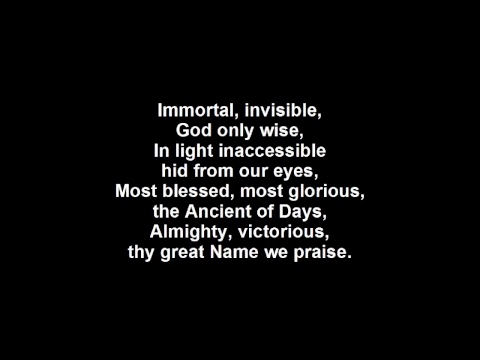
Free Grace Baptist Church - November 26, 2017 PM
Titus 3:3–7 expounds the full arc of sovereign grace: the grave former state of all believers in foolishness, disobedience, and depravity; the divine condescension by which God's kindness and love appeared in Christ; and the sovereign power of the Holy Spirit in washing and regenerating dead sinners to new life. Salvation is not by works of righteousness which we have done but entirely according to divine mercy, secured through Jesus Christ alone and applied by the Holy Spirit — a triunely accomplished redemption that eliminates all boasting in self and grounds the believer's perseverance in the immutability of God's electing love.

Of Religious Worship and the Sabbath Day (2LCF22)
The Sabbath commandment is a moral, positive, and perpetual law binding all men in all ages — not a distinctively Jewish institution abolished with the Mosaic economy, but a creation ordinance blessed and sanctified by God from the beginning and carried forward into the New Covenant era. Working through 2LCF chapter 22, paragraphs 7 and 8, this session traces a biblical theology of the Sabbath from Genesis 2 through Isaiah and Jeremiah, establishing both the moral principle (one day in seven) and its positive element (the particular day). The shift from Saturday to Sunday is grounded in creation and redemption as the twin rationales for the commandment, anticipating the resurrection of Christ as the basis for Lord's Day worship. Hearers are called to receive the Sabbath not as a burden but as a gift given by God for the good of His creatures.

The Denial of Christ by Peter
Peter's threefold denial of Christ in Matthew 26:69–75 exposes both the anatomy of a disciple's fall and the magnitude of divine grace that restores the fallen. The sermon traces Peter's descent from evasive mumbling to sworn denial, showing how self-confidence, prayerlessness, and neglect of the Word prepared him for catastrophic failure before a servant girl. The contrasting thread throughout is the mercy of Christ — his look of 'sorrow, pity, love, and forgiveness' — which, together with the remembered word, brought Peter to godly repentance and eventual restoration. Hearers are exhorted to watch and pray, to hide the Word in their hearts, and to flee to the Christ who does not cast out those who come to him.
2LCF Chapter 18 - Of the Assurance of Grace and Salvation
The doctrine of assurance of grace and salvation is grounded not in subjective experience or extraordinary revelation, but in the blood and righteousness of Christ revealed in the gospel, confirmed by the inward witness of the Holy Spirit and the objective evidences of saving grace. Working through chapter 18 of the 1689 London Baptist Confession of Faith, this study distinguishes genuine assurance from carnal presumption, refutes the Roman Catholic and Arminian denials of assurance, and addresses why true believers may wait long before attaining it. Assurance is not of the essence of faith — a believer may possess saving faith without yet possessing settled assurance — yet the ordinary means of grace are the appointed path by which the Spirit revives it. The study closes with the sobering reality that assurance may be shaken by negligence, special sin, or vehement temptation, while insisting that the seed of God in the elect ensures they are never left in utter despair.